
Why companies commission corporate mural art
A mural does a job that a poster, a screen or a framed print cannot. It is part of the building, so it reads as a decision the company made about the place, not a decoration added afterward. For workplace and brand teams, that makes corporate mural art one of the most visible ways to show who the company is.
The usual reasons are practical. A reception wall that has to impress visitors. A long corridor that feels anonymous. A café or break room that people pass through without stopping. A new floor that needs a character of its own after a renovation. A headquarters that wants to say something about Atlanta, where its people live and work. A mural solves each of these at a scale that furniture and signage cannot.
What corporate mural art looks like
There is no single corporate style. Some companies want a quiet, graphic wall in the brand palette that frames a reception desk. Others want a story told across a long corridor, or a portrait of the city painted across an atrium. The common thread is control: the design is reviewed against the brand, shown on a photo of the real wall, and approved before the first can of paint is opened.
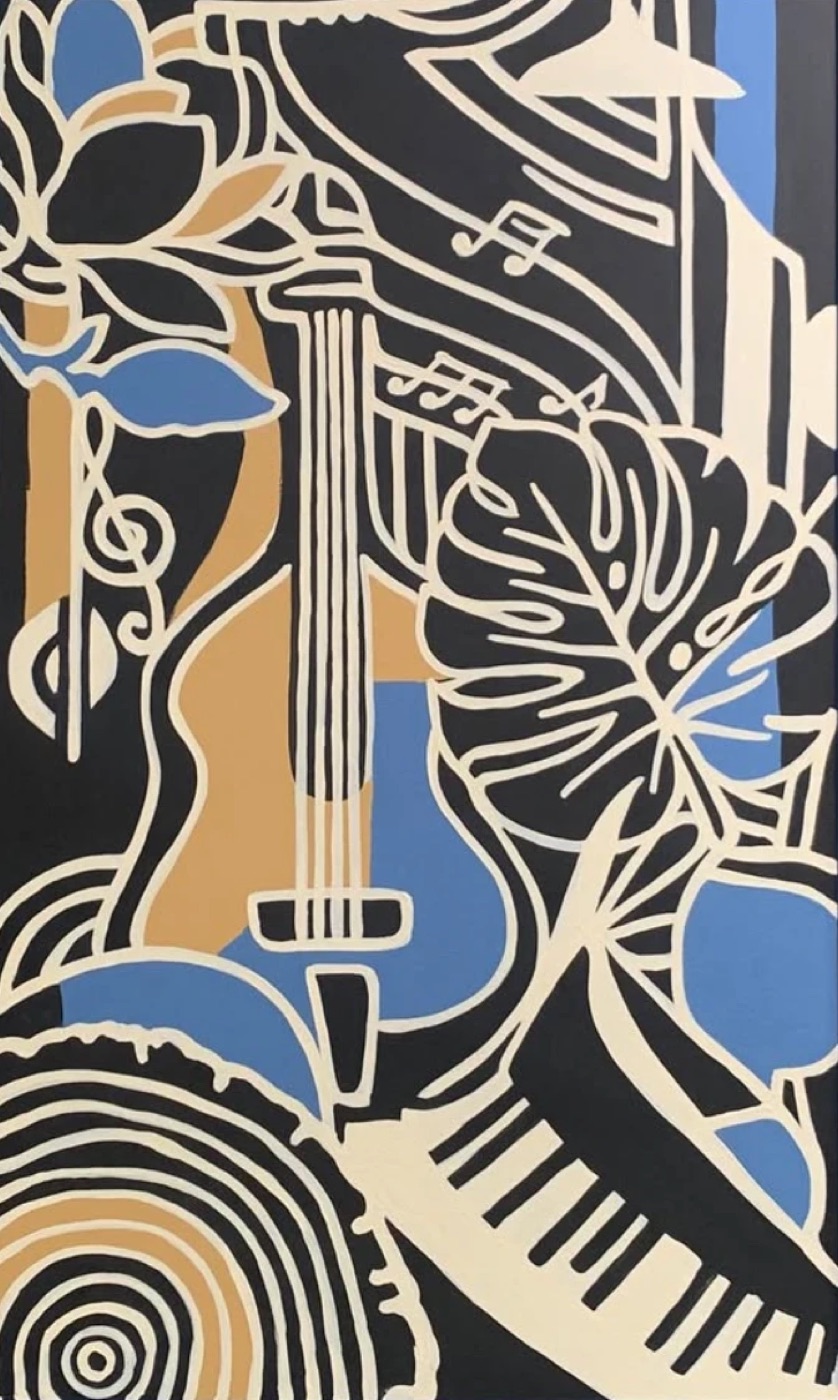
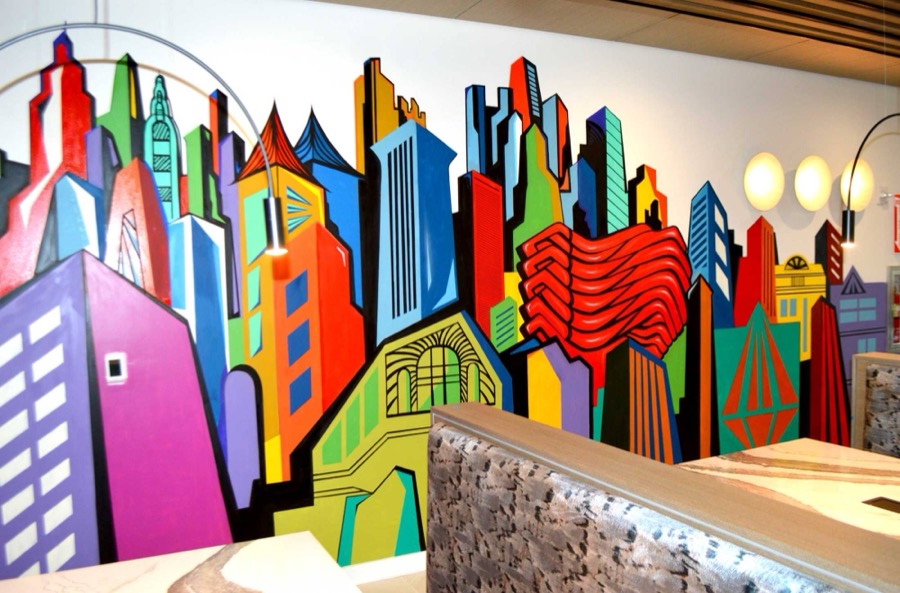
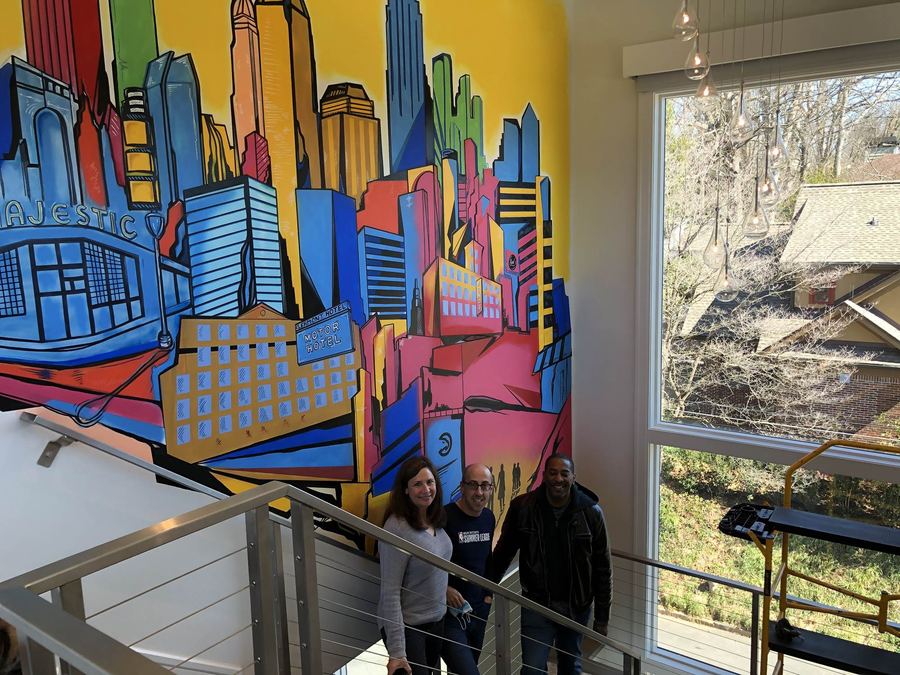
Line art in a restrained palette suits research, healthcare and professional-services offices, where the wall should calm a room and still carry personality. Illustrated scenes suit a café or a collaboration space. Large skyline or neighborhood murals suit a lobby or a campus that wants to be part of Atlanta.
Brand review, built into the process
Corporate buyers rarely decide alone. A mural passes through brand, facilities, real estate, sometimes legal. We plan for that from the start. Send your brand guidelines with the request, and name one approver so the mockup has a single place to land. The artist works your colors, typefaces and tone into the design, and your team sees the result on a photo of the actual wall before any paint goes up.
Our process includes 2 revision rounds. The first mockup arrives within 5 business days of the deposit, which leaves room for a review cycle without pushing the install date. If your brand team needs a different format, such as slides or a PDF, tell us in the request.
Painting around a working office
The practical details of an occupied building decide whether a mural is painted smoothly or painfully. Tell us your building’s rules: freight elevator hours, badging, certificate-of-insurance requirements for building management, and any quiet hours. Painting is scheduled when the floor is empty, which often means evenings or weekends, and the quote accounts for it.
In finished interior spaces, say in your request if you need low-odor paint and daily clean-up, so it goes into the quote. A typical single wall takes from a few days to two weeks on site, depending on size, height and access. Painting usually starts within 4 weeks of approval.

A planning checklist for a corporate wall
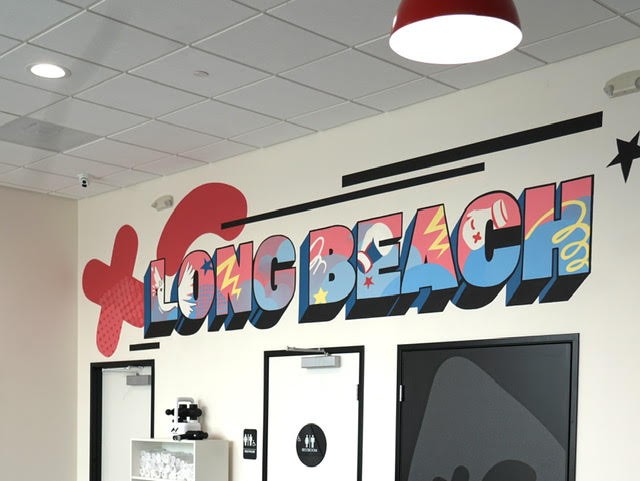
A short checklist at the start saves weeks later. Confirm who approves the design and who signs the contract, because these are often different people. Confirm whether the building owner or property manager must approve a change to a wall, especially in a leased space. Gather the brand guidelines, logo files and any words that must appear on the wall. Photograph the wall straight on, and measure it, including any doors, windows, vents or fixtures.
Next, decide the purpose. A mural that welcomes visitors is designed differently from one that gives a team its own neighborhood on a large floor. Say which you want, and what you want people to feel when they walk past it. Finally, set a rough date. If the mural must be finished before an event, a move-in or a client visit, say so in the request, and we will tell you in the quote whether the date is realistic.
Corporate mural art pricing in Atlanta
Pricing follows wall size. A reception or logo wall in the accent range (up to 50 sq ft) typically runs $2,500–$6,000. A café, break-room or meeting-room wall in the feature range (51–150 sq ft) typically runs $6,000–$12,000. An atrium, stair or long corridor in the statement range (151–400 sq ft) typically runs $12,000–$25,000. A headquarters exterior or a multi-floor program in the landmark range (over 400 sq ft) is priced per project.
Height, lifts, coatings, permits and after-hours work move the number. Insured artists, commercial-grade materials and a mockup are always included. Your quote is one written, all-in price. Your $750 design deposit starts the mockup and is applied to your final price.
Procurement, insurance and ownership
Corporate buyers need the paperwork to be clean. We can be set up as a vendor: send your vendor forms with the request, and we provide a W-9 and a certificate of insurance and invoice against your purchase order. ACH is the default, cards are accepted at the same price with no surcharge, and net terms are available for approved accounts. On our jobs, $1M general liability; we add you as additional insured, and the certificate arrives before anyone is on site.
Two questions come up on almost every corporate job. The first is ownership. The artist keeps the copyright, and your contract licenses the mural for display at your location and in photos and marketing of it. The second is what happens if the company moves. The mural stays with the wall, and the contract covers painting over or removing it later, with a written waiver from the artist for that wall.
Make it a team project
Some companies turn the install into an event. An artist can run a paint day where staff fill in a section of the wall, which gives the team a share in the result. Ask for it in the request so it is priced and scheduled properly, because it changes the setup and the safety plan.
To plan a wall, read about office and lobby murals, see custom murals in Atlanta for how a design is developed, or hire an Atlanta muralist with confidence using our buyer’s guide. When you are ready, tell us about your wall. The 48-hour clock starts once we have your wall size and a photo or rough dimensions; weekends and holidays don’t count.