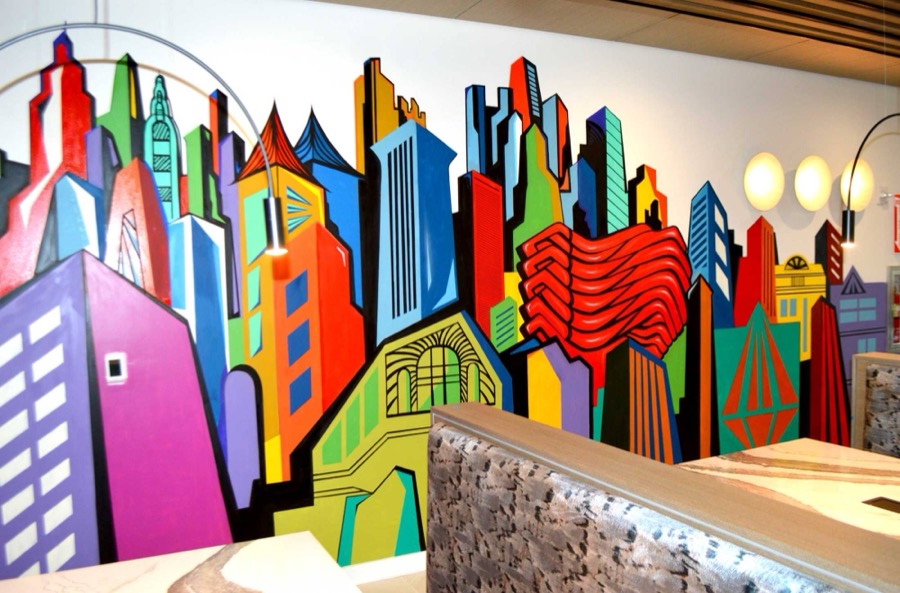
A neighborhood of tall buildings and long walls
Midtown has less street frontage than most Atlanta neighborhoods, because so much of it is built upward. The walls that matter are often inside: a lobby behind a concierge desk, a corridor to the elevators, an amenity floor, a conference-floor stairwell. Outside, the large painted surfaces tend to be the sides of parking decks and the blank faces of buildings that were built to face a street, not a viewer.
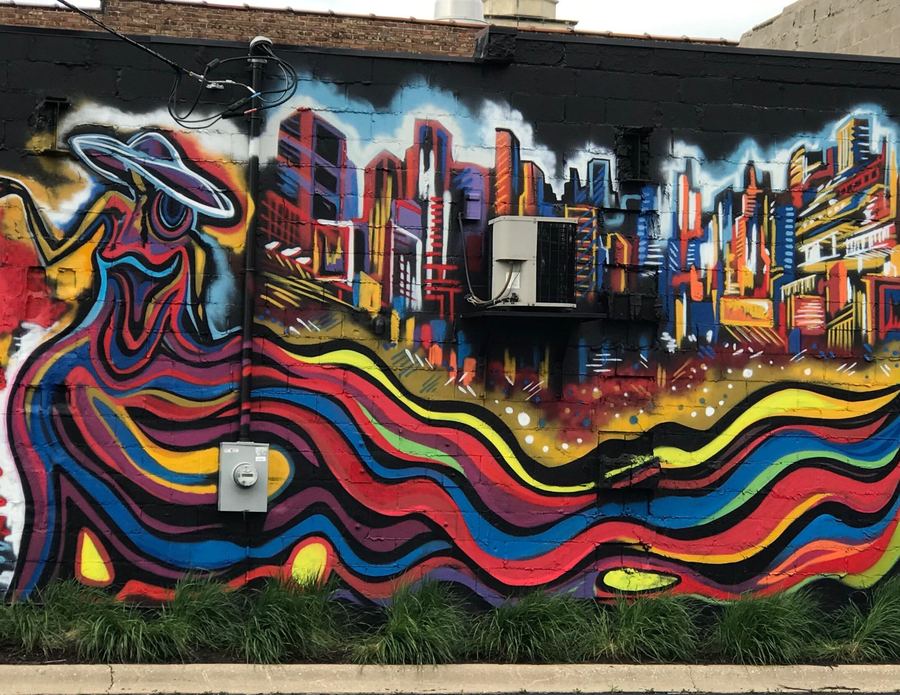
That affects the design. Inside a tower, a mural is seen by the same residents or employees every day, so it should hold up to repeat viewing. Outside, a garage or tower wall may be seen from a freeway ramp, a train platform or a block away, so scale and contrast carry more weight than fine detail. We help you pick the right approach for the wall in front of you.
Who commissions murals in Midtown
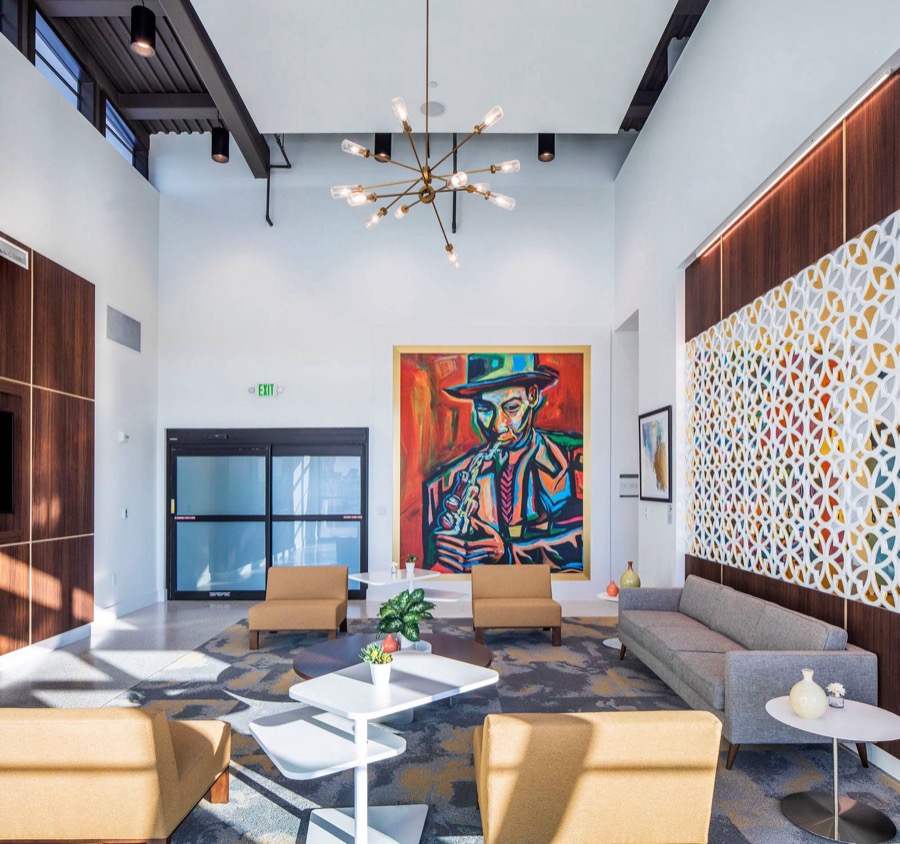
Midtown buyers are mostly institutional. Property managers want a lobby or amenity wall that makes a tower feel current and helps in a leasing tour. Companies want a mural for a headquarters or a satellite office, something that gives the workplace a point of view and gives employees a place to meet. Hotels want a lobby or bar feature. Developers want a garage or a ground-floor wall that reads as part of the neighborhood.
These buyers share a way of working. There is a landlord or an asset manager to approve the design, a building engineer who controls access, and a purchase order or vendor form before the work starts. We are used to all three. Send the contact for building operations with your request and we will line up the paperwork, schedule and certificate of insurance with them.
Working inside an occupied building
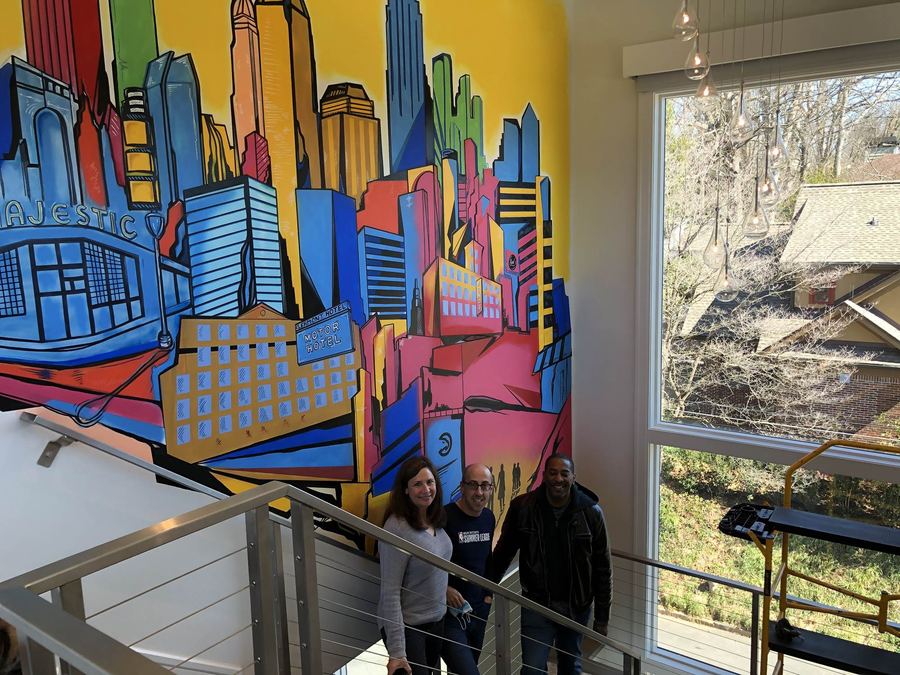
Most Midtown murals are painted while the building is open. That means a plan: protective drop cloths and floor covering, low-odor paint for interior walls, work in the early morning or at night, and a clear route for staff and deliveries. A lobby wall may be painted in sections behind a temporary barrier, and a stairwell may be closed in turns, not all at once.
Freight elevators, loading-dock hours and building rules often decide the schedule more than the painting does. Tell us the access windows in your request, and whether a union or building engineer must be present. If equipment such as a lift or scaffold is needed for a tall wall, the quote lists it, along with who supplies it and what the insurance covers.
Approvals and building standards
In a managed building the owner’s written approval comes first, and a tenant usually needs it before commissioning anything on a common wall. Many towers also have design guidelines for signage and public areas, so a mural that includes a logo or a company name may need extra sign-off. Exterior walls that face public property can need a courtesy review or a permit, and some sit in design-review areas.
We cover the common questions in our guide to mural permitting in Atlanta neighborhoods. Send the address and the landlord’s contact with your request, and the quote notes the approvals we expect. If a lease requires proof of insurance, $1M general liability; we add you as additional insured, and the certificate arrives before anyone is on site.
Choosing a style for a corporate or residential tower
Buyers often start by asking for Atlanta. A skyline, a map, a nod to Piedmont Park or a pattern drawn from the neighborhood grid are safe choices, and they work for visitors from out of town. If you want something more particular, a custom illustration, an abstract piece in your brand colors or a portrait series about the people in the building gives the space its own identity. A good artist can handle all of these.
Tell us how the room is used. A quiet reception area calls for calmer color than a break room, and a stairwell can take bold pattern that a lobby cannot. Send photos of the wall in the light you see most often, plus a few images you like. You see a mockup on a photo of the actual wall within 5 business days of the deposit, with 2 revision rounds included.
What a Midtown mural costs
Price follows wall size. An accent wall of up to 50 sq ft, such as a reception back wall, typically runs $2,500–$6,000. A feature wall of 51–150 sq ft, common for lobbies and amenity floors, typically runs $6,000–$12,000. A statement wall of 151–400 sq ft, such as a full corridor or a garage face, typically runs $12,000–$25,000. A landmark wall of over 400 sq ft typically runs from $25,000.
Height, lifts, coatings, permits and after-hours work move the number. Insured artists, commercial-grade materials and a mockup are always included. Height and lift needs matter most on tower walls. Your quote is one written, all-in price. Your $750 design deposit starts the mockup and is applied to your final price. Painting usually starts within 4 weeks of approval.
Next steps
To see how other neighborhoods compare, read our pages on Westside murals and Buckhead murals, or the pages for office murals, apartment murals and hotel murals. For a walking list of what is painted here today, see our Midtown mural map.
When you are ready, tell us about your wall. The 48-hour clock starts once we have your wall size and a photo or rough dimensions; weekends and holidays don’t count.