What makes a mural custom
A custom mural begins with your wall and your purpose, not with a stock image. The artist designs it for the exact dimensions, the architecture around it, the light it gets and the people who will see it. The result fits the wall the way a tailored jacket fits a person: edges, windows, doors, vents and corners are all part of the design instead of obstacles to it.
Custom does not mean complicated. A simple, strong design in three colors can be fully custom. What matters is that it was made for the space. That is why custom murals in Atlanta range from a single graphic wall in a lobby to a full illustrated scene covering a building side.
Custom work comes in many forms
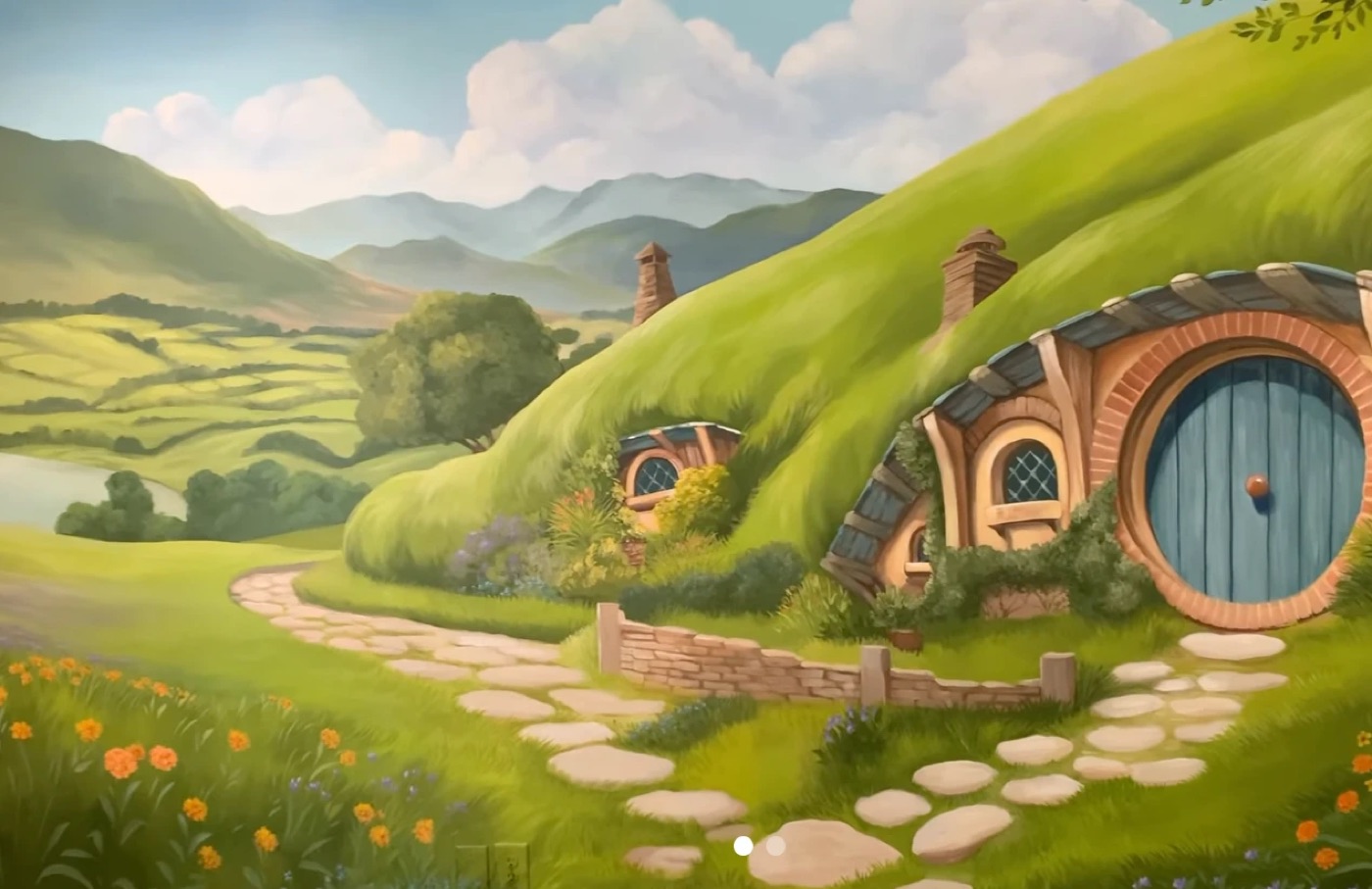
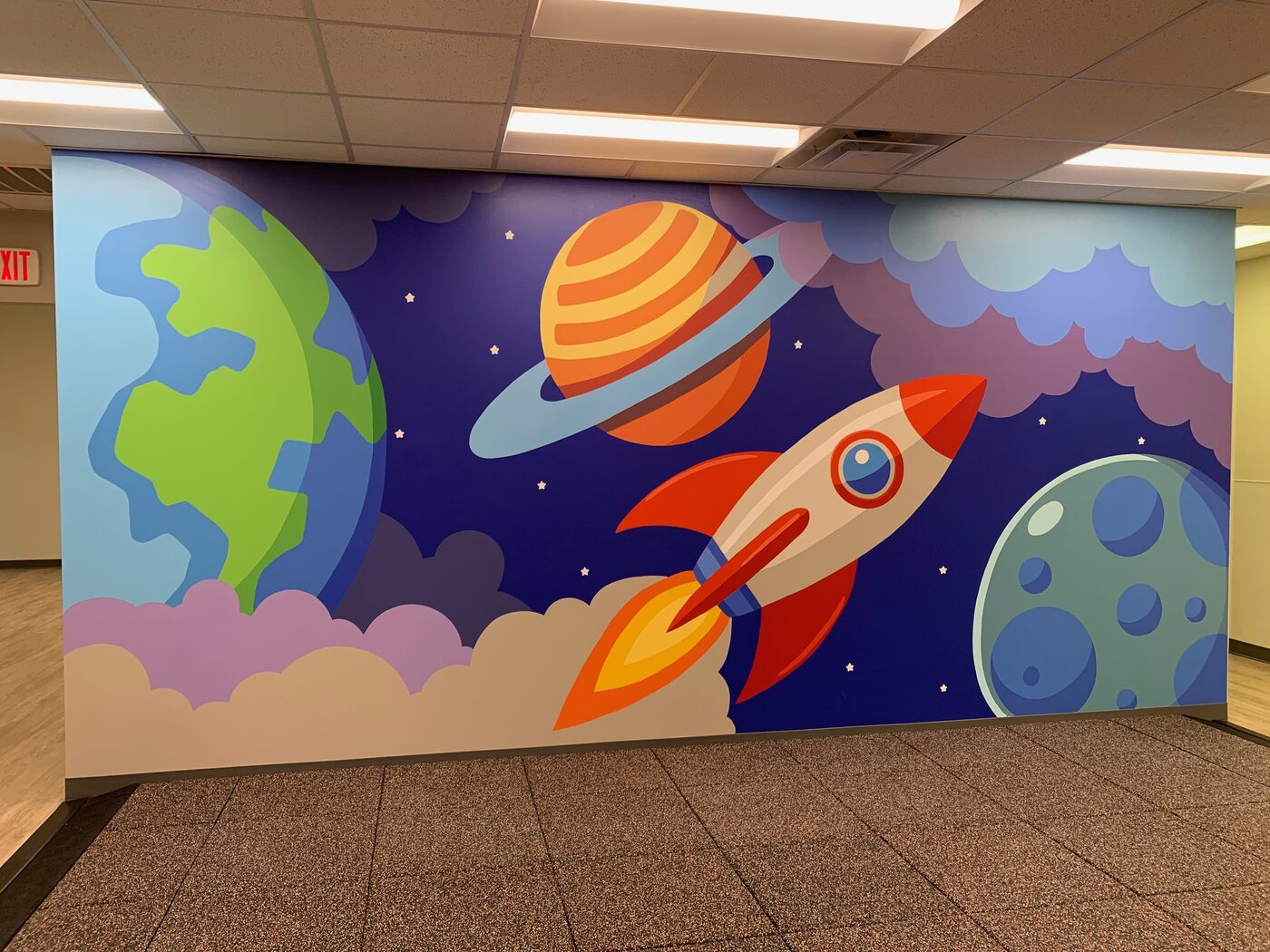
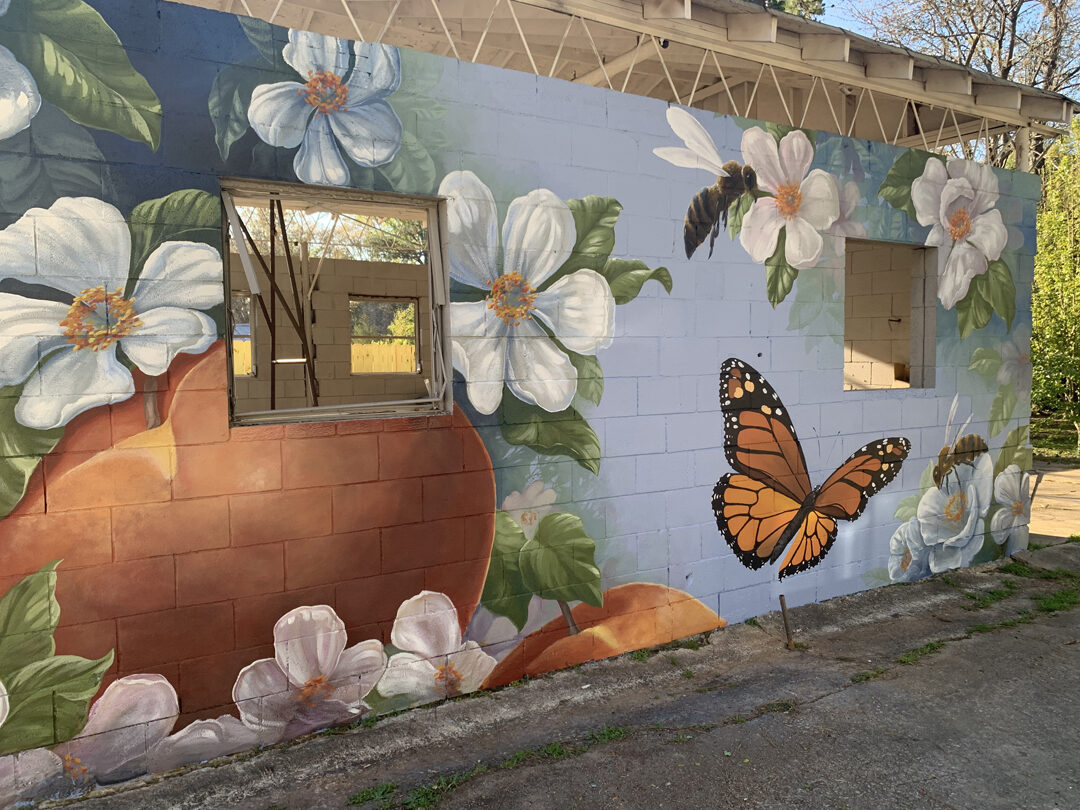
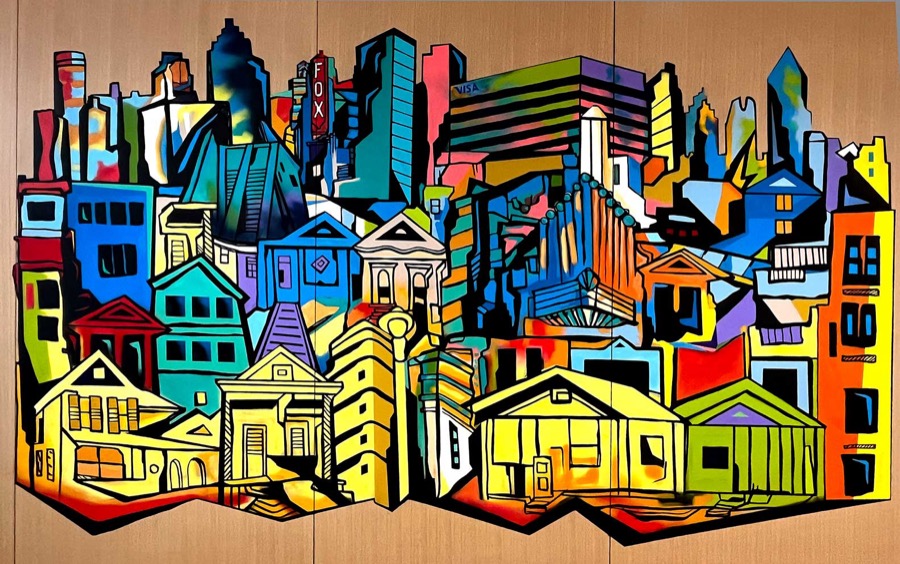
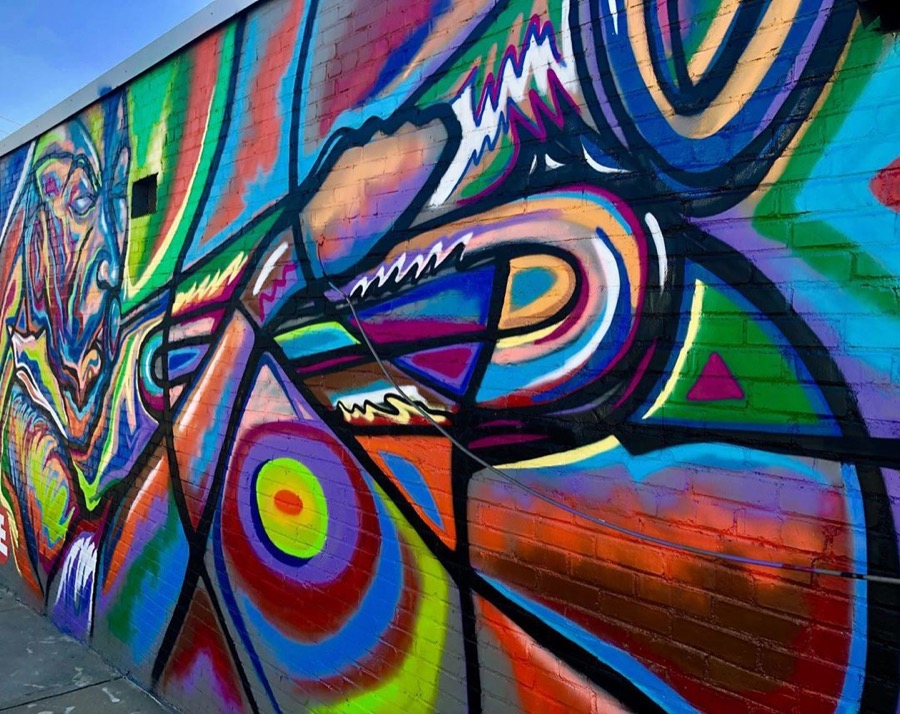
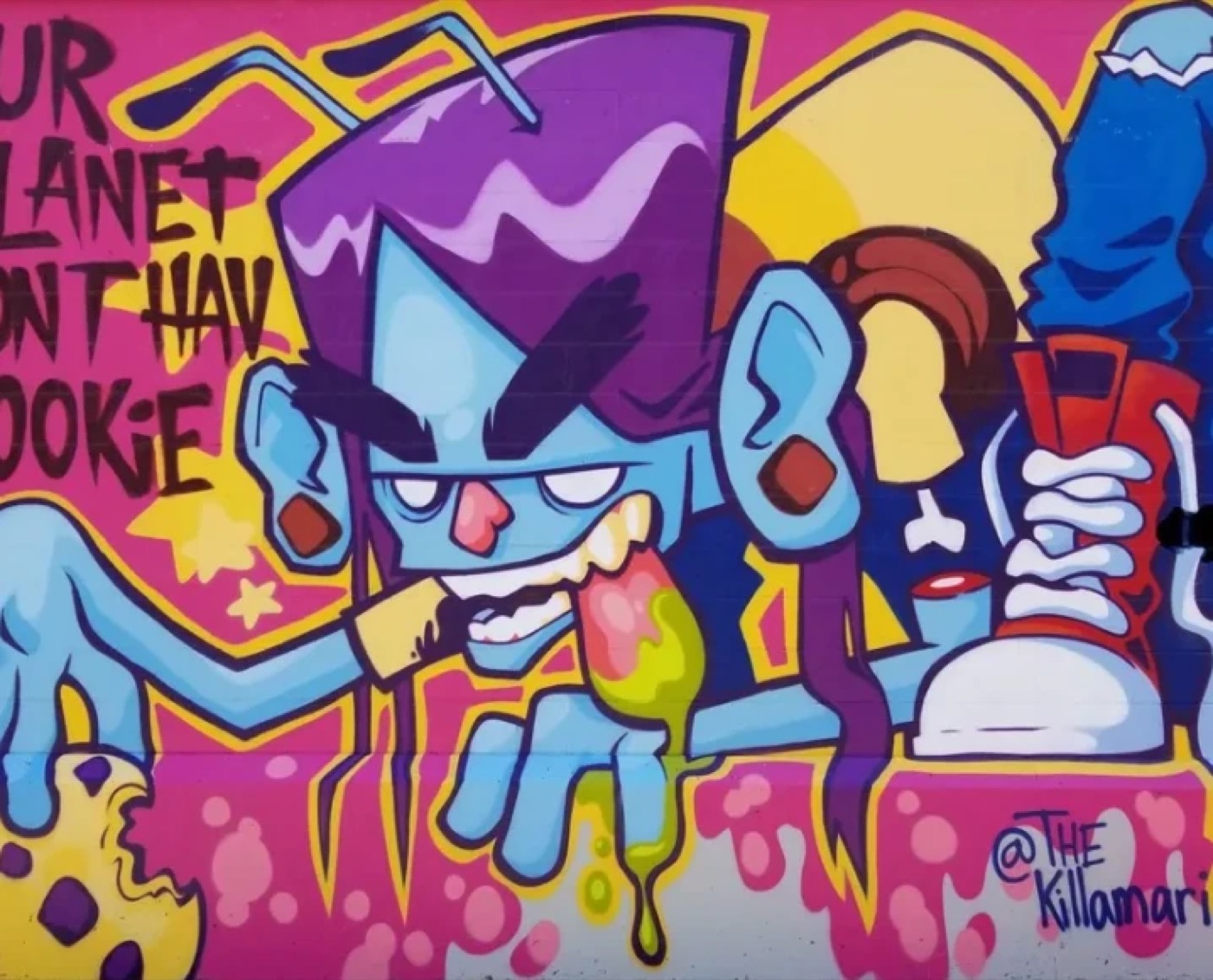
The best way to see what custom can mean is to look at what Atlanta artists have painted. A children’s space might get a storybook landscape or a rocket among the planets. A music-themed room might get a line-art guitar and piano. An outdoor wall might get magnolias and peaches in a repeating block pattern. A community space might get a long retaining wall of portraits and flowers.
Each of these started as a short conversation: what is the room for, who uses it, what should they feel. From there the artist develops a concept, and you see it on your wall before paint is opened.
Ideas for what a custom mural can show
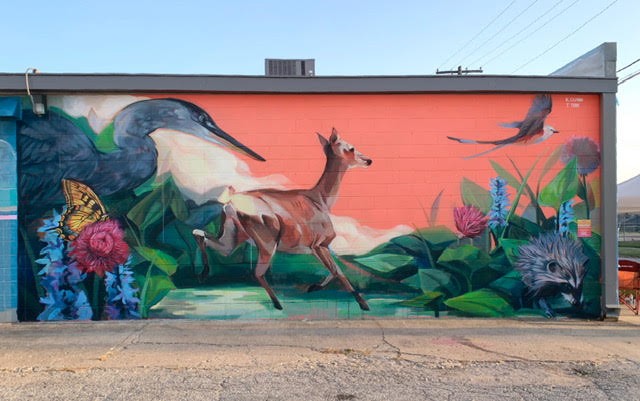
If you are not sure what to put on the wall, start from the place. Atlanta offers plenty to work with: the skyline, a neighborhood’s houses and porches, magnolias and peaches, music and dance, local history, the BeltLine and the trees that give the city its canopy. A mural can celebrate the street it is on, so that people nearby see something of their own place on the wall.
Start from the business, too. A mural can carry a company’s values, tell the story of how it began, or hold an image that has nothing to do with the logo but captures the mood of the brand. Start from the people who use the space, whether children, patients, residents or customers. A pediatric office wants something different from a taproom, and a mural that respects that difference works harder.
Finally, start from what the wall needs to do. A mural can draw people toward an entrance, hide an unattractive surface, add color to a plain corridor, or give a long wall a rhythm. When the purpose is clear, the design usually follows.
Whatever the subject, scale matters. A design that looks balanced on a laptop screen can feel crowded or empty at twenty feet. That is why the mockup is placed on a photo of your wall, and why we ask for a straight-on photo and rough dimensions. Seeing the image at true proportion is the surest way to catch a problem before it is painted.
Step one: a short brief
You do not need a finished idea. A short brief is enough: where the wall is, how large it is, what the space is used for, and a few words about the feeling you want. Photos of the wall help most, one straight on and one from across the room or street. Rough measurements are enough.
Add anything you already know. A color palette, a logo, a local landmark that matters to you, a design you saw and liked, a subject to avoid. Constraints help an artist as much as freedom, and they keep the design on track for approval.
Step two: a fixed quote, then a mockup on your wall
We read your request, match the wall to a vetted artist and send one written, all-in price within 48 hours of a complete request. The 48-hour clock starts once we have your wall size and a photo or rough dimensions; weekends and holidays don’t count.
After you accept and pay the deposit, the first mockup arrives within 5 business days. It is placed on a photo of your actual wall, so you see scale, color and position as they will be, not as a flat image on a screen. This is the moment most buyers say, “I can see it,” or “move that to the left.” Either is the process working.
Step three: revisions and approval
Two revision rounds are included, and that is enough for nearly every wall. Common changes are color shifts, moving a figure, adjusting where a logo sits, and simplifying a detail that will not read from a distance. Ask for what you need. If a change would take the design somewhere very different, tell us early, because a new direction is easier to handle in the first round than the second.
Painting starts only after you approve the design. 2 rounds are included; an extra round is a flat $250.
What a custom mural costs in Atlanta
Custom does not change the price structure. Pricing follows wall size. An accent wall of up to 50 sq ft typically runs $2,500–$6,000. A feature wall of 51–150 sq ft typically runs $6,000–$12,000. A statement wall of 151–400 sq ft typically runs $12,000–$25,000. A landmark wall of over 400 sq ft starts at $25,000 and is priced per project.
Detail moves the number. Fine portrait work, dense illustration and photorealism take longer than bold shapes and flat color, so the same wall can price differently depending on the design. Height, lifts, coatings, permits and after-hours work move the number. Insured artists, commercial-grade materials and a mockup are always included. Your $750 design deposit starts the mockup and is applied to your final price.
Step four: painting and the walkthrough
Painting usually starts within 4 weeks of approval, and most single walls take a few days to two weeks on site, depending on size, height, access and weather. We handle the contract, insurance paperwork and scheduling, so you have one contact throughout. When the paint is done, you walk the wall with the artist and sign off.
If you are still deciding who should paint it, read about how to hire an Atlanta muralist, see the range of styles in our Atlanta mural artists for hire, or look at corporate mural art and restaurant murals for examples by space. When you are ready, tell us about your wall.