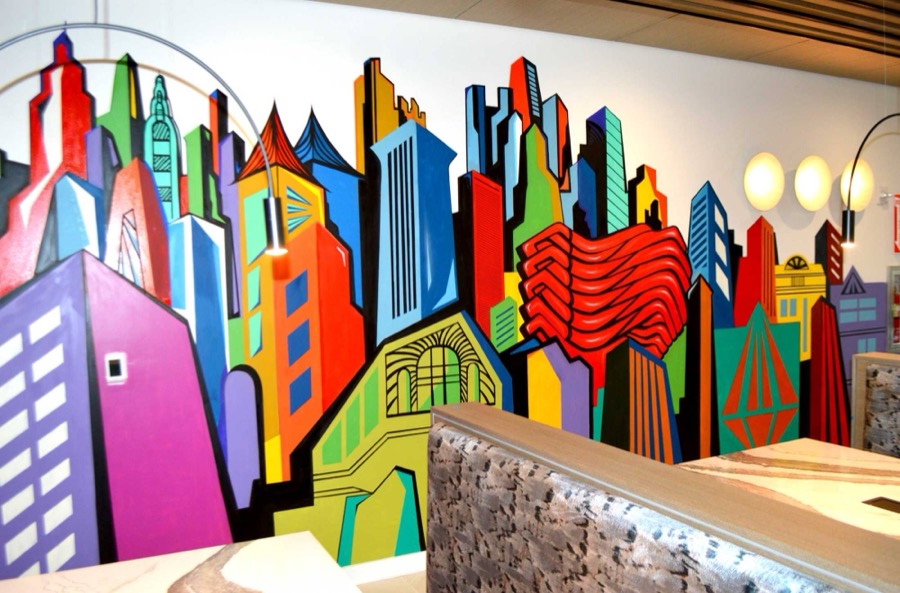
What a mural does for a hotel
Travelers can find a clean room anywhere. They choose and remember a hotel for its character, and a local mural is one of the fastest ways to give it some. It shows the property cares about the neighborhood, it separates a franchise from the next one down the road, and it supplies a backdrop that guests share on their own accounts. For independent and boutique hotels, a mural can be the signature of the property.
Hotels also use murals to solve problems. A long corridor with nothing on it feels like an institution. A windowless meeting room feels like a basement. A bare wall behind a bar feels unfinished. A mural turns each of these into an asset, usually for less than a renovation. It can be changed later by painting over it, which is simpler than replacing furniture or flooring.
Where murals go in a hotel
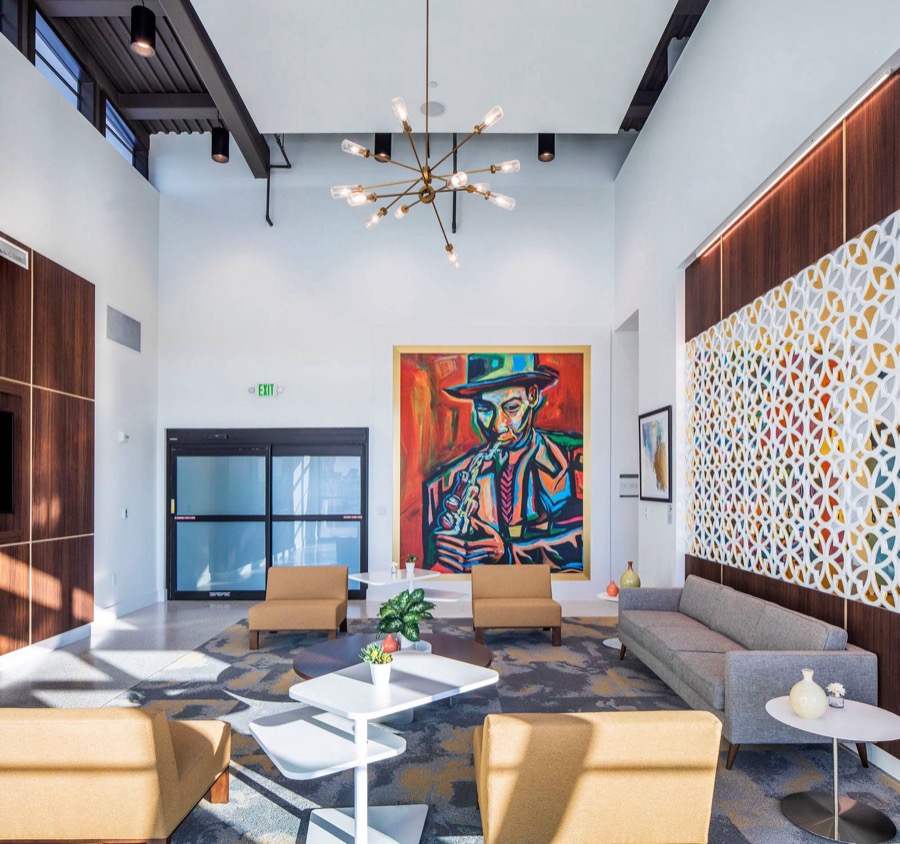
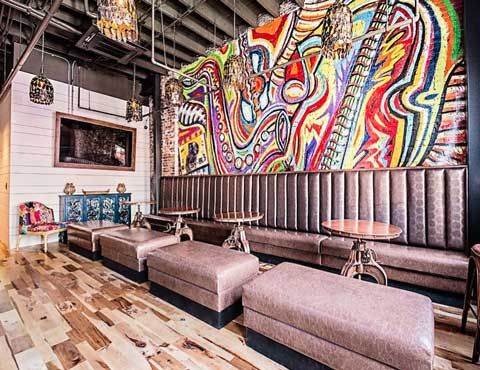
The lobby is the first choice: the wall behind the front desk, the feature wall by the seating area, or the wall facing the entrance. The bar and restaurant come next, where a mural can set the mood and carry the concept. Corridors can take a mural at each elevator landing, which helps guests find their floor. Ballrooms and meeting rooms can take a feature wall that works as a backdrop for events.
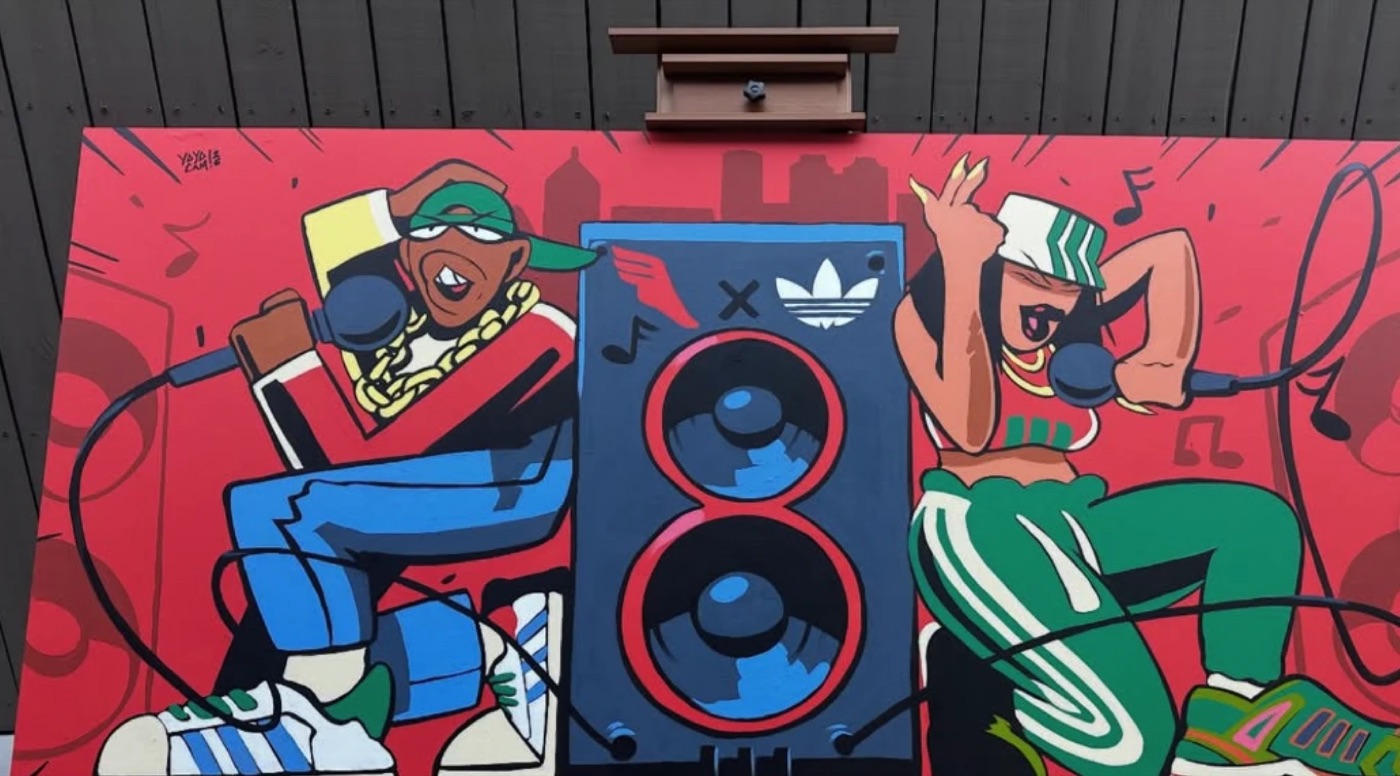
Guest rooms are a smaller but growing use: a painted headboard wall gives each room a local touch, and a set of artists can give each floor a different theme. Exteriors are also common. A street-facing wall, a pool deck wall or a garage face can announce the hotel to passersby and give guests a photo spot outside. We help you decide which walls matter most, so you start where the return is highest.
Painting around guests, floor by floor
A hotel never fully closes, so painting is planned around occupancy. Lobby and bar walls are painted overnight or in sections behind a barrier. Corridor and room walls are painted floor by floor, with the floor taken out of service for the work, which suits renovation phases. Low-odor paint and ventilation protect guests and staff, and floors and furniture are covered.
Give us the occupancy calendar. Slow weeks, planned renovations and the start of a new season are the best times, and a convention or a major event is the worst. Most lobby feature walls take a few days on site, and a set of corridor walls scales with the number of floors. We build the schedule with your general manager and your engineer, so work is finished before the next busy period.
Brand standards, franchise approvals and ownership
If the hotel flies a flag, the brand may have standards for art in public spaces, and a franchise owner may need approval before painting. Ask early whether there is a brand design review, who signs it and what it covers. Some brands have a list of approved artists or require specific content rules, and some are open to local art that fits the property’s story.
Send the approver’s contact with your request. We prepare the mockup on a photo of the actual wall, which is what brand reviewers need to say yes, and 2 revision rounds are included in the price. The contract licenses the mural for display at your property and in photos and marketing of it, and the artist keeps the copyright. If you want to use the artwork on merchandise or signage, say so at the start so the license can cover it.
Insurance, safety and paperwork
Hotels have strict vendor requirements. $1M general liability; we add you as additional insured, and the certificate arrives before anyone is on site. If your company, your management group or your lender requires specific wording or limits, send them with the request. Invoices can carry your purchase order number, and payments follow milestones, which suits hotel accounts payable.
Safety planning covers lifts, ladders, barriers and fire exits. Painting near an elevator lobby or a stairwell means keeping exits clear and signage in place. For tall lobby walls or exterior work, the quote lists the equipment and who provides it. Painting usually starts within 4 weeks of approval, and the mockup arrives within 5 business days of the deposit.
What a hotel mural costs in Atlanta
Price follows wall size. An accent wall of up to 50 sq ft, such as a headboard wall or a bar niche, typically runs $2,500–$6,000. A feature wall of 51–150 sq ft, the usual size for a front-desk or lobby wall, typically runs $6,000–$12,000. A statement wall of 151–400 sq ft, such as a long corridor or a ballroom wall, typically runs $12,000–$25,000. A landmark wall of over 400 sq ft, such as a building side or a garage face, typically runs from $25,000.
Height, lifts, coatings, permits and after-hours work move the number. Insured artists, commercial-grade materials and a mockup are always included. Your quote is one written, all-in price. Your $750 design deposit starts the mockup and is applied to your final price. If you manage several hotels, tell us in the request and we can plan the set together.
Next steps
Read our page on restaurant and hospitality murals and the longer article on restaurant murals in Atlanta if the hotel has a bar or a restaurant. For district detail, see Midtown murals and Buckhead murals.
When you are ready, tell us about your hotel. The 48-hour clock starts once we have your wall size and a photo or rough dimensions; weekends and holidays don’t count.