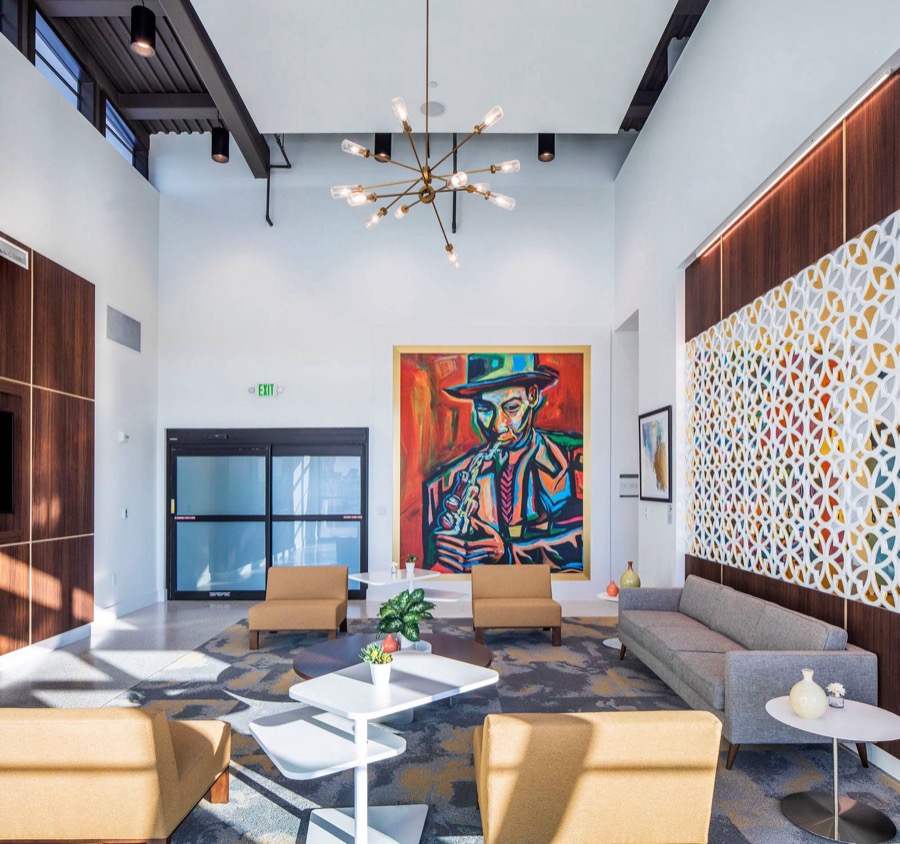
Why companies commission office murals
Offices compete with home. When people have a choice about where to work, the workplace has to give them something a kitchen table cannot. Art is a quick, visible signal that the space was designed for people, and a mural is the most direct kind: it fills a wall, it cannot be mistaken for a poster and it cannot be carried out the door. Companies use murals to welcome visitors, to mark a team’s floor and to tell a story about their brand without a slide deck.
There is a recruiting angle too. A candidate on a tour remembers the mural in the reception area, and photographs it. A new hire posts a picture on their first day. Workplace-experience teams often say the mural is the part of a renovation that employees mention most. It is a modest part of the budget compared with furniture or flooring.
The walls that work best
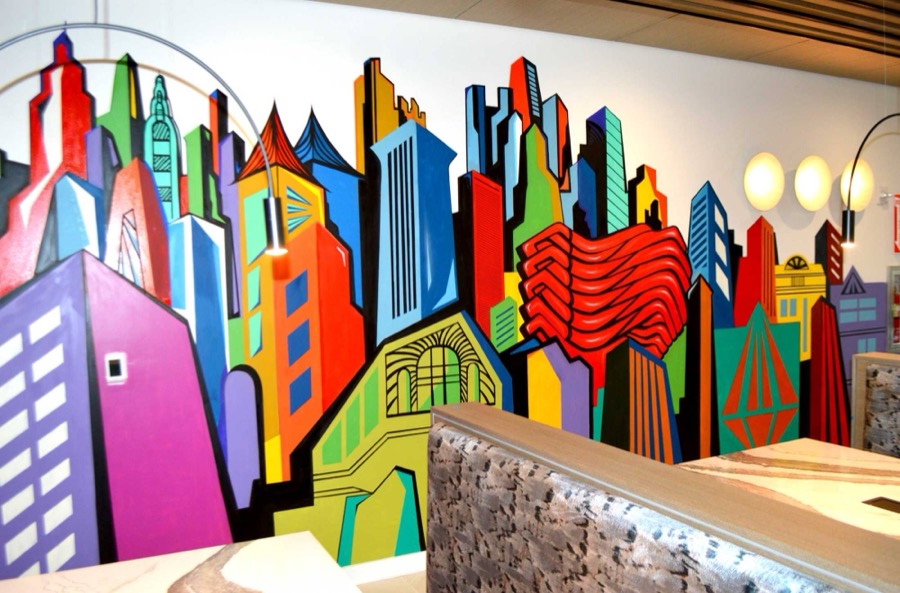
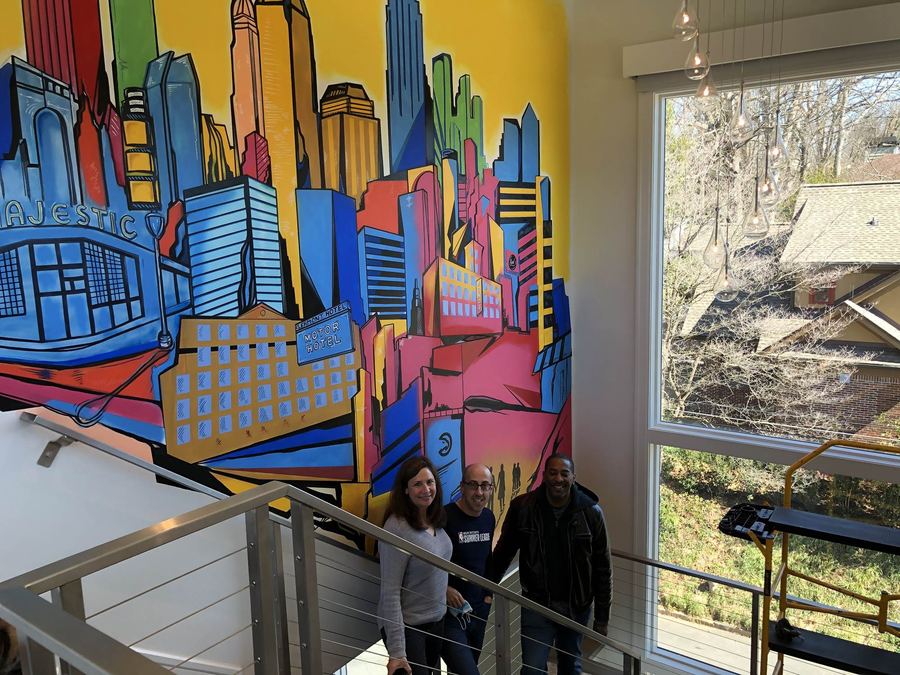
Reception is the first choice, because everyone sees it. A wall behind the desk or opposite the elevators sets the tone for the office. Next are the places where people gather: the break room, the café area, the town-hall space and the cluster of collaboration rooms. Stairwells are underrated. People move through them slowly and talk, and a painted stairwell becomes a landmark within the building.
Long corridors and open floors take murals well when a wall gives the eye something to follow. Behind a row of desks, a mural can be too busy, so we often recommend calmer color for quiet work areas and bolder color for shared spaces. Tell us how each room is used and we will suggest walls and designs to match.
Painting in a working office
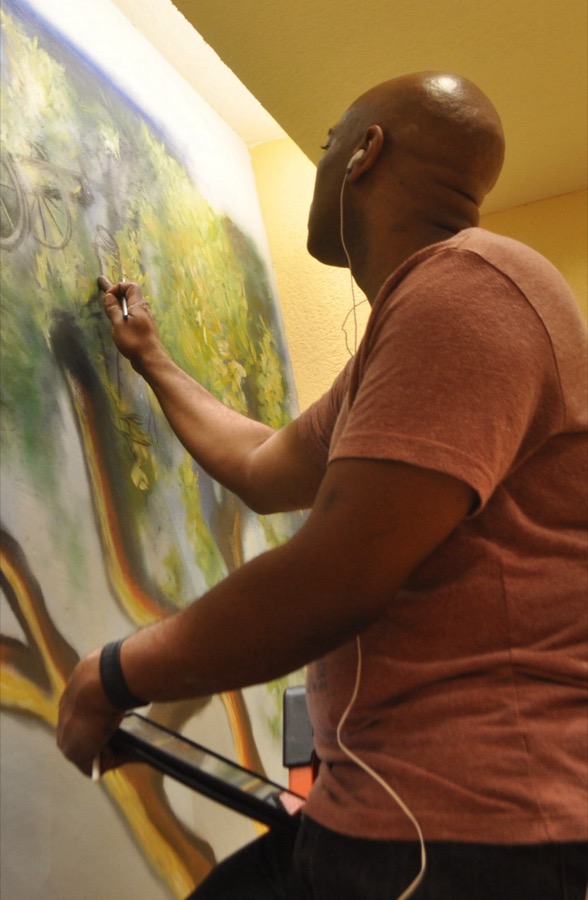
Most office murals are painted with the office open, so the plan matters. Painting is done early in the morning, in the evening or over a weekend, with floors and furniture covered and the area closed off. We use low-odor paint for interior walls, and ventilation is arranged with building operations. A single reception or break-room wall is often finished in a day or two of on-site work.
Ask your facilities lead for the building’s rules. Many towers limit after-hours access, require a certificate of insurance naming the landlord and need a freight elevator reservation. $1M general liability; we add you as additional insured; we send the certificate before anyone is on site. Put the building contact in the request and we will arrange the details with them, so your team does not have to coordinate the crew.
Using your brand without making it an advertisement
Most office murals say something about the company without shouting its name. A brand color palette, a pattern drawn from a product, a scene from the company’s history or a design inspired by the city or the industry all work. A logo can be built in subtly, or placed on its own wall. The best results come from a clear brief about what the space should feel like.
Send your logo files, brand colors and any brand guidelines. If there is a style guide, we pass it to the artist. You see a mockup on a photo of the real wall within 5 business days of the deposit, with 2 revision rounds included, so your brand and facilities teams can review before any paint goes up.
Landlords, leases and approvals
If you lease, check the lease. Many leases require the landlord’s written consent to alter walls, and some require the wall to be restored when you move out. Painting over a mural at move-out is simple but has a cost, and it is worth discussing at the start. Ask the landlord about it in writing and send us what they say.
If the wall is exterior or visible from public property, there may also be permit or design-review questions. Our guide to mural permitting in Atlanta neighborhoods explains what to check. Send the address with your request and the quote lists the approvals we expect.
What an office mural costs in Atlanta
Price follows wall size. An accent wall of up to 50 sq ft, such as a reception back wall or a nook, typically runs $2,500–$6,000. A feature wall of 51–150 sq ft, the usual size for a reception wall or a break room, typically runs $6,000–$12,000. A statement wall of 151–400 sq ft, such as a long corridor or an open floor, typically runs $12,000–$25,000.
Height, lifts, coatings, permits and after-hours work move the number. Insured artists, commercial-grade materials and a mockup are always included. Your quote is one written, all-in price. Your $750 design deposit starts the mockup and is applied to your final price. Painting usually starts within 4 weeks of approval.
Next steps
Read more on the broader topic in corporate mural art in Atlanta and our page on murals for corporate offices. For building-specific details, see Midtown murals and Buckhead murals.
When you are ready, tell us about your office. Send a photo of the wall, the rough size and the building address. The 48-hour clock starts once we have your wall size and a photo or rough dimensions; weekends and holidays don’t count.