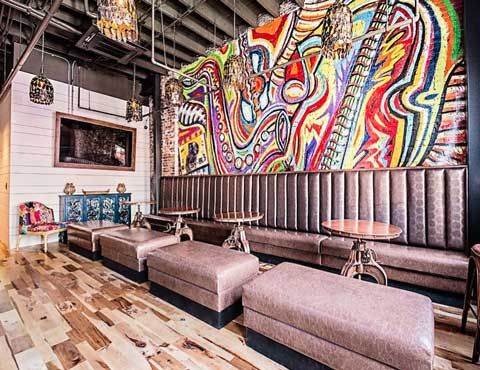
What a mural does for a restaurant
Restaurants compete on atmosphere as much as on food. A mural is one of the few investments that works on every guest, every night, and keeps working after the first week. It gives a dining room a point of view, fills a wall that would otherwise be bare, and creates a backdrop that guests share on their own accounts without being asked.
The strongest restaurant murals do three things. They fit the concept, so the wall and the menu feel like the same place. They work in the light the room actually has, whether that is warm evening light from lamps or bright afternoon sun on a patio. And they leave the space easy to use, with seating, service paths and signage working around the art instead of fighting it.
Match the style to the room
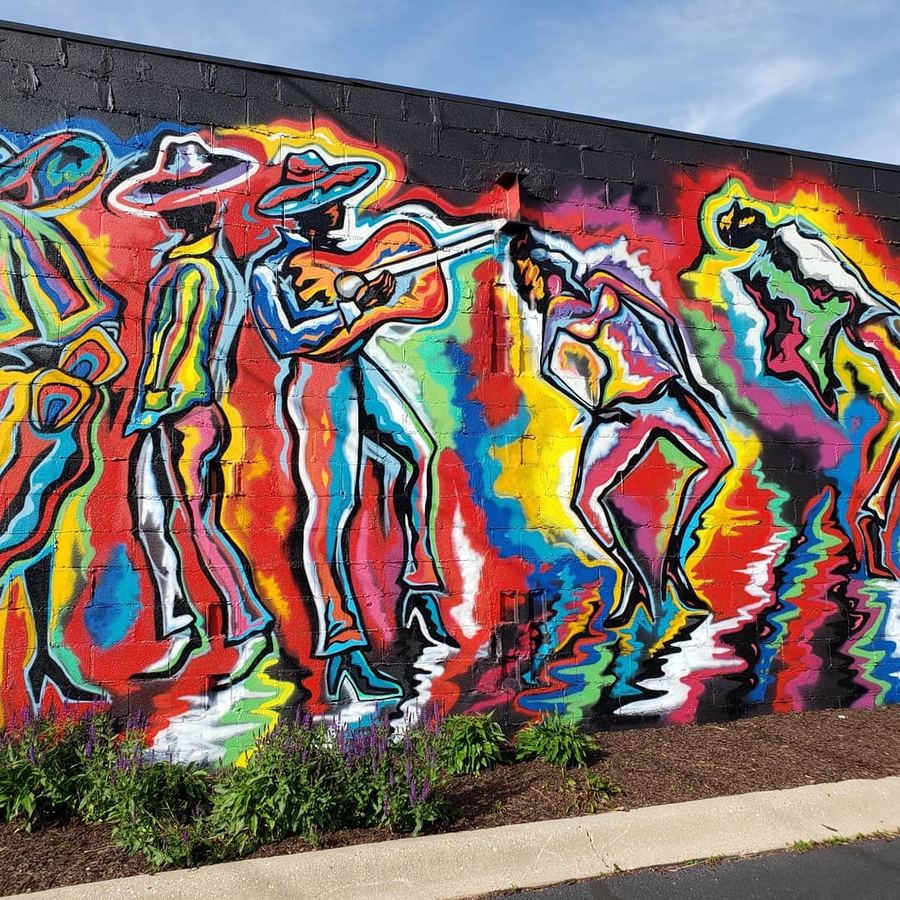
A bold, character-driven mural suits a taproom, a pizza counter or a late-night bar, where the room wants energy and a sense of humor. A more graphic or abstract wall suits a lounge or cocktail bar, where the art should add color without competing with the conversation. A realistic or illustrated scene suits a family dining room, a café or a bistro that wants warmth.
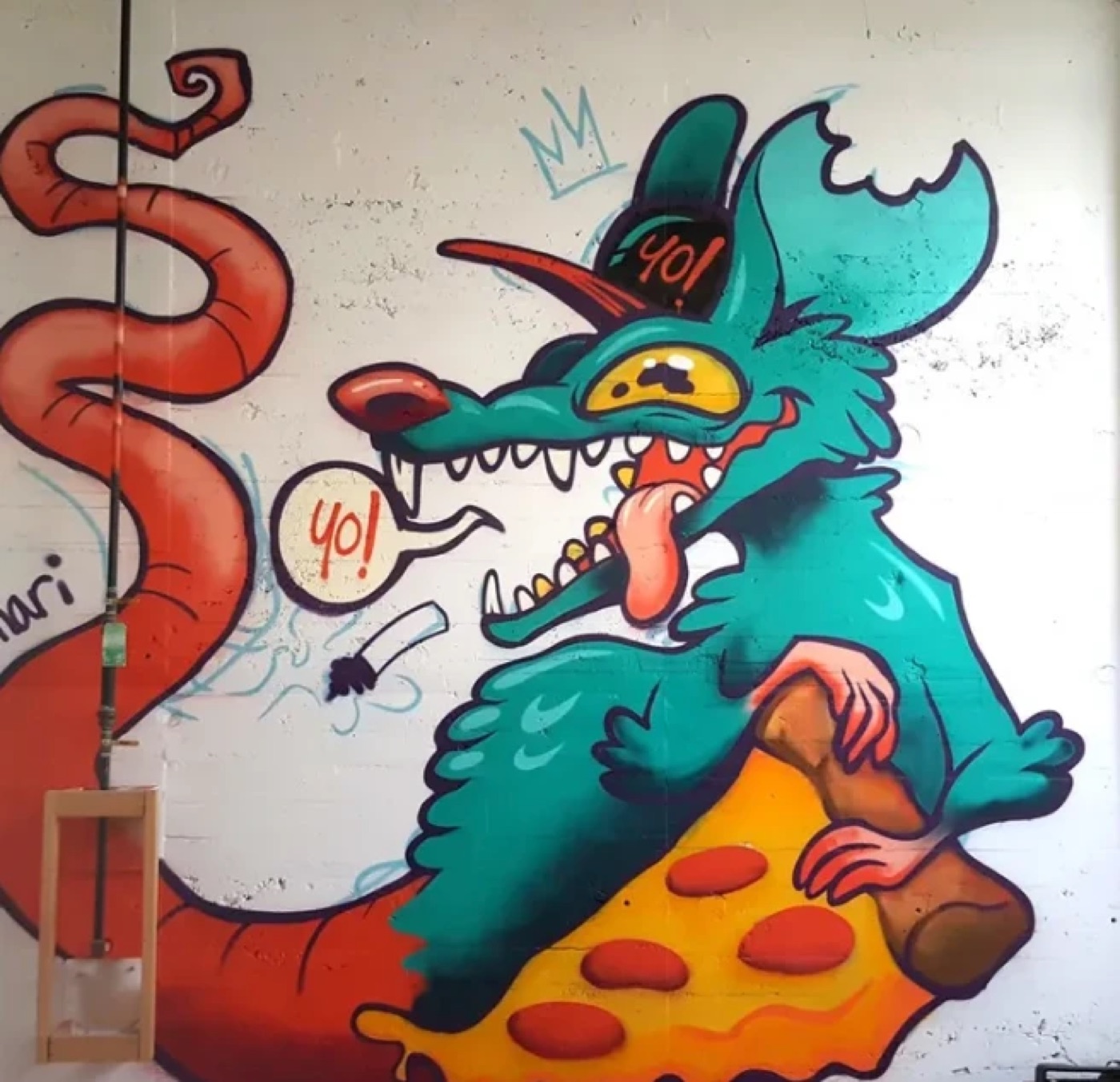
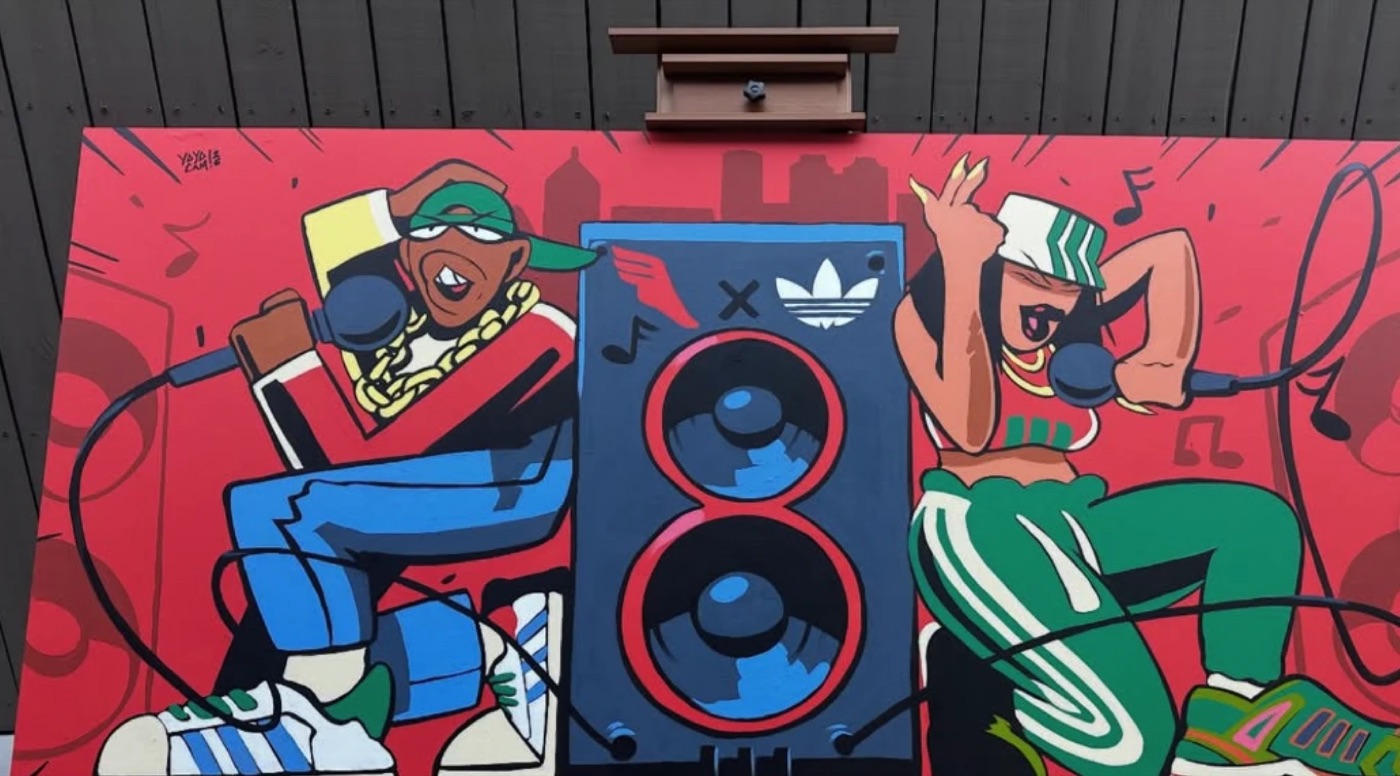
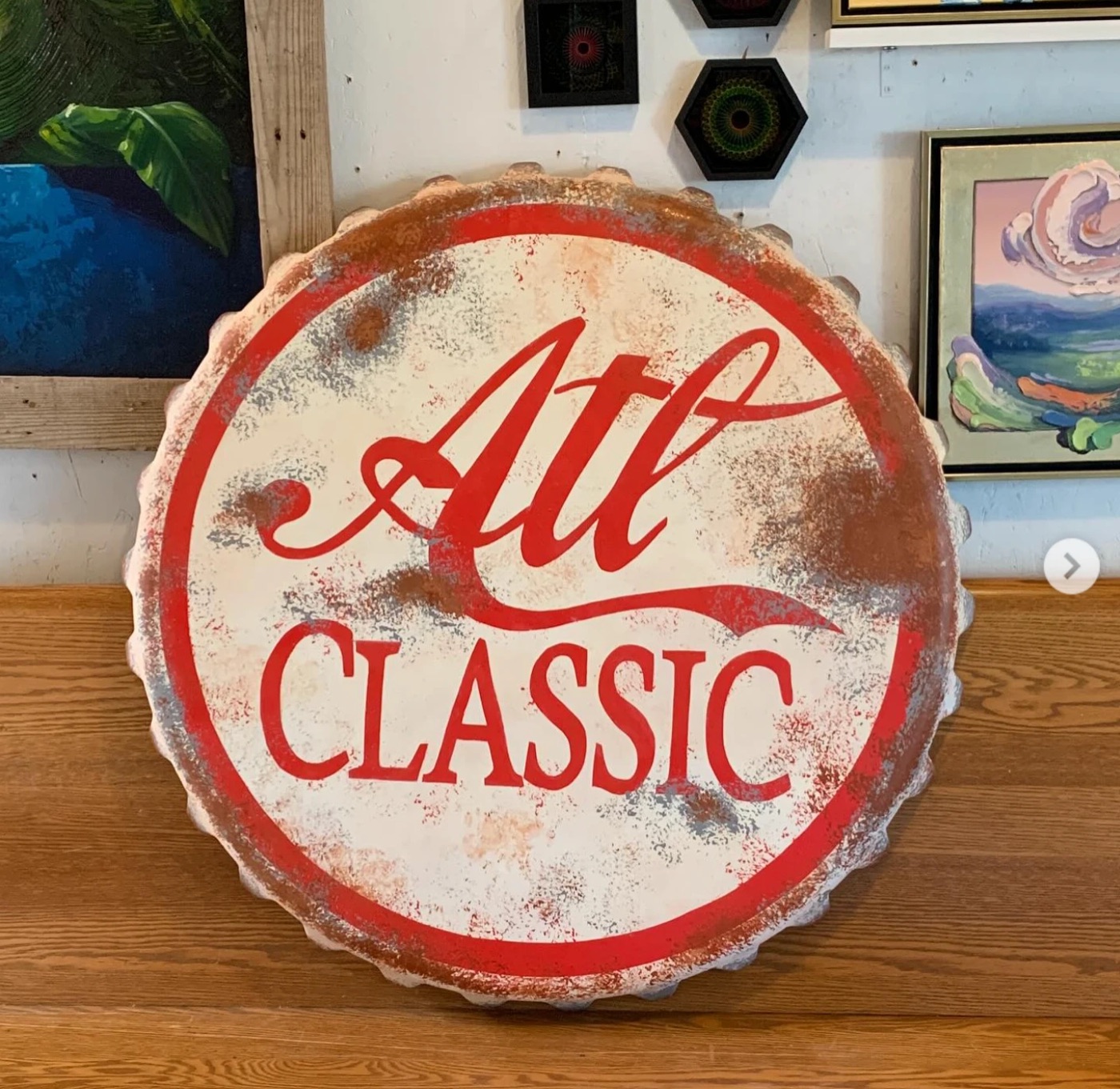
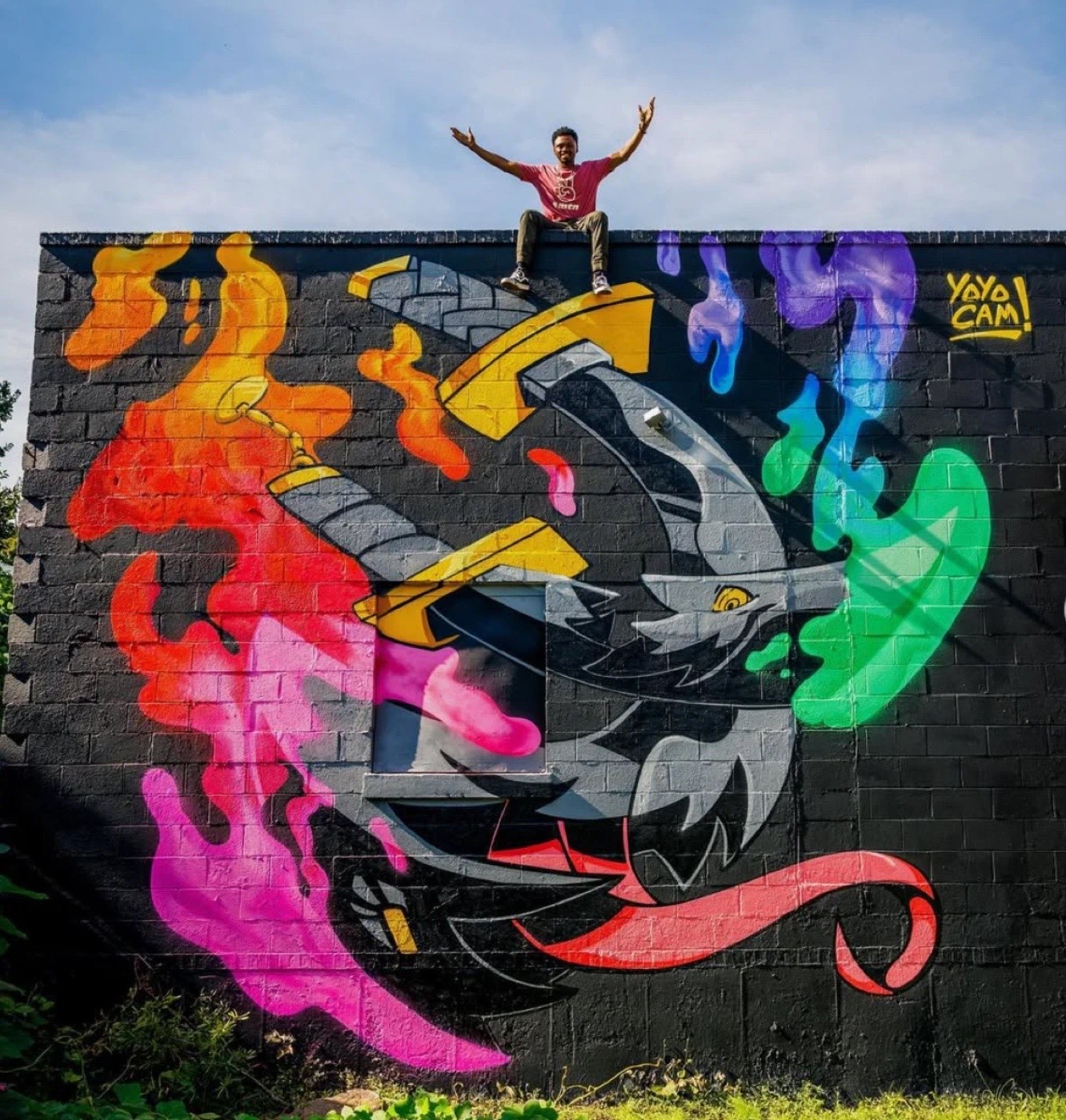
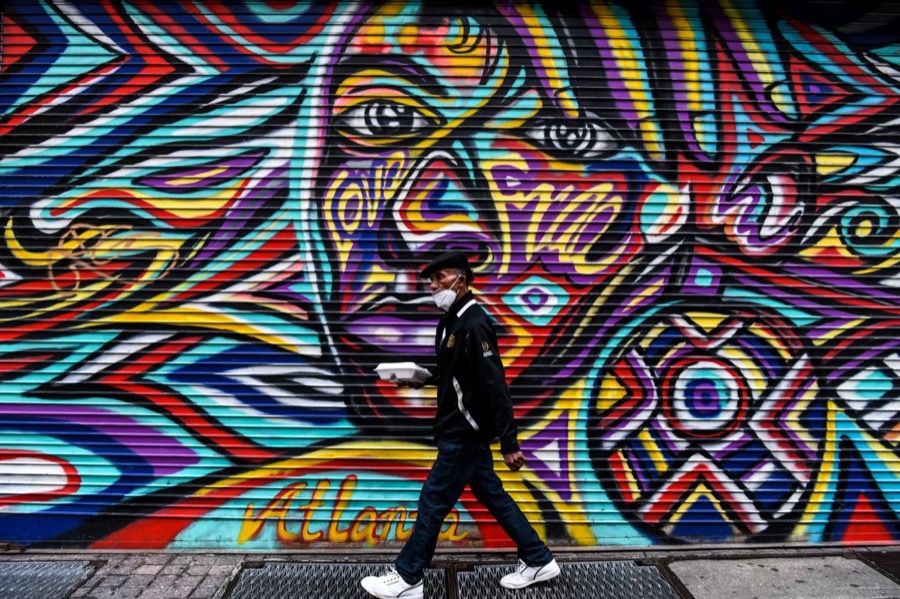
Atlanta artists work across all of these. Killamari paints playful characters, such as a pizza-slice rat with a pepperoni slice on white brick. YoYoCam paints hip-hop scenes with a boombox and dancers on a red wall, and spray-paint creatures on black brick. Anna Parker paints Atlanta-themed work, including a hand-painted ATL sign built around a classic bottle cap.
Interior walls, patios and exteriors
Where the mural goes changes how it is painted. An interior feature wall behind a bar or above booth seating is the most common request. It is viewed from a few feet away, so detail and finish matter. A patio wall faces the weather and the sun, so the paint, primer and clear coat have to be chosen for the surface and for Atlanta summers and storms. An exterior wall facing the street works as a sign, and it should read from the sidewalk and from a passing car.
The surface matters as much as the design. Raw brick drinks paint and needs sealing. Painted block, stucco and metal each take a different prep. Tell us the surface when you send the request, and add a photo of the wall in the light you see most often. For a patio or exterior wall, also tell us whether the wall faces the street, because a street-facing wall may need a coating that makes graffiti easier to clean.
Painting around service
A restaurant cannot close for two weeks. The good news is that most murals do not need it to. Painting is planned around your hours: early mornings before prep, the days you are closed, or overnight. Tell us when the room is quiet, how deliveries and staff move through the space, and which areas can be closed off. The quote accounts for the schedule.
Ask about odor and cleanup if guests will be nearby. A feature wall in a dining room is usually painted in a few days. A larger wall or a full wrap of a room can take up to two weeks on site, depending on size, height and access. Painting usually starts within 4 weeks of approval, which leaves time to plan an opening or a reopening around it.
Timing a mural with an opening or a refresh
Many restaurant murals are commissioned around a moment: a new location, a renovation, a rebrand or a seasonal reopening. If your date is fixed, work backward from it. The design needs to be approved before painting starts, and painting needs a clear window in the room. Allow time for the mockup, one or two revision rounds, and the on-site days, and keep a margin for weather if the wall is outdoors.
It is also worth deciding what the mural should do after the opening. Some owners use it as the visual anchor of their social accounts, their takeout packaging or their signage. If you plan to reuse the artwork in marketing, say so in the request. The contract licenses the mural for display at your location and in photos and marketing of it, and the artist keeps the copyright.
What restaurant murals cost in Atlanta
Pricing follows wall size. An accent wall of up to 50 sq ft, such as a wall behind the host stand or a corner of the patio, typically runs $2,500–$6,000. A feature wall of 51–150 sq ft, the usual size for a dining-room or bar wall, typically runs $6,000–$12,000. A statement wall of 151–400 sq ft, such as a full side of a building or a long patio wall, typically runs $12,000–$25,000.
Height, lifts, coatings, permits and after-hours work move the number. Insured artists, commercial-grade materials and a mockup are always included. Your quote is one written, all-in price. Your $750 design deposit starts the mockup and is applied to your final price. If you plan murals across several locations, tell us in the request, and we can plan the set together.
Brand, logo and menu: what to send
The more you tell us up front, the better the first mockup. Send photos of the wall, your logo files and brand colors, a few pictures of places or images you like, and a sentence about the feeling you want. If the mural will include your name or logo, say where it should appear and how large.
You see a mockup on a photo of your actual wall within 5 business days of the deposit, with 2 revision rounds included. Nothing is painted until you approve the design. On our jobs, $1M general liability; we add you as additional insured, and the certificate arrives before anyone is on site, which also helps if your landlord requires proof of coverage.
Next steps
If your restaurant is part of a larger development, a landlord may need to approve the wall, and an exterior mural may need a permit or design review. Ask early. Our guide to mural permitting in Atlanta neighborhoods covers what to check.
For more on the process, read the page on restaurant and hospitality murals, see how we hire an Atlanta muralist for each job, or browse custom murals in Atlanta. When you are ready, tell us about your wall. The 48-hour clock starts once we have your wall size and a photo or rough dimensions; weekends and holidays don’t count.