City story · Austin · 6 min read
Austin Murals: A City That Writes on Its Walls
From a stenciled line of love downtown to a mosaic of musicians in East Austin, a slow walk through the Austin murals and street art that give the city its voice.
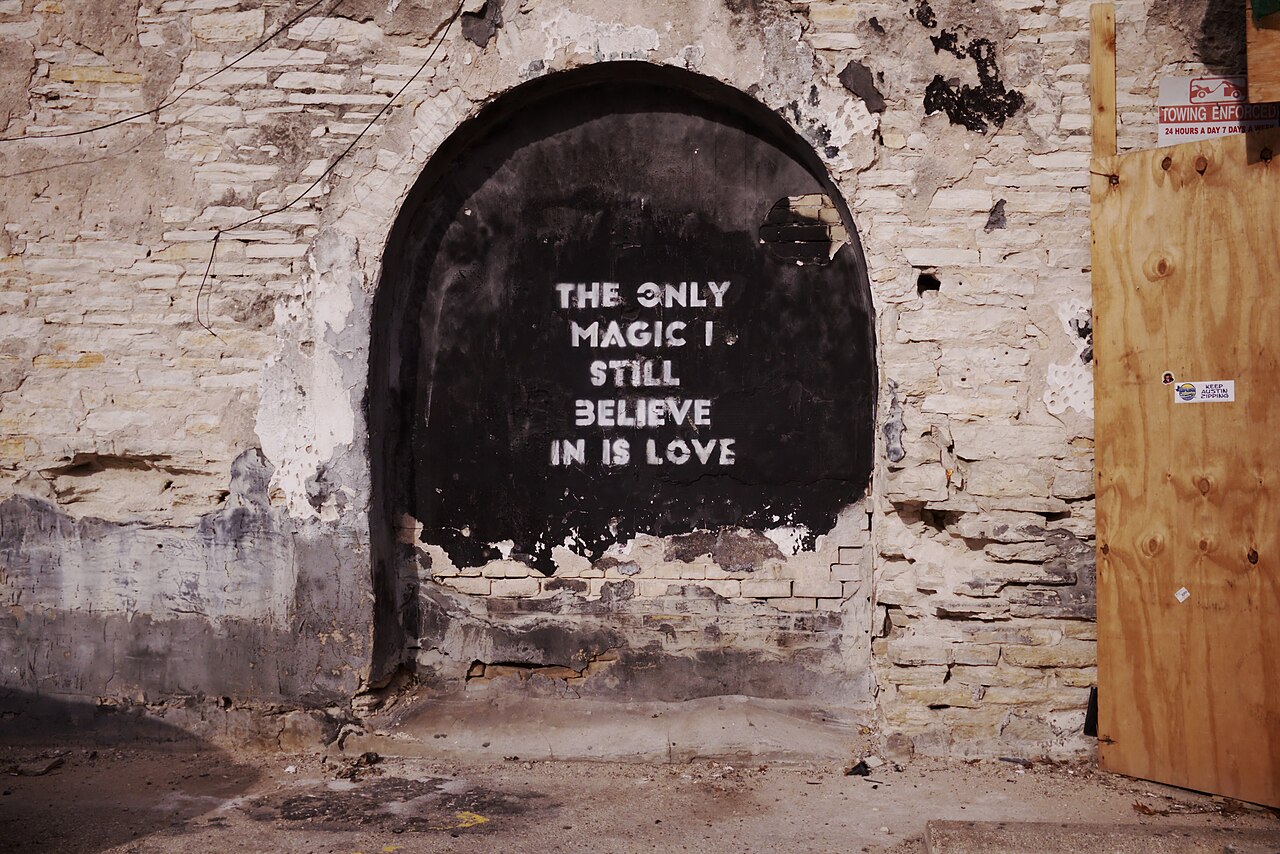
One sentence on old limestone
Some of the best Austin murals are only a few words long. Just off Congress Avenue, downtown, an old limestone wall opens into a black arch, and across it someone has stenciled a single sentence: the only magic I still believe in is love.
It is a strange thing to find a few blocks from the offices and the bars. You slow down. You read it twice. A good wall does that, and it does not need to be big to do it. The stone is old, the paint is plain, and the message stays with you longer than a billboard would.
Stand there a minute and you notice who else stops. A couple on a walk, someone with a coffee, a person who pulls out a phone and then thinks better of it. Walls like this work because they ask for so little. They give a street a moment of honesty, and they take only a few seconds of a passerby’s attention.

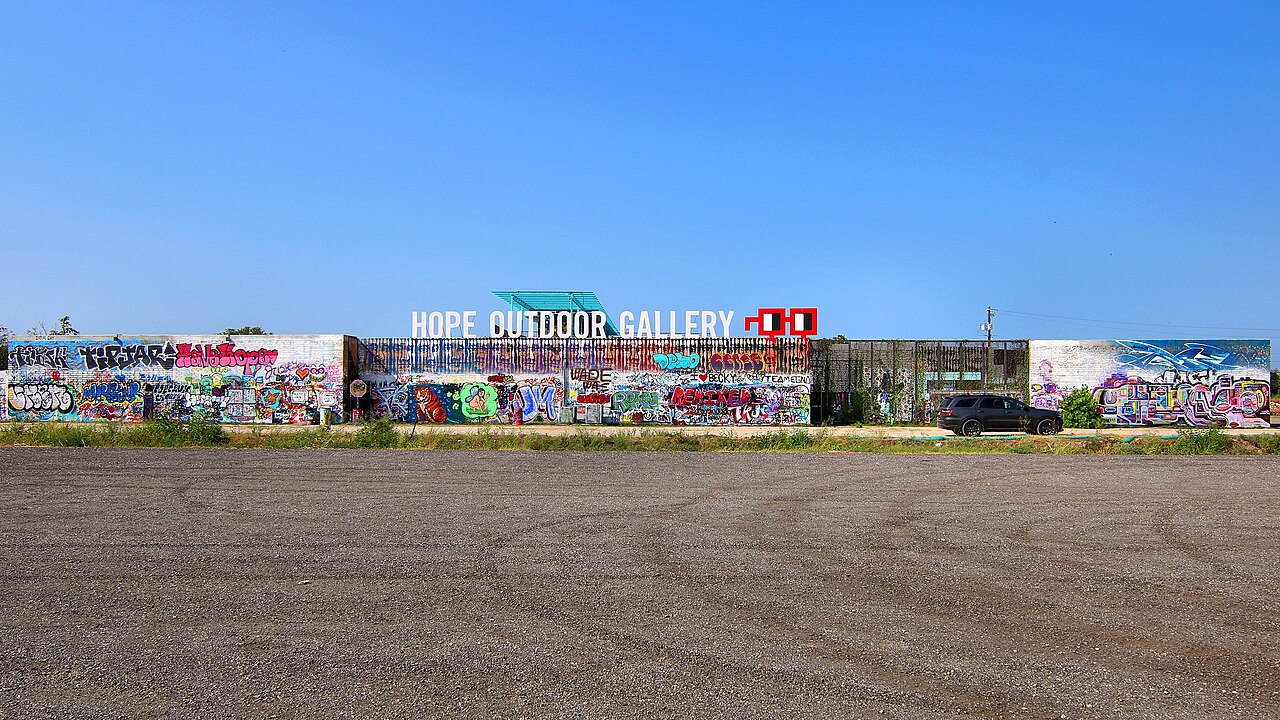
A gallery that never finishes
Head west to Baylor Street, in Clarksville, and the walls stretch out in long, layered runs under the Texas sky. The HOPE Outdoor Gallery is known as a public art project and an interactive graffiti park, which is a polite way of saying the paint is never dry for long.
What you see on a given morning will not be what someone else saw last month. People come with cans and cameras, and the surfaces take everything. For anyone curious about Austin street art, it is the clearest place to see the city thinking out loud, in color, in public.
There is a lesson here for anyone who has ever wondered why a plain wall feels so different from a painted one. A surface that invites people in becomes a destination. The ones that keep changing become habits, places people return to just to see what is new.

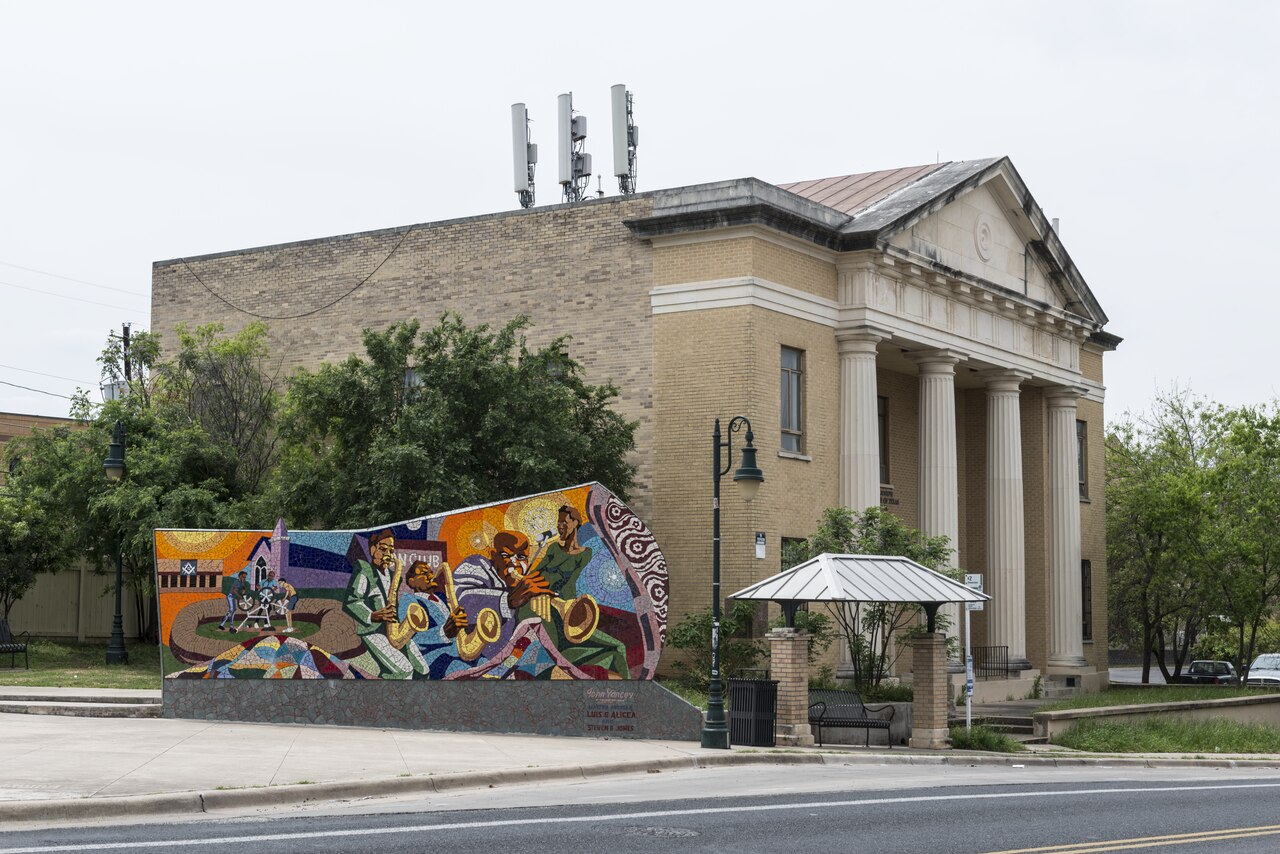
Music, set in tile
Austin calls itself a music town, and in East Austin the walls agree. Beside a columned brick building, a mosaic of musicians glows in jazz-hall colors, each figure built from small pieces that add up to rhythm.
Mosaic asks for patience. Every tiny square is a decision, and from across the plaza the decisions disappear into a picture. It is a good reminder that a mural does not have to be paint, and that a neighborhood can hold its history in the surface of a wall.
Seen in person, a mosaic changes as you move. Up close it is texture and edge; a few steps back it turns into faces and instruments. That shift is a kind of generosity, because it rewards people who look twice.
Big yellow letters at sunset
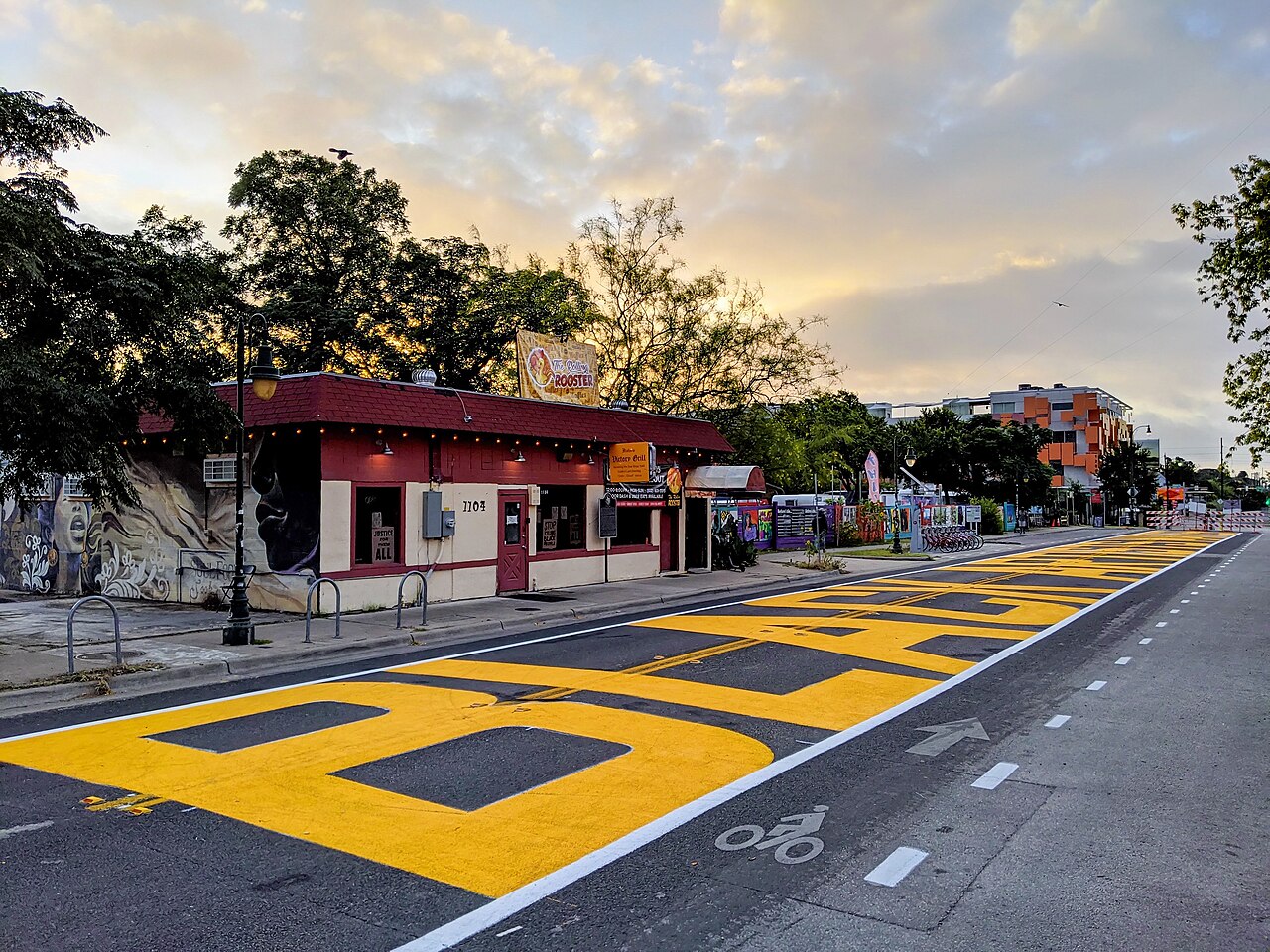
On East 11th Street, the message is painted right onto the road. Huge yellow letters run across the pavement in front of a small restaurant, and murals line the buildings behind them, all lit by the low light of a Texas evening.
This is a mural that treats the street itself as the wall. It stops traffic in a gentle way, and it makes a short block feel like a place with something to say.
Painted streets and painted walls make each other better. The lettering gives the block a voice, the murals give it depth, and the little restaurant in the middle gives it a reason to linger. It is a small scene, but it shows how art and everyday business can share a corner without competing.

South Congress, day and night
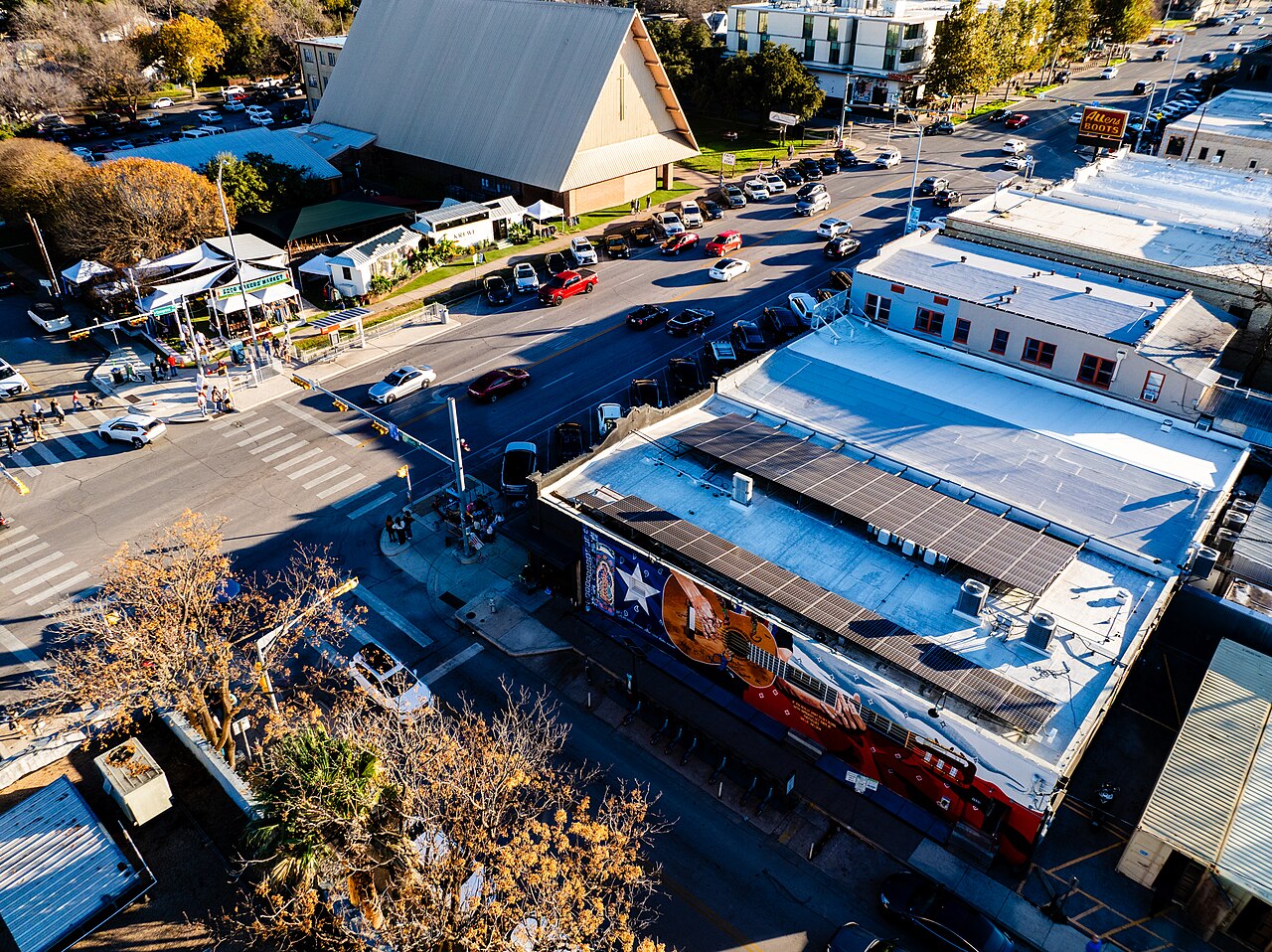
Few streets in Austin are as photographed as South Congress. Look east from above and a guitar-and-star mural stands out on the side of a low building, the kind of simple, friendly picture that tells visitors what town they are in.
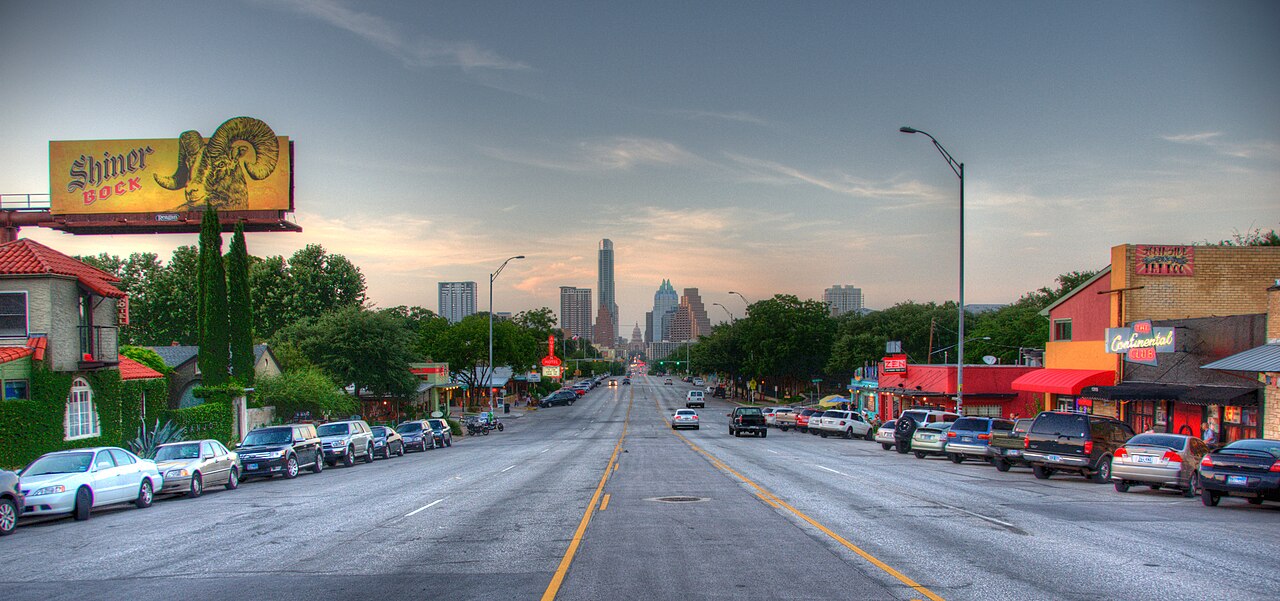
The avenue itself runs straight toward downtown and ends at the state capitol, and at dusk the towers sit at the end of it like a stage set. It is easy to see why so many walls here are painted to be seen from a distance.
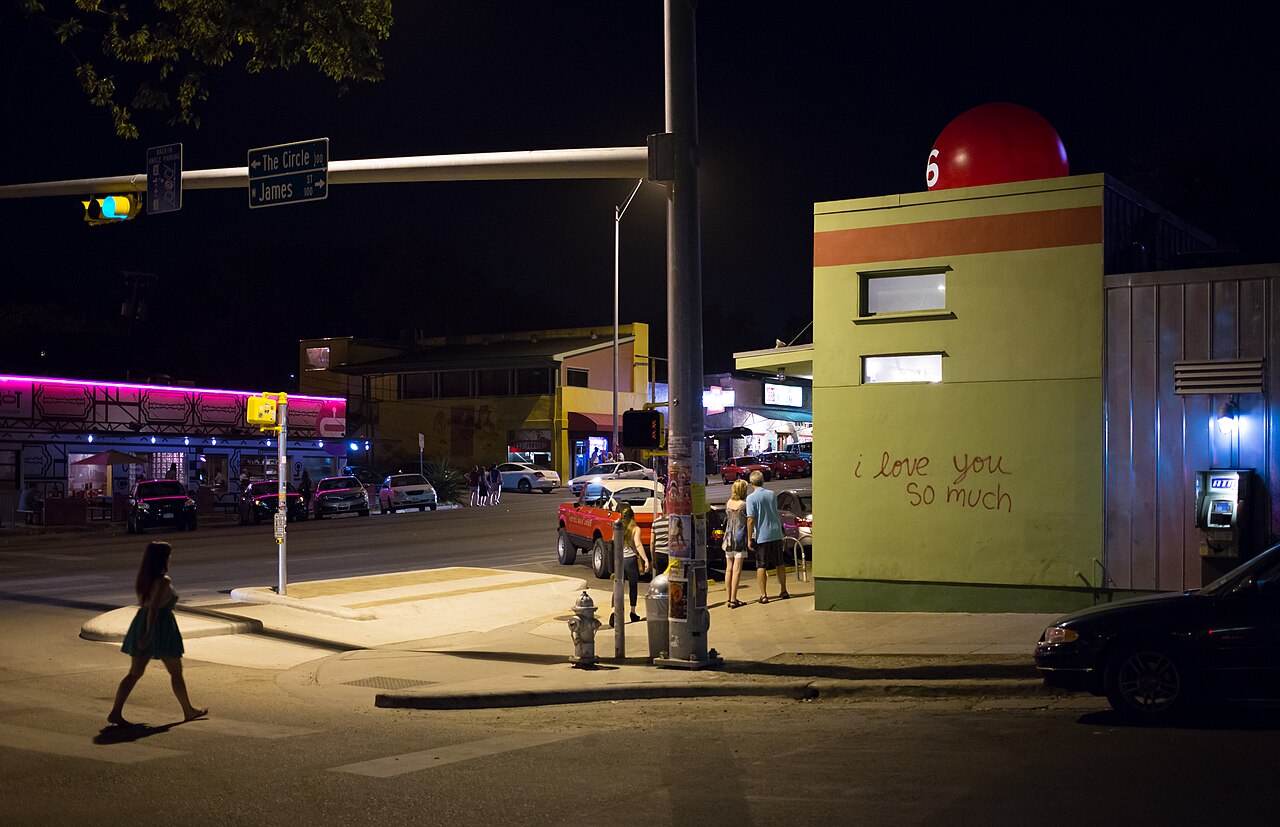
Come back after dark and the character shifts. A corner glows with neon, a few people drift along the sidewalk, and one wall simply says i love you so much. It is sentimental, a little cheeky and completely Austin. Murals in a place like this are not hidden in a gallery. They are the background to everyone's evening.
What ties these walls together is how they hold the street. The best ones do not fight their surroundings. They borrow from the brick, the signs, the evening light and the people passing by, and give something back.



Color without a canvas
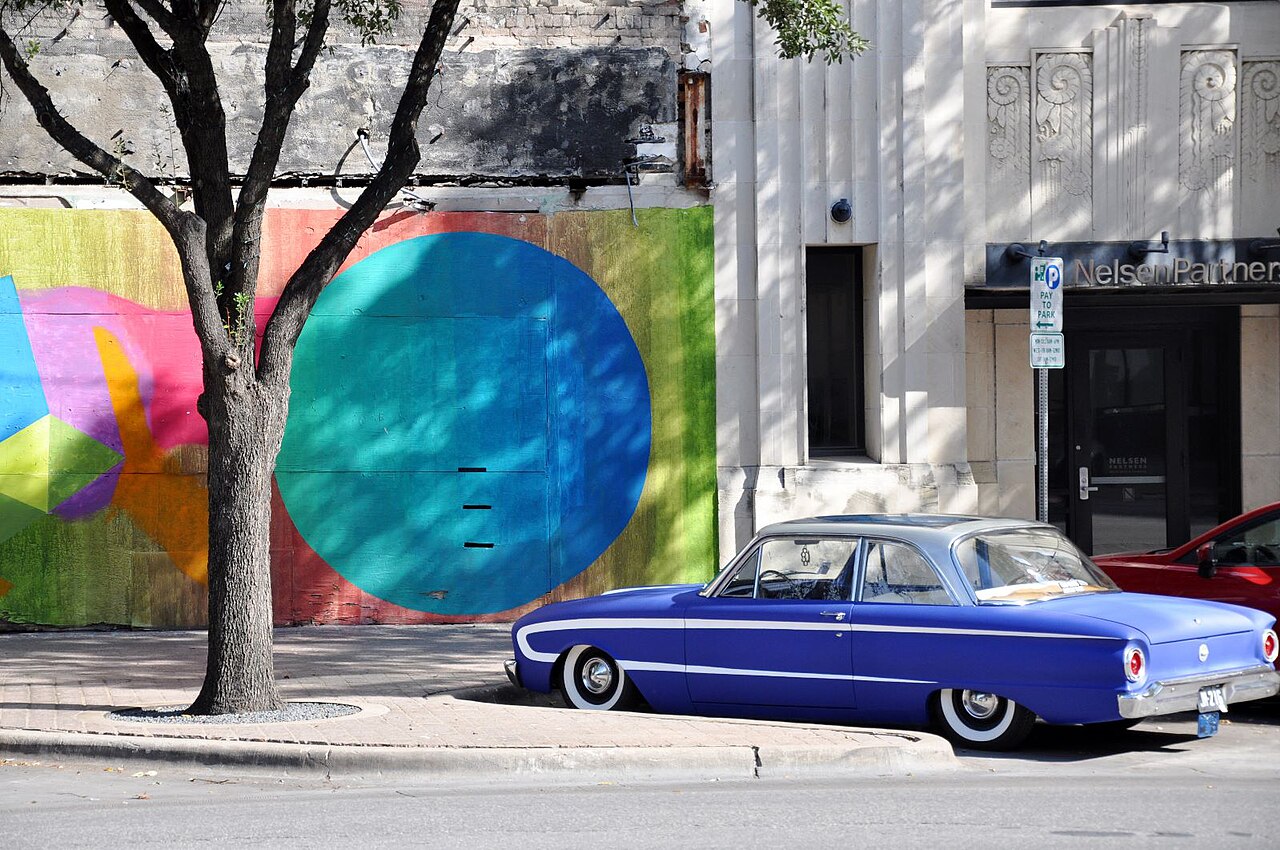
Not every wall has a story you need to read. Downtown, a geometric painting built around a big teal circle sits behind a parked blue vintage car, and the two together make a picture neither would make alone.
Pure color and shape do a lot of quiet work in a city. They brighten a plain facade and give a corner an identity. If you would like to see how the city fits into the wider picture, our Austin page collects more of the walls we follow.
That is also how a good commissioned wall works. It starts with the building, the light and the neighbors, then asks what would make the corner better. Color and shape come second to that conversation.

Step back to the water and the lawn
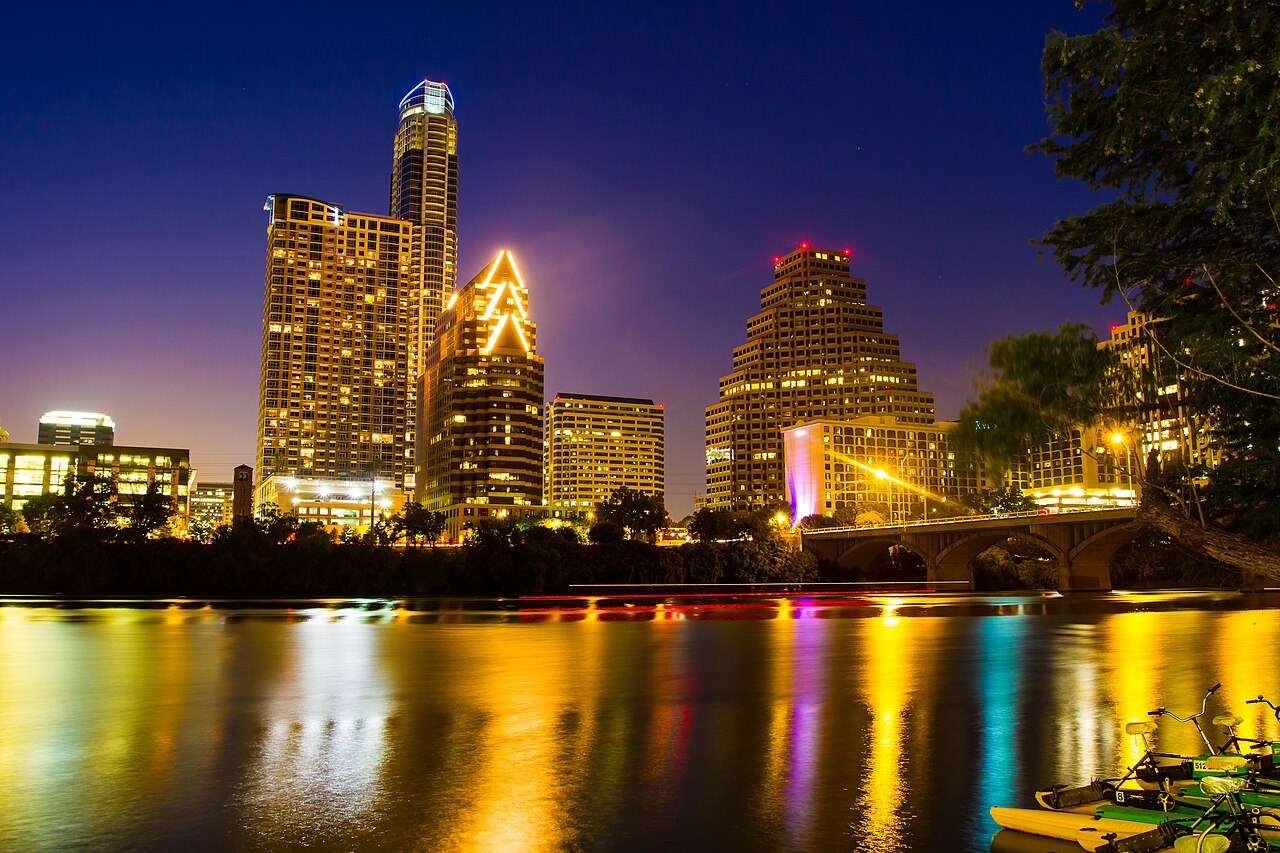
Every walk through the Austin murals ought to end outside. After dark, downtown's towers light up and reflect in Lady Bird Lake beside a bridge, the whole skyline doubled in the water.
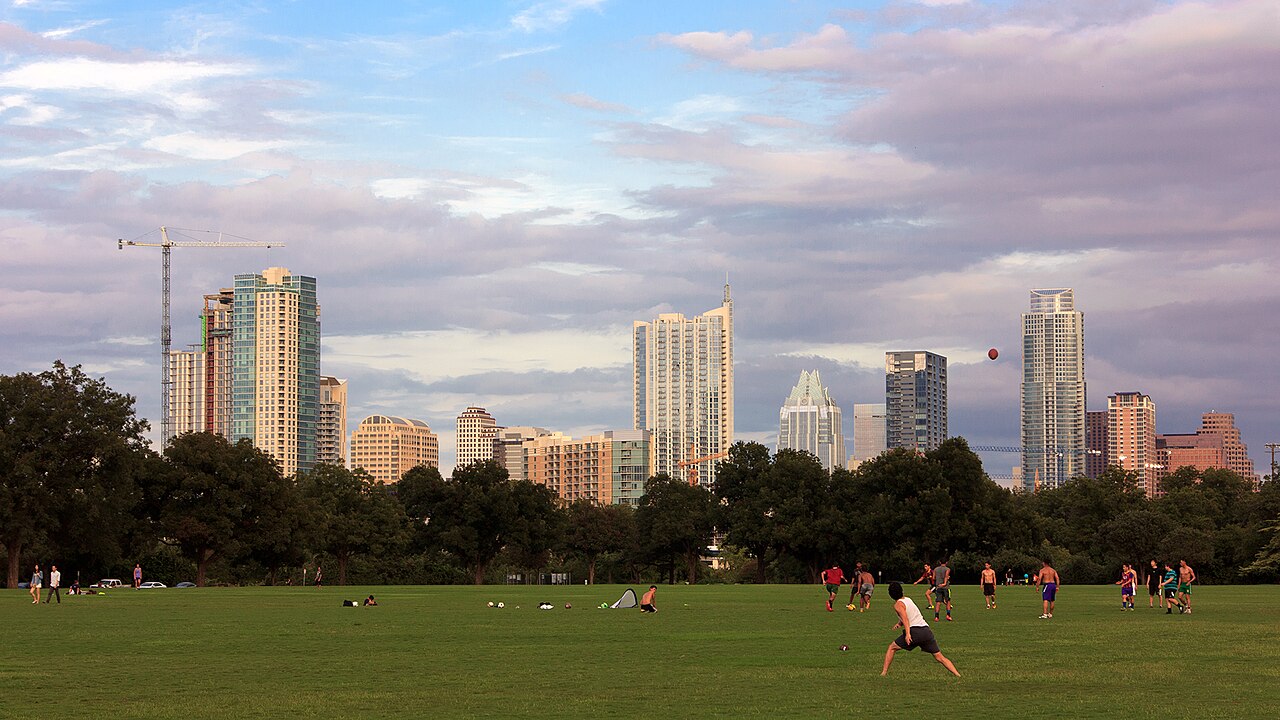
Then, by day, there is Zilker Park, where people play on the big lawn with the skyline standing behind them. It is a useful picture to hold in mind. The walls are one part of how Austin feels, along with the water, the grass and the people who show up for all of it. A building owner thinking about a wall can start with our guide to how public art can lift a property in Austin.
Seen together, the lake, the lawn and the skyline remind you why people care about how Austin looks. A city this attached to its outdoor life wants its walls to feel like part of the same scene.


If you have a wall in mind
Every wall in this story started out blank, and somebody decided it could be more. If you manage a building in Austin and keep looking at a wall that deserves better, we would be glad to hear about it. Tell us about your wall and we will take it from there.
Frequently asked questions
- Where can I see murals in Austin?
- Good places to start are the HOPE Outdoor Gallery on Baylor Street, South Congress, East 11th Street, East Austin and the walls just off Congress Avenue downtown. Most are within a short drive of each other.
- Which Austin neighborhoods have the most street art?
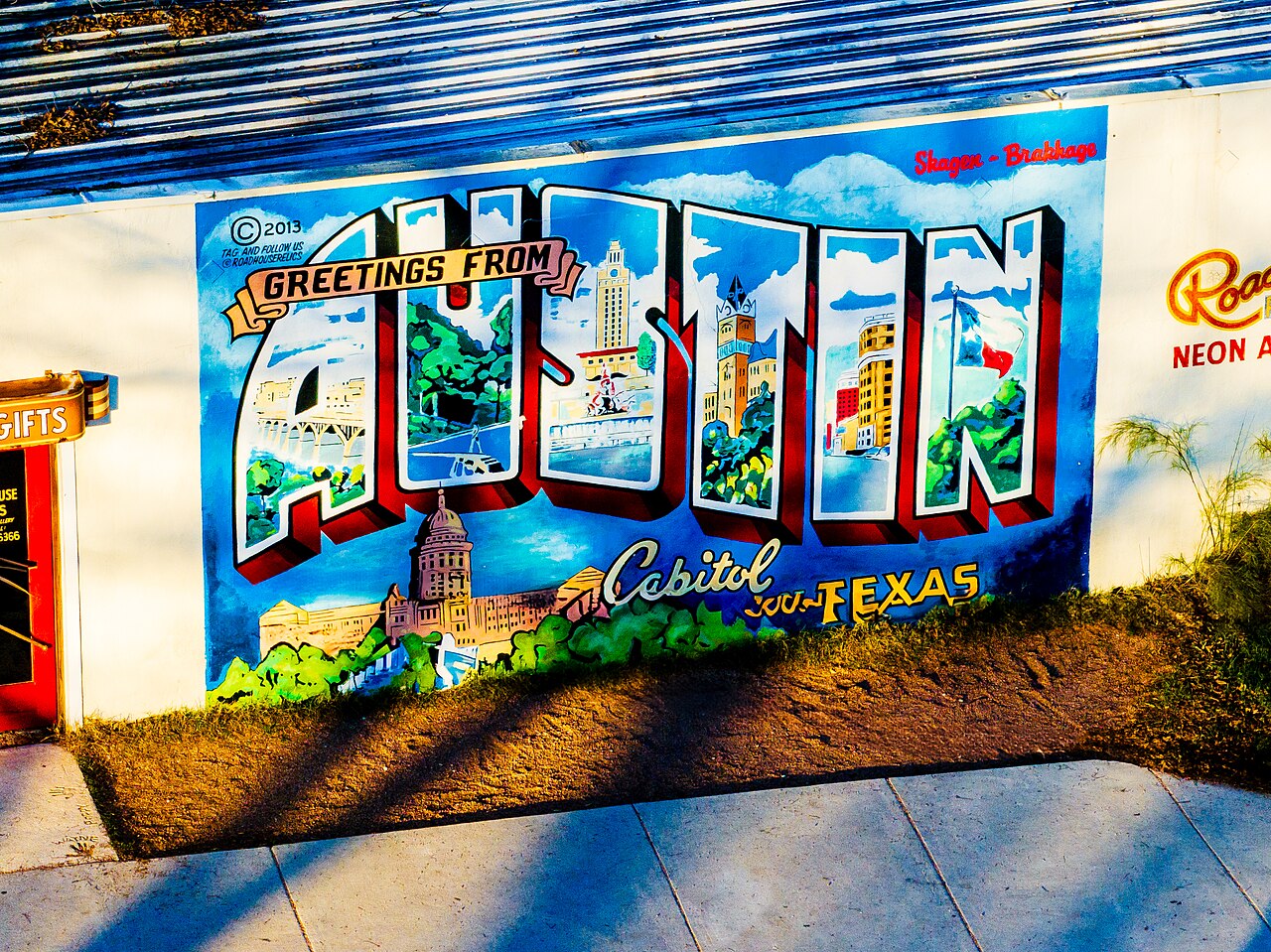
- South Congress, East Austin, East 11th Street, Clarksville and downtown all have memorable walls, and Bouldin Creek has its own Greetings from Austin postcard.
- Is street art legal in Austin?
- It depends on the wall and the owner. A mural painted with the property owner's permission is commissioned work, while unsanctioned pieces are a different matter. If you own a wall, get the agreement in writing before anyone paints.
- How do I find a muralist in Austin for my building?
- Start with a muralist whose style suits the wall and the neighborhood, then talk through the surface, size and look. We help match walls with muralists and handle quotes, contracts and scheduling.
All photos are free-licensed and credited under each image; license links go to the original file pages.