City story · Barcelona · 6 min read
Barcelona Murals: A City That Decorates Itself
Balconies, mosaics, paper streamers and paint. A walk through the Barcelona murals and street art that sit inside a city already in the habit of decorating everything it touches.
A city that was decorating long before spray paint
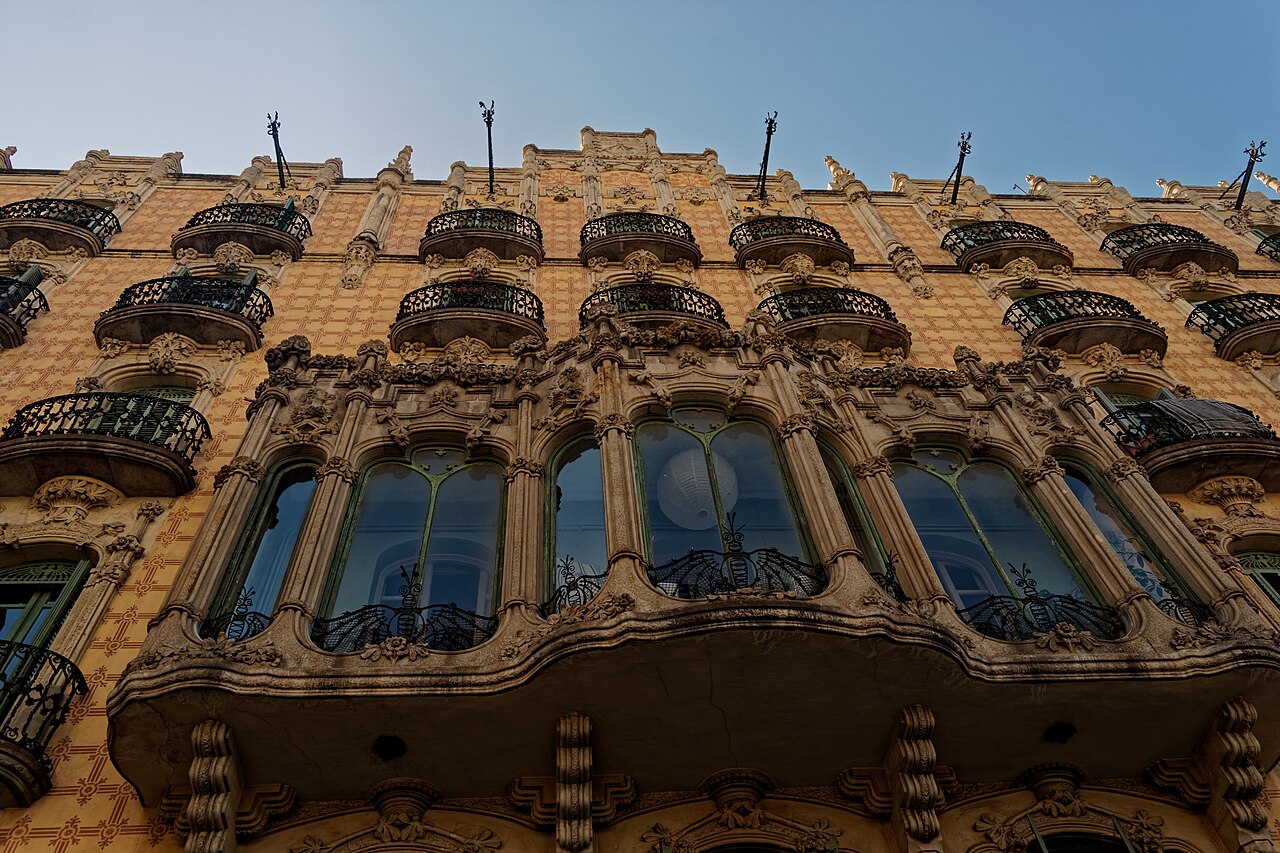
Look up on almost any Barcelona street and the buildings are already performing. On Carrer Gran de Gràcia the facades carry stone and iron balconies, each one shaped and curled as if the builder had been told to enjoy himself. You do not need a mural to feel that this is a place where surfaces matter.
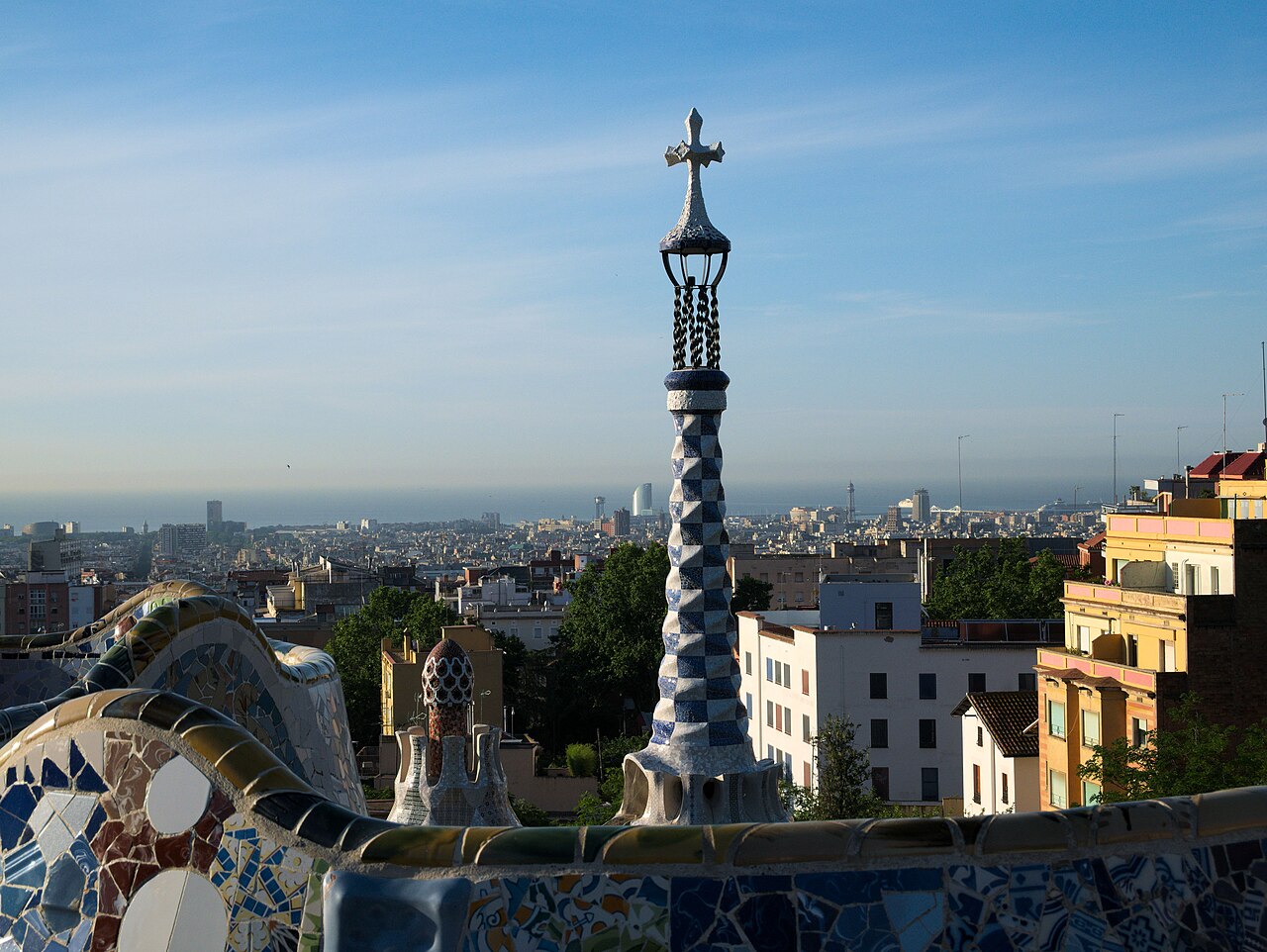
Climb to the terrace at Parc Güell and the habit gets bolder. A spire covered in broken tile, a bench that curves like a wave, the city and the sea laid out below. It is worth starting here, because it explains something about the Barcelona murals you will meet later. Painting a wall in this city is not a strange interruption. It is the next chapter of a very old conversation about color, pattern and the pleasure of making a plain thing beautiful.
It also helps to know what to look for. Notice how the balconies repeat, how each one changes the light on the wall behind it, and how the street seems taller because of them. A good mural does the same job on a smaller budget of space: it gives the eye something to follow.


The wall that pretends to be a building
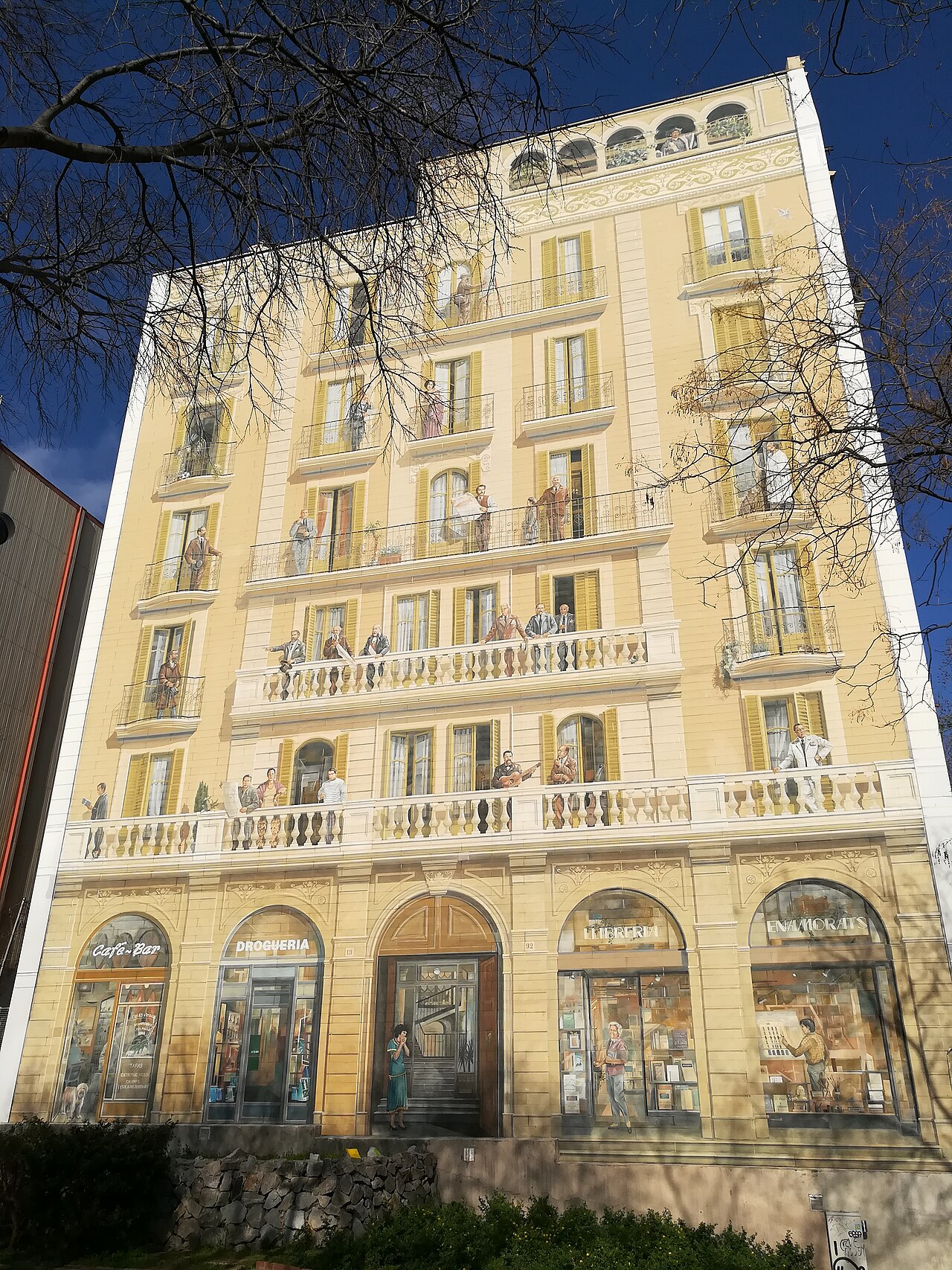
Near Plaça de Pablo Neruda, a tall side of a building has been painted to look like a real facade. There are balconies, there are people leaning on them, and at street level there are shopfronts that blend in so well you might check whether the door opens.
This is the old trick of the eye, and it is a generous one. A blank party wall is the kind of thing a neighborhood puts up with for years. Here it has been given windows, neighbors and a little theater, and the square feels more finished for it. Of all the Barcelona street art you can find on foot, this may be the most polite: it does not shout, it just quietly improves the view.

Raval, one layer on top of another
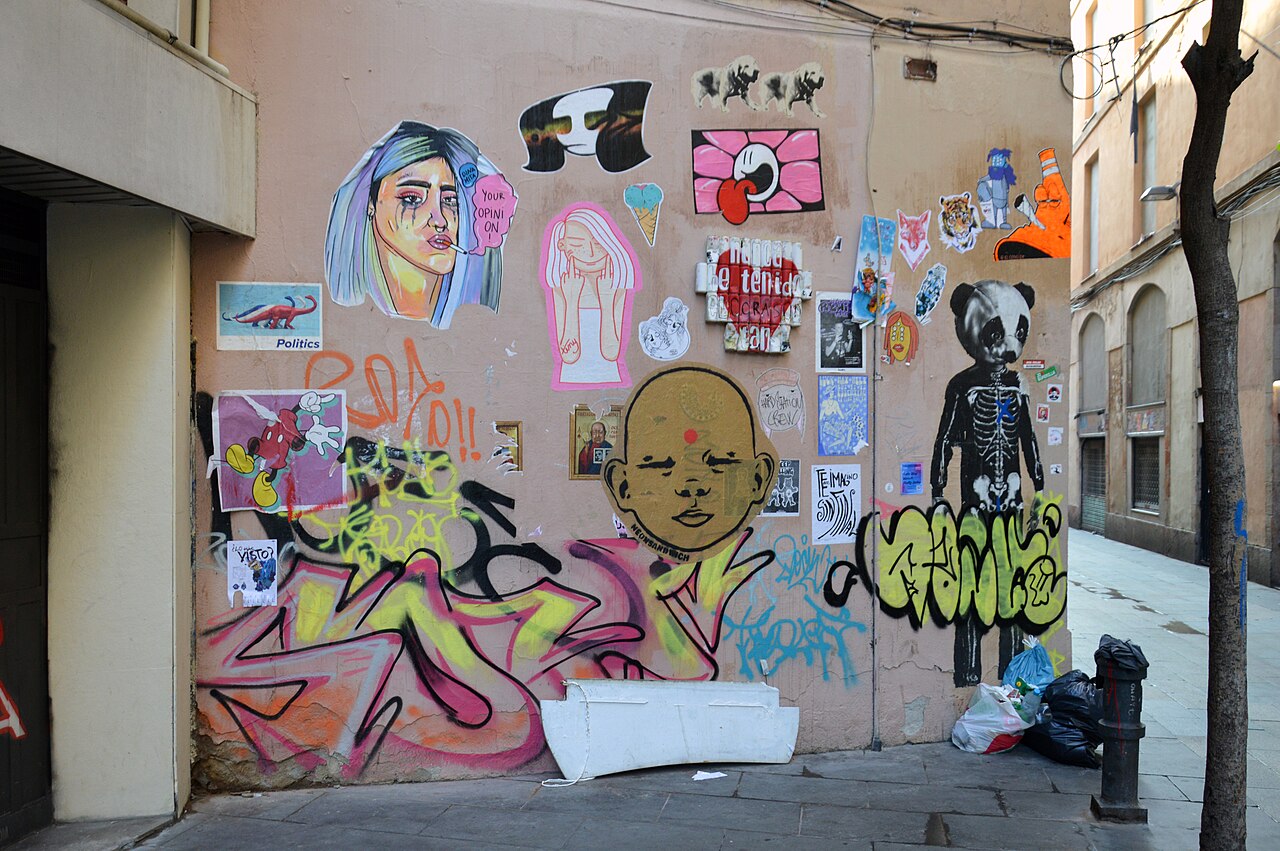
Go to Raval and the mood changes. On a corner of Carrer de la Ferlandina the wall has no single author and no clear edge. Stickers overlap pasted portraits, a bald figure watches from the middle, and bright tags climb over everything.
It is easy to call this messy, and it is, in the way a living conversation is messy. Nothing on this wall is waiting for approval. It is a record of who walked past, what they cared about and how fast the street moves. If the facade near Pablo Neruda is a composed sentence, this corner is overheard talk.
Stand there for a few minutes and you start to see the rhythm. A pasted portrait gets a tag across its forehead, a sticker lands on the tag, and the whole corner shifts a little from week to week. Come back in a month and it will have changed, which is half the reason to visit.

Old streets and a market that glows
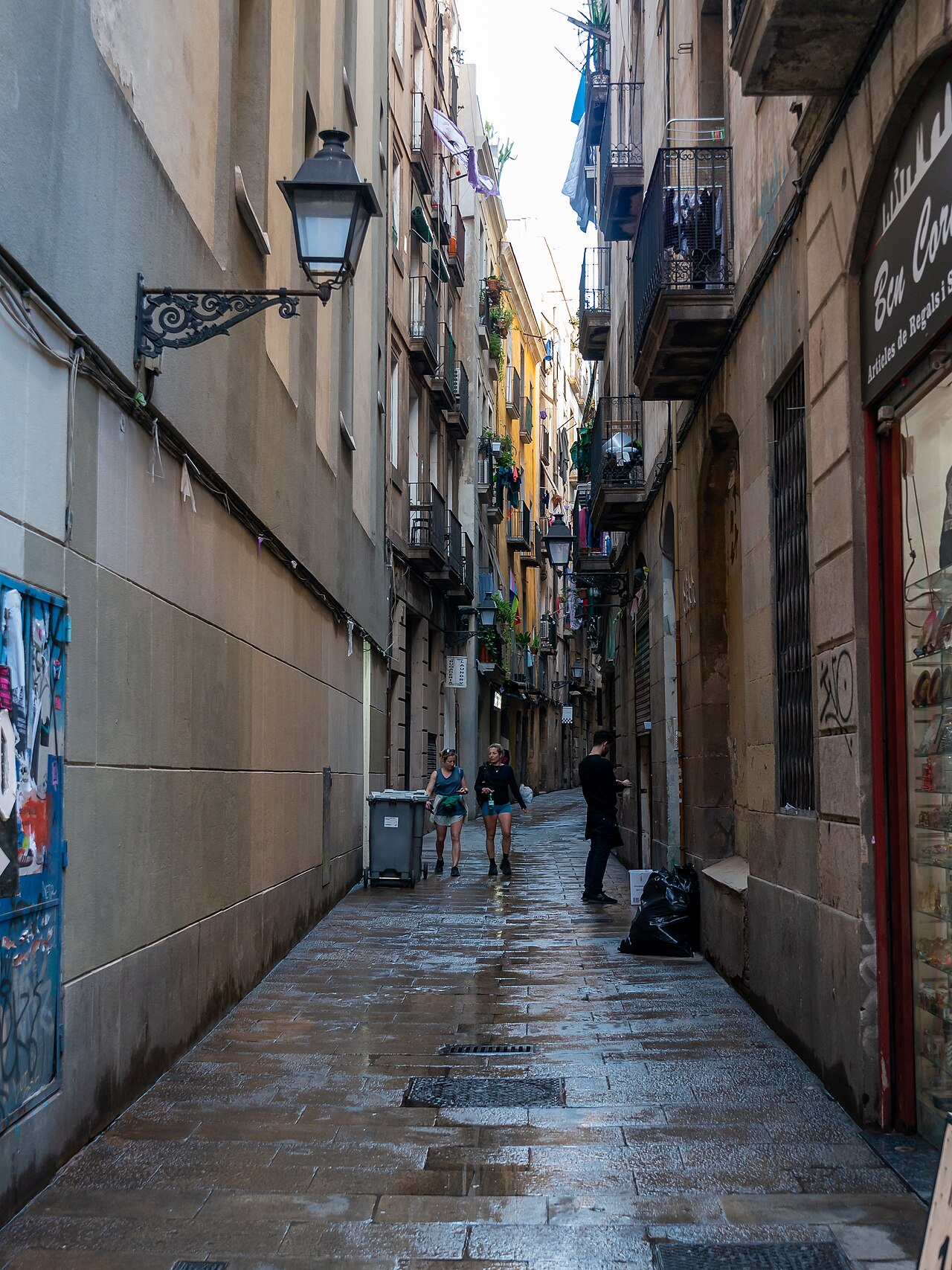
Not every good walk is about paint. In the Barri Gòtic the alleys narrow until the sky is a strip, and iron lamps lean out from stone walls above wet cobbles. A mural would be almost redundant here. The street itself is the artwork, and it is a reminder that new walls in an old center have to earn their place.
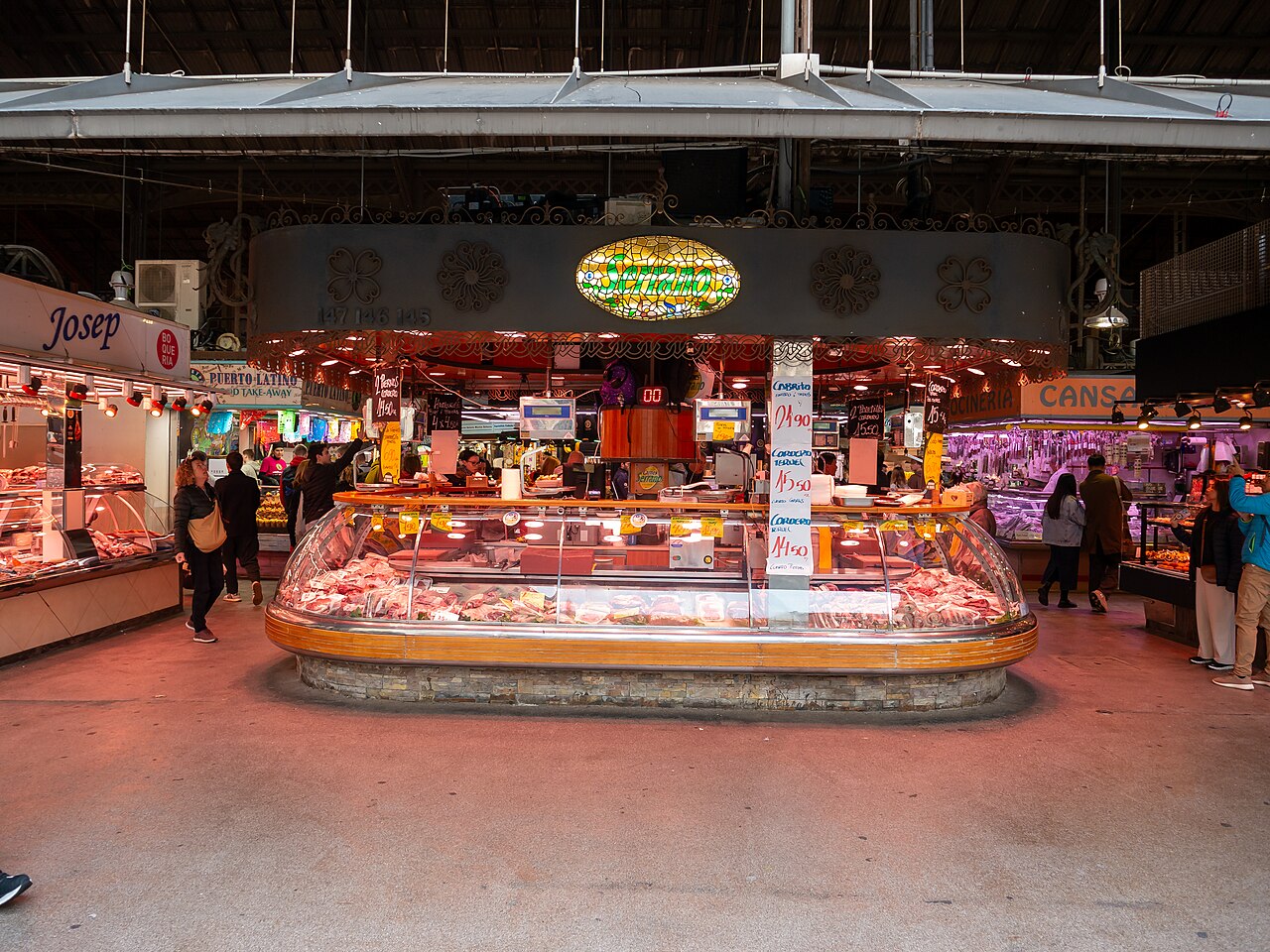
A short walk away, the covered market of La Boqueria answers with warm light, glass and the noise of people shopping. Between the two you get a lesson in scale: dark and close in the alley, bright and open in the hall. If you are curious about the wider picture of the city, our Barcelona page gathers more of it in one place.


A woman in the arch, out in Poblenou
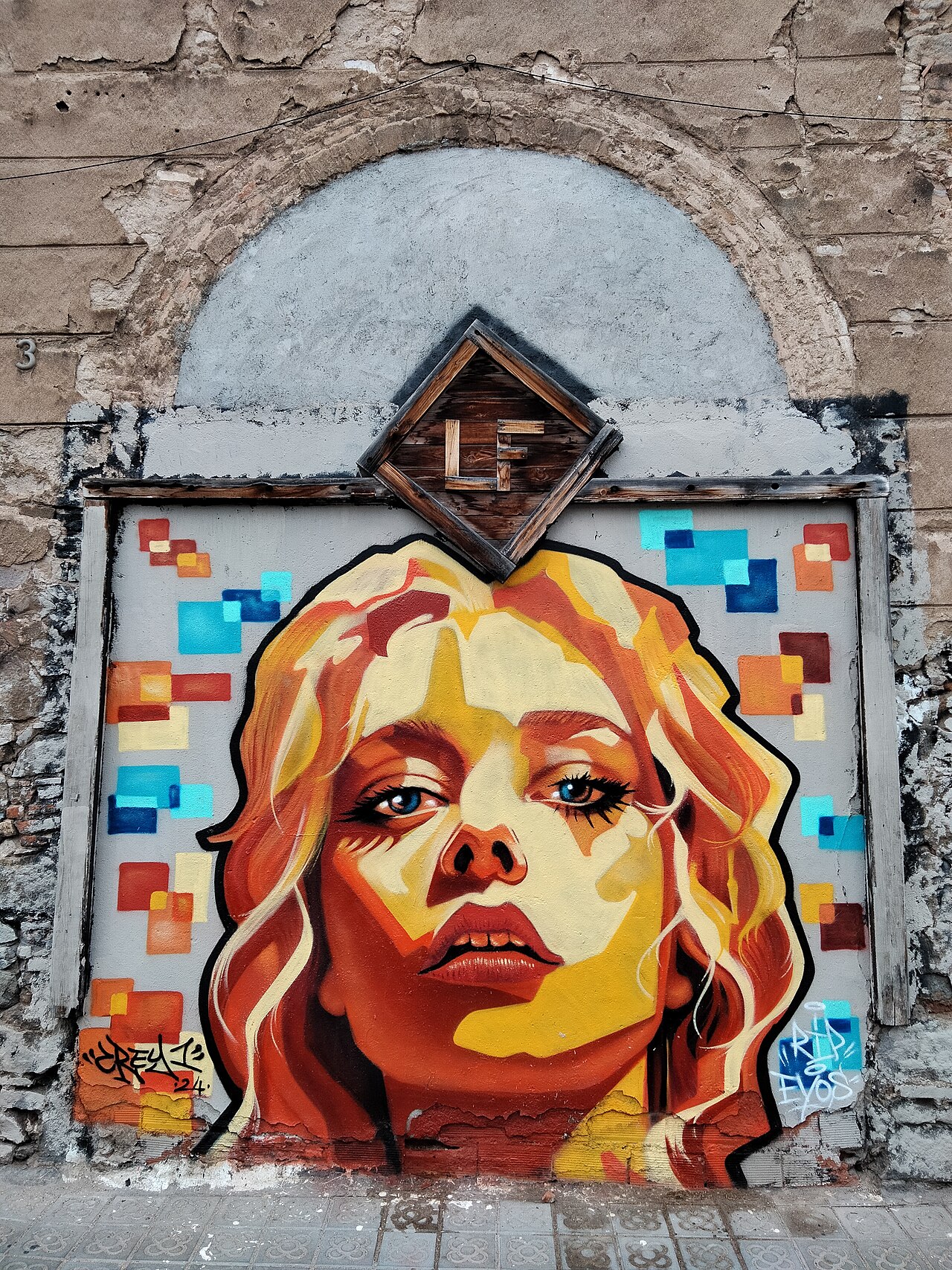
Poblenou is where Barcelona murals begin to feel large. On Carrer de Fernando Poo a painted portrait fills an old stone arch: a woman with orange and yellow hair, framed by squares of blue and orange. The stone gives the portrait a doorway to sit in, and the colors give the stone a second life.
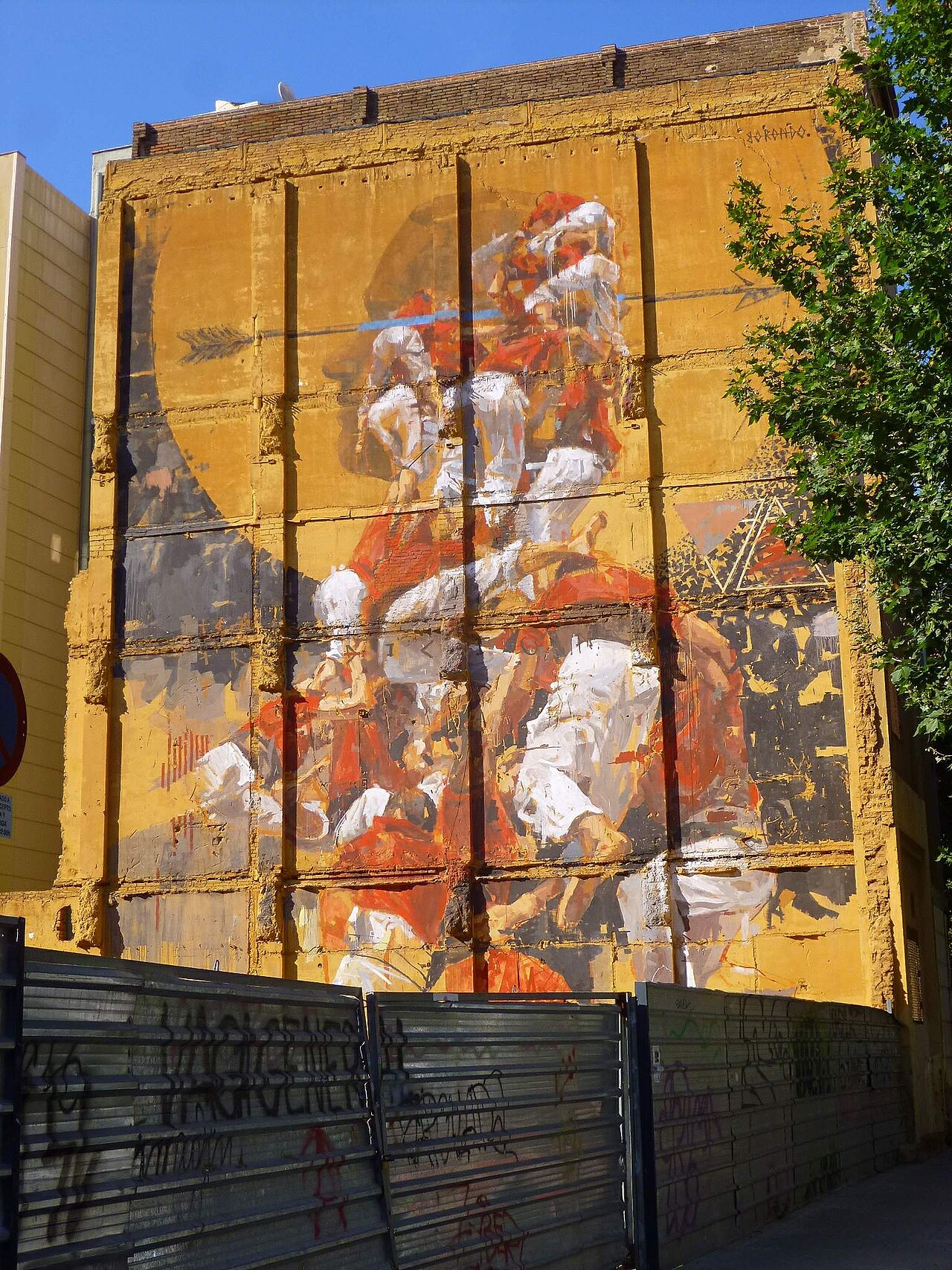
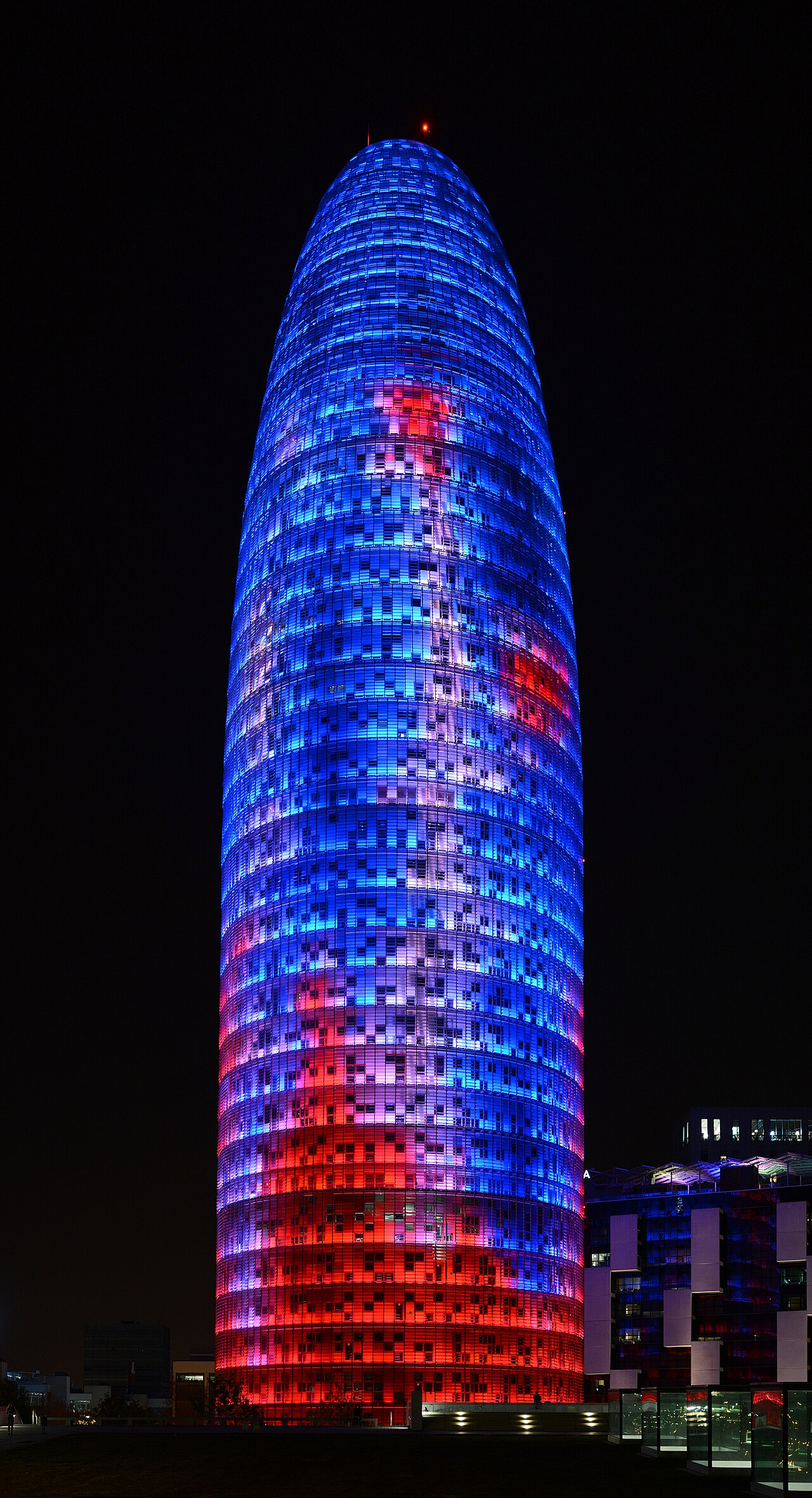
The same area is home to the 22@ district, where the hero wall of this story rises over a yellow party wall, and where old industrial streets are being given new uses. Further on, a glass tower lights up blue, purple and red after dark. Paint by day, light by night: the neighborhood keeps finding new ways to be looked at.
What stays with you is the contrast. One street gives you a quiet portrait in a stone doorway, the next a tall wall seen from three blocks away. Neither is trying to be the other, and the district is richer for having both.


Paper, books and a street party
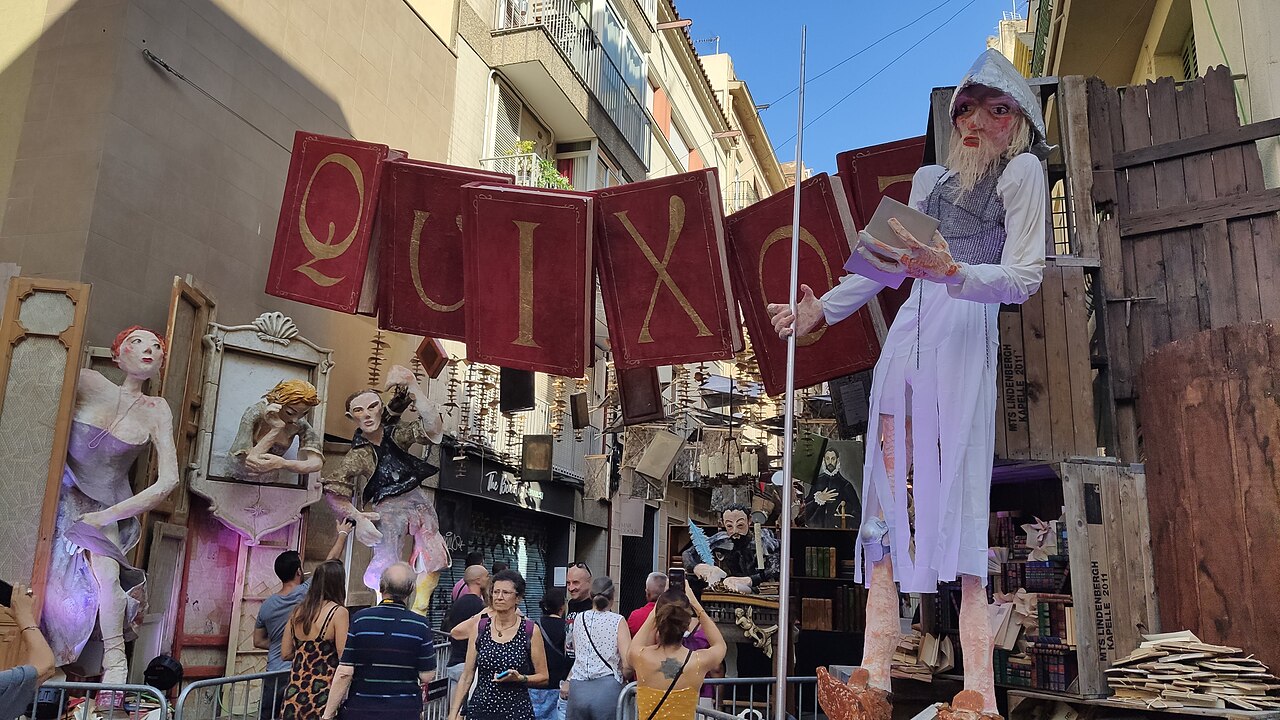
Some of the best decoration in Barcelona is gone within weeks. In Gràcia, streets dress up for the neighborhood's yearly festival, and on Carrer Verdi the whole block is turned into a stage set: giant book letters spelling QUIXOTE, paper figures overhead and visitors craning their necks below.
It is not a mural in the strict sense, but it belongs in the same story. People here decorate their own street because they want to, and they do it with such care that a visitor stops mid-step. When you meet the painted walls elsewhere in the city, remember where that spirit comes from.

What a good wall asks of its street
Walk long enough and the same questions come up. Does the image suit the shape of the wall? Does it respect the neighbors, the light and the way people actually move past it? The painted facade works because it borrows the language of the buildings around it. The Poblenou portrait works because the arch was already there.
If you are thinking about a wall of your own, those are the right questions to start with. Before the colors and the subject, ask what the wall is already saying and what the street would like to hear next.
Tile instead of paint
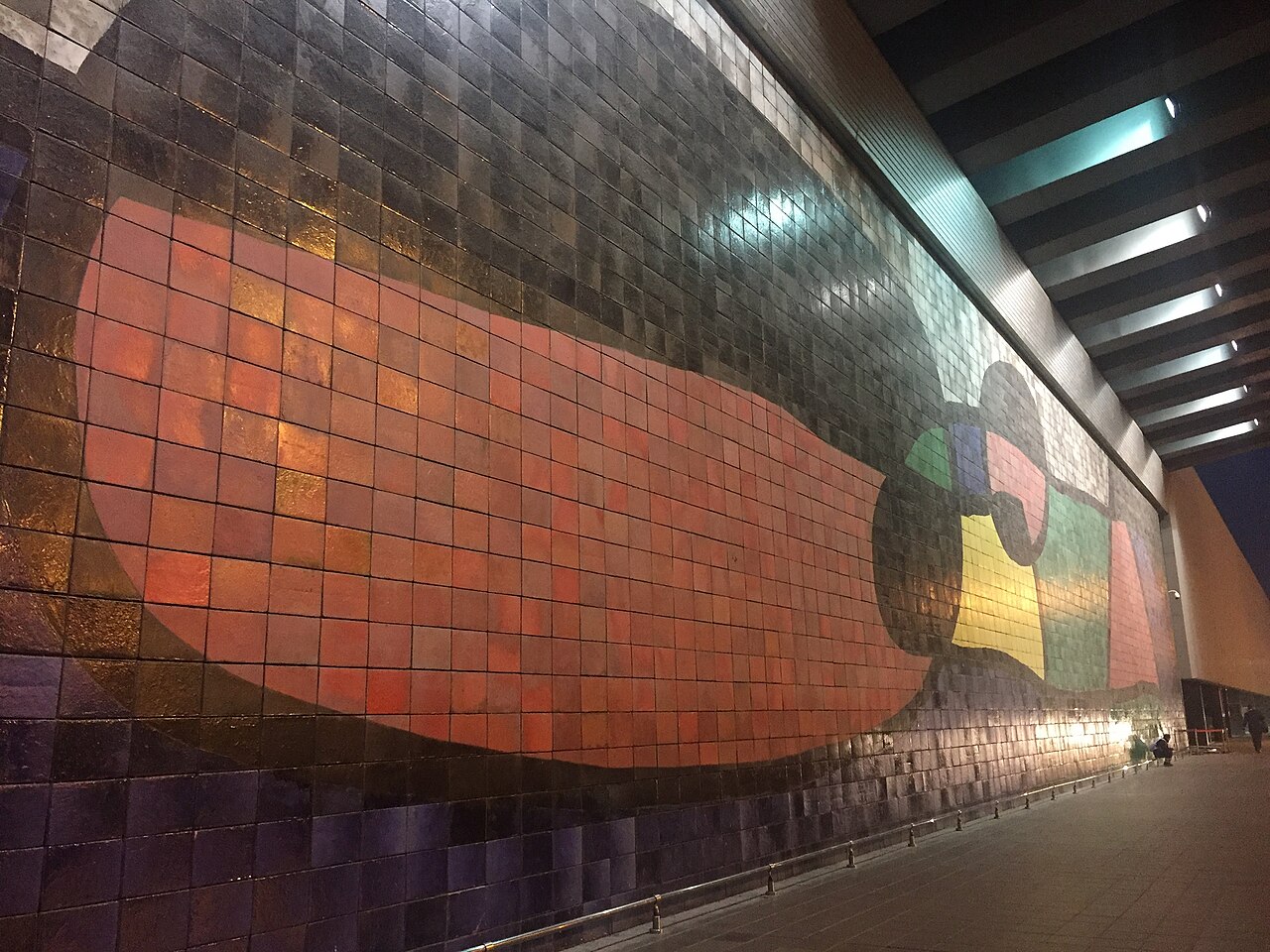
Finish at the airport, where you may not expect to find a wall worth stopping for. A long tiled mural runs along the lit wall, in red, black, yellow and green, and it greets people on the way in and the way out.
It is a useful ending because it reminds you that a mural is a wall made meaningful, not a medium. Paint, paper, tile and mosaic all do the same work: they tell you that someone thought about the place you are standing in. Barcelona has understood that for a very long time.

If you have a wall in mind
Every wall in this story began as somebody's plain surface and a decision to make it more. If you manage a building in Barcelona, or anywhere else, and there is a wall you keep looking at, we would be glad to hear about it. Tell us about your wall and we will take it from there.
Frequently asked questions
- Where can I see murals in Barcelona?
- Good places to start are Raval for layered street art, Poblenou and the 22@ district for large painted walls, and the area around Plaça de Pablo Neruda for a mural painted to look like a building. Plenty can be reached on foot in a day.
- Which Barcelona neighborhoods have the most street art?
- Raval, Poblenou and the 22@ district are good places to look. Gràcia is better known for decorated streets, especially around its yearly festival.
- Is street art legal in Barcelona?
- It depends on the wall and the owner. A mural painted with a property owner's permission is commissioned work; unsanctioned pieces are a different matter, and local rules apply. If you own a wall, agree the details in writing.
- How do I find a muralist for a wall in Barcelona?
- Look for a muralist whose style fits the wall and the neighborhood, then talk through the size, surface and look. We help match walls with muralists and handle quotes, contracts and scheduling.
All photos are free-licensed and credited under each image; license links go to the original file pages.
Historia de la ciudad · Barcelona · 6 min de lectura
Murales en Barcelona: una ciudad que se decora a sí misma
Balcones, mosaicos, tiras de papel y pintura. Un recorrido por los murales y el arte urbano de Barcelona, en una ciudad que ya tiene la costumbre de decorar todo lo que toca.
Una ciudad que decoraba mucho antes del espray
Levante la vista en casi cualquier calle de Barcelona y verá que los edificios ya están actuando. En la calle Gran de Gràcia, las fachadas lucen balcones de piedra y hierro, cada uno con sus curvas y sus rizos, como si al constructor le hubieran dicho que disfrutara. No hace falta un mural para notar que aquí las superficies importan.
Suba a la terraza del Park Güell y la costumbre se vuelve más atrevida. Una aguja cubierta de trencadís, un banco que ondula como una ola, la ciudad y el mar desplegados a sus pies. Conviene empezar aquí, porque explica algo de los murales de Barcelona que verá más adelante. Pintar un muro en esta ciudad no es una interrupción extraña. Es el siguiente capítulo de una conversación muy antigua sobre el color, el dibujo y el placer de embellecer algo corriente.
También ayuda saber en qué fijarse. Observe cómo se repiten los balcones, cómo cada uno cambia la luz sobre la pared que tiene detrás y cómo la calle parece más alta gracias a ellos. Un buen mural hace el mismo trabajo con menos espacio: le da a la mirada algo que seguir.
El muro que finge ser un edificio
Cerca de la plaza de Pablo Neruda, un lateral alto de un edificio se ha pintado para parecer una fachada de verdad. Hay balcones, hay gente asomada a ellos y, a pie de calle, escaparates tan bien integrados que uno se pregunta si la puerta se abre.
Es el viejo truco del trampantojo, y es un truco generoso. Una medianera en blanco es de esas cosas que un barrio soporta durante años. Aquí le han dado ventanas, vecinos y un poco de teatro, y la plaza se siente más acabada. De todo el arte urbano de Barcelona que se puede encontrar a pie, quizá sea el más educado: no grita, simplemente mejora las vistas sin hacer ruido.
El Raval, una capa sobre otra
Vaya al Raval y el ambiente cambia. En una esquina de la calle de la Ferlandina, el muro no tiene un único autor ni un borde claro. Las pegatinas se superponen a retratos pegados con cola, una figura calva observa desde el centro y las firmas de colores vivos trepan por encima de todo.
Es fácil llamarlo un desorden, y lo es, igual que lo es una conversación viva. Nada en este muro espera una aprobación. Es el registro de quién ha pasado, de lo que le importaba y de lo deprisa que se mueve la calle. Si la fachada de la plaza de Pablo Neruda es una frase bien construida, esta esquina es una charla escuchada al pasar.
Quédese unos minutos y empezará a distinguir el ritmo. Un retrato pegado recibe una firma en la frente, una pegatina cae sobre la firma y toda la esquina se desplaza un poco de una semana a otra. Vuelva dentro de un mes y habrá cambiado, y esa es la mitad del motivo para visitarla.
Calles antiguas y un mercado que brilla
No todo buen paseo trata de pintura. En el Barri Gòtic, los callejones se estrechan hasta que el cielo es una franja, y los faroles de hierro se asoman desde los muros de piedra sobre el adoquín mojado. Un mural sería casi redundante aquí. La calle misma es la obra, y recuerda que los muros nuevos en un casco antiguo tienen que ganarse su sitio.
A pocos pasos, el mercado cubierto de La Boqueria responde con luz cálida, cristal y el bullicio de la gente que compra. Entre uno y otro se aprende una lección de escala: oscuro y cercano en el callejón, luminoso y abierto en la nave. Si le interesa tener una imagen más amplia de la ciudad, nuestra página de Barcelona reúne más cosas en un solo lugar.
Una mujer en el arco, en el Poblenou
En el Poblenou es donde los murales de Barcelona empiezan a sentirse grandes. En la calle de Fernando Poo, un retrato pintado llena un viejo arco de piedra: una mujer de pelo naranja y amarillo, enmarcada por cuadrados azules y naranjas. La piedra le da al retrato una puerta donde sentarse, y los colores le dan a la piedra una segunda vida.
La misma zona alberga el distrito 22@, donde se alza sobre una medianera amarilla el muro principal de esta historia, y donde las viejas calles industriales están recibiendo nuevos usos. Más allá, una torre de cristal se ilumina de azul, morado y rojo al caer la noche. Pintura de día, luz de noche: el barrio no deja de encontrar nuevas maneras de ser mirado.
Lo que queda es el contraste. Una calle ofrece un retrato tranquilo en un portal de piedra, la siguiente un muro altísimo visible desde tres manzanas de distancia. Ninguno intenta ser el otro, y el distrito es más rico por tener ambos.
Papel, libros y una fiesta en la calle
Parte de la mejor decoración de Barcelona dura apenas unas semanas. En Gràcia, las calles se visten para la fiesta anual del barrio, y en la calle Verdi toda la manzana se convierte en un decorado: letras gigantes de libro que forman QUIXOTE, figuras de papel colgadas arriba y visitantes con el cuello estirado abajo.
No es un mural en sentido estricto, pero pertenece a la misma historia. Aquí la gente decora su propia calle porque quiere, y lo hace con tanto cuidado que el visitante se detiene a medio paso. Cuando vea los muros pintados en otras partes de la ciudad, recuerde de dónde viene ese espíritu.
Lo que un buen muro le pide a su calle
Si camina lo suficiente, las mismas preguntas vuelven una y otra vez. ¿Le va la imagen a la forma del muro? ¿Respeta a los vecinos, la luz y la manera en que la gente pasa de verdad por delante? La fachada pintada funciona porque toma prestado el lenguaje de los edificios que la rodean. El retrato del Poblenou funciona porque el arco ya estaba allí.
Si está pensando en un muro propio, esas son las preguntas con las que conviene empezar. Antes de los colores y del tema, pregunte qué está diciendo ya el muro y qué le gustaría oír a la calle a continuación.
Azulejo en lugar de pintura
Termine en el aeropuerto, donde quizá no espere encontrar un muro que merezca una parada. Un largo mural de azulejos recorre la pared iluminada, en rojo, negro, amarillo y verde, y saluda a la gente a la llegada y a la salida.
Es un buen final porque recuerda que un mural es un muro con sentido, no una técnica. Pintura, papel, azulejo y mosaico hacen el mismo trabajo: avisan de que alguien pensó en el lugar donde usted está. Barcelona lo entendió hace mucho tiempo.
Si tiene un muro en mente
Cada muro de esta historia empezó siendo la superficie lisa de alguien y la decisión de hacer algo más con ella. Si usted administra un edificio en Barcelona, o en cualquier otro lugar, y hay un muro que no deja de mirar, nos encantaría saberlo. Cuéntenos sobre su muro y nosotros nos encargamos del resto.
Preguntas frecuentes
- ¿Dónde puedo ver murales en Barcelona?
- Buenos lugares para empezar son el Raval, por su arte urbano en capas; el Poblenou y el distrito 22@, por sus grandes muros pintados; y la zona de la plaza de Pablo Neruda, por un mural pintado para parecer un edificio. Mucho de esto se puede recorrer a pie en un día.
- ¿Qué barrios de Barcelona tienen más arte urbano?
- El Raval, el Poblenou y el distrito 22@ son buenos sitios donde buscar. Gràcia es más conocido por sus calles decoradas, sobre todo durante su fiesta anual.
- ¿Es legal el arte urbano en Barcelona?
- Depende del muro y de su propietario. Un mural pintado con el permiso del propietario es un trabajo encargado; las piezas sin autorización son otra cosa y se aplican las normas locales. Si usted es dueño de un muro, acuerden los detalles por escrito.
- ¿Cómo encuentro a un muralista para un muro en Barcelona?
- Busque a un muralista cuyo estilo encaje con el muro y con el barrio, y hablen del tamaño, la superficie y el aspecto. Nosotros ayudamos a emparejar muros con muralistas y nos encargamos del presupuesto, el contrato y la programación.
Todas las fotos tienen licencia libre y llevan su crédito bajo cada imagen; los enlaces de licencia llevan a la página original del archivo.