City story · Berlin · 6 min read
Berlin Murals: A City That Paints on Its Own Walls
Tall gable ends, brick corners, a playground wall and an apartment tower in the east. A walk through the Berlin murals and Berlin street art that turn a city of side streets into an open-air gallery.
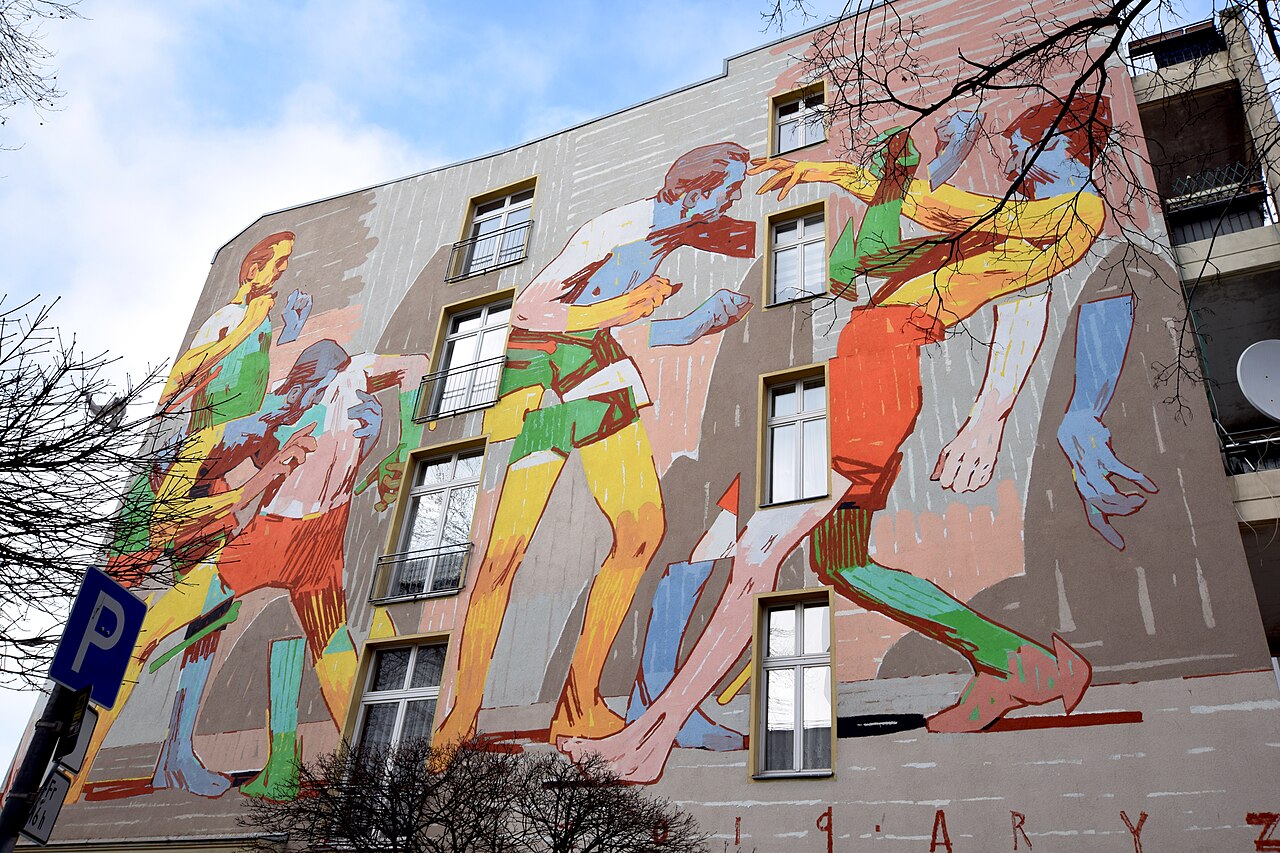
Look up, then look down the block
Berlin is a city of side streets, and the best way to meet its murals is to turn off the main road and keep your head tilted back. In Kreuzberg, a cobbled lane ends at the blank end wall of a building, and the wall has been given to a single enormous figure: a man in a flat cap, painted in warm orange, a small bird perched on his shoulder.
Nothing about it is shy. The painting is taller than the buildings around it, and you see it long before you reach it. That is one of the quiet gifts of a mural in a dense neighborhood. It gives a street a place to point toward.
Walk toward it slowly. The cobbles, the parked bikes and the apartment windows on either side all frame the painting, and by the time you stand beneath it the figure has stopped being an image and become a neighbor. That is the pull of Berlin murals at their best: they sit on ordinary streets, so you find them the way you find a good bakery, by wandering.
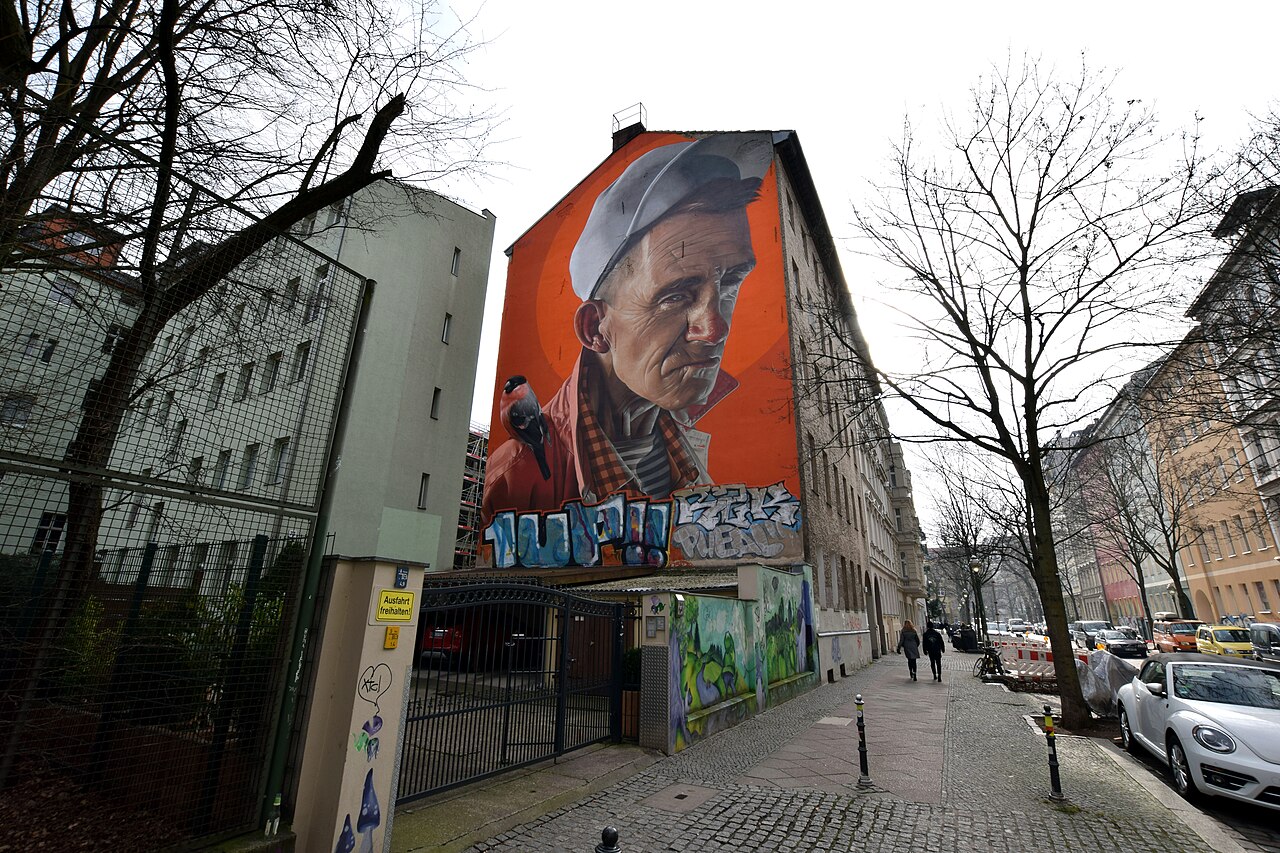

Walls beside the playground
A few streets away, a large wall rises above a fenced court where neighborhood kids play. The wall is covered in layers of graffiti, and in the middle sits a painted portrait of a man in a cap. Paint on top of paint, a face among the lettering.
It is a reminder that Berlin murals are rarely kept apart from daily life. They sit next to basketball hoops, laundry windows and bus stops. People walk under them on the way to somewhere else, and over time the wall becomes part of the address.
Look at the texture of the wall as much as the portrait. Lettering, scribbles and fresh colors crowd the surface, and each layer records somebody's visit. A mural in a place like this is part of a longer conversation, and the portrait holds its own by being calm among the noise.
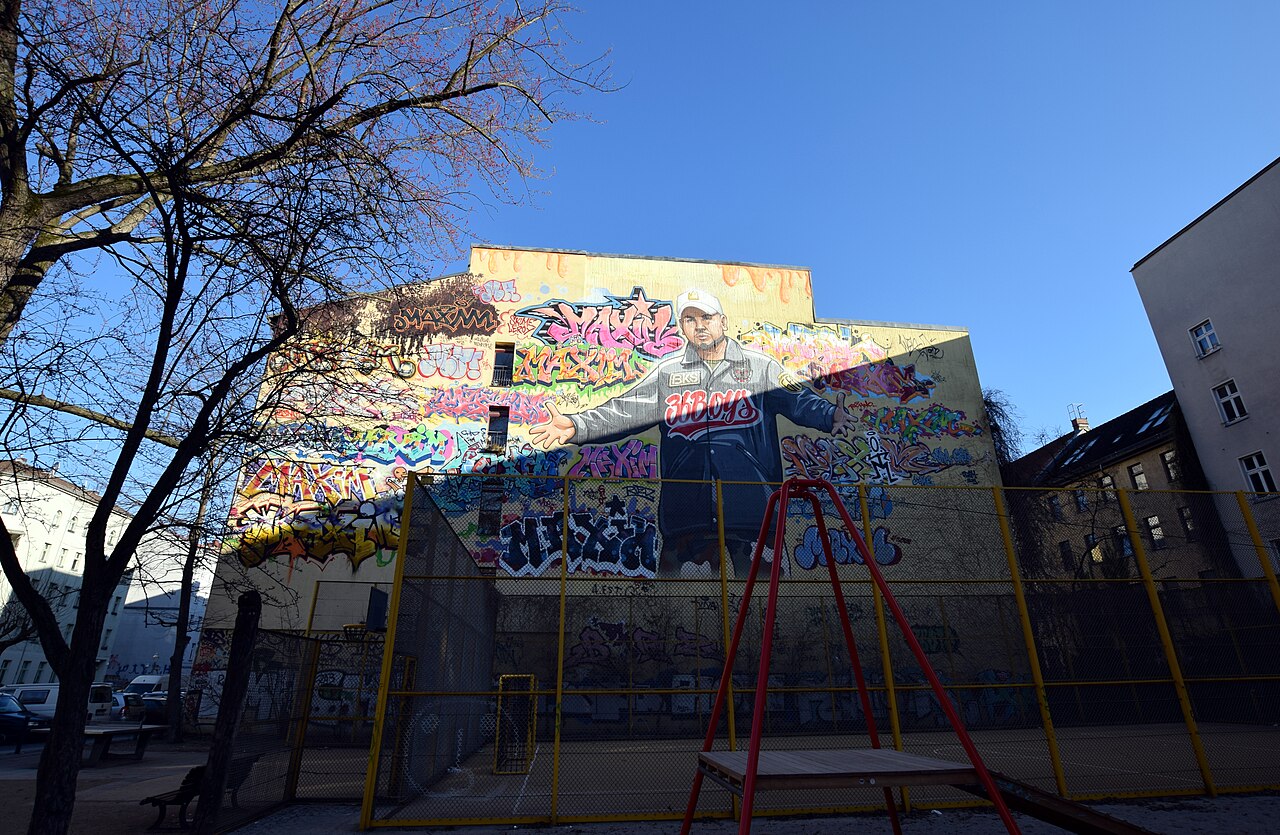

The small stuff counts
Not every wall in Berlin is a giant. On a brick wall along Wrangelstraße, tiny painted figures drift upward with a red balloon among scattered poppies, just above a cobbled sidewalk. You could walk straight past it. Most people do not, because it is the only red on the block.
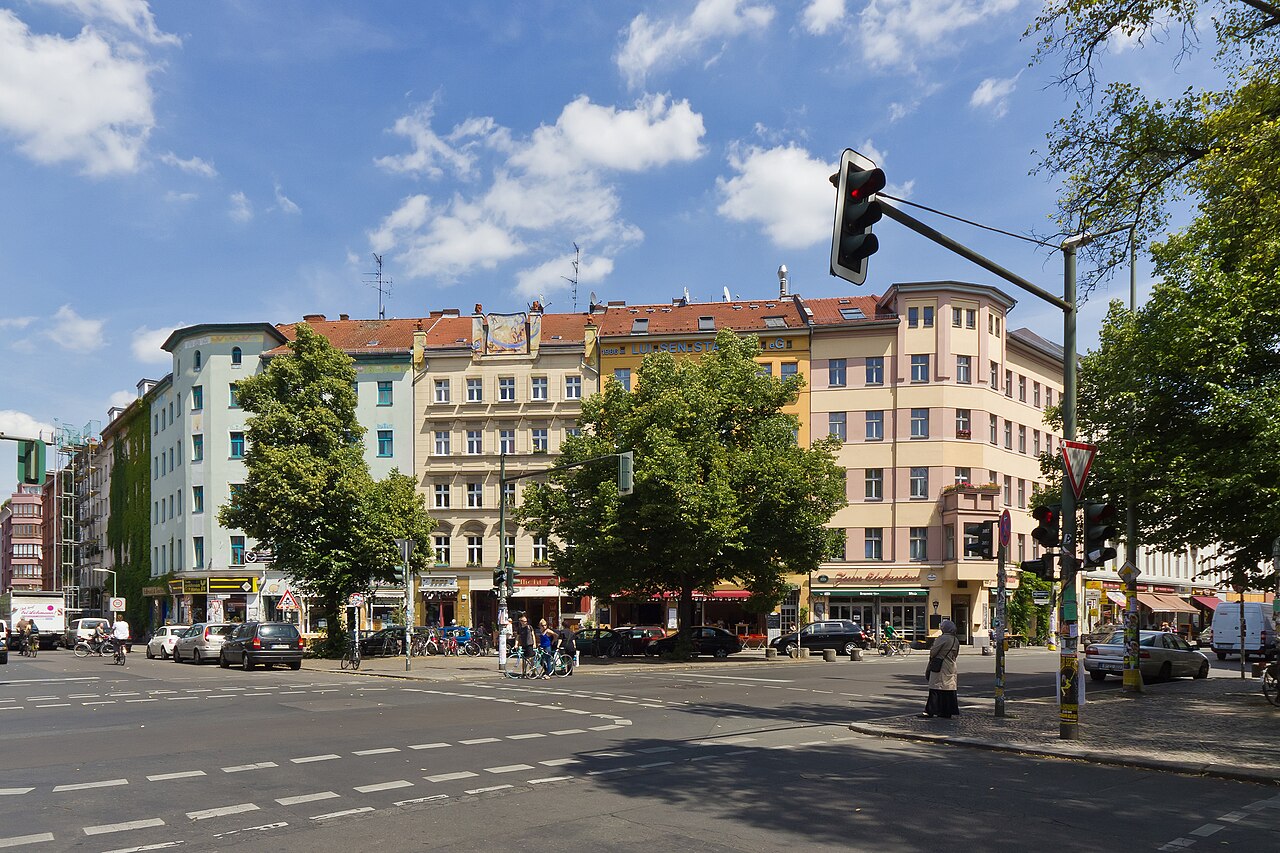
Round the corner at Heinrichplatz, the scene is more ordinary and just as useful to see: older apartment buildings, shops at street level, trees throwing shade on the corner. This is the kind of setting that explains why Berlin street art feels so at home. The walls are already close, human-scaled and lived beside, so a painting does not have to compete with glass and steel.
Small walls are where a city shows its manners. A balloon and a few poppies give the sidewalk a reason to slow down.
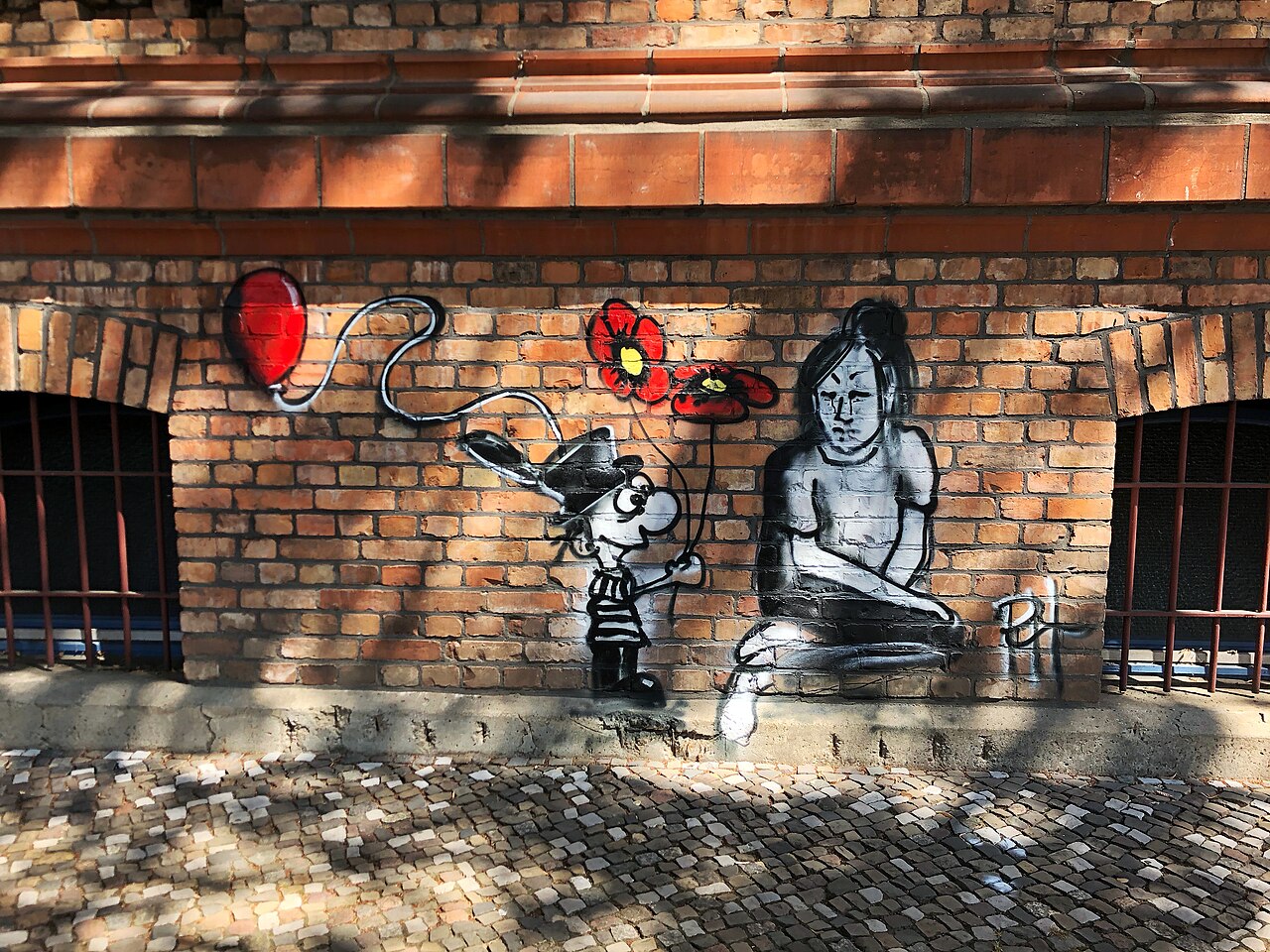


A giant at the river
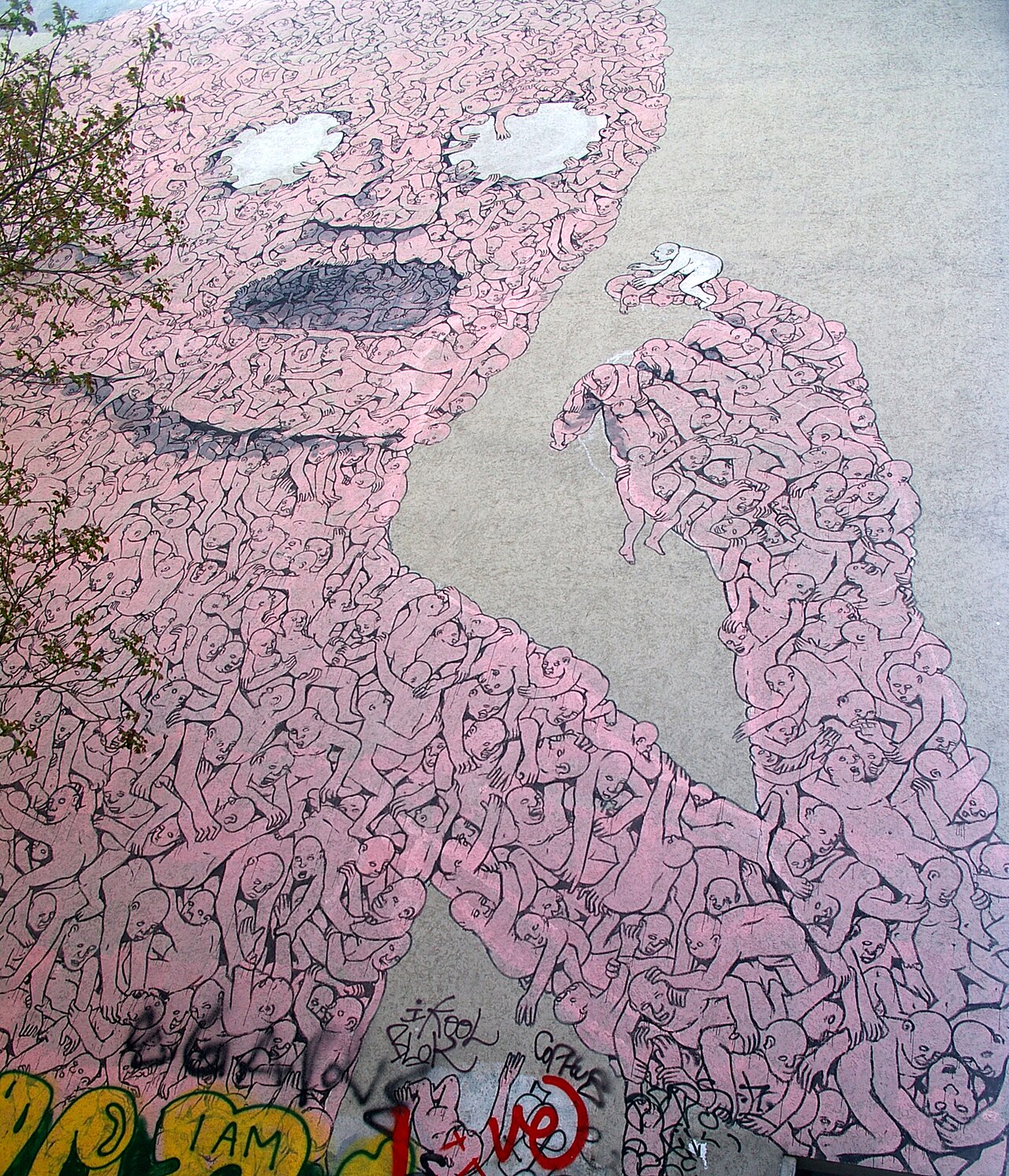
At the western end of the Oberbaum Bridge, a huge pink figure covers a plain wall. Look closely and it is built from many smaller bodies, one great hand reaching out. It is strange, a little unsettling and impossible to forget, the sort of wall visitors go out of their way to find.
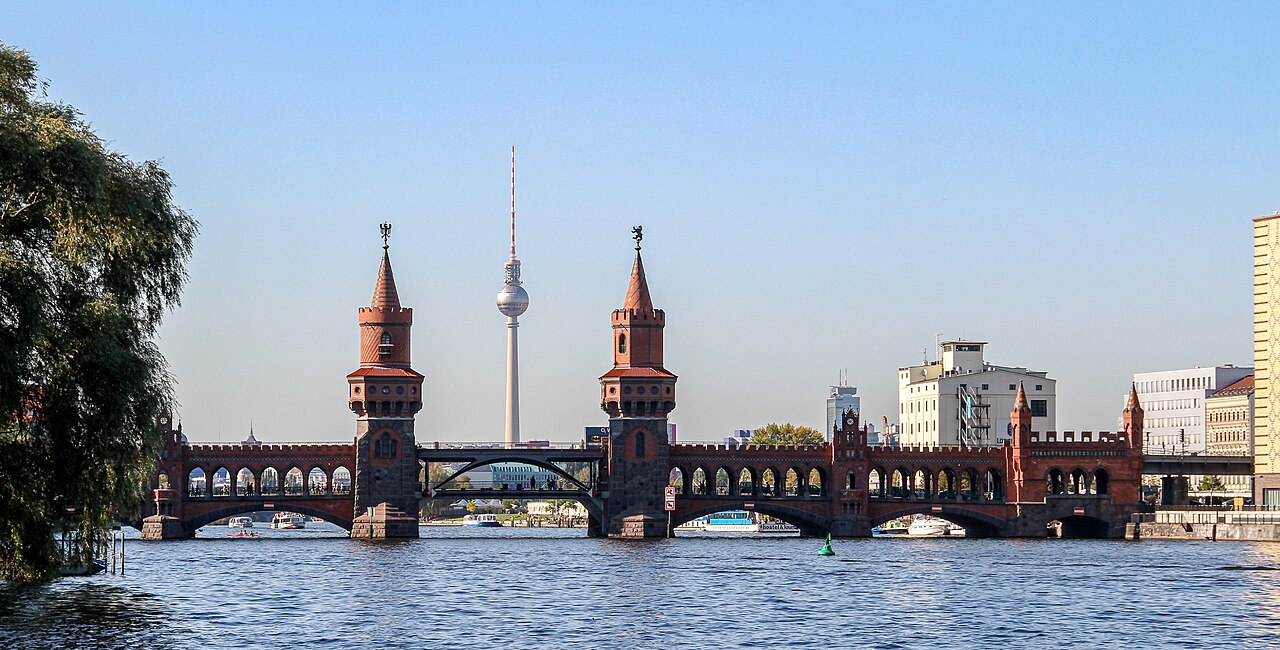
The bridge itself is part of the draw. Its red brick and two towers cross the Spree between Kreuzberg and Friedrichshain, and at sunset the whole crossing glows. Stand at the water and you can take in an old landmark and a giant painting in one view.
Scale matters here. A figure this size can be read from across the water, from the bridge and from a moving train, and each distance gives a different painting. Good wall work plans for all of those viewings at once.


Out east, on a tower
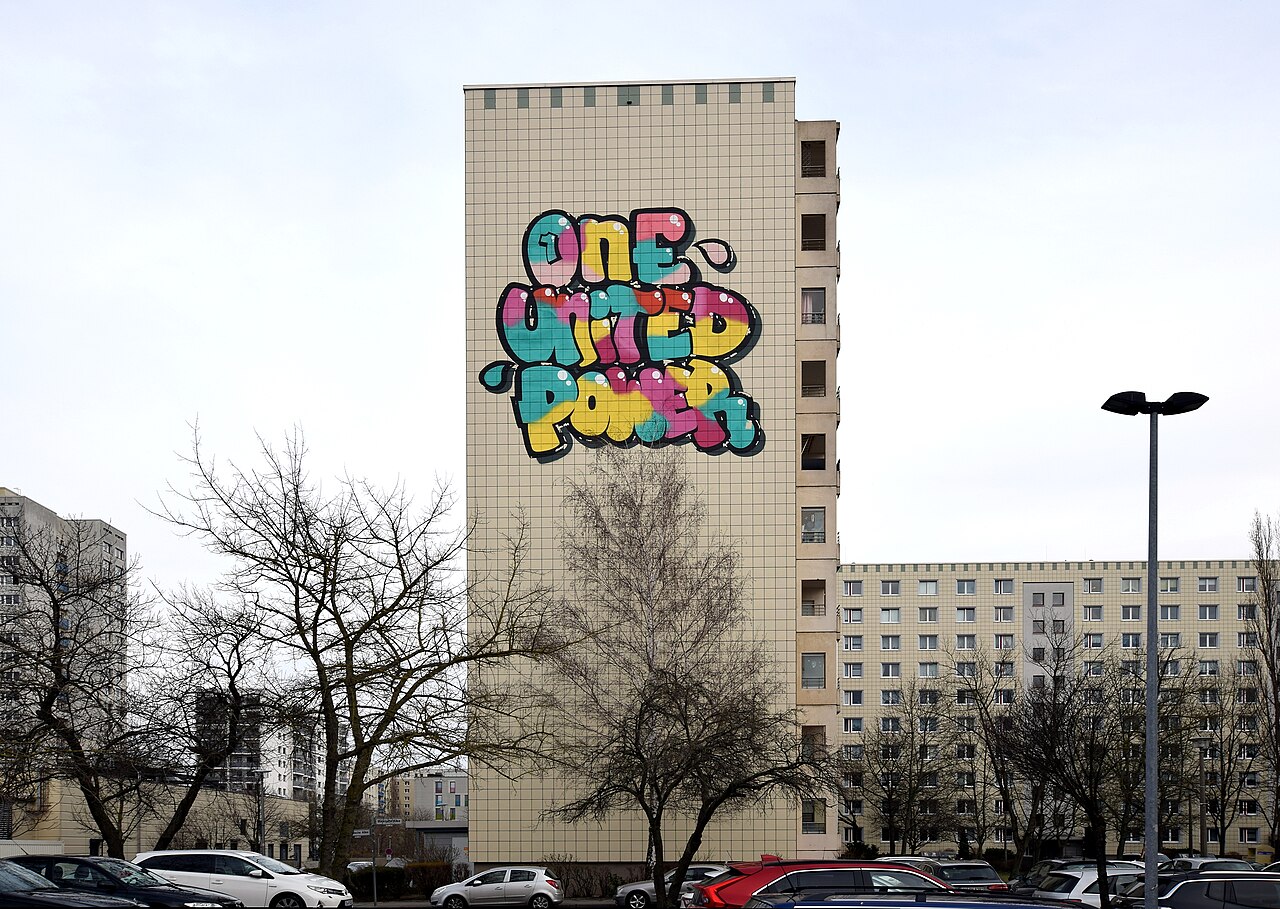
Most Berlin guides stop at Kreuzberg, but the city keeps going. In Marzahn, a tall prefab apartment tower stands above a parking lot, and its side has been lettered in fat, friendly bubble letters. It spells out three words, One United Power, in colors that carry across the whole neighborhood.
This is what a mural can do for a big residential block. It takes a plain slab and gives it a name, a mood and a message. If you came to Berlin only for the postcard streets, a trip out here is a good way to see how far the city's walls reach.
Residents see this wall every morning from their windows and every evening from the parking lot. A painting at that scale has to be friendly on a bad day as well as a good one, and bright bubble letters manage it.

A park named for a wall
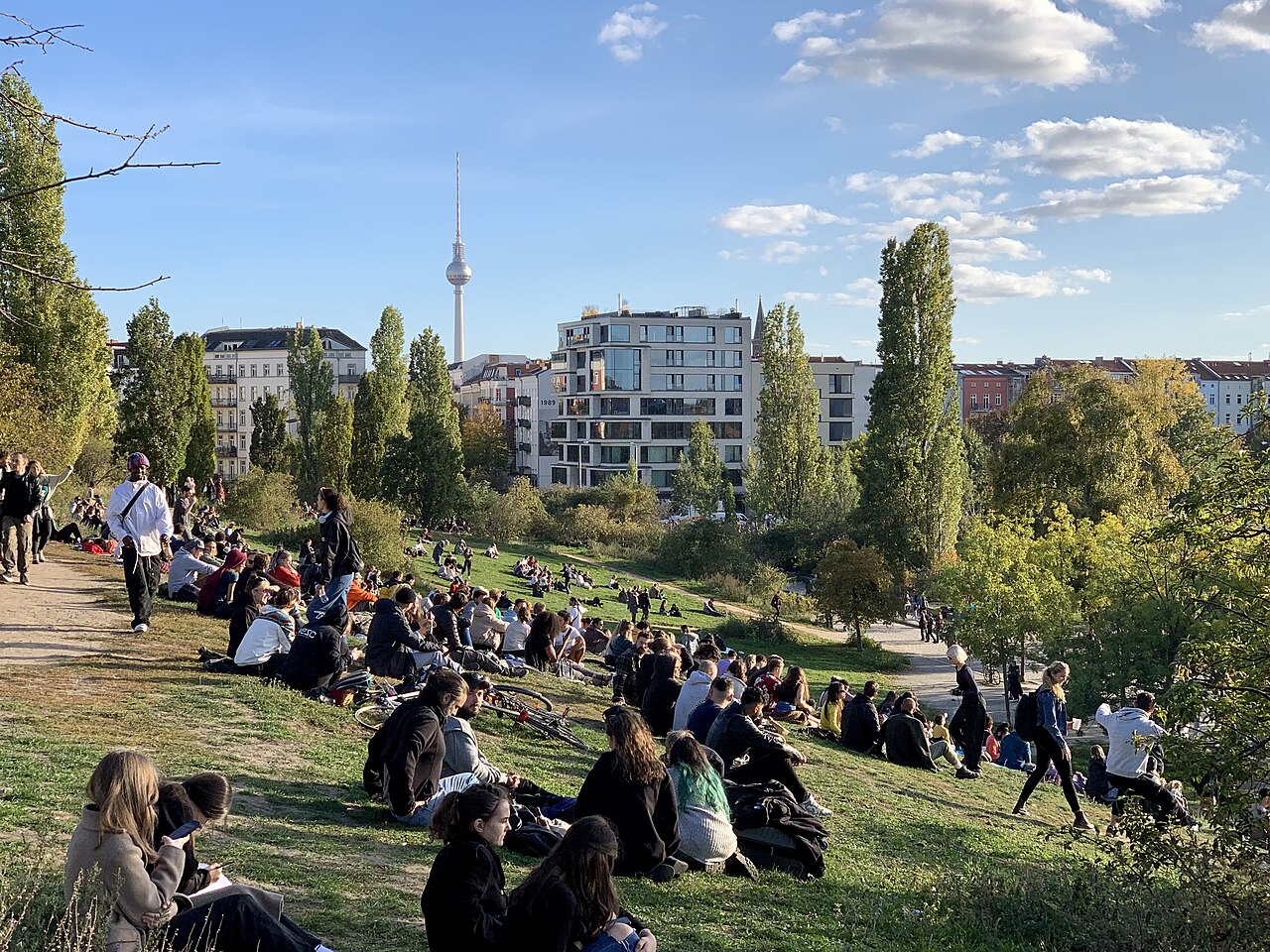
The name Mauerpark means wall park, and on a sunny weekend you will understand why people come. Crowds spread across a grassy slope with the TV tower rising behind the trees, and a city that was once divided by a wall now spends its afternoons sitting on the grass.
It is hard to talk about Berlin murals without feeling that history in the background. A wall here has never been just a surface. Today it is something people choose to paint, and to keep painting.


How a wall gets chosen
Behind every big mural is a plain conversation. Someone owns or manages a wall, someone else sees what it could be, and they agree on a look, a size and a plan. Berlin's walls look so generous partly because many of them were offered up this way.
If you are standing across from a wall of your own, the walk through this story is a decent way to think about it. What should it say to the street? Who walks past it every day? Those are the first questions any good muralist will ask.
Every mural in this story reads differently by night, and the best ones are painted knowing that. Light, distance and the season change what a wall says, so a patient visit rewards a second look.
End the day on the Spree
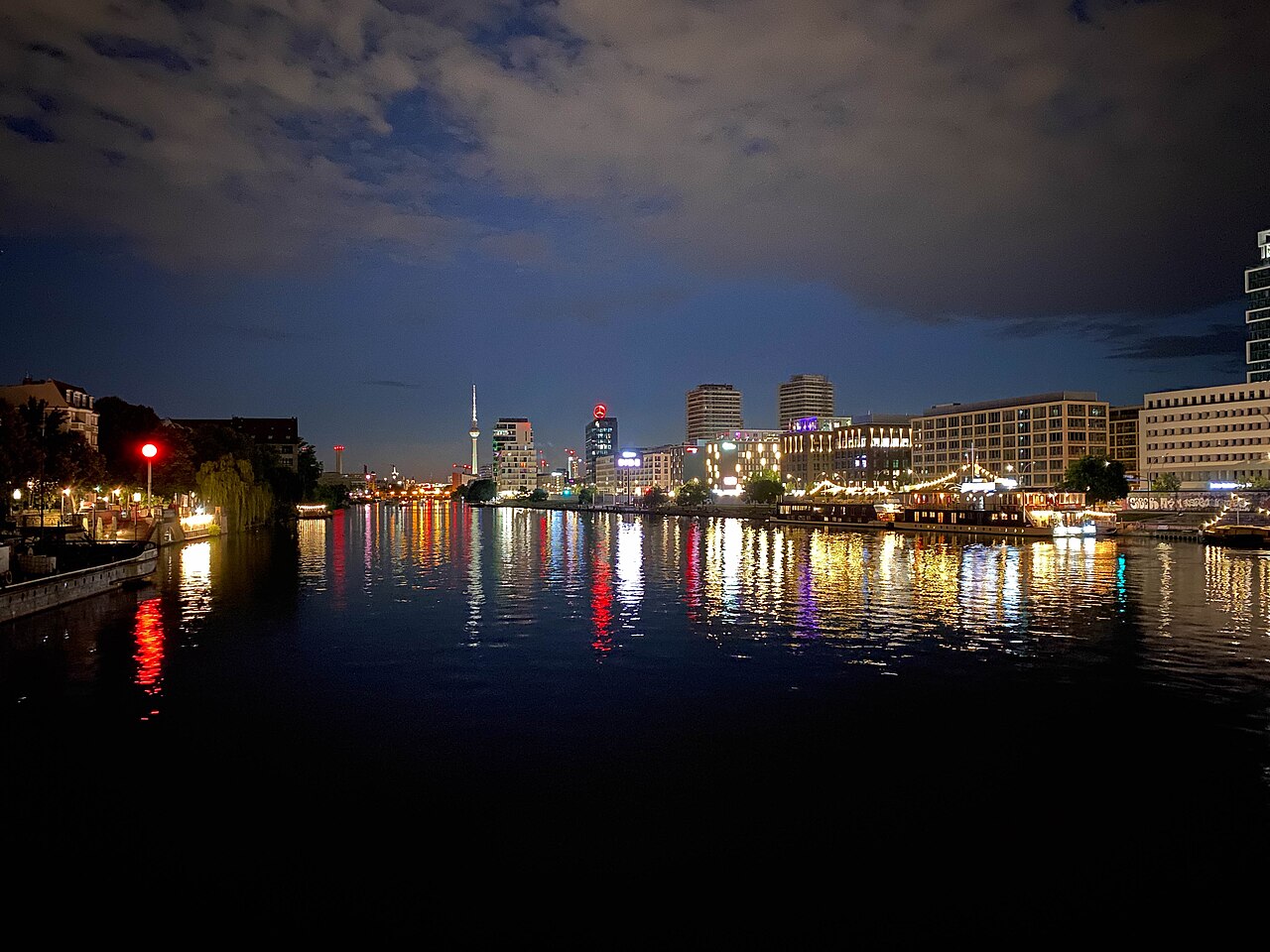
Finish where the city lights up. At night in Friedrichshain, the buildings along the Spree reflect in the water and the TV tower glows in the distance. After a day of looking up at walls, it is a gentle way to close: the city quiet, the paintings resting in the dark, and every one of them waiting for the morning light.

If you have a wall in mind
Every wall in this story started out blank. If you manage a building, or are planning a project in Berlin, and keep looking at a wall that deserves better, we would be glad to hear about it. You can read more about the city in our Berlin guide, or tell us about your wall and we will take it from there.
Frequently asked questions
- Where can I see murals in Berlin?
- Kreuzberg is the easiest place to start, with large gable-end murals, courtyard walls and the giant pink figure near the Oberbaum Bridge. Friedrichshain, the area around Mauerpark and the apartment towers of Marzahn in the east add very different scenes.
- Which Berlin neighborhoods have the best street art?
- Kreuzberg and Friedrichshain are the best-known, and Marzahn offers large murals on prefab apartment towers. Mauerpark and Mitte are good places to pair a walk with the city's landmarks.
- Is street art legal in Berlin?
- It depends on the wall and its owner. A mural painted with the owner's permission is commissioned work, while unsanctioned pieces are treated differently. If you own a wall, agree the design and the terms in writing before anyone paints.
- How do I find a muralist in Berlin for my building?
- Start with a muralist whose style fits your wall and the neighborhood, then talk through the size, surface and look. We help match walls with muralists and handle quotes, contracts and scheduling.
All photos are free-licensed and credited under each image; license links go to the original file pages.