City story · Bogotá · 6 min read
Bogotá Murals: A City Read Off Its Walls
From a hillside viewpoint to old colonial corners, a market aisle and a wetland-side apartment block, a slow walk through the Bogotá murals and street art that give each neighborhood its voice.
Start high, then come down
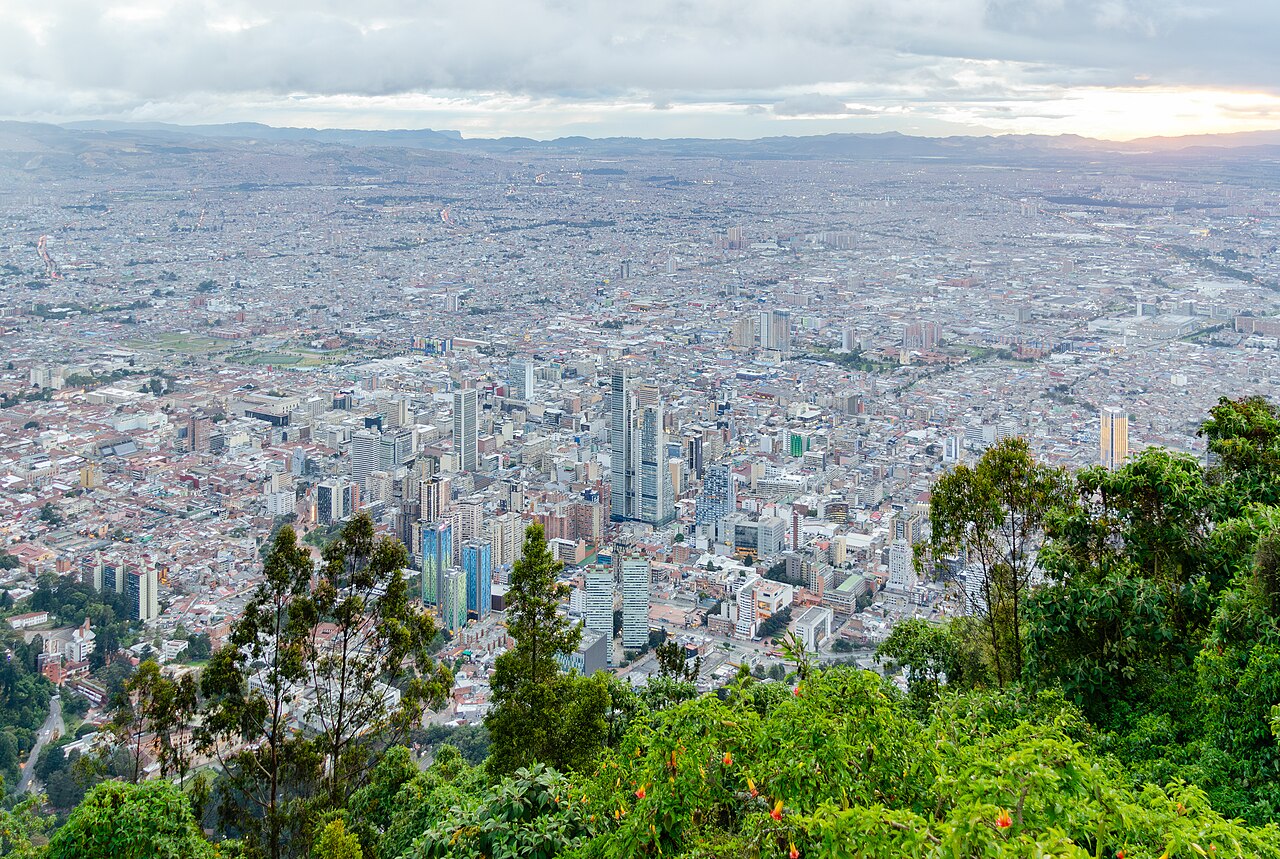
Bogotá is a city you understand better from above. Climb Monserrate near the end of a day, after a rain, and the capital unrolls below you: downtown towers in the middle, neighborhoods spreading out in every direction, and the green of the treetops framing all of it. The city sits high in the Andes, and from up here it looks enormous and a little improbable.
The trick is to carry that view down with you. Every neighborhood in that sprawl has its own walls, and the walls are where you start to tell them apart. Bogotá murals are not one style or one movement. They are what happens when a very large city gives a great many people a surface and a reason.
Give yourself time before you go down. The light changes quickly at that height, and the city goes from grey to gold to blue in the space of a few minutes. It is a good reminder that a wall, like a skyline, looks different depending on when you meet it.

Old rooflines, one painted face
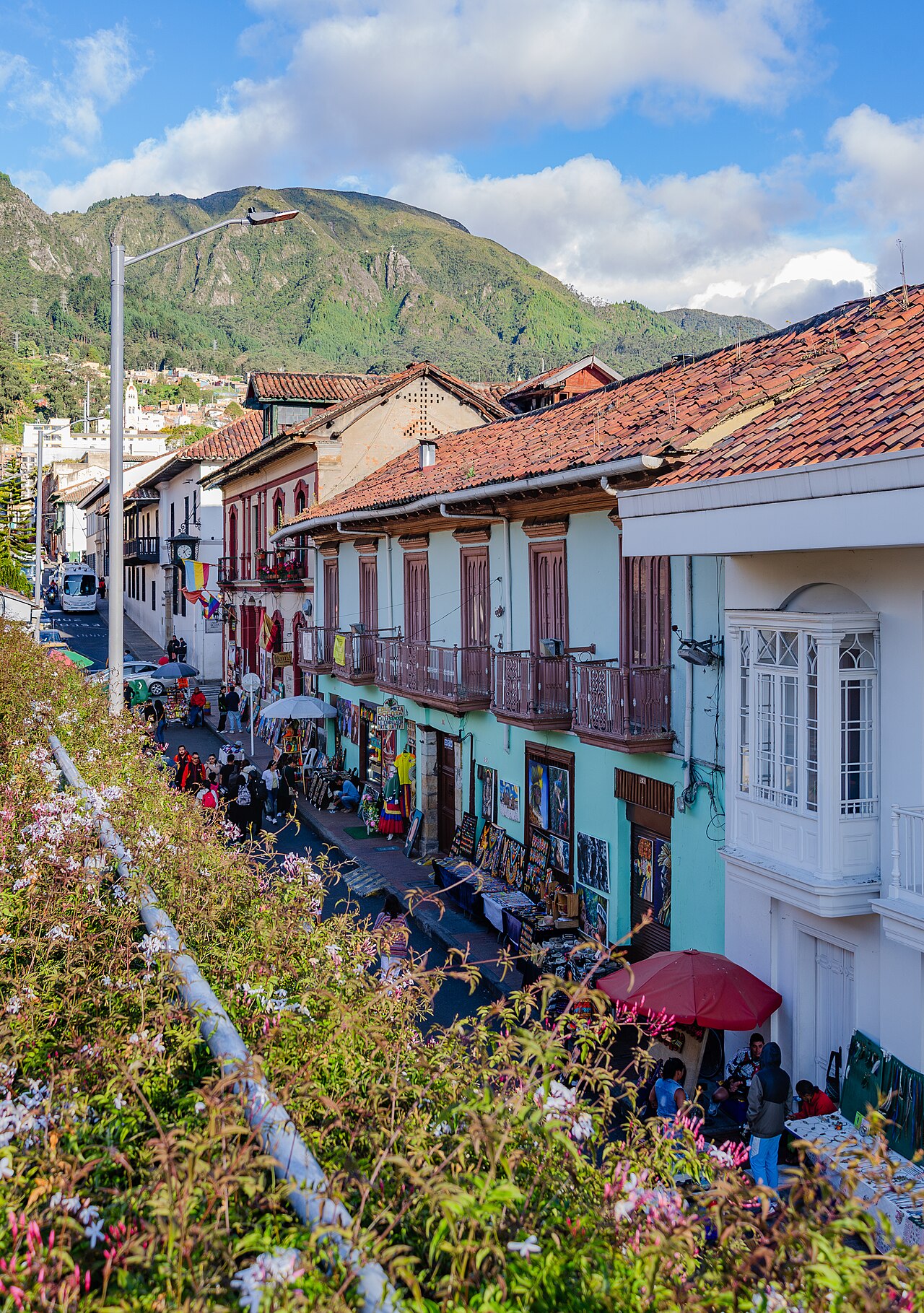
La Candelaria is the old town, and it is the easiest place in the city to lose an afternoon. Cobbled streets run between colonial houses with tile roofs and wooden balconies, vendors set up stalls below, and green mountains stand at the end of nearly every block. It is a neighborhood built to be looked at.
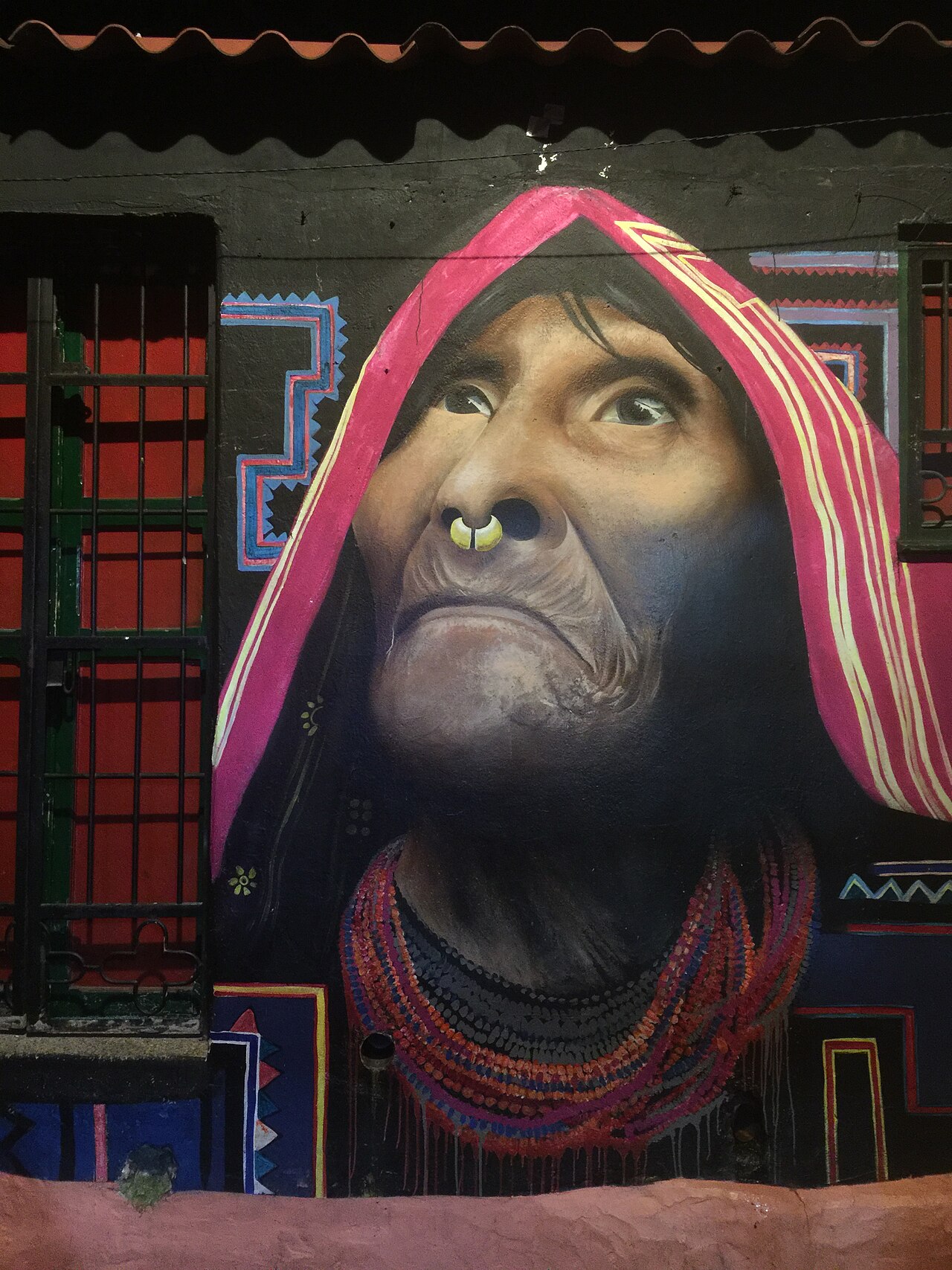
Then you turn a corner and a house wall is a portrait. One large mural, seen here at night, shows an Indigenous woman in a pink hooded shawl and beaded necklaces, with geometric patterns wrapped around her. It is the kind of piece that changes how a plain house reads in the dark. The old town keeps its shape, and the paint gives it a living face.
Anyone searching for Bogotá street art tends to start here, and it is a fair place to begin. Just walk slowly. The best pieces are often a block off the busiest street.


A wall that goes on and on
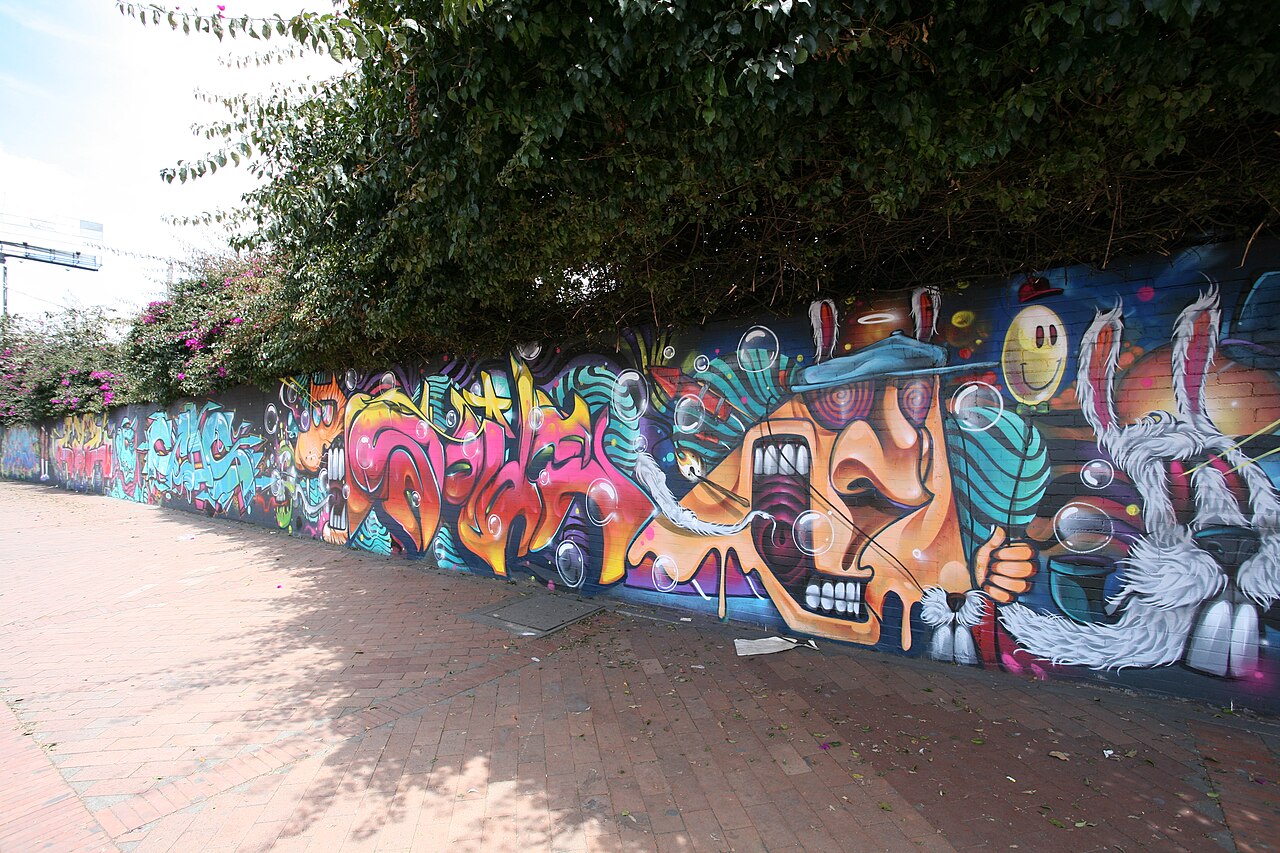
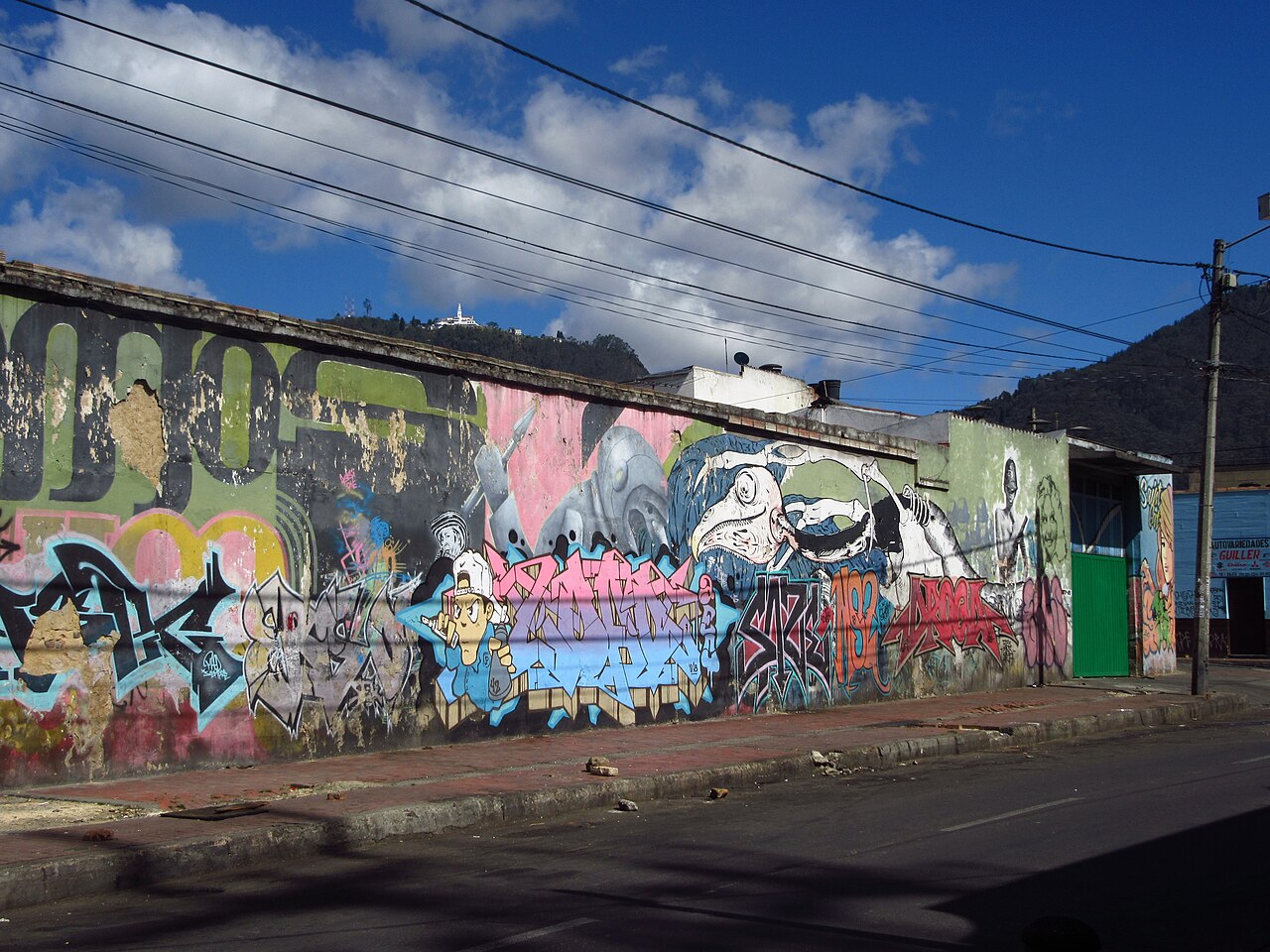
In La Pepita the wall is the main event. A long stretch of it runs down an empty street, covered in layers of graffiti and murals, with a hillside and a small church on the ridge behind. Nobody is posing in front of it. It is just there, doing what walls in a working neighborhood do.
What stands out is the layering. Pieces sit beside and over each other, a few clearly planned and others quick, and the whole thing reads like a conversation that has been going on for years. You can enjoy it without knowing a single name in it.
Walls like this are also a lesson in scale. Seen from the far end of the street, the colors blur into one long band. Up close, individual letters, faces and patterns separate out. The best murals reward both distances, and the best streets give you room to step back.

A wrench, a headscarf, a neighborhood
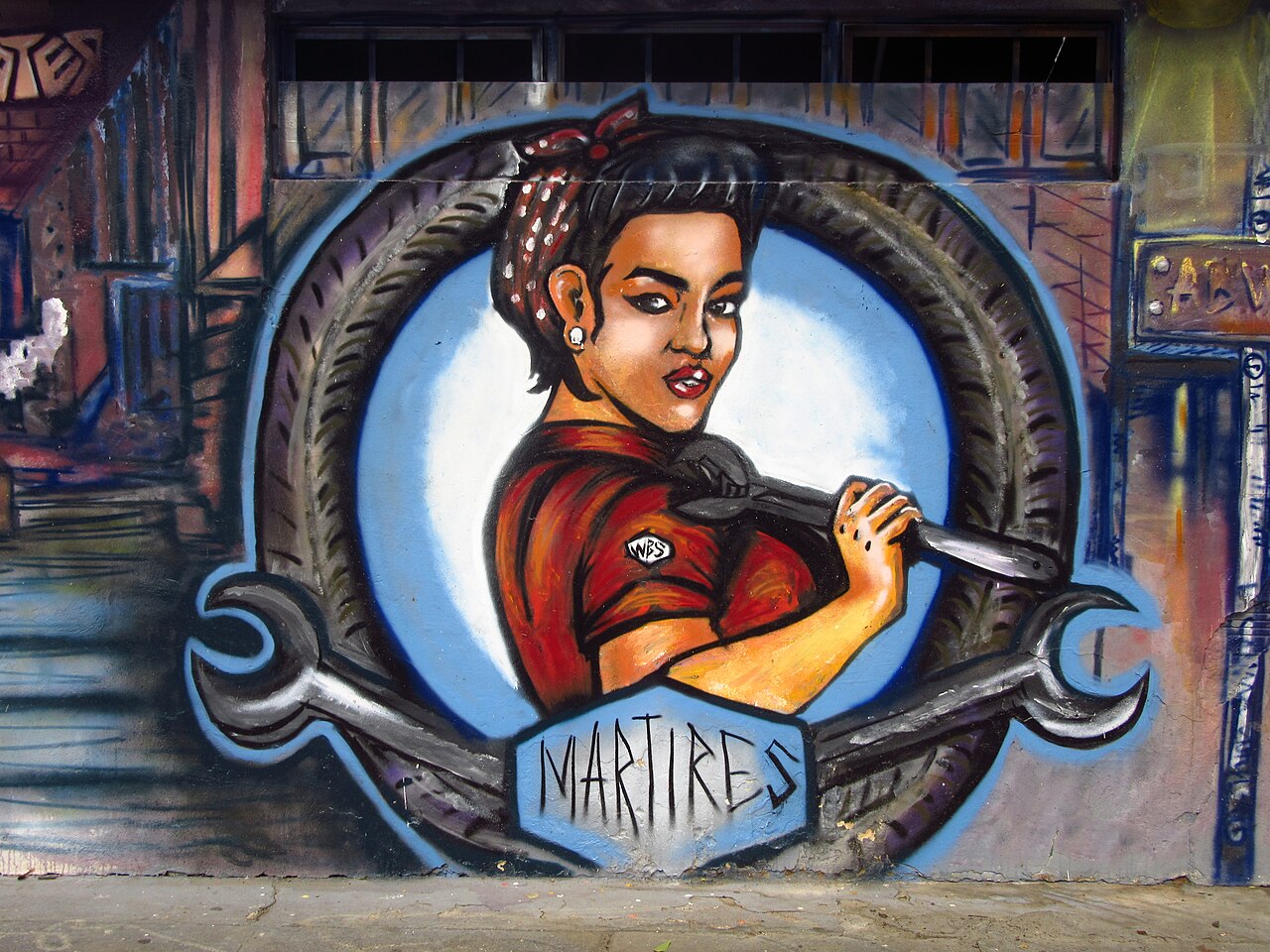
Los Mártires does not look like a postcard, and the mural in La Estanzuela does not try to. A woman in a polka-dot headscarf holds a wrench, framed by tires and more wrenches, with the word Mártires painted below. It is bold, direct and a little funny.
It also does something a mural can do better than almost anything else: it says what the neighborhood is about, in a way people on the street recognize. A painted worker with her tools tells you more about a block than a sign would.
Ask anyone who has lived on a block with a painted wall and they will tell you the same thing: after a while the wall becomes the landmark. People give directions by it, meet in front of it and notice at once if it changes.

Color you can buy by the crate
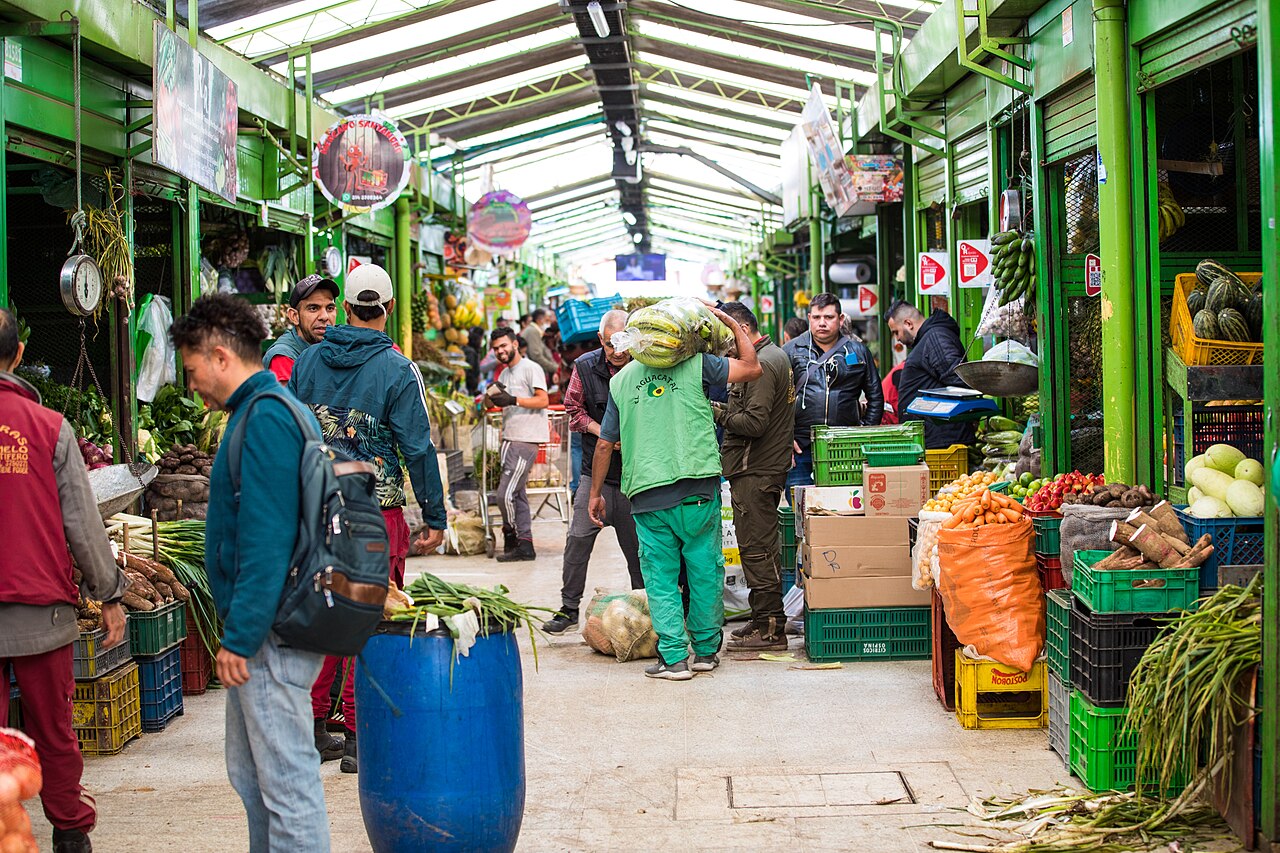
Not every colorful wall is painted. Inside the Paloquemao fresh-produce market, stalls of green vegetables, fruit and stacked crates run down a covered aisle while workers carry sacks past. The color here is made of food, and it is as much a part of Bogotá's character as any wall outside.
It is worth stopping for. A city's murals make more sense once you have seen where its people shop, work and talk over the day. The paint on the street and the produce in the aisle are the same instinct: make the everyday look good.

A big plaza and a Sunday street
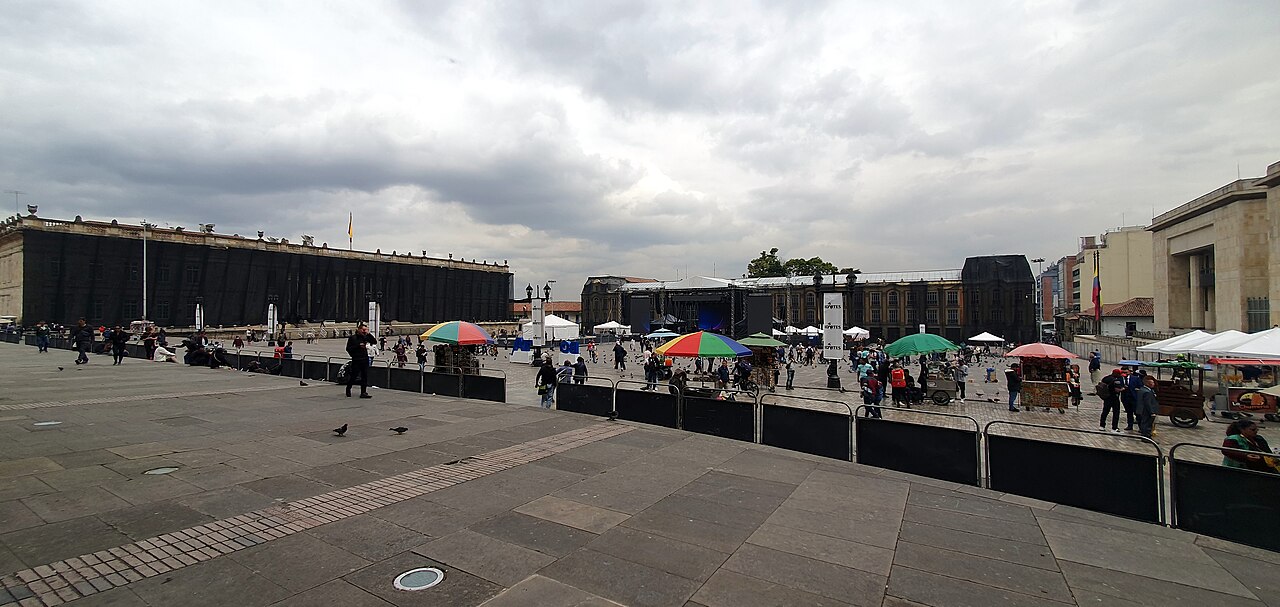
Plaza de Bolívar is the city's formal heart: a wide stone plaza under a grey sky, historic buildings along its edges, vendor carts with colorful umbrellas scattered across it. It is a place of ceremony, and the color comes in small, human flecks.
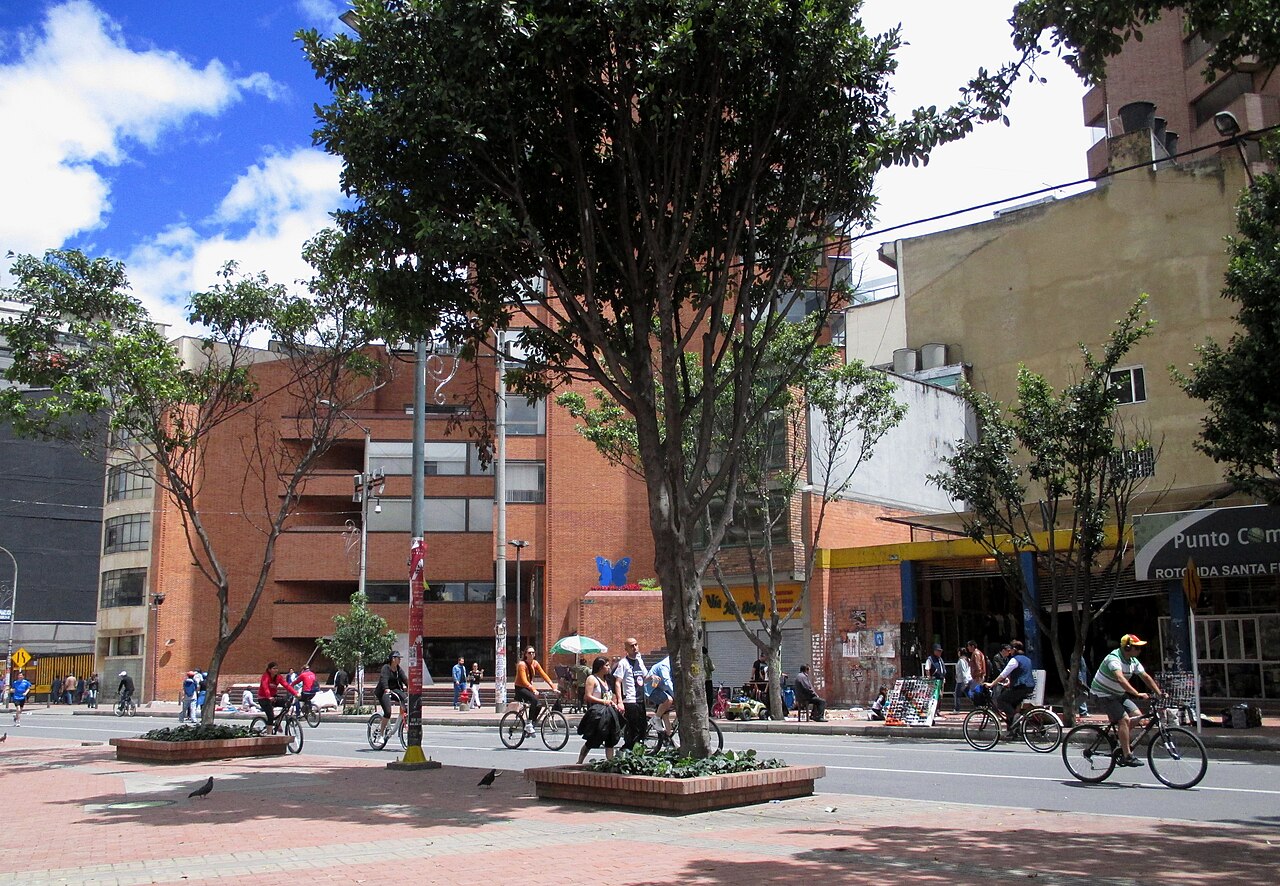
On Sundays, the city does something that suits a mural lover. Streets such as the Carrera Séptima close to cars for the ciclovía, and cyclists and walkers take over beside brick buildings and trees. Wall art is meant to be seen at the speed of a person, and that is the speed of a Sunday in Bogotá.
If you are planning a visit, pair the plaza with a wander through the streets around it. The contrast between the stone and ceremony of the square and the paint and noise a few blocks away is a big part of what makes the city feel layered.


Along the bus lane
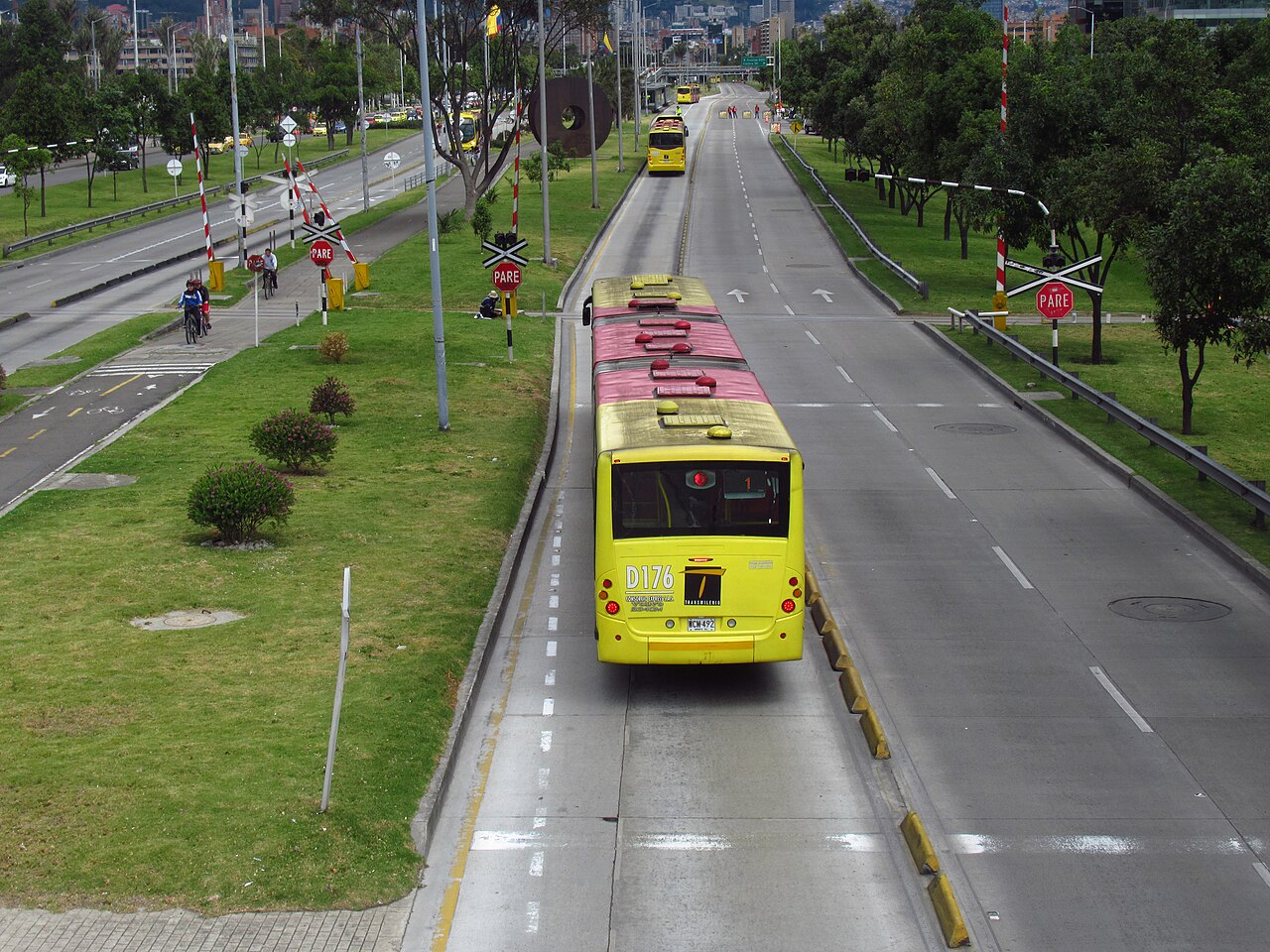
Calle 26 is a different Bogotá: a wide green avenue with a dedicated lane where a yellow articulated TransMilenio bus slides past a cyclist and the city beyond. It is a corridor, built for moving, and a good reminder that most people meet public art while they are going somewhere else.
That is the quiet strength of the form. A wall asks nothing of you. It is simply there on the commute, and over a year it becomes part of how a person remembers a place.
Look up next time you are stuck at a stop. The blank concrete along a transit corridor is some of the most-seen wall space in any city, and the walls that make the most of it tend to be the ones people remember.

Birds on an apartment block
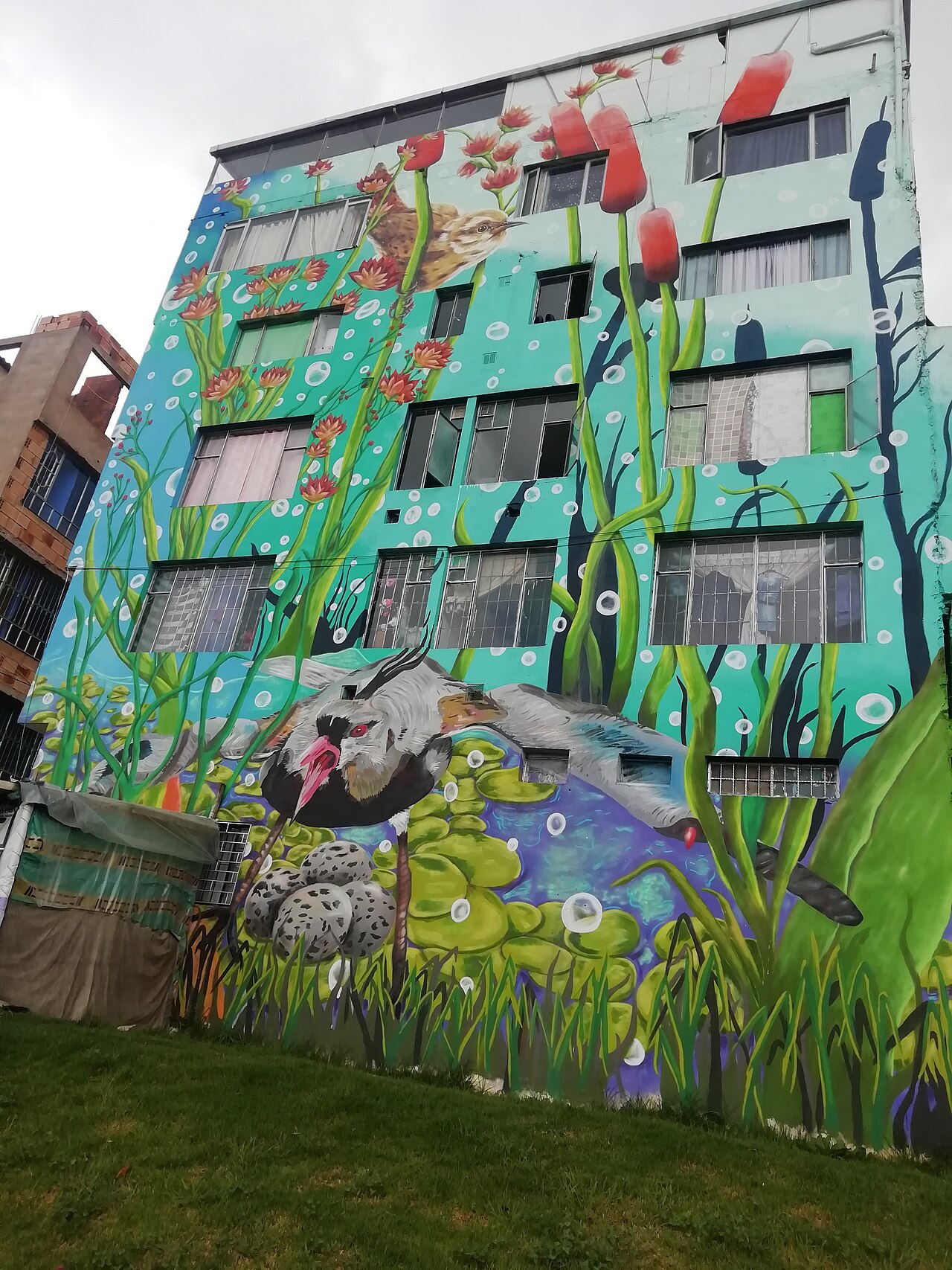
Out in Engativá, beside the Jaboque wetland, a whole side of a multi-story apartment building has been painted with wetland birds, nest eggs, reeds and water plants in teal and green. It is a mural that points at the thing nearest to it, the wetland itself, and asks the people who live in the building to notice it.
For anyone who manages a building, it is the most useful example in this story. A blank side wall can speak for the place around it. The right image makes residents proud of where they live, and gives visitors a clear sense of where they are.

If you have a wall in mind
Every wall in this story began as somebody's blank surface and a decision to leave it less blank. If you manage a building and have a wall you keep looking at, we would be glad to hear about it. You can also see more of the city on our Bogotá page, or tell us about your wall and we will take it from there.
Frequently asked questions
- Where can I see murals in Bogotá?
- Good places to start are La Candelaria, La Pepita, Los Mártires and the area around the Jaboque wetland in Engativá. Many of the best walls are a block or two off the busiest streets, so walking is the best way to find them.
- Which Bogotá neighborhoods have the best street art?
- La Candelaria is the easiest first stop, with portraits on house walls in the old town. La Pepita has long layered walls, and Los Mártires has bold neighborhood murals such as the one in La Estanzuela.
- Is street art legal in Bogotá?
- Rules depend on the wall, the owner and the city's current regulations. Murals painted with a property owner's permission are commissioned or agreed work. If you own a wall, get the agreement in writing and confirm local requirements before painting.
- How do I find a muralist in Bogotá for my building?
- Start with a muralist whose style fits the wall and the neighborhood, then talk through the size, surface and look. We help match walls with muralists and handle quotes, contracts and scheduling.
All photos are free-licensed and credited under each image; license links go to the original file pages.
Historia de la ciudad · Bogotá · 6 min de lectura
Murales en Bogotá: una ciudad que se lee en sus muros
Desde un mirador en el cerro hasta las esquinas coloniales, un pasillo de plaza de mercado y un edificio junto al humedal: un recorrido pausado por los murales y el arte urbano de Bogotá que le dan voz a cada barrio.
Empiece arriba y baje despacio
Bogotá es una ciudad que se entiende mejor desde lo alto. Suba a Monserrate hacia el final de la tarde, después de un aguacero, y la capital se despliega a sus pies: las torres del centro en medio, los barrios extendiéndose en todas las direcciones y el verde de las copas de los árboles enmarcándolo todo. La ciudad está en lo alto de los Andes y desde aquí se ve inmensa y un poco inverosímil.
Lo ideal es llevarse esa vista cuando baje. Cada barrio de esa extensión tiene sus propios muros, y en los muros empieza uno a distinguirlos. Los murales de Bogotá no son un solo estilo ni un solo movimiento. Son lo que pasa cuando una ciudad muy grande les da a muchas personas una superficie y una razón.
Tómese su tiempo antes de bajar. La luz cambia rápido a esa altura y la ciudad pasa del gris al dorado y al azul en pocos minutos. Es un buen recordatorio de que un muro, como un horizonte, se ve distinto según el momento en que uno lo encuentra.
Techos antiguos y un rostro pintado
La Candelaria es el centro histórico y el lugar más fácil de la ciudad para perder una tarde. Las calles empedradas corren entre casas coloniales de techos de teja y balcones de madera, los vendedores arman sus puestos abajo y las montañas verdes aparecen al final de casi todas las cuadras. Es un barrio hecho para mirarlo.
Entonces usted dobla una esquina y el muro de una casa es un retrato. Un gran mural, visto aquí de noche, muestra a una mujer indígena con un manto rosado con capucha y collares de cuentas, rodeada de patrones geométricos. Es el tipo de obra que cambia la forma en que se lee una casa sencilla en la oscuridad. El centro antiguo conserva su forma y la pintura le da un rostro vivo.
Quien busca arte urbano en Bogotá suele empezar por aquí, y es un buen punto de partida. Eso sí, camine despacio. Las mejores obras suelen estar una cuadra más allá de la calle más transitada.
Un muro que no se acaba
En La Pepita, el muro es el protagonista. Un tramo largo recorre una calle vacía, cubierto de capas de grafiti y murales, con una ladera y una pequeña iglesia en la cima al fondo. Nadie posa frente a él. Simplemente está ahí, haciendo lo que hacen los muros en un barrio trabajador.
Lo que más llama la atención son las capas. Las obras se acomodan unas junto a otras y unas sobre otras, algunas claramente planeadas y otras hechas de afán, y el conjunto se lee como una conversación que lleva años. Se puede disfrutar sin conocer un solo nombre.
Muros como este también enseñan sobre la escala. Vistos desde el extremo de la calle, los colores se funden en una sola franja larga. De cerca se separan las letras, los rostros y los patrones. Los mejores murales premian ambas distancias, y las mejores calles dan espacio para retroceder.
Una llave inglesa, un pañuelo, un barrio
Los Mártires no parece una postal, y el mural de La Estanzuela tampoco lo intenta. Una mujer con pañuelo de lunares en la cabeza sostiene una llave inglesa, enmarcada por llantas y más llaves, con la palabra Mártires pintada debajo. Es atrevido, directo y un poco divertido.
También hace algo que un mural puede hacer mejor que casi cualquier otra cosa: dice de qué se trata el barrio, de una manera que la gente de la calle reconoce. Una trabajadora pintada con sus herramientas le cuenta más sobre una cuadra que un aviso.
Pregúntele a cualquiera que haya vivido en una cuadra con un muro pintado y le dirá lo mismo: con el tiempo, el muro se vuelve punto de referencia. La gente da indicaciones a partir de él, se encuentra frente a él y nota de inmediato si algo cambia.
Color que se compra por cajas
No todo muro colorido está pintado. Dentro de la plaza de mercado de Paloquemao, los puestos de verduras verdes, frutas y cajas apiladas se alinean en un pasillo techado mientras los trabajadores cargan bultos. Aquí el color está hecho de comida, y es tan parte del carácter de Bogotá como cualquier muro de la calle.
Vale la pena detenerse. Los murales de una ciudad cobran más sentido cuando uno ha visto dónde compra, trabaja y conversa su gente a lo largo del día. La pintura en la calle y las frutas en el pasillo nacen del mismo impulso: hacer que lo cotidiano se vea bien.
Una gran plaza y una calle de domingo
La Plaza de Bolívar es el corazón formal de la ciudad: una amplia plaza de piedra bajo un cielo gris, con edificios históricos en sus bordes y carritos de vendedores con sombrillas de colores repartidos por ella. Es un lugar de ceremonia, y el color llega en pequeños destellos humanos.
Los domingos, la ciudad hace algo que le gustará a quien quiere ver murales. Calles como la Carrera Séptima se cierran a los carros para la ciclovía, y ciclistas y caminantes toman el espacio junto a edificios de ladrillo y árboles. El arte mural está hecho para verse a la velocidad de una persona, y esa es la velocidad de un domingo en Bogotá.
Si planea una visita, combine la plaza con un paseo por las calles de alrededor. El contraste entre la piedra y la ceremonia de la plaza y la pintura y el bullicio a pocas cuadras es buena parte de lo que hace que la ciudad se sienta hecha de capas.
Junto al carril del bus
La Calle 26 es otra Bogotá: una avenida ancha y verde con un carril exclusivo por donde un bus articulado amarillo de TransMilenio pasa junto a un ciclista y la ciudad al fondo. Es un corredor, hecho para moverse, y un buen recordatorio de que la mayoría de la gente se encuentra con el arte público mientras va para otro lado.
Esa es la fuerza silenciosa del oficio. Un muro no le pide nada a nadie. Está ahí, en el trayecto diario, y con el paso del año se vuelve parte de cómo una persona recuerda un lugar.
La próxima vez que se quede detenido en una parada, levante la mirada. El concreto desnudo a lo largo de un corredor de transporte es uno de los espacios de muro más vistos de cualquier ciudad, y los muros que mejor lo aprovechan suelen ser los que la gente recuerda.
Aves en un edificio de apartamentos
En Engativá, junto al humedal Jaboque, toda una fachada lateral de un edificio de apartamentos de varios pisos está pintada con aves de humedal, huevos en el nido, juncos y plantas acuáticas en tonos verdeazulados y verdes. Es un mural que señala lo que tiene más cerca, el propio humedal, y les pide a quienes viven en el edificio que se fijen en él.
Para quien administra un edificio, es el ejemplo más útil de este recorrido. Un muro lateral en blanco puede hablar por el lugar que lo rodea. La imagen adecuada llena de orgullo a los residentes por el lugar donde viven y les da a los visitantes una idea clara de dónde están.
Si tiene un muro en mente
Cada muro de este recorrido empezó como la superficie en blanco de alguien y la decisión de dejarla menos en blanco. Si administra un edificio y tiene un muro que no deja de mirar, con gusto lo escucharemos. También puede ver más de la ciudad en nuestra página de Bogotá, o cuéntenos sobre su muro y nosotros nos encargamos del resto.
Preguntas frecuentes
- ¿Dónde puedo ver murales en Bogotá?
- Buenos lugares para empezar son La Candelaria, La Pepita, Los Mártires y la zona del humedal Jaboque, en Engativá. Muchos de los mejores muros están a una o dos cuadras de las calles más transitadas, así que caminar es la mejor forma de encontrarlos.
- ¿Qué barrios de Bogotá tienen el mejor arte urbano?
- La Candelaria es la primera parada más fácil, con retratos en los muros de las casas del centro histórico. La Pepita tiene largos muros de capas superpuestas, y Los Mártires tiene murales de barrio atrevidos, como el de La Estanzuela.
- ¿Es legal el arte urbano en Bogotá?
- Las reglas dependen del muro, del propietario y de la normativa vigente de la ciudad. Los murales pintados con permiso del propietario son trabajos encargados o acordados. Si usted es dueño de un muro, deje el acuerdo por escrito y confirme los requisitos locales antes de pintar.
- ¿Cómo encuentro un muralista en Bogotá para mi edificio?
- Empiece por un muralista cuyo estilo vaya con el muro y con el barrio, y converse sobre el tamaño, la superficie y el resultado que busca. Nosotros ayudamos a unir muros con muralistas y nos encargamos de las cotizaciones, los contratos y la programación.
Todas las fotos tienen licencia libre y llevan su crédito bajo cada imagen; los enlaces de licencia llevan a las páginas de los archivos originales.