City story · Boston · 6 min read
Boston Murals: A City Read Through Its Walls
From a station stairway to a library staircase, a Chinatown side street and a long blue wall by the harbor, a walk through the Boston murals and street art that give each neighborhood its own voice.
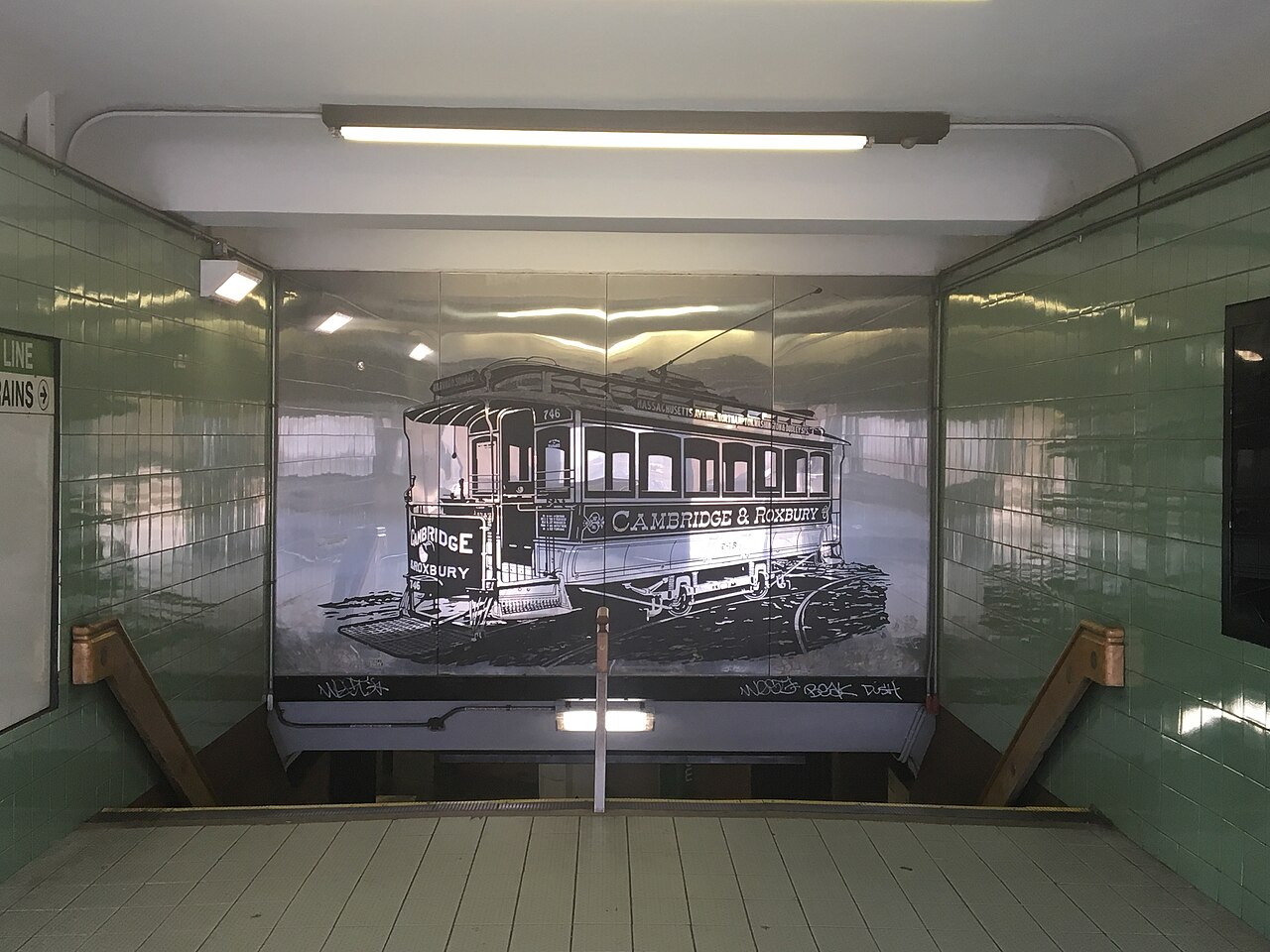
Take the stairs at Hynes
Plenty of cities hide their best walls. Boston puts one at the bottom of a stairway. At Hynes Convention Center station in Back Bay, a black-and-white mural of an old Cambridge and Roxbury streetcar waits at the foot of the steps, so that people heading underground meet a picture of how earlier riders did the same thing.
It is a quiet kind of public art. Nobody stops to pose in front of it, and it does not need them to. It simply makes a utilitarian place feel like it has a memory, which is one of the oldest jobs a mural has. Boston murals often work like this: not as a destination, but as a small improvement to a trip you were already making.

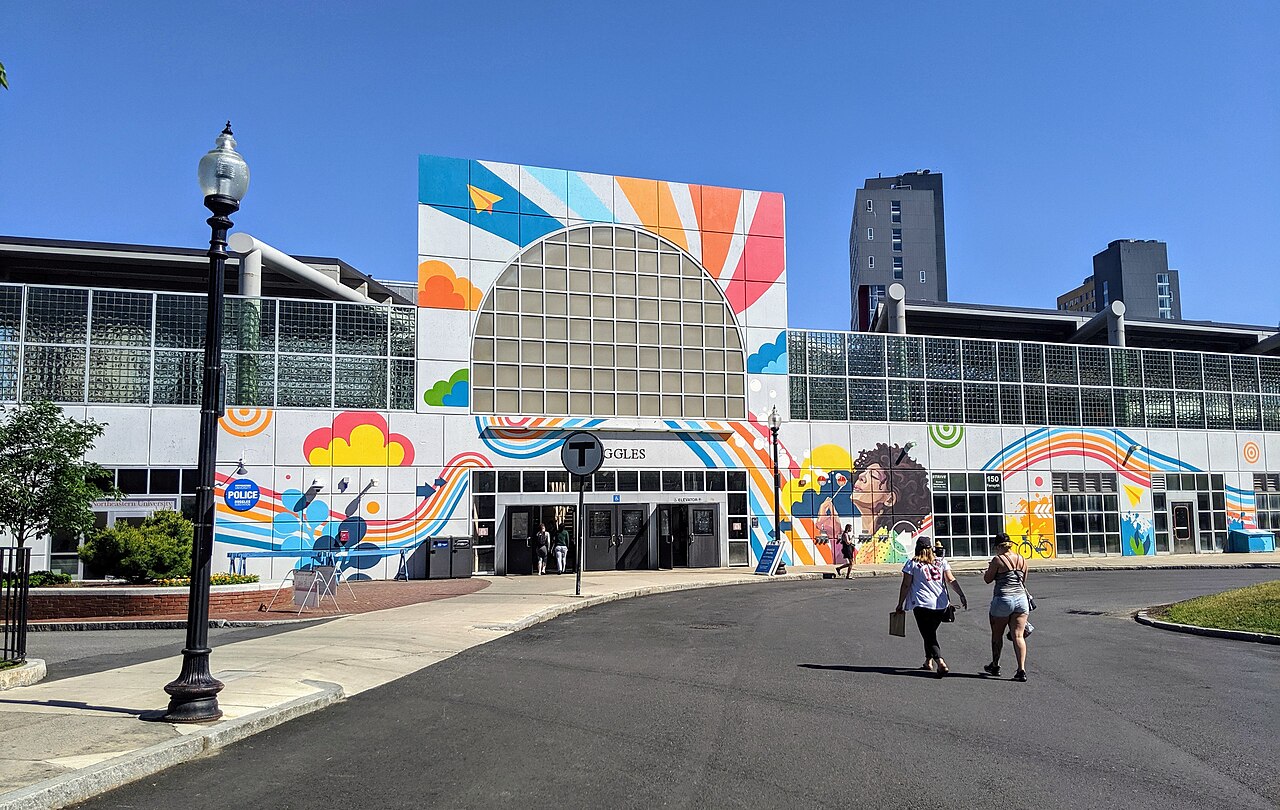
A portrait at Ruggles
Head toward Roxbury and the palette changes. The north entrance to Ruggles station is covered in a bright, colorful mural that includes a woman’s portrait, and on a sunny day the whole entrance seems to glow.
A transit entrance is a good place for a face. Thousands of people pass through without a reason to look up, and a large painted portrait gives them one. It also tells you something about the neighborhood before you have walked a block of it: this is a place that wants to be seen.

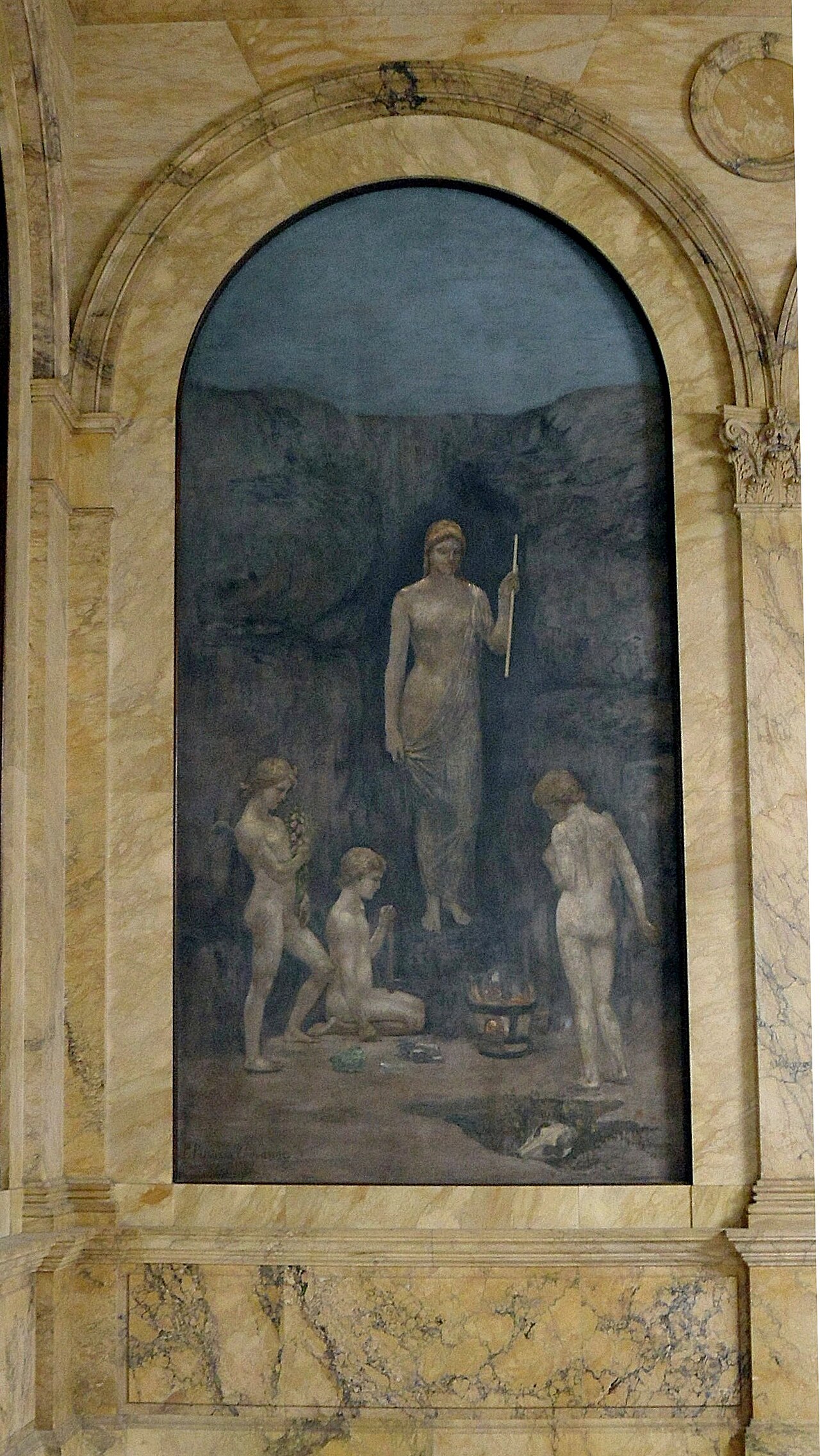
Before spray paint, there was the staircase
Not every wall in Boston came from a can. In Back Bay, the main staircase of the Boston Public Library’s McKim Building is lined with painted murals in an arch of yellow marble, including one of a robed figure and three others gathered around a small fire.
It is a good reminder that the city has been putting paint on walls for a very long time, and that a mural in a public building was once a sign of civic pride long before anyone called it street art. Walk up slowly. The scale is the lesson: a painting that belongs to the room it hangs in.

Chinatown, above the storefronts
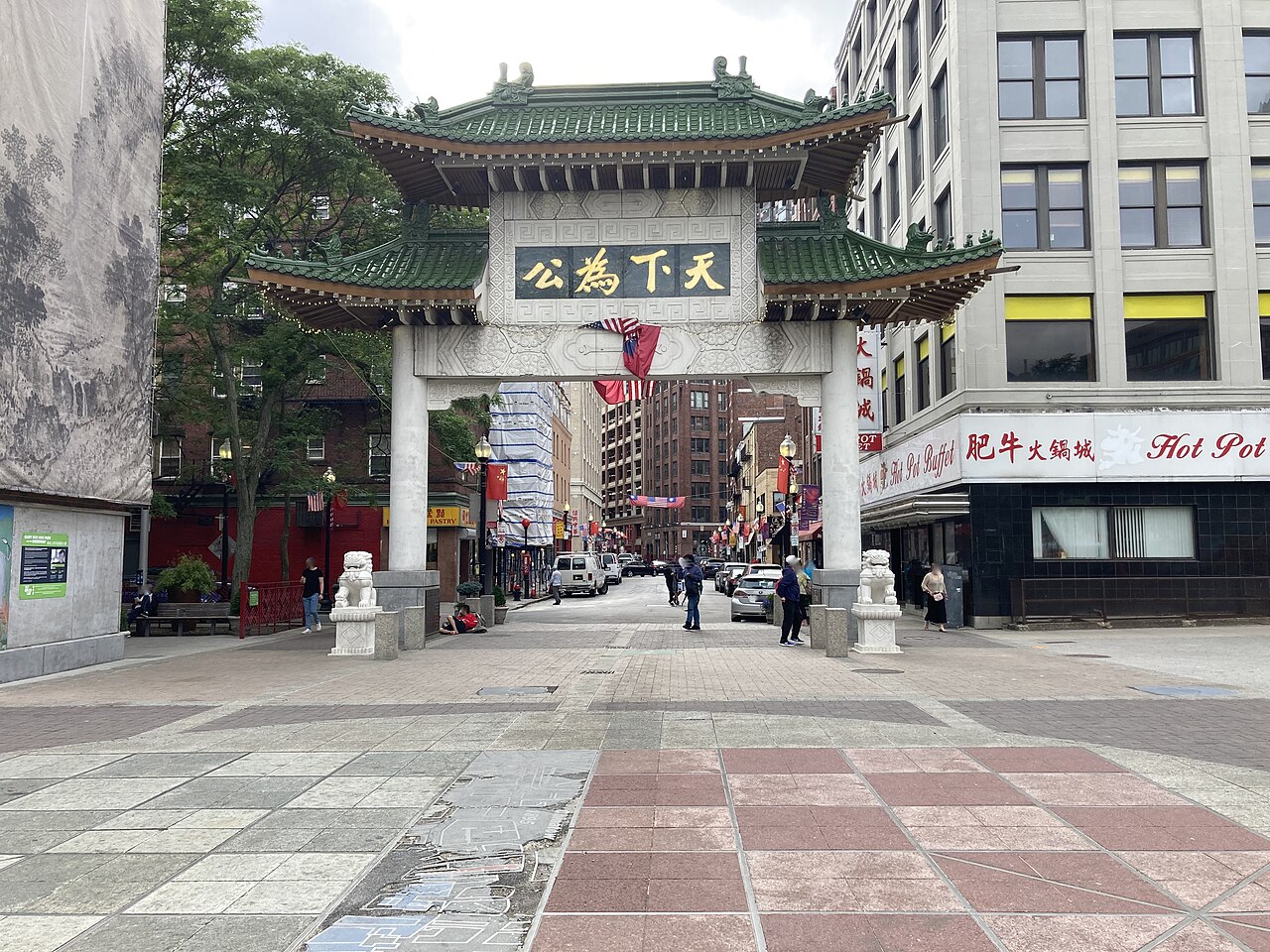
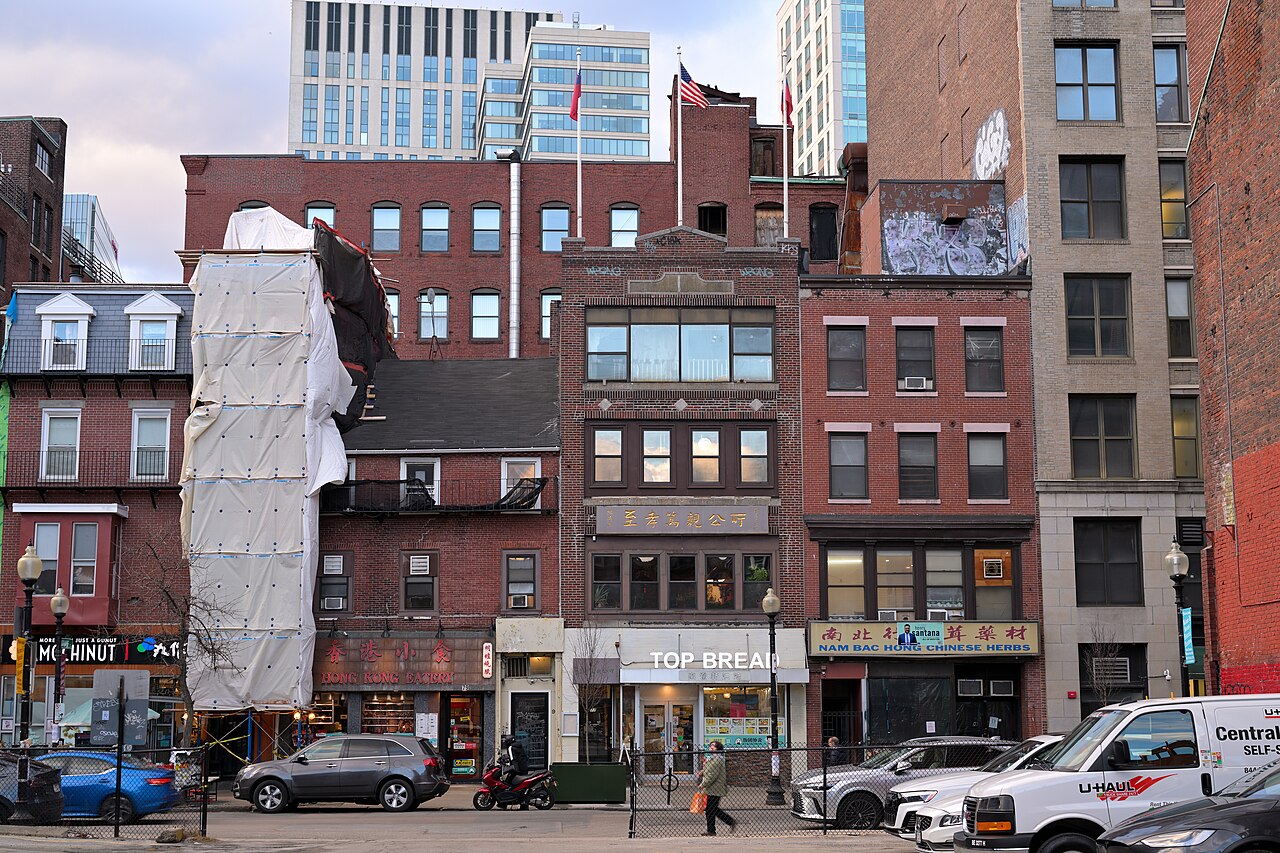
Chinatown announces itself with a green-roofed paifang gate, stone lions and a brick plaza, and from there the neighborhood is a dense, busy grid of signs. Along Harrison Avenue the brick storefronts carry Chinese lettering, and if you look up, a side wall wears a bit of graffiti.
This is Boston street art at its most layered: official gateway, hand-lettered shop signs, and the occasional wall that someone could not resist. For anyone thinking about a mural here, the neighborhood is a lesson in listening first. The best walls answer the street they sit on.


Allston keeps its walls busy
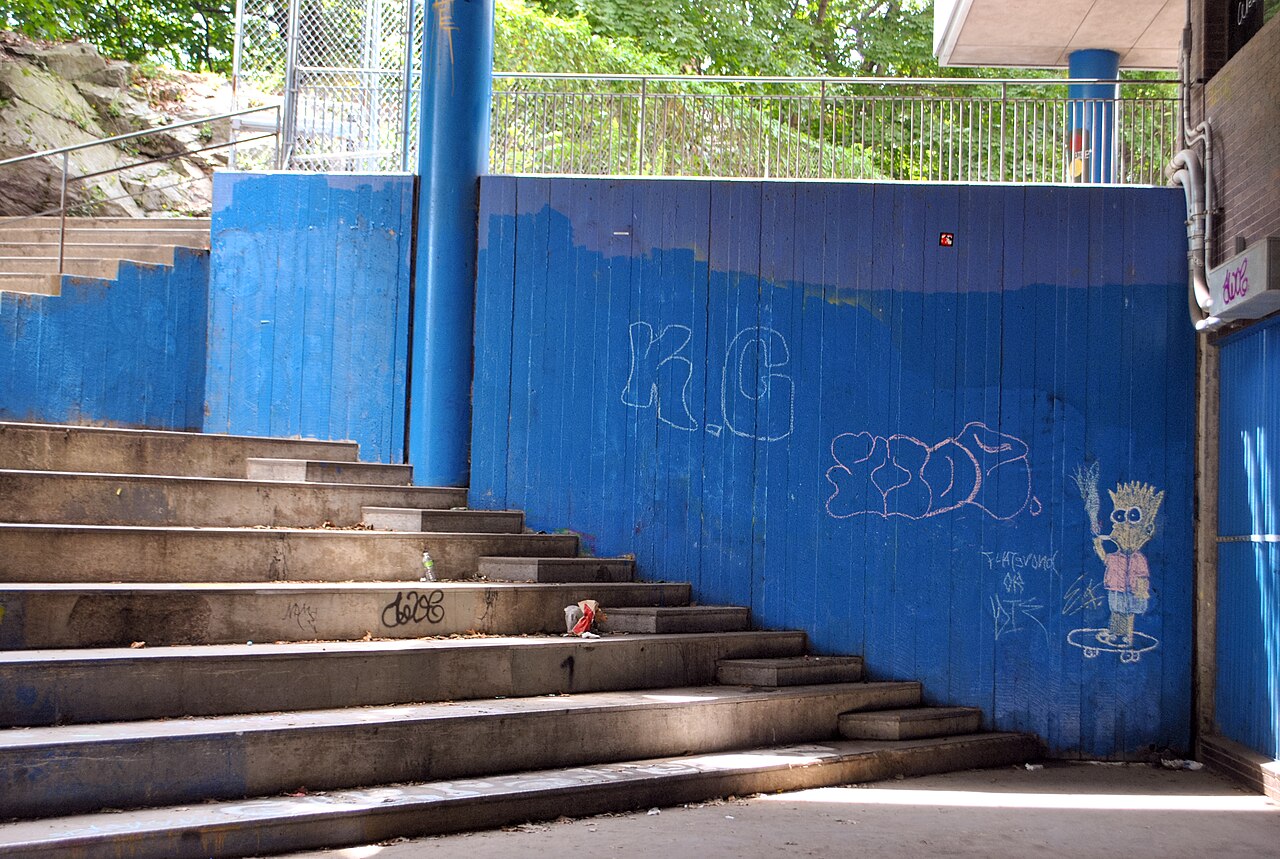
Allston has a reputation for being a place where things get made, and the back of the Jackson Mann School shows why. A blue painted wall sits beside concrete steps, marked with chalk and spray-paint lettering and a chalk cartoon character someone left for the next kid who walks by.
It is not a showpiece, and that is the appeal. Walls near schools and stairways are where a neighborhood tries things out. Some of what you see will be gone by next week.

Triple-deckers and the blank walls between
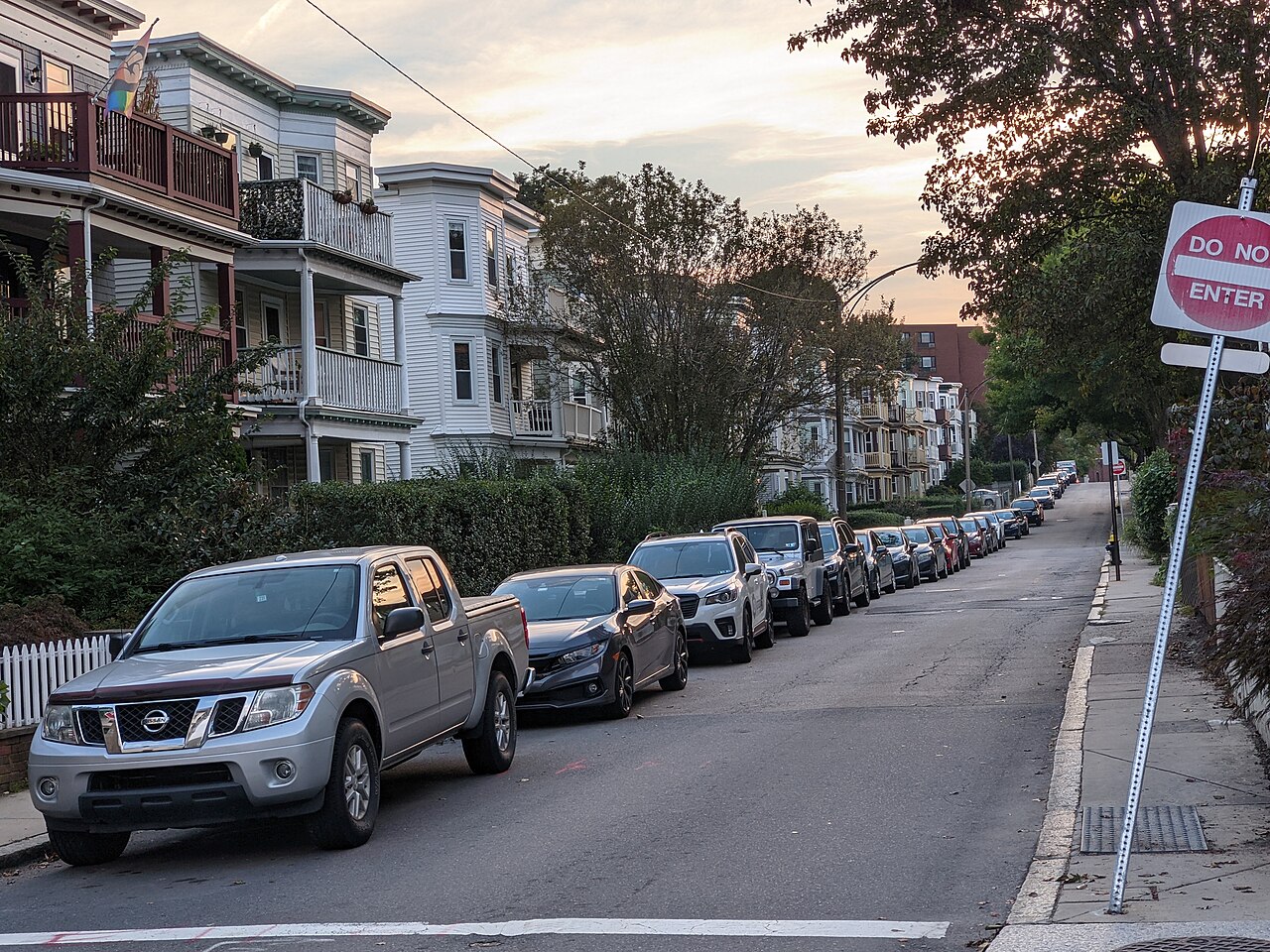
Jamaica Plain is the Boston many residents actually live in. A sloping street at dusk, parked cars at the curb, wooden triple-decker houses stacked three stories high. There is no mural in this picture, and that is the point of including it.
Boston is a city of houses and brick corners as much as monuments. The side wall of a corner store, the end of a block, a fence by a school: these are the quiet spaces where a painted wall could change how a street feels. The question for any neighborhood is which of those walls is asking for something.

One long blue wall by the harbor
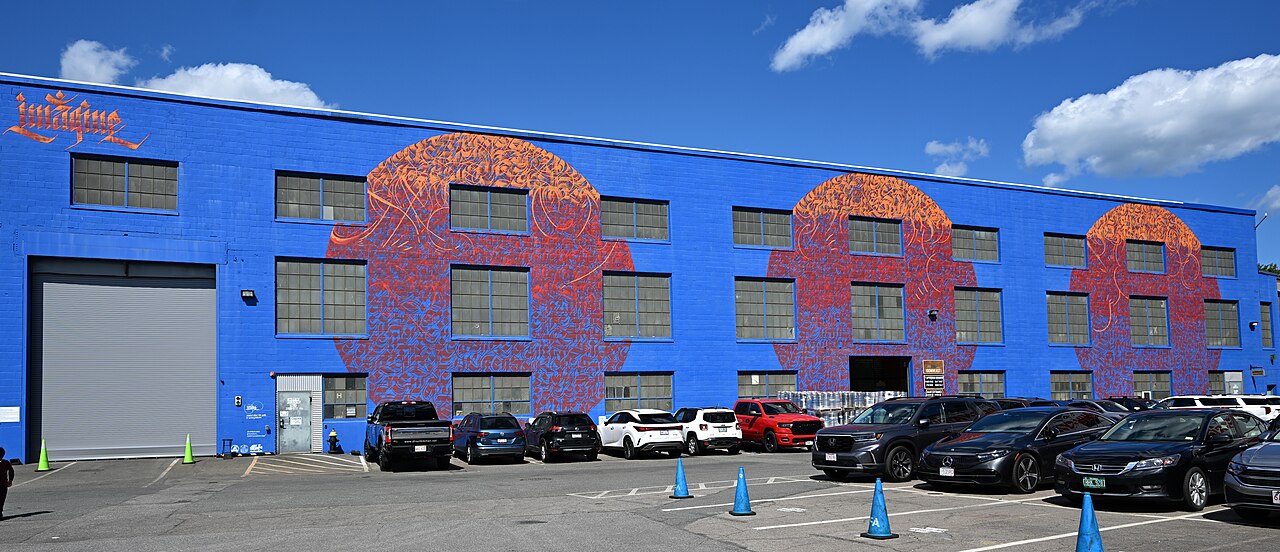
The photograph at the top of this story is from East Boston, where a long blue warehouse wall in the Shipyard carries three large orange-red circular designs in a lettering style. From a distance it reads as pattern. Up close it is a reminder that an industrial building can be a canvas.
A wall like this does what the best Boston murals do: it takes a big, plain surface and gives it a personality, so that people remember the place by it. A warehouse becomes a landmark, and a landmark becomes the thing you tell visitors to look for.
Green, gold and city lights
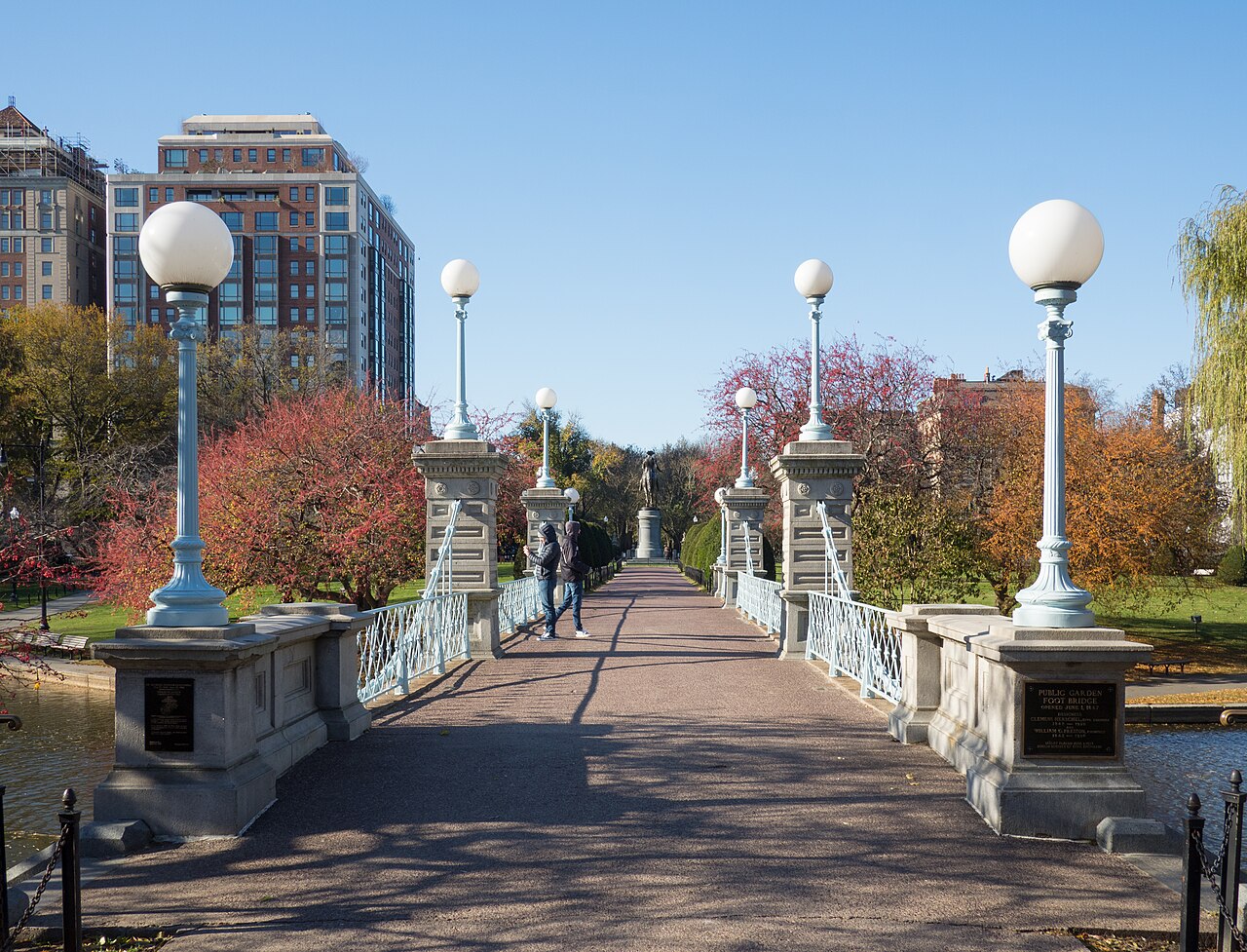
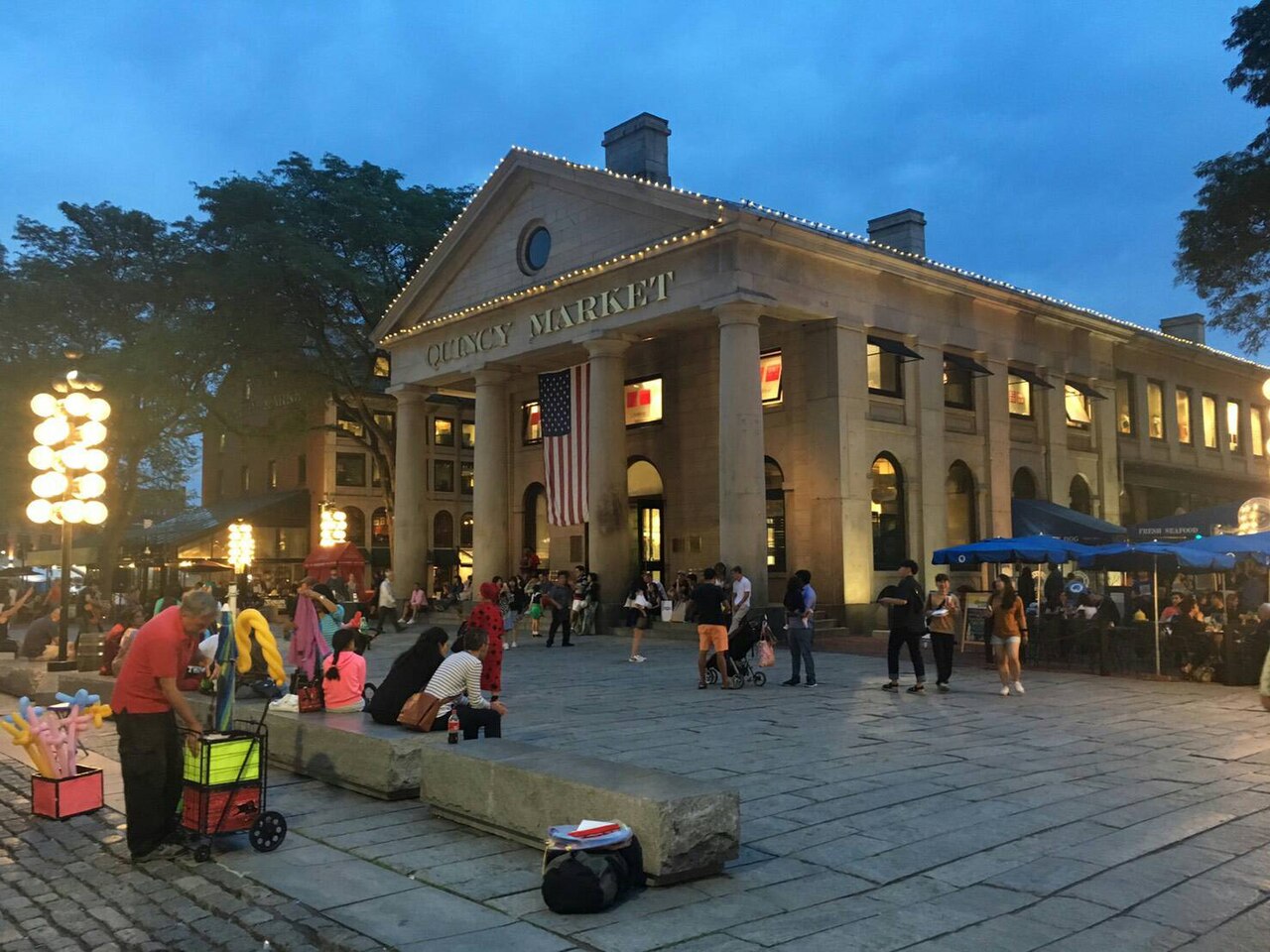
Finish away from the walls, because a good mural day needs somewhere to rest. The Public Garden footbridge, with its globe lamps and autumn trees, is one of the calmest places in the city. A little east, Quincy Market glows at dusk under string lights, with people gathered in the plaza.
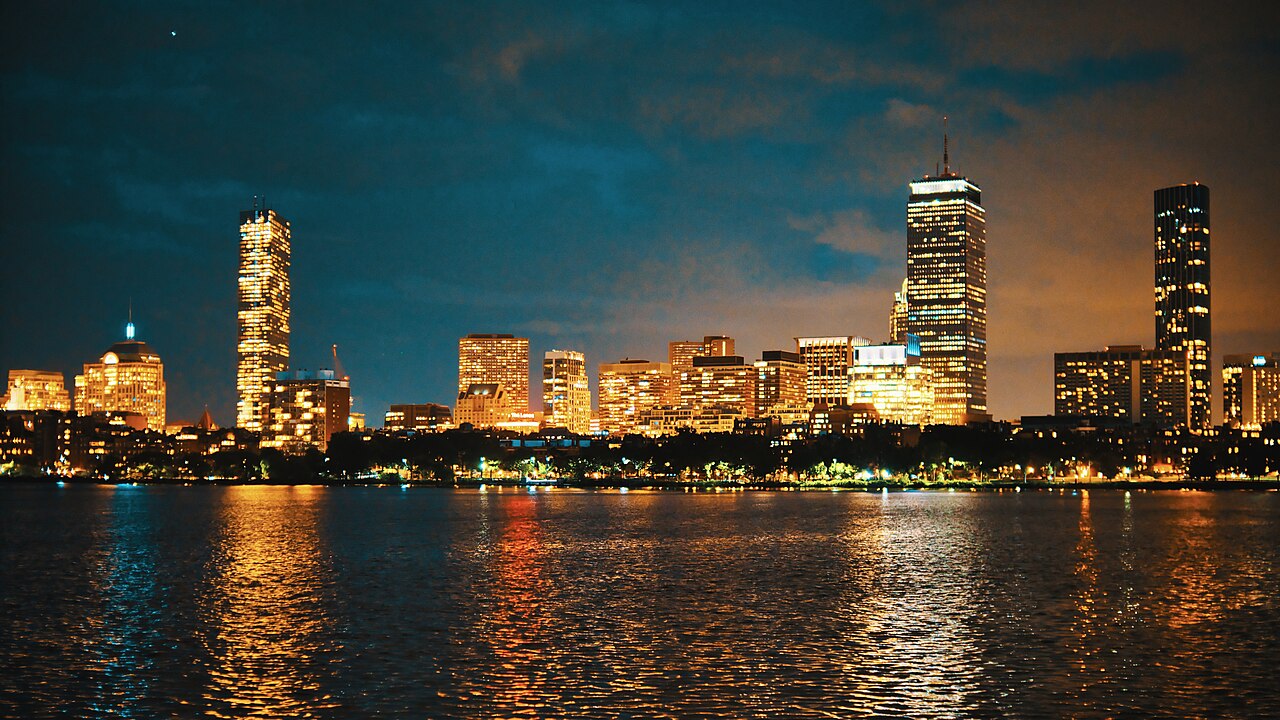
Then walk back toward Back Bay as the lights come on. Across the Charles River, the skyline shows up lit and reflected in the water. Seen from here, the walls you visited today feel like the human-sized part of the picture, the part where the city says something to you directly.



If you have a wall in mind
Every wall in this story began as somebody’s blank surface and a decision to leave it less blank. If you manage a building in Boston and have a wall you keep looking at, we would be glad to hear about it. Tell us about your wall and we will take it from there.
Frequently asked questions
- Where can I see murals in Boston?
- Good places to start are the stairway at Hynes Convention Center station, the entrance to Ruggles station in Roxbury, the main staircase of the Boston Public Library in Back Bay, Chinatown, Allston and East Boston. Many are easy to reach by transit.
- Which Boston neighborhoods have the most street art?
- Allston, Roxbury, Chinatown and East Boston are all worth a slow walk, and transit stations often carry painted work. Street art changes quickly, so go with time to wander.
- Is street art legal in Boston?
- It depends on the wall and its owner. A mural painted with the property owner’s permission is commissioned work; unsanctioned pieces are a different matter. If you own a wall and want a mural, get the agreement in writing.
- How do I find a muralist in Boston for my building?
- Start with a muralist whose style fits the wall and the neighborhood, then talk through the size, surface and look. We help match walls with muralists and handle quotes, contracts and scheduling.
All photos are free-licensed and credited under each image; license links go to the original file pages.