City story · Buenos Aires · 6 min read
Buenos Aires Murals: A City That Paints Its Own Mood
From a rainbow wall on Avenida Corrientes to tiled landscapes under the street, a wandering look at the Buenos Aires murals and street art that give each barrio its voice.
Begin where the avenues cross
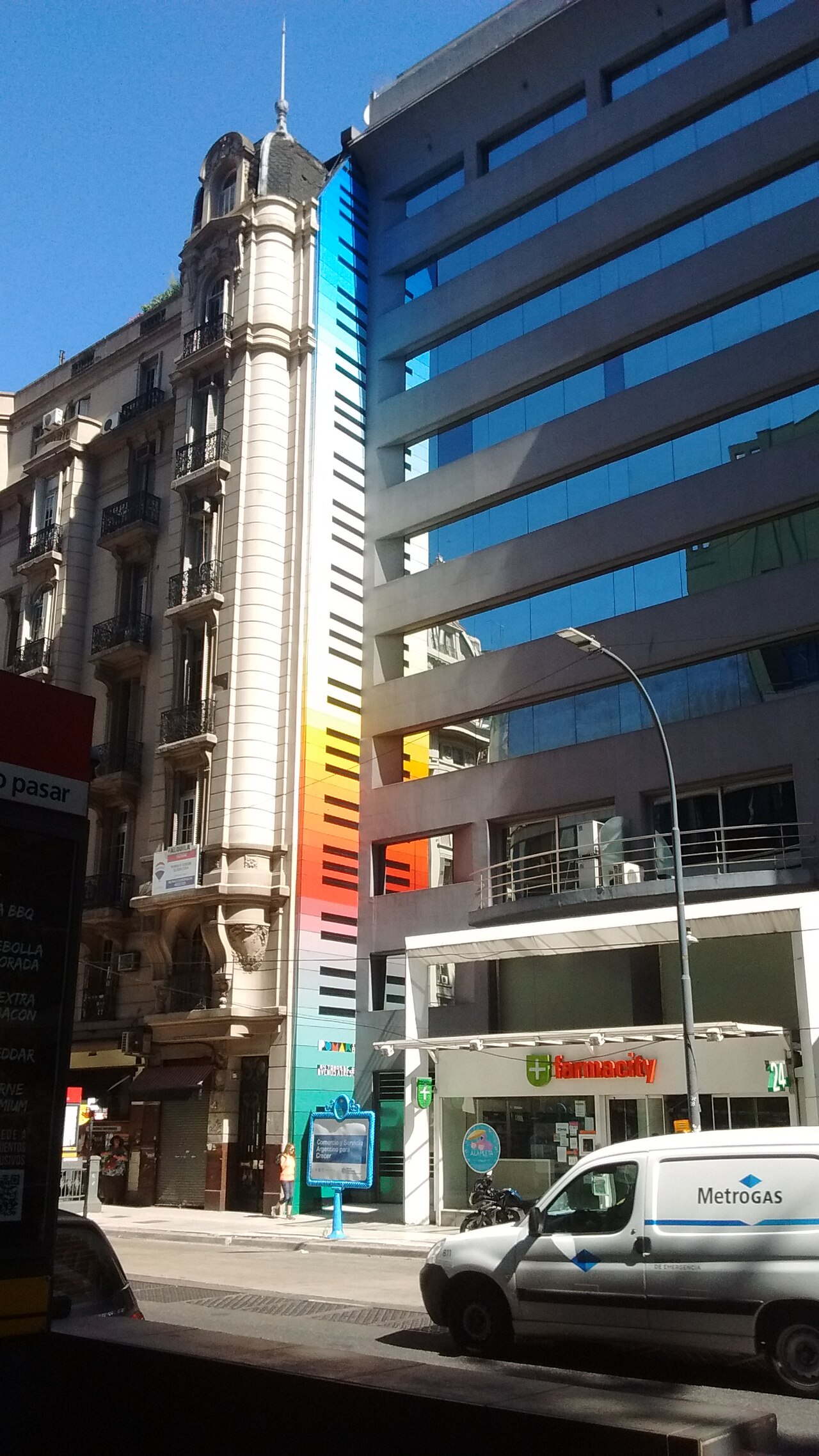
Most visitors find their first Buenos Aires mural without looking for it. You step out onto Avenida Corrientes, a street of theaters, bookshops and late-night pizza, and a building wears a stripe of color from roofline to sidewalk. Beside it, an old stone facade stands exactly as it did, and the two seem perfectly content to share a block.
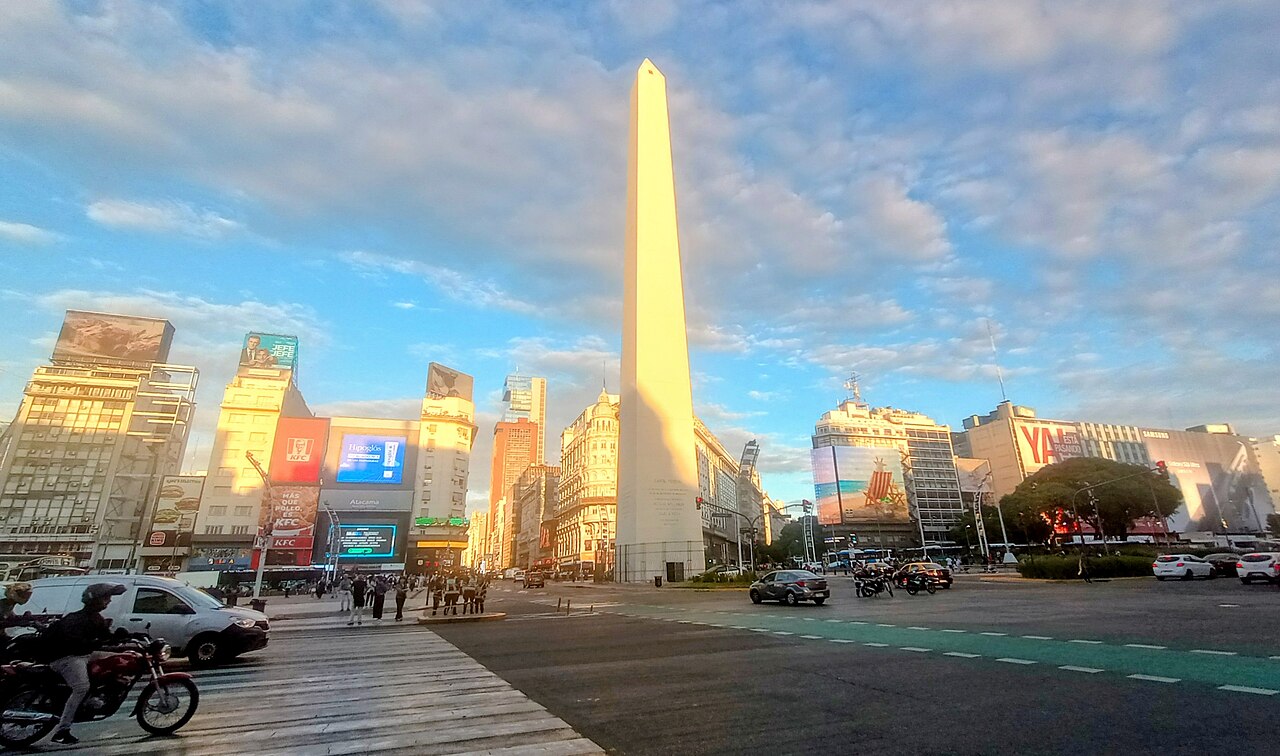
A few streets away the Obelisco rises over Avenida 9 de Julio, one of the widest avenues anywhere, and the whole scene is crowded with billboards, signs and traffic. In a place this loud, a painted wall has to earn its attention. The good ones do it with scale and with color that holds up against the noise.
That is the first lesson of Buenos Aires murals: they do not sit politely in a gallery. They share the sidewalk with kiosks, bus stops and people on their way somewhere, and they are judged at walking speed. A wall that makes someone slow down for a second has already done its work.

Down the stairs, into the paint
Some of the city's most generous art is waiting underground. The Buenos Aires subway, the subte, carries painted and tiled murals along its platform walls, and a wait for the train becomes a few minutes in front of a picture.
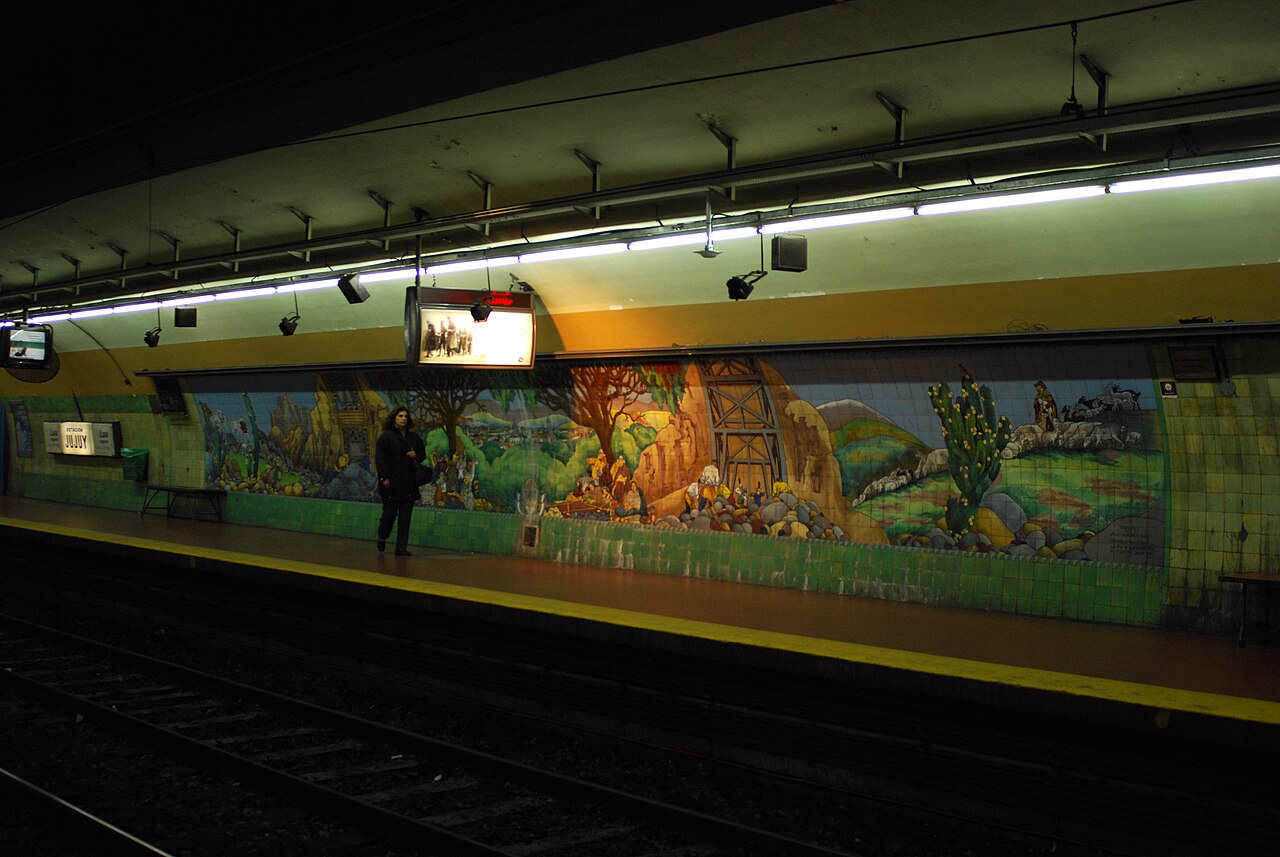
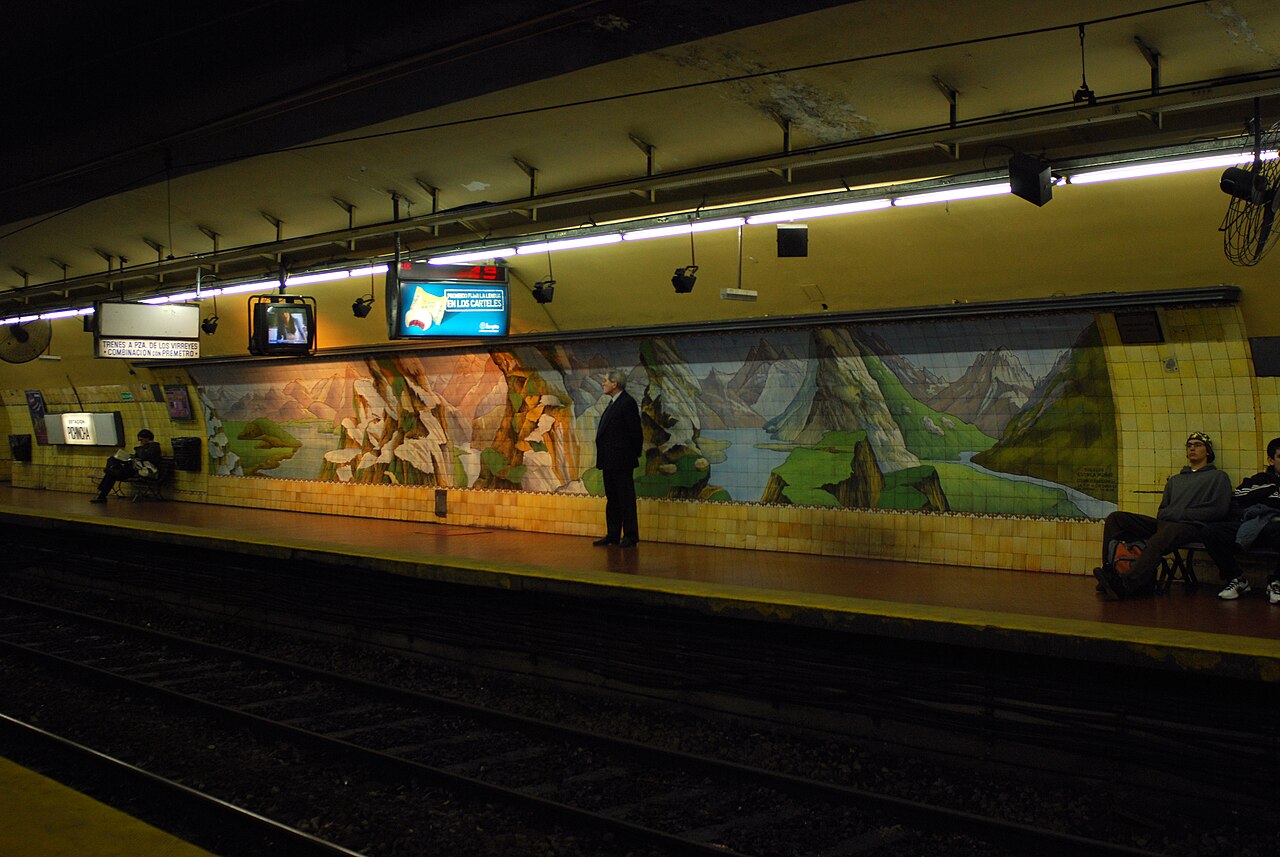
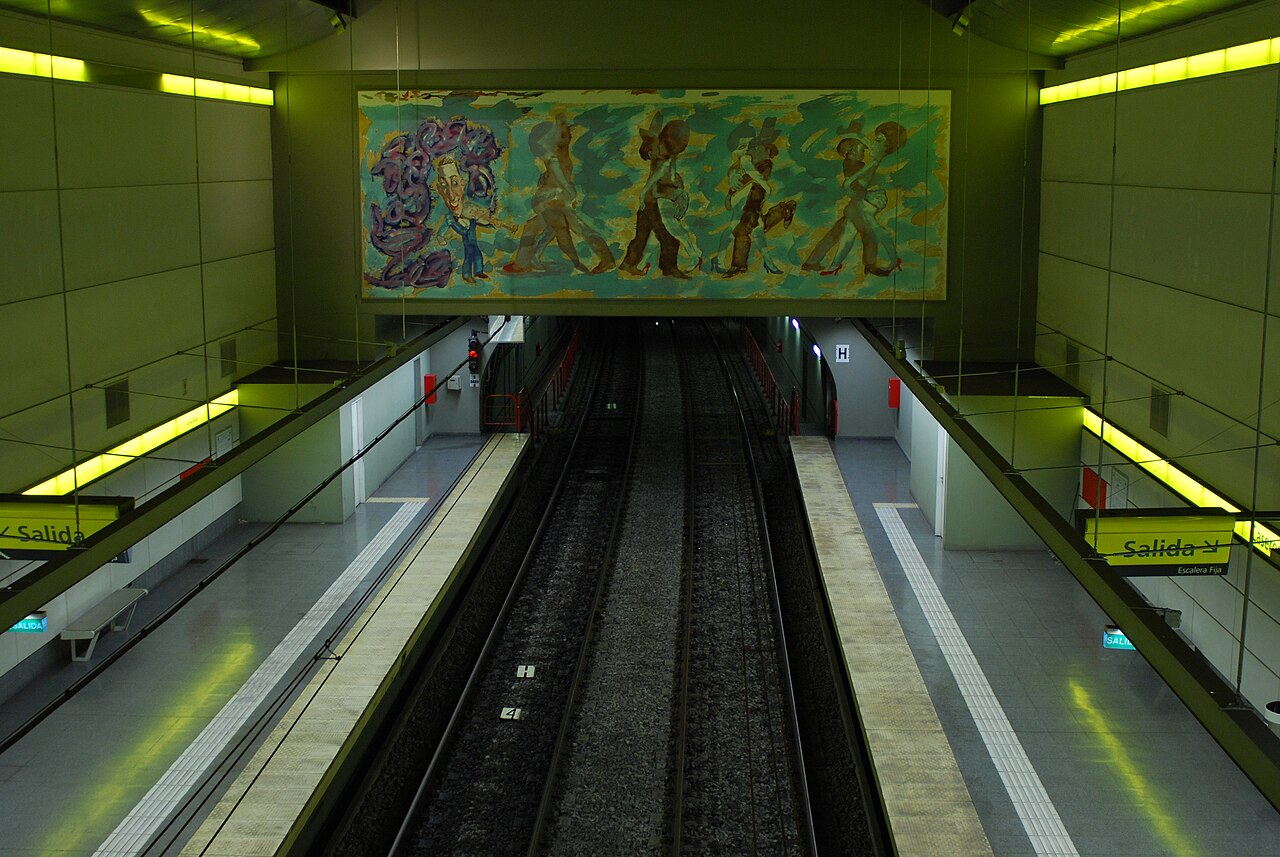
On Line E, the Jujuy station shows a long tiled landscape with a bridge and a cactus, a scene you can follow with your eyes as the platform stretches away. At Pichincha, another tiled wall pictures mountains and a lake while a few people wait beside it. Over on Line H, a large painted mural of figures hangs above the tracks.
It is easy to walk past these in a hurry. But a mural in a station has a particular job. It meets people at their most distracted, in the middle of a commute, and gives them somewhere pleasant to rest their attention.
If you only have an afternoon, buy a ticket and ride a line or two with no destination. The art is part of the trip, and all it asks is that you look up.



La Boca and the houses that took the paint
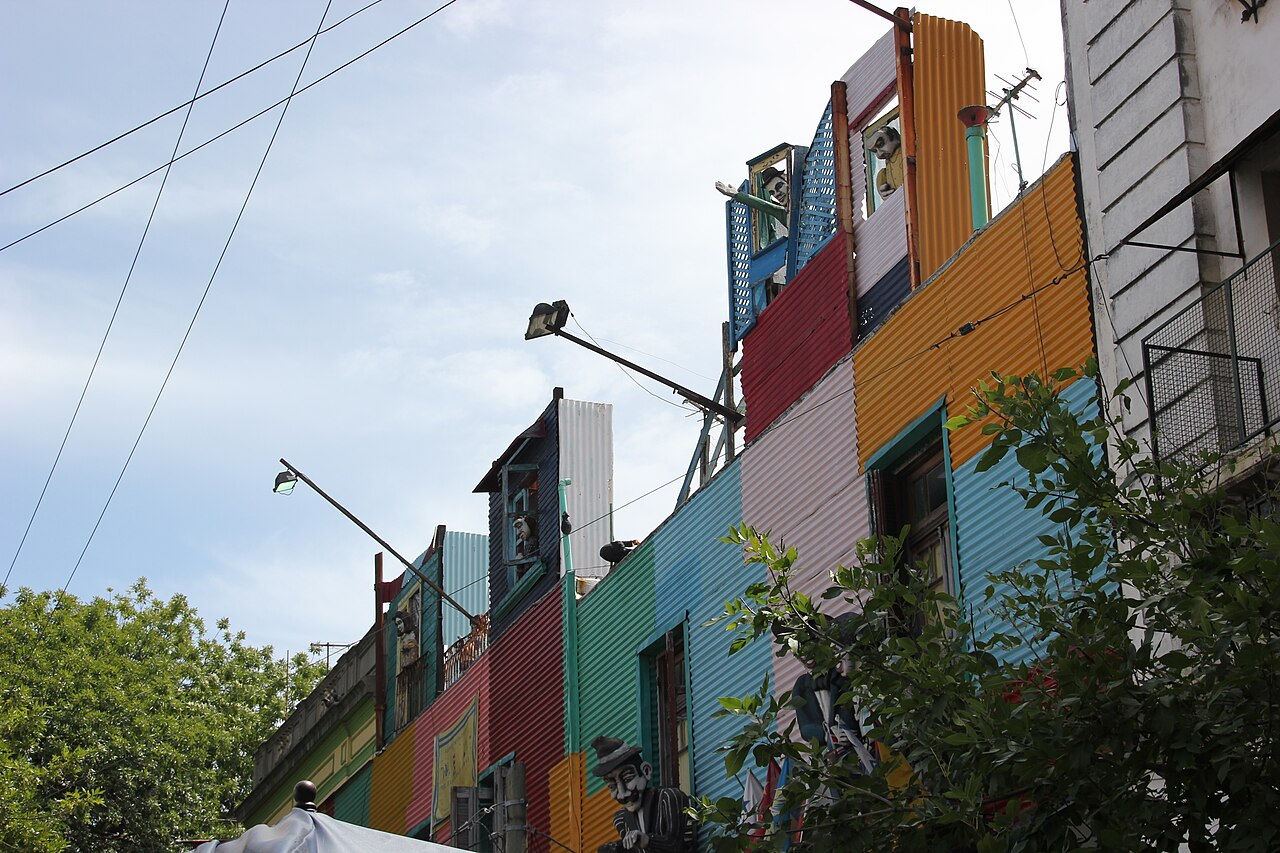
La Boca is the barrio that most people picture first, and it earns the reputation. On Caminito, the houses are clad in corrugated walls painted red, orange, blue and green, and under a pale sky the colors look almost edible.
Here the building is the canvas. There is no frame and no gallery wall, only a street that decided long ago to look cheerful. It is a reminder that color on a facade is a kind of welcome, and that a neighborhood can be known by it.
Walk a few blocks in either direction and the mood changes again. That is how the city works. Each barrio keeps its own palette, its own pace and its own idea of what belongs on a wall, and the Buenos Aires murals you remember are usually tied to the street where you found them.

An old door with a hundred eyes
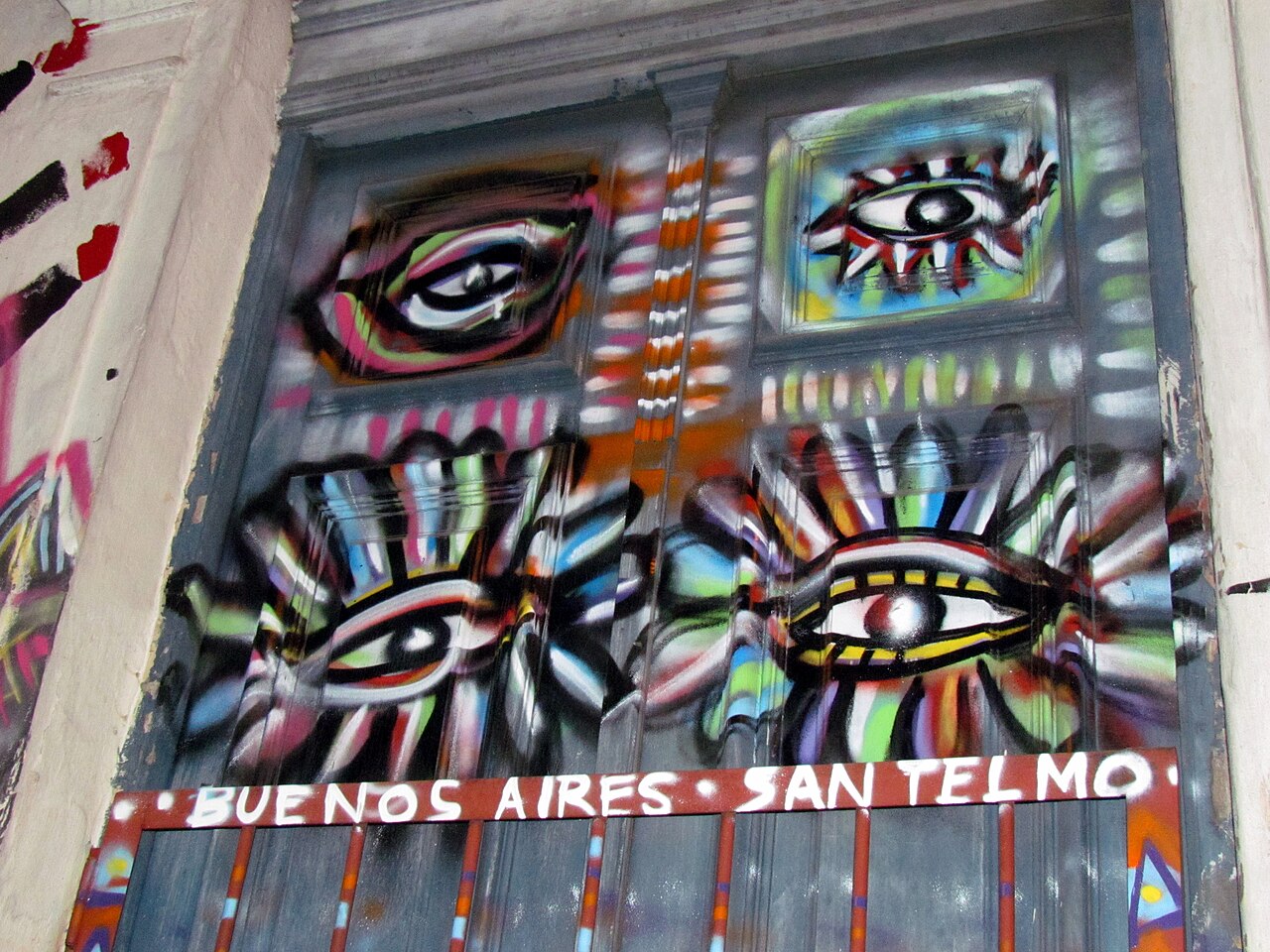
San Telmo is a barrio of cobblestones and old buildings, and its street art tends to be small and surprising. One door is painted entirely with colorful eyes, and along the bottom run the words Buenos Aires San Telmo. It looks back at you as you pass.
Doors, shutters and small corners like this make a block feel lived in, and they are the best argument for letting a wall be more than a wall.
Look for the details on the way: a stencil by a doorway, a sticker on a lamppost, a shopfront with a hand-painted sign. Together they make a block feel lived in, and they are the best argument for letting a wall be more than a wall.

A ghost on a plain wall
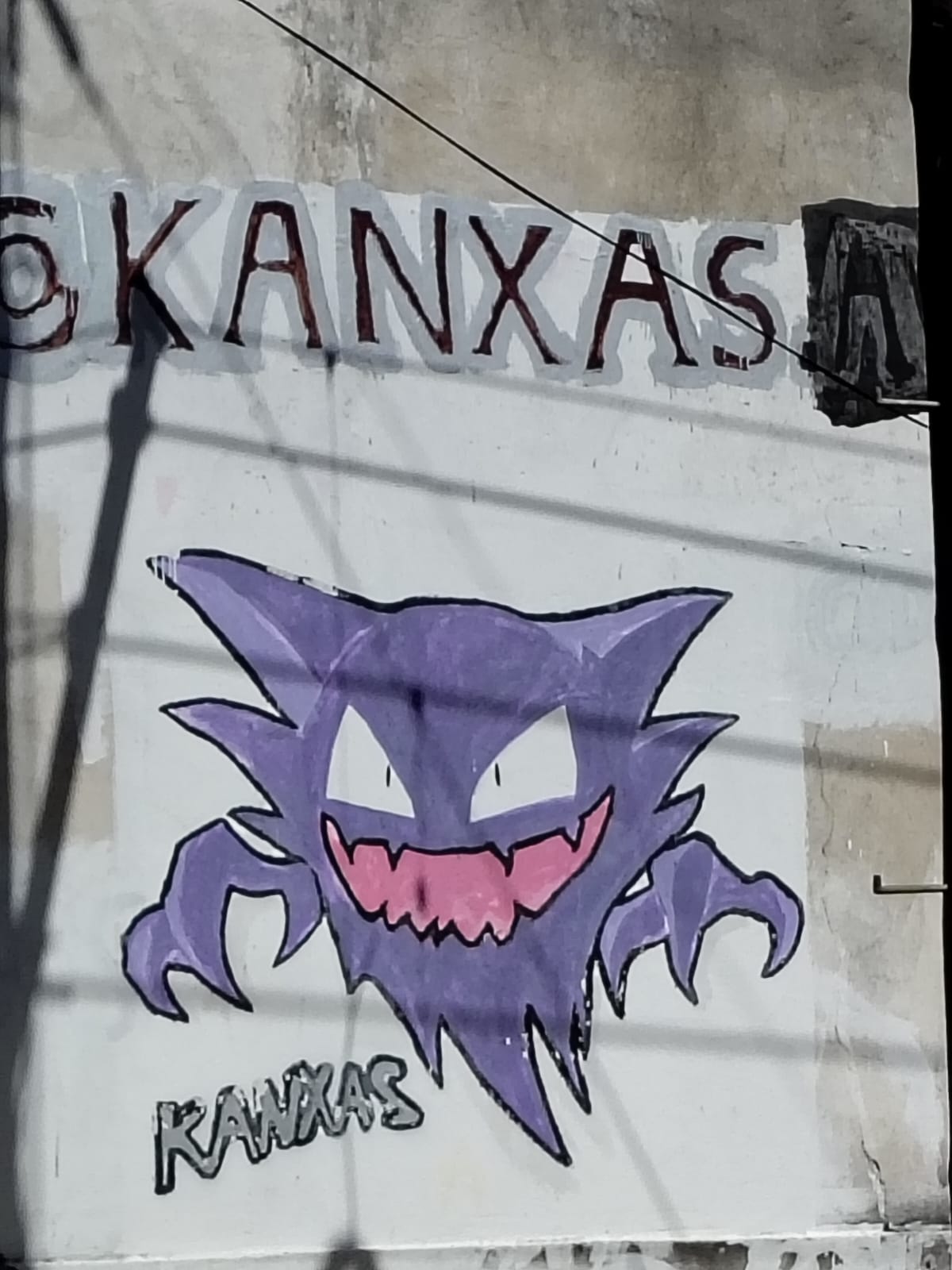
Not every piece of Buenos Aires street art is meant to be pretty. One wall shows a ghost-like character in white and purple, with the artist's tag floating above. It sits on an otherwise plain surface, and that plainness is part of why it works.
This is paint as a personal mark, quick to read and a little mischievous. Buenos Aires street art has many voices, and some of them speak in a single character and a signature.
Next to a big avenue piece, a character like this feels almost private. Yet the two belong to the same conversation. One speaks to a whole crowd, the other to whoever happens to turn the corner.

Palermo, where the walls are quiet
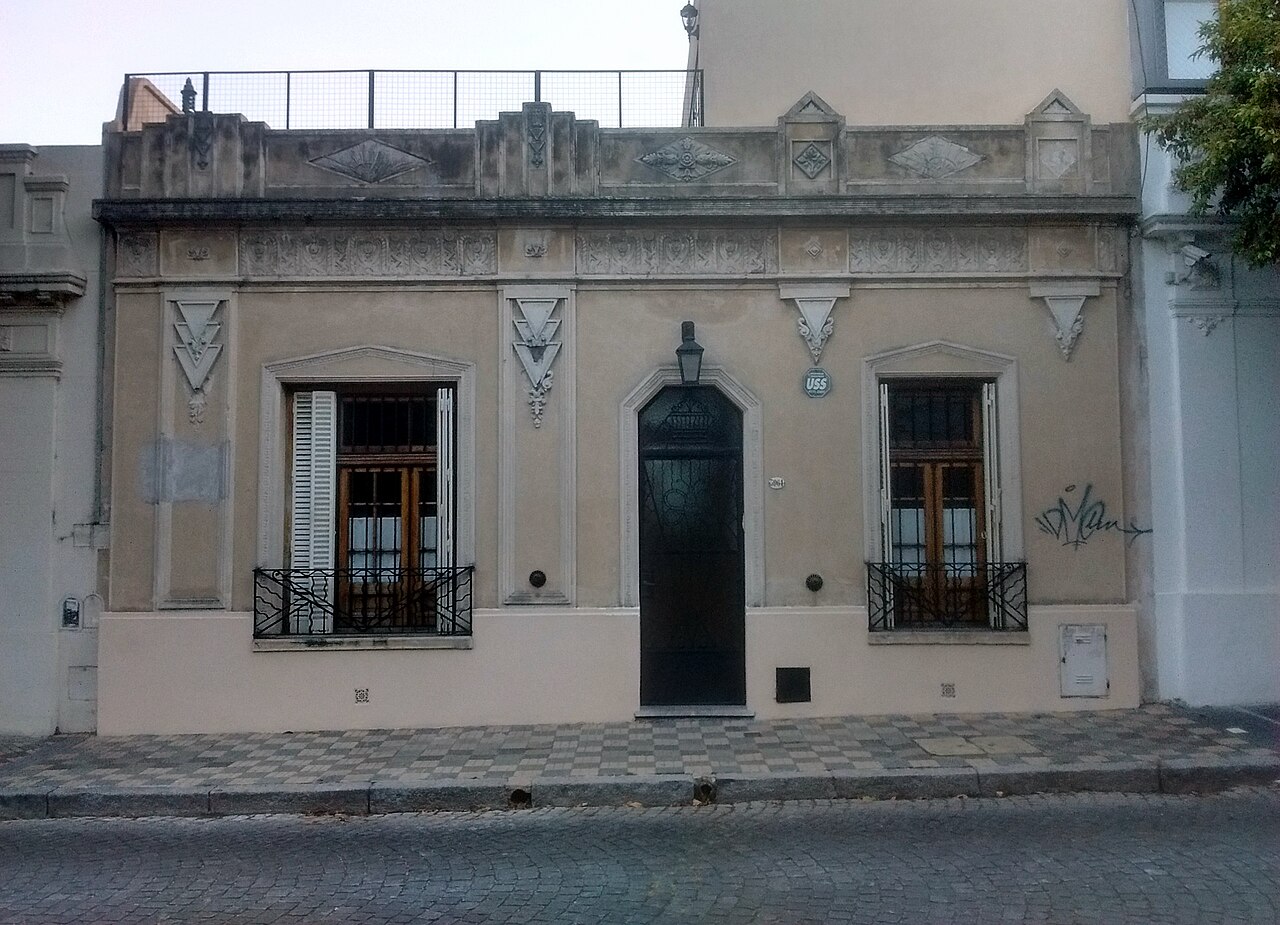
Palermo is a big barrio with many moods. On Calle Voltaire, a single-story Art Deco house sits behind a dark door and two barred windows on a cobbled street. There is no mural on it, and that is the point. Streets like this show what a painted wall is up against, and what it can bring to a block that has been quiet for decades.
A good mural does not erase a place like this. It talks to it, sharing the same street and the same light.
It helps to see the quiet streets too. They show how light moves across a facade, how a door and two windows can set a rhythm, and why a painted wall placed with care can change how a whole street feels.

Faces in the plaza
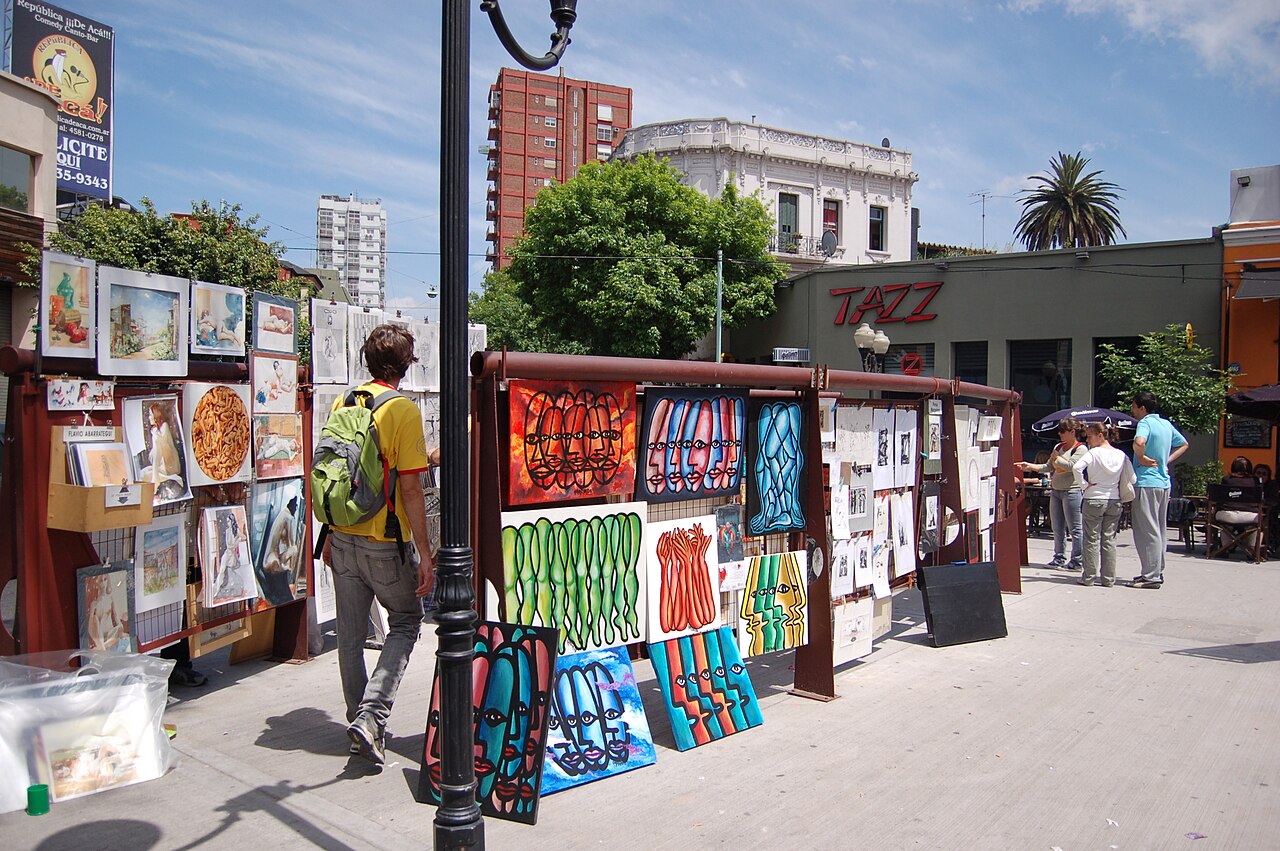
In Palermo Soho, Plaza Cortázar fills with an outdoor art fair, and colorful painted faces are propped up for passersby in the sun. Here art is not on a wall but beside it, offered at eye level to people who stop to talk.
If you want to follow the city's walls beyond this story, our Buenos Aires guide collects more of them, neighborhood by neighborhood.
A plaza like this is also a place to see how people react to art. They lean in, they point, they take photos, and they ask who made it. That curiosity is what every good wall is quietly hoping for.

Look back from the water
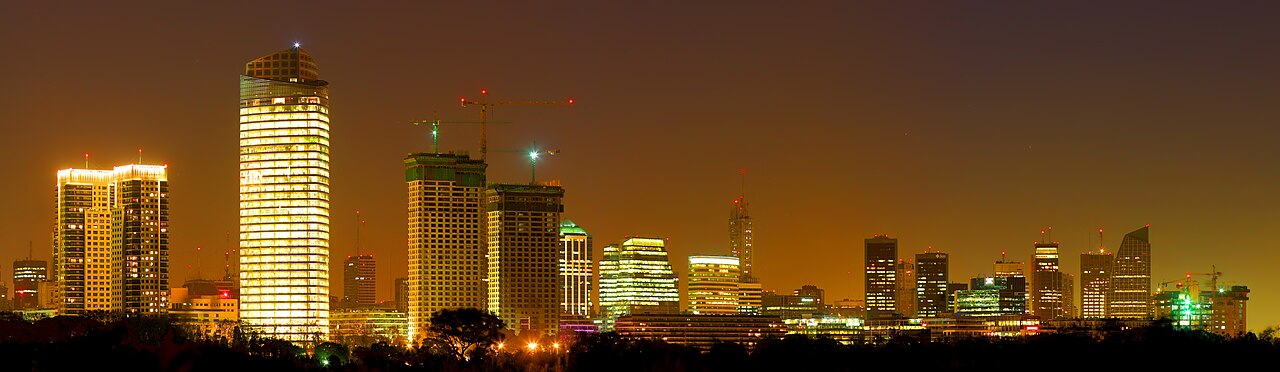
End the day at Puerto Madero, where towers and construction cranes light up the night along the water. It is a newer part of the city, a place still being built.
From there the older barrios feel far away, and that distance helps. You realize how much of Buenos Aires lives in the painted stripes, tiles and doors you passed on the way, and how a city can be told in color.
Come back in daylight and the story starts again, one barrio at a time.

If you have a wall in mind
Every wall in this story began as someone's blank surface and a decision to give it a voice. If you manage a building and have a wall you keep looking at, we would be glad to hear about it. Tell us about your wall and we will take it from there.
Frequently asked questions
- Where can I see murals in Buenos Aires?
- Good places to start are Avenida Corrientes, the colorful houses of Caminito in La Boca, the streets of San Telmo, Palermo and the painted and tiled walls inside subway stations on Lines E and H.
- Which Buenos Aires neighborhoods have the best street art?
- La Boca, San Telmo and Palermo are the most popular for a walk, and each has a different feel: painted houses, small surprises on old doors, and larger works on quiet streets.
- Is street art legal in Buenos Aires?
- It depends on the wall and the owner. Murals painted with a property owner's permission are commissioned work, while unsanctioned pieces are a different matter. If you own a wall, get any agreement in writing and check local rules.
- How do I find a muralist for my building in Buenos Aires?
- Start with a muralist whose style fits the wall and the neighborhood, then talk through the size, surface and look. We help match walls with muralists and handle quotes, contracts and scheduling.
All photos are free-licensed and credited under each image; license links go to the original file pages.
Historia de la ciudad · Buenos Aires · 6 min de lectura
Murales en Buenos Aires: una ciudad que pinta su propio ánimo
De un muro arcoíris en la avenida Corrientes a los paisajes de azulejos bajo la calle, un paseo por los murales y el arte urbano de Buenos Aires que le dan voz a cada barrio.
Empiece donde se cruzan las avenidas
La mayoría de los visitantes encuentra su primer mural de Buenos Aires sin buscarlo. Uno sale a la avenida Corrientes, una calle de teatros, librerías y pizzerías abiertas hasta la madrugada, y un edificio lleva una franja de color desde la cornisa hasta la vereda. Al lado, una vieja fachada de piedra está exactamente como siempre, y las dos parecen muy conformes con compartir la cuadra.
A unas cuadras, el Obelisco se alza sobre la avenida 9 de Julio, una de las más anchas del mundo, y toda la escena está repleta de carteles, letreros y tránsito. En un lugar tan ruidoso, un muro pintado tiene que ganarse la atención. Los buenos lo logran con escala y con un color que resiste al ruido.
Esa es la primera lección de los murales de Buenos Aires: no se quedan sentados con buenos modales en una galería. Comparten la vereda con kioscos, paradas de colectivo y gente que va a algún lado, y se los juzga a la velocidad de la caminata. Un muro que hace que alguien baje el ritmo por un segundo ya cumplió su trabajo.
Escaleras abajo, hacia la pintura
Parte del arte más generoso de la ciudad está esperando bajo tierra. El subte de Buenos Aires lleva murales pintados y de azulejos a lo largo de las paredes de sus andenes, y la espera del tren se convierte en unos minutos frente a una imagen.
En la Línea E, la estación Jujuy muestra un largo paisaje de azulejos con un puente y un cactus, una escena que se puede seguir con la vista a medida que el andén se aleja. En Pichincha, otra pared de azulejos muestra montañas y un lago, con unas pocas personas esperando a su lado. Y en la Línea H, un gran mural pintado de figuras cuelga sobre las vías.
Es fácil pasar de largo con apuro. Pero un mural en una estación tiene una tarea particular: encuentra a la gente en su momento más distraído, en medio del viaje diario, y le ofrece un lugar agradable donde descansar la atención.
Si solo tiene una tarde, cargue la tarjeta y recorra una o dos líneas sin destino. El arte es parte del viaje, y lo único que pide es que levante la mirada.
La Boca y las casas que se vistieron de pintura
La Boca es el barrio que la mayoría imagina primero, y se ganó esa fama. En Caminito, las casas están revestidas de chapa acanalada pintada de rojo, naranja, azul y verde, y bajo un cielo pálido los colores parecen casi comestibles.
Aquí el edificio es el lienzo. No hay marco ni pared de galería, solo una calle que decidió hace mucho tiempo verse alegre. Es un recordatorio de que el color en una fachada es una forma de bienvenida, y de que un barrio puede reconocerse por él.
Camine unas cuadras en cualquier dirección y el ánimo vuelve a cambiar. Así funciona la ciudad. Cada barrio conserva su propia paleta, su propio ritmo y su propia idea de lo que pertenece a un muro, y los murales de Buenos Aires que uno recuerda suelen estar atados a la calle donde los encontró.
Una puerta vieja con cien ojos
San Telmo es un barrio de adoquines y edificios antiguos, y su arte urbano tiende a ser pequeño y sorprendente. Una puerta está pintada por completo con ojos de colores, y a lo largo de la parte inferior corren las palabras Buenos Aires San Telmo. Lo mira a uno mientras pasa.
Puertas, persianas y rincones pequeños como este hacen que una cuadra se sienta habitada, y son el mejor argumento para dejar que un muro sea más que un muro.
Fíjese en los detalles del camino: un esténcil junto a una puerta, un sticker en un farol, un local con un cartel pintado a mano. Juntos hacen que una cuadra se sienta habitada, y son el mejor argumento para dejar que un muro sea más que un muro.
Un fantasma en una pared lisa
No todo el arte urbano de Buenos Aires busca ser lindo. En un muro aparece un personaje fantasmal en blanco y violeta, con la firma del artista flotando encima. Está sobre una superficie por lo demás lisa, y esa simpleza es parte de por qué funciona.
Es la pintura como marca personal, de lectura rápida y un poco traviesa. El arte urbano de Buenos Aires tiene muchas voces, y algunas hablan con un solo personaje y una firma.
Al lado de una gran obra de avenida, un personaje así parece casi privado. Sin embargo, las dos pertenecen a la misma conversación. Una le habla a toda una multitud; la otra, a quien casualmente doble la esquina.
Palermo, donde las paredes están en silencio
Palermo es un barrio grande con muchos ánimos. En la calle Voltaire, una casa Art Déco de una sola planta se asienta detrás de una puerta oscura y dos ventanas con rejas, sobre una calle empedrada. No tiene ningún mural, y ese es justamente el punto. Calles como esta muestran a qué se enfrenta un muro pintado y qué puede aportar a una cuadra que lleva décadas en calma.
Un buen mural no borra un lugar así. Dialoga con él, compartiendo la misma calle y la misma luz.
Conviene ver también las calles tranquilas. Muestran cómo se mueve la luz sobre una fachada, cómo una puerta y dos ventanas pueden marcar un ritmo, y por qué un muro pintado y bien ubicado puede cambiar cómo se siente toda una calle.
Rostros en la plaza
En Palermo Soho, la Plaza Cortázar se llena con una feria de arte al aire libre, y rostros pintados de colores se apoyan a la vista de los que pasan, bajo el sol. Aquí el arte no está sobre una pared sino a su lado, ofrecido a la altura de los ojos a quienes se detienen a conversar.
Si quiere seguir los muros de la ciudad más allá de esta historia, nuestra guía de Buenos Aires reúne más, barrio por barrio.
Una plaza así también es un lugar para ver cómo reacciona la gente ante el arte. Se inclinan, señalan, sacan fotos y preguntan quién lo hizo. Esa curiosidad es lo que todo buen muro espera en silencio.
Mirar atrás desde el agua
Termine el día en Puerto Madero, donde torres y grúas de obra se iluminan de noche a lo largo del agua. Es una parte más nueva de la ciudad, un lugar que todavía se está construyendo.
Desde allí los barrios más antiguos parecen lejanos, y esa distancia ayuda. Uno se da cuenta de cuánto de Buenos Aires vive en las franjas pintadas, los azulejos y las puertas que pasó en el camino, y de cómo una ciudad puede contarse en color.
Vuelva de día y la historia empieza otra vez, un barrio a la vez.
Si tiene un muro en mente
Cada muro de esta historia empezó como la superficie en blanco de alguien y la decisión de darle voz. Si administra un edificio y tiene un muro que no deja de mirar, con gusto lo escucharemos. Cuéntenos sobre su muro y nosotros nos encargamos del resto.
Preguntas frecuentes
- ¿Dónde puedo ver murales en Buenos Aires?
- Buenos lugares para empezar son la avenida Corrientes, las casas de colores de Caminito en La Boca, las calles de San Telmo y Palermo, y las paredes pintadas y de azulejos dentro de las estaciones del subte de las Líneas E y H.
- ¿Qué barrios de Buenos Aires tienen el mejor arte urbano?
- La Boca, San Telmo y Palermo son los más elegidos para una caminata, y cada uno tiene un aire distinto: casas pintadas, pequeñas sorpresas en puertas antiguas y obras más grandes en calles tranquilas.
- ¿Es legal el arte urbano en Buenos Aires?
- Depende del muro y de su dueño. Los murales pintados con permiso del propietario son trabajos encargados, mientras que las obras sin autorización son otra cosa. Si usted es dueño de un muro, deje cualquier acuerdo por escrito y consulte la normativa local.
- ¿Cómo encuentro un muralista para mi edificio en Buenos Aires?
- Empiece por un muralista cuyo estilo se ajuste al muro y al barrio, y luego converse sobre el tamaño, la superficie y el aspecto. Nosotros ayudamos a vincular muros con muralistas y nos encargamos de las cotizaciones, los contratos y la programación.
Todas las fotos tienen licencia libre y llevan su crédito bajo cada imagen; los enlaces de licencia llevan a las páginas de los archivos originales.