City story · Charlotte · 6 min read
Charlotte Murals: Paint Along the Rails
From a light rail platform in NoDa to a brewery in Camp North End and a corner in South End, a slow look at the Charlotte murals and street art that give each neighborhood its own face.
A panther on a garage door
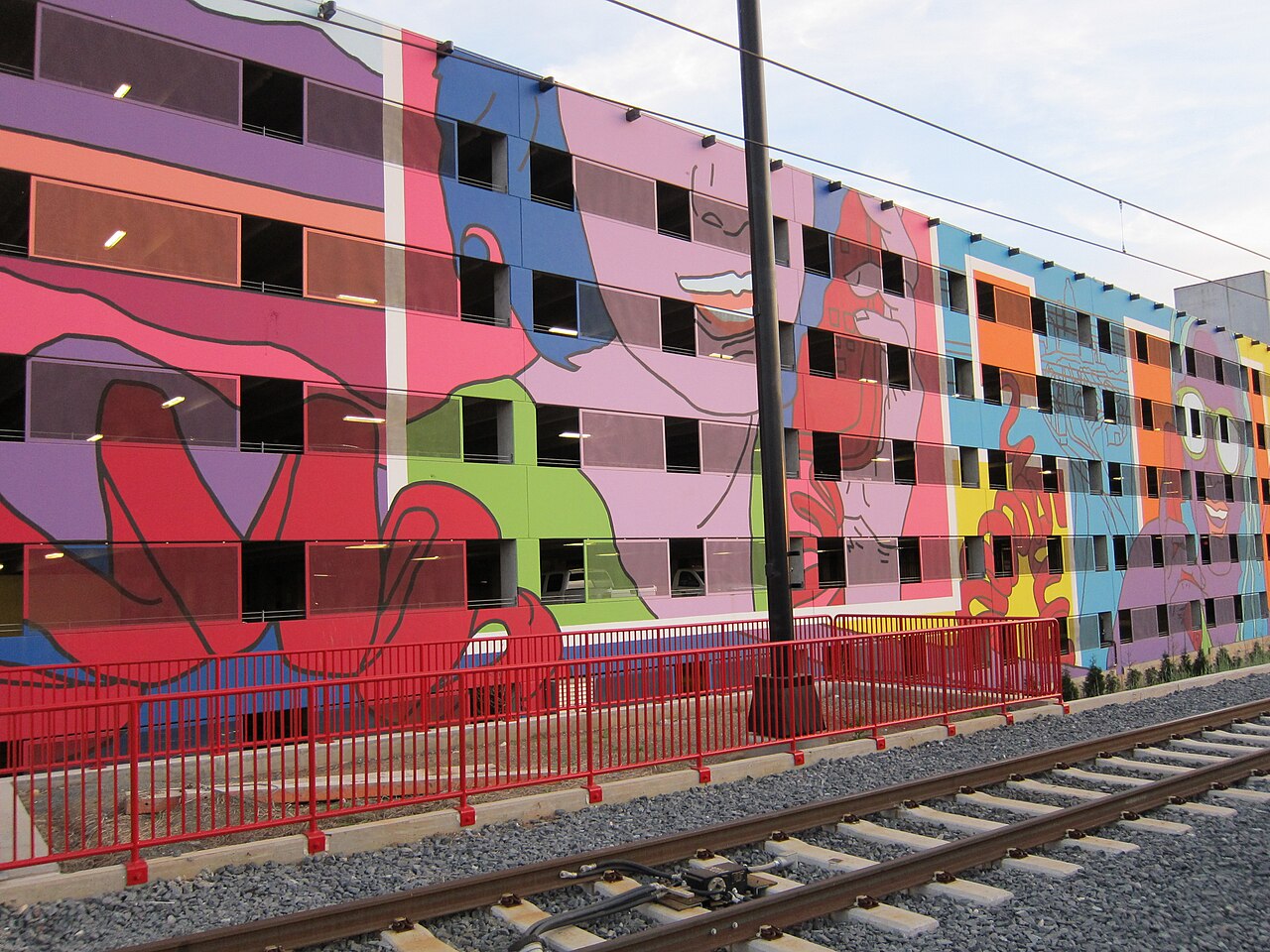
Start at Camp North End, where the paint is part of the welcome. A blue panther fills a roll-up garage door set into a white-painted brick wall, and it does something a sign never could: it makes an industrial building look like it has a personality. You notice the cat before you notice the address.
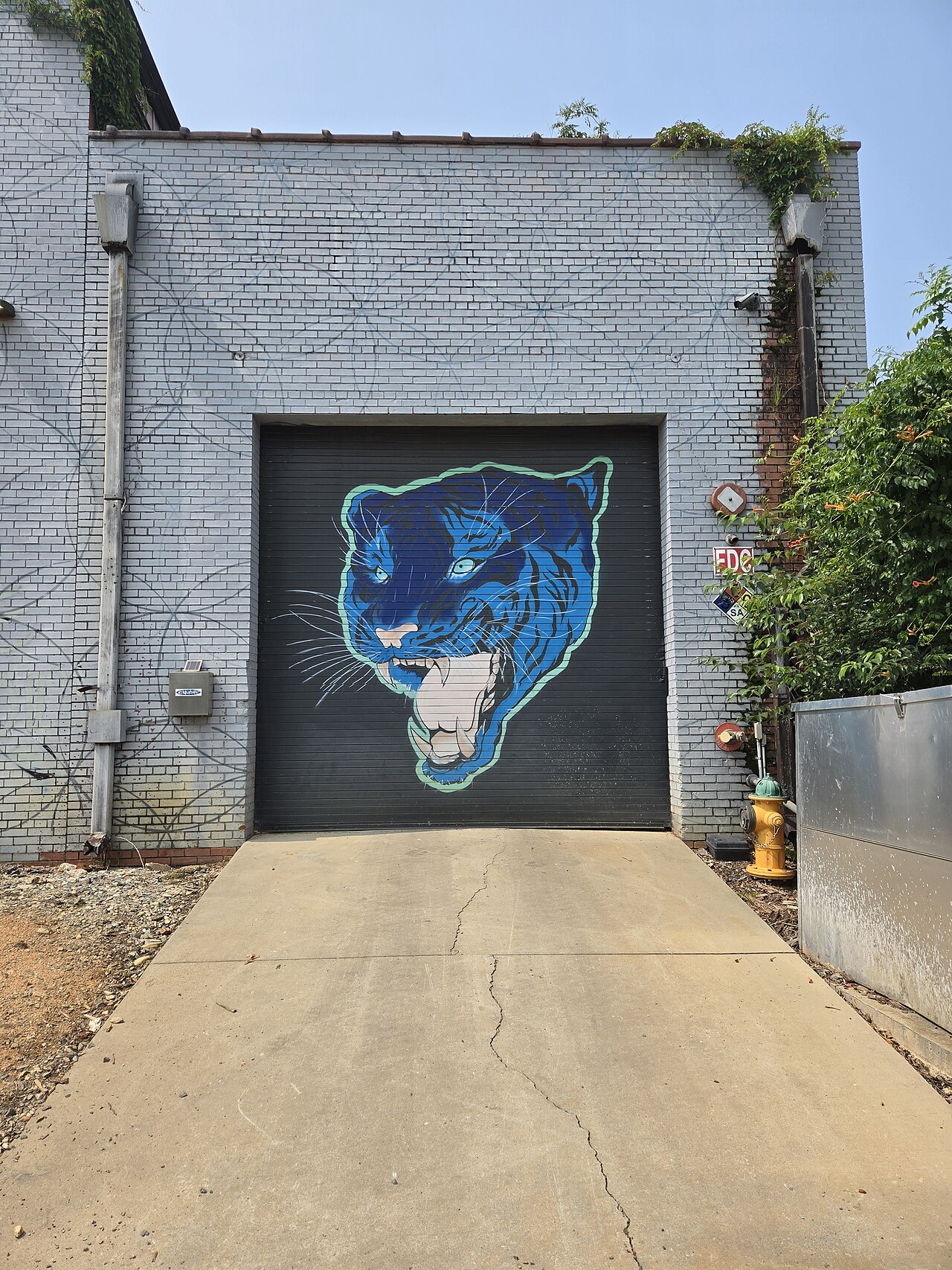
Step back along Woodard Avenue and the whole brewery building comes into view. A large green geometric pattern wraps one side, a portrait mural sits nearby, and more of the panther shows at the edge. Nothing matches, and nothing needs to. Charlotte murals at their best feel like a building talking in several voices at once.
There is a lesson in the garage door, too. The door is a working part of the building, opened and closed in the course of a day, and the paint has to live with that. A good mural respects the surface it sits on, whether that is brick, steel or a door that moves.


Waiting for the train in NoDa
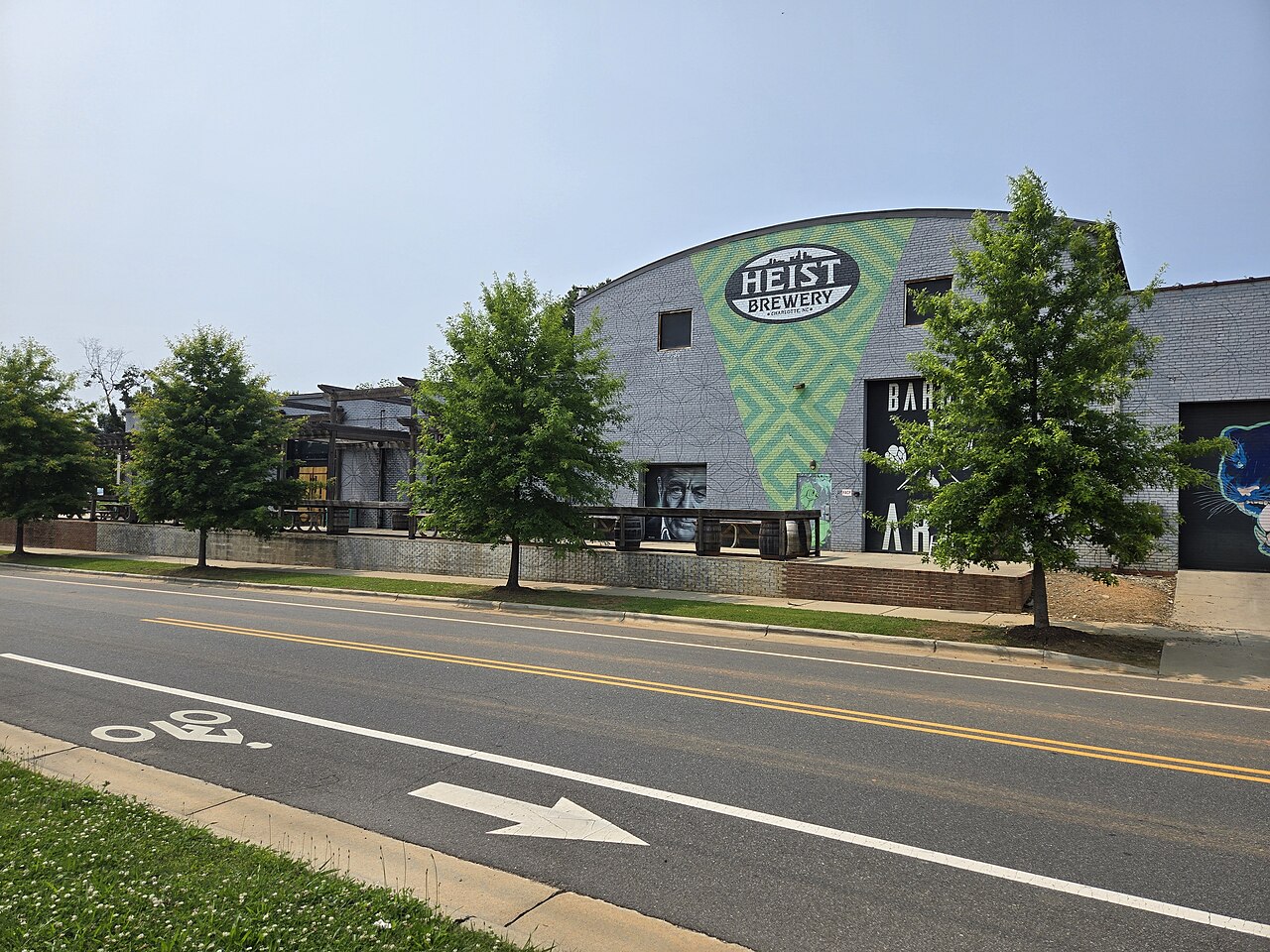
NoDa is the neighborhood most people think of first when they ask about Charlotte street art, and the light rail is a big reason. At the 36th Street station, riders wait on a red-steel platform at sunset while the city goes gold behind them. The platform is a place where people are, by definition, looking around.
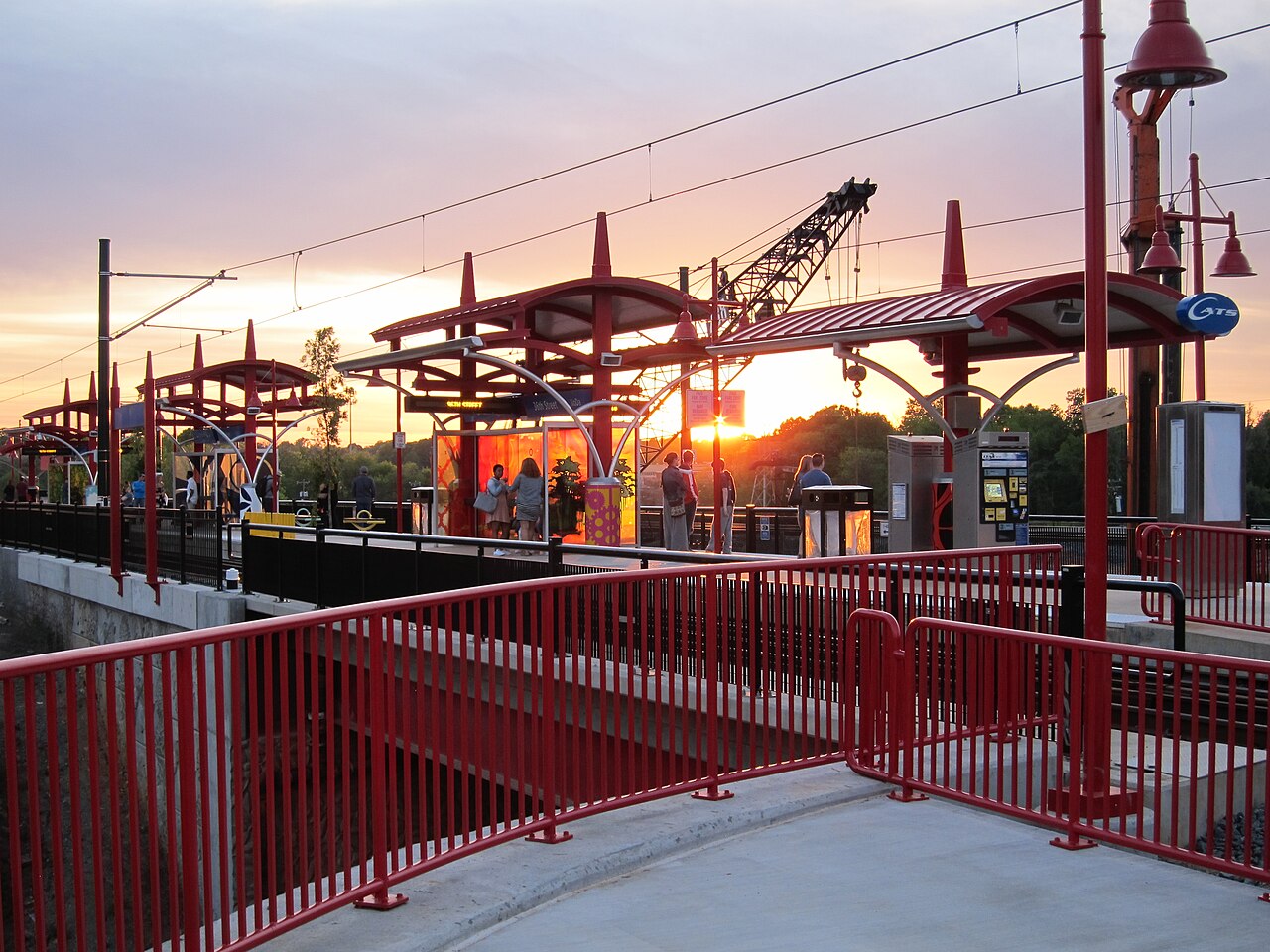
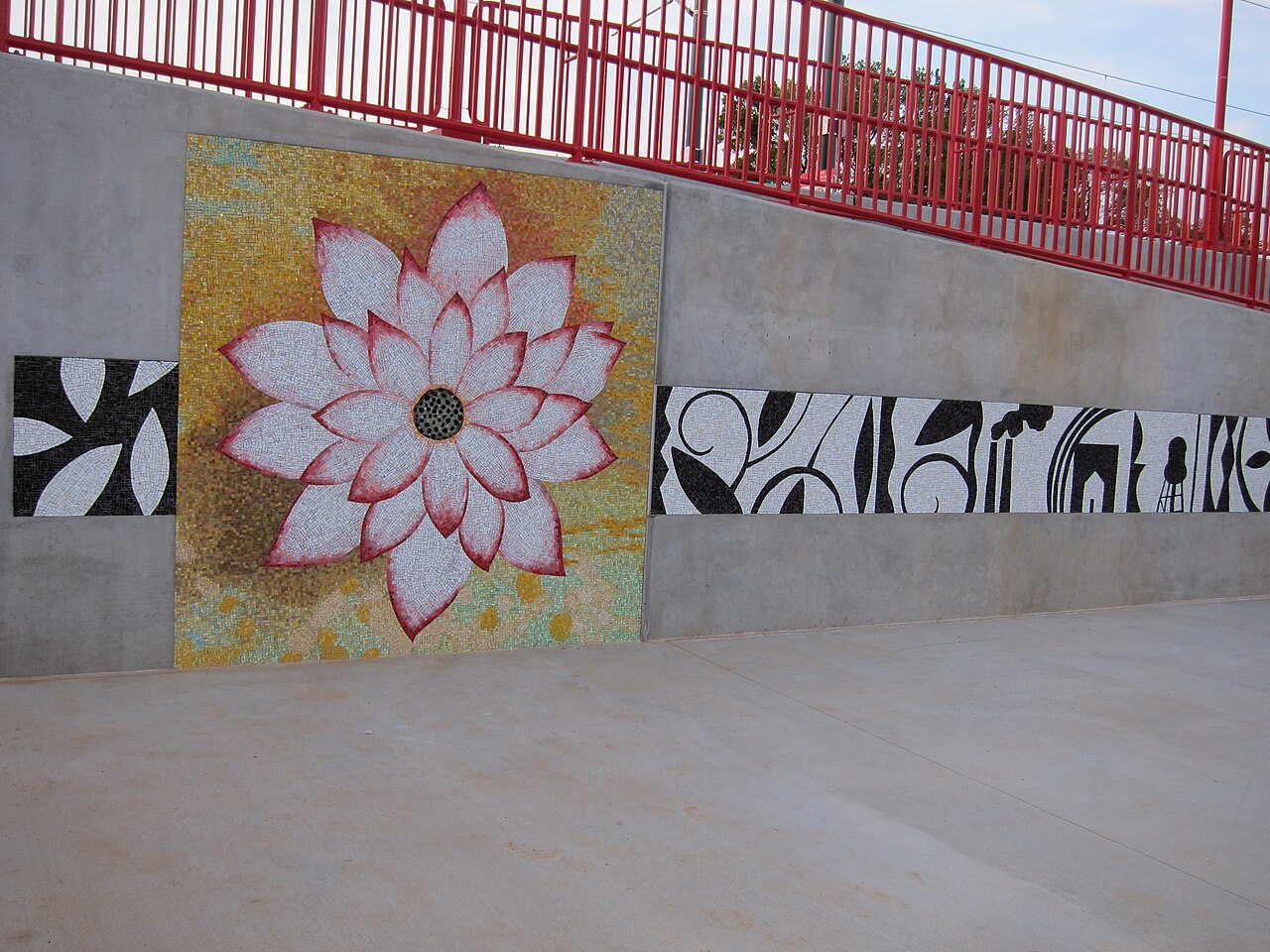
That is exactly where public art earns its keep. Beside the platform, a mosaic of a large pink-white lotus flower sits above black and white patterned bands on a concrete wall. It is quiet next to the big painted wall across the tracks, and the two together show how the same station can hold both a shout and a whisper.
Take the train one stop and the neighborhood changes character again. That is part of the pleasure of Charlotte murals near the rail line: you can see several very different walls in one easy afternoon without ever needing a car.


Words on the pavement
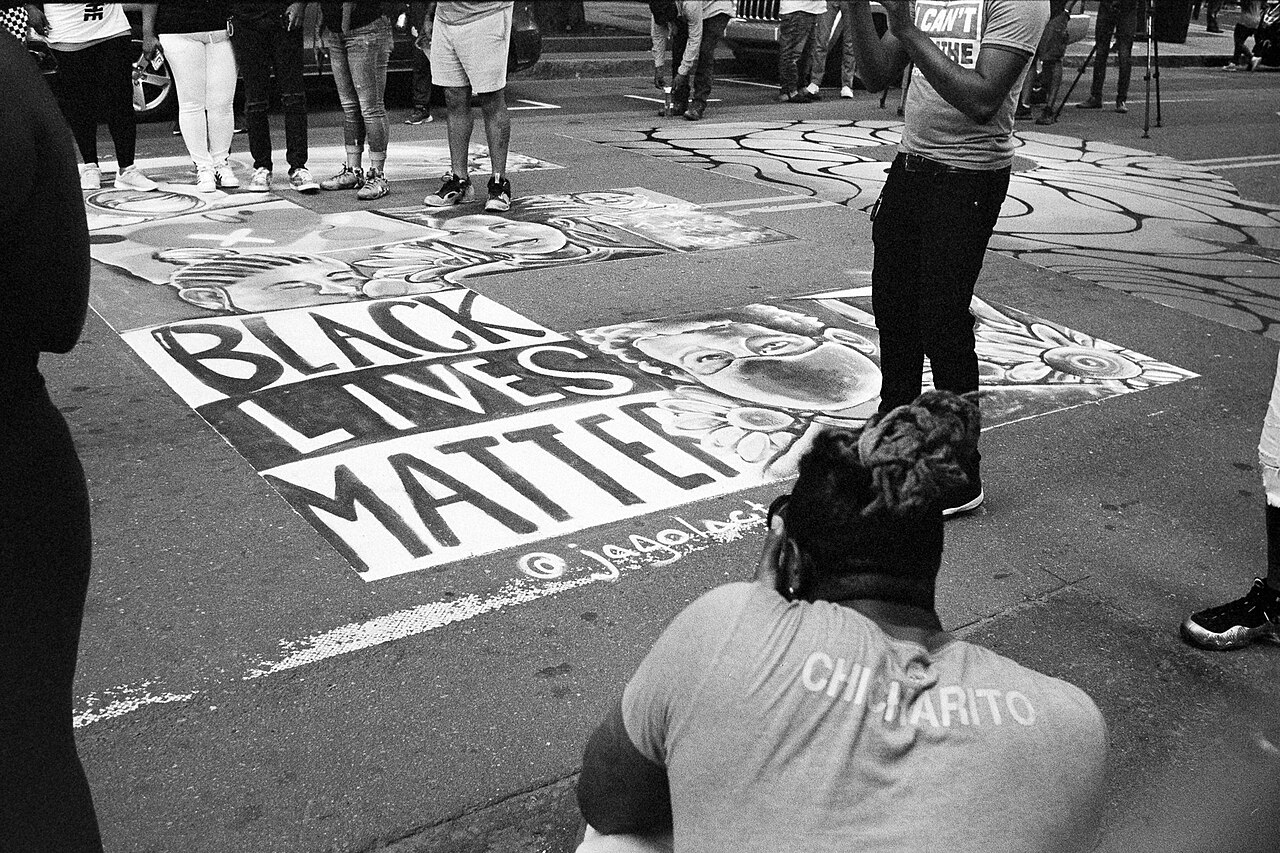
Not every mural hangs on a wall. In Uptown, a large Black Lives Matter painting covers a stretch of city street, and the photograph of it is black and white film, with onlookers standing around the edge of the lettering. It is a reminder that murals can be a place to gather as much as a thing to look at.
Painting on pavement turns a road into a room. People stop, talk and take their time, and the city briefly feels like it belongs to the people standing in it.
Look at the faces in the photograph. Nobody is hurrying. The painting has made an ordinary block into somewhere people choose to linger, and that is a quiet kind of power for paint to have.

Where the towers meet the street
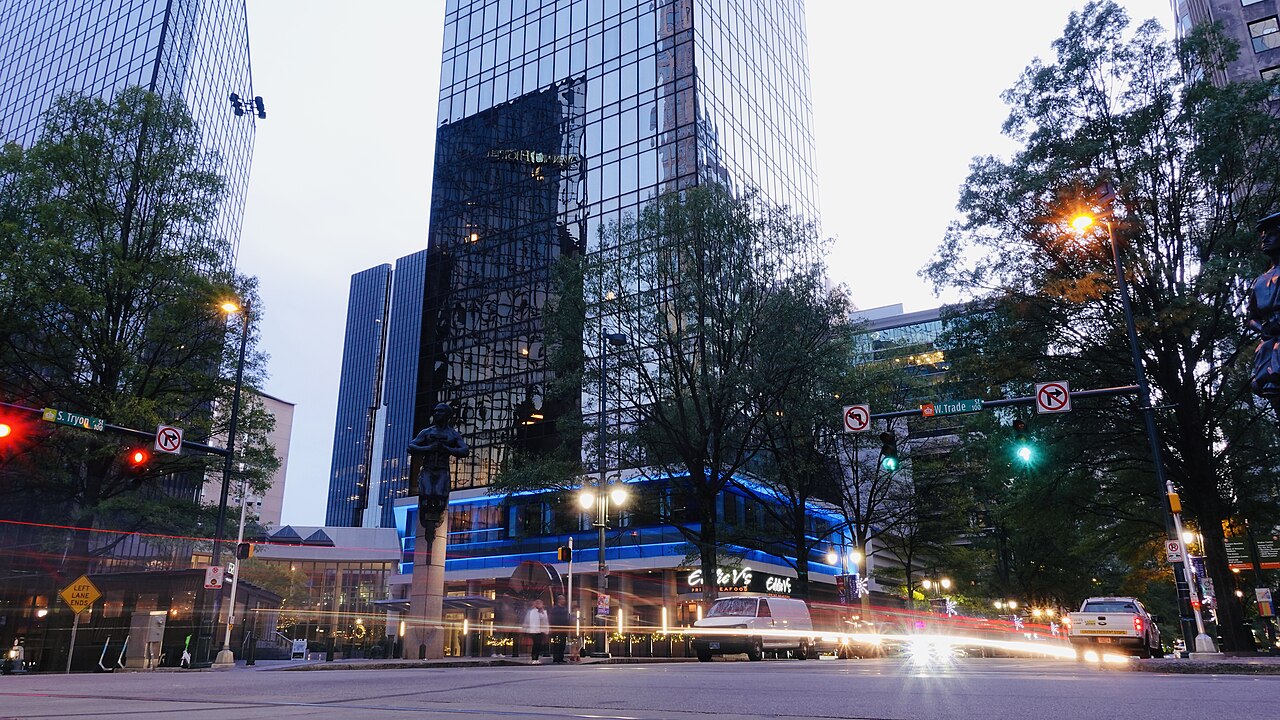
At Trade and Tryon, the center of Uptown, glass towers rise on every side and traffic keeps moving past a statue. A long exposure turns the cars into ribbons of light. It is a city at full speed.
Big commercial cores like this are where murals have the hardest job and the clearest purpose. Against so much glass and steel, a painted wall adds scale you can feel and a touch of the human hand. If you work with property in the area, our guide to how public art can lift a property in Charlotte covers that side of the story.

Green rooms for the city
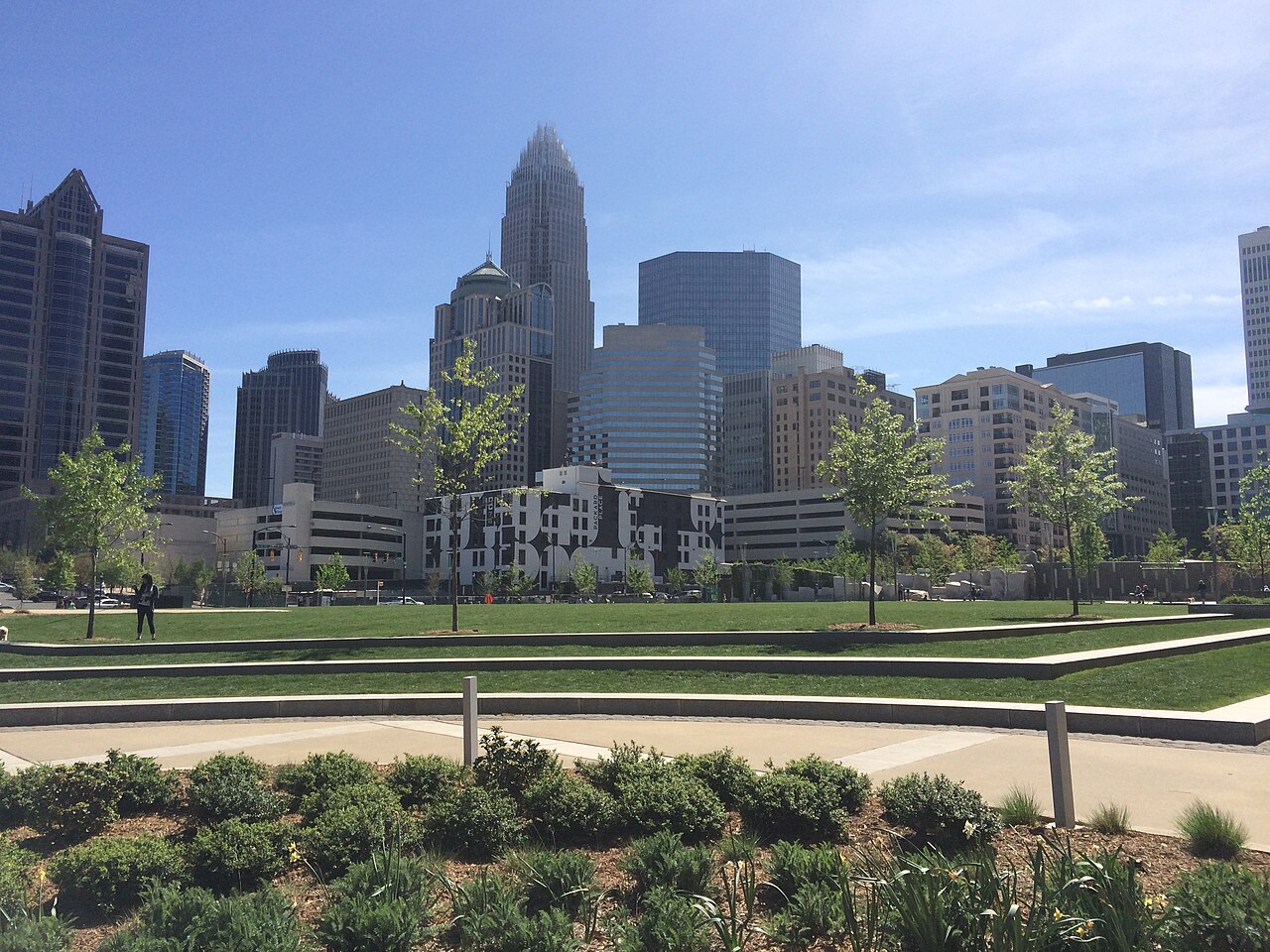
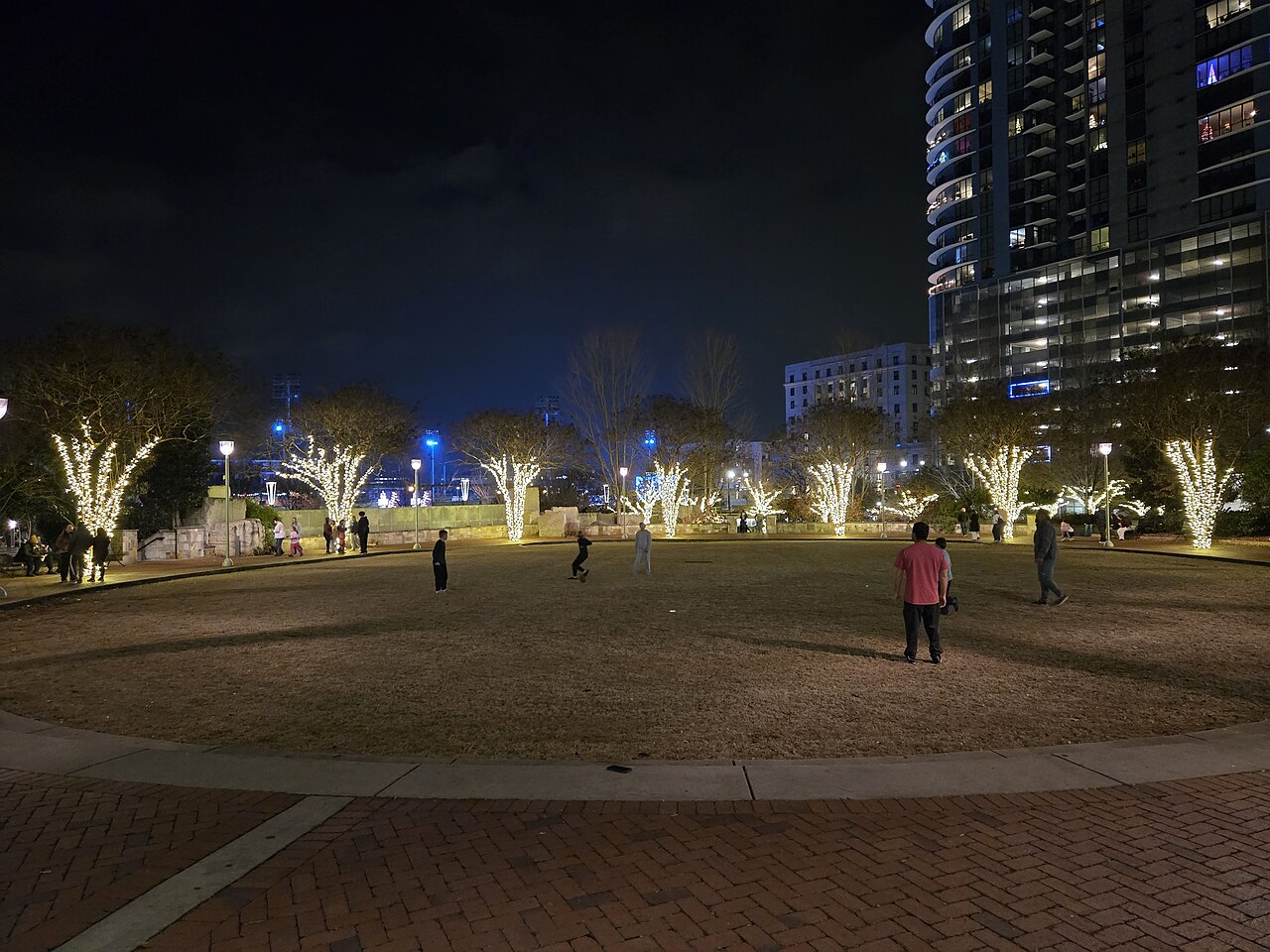
Romare Bearden Park gives Uptown a lawn. Young trees stand on the grass and the skyline rises behind them under a clear blue sky. After dark the same lawn turns into a circle of trees wrapped in lights, with a few people walking through and a high-rise beside them.
Parks and murals do related work. One gives people room, the other gives them a reason to look up. Walk from a park like this to a painted wall and you feel the city change pace, and you begin to see why so many neighborhoods want both.
Neither picture shows a mural, and that is rather the point. The best painted walls are never alone. They sit in a setting of lawns, sidewalks, trees and light, and the setting is half of what you remember.


Color on a garden fence
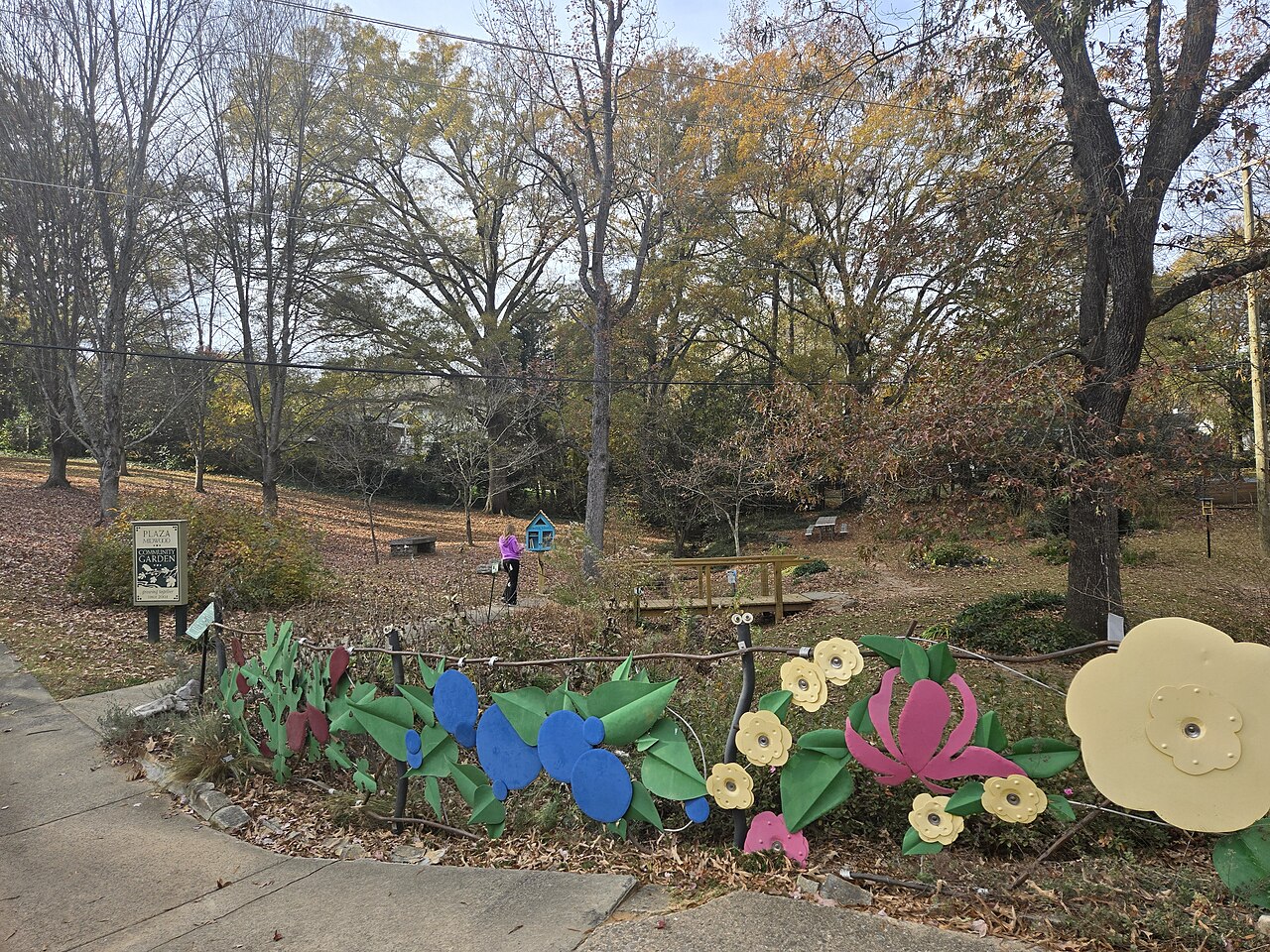
In Plaza Midwood, a community garden sits under autumn trees, and its fence is decorated with colorful cut-out metal flowers. It is small, handmade and a little unexpected, the kind of detail you only find by walking slowly.
Charlotte street art is not all large and loud. A fence, a gate or a garden edge can carry as much feeling as a three-story wall, and those small gestures are often what make a block feel looked after.
If you are exploring Charlotte street art on foot, keep your eyes at fence height as well as roof height. Plaza Midwood rewards that kind of looking.

A corner after dark
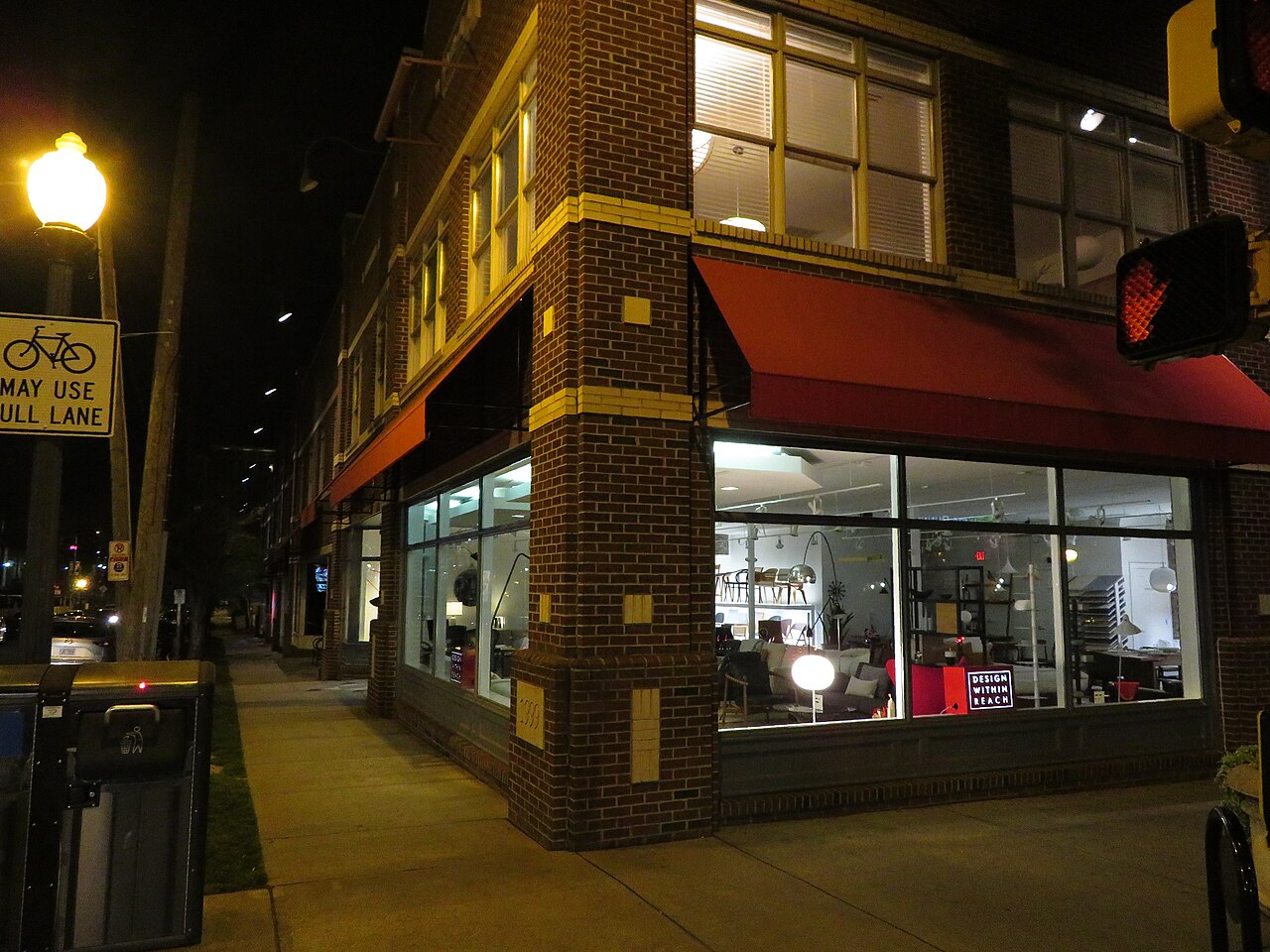
Finish in South End at night. A brick corner building with a red awning glows from its lit shop windows, and the sidewalk in front of it is the kind of place people meet before dinner. The wall beside a door like that is a ready-made invitation.
Small businesses know this instinctively. A bright wall beside a lit window tells a passer-by that someone is home, and that the block is worth a few extra minutes of their evening.
That is the thread running through Charlotte murals, from the panther in Camp North End to the platform in NoDa. Paint makes a place easier to find and easier to remember, one corner at a time.

If you have a wall in mind
Every wall in this story began as someone's plain surface and a decision to leave it less plain. If you manage a building in Charlotte and keep looking at a wall of your own, we would be glad to hear about it. You can see how we think about the city on our Charlotte page, or tell us about your wall and we will take it from there.
Frequently asked questions
- Where can I see murals in Charlotte?
- Good places to start are NoDa around the 36th Street light rail station, Camp North End, Uptown, Plaza Midwood and South End. Most can be reached by light rail, bike or a short walk between stops.
- Which Charlotte neighborhoods have the most street art?
- NoDa and Camp North End are the best-known for painted walls, while Uptown, Plaza Midwood and South End each have their own pieces and smaller details worth finding on foot.
- Is street art legal in Charlotte?
- It depends on the wall and the owner. A mural painted with a property owner's permission is commissioned work, while unsanctioned painting is a different matter. If you own a wall, get the agreement in writing before anyone paints.
- How do I find a muralist in Charlotte for my building?
- Start with a muralist whose style fits the wall and the neighborhood, then talk through the size, surface and look. We help match walls with muralists and handle quotes, contracts and scheduling.
All photos are free-licensed and credited under each image; license links go to the original file pages.