City story · Cincinnati · 6 min read
Cincinnati Murals: A City Built of Brick and Color
From a bridge over the Ohio River to alleys, storefronts and a mission wall, a walk through the Cincinnati murals and street art that give a brick city its color.

Cross the river first
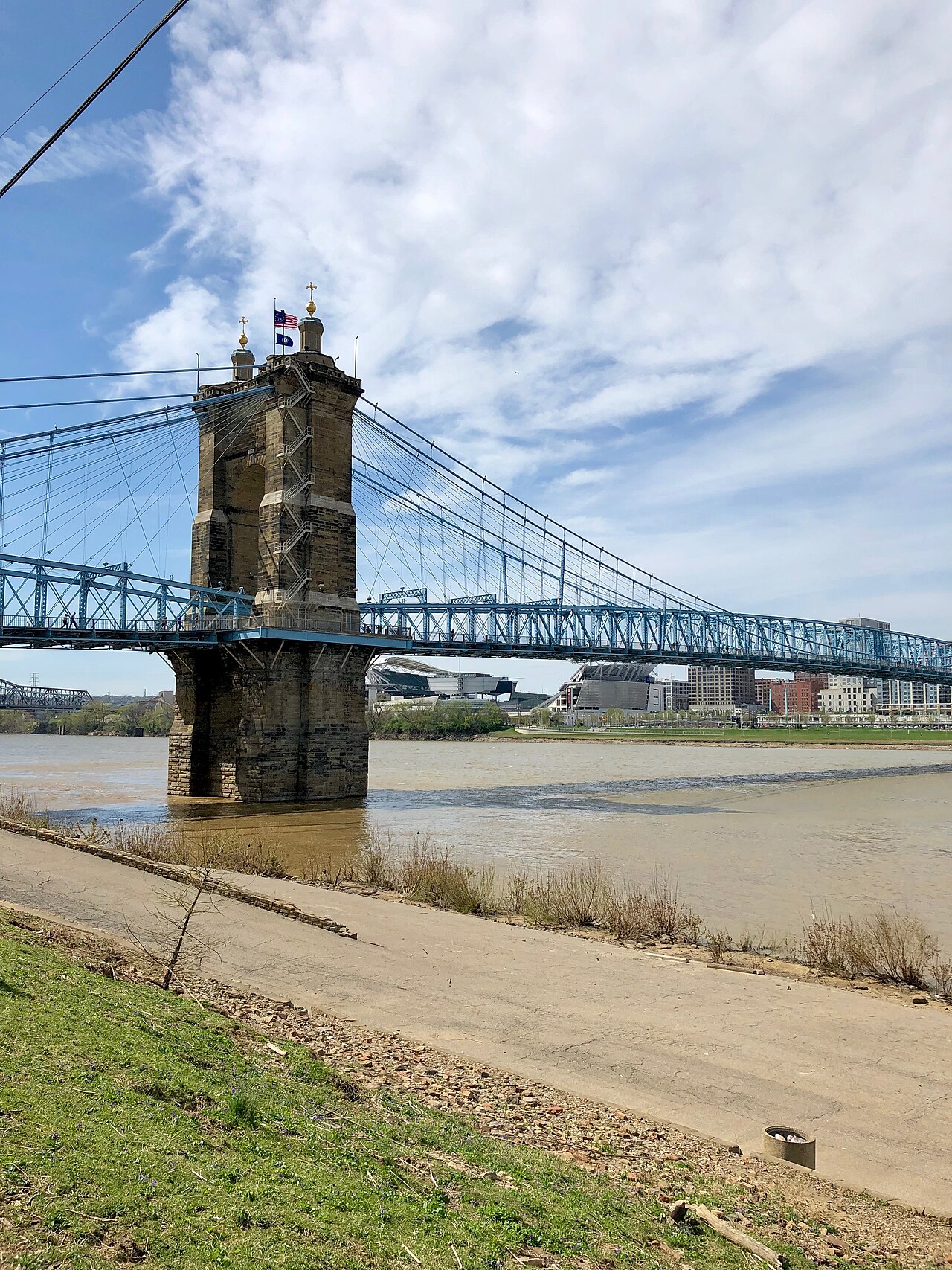
Cincinnati makes the most sense if you arrive from the water. The Ohio River runs along the edge of the city, and the Roebling Suspension Bridge crosses it on a tall stone tower and blue steel cables. Stand on the bridge and the city lays itself out behind you: hills, church steeples, old brick, new glass.
That is a useful way to start a story about Cincinnati murals, because this is a city of hills and brick and river, and the paint has to work with all three. A wall here is rarely a blank slab. It is usually a brick face with a long past, and the people who paint it are answering that past.
So take the bridge in, then walk up into the neighborhoods. Everything that follows is a few blocks from the river and a world apart in feeling.

Brick is the canvas
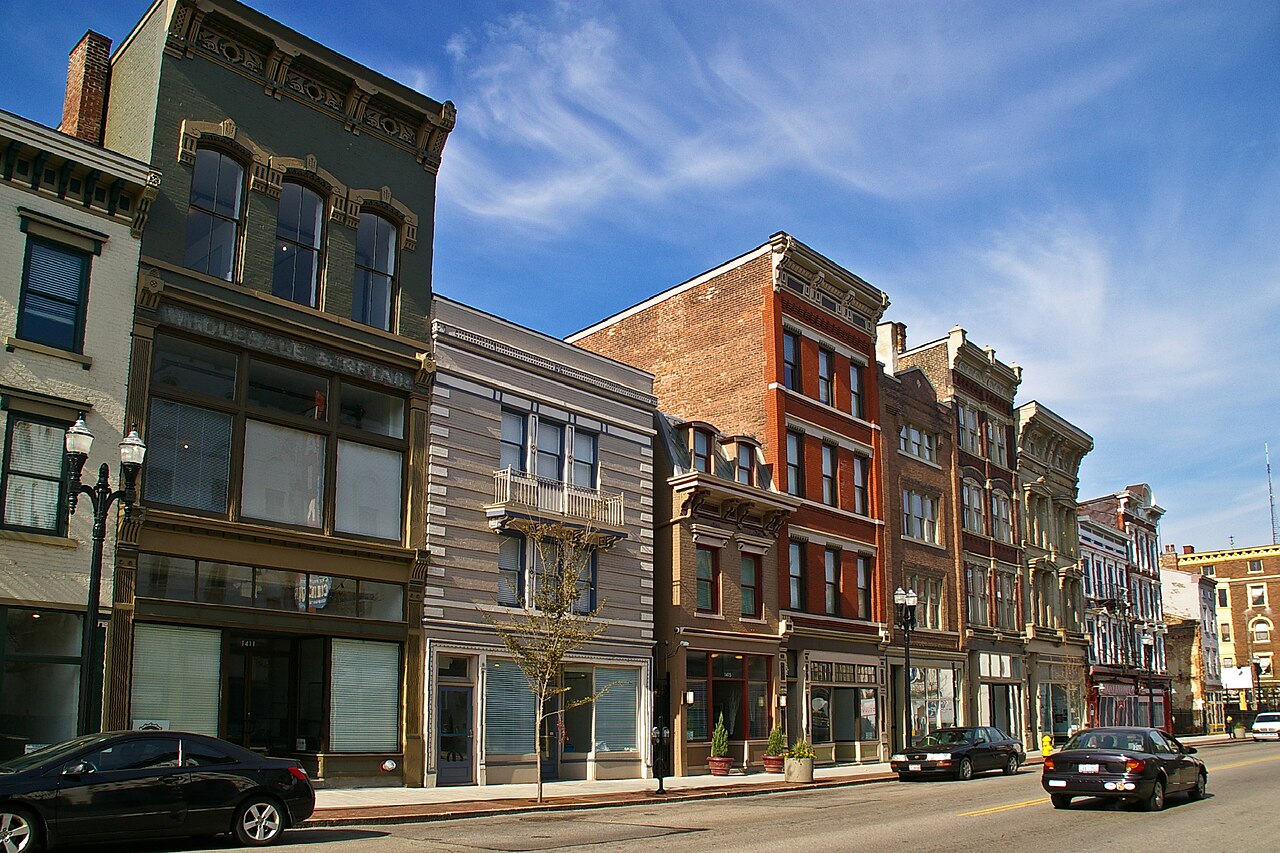
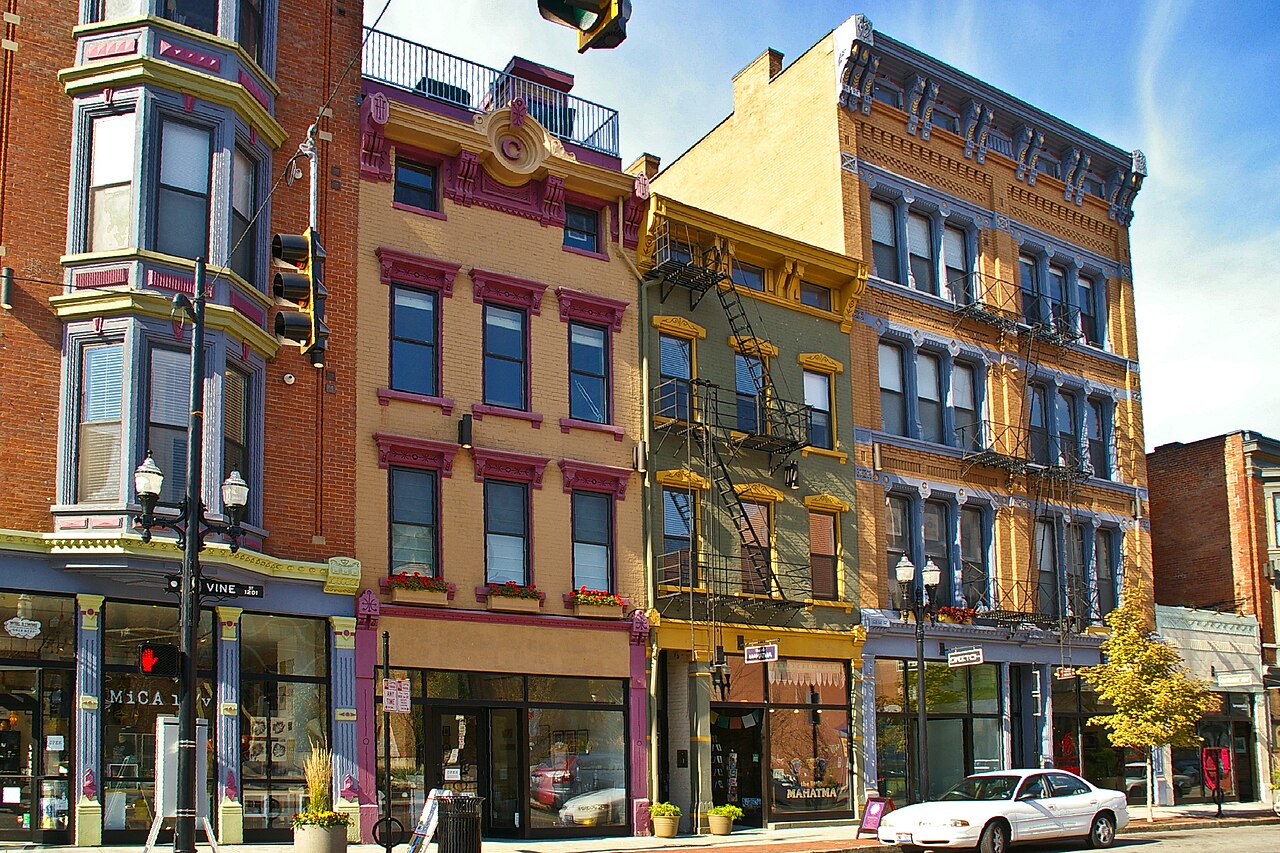
Over-the-Rhine is the neighborhood where the brick shows best. Block after block of nineteenth-century storefronts have been restored, and in the sun they glow in warm reds and browns. Some wear painted signs. Some carry bright trim. On Vine Street, the Italianate buildings step down the block in different colors, with shops at street level and windows stacked above.
Before you find a single large mural, you notice that color is already part of the street. The neighborhood is listed on the National Register of Historic Places, and it shows how a place can hold on to its old buildings and still feel alive. Paint on a wall like these is never starting from nothing. It joins a conversation that bricklayers began.
Walk it slowly and you start to read the street in layers: stone and brick below, painted trim and signs above, sky over the top. A mural dropped into that mix has to know its neighbors, and the best ones do.


A jersey, a sneaker, a black wall
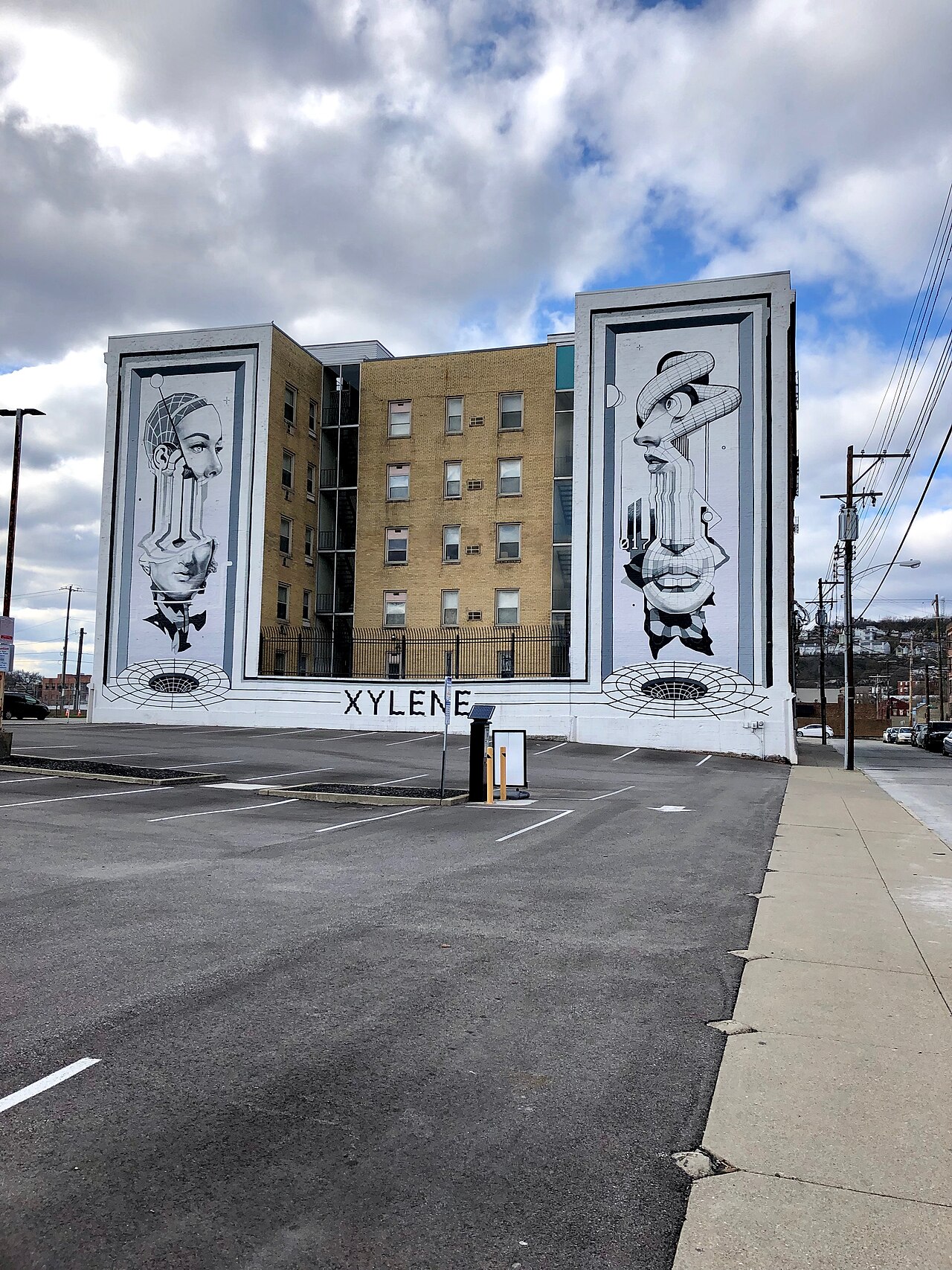
Then, in Over-the-Rhine, a wall goes dark. A mural covers a black brick face with a basketball jersey and a sneaker, both in stars-and-stripes colors. It is bold and simple and reads from across the street, which is what a good wall in a busy neighborhood has to do.
Look at how the dark background does the work. The colors jump forward, and the shapes feel almost like a poster you could walk into. It is a reminder that a mural is a design problem as much as a painting: scale, contrast, and what a passer-by can take in at a glance.

Alleys that reward the curious
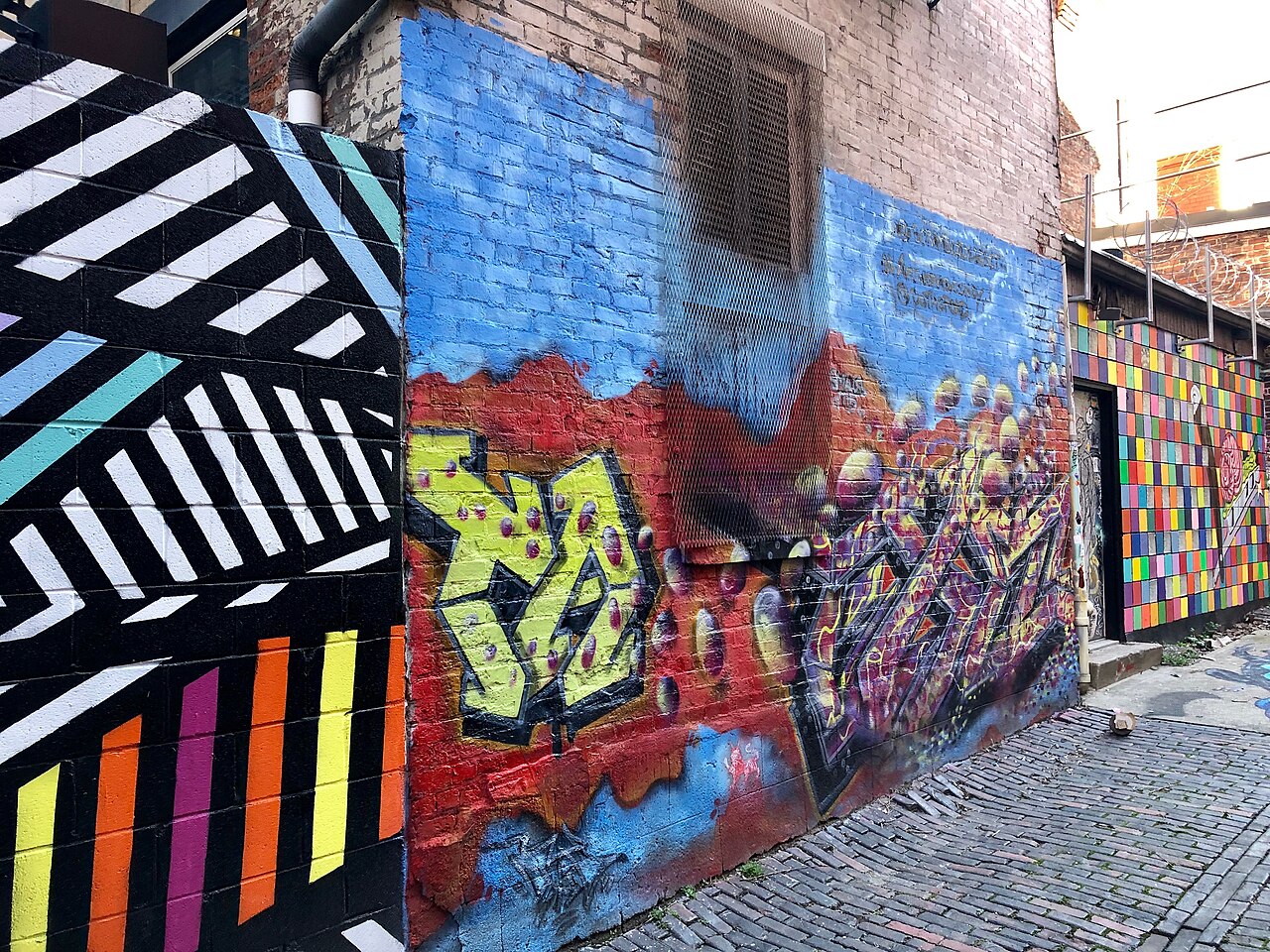
Pendleton is a good place to put your map away. Bolivar Alley is paved in brick and lined with graffiti lettering, black and white geometric stripes, and a wall of multicolored tile patterns. It is narrow enough that the art surrounds you.
Alleys like this are where Cincinnati street art feels most personal. Nobody is driving past at speed. You walk slowly, you look up, and you see how one wall hands off to the next. An alley turns a service lane into a small gallery, and it asks very little of the neighborhood to do it.
There is a lesson for anyone who owns a wall facing a back lane. The alley does not need to be wide or grand. It needs a surface, a little light and someone willing to paint. Even a short stretch of brick can become the part of the block people tell their friends about.

One big number, in Walnut Hills
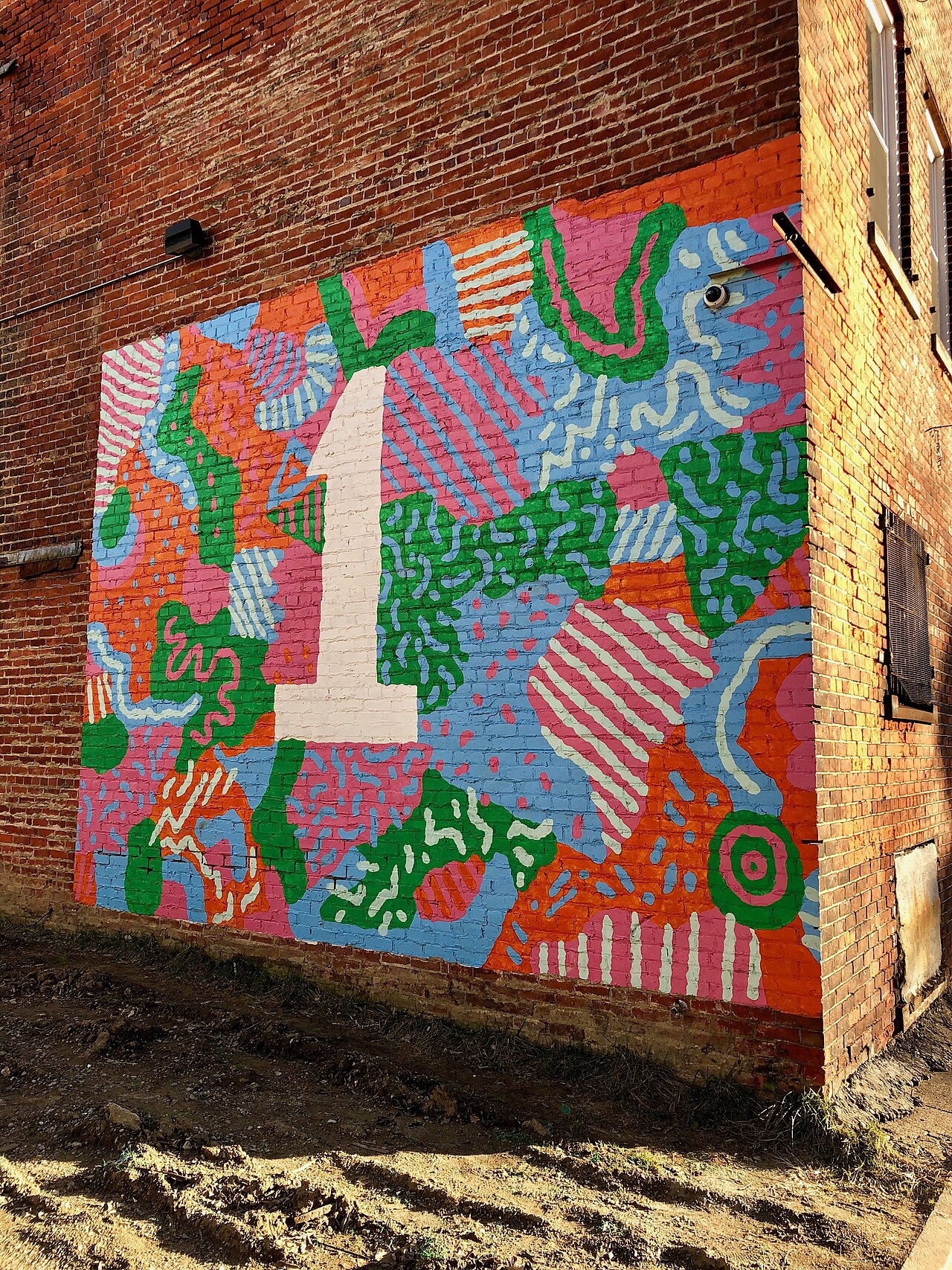
In Walnut Hills, Sedalia Alley holds a brighter surprise. A red brick wall carries an abstract mural in pink, green, blue and orange patterns, with a large white number one standing in the middle of it.
It makes no argument and tells no story, and that is its charm. It is simply a burst of joy on a plain wall. Not every mural has to explain itself. Some just have to make an ordinary afternoon a little better for whoever turns the corner.
Put it next to the black brick jersey wall and you see the range. One is loud and graphic, the other cheerful and abstract, and both belong to the same city.

A ballpark remembered on a mission wall
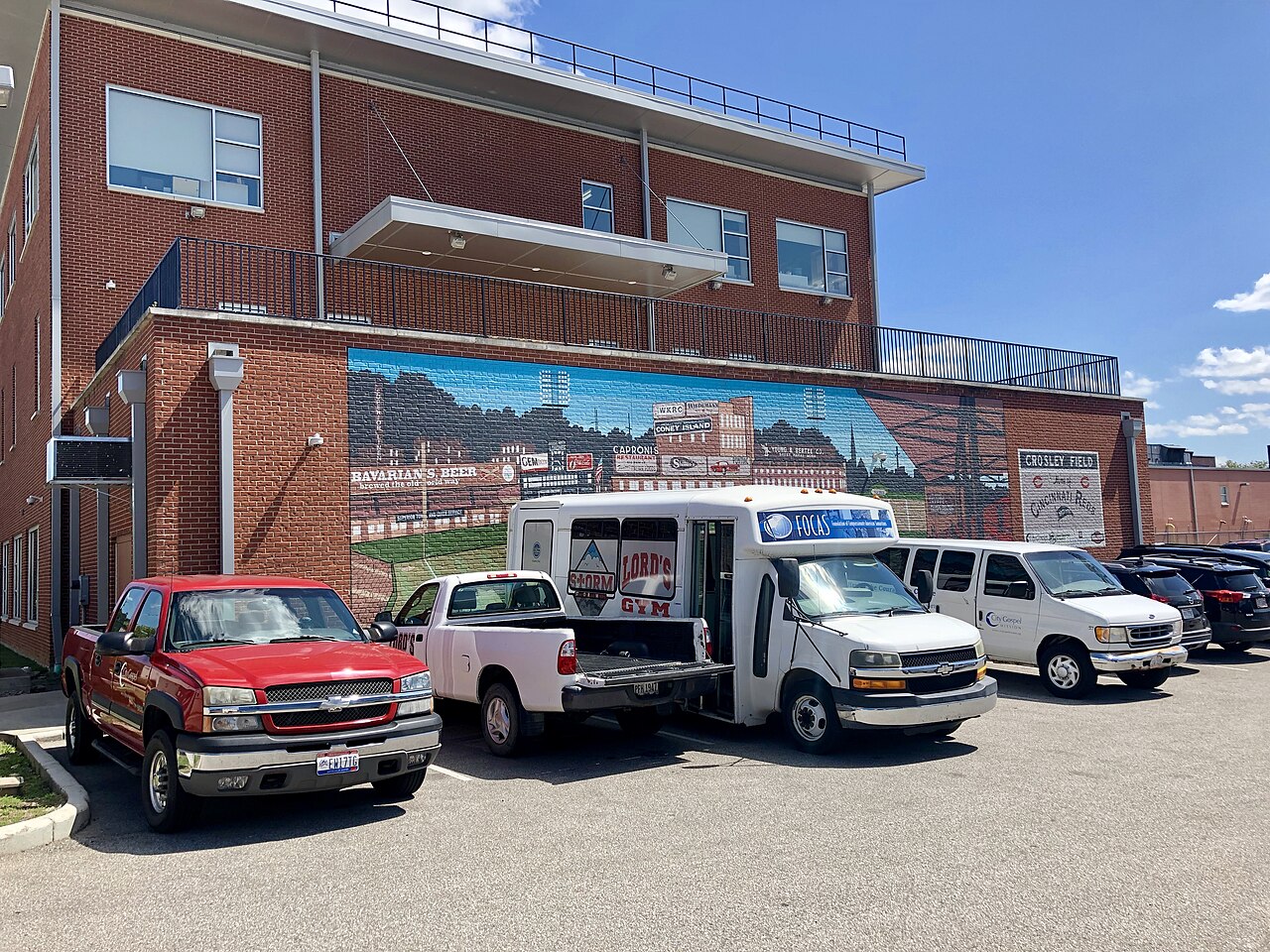
In Queensgate, a memorial mural runs along the lower wall of the City Gospel Mission, a red brick building. It remembers Crosley Field, with the ballpark painted at street level and vehicles parked in front of it.
This is a quieter kind of wall, and an important one. It treats the building as a place to keep a memory, not just to catch an eye. Neighbors who know the old ballpark can read it one way, and newcomers another, and both are right.

The market and the park do their part
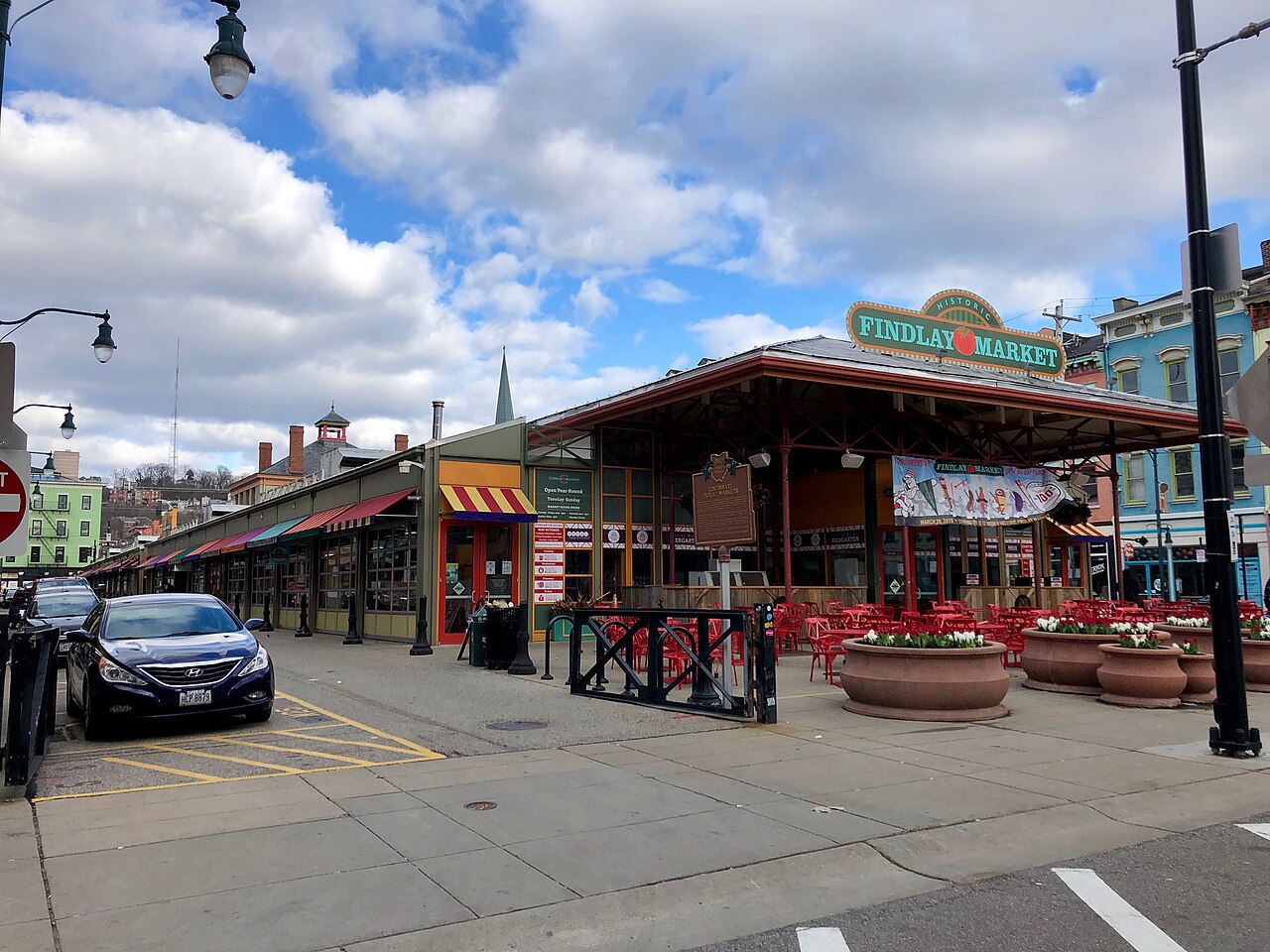
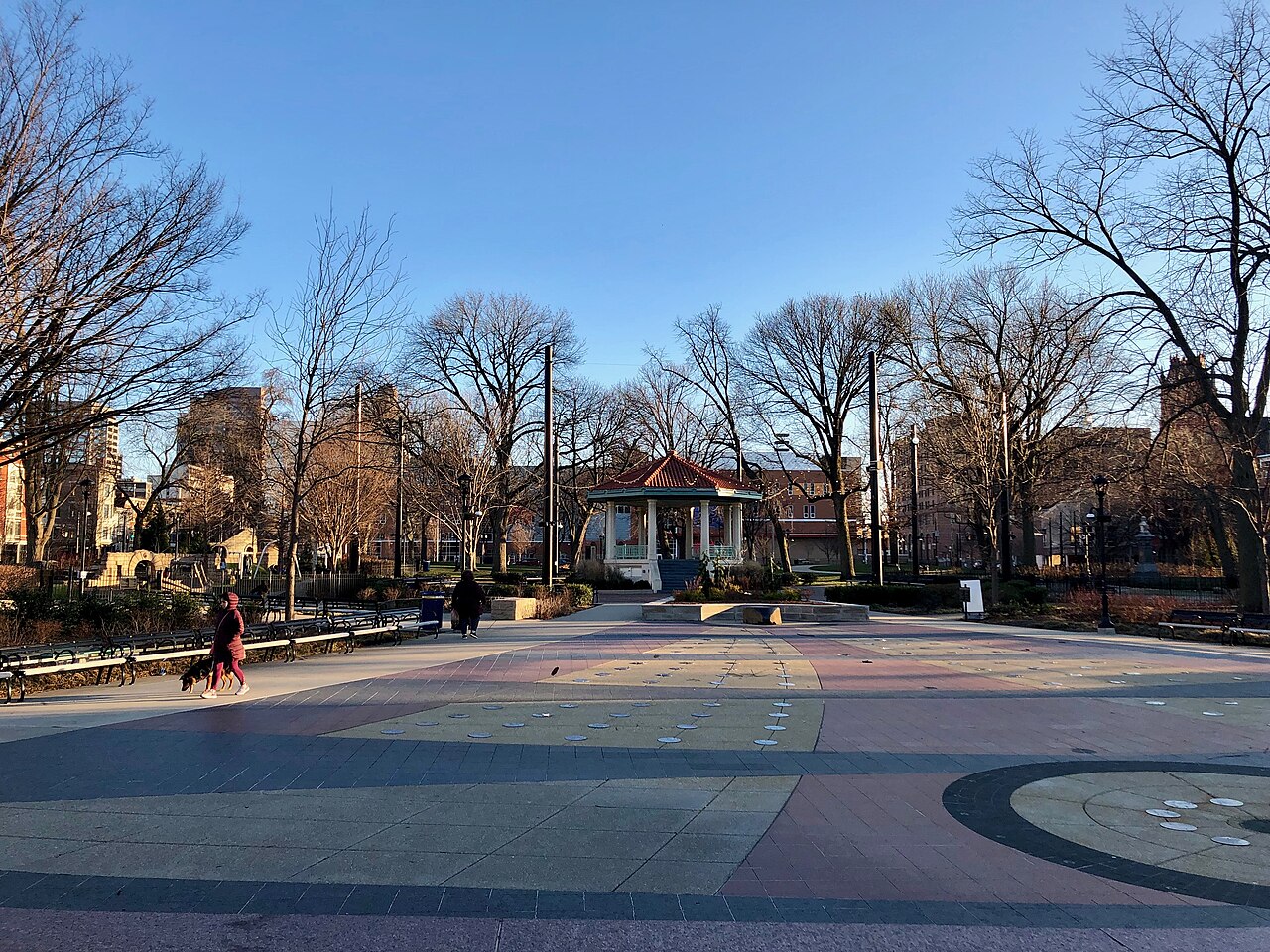
Murals work best when the street around them is worth lingering on, and Over-the-Rhine has two places that make people linger. Findlay Market is a covered market building with red outdoor chairs, planters of flowers and a big sign over the door. A few blocks away, Washington Park opens into a wide patterned plaza with a bandstand, where a person might be walking a dog on a cold day.
That is the real secret of a mural district. The walls are the draw, but the places to sit and eat and watch the neighborhood go by are what keep people coming back. For owners thinking about what art can do for a block, our guide on how public art can lift a property in Cincinnati goes deeper.


Last light on the river
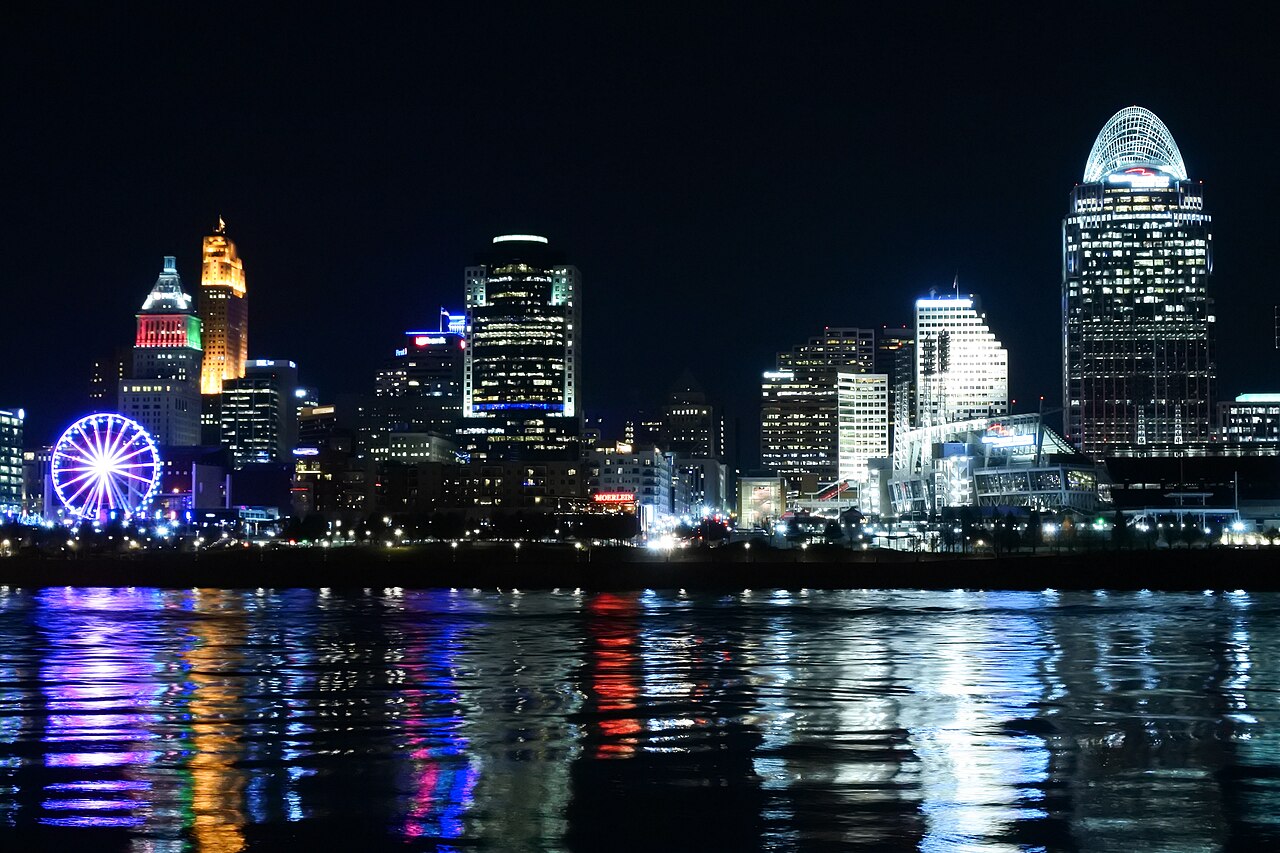
Finish where you began, with the water. From the Kentucky side at night, the downtown skyline is lit and a Ferris wheel turns, and all of it doubles in the Ohio River.
After a day among brick and paint, the view reads differently. Behind those towers are the alleys and storefronts you walked through, and the Cincinnati murals tucked into them.

An artist from just across the river
The artwork at the top of this story is by Aly Senger, a painter based in Covington, Kentucky, just across the river from Cincinnati. Aly’s work blends portraiture and still life with personal symbolism, in oil, embroidery, graphite and collage, and reworks craft techniques that art history has often overlooked. Oil paint, thread, appliqué and found materials such as dried fruit, beads and fabric come together in layered, autobiographical pieces.
Aly earned a BFA in Art History from Northern Kentucky University in 2025 and has shown work in galleries and museums across Cincinnati and Northern Kentucky. The piece shown here, Gathering Stitch, is shown with Aly’s permission. See more on Aly’s artist page, or look at the Cincinnati page for more of the city.
If you have a wall in mind
Every wall in this story was once somebody’s plain brick and a decision to give it something to say. If you manage a building in Cincinnati and have a wall you keep looking at, we would be glad to hear about it. Tell us about your wall and we will take it from there.
Frequently asked questions
- Where can I see murals in Cincinnati?
- Good places to start are Over-the-Rhine, especially around Vine Street, Findlay Market and Washington Park, plus Bolivar Alley in Pendleton, Sedalia Alley in Walnut Hills and the Crosley Field memorial in Queensgate. Over-the-Rhine is easy to explore on foot.
- Which Cincinnati neighborhoods have the best street art?
- Over-the-Rhine, Pendleton, Walnut Hills and Queensgate all have walls worth seeing. Alleys in Pendleton and Walnut Hills are especially rewarding if you like to wander.
- Is street art legal in Cincinnati?
- It depends on the wall and the owner. Murals painted with a property owner’s permission are commissioned work; unsanctioned pieces are a different matter. If you own a wall and want a mural, ask a muralist and get the agreement in writing.
- How do I find a muralist in Cincinnati for my building?
- Start with a muralist whose style fits the wall and the neighborhood, then talk through the size, surface and look. We help match walls with muralists and handle quotes, contracts and scheduling.
Hero artwork © Aly Senger, shown with the artist’s permission. All other photos are free-licensed and credited under each image; license links go to the original file pages.