City story · Dallas · 6 min read
Dallas Murals: A City Painted Wall by Wall
From a steam locomotive in Deep Ellum to a painted gate in Bishop Arts and a grand Art Deco entrance at Fair Park, a slow look at the Dallas murals and street art that give the city its character.
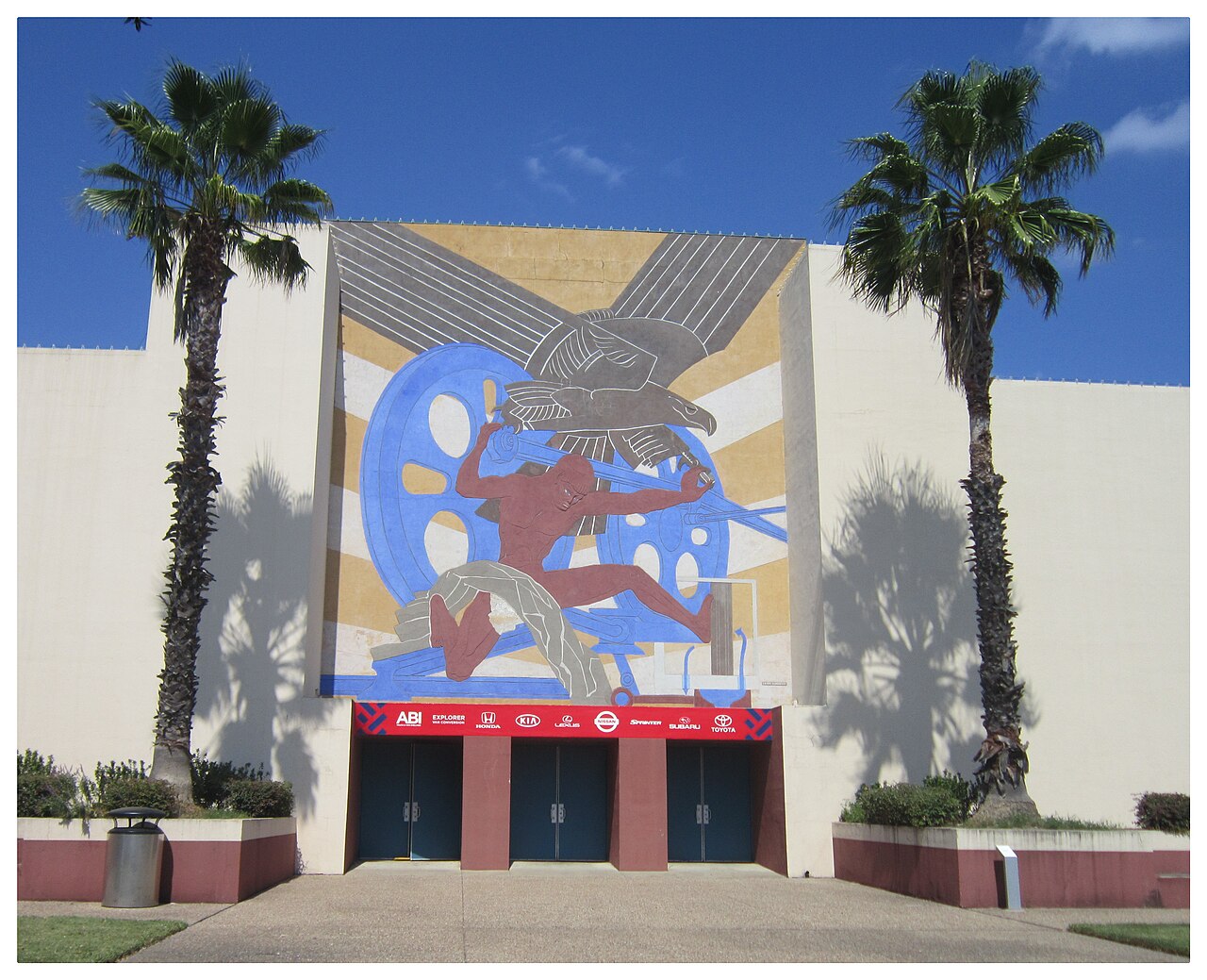
Look up at the entrance
Plenty of Dallas murals ask you to come find them. The one above the entrance of the Automobile Building at Fair Park simply meets you at the door. A figure, an eagle and a set of wheels sweep across the wall in the bold, streamlined style of Art Deco, and palm trees stand on either side as if they were part of the composition.
It is a useful way to begin, because it shows how old the habit is. A building can carry a picture the way a person carries a name. Long before anyone said street art, the idea was already here: put something worth looking at where people will walk in.
Stand there a minute and watch who walks past. Some people glance up, some never do, and a few stop to take a picture. That mix is true of nearly every wall in this story. A mural does not demand attention. It waits, and it rewards the people who give it a moment.

Deep Ellum keeps its own time
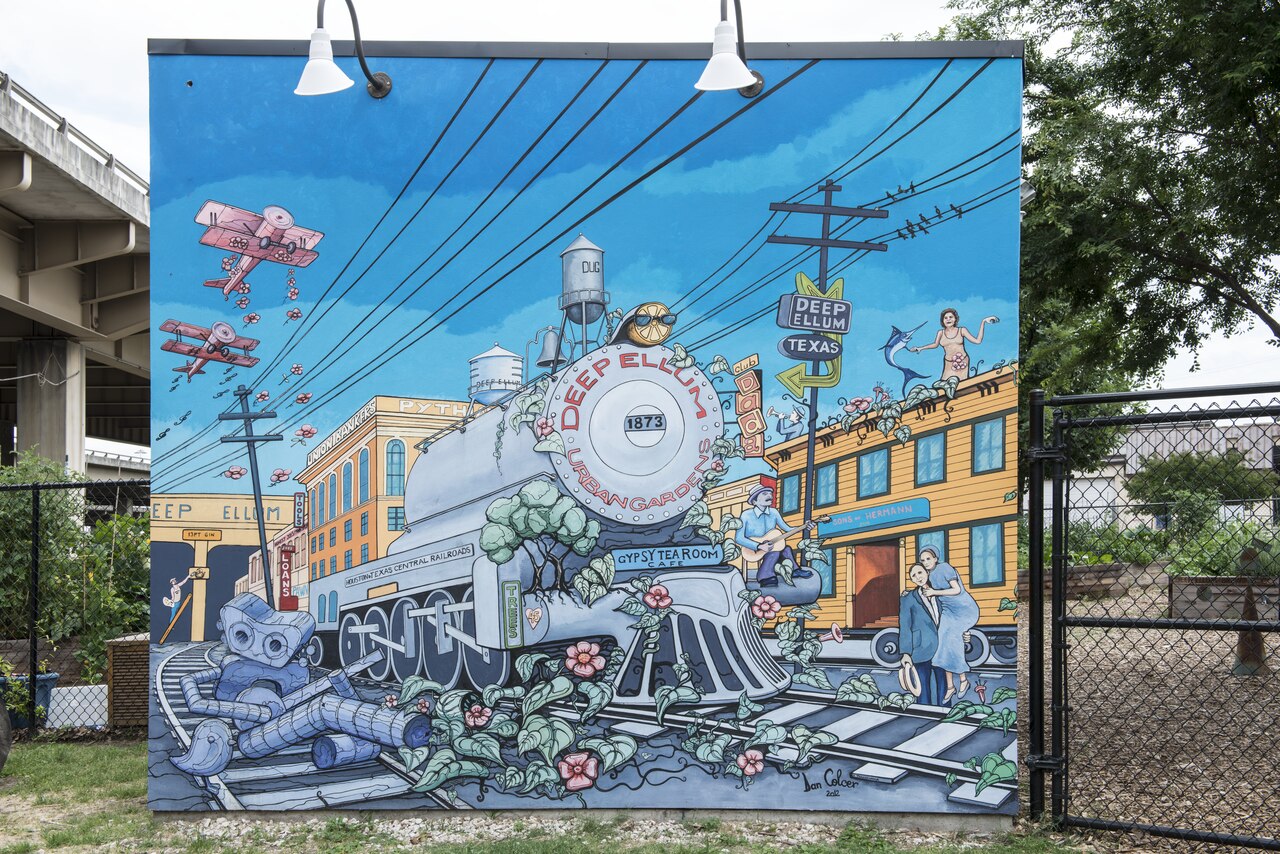
Deep Ellum is where the walls get chatty. The hero of this story is a good example: a painted steam locomotive rolling past old storefronts, with biplanes overhead, on the wall of a community garden. It is part history lesson, part daydream, and it makes a patch of ground feel like a destination.
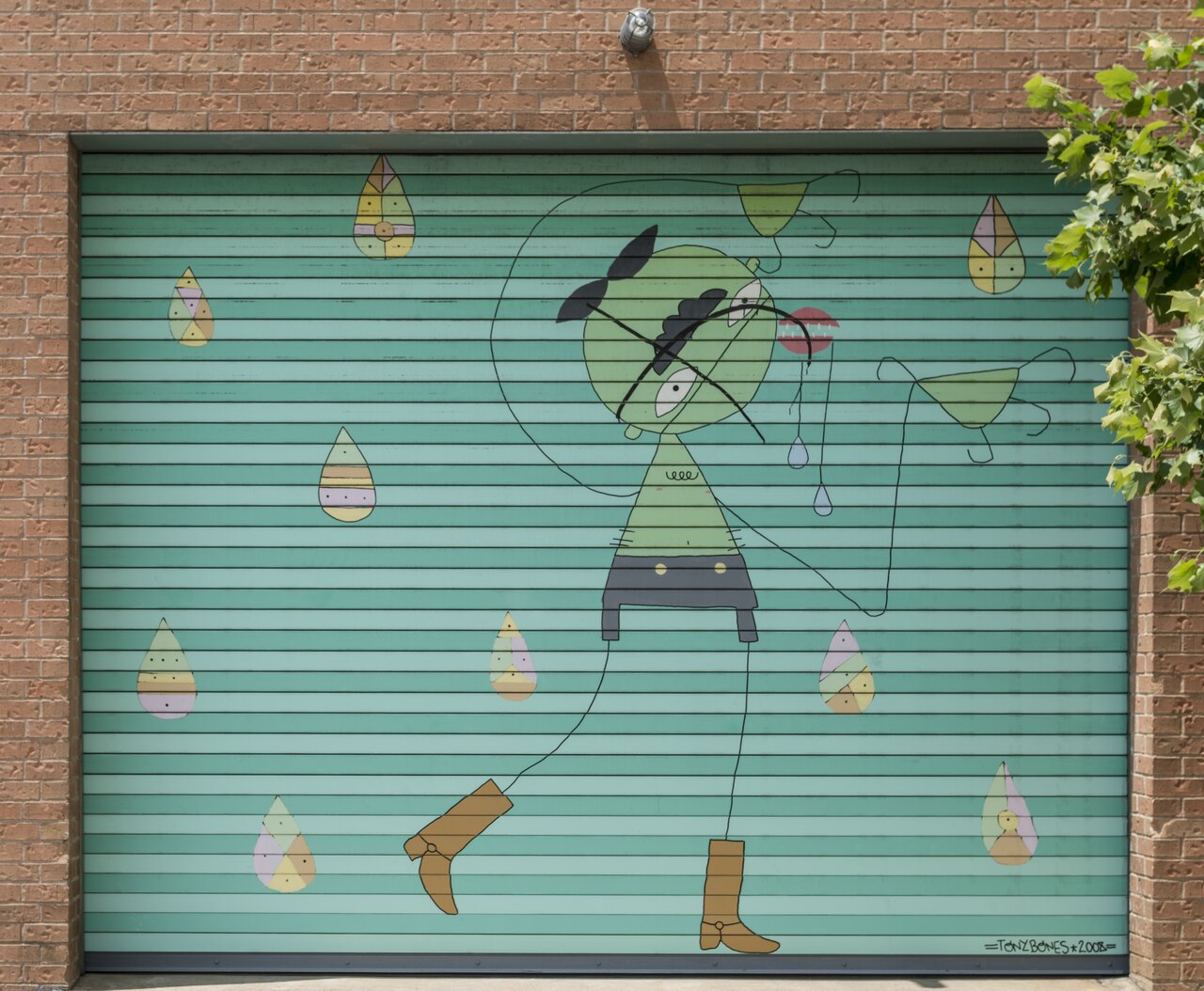
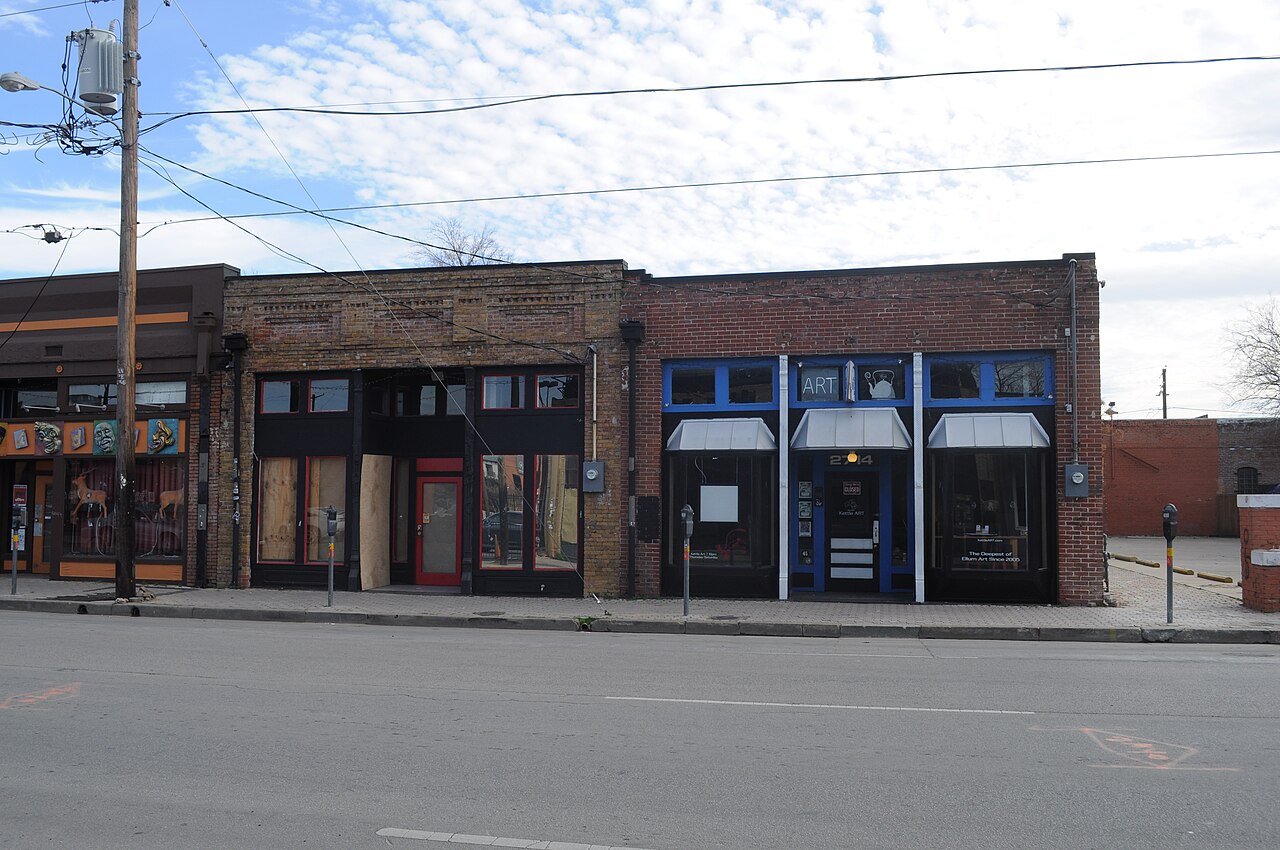
Walk a little and the scale changes. A roll-up garage door set in brick carries a green cartoon figure under a scatter of raindrops, small and funny and a bit stubborn. Around the corner a row of old brick storefronts, one with a sign that simply reads ART, sits quietly on its street. Nothing about it is loud, and that is the charm. In Deep Ellum, Dallas street art lives on doors, brick and signs as much as on any grand wall.
What ties Deep Ellum together is a feeling of layers. The district has the look of a place that has been many things, and the painted walls read like chapters laid on top of each other. A train from another era sits beside a cartoon from this one, and neither seems out of place. If you only have an afternoon for Dallas murals, spend most of it here, and let yourself wander without a list.

An iron gate and a street full of life
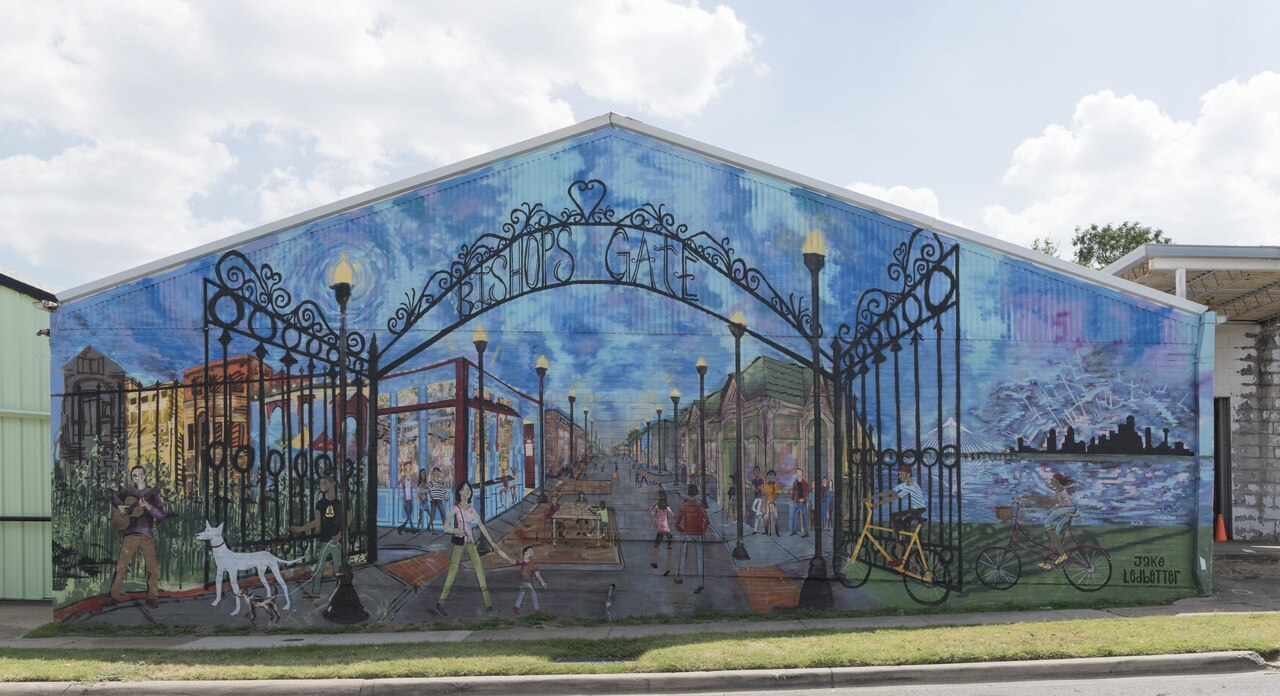
Over in the Oak Cliff side of town, Bishop Arts has a mural that works like a window. Painted across the gabled wall of a building is an iron gate, and through it you can see a lively street: cyclists, a dog, the skyline in the distance. The wall shows the neighborhood a flattering picture of itself, and the neighborhood seems happy to be looked at.
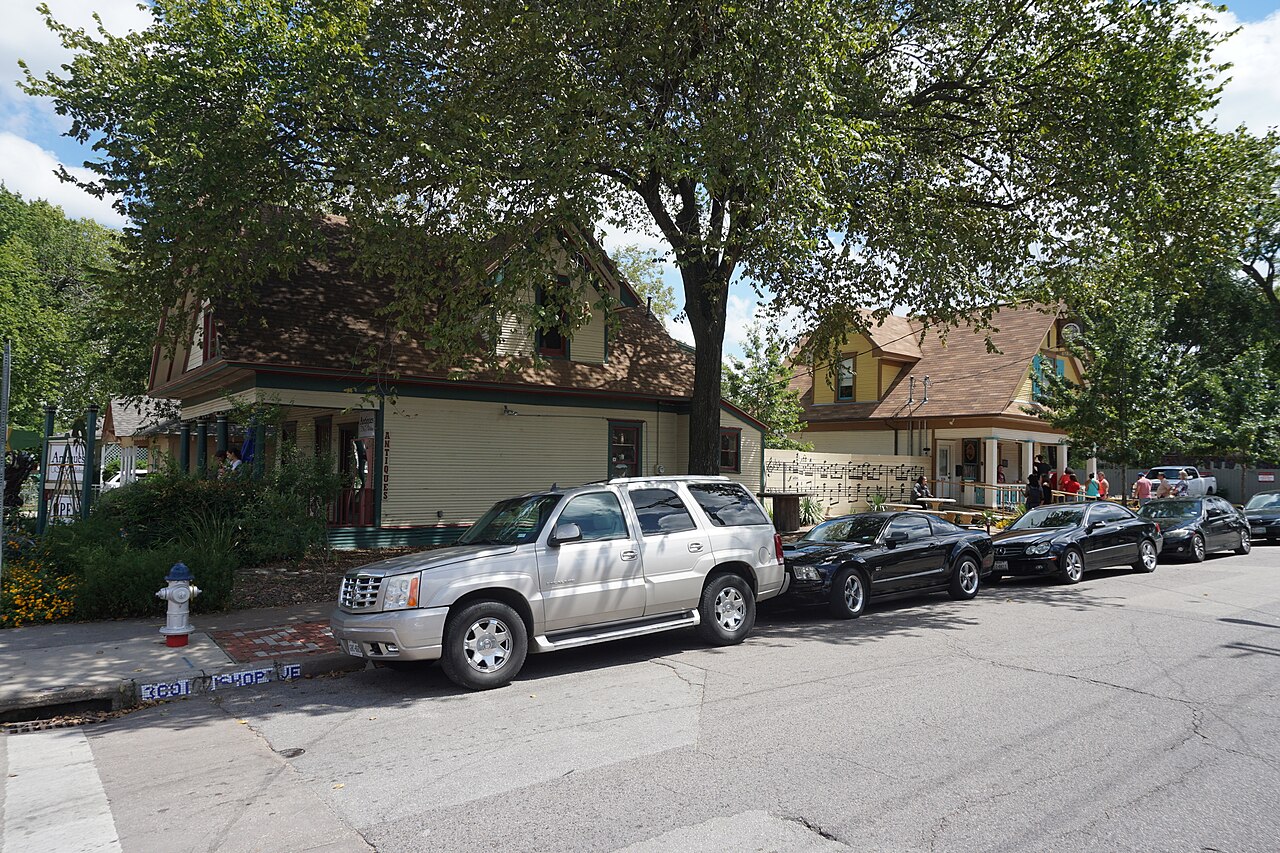
The real street is just as inviting. Small shops sit in old houses along a tree-lined block, cars parked at the curb, nobody in a hurry. Put the painted street beside the real one and you get the point of a good neighborhood mural. It does not replace the place. It makes you notice it.
There is also a lesson for anyone who owns a building. The Bishop Arts mural does not shout about the business inside. It gives the block a signature, something people describe when they give directions, and that kind of landmark is hard to buy any other way.

Faces on a clinic wall
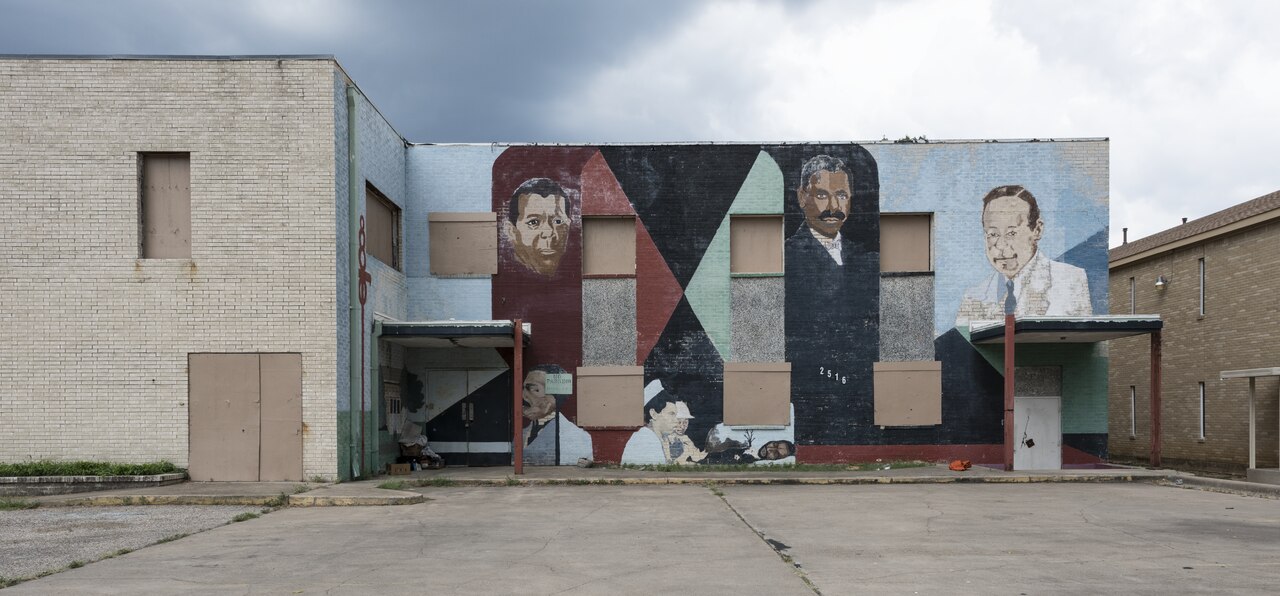
Not every wall is there to charm visitors. In South Dallas, a mural of portraits covers the side of a clinic building, the windows boarded, the sky heavy and gray. The faces look out over the street at eye level with the neighborhood.
A wall like this does quieter work. It gives a plain building a human presence, and it tells people walking by that the place is part of their community. That is a reminder that murals in Dallas are not only about the districts people photograph. Some of the most meaningful ones sit where few visitors ever go.
It is worth saying plainly: a mural that honors faces from a community is a responsibility as well as a decoration. The best ones are made with the neighborhood in mind, and you can feel the difference when you stand in front of them.
A grocery store after dark
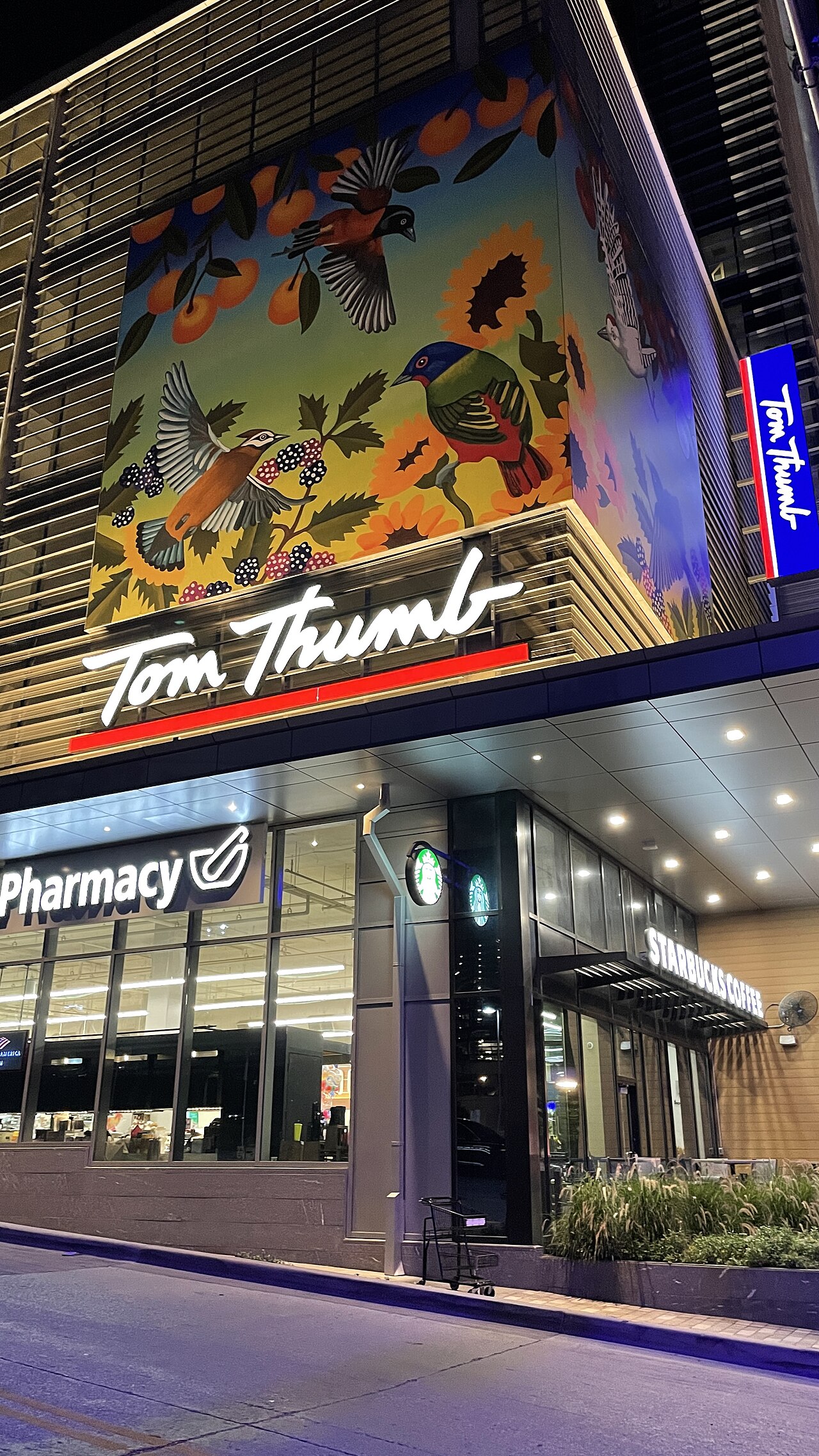
At night, a corner of a Tom Thumb grocery store turns into one of the friendlier sights in town. Birds, sunflowers and fruit wrap around the building in large, generous shapes, lit just enough to keep the colors alive.
It is an ordinary place, the kind of errand stop you pass on a Tuesday, and that is why it works. Everyday buildings are where most people actually meet public art. A mural on a store does not need an opening night. It just needs to be there when you come out with your bags.
There is a kind of generosity in painting something this cheerful on a building whose job is to sell groceries. It turns a parking lot into a place you might linger for a second longer, and it gives the whole corner a face after the sun goes down.

The corner with a rooftop
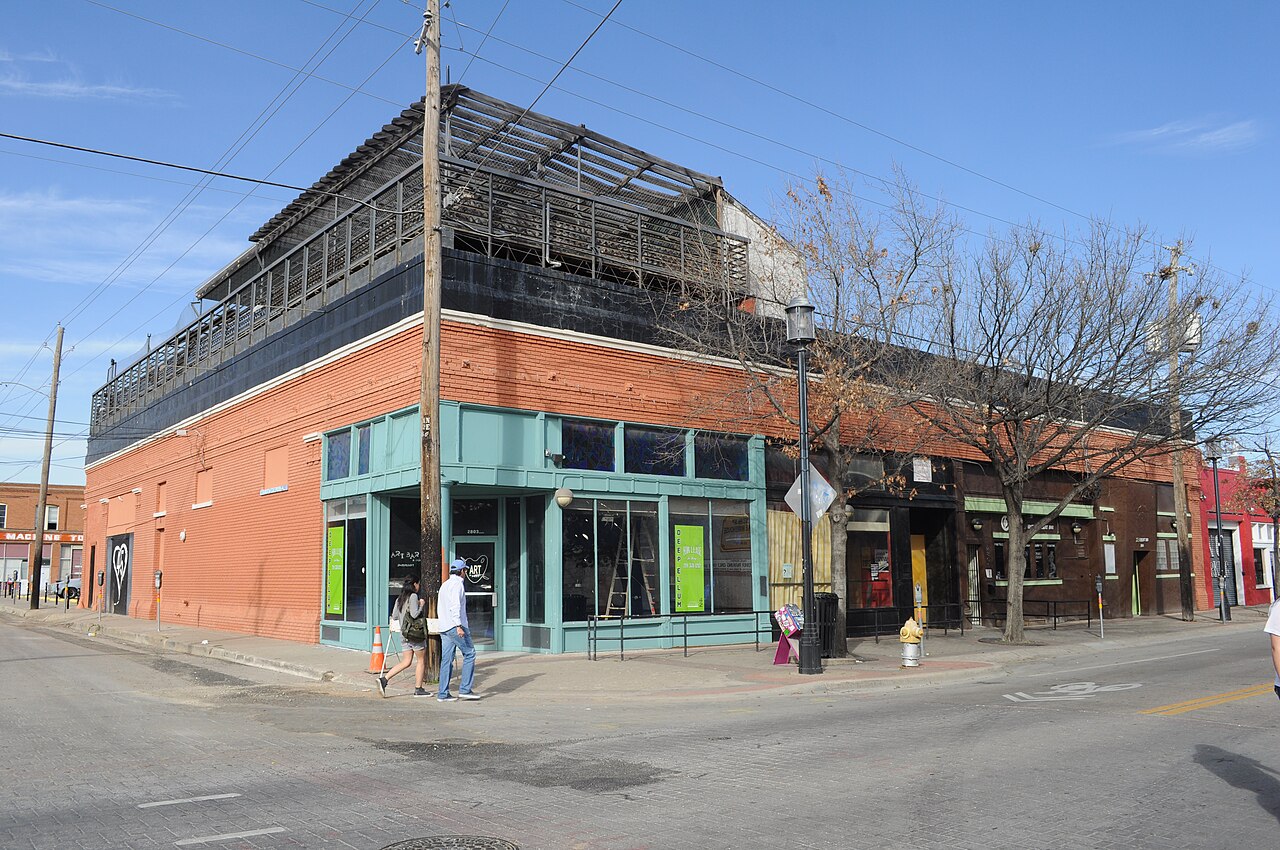
Back in Deep Ellum, a brick corner building with a teal storefront and a rooftop deck shows what a block looks like when color is part of the plan. Two people cross the street in front of it, unhurried.
A single colored storefront can do what a mural does on a bigger scale: say that someone is paying attention. Property owners often discover that the most memorable corner on a block is the one that was willing to look a little different. Our guide on how public art can lift a property in Dallas looks at that side of the story.
Look at how the building sits on its corner. Corners are natural stages: they are seen from two streets at once, and they are the first thing a driver notices when the light changes. Whether the answer is paint on the wall or paint on the door, a corner invites a decision.

Finish with the skyline
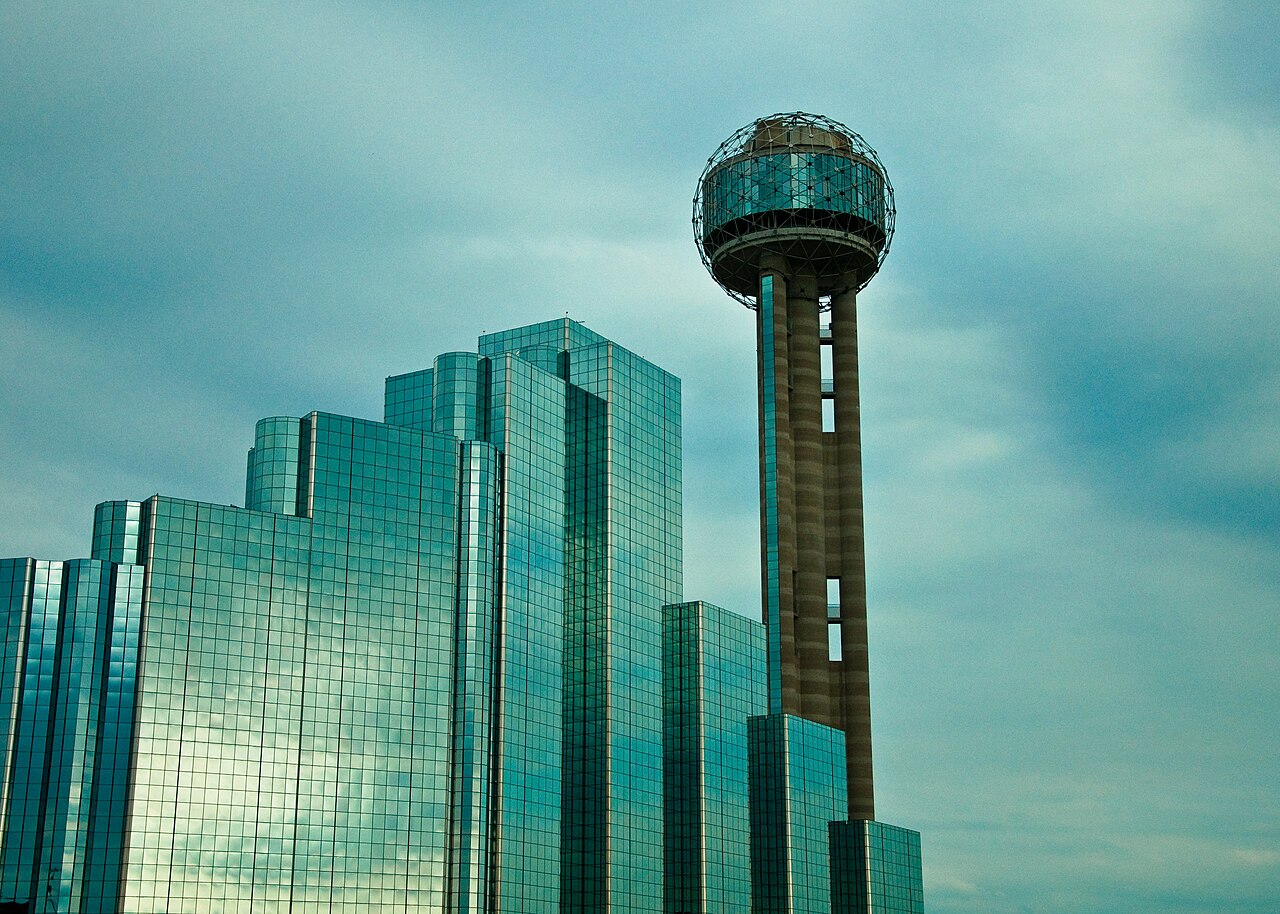
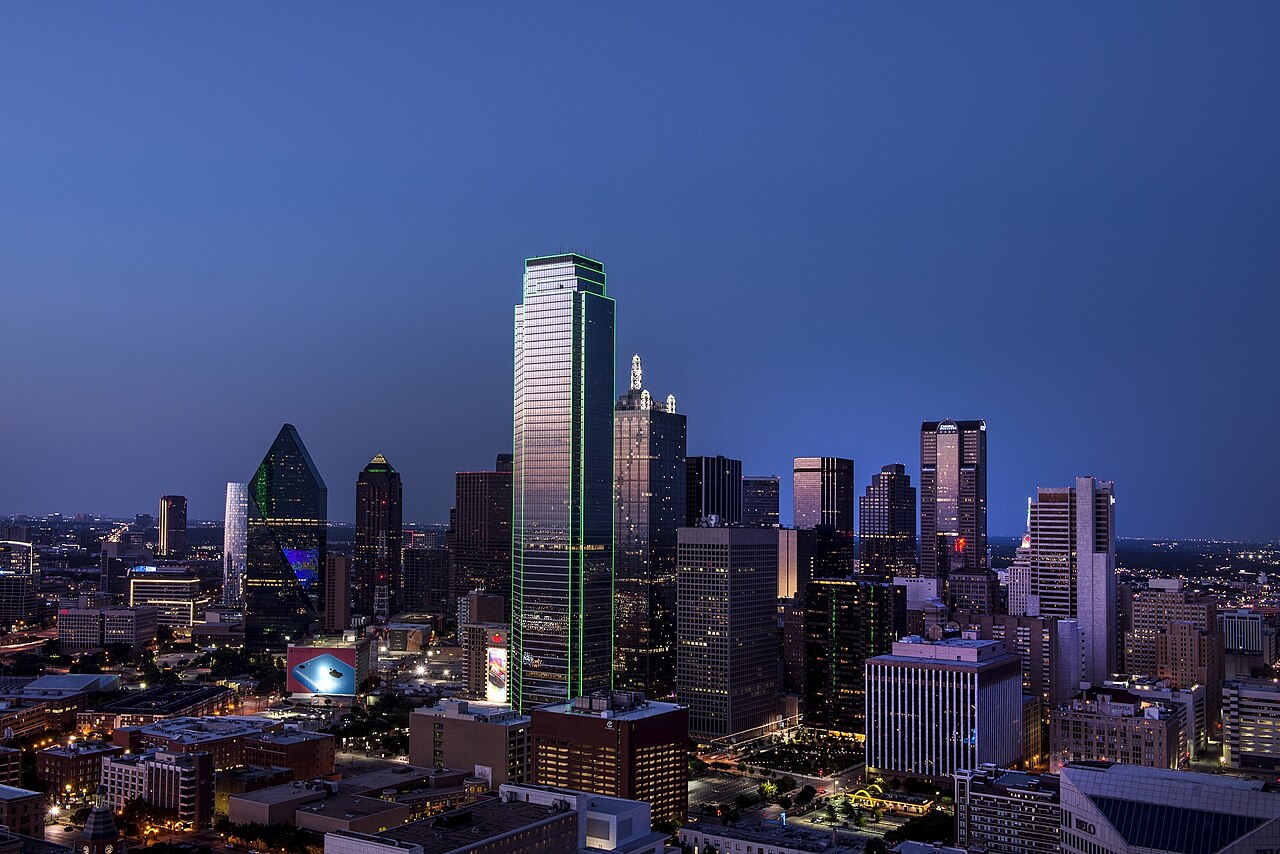
Eventually every walk lifts its eyes. Reunion Tower, with its round observation ball, stands beside the glass towers of a hotel, and at dusk the downtown skyline lights up, one tower outlined in green. After a day of painted gates, trains and faces, the skyline feels like the frame around the picture.
Dallas is a big, spread-out city, and its murals are how it gets small enough to love. They sit in the neighborhoods, on the doors, the shop corners and the walls between. To see more of what is happening around town, visit our Dallas page.
If you take one thing from a walk like this, let it be that Dallas street art is not one scene. It is a Fair Park entrance, a garage door, a garden wall and a grocery store, each made for a different reason and a different crowd. Taken together they say a lot about a city that likes to build big and still cares about the small, human corners.


If you have a wall in mind
Every mural here began as a blank wall and someone's decision to leave it less blank. If you manage a building in Dallas and keep looking at a wall of your own, we would be glad to hear about it. Tell us about your wall and we will take it from there.
Frequently asked questions
- Where can I see the best murals in Dallas?
- Good places to start are Deep Ellum, the Bishop Arts District in Oak Cliff, Fair Park and the neighborhoods of South Dallas. Deep Ellum and Bishop Arts are easy to explore on foot.
- Which Dallas neighborhoods have the most street art?
- Deep Ellum is the one most people name first, with murals on garden walls, garage doors and brick storefronts. Bishop Arts has painted walls among its small shops, and you will find more across South Dallas and around Fair Park.
- Is street art legal in Dallas?
- It depends on the wall and the owner. A mural painted with a property owner's permission is commissioned work; unsanctioned painting is a different matter. If you own a wall, get the agreement in writing before anything is painted.
- How do I find a muralist in Dallas for my building?
- Start with a muralist whose style fits the wall and the neighborhood, then talk through the surface, size and look. We help match walls with muralists and handle quotes, contracts and scheduling.
All photos are free-licensed and credited under each image; license links go to the original file pages.