City story · Denver · 6 min read
Denver Murals: Painted Walls in the Mile High City
From RiNo alleys to a winter stretch of Colfax, a walk through the Denver murals and street art that give the Mile High City its color.
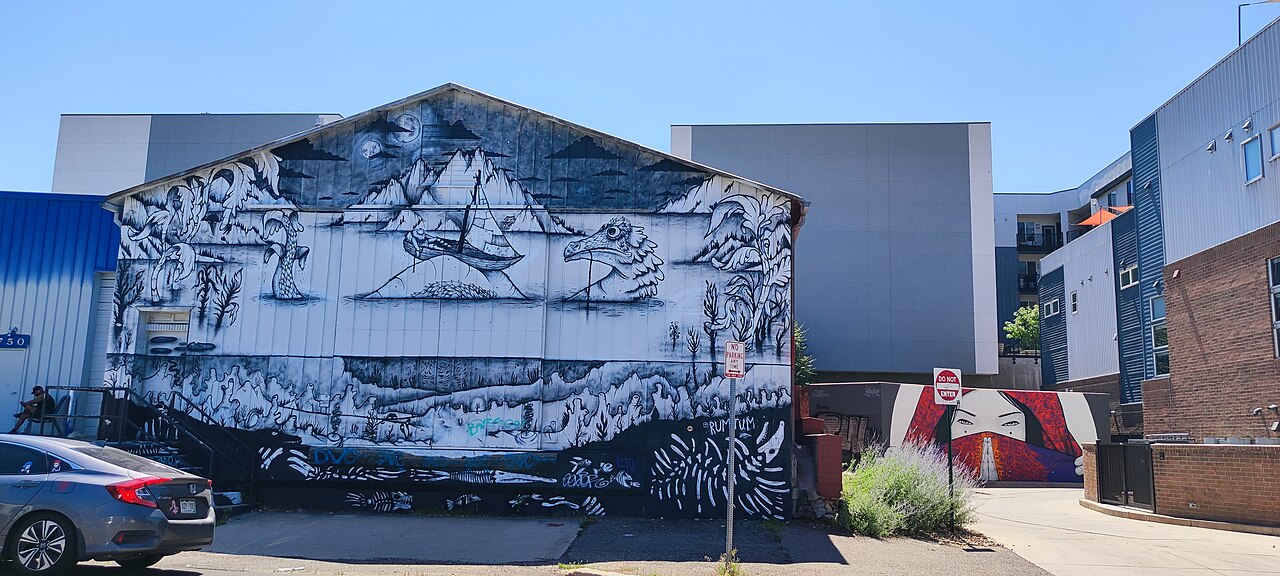
Begin in an alley
The best way into Denver murals is sideways. Turn off a main street in RiNo and the alley takes over: painted walls on both sides, a garage door done up like a canvas, and behind it all the glass and balconies of new apartments. The old and the new share one narrow strip of pavement, and the paint is what ties them together.
Nobody planned this as a single picture, and that is its charm. Each wall is a separate decision by a separate person, yet the alley reads as one place. It is a good first lesson in Denver street art: the city does not keep its color in a museum. It keeps it where you happen to be walking.
Stand in the middle of it for a minute and watch who passes. A delivery driver slows down. Two friends stop to take a picture. Someone on a balcony above looks down at the same wall they see every morning. A good alley gives all of them something, and asks nothing in return.
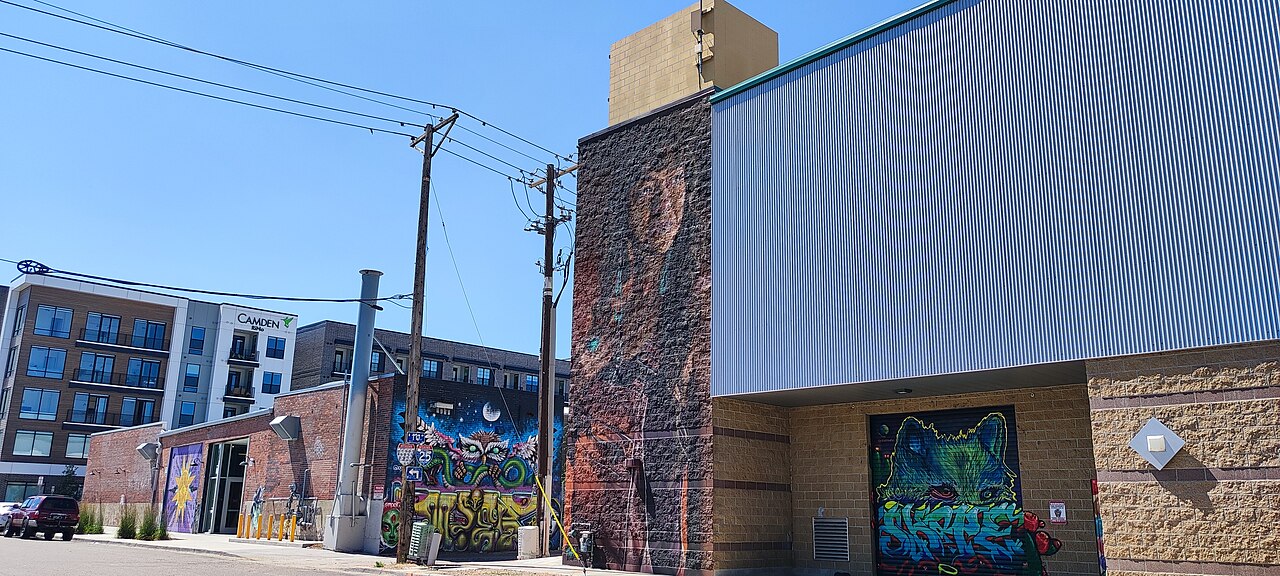

Faces bigger than the buildings
A few blocks on, the scale changes. Enormous painted faces cover the sides of buildings, and behind them a church spire pokes up into the sky. It is an odd and wonderful pairing: one kind of landmark built to be seen from far away, and another that gets the same job done with a brush.
Big portraits do something quiet to a street. They give a corner a presence. You can use them for directions, you can meet a friend beneath them, and after a while you stop noticing the wall and start noticing when it is missing.
Look closely at how the paint meets the architecture. The faces follow the shape of each building, running across windows, edges and rooflines, so the wall becomes part of the picture instead of a frame around it.
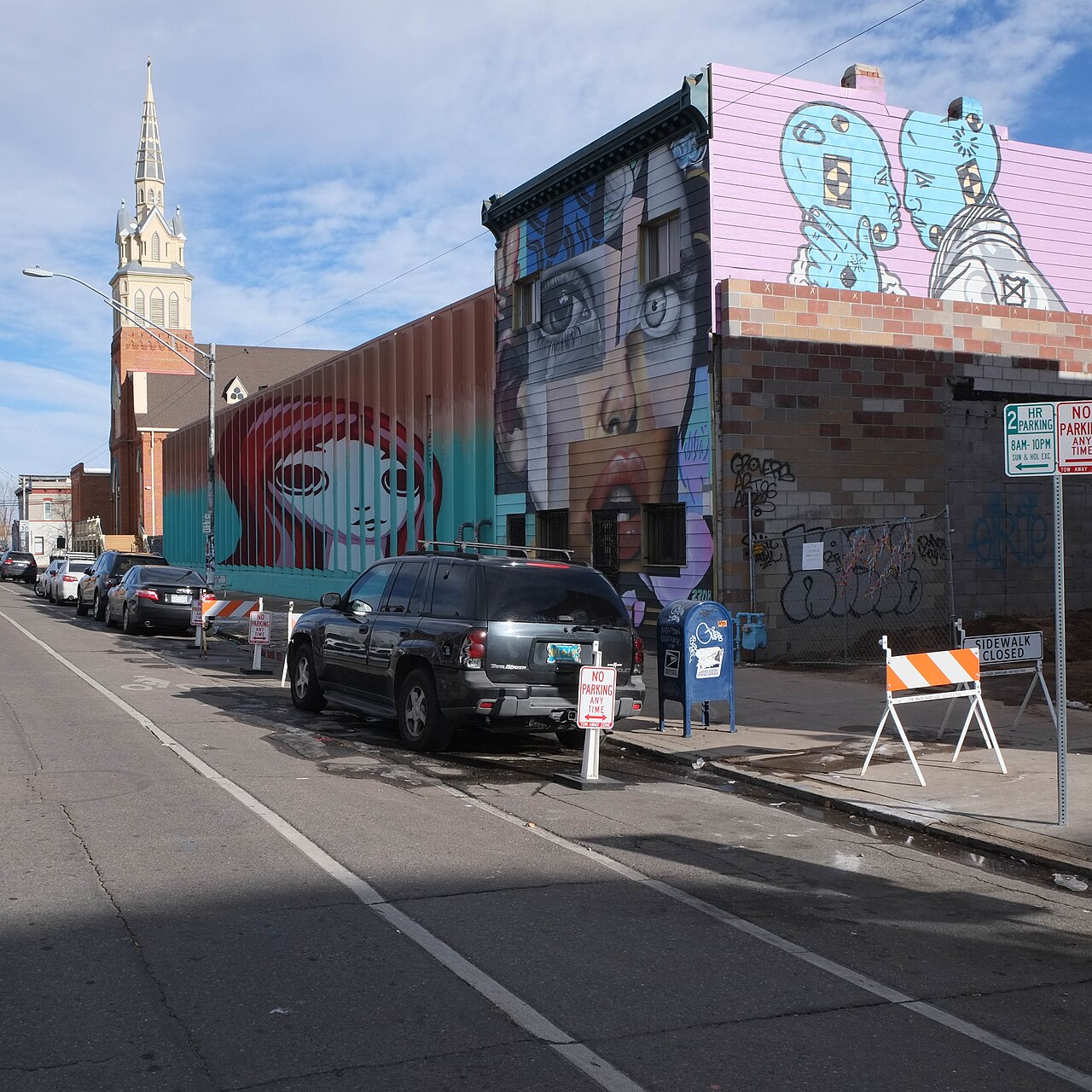

A bird in a top hat
Not every wall has to be enormous. On Blake Street, a plumed bird in a top hat stands on a garage door set into red brick, bright and a little bit absurd. It makes an ordinary service door feel like the entrance to somewhere.
That is the small-wall argument in one image. A door, a gate or a patch of brick is easy to overlook until someone gives it a personality, and then a block you would have hurried past has a reason to slow you down.
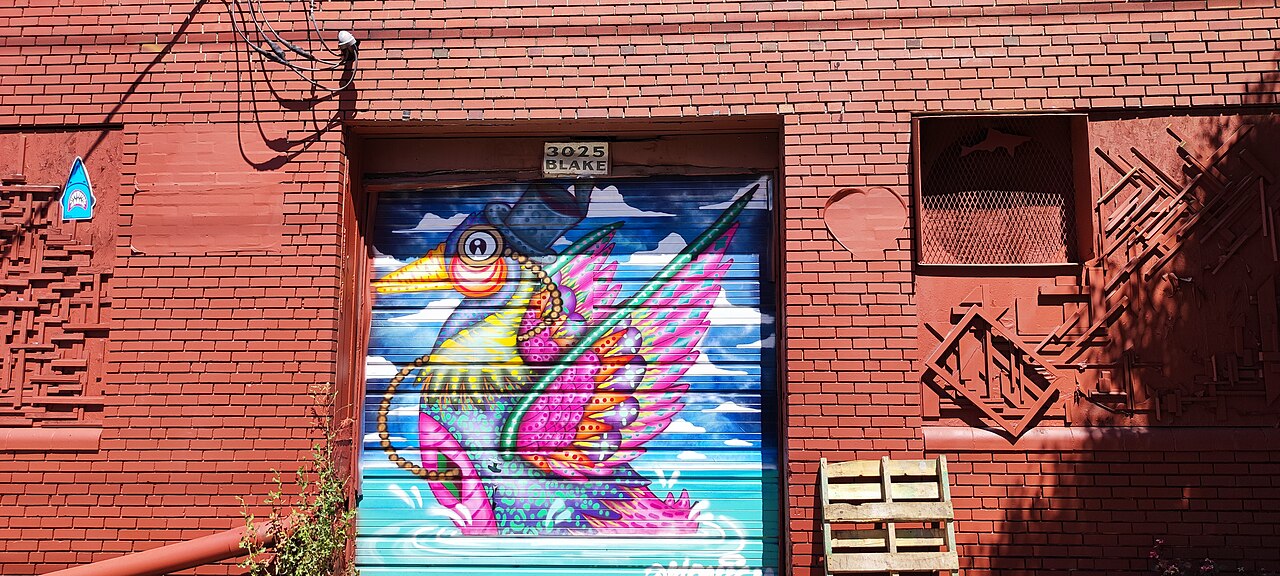

Colfax in winter
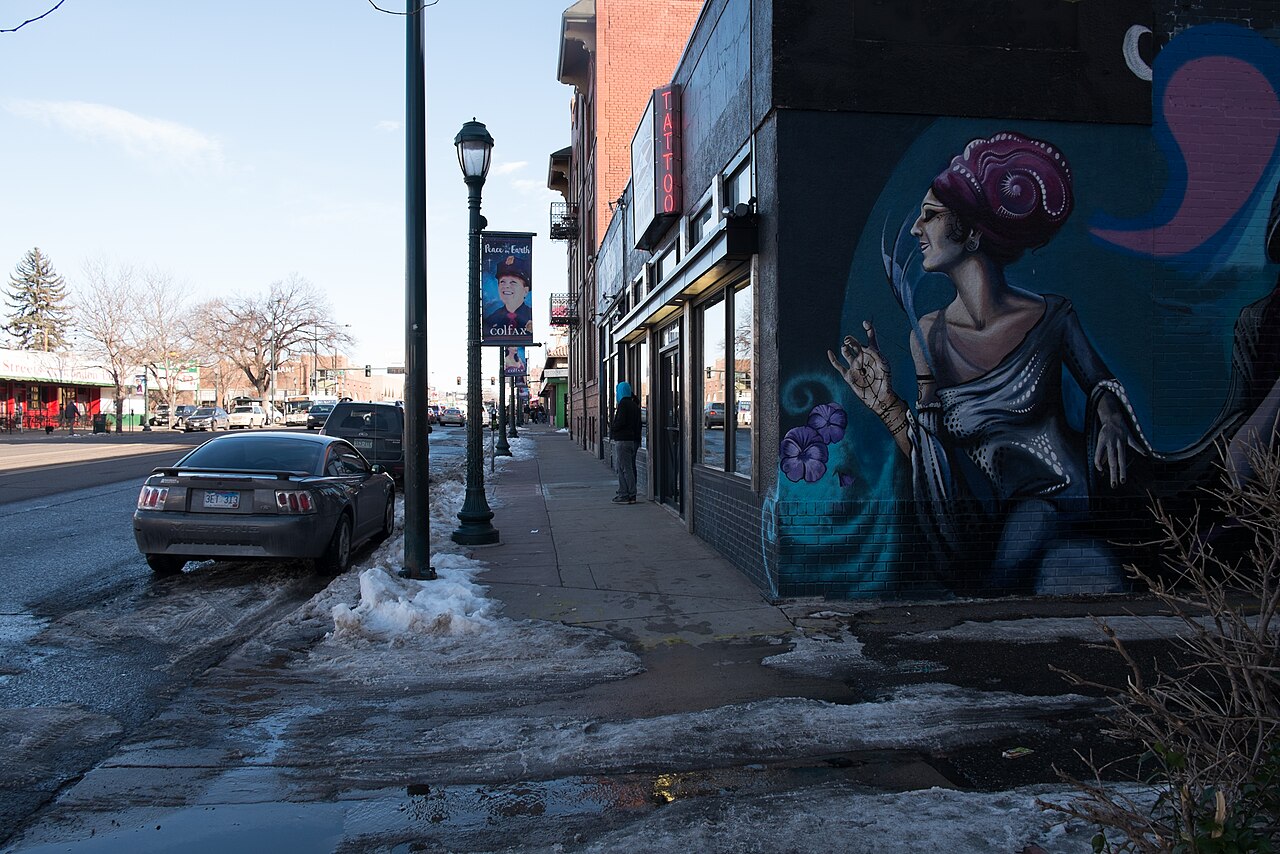
Colfax Avenue is a long, working street, and it does not dress up for visitors. On a cold day the sidewalk is bare, the sky is flat, and then a woman in a headscarf looks out from the side of a tattoo shop, painted large enough to meet you at eye level and warm enough to cut through the weather.
This is the other side of Denver murals. Away from the arts districts, a painted wall is often a neighbor: it belongs to a shop, it faces the sidewalk, and it keeps company with whoever passes. A good one makes a stretch of street feel looked after.
The sidewalk in this photo is quiet, and that matters. Murals are not only for crowds and festival weekends. They do their best work on ordinary days, for people on their way somewhere else.

Where the galleries meet the street
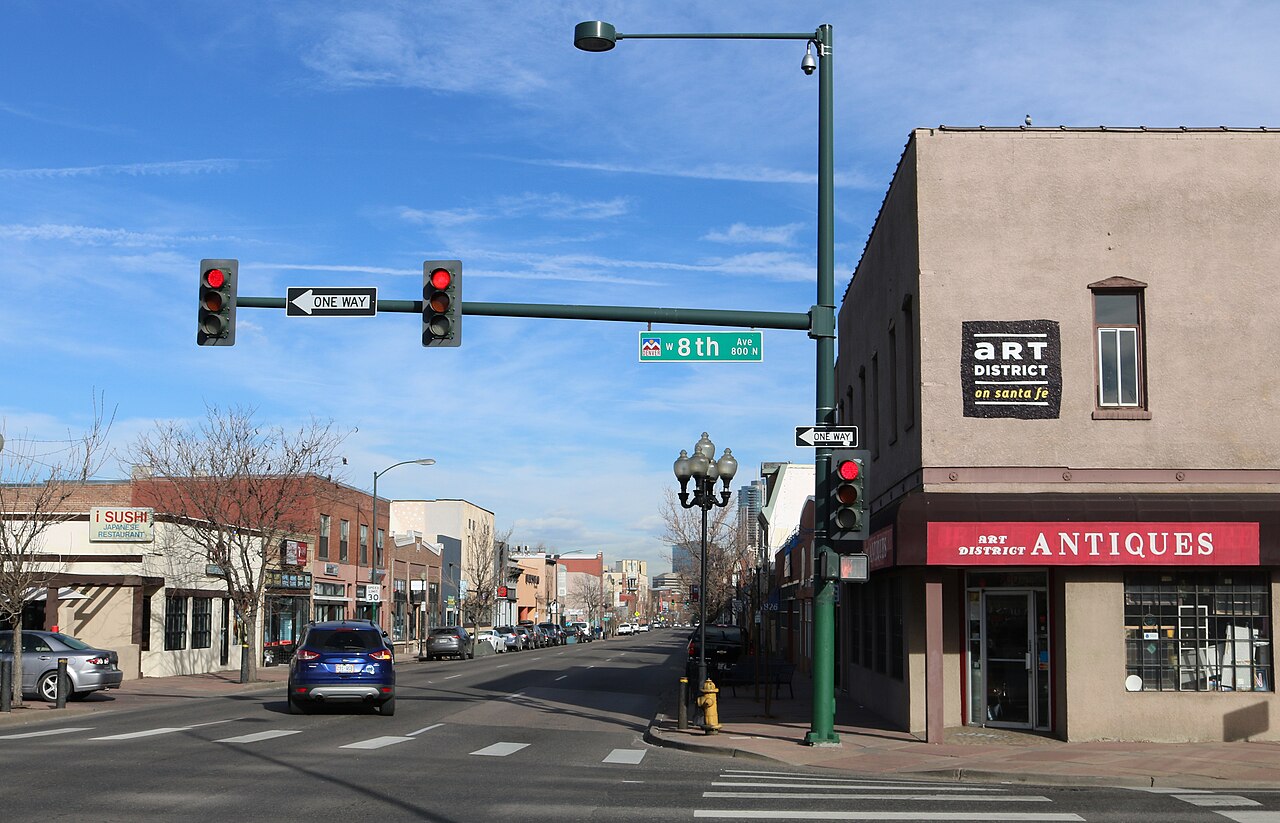
South of downtown, the Art District on Santa Fe announces itself with a sign on the corner, an antique shop across the way and a long view north toward the city. It is the sort of neighborhood where the street itself seems to be inviting you to wander into the doors that line it.
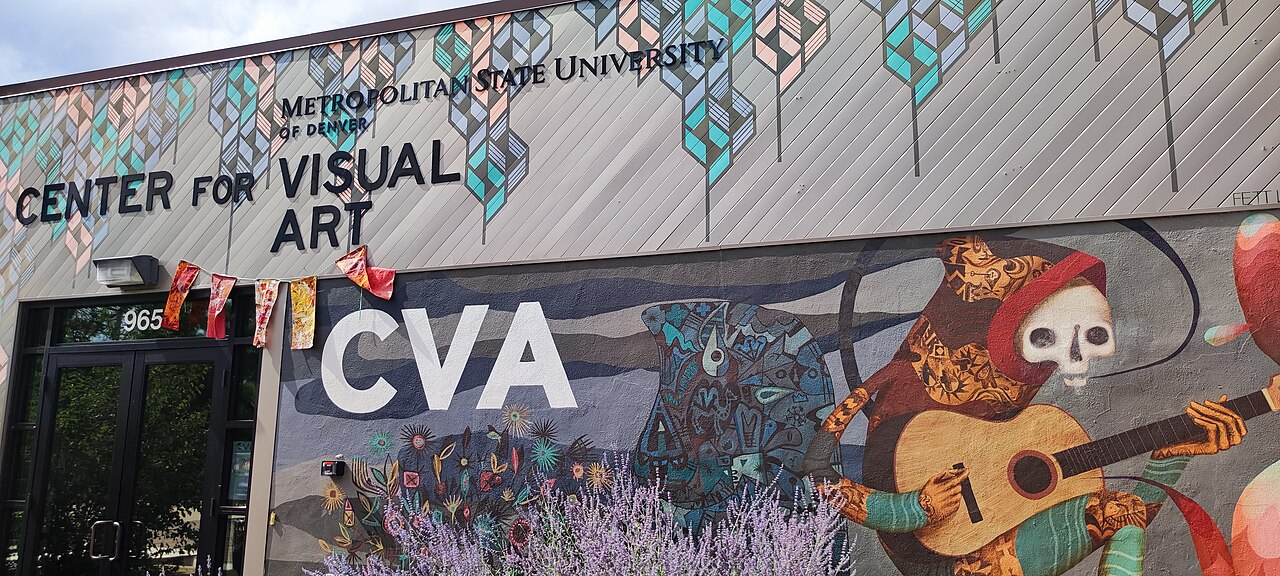
Beside the entrance to the Center for Visual Art, a guitarist with a skeleton face is painted in full color, as if the building had its own soundtrack. When a mural is placed by a front door, it does more than decorate. It tells you what kind of place you are about to enter, and it promises that the people inside have a sense of humor.
Come back in different light and the same corner will feel new. A wall by the door is something you pass many times, and each time it gets a little more familiar and a little more yours.


Brick, lights and flags at Larimer Square
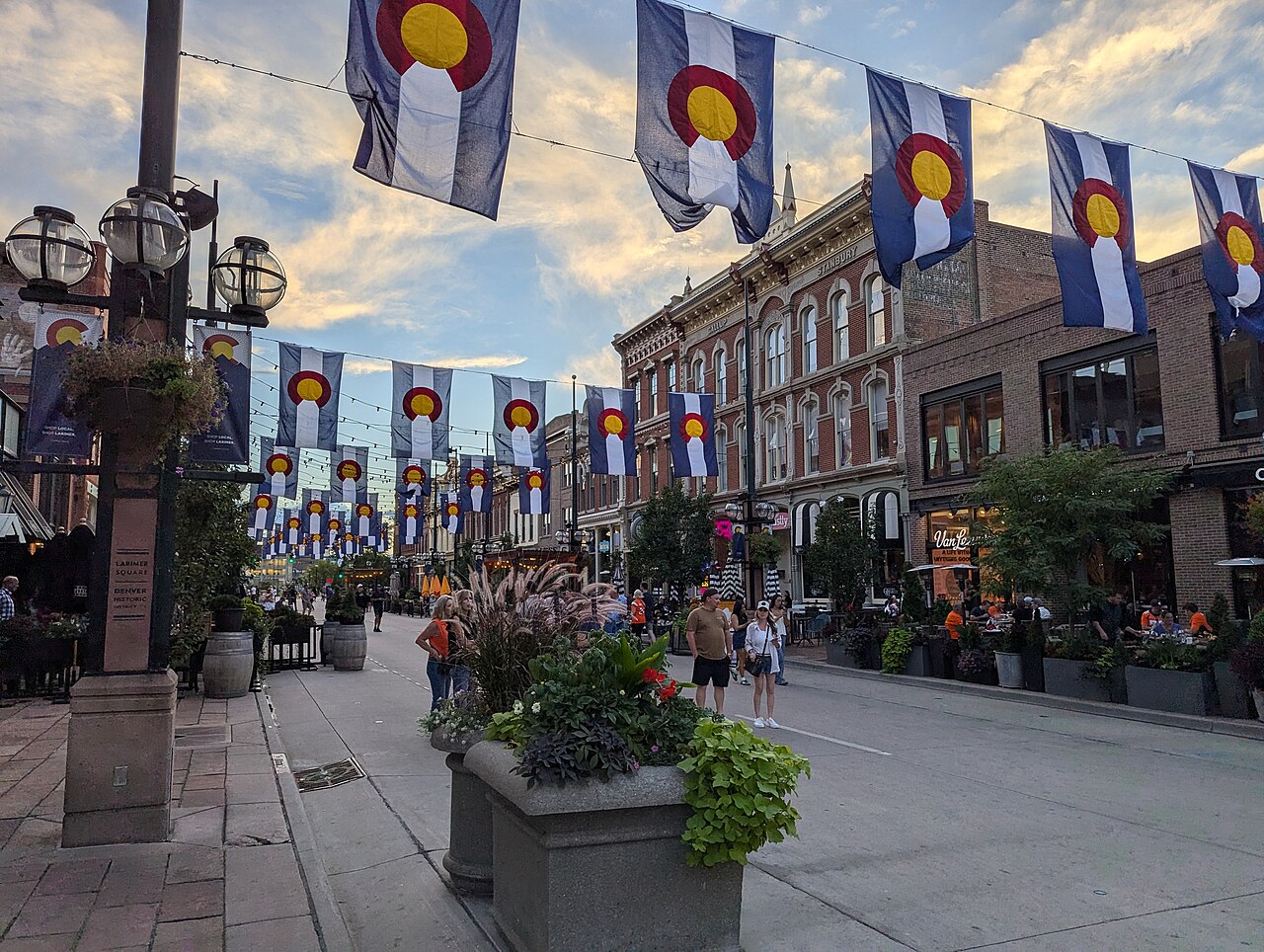
Larimer Square at dusk is a different mood altogether. Colorado flags are strung across a pedestrian street, brick buildings glow, and restaurant patios fill with people lingering over the last of the light. There is no giant mural to point at here, and yet the lesson carries over.
Denver pays attention to the character of its blocks. Brick, signage, string lights and a flag overhead all do the work that paint does elsewhere, which is to make a place feel like somewhere in particular rather than anywhere.
It is worth walking this block slowly. Look at how the buildings frame the street and where the lights hang, and ask what you would put on a blank wall here.

Arrivals and the red sign
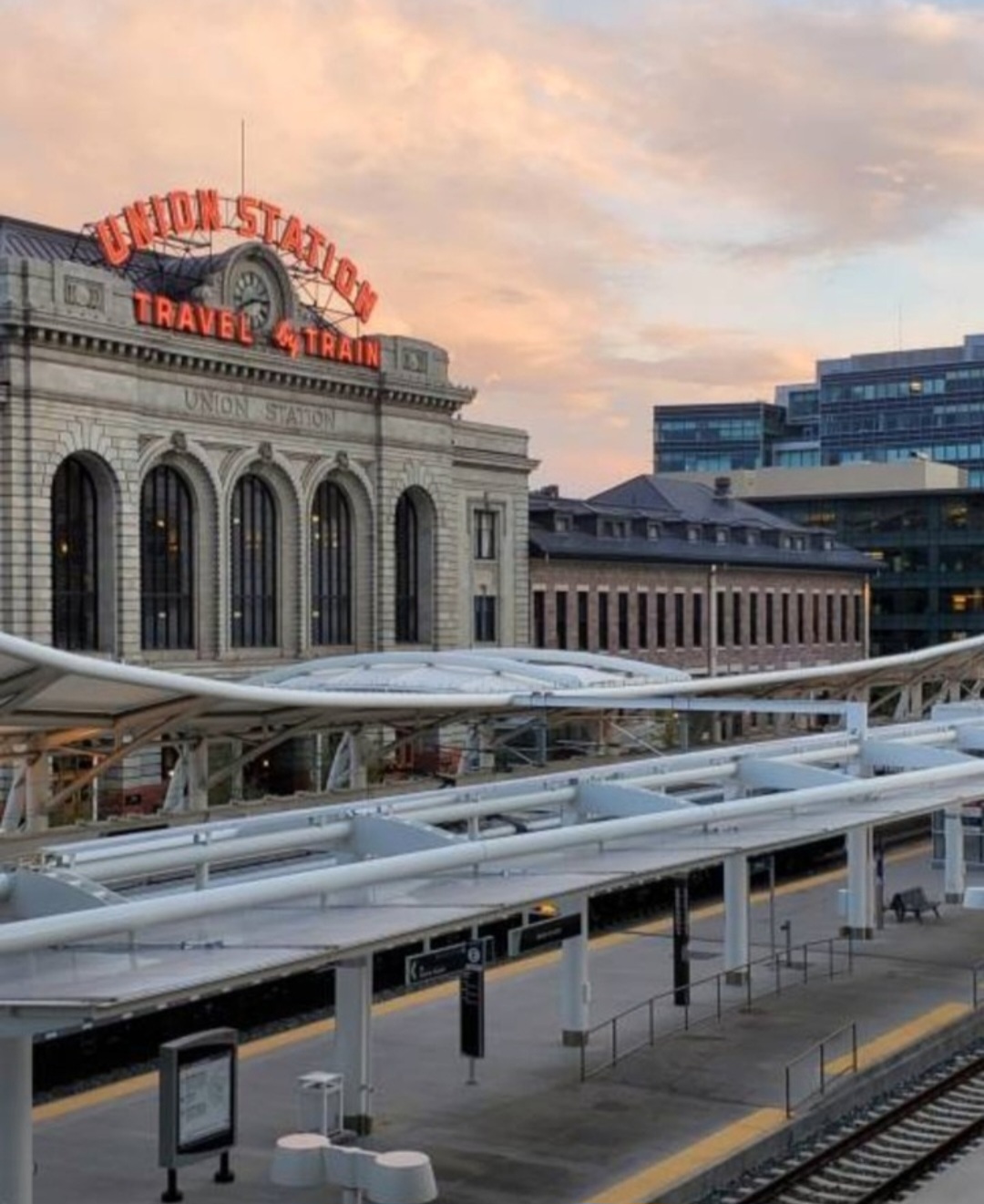
Union Station glows at sunset with its red Travel by Train sign, the platform canopies stretching out in front. It is a building that has always been about arrival, and it makes a fitting stop on a walk about walls, because a city's first impression is so often a wall, a sign or a facade.
Think about what a visitor sees first when they step off a train. Whatever it is becomes, for a moment, the whole city. That is a serious job for a surface, and it is why so many owners and neighborhoods treat their walls as something worth getting right.

The wall the mountains made
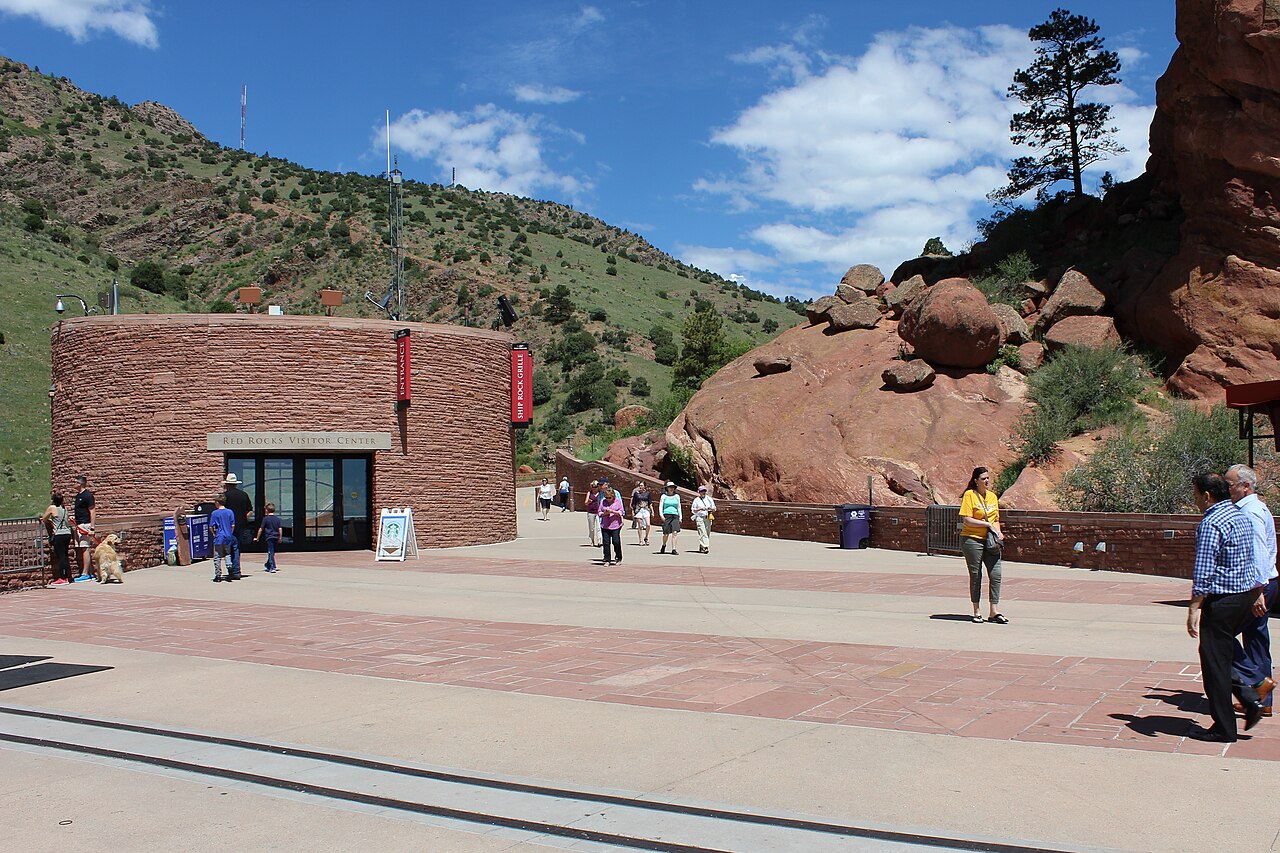
Denver's greatest wall was not painted by anyone. At Red Rocks, red sandstone outcrops rise beside the visitor center while people wander the plaza with their heads tilted back. It is a useful humbling. Every muralist working in this city is competing, a little, with the foothills.
Perhaps that is why Denver murals tend to be bold. In a place with this much sky and this much rock, a wall has to bring its own color to the conversation.
Take that thought back through the day. The ship in RiNo, the bird on Blake Street and the woman on Colfax all say the same thing to a passerby: someone cared enough to make this.

Finish in the dark
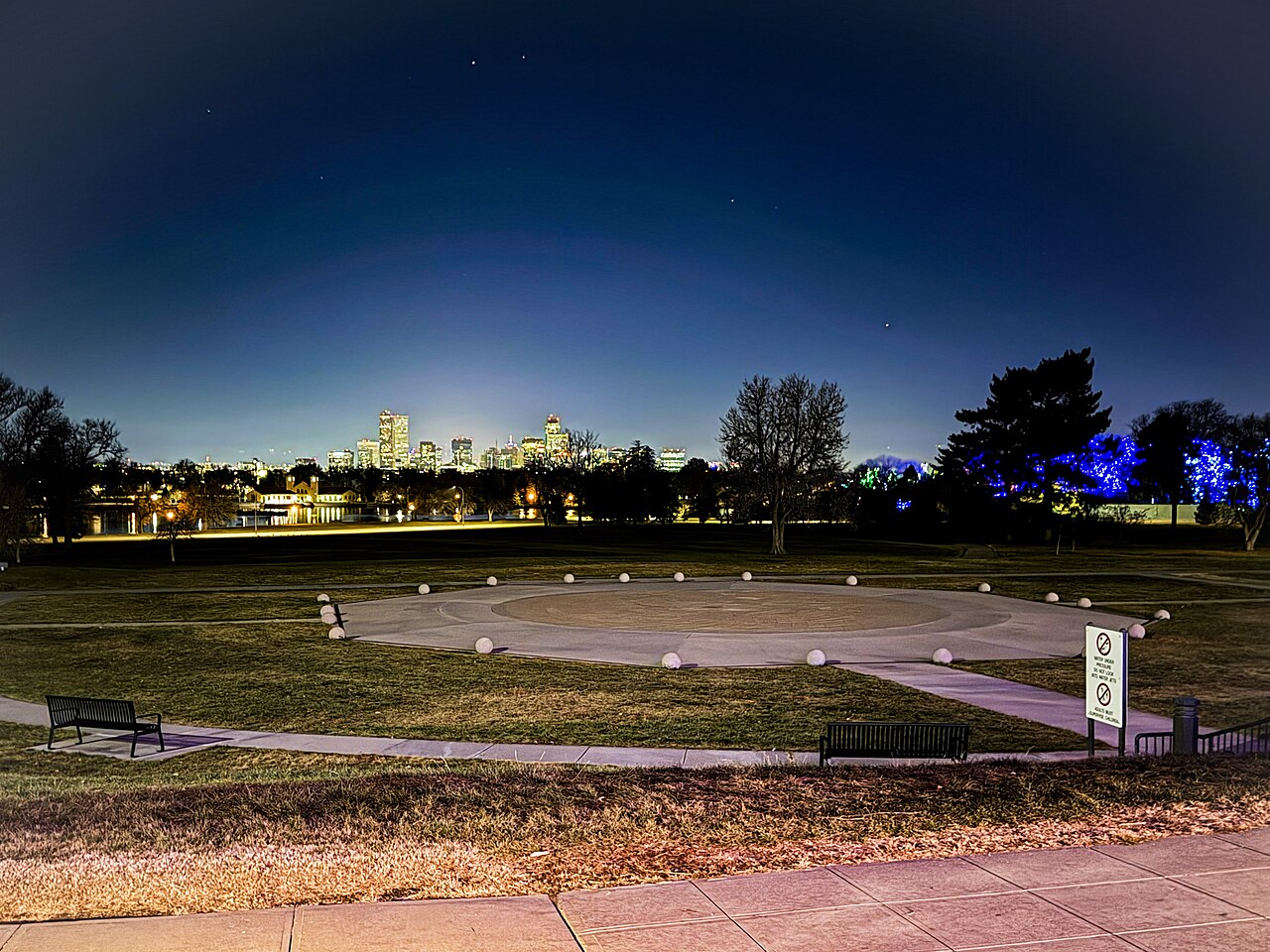
End at City Park, on a lawn gone dark, looking at the downtown skyline lit up across the grass. Everything you saw today is out there somewhere in that glow: the alleys, the faces, the bird in the top hat.
If you own or manage property in the city, it may be worth knowing how much a painted wall can change the feel of a block. Our guide to how public art can lift a property in Denver looks at that side of the story, and our Denver page has more about the city.

If you have a wall in mind
Every wall in this story began as somebody's blank surface and a decision to give it a face, a bird or a ship. If you manage a building in Denver and keep looking at a wall that could be more, we would be glad to hear about it. Tell us about your wall and we will take it from there.
Frequently asked questions
- Where can I see murals in Denver?
- RiNo is the easiest place to start, with murals on alley walls, garage doors and building sides within walking distance of each other. Colfax Avenue and the Art District on Santa Fe are good next stops.
- Which Denver neighborhoods have the most street art?
- RiNo, the Santa Fe arts district and stretches of Colfax Avenue are good places to look. Walls change over time, so wander the side streets and alleys as well as the main roads.
- Is street art legal in Denver?
- It depends on the wall and its owner. Murals painted with a property owner's permission are commissioned or approved work; unsanctioned pieces are a different matter. If you own a wall and want a mural, ask a muralist and get the agreement in writing.
- How do I find a muralist in Denver for my building?
- Start with a muralist whose style fits your wall and your neighborhood, then talk through the size, surface and look. We help match walls with muralists and handle quotes, contracts and scheduling.
All photos are free-licensed and credited under each image; license links go to the original file pages.