City story · Detroit · 6 min read
Detroit Murals: Walls That Remember the Work
Detroit murals grow out of a city that built things, lost some of them and kept painting anyway. A walk through its markets, greenways, side streets and one famous courtyard.
Rain on red brick
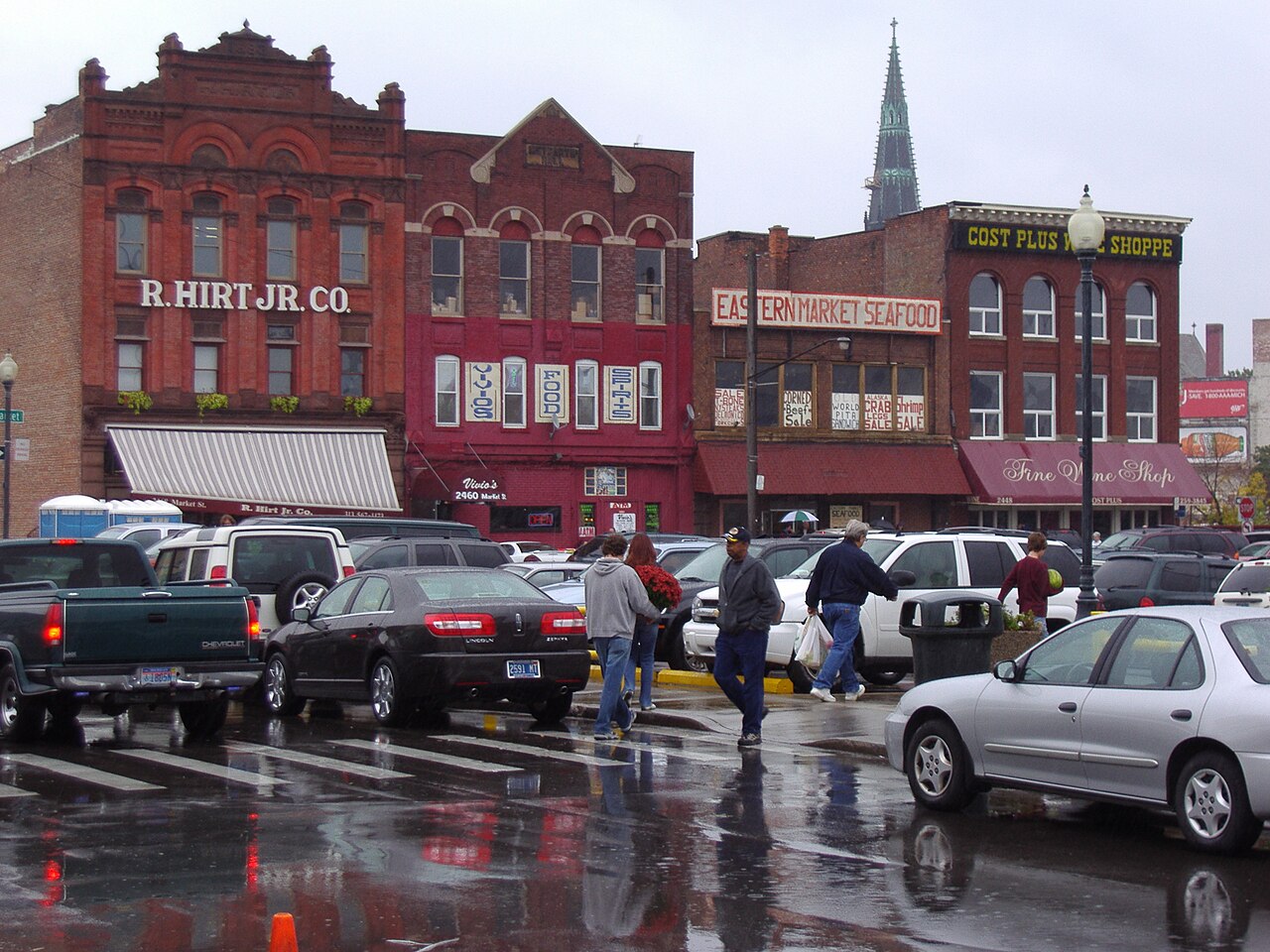
Start at Eastern Market on a wet afternoon, because that is when the brick looks its best. Old red storefronts hold their ground along the street while shoppers cross with their collars up, and nobody seems to be in a hurry. The buildings have the worn, handsome look of places that have been used every day for a very long time.
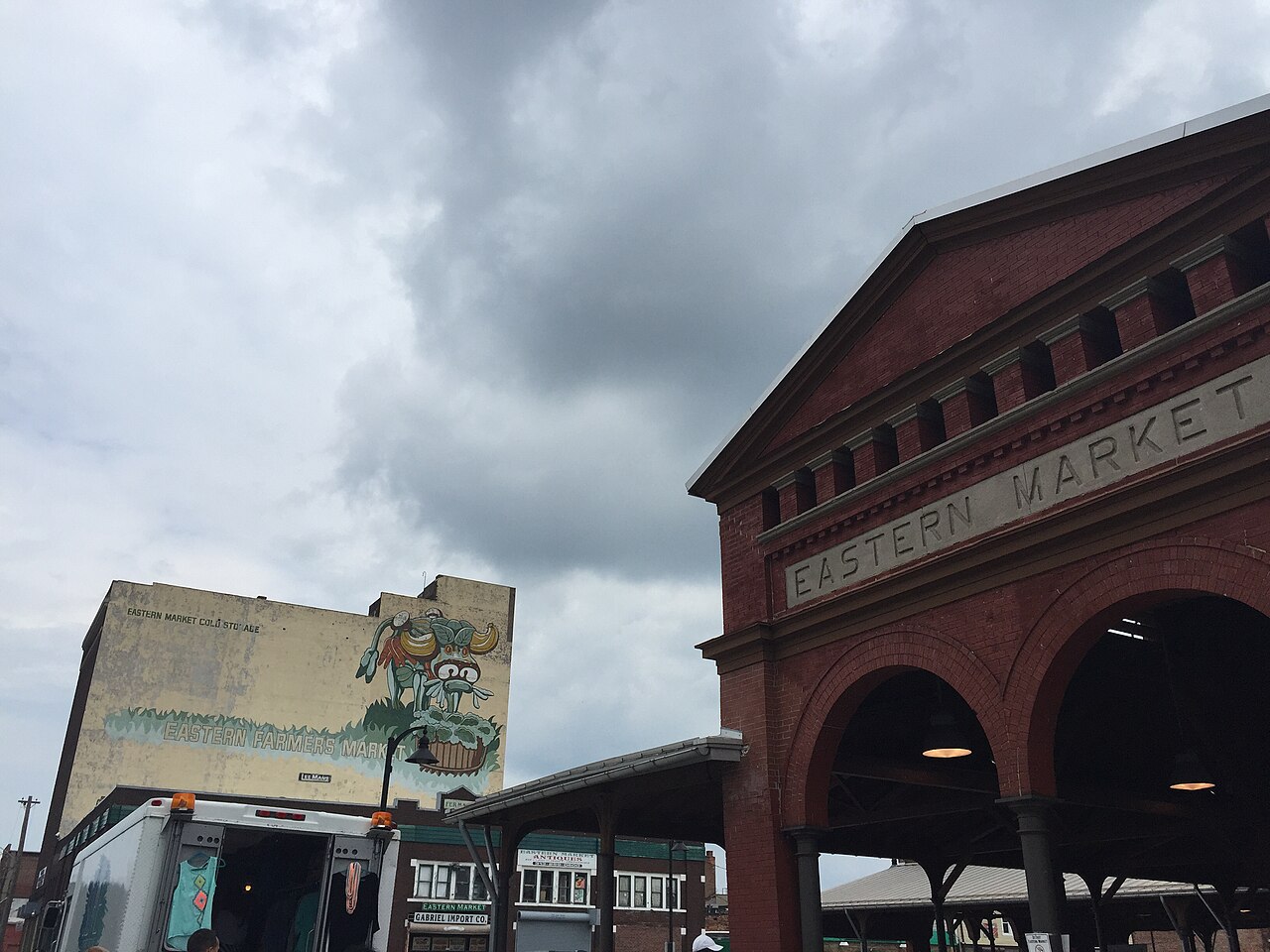
Then look up. Behind the brick entrance of one of the market sheds, a painted wall announces the farmers market in big, friendly lettering. It is advertising, and it is also a landmark, the kind of thing you use to tell a friend where to meet. In a district built around people coming and going, paint on a wall does a quiet kind of work: it says this is the place.
That is the thing to carry through the rest of this walk. In Detroit, a wall is rarely just a wall. It is a meeting point, a sign, a bit of history and a bit of welcome, often all at once, and the neighborhoods that understand this tend to be the ones people remember.


The wall that painted the factory floor
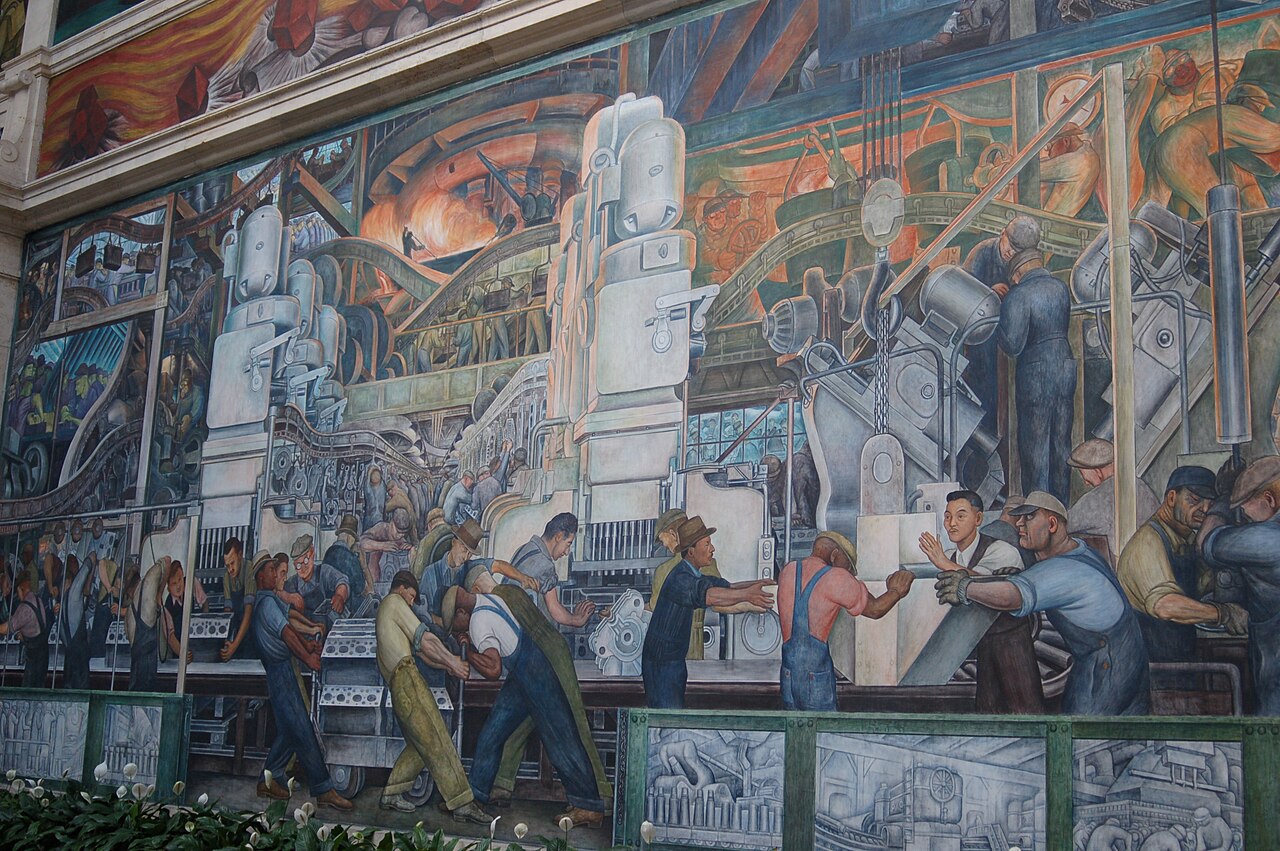
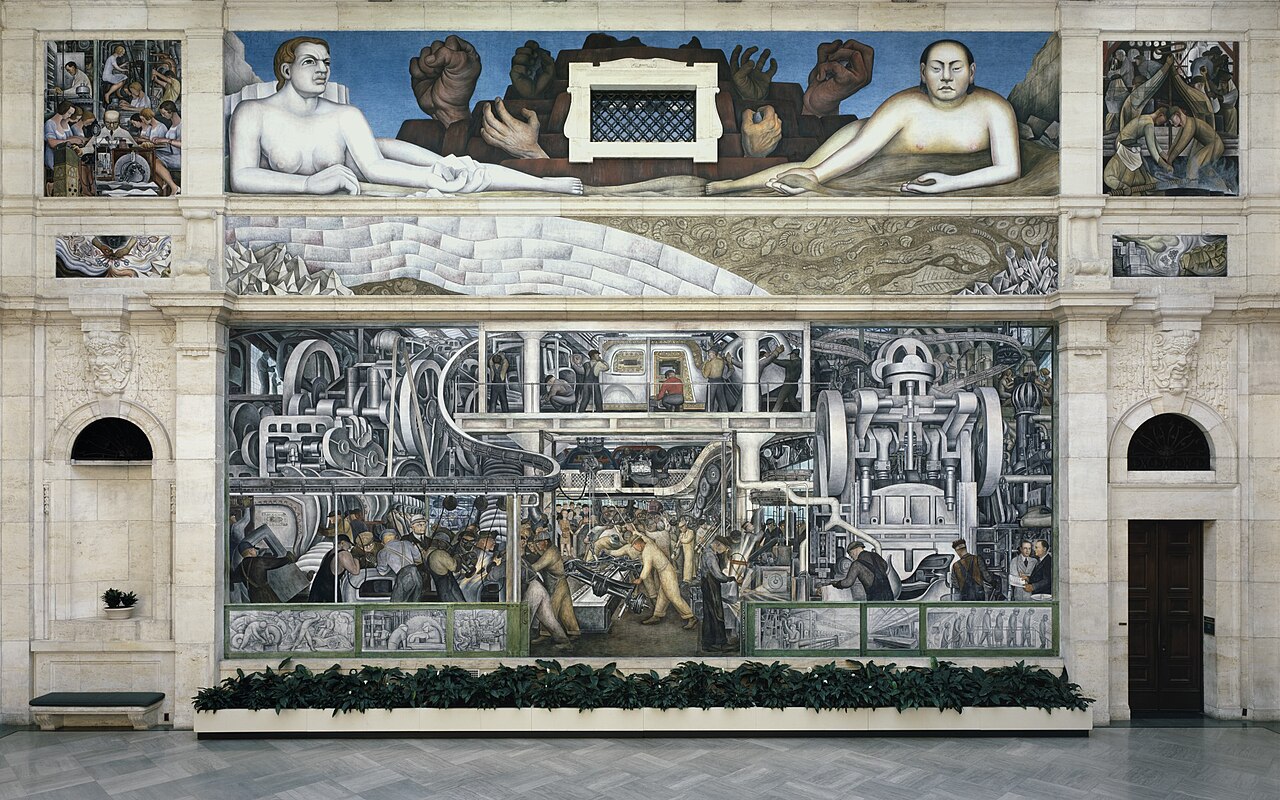
You cannot talk about Detroit murals without going indoors. In the courtyard of the Detroit Institute of Arts, in Midtown, a set of enormous frescoes covers the walls with the machinery and the workers of the city. Painted in the 1930s, they show the assembly line as something monumental, with people bent to their tasks beneath the gears.
It is worth standing in the middle of that room. These are walls that looked straight at the city's main industry and decided it deserved to be painted at heroic scale. Nearly every wall since has been, in some way, answering them.

A street that became one long piece
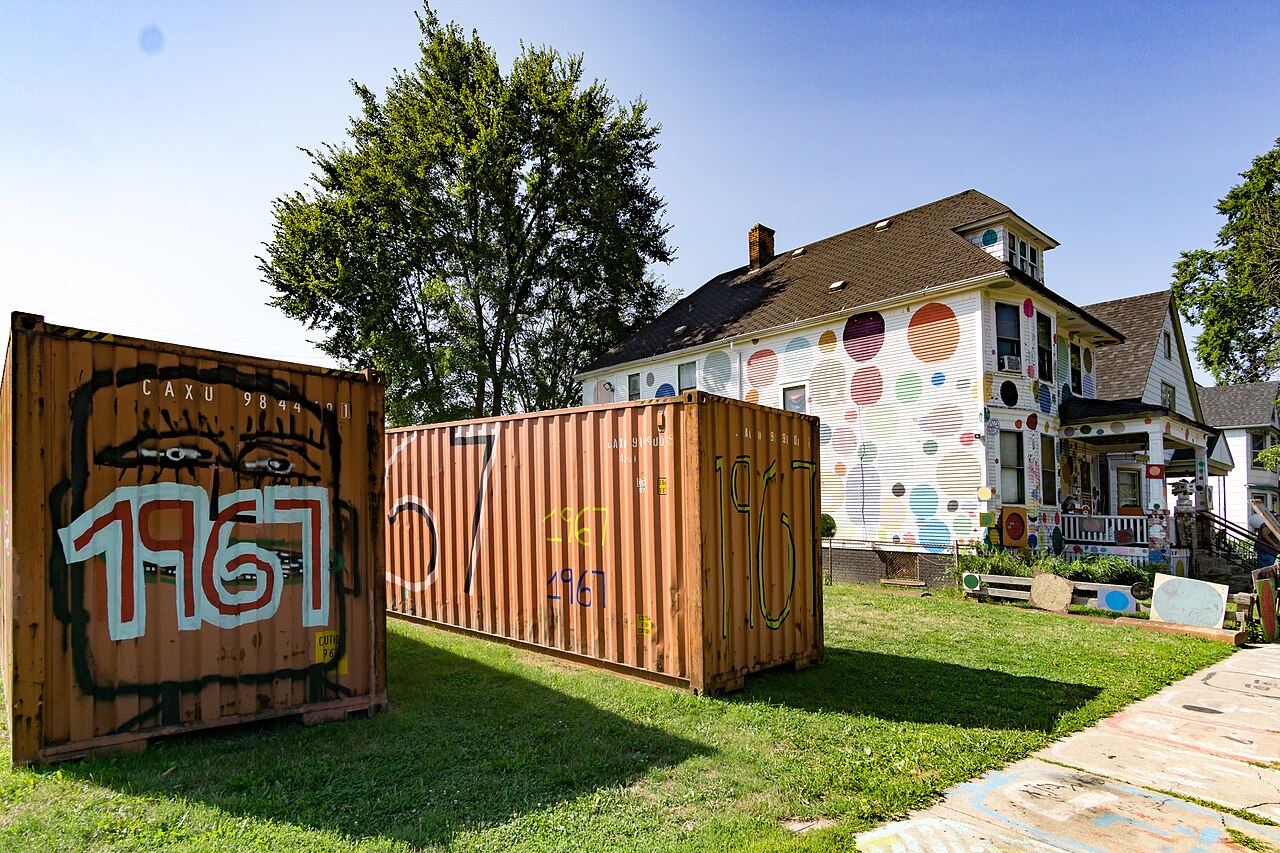
Across town, the Heidelberg Project turns a few blocks into something that is hard to file under any heading. A house is covered in painted polka dots. Beside it, shipping containers carry a painted face and the year 1967. Objects, color and pattern spill from the buildings into the yard and the street.
It is not a mural in the way a commissioned building wall is a mural, and that is exactly why it belongs in any account of Detroit street art. It shows how far a city's walls can stretch when a neighborhood decides to say something out loud.

Hamtramck, in teal
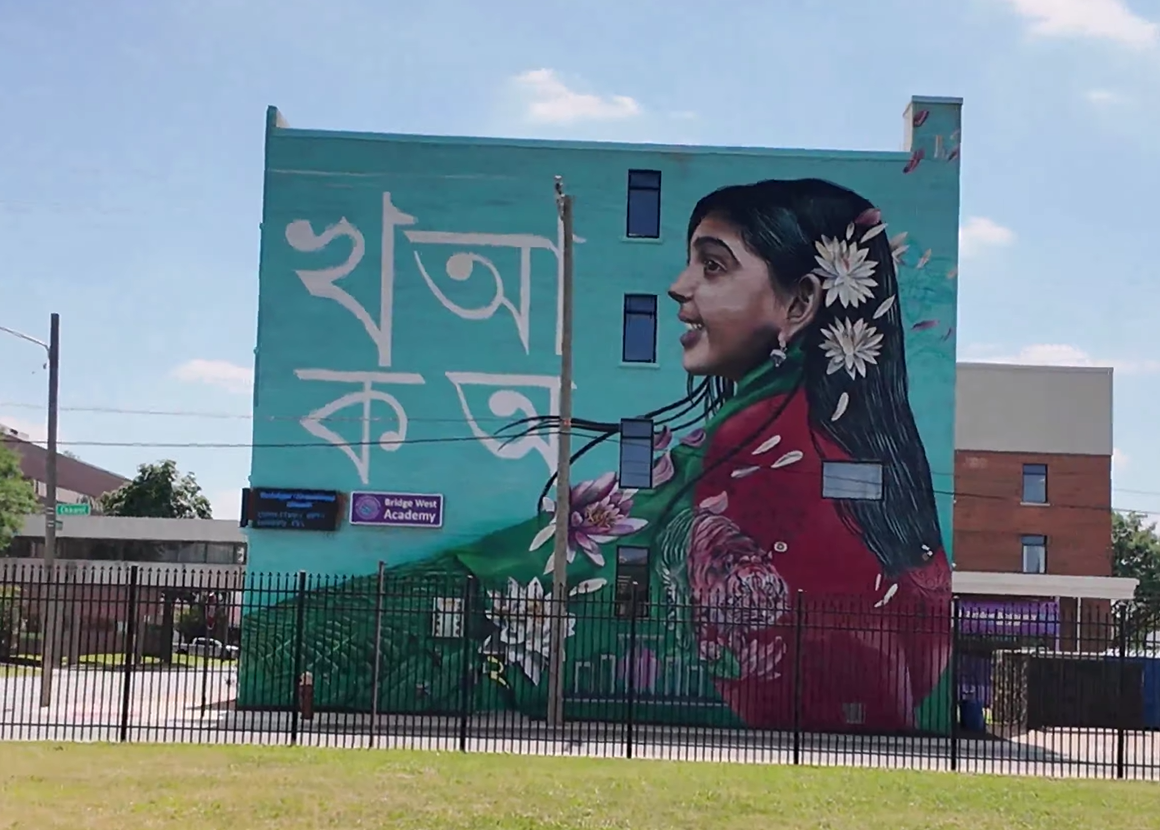
Hamtramck is its own city inside Detroit's borders, and its walls say so. On the side of one building, a girl with flowers in her hair smiles out from a field of teal, with Bengali lettering beside her. You see it from a distance first, a calm block of color among ordinary brick, and then the details come into focus.
A wall like this tells you who lives on the street. It is language, portrait and welcome in one gesture, and it is a good reminder that murals are most convincing when they belong to the people walking past them every day.
Walk a little farther and you start to see how much a single large wall can set the tone for a whole block. Colors repeat in signs and doors, and the street begins to feel like it has a point of view.

Down in the cut
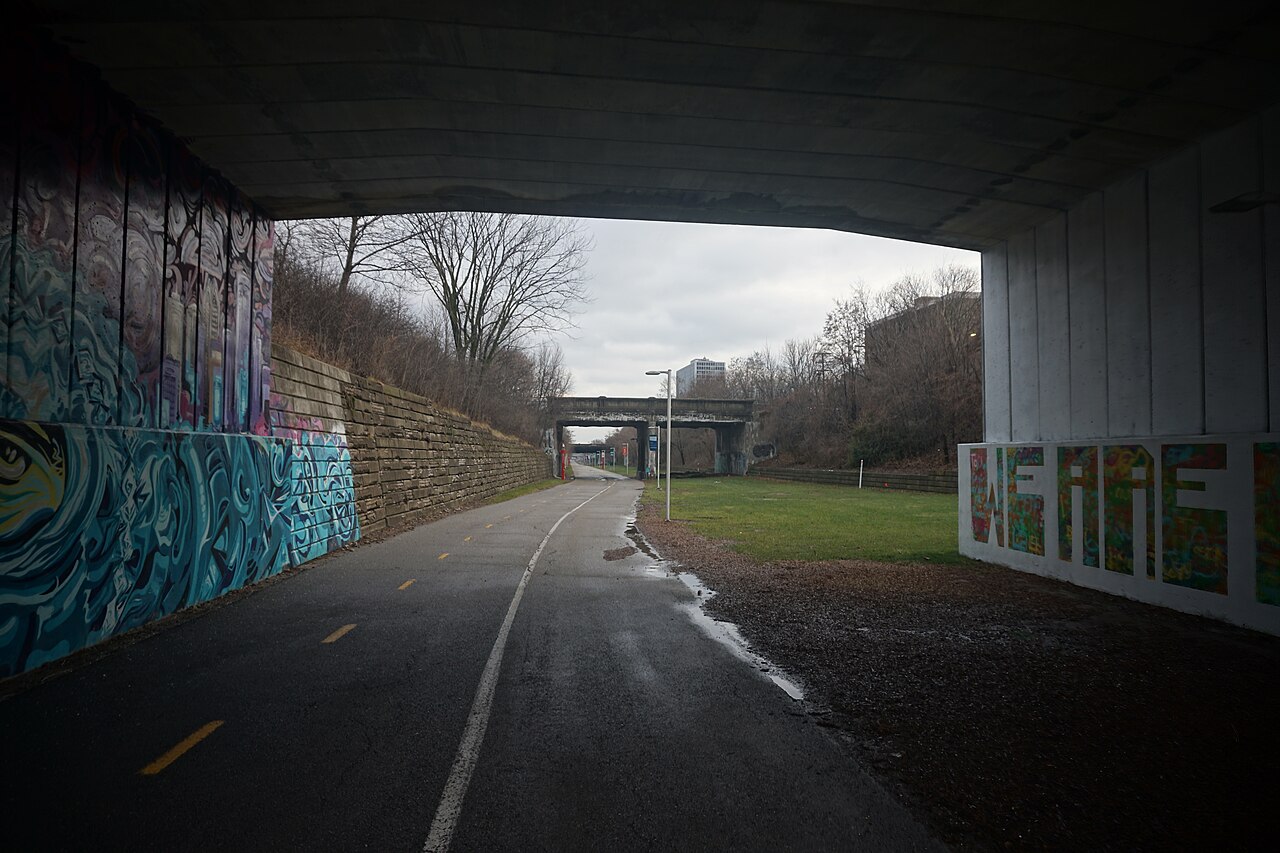
The Dequindre Cut is a greenway that runs below street level, and walking it feels like slipping underneath the city. Where the path passes beneath a bridge, the walls are covered in bright graffiti murals, one layer over another, with runners and cyclists passing through the color.
This is Detroit street art at its most open. The walls are long, the audience is moving, and the work is made to be seen at walking speed. Few places in the city show so clearly how a path and a painted surface can turn a forgotten route into somewhere people choose to go.
Stay a while and the rhythm becomes clear. People slow at a favorite piece, step back to take it in, then move on. Nobody needs a map or a ticket. The wall simply sits there being generous, and it asks only that you look.

Where the factories went quiet
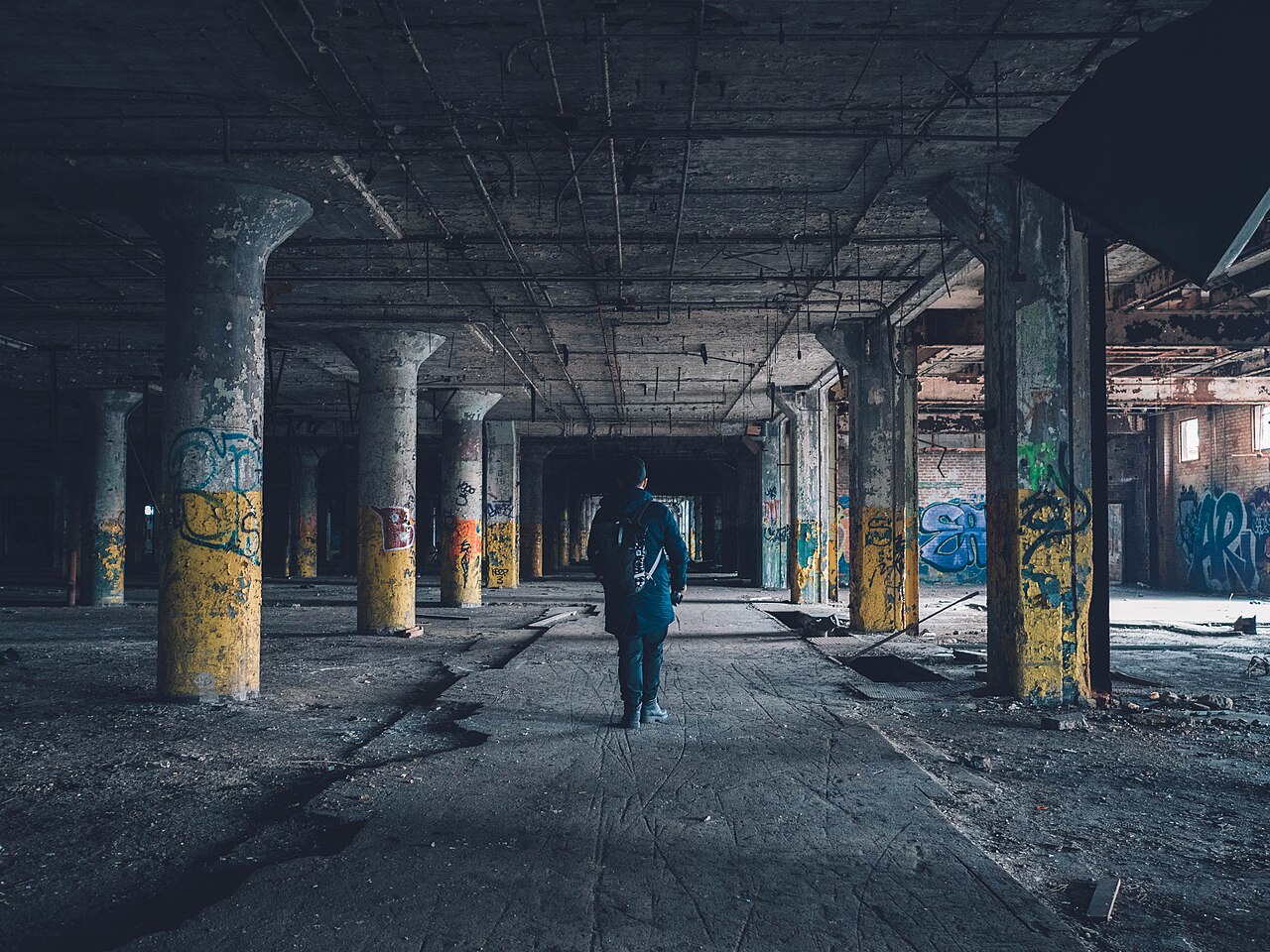
Not every wall in Detroit is cared for. Inside a large empty industrial building, concrete columns stand in rows, covered in graffiti, while a single figure walks away across the floor. The scale is the first thing you notice, and the silence is the second.
It would be easy to read this only as loss. But look at the columns: someone climbed in here and filled them with color. The city has a long habit of answering empty space with paint, and the habit is part of why Detroit murals feel so personal.
Detroit has plenty of these spaces, and each one raises the same question about what a place becomes when the work moves on. Some answers are formal and planned, with a building owner, a painter and a wall agreed in advance. Others are quicker and rougher. Both are part of the picture.

Coffee and color on Michigan Avenue
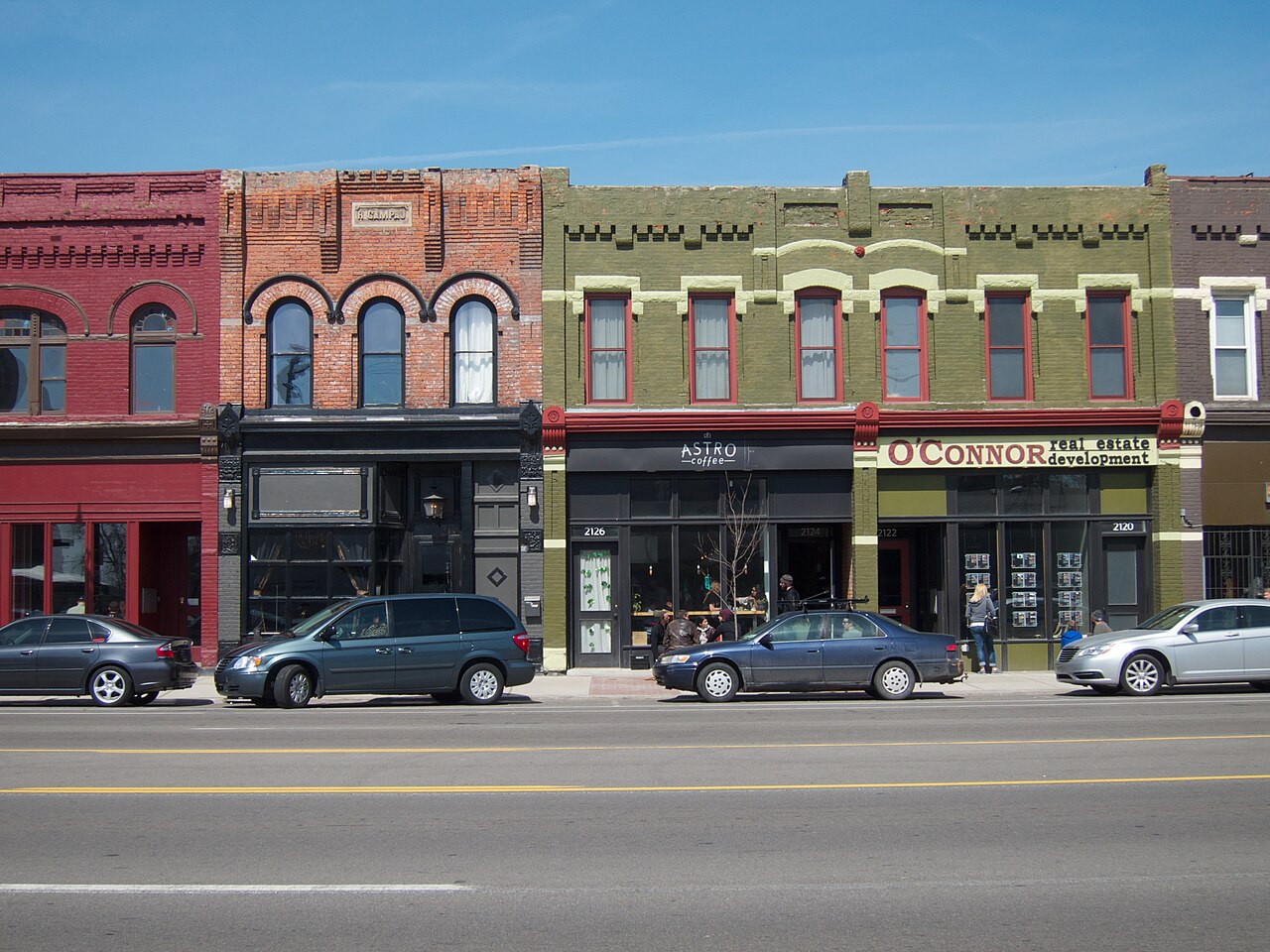
Corktown is where the walking gets easy. Along Michigan Avenue, a row of brick storefronts is painted in bright colors, and a coffee shop anchors the block. Nothing here is grand. It is the everyday scale of a neighborhood street, and the color does a lot of the talking.
For anyone who owns or manages a building, this is the lesson of the block. A colorful frontage is not decoration for its own sake. It tells people the place is open, looked after and worth a stop.
Pause with a cup in hand and watch who stops to look. That small habit of noticing is what a good street wall is really for.

Come up for air on Belle Isle
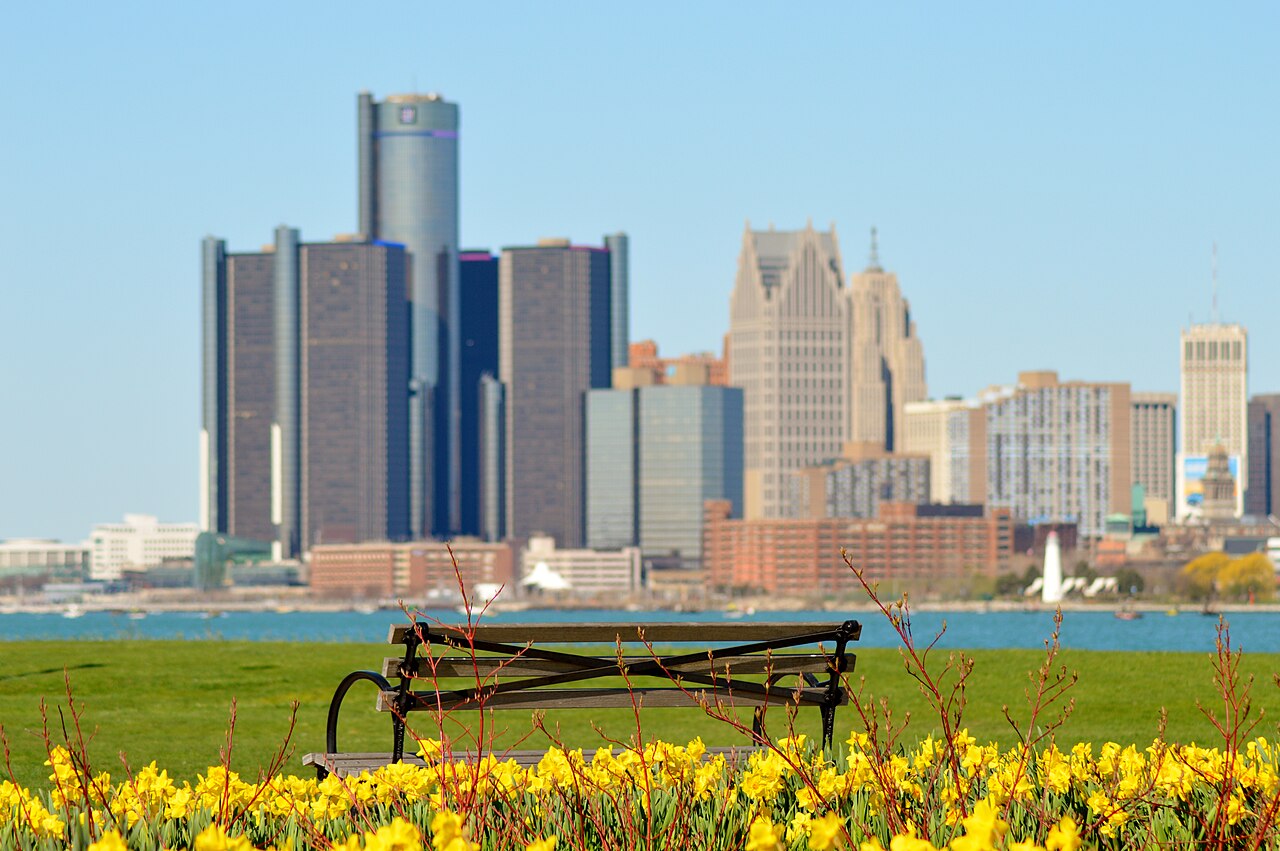
After a day among walls, Belle Isle is the pause. A park bench, a patch of yellow flowers and a lawn run down to the river, with the Renaissance Center skyline standing behind the water. There is nothing painted in this picture, and that is the point of including it.
A city needs places to rest the eye, and the best Detroit murals work because they sit between spaces like this one, the bustle of the market on one side and open sky on the other.
Then walk back toward the city. You will see it differently, with a clearer sense of where the color sits and why it matters.

Leave by the river
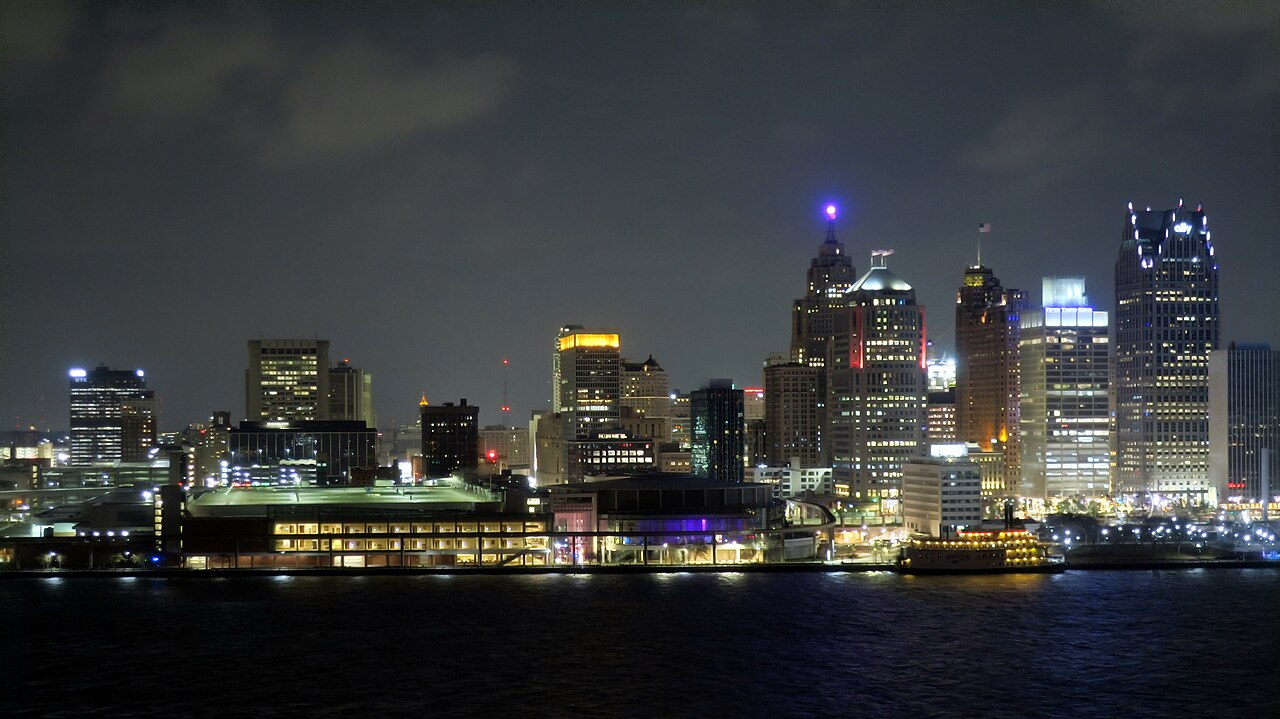
Finish at night, across the water, where downtown Detroit is a line of lit towers over the dark river. From here the whole walk folds into one view: the market, the greenway, the neighborhoods, each with its own walls and its own reasons for them.
If you want to keep exploring, our Detroit page gathers more of the city in one place.

If you have a wall in mind
Every wall in this story began as a blank surface and someone's decision to do something with it. If you manage a building in Detroit, or anywhere, and there is a wall you keep looking at, we would like to hear about it. Tell us about your wall and we will take it from there.
Frequently asked questions
- Where can I see murals in Detroit?
- Good places to start are Eastern Market, the Dequindre Cut greenway, Hamtramck, Corktown and the Heidelberg Project. For murals indoors, the frescoes at the Detroit Institute of Arts in Midtown are the best known.
- Which Detroit neighborhoods have the most street art?
- Eastern Market, the Dequindre Cut and Hamtramck are strong places to begin, with Corktown and Midtown close by. The walls change often, so a slow walk beats a fixed route.
- Is street art legal in Detroit?
- It depends on the wall and its owner. A mural painted with the property owner's permission is commissioned work; unsanctioned pieces are another matter. If you own a wall, agree the plan with your muralist in writing.
- How do I find a muralist in Detroit for my building?
- Look for a muralist whose style suits your wall and your neighborhood, then talk through size, surface and the look you want. We help match walls with muralists and handle quotes, contracts and scheduling.
All photos are free-licensed and credited under each image; license links go to the original file pages.