City story · Houston · 6 min read
Houston Murals: A City That Paints Its Own Welcome
Houston murals are spread across a city too big to see in one afternoon. Here is a slow tour of the street art, painted halls and neighborhood walls that tell you who lives where.

Too big for one walk
Houston does not hand you a single main street of murals. It spreads out, mile after mile, and the paint turns up where you least expect it: a restaurant wall, a hallway, the side of a visitors center. The first lesson of Houston street art is to stop trying to see it all and pick a neighborhood.
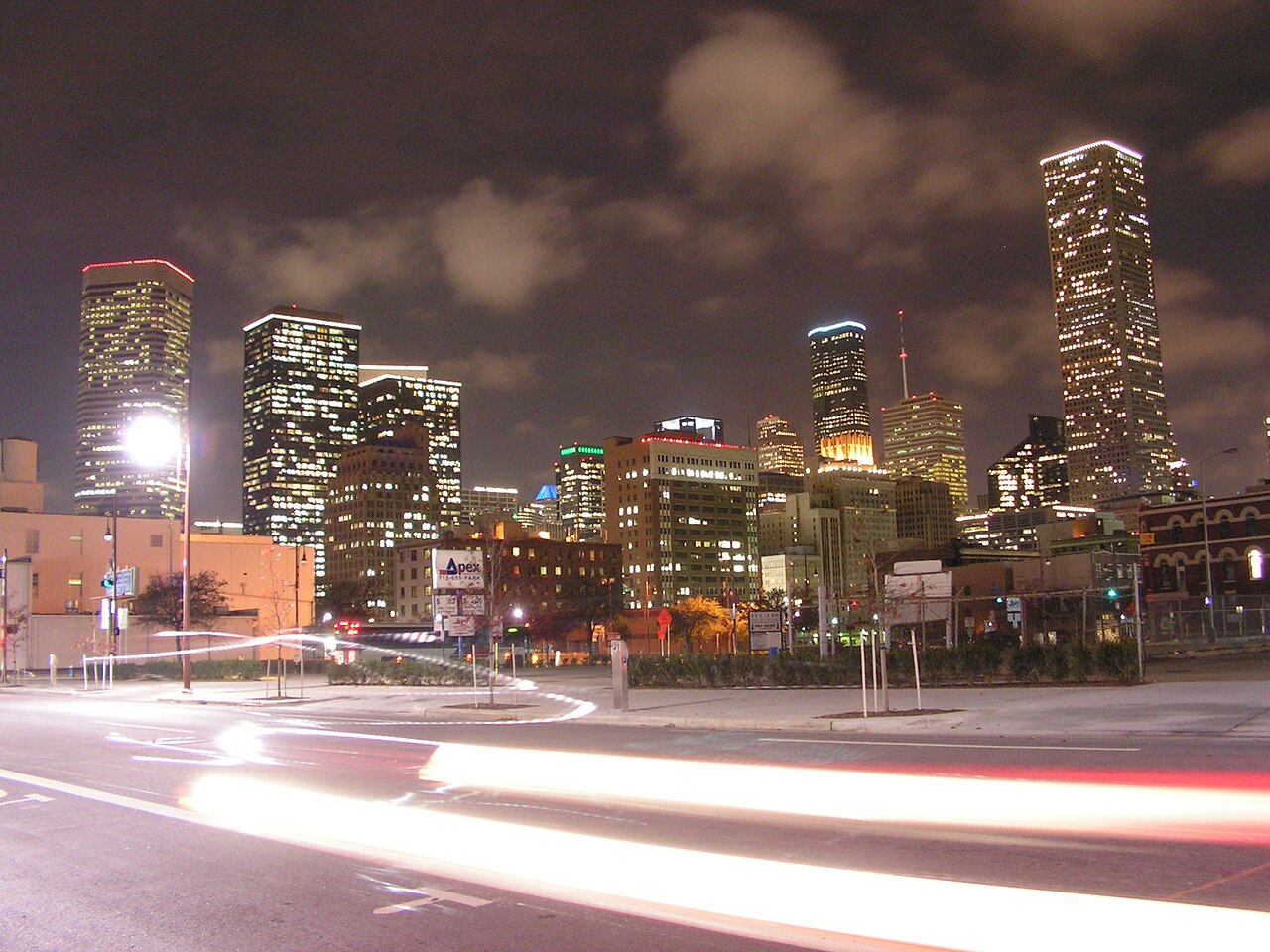
From downtown at night, the towers glow over traffic as if the whole place were one tall idea. Down at street level, it is a hundred smaller ones. The walls are where those smaller ideas get said out loud.
Think of this story as a set of doorways rather than a route. Each stop below is a different way a wall can work in Houston: as a greeting, a hallway, a landmark, a map in tile, a historic frame. None of them needs a guide, only a little curiosity and comfortable shoes.

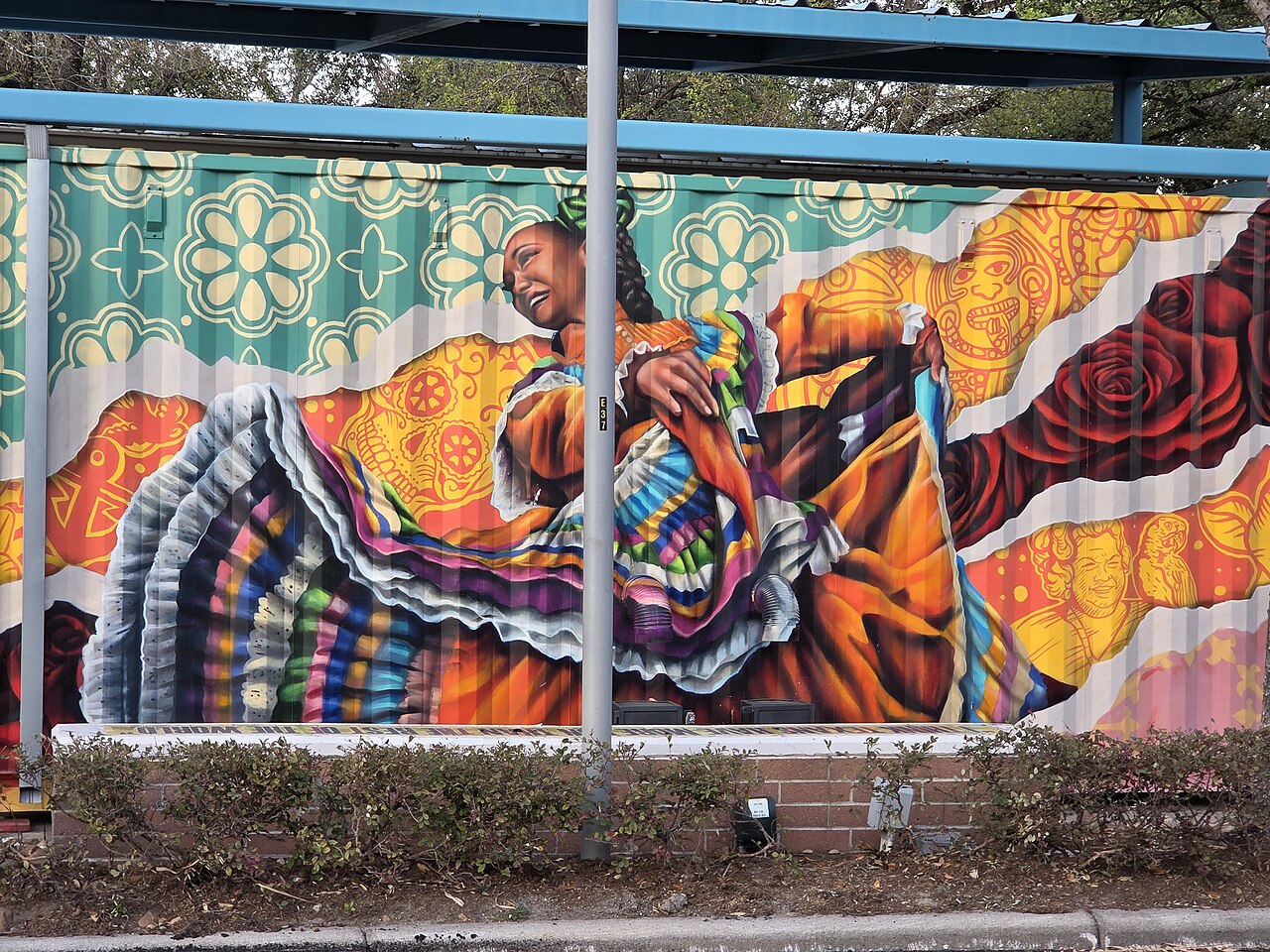
A dancer on Navigation Boulevard
In EaDo, east of downtown, a wall on Navigation Boulevard is given to a dancer in a ruffled folkloric skirt. Roses and patterned shapes crowd the background, and the skirt swirls as though the music just started.
It is the kind of Houston mural that explains its block without a sign. Navigation Boulevard carries a strong Hispanic heritage, and a painted dancer says so in color before you read a word. Walls like this are a neighborhood introducing itself.
Stand across the street for a minute. The patterned backgrounds are the part most people photograph last and remember longest, because the pattern is where the craft shows. Every rose is a decision someone made on a ladder, and the whole block is warmer for it.

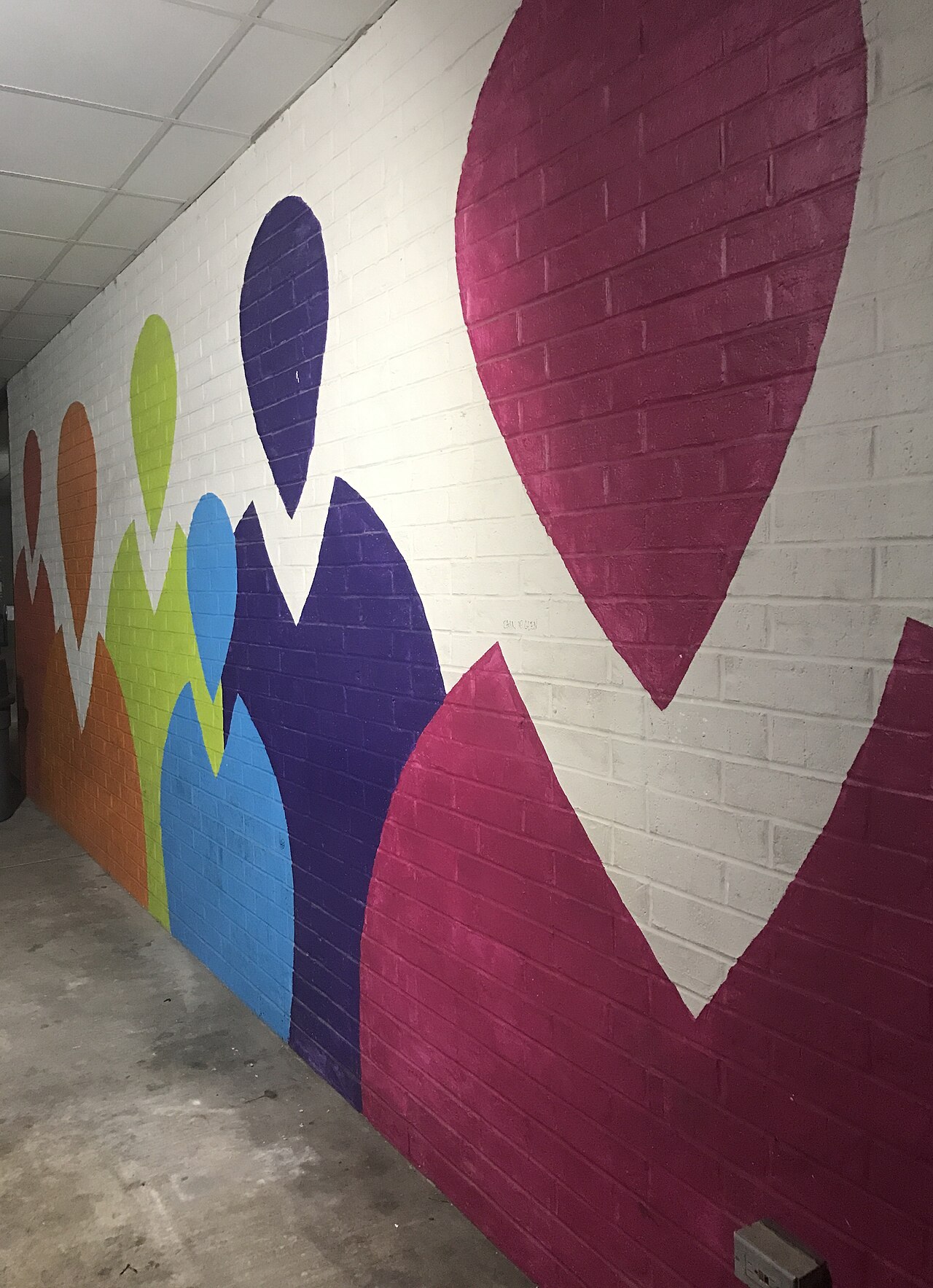
Color indoors, in Montrose
Not every mural faces the street. On the ground floor of the Montrose Center, a brick hallway is painted with soft rounded shapes in magenta, purple, blue, green and orange. There is no portrait and no slogan, only color given room to breathe.
That is a quiet argument for painting inside. A hallway is where people wait, hurry through and meet each other, and a painted wall makes that small stretch feel considered. Offices, clinics and community buildings across Houston have the same chance.
There is also something worth noticing about scale. A hallway mural is seen up close, from a few feet, by the same people day after day. That is a different job from a wall on a boulevard, and it rewards a different kind of detail.

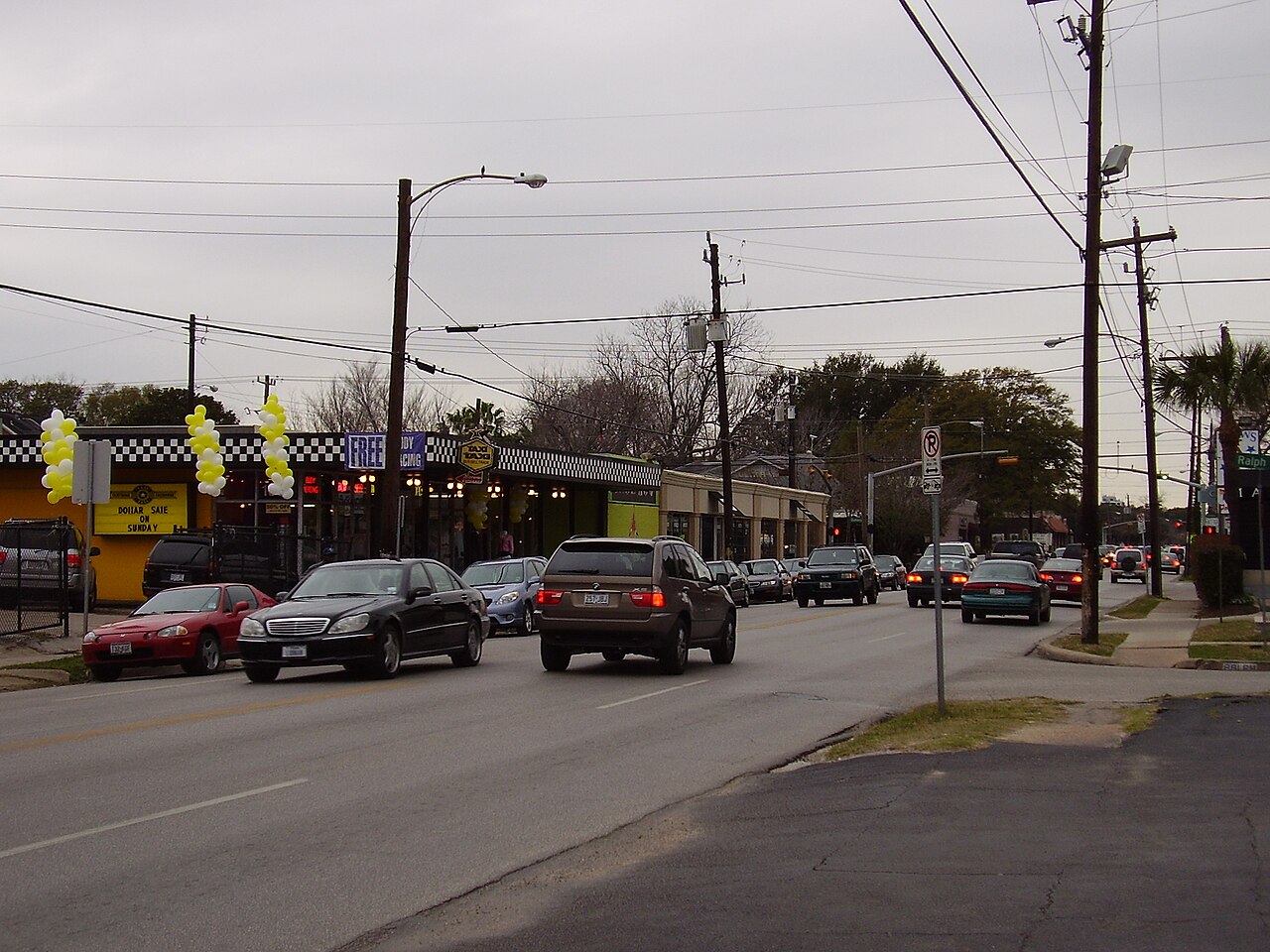
Westheimer, and a red wall worth a turn
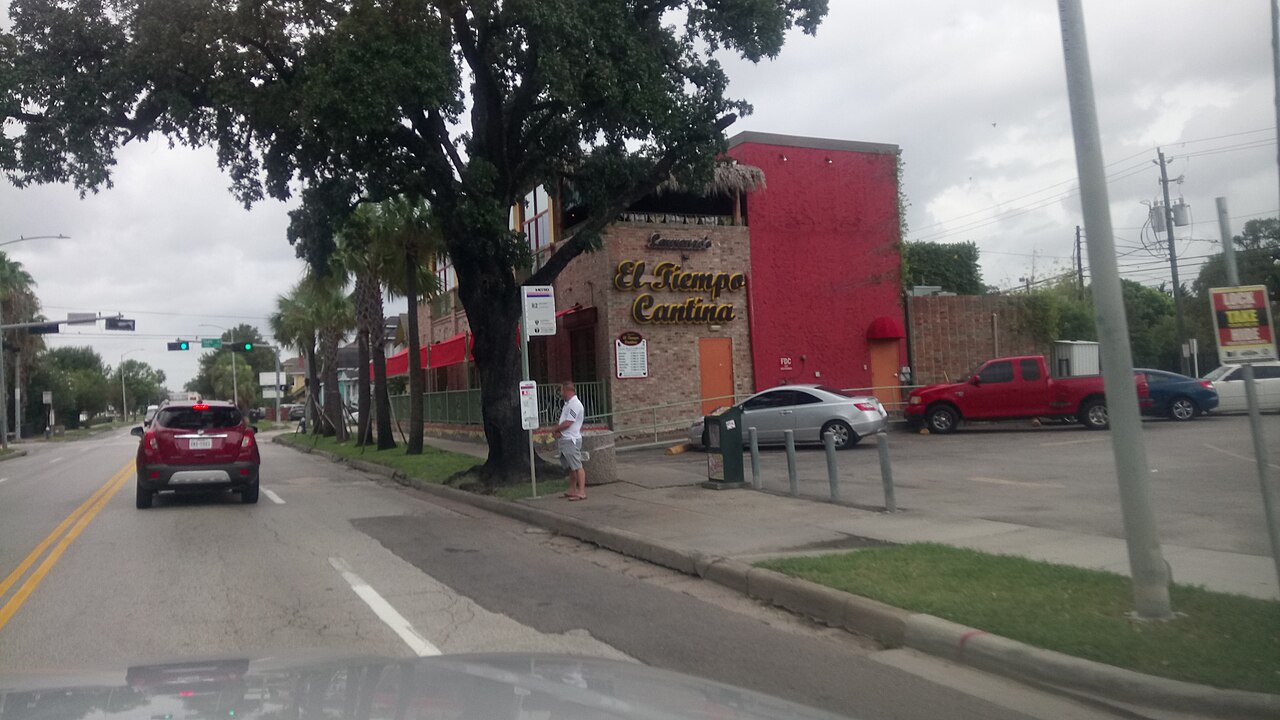
Montrose is better at a slow speed. Drive along Westheimer Road past low shops and winter-bare trees and the neighborhood looks plain. Then you turn a corner, find shade, and a restaurant such as El Tiempo Cantina holds the intersection with a red wall.
Color on a building is a kind of mural thinking even when it is not a picture. A bold wall turns a corner into a landmark, the place people use when they say meet me at the red one. Montrose understands that better than most.
If you are looking for Houston street art in the loudest sense, this is not that. It is the everyday version: the color that makes a commercial strip feel like somewhere. Stay a while, order lunch, and let the corner do its work.


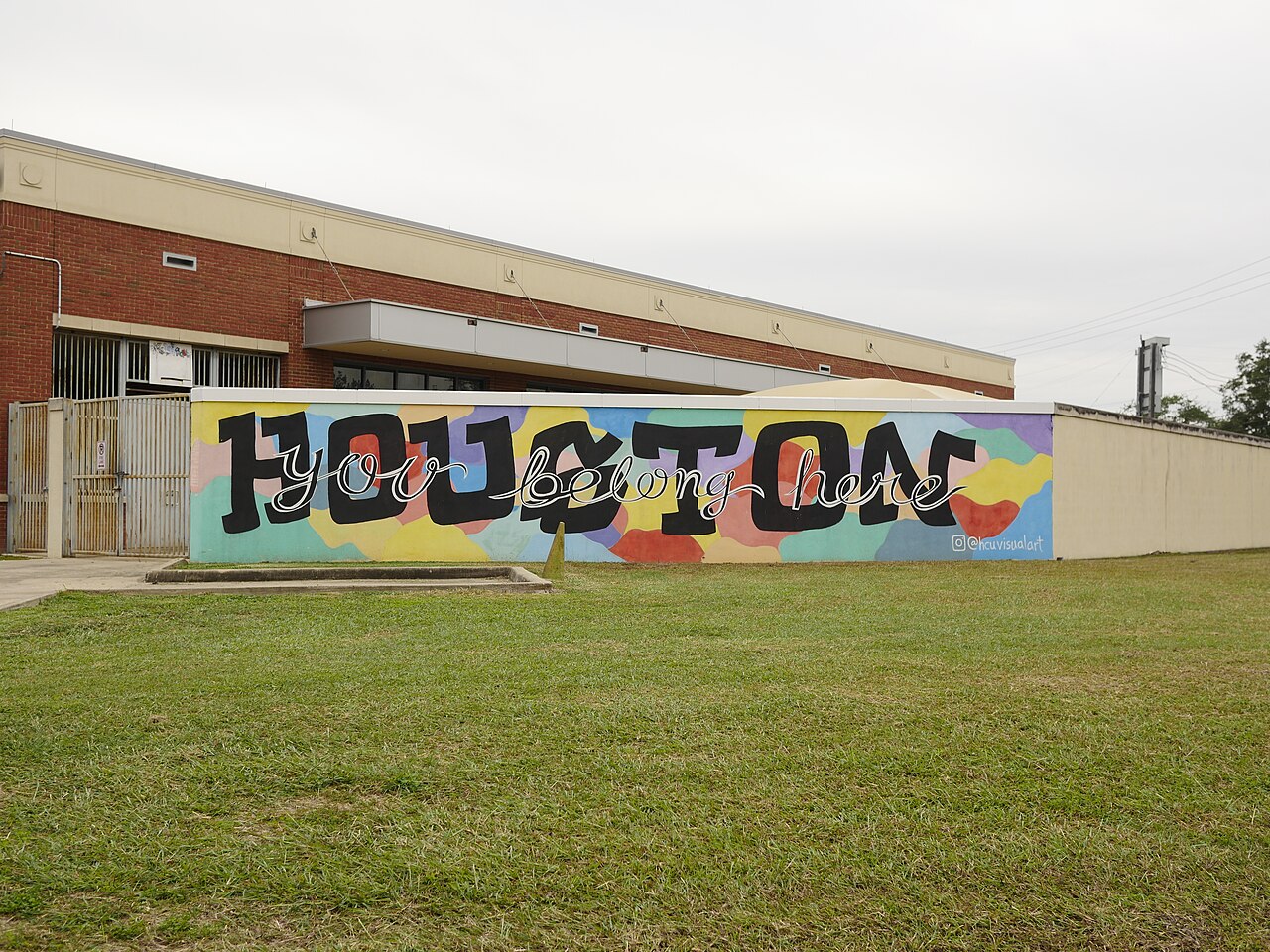
Words on a wall: you belong here
Out in southwest Houston, a long wall at a university entrance carries one big idea in black lettering: HOUSTON, and below it, you belong here. Soft colored shapes drift behind the words.
It is a mural as a handshake. Houston is a place many people arrived in from somewhere else, and a wall that says you are welcome speaks to the whole city. Of all the Houston murals in this story, it may be the most direct.
What stays with you is how simple it is. Big letters, a soft background and a sentence anyone can read in a second. A wall like this does not need to be explained to a visitor, a student or a neighbor walking past. It just says the thing, at the size of a building.

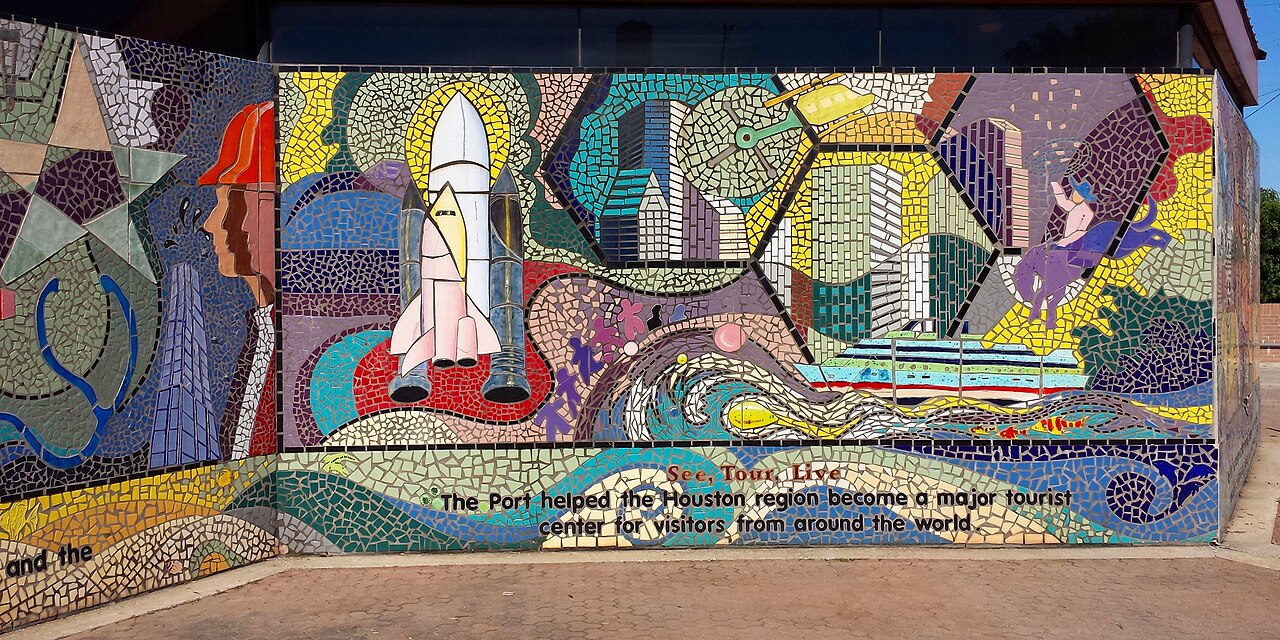
A shuttle in tile at the ship channel
Murals do not have to be paint. On the Port of Houston visitors center along the Houston Ship Channel, a large tile mosaic shows a space shuttle, city towers, waves and fish all in one picture.
Put together, that is Houston in a single frame: water, work, sky and the space program the city is known for. Tile is slow and patient, and a mosaic like this asks to be read like a map. You can almost trace the story from the waves up to the rocket.
The mosaic also shows a different timescale. Paint fades and gets repainted, while tile is built to last, laid piece by piece. When a place wants a picture to stay put, this is one way to do it, and visitors arriving at the center get a first impression of the city before they have said hello.

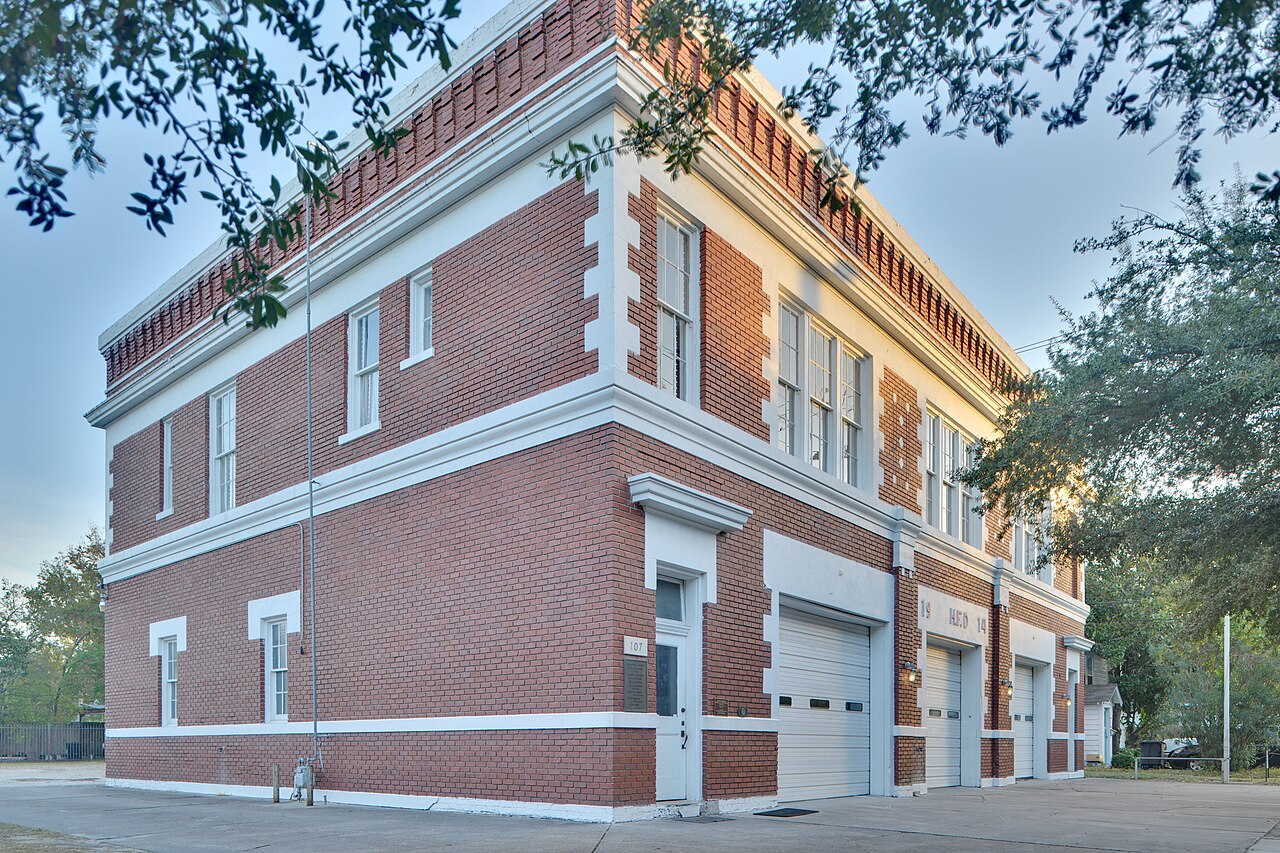
Brick, history and a blank-wall question
In the Heights, the old fire station stands in red brick and white trim, glowing at dusk. It is listed on the National Register of Historic Places, and it is a reminder that Houston keeps some of its past in plain view.
Older buildings are a reminder that a mural is a conversation with its surroundings. A wall beside a landmark can echo its color, or go bold and contrast with it. Either way, the best choices start with looking at the building first and the idea second.
Neighborhoods like this ask a careful question of any new wall: what should it add, and what should it leave alone? Good murals answer by fitting the place. If you own property here or elsewhere, our guide on how public art can lift a property in Houston looks at that side.

Art you can walk up to, in the Third Ward
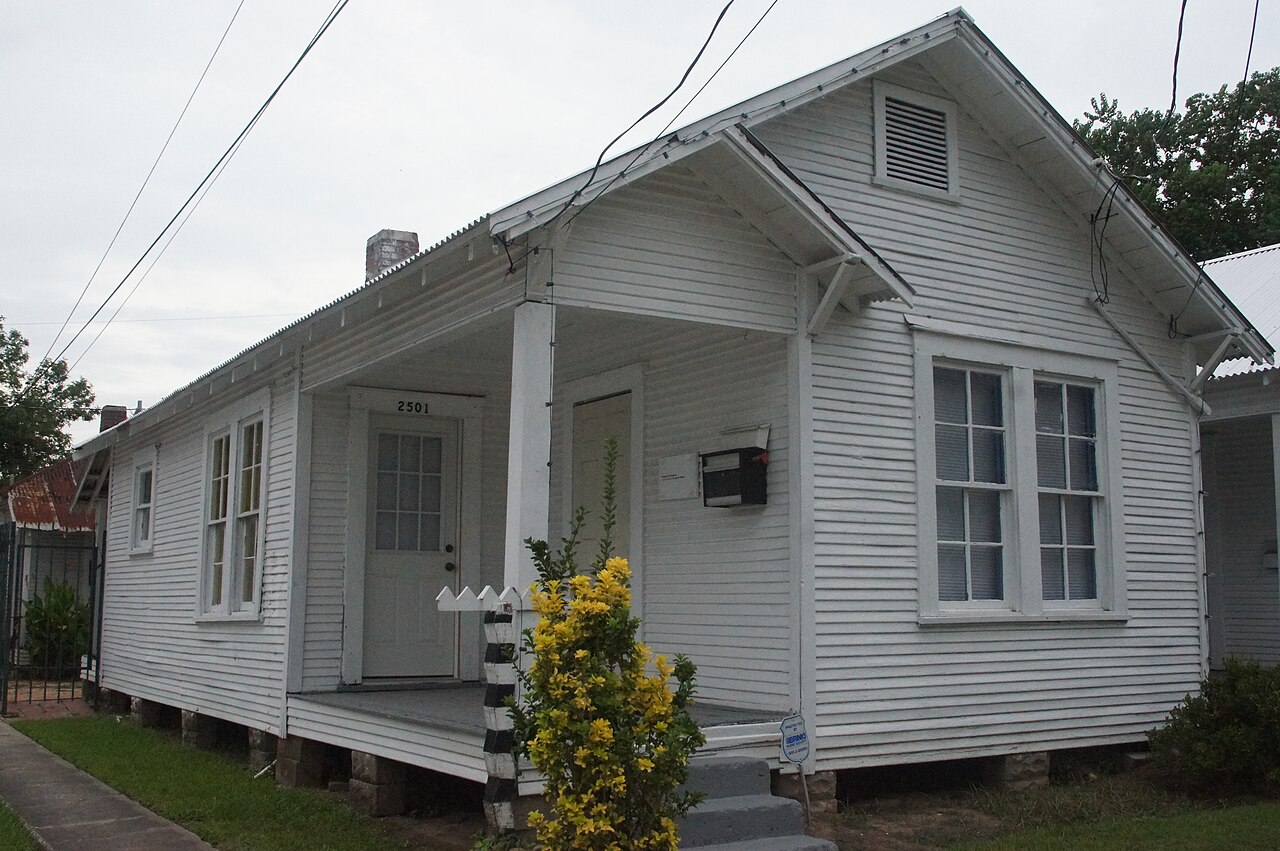
In the Third Ward, a white wooden shotgun-style house with a front porch and yellow flowers sits at Project Row Houses, where houses themselves are used for art. Here the building is the canvas and the street is the gallery.
It shows another way a neighborhood can hold art: slowly, in public, with the porch still a porch. A wall does not have to be loud to matter.
It is easy to walk past the idea at Project Row Houses because it is so gentle. The porch, the flowers and the painted white boards of the house are all part of the picture, and they say that art and everyday life can share a block without crowding each other.

End at the bayou
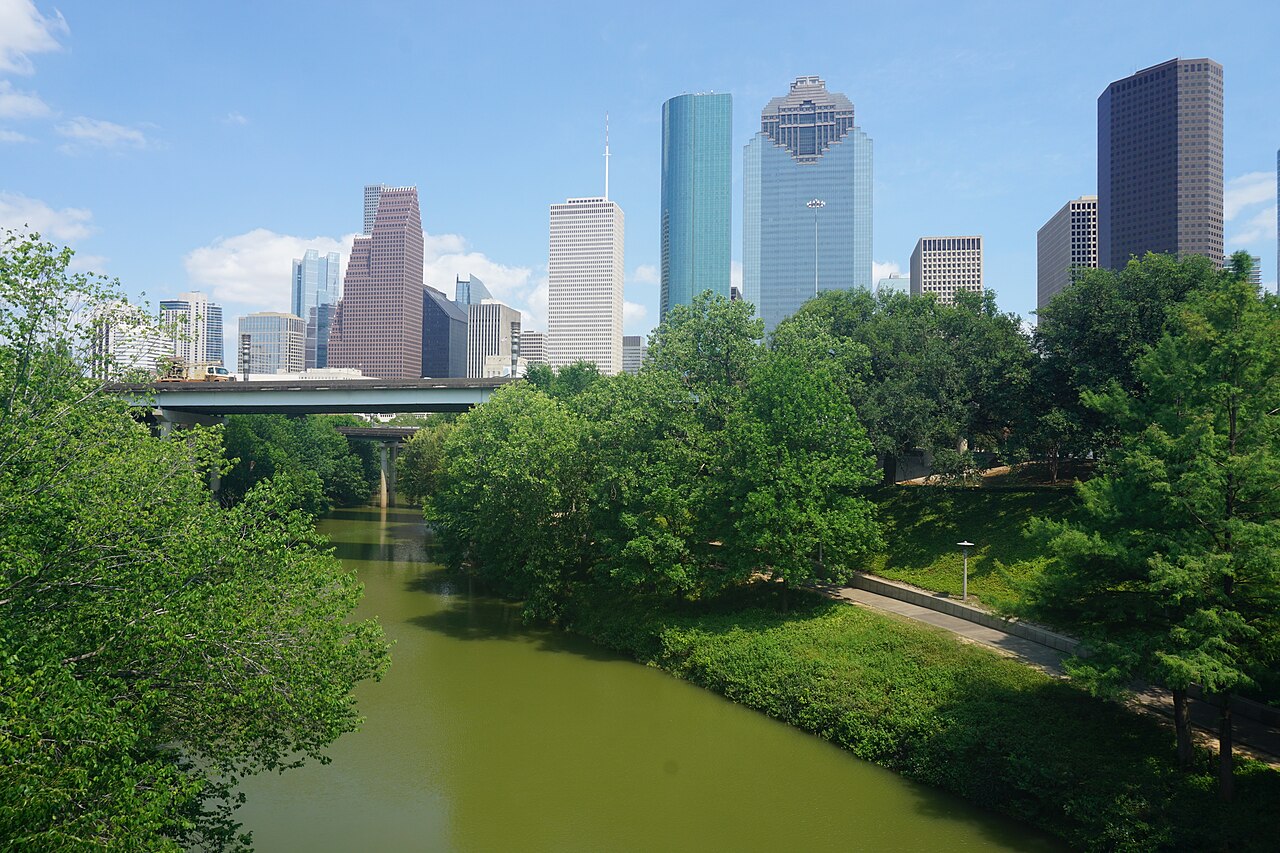
Finish where the city exhales. Buffalo Bayou winds between green trees with the downtown towers rising behind it under a blue sky. After a day of walls, it is a good place to sit and think about what you saw.
The bayou also makes a useful counterpoint. After the density of the walls, a stretch of green and water reminds you how much open sky Houston has, and why color on a wall can feel so welcome against all that concrete.
Houston murals reward patience. The best ones are seldom in one place, and each neighborhood asks you to look a little differently. Our Houston page is a good place to keep exploring.

If you have a wall in mind
Every wall here began as somebody's blank space and a decision to say something with it. If you manage a building in Houston and keep looking at a wall that could do more, we would like to hear about it. Tell us about your wall and we will take it from there.
Frequently asked questions
- Where can I see murals in Houston?
- Good places to start are EaDo along Navigation Boulevard, Montrose, the Heights, the Third Ward and the area around the Houston Ship Channel. The city is spread out, so pick one or two neighborhoods per visit.
- Which Houston neighborhoods have the best street art?
- EaDo, Montrose, the Heights and the Third Ward are all worth a walk, and each has its own character. Look for painted walls on restaurants, community buildings and corner shops.
- Is street art legal in Houston?
- It depends on the wall and the owner. Murals painted with a property owner's permission are commissioned work, while unsanctioned pieces are a different matter. If you own a wall, get any mural agreement in writing.
- How do I find a muralist in Houston for my building?
- Start with a muralist whose style fits the wall and the neighborhood, then talk through the size, surface and look. We help match walls with muralists and handle quotes, contracts and scheduling.
All photos are free-licensed and credited under each image; license links go to the original file pages.