City story · Lisbon · 6 min read
Lisbon Murals: A City That Paints on Its Walls
Tile on the church wall, a poet at a cafe table, a woman with a basket on a whitewashed house: a slow walk through the Lisbon murals and street art that sit inside everyday life.
Take the empty chair
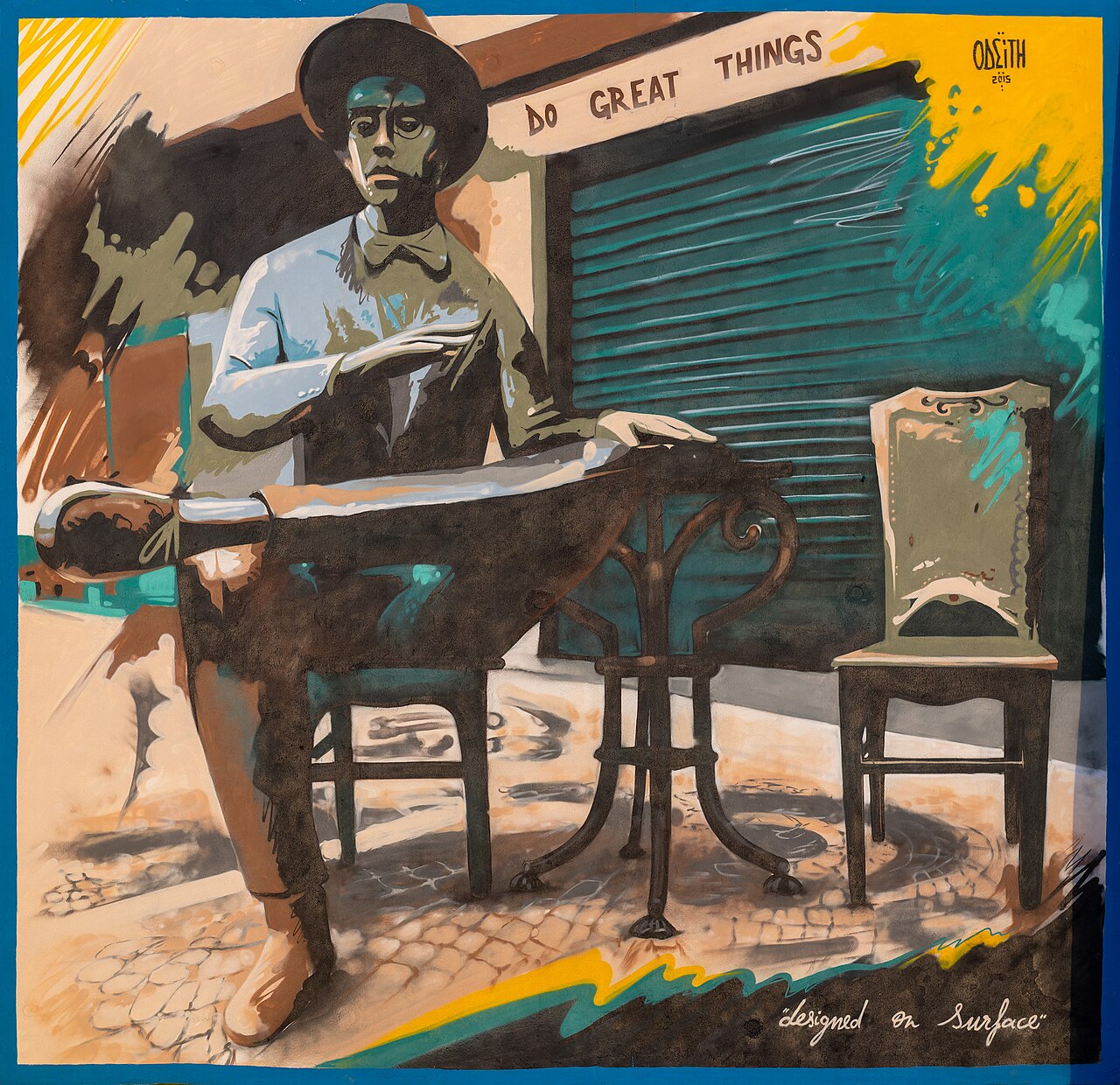
The first Lisbon mural worth stopping for is a quiet one. A man in a hat and round glasses sits at a cafe table, painted in teal, ochre and brown, and beside him is an empty chair. It is a small invitation at the scale of a building. Nobody is asked to buy anything. You are only asked to sit down for a minute.
That gesture says a lot about how Lisbon murals work. The city is hilly, the streets are narrow, and the walls are close enough to touch. A painted wall here is rarely a billboard shouted from across a highway. It is something you meet at walking speed, usually while you are looking for somewhere else.
Stay a little longer and you notice the details that make it feel placed rather than dropped in: the way the colors echo the garden, the way the figure faces the path, the way people slow down without quite knowing why. A good mural does not demand attention. It earns a few seconds, and a few seconds is often enough to change how a corner feels.
Tile came first
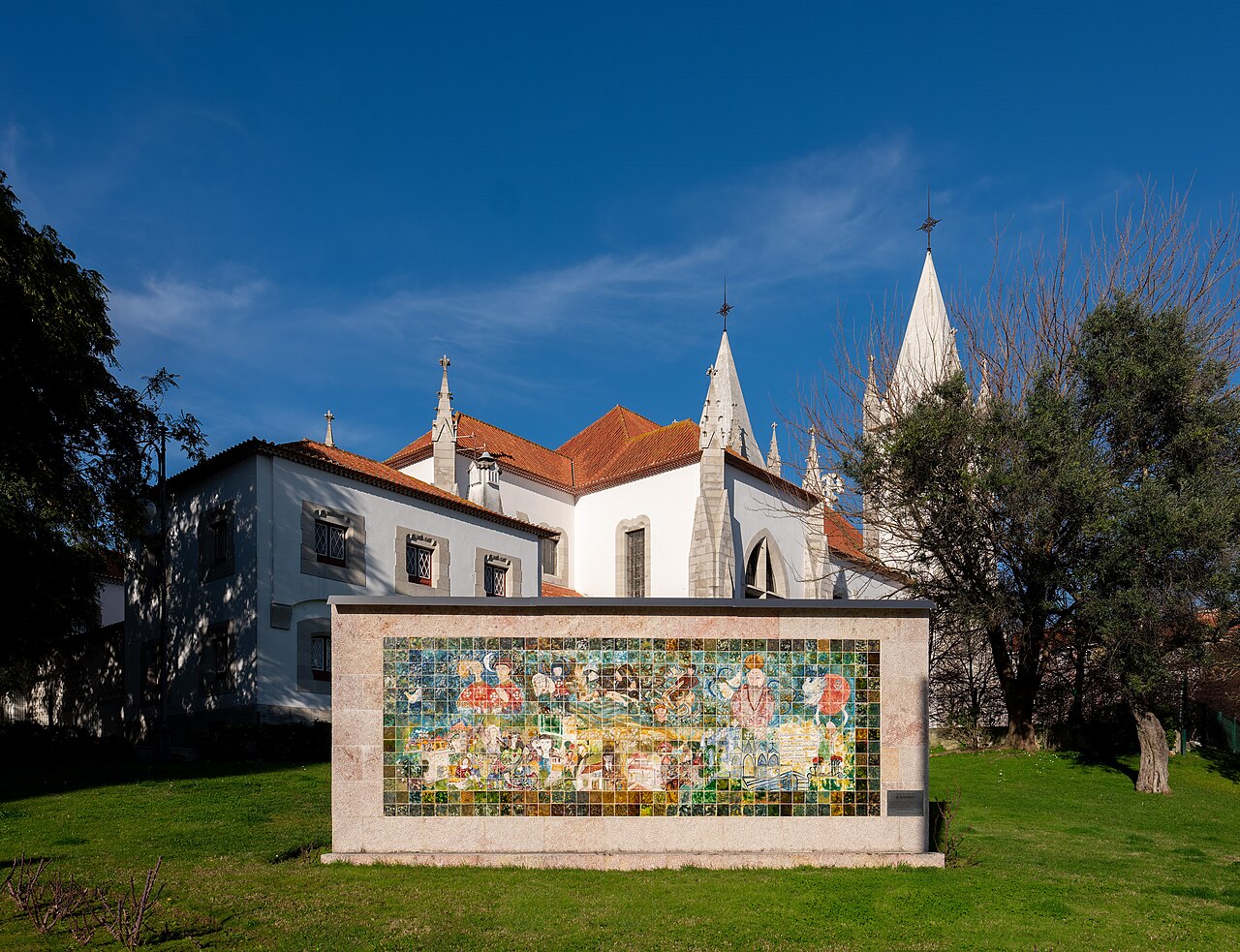
Before there was spray paint, there was tile. Azulejos, the glazed ceramic tiles that cover so many Portuguese walls, are one of the first things a visitor notices, and they make a good key to everything else. Tile is a mural made of small repeating pieces, fixed to a wall so that weather can do its worst and the picture stays.
In Campo de Ourique, a tile panel sits on a stone wall at the edge of a lawn, with a white church and its red roofs rising behind. It is easy to read as scenery. It is also a reminder that Lisbon has been putting pictures on walls for a very long time, and that the newer painted walls are joining a conversation rather than starting one.

A factory under the bridge
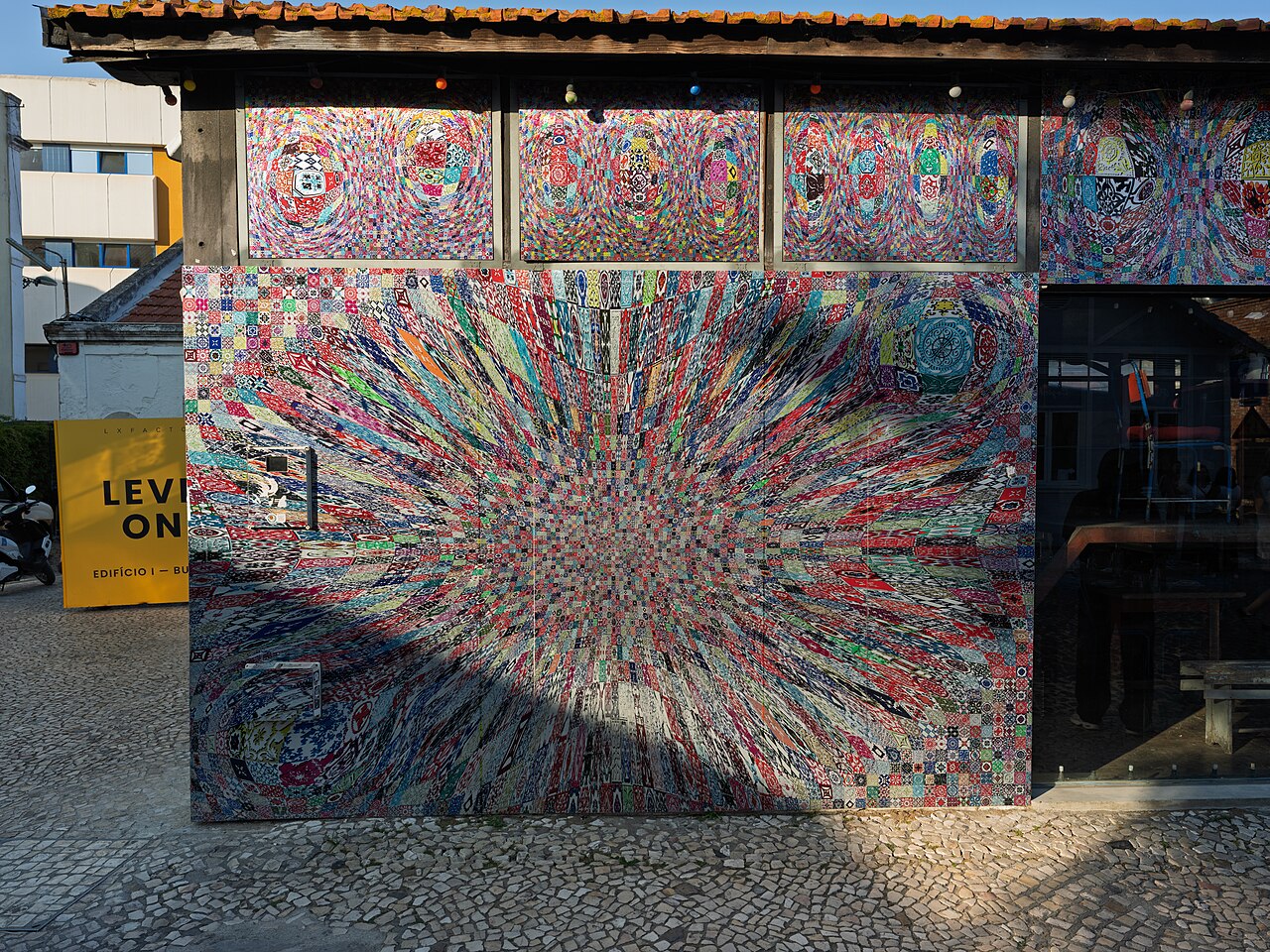
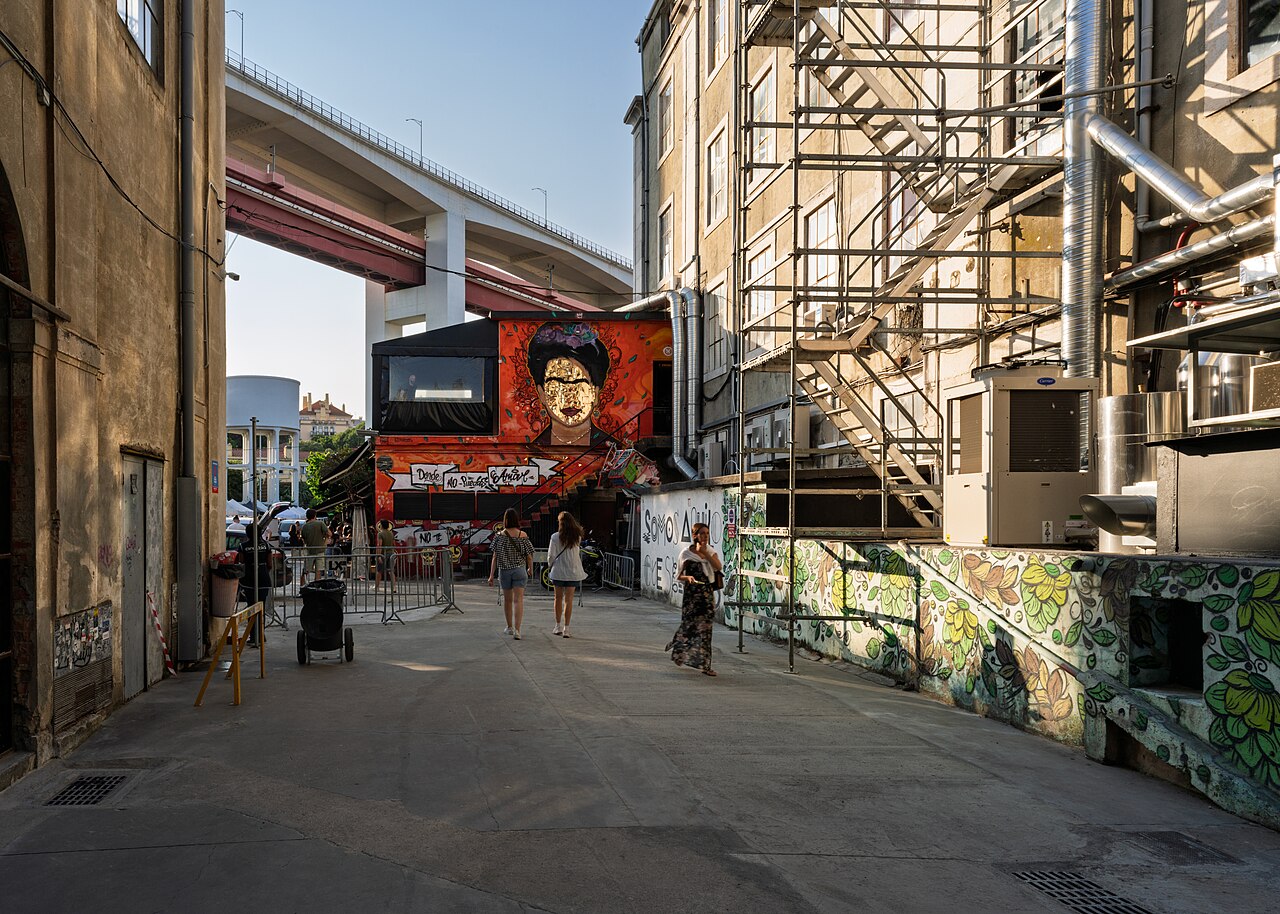
LX Factory is a maze of former industrial buildings tucked beneath the Ponte 25 de Abril, and today it is one of the best places in town to see Lisbon street art in a concentrated dose. Cafes spill into narrow courtyards. Painted walls climb the fronts of old buildings. Every few steps something new catches your eye.
One building front radiates in bursts of color, built from countless tile-like patterns, and it looks like a kaleidoscope pinned to a facade above the cobblestones. Around the corner, a lane runs under the bridge past an orange portrait of a woman's face, with a leafy painted wall on the other side. Together they show what a creative district can feel like when old walls are given a second job.
What makes LX Factory work is the mix. Painted walls share space with workshops, tables and people carrying coffee, so the art is never sealed off in a gallery. It is part of the working day, and it changes the feel of the place from morning to evening.


Alfama, where the wall is the house
Alfama is the old quarter, a tangle of steep lanes above the river, and its walls are lived in before they are looked at. Laundry, doorways, iron balconies and weathered plaster all take part. Street art here has to earn its place among the building's own character.
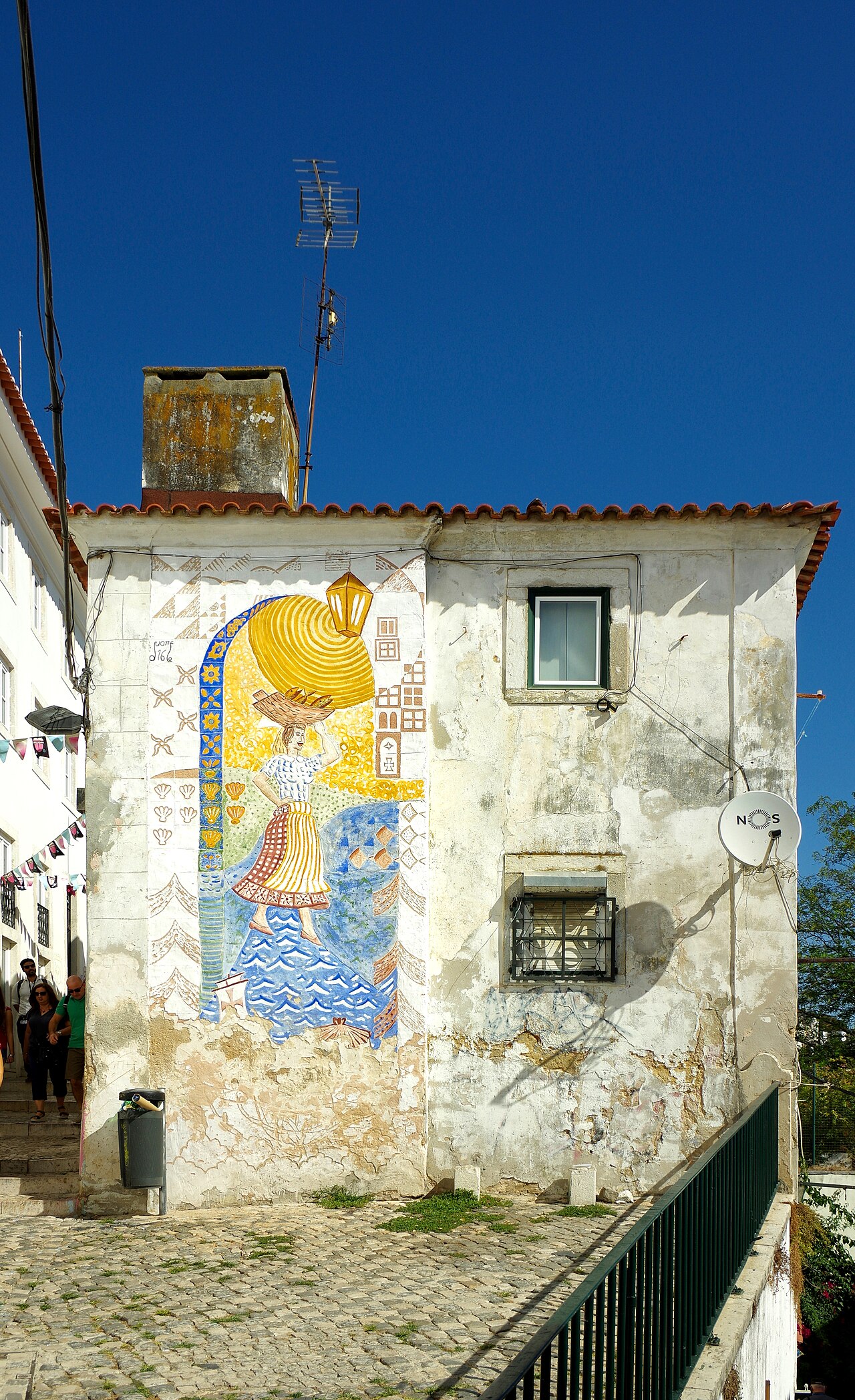
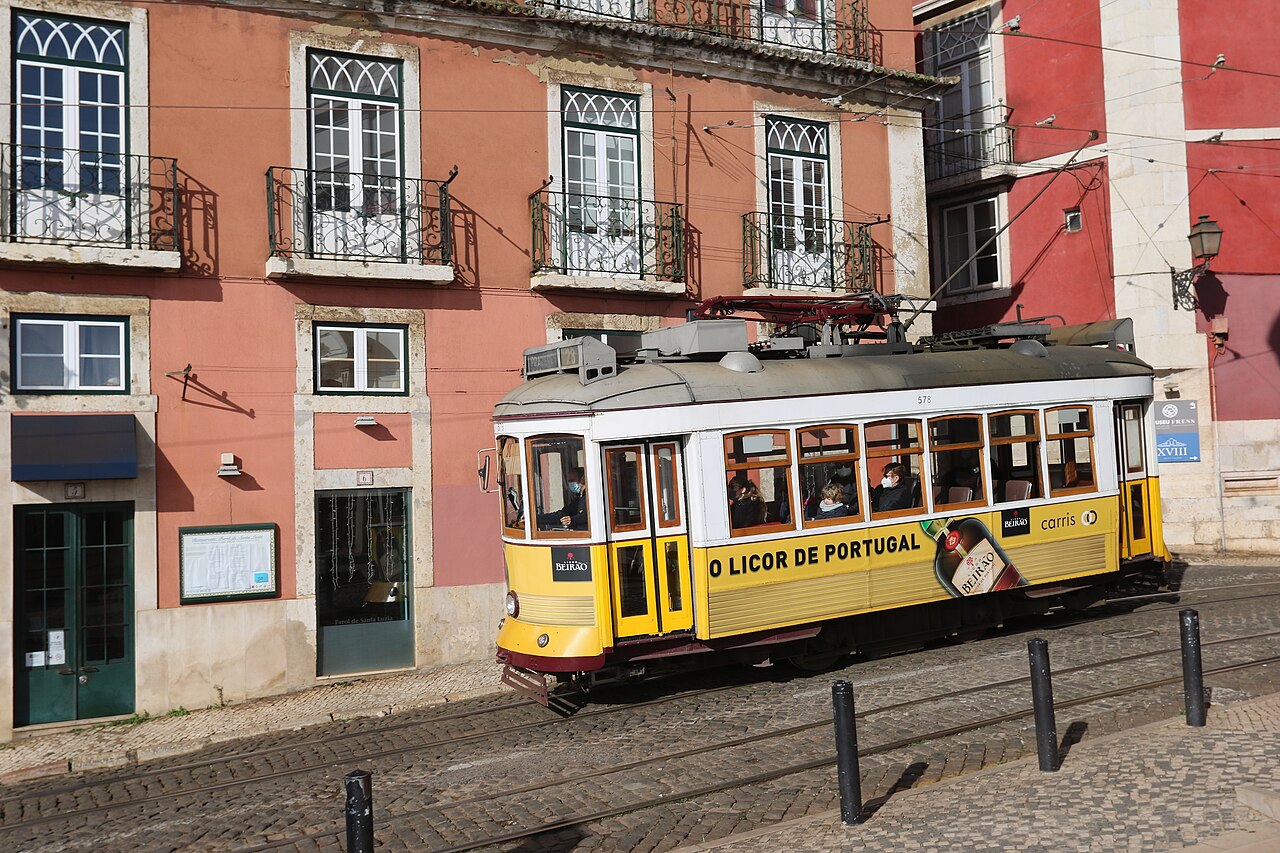
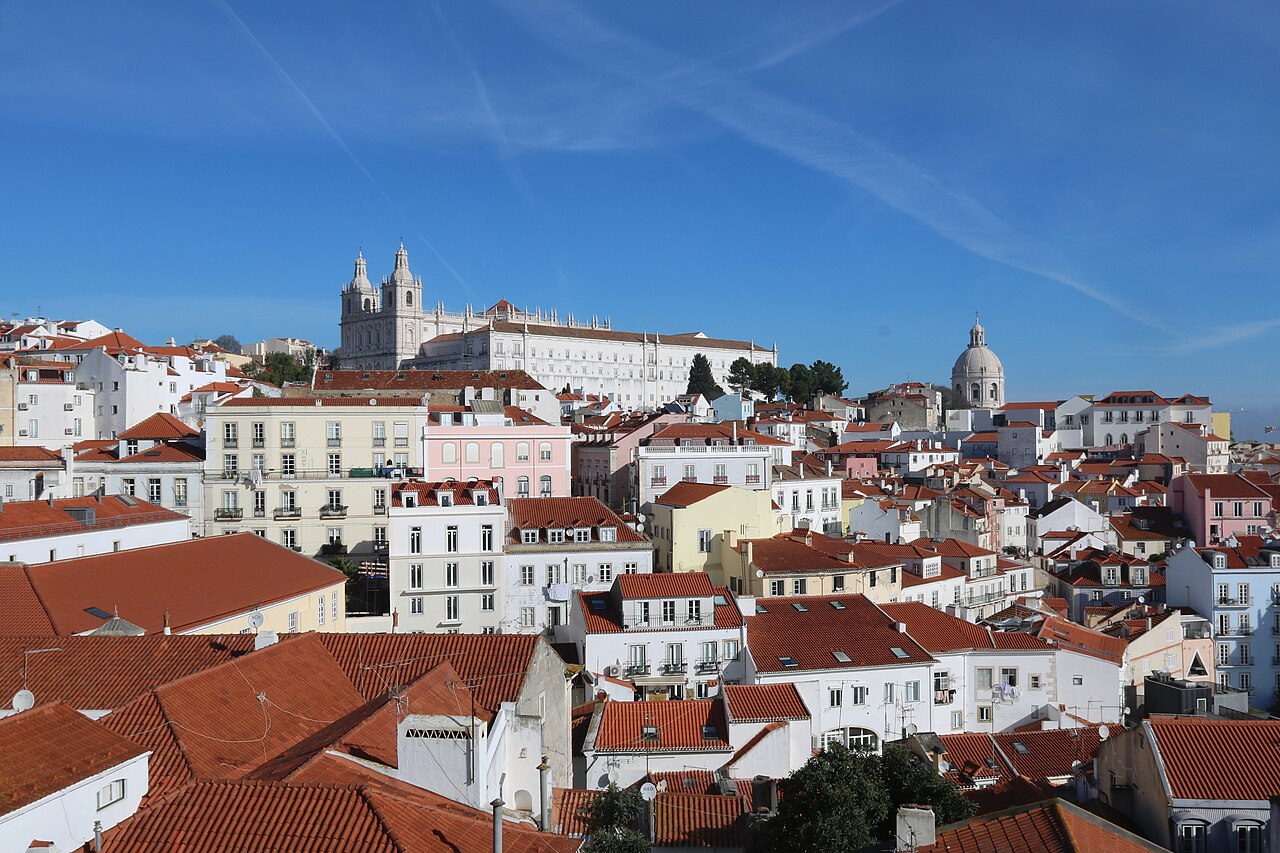
On a whitewashed house with a tile-roof edge, a painted woman carries a basket on her head. She belongs to the wall as if she had always been walking past it. Nearby, a yellow tram rattles by a pink-orange building with iron balconies, and from the Santa Luzia viewpoint the whole district spreads out in red rooftops and pastel facades under a church. The lesson of Alfama is restraint. The best painted walls fit the street they are on.



Black, white and a cobbled underpass
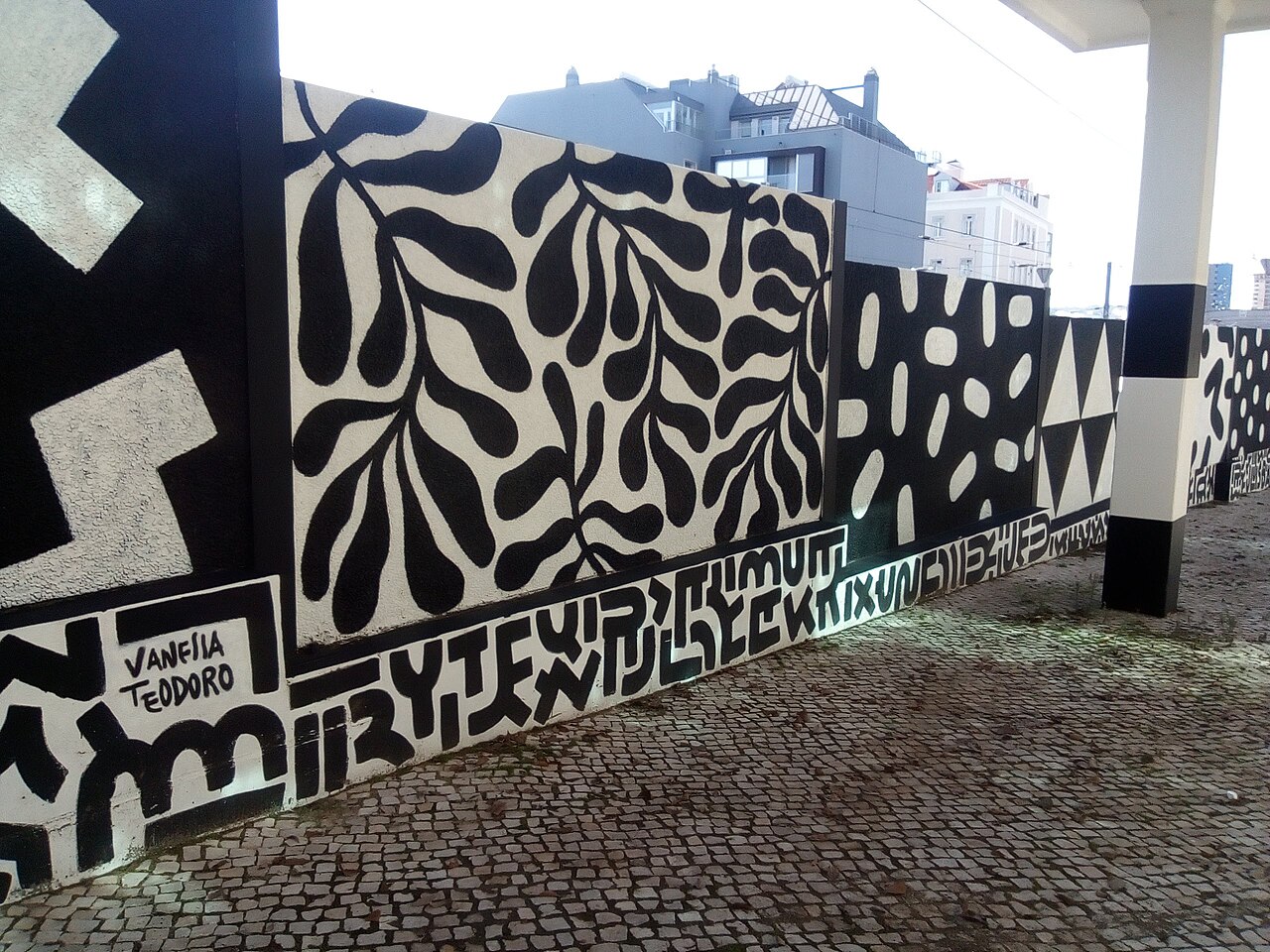
Not every wall in Lisbon is warm. In Entrecampos, a pedestrian underpass and elevator are painted in bold black-and-white leaf shapes and patterns that run along the cobblestones. With no color to lean on, the design relies on rhythm, and it turns a place people pass through in a hurry into a place with a little personality.
Walls like this are the quiet workhorses of public art. An underpass is a place nobody chooses to linger, and a good painted wall gives people a reason to look up from their phones.
There is a lesson here for anyone looking at a plain concrete wall: pattern and contrast can do as much as a full palette, and a simple scheme often reads clearly from a distance as well as up close.

The square that opens to the river
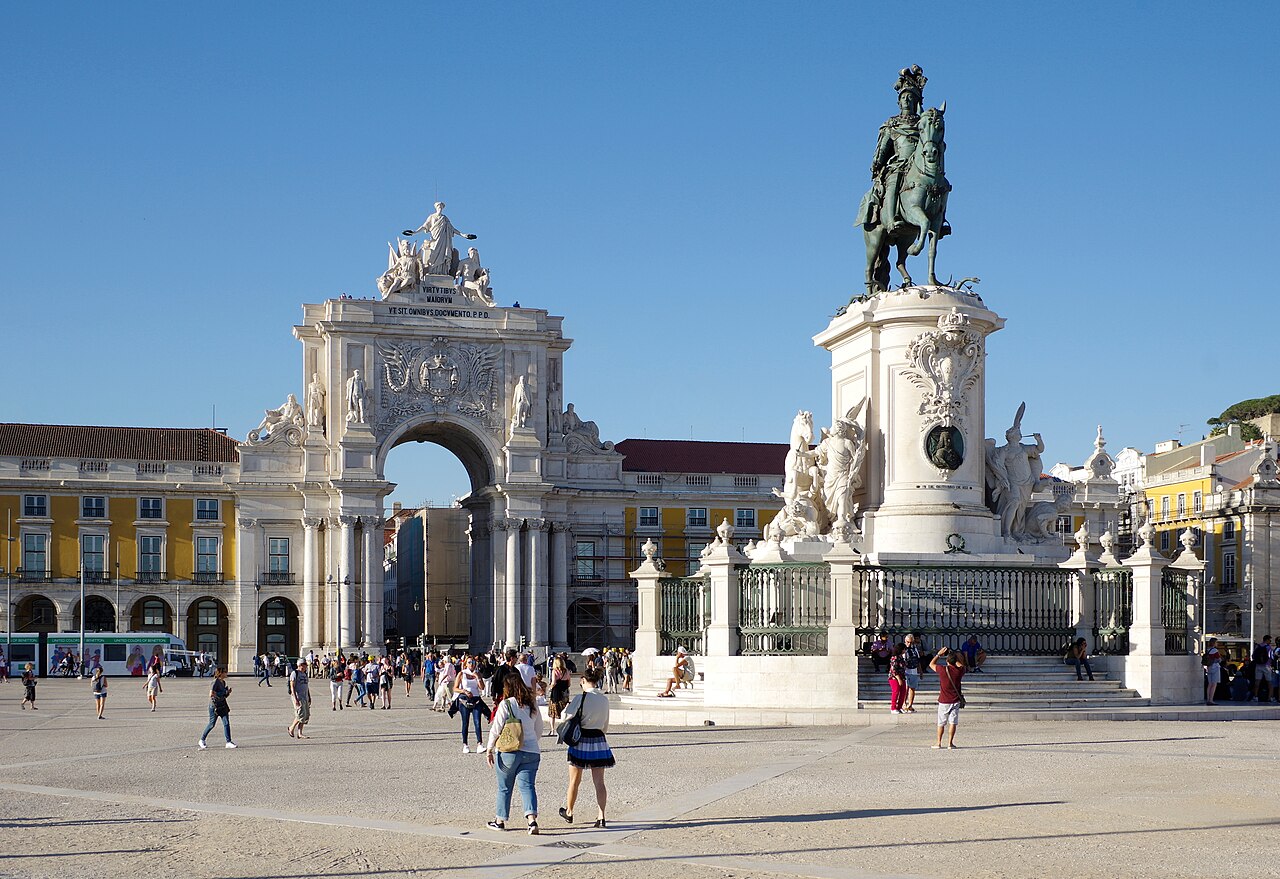
Praça do Comércio is Lisbon at its most formal: a vast riverside square with a triumphal arch and an equestrian statue, and room for a few visitors to stand in the sun and feel small. After the close walls of Alfama and LX Factory, the space comes as a relief.
It is worth standing here and thinking about scale. A square this open can carry a grand monument. A lane can carry only a little. The murals of Lisbon are largely lane-sized, and that is a feature, not a limitation. They are built for people on foot.

A market hall for the long table
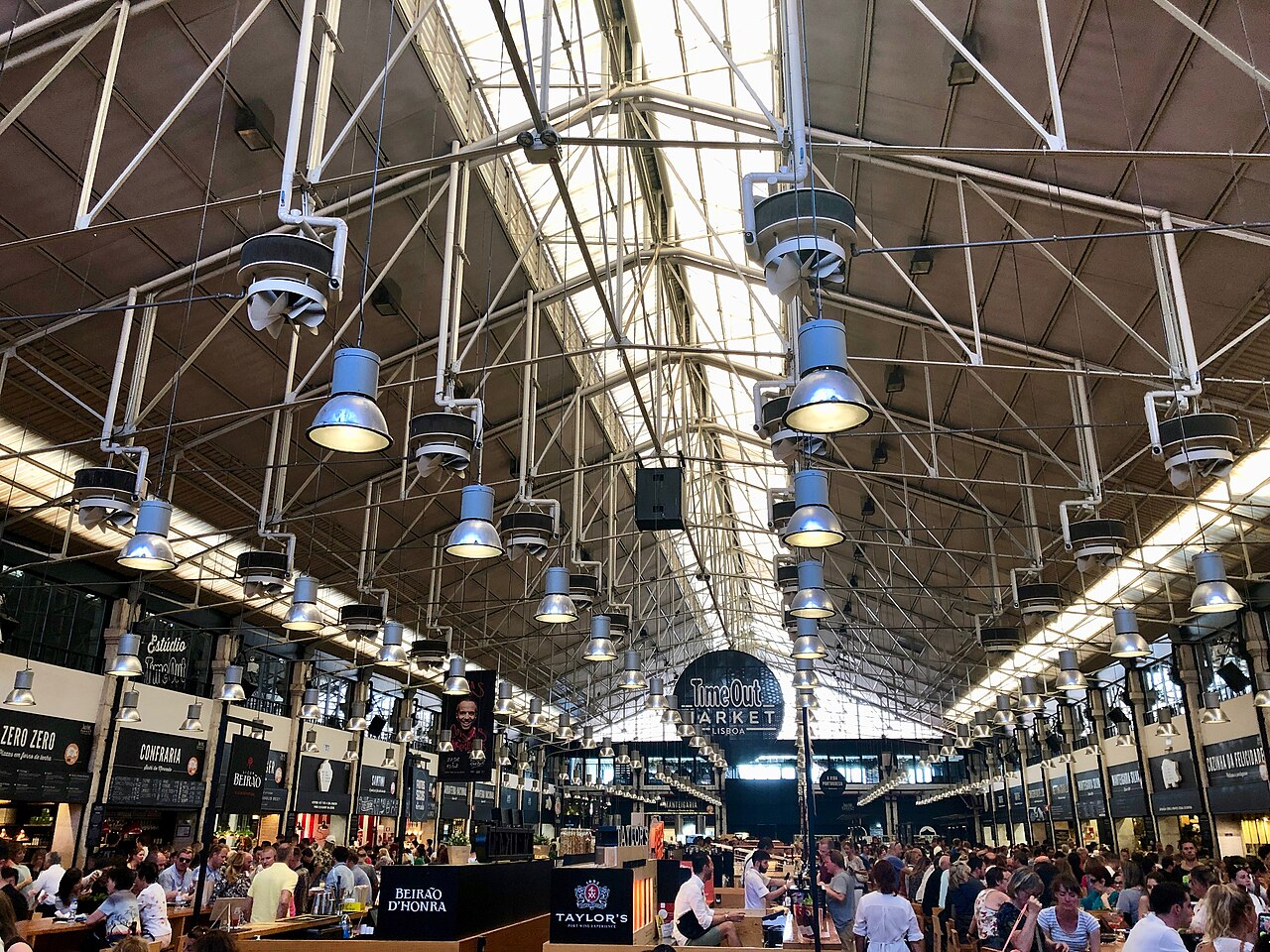
In Cais do Sodré, a big iron-framed market hall holds long tables, hanging lamps and a steady crowd of diners. It is a good example of a city putting a historic building back to work, and the same instinct runs through much of Lisbon: keep the structure, change the use, let new color in.
A blank wall near a busy corner often waits for the same decision. If you manage a building, it is worth asking what the wall could say to the people who pass it every day.
The long tables matter too. People meet, eat and linger, and a space that invites lingering is exactly where a well-placed painted wall does its best work, giving strangers something to talk about while they wait for a seat.

End on a hill at dusk
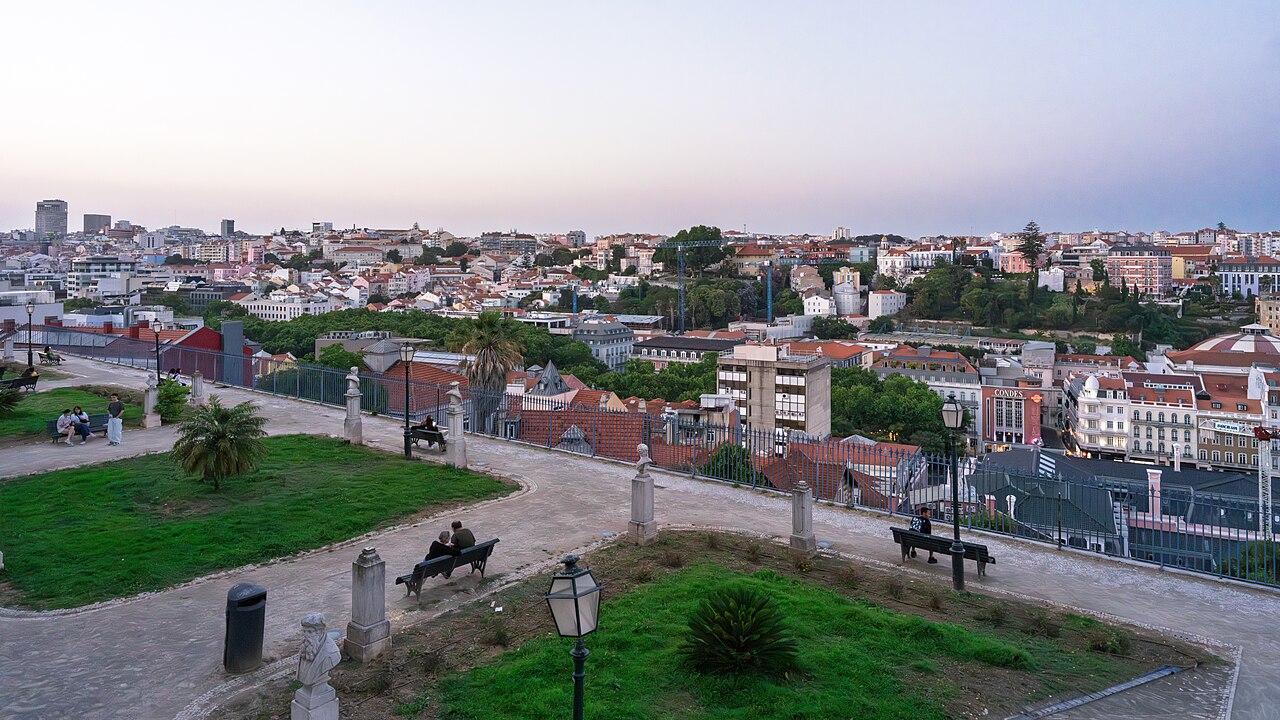
Finish in Bairro Alto, on a garden viewpoint where benches face a city of rooftops stretching away at dusk. From up here the painted walls disappear into the larger picture, and that may be the best way to understand them. Lisbon murals are not separate from the city. They are part of how it looks, and how it feels to live in.
Come down slowly. Somewhere on the way back there will be another wall, and perhaps another empty chair.

If you have a wall in mind
Every wall in this story began as someone's blank surface and a decision to leave it less blank. If you manage a building and have a wall you keep looking at, we would be glad to hear about it. You can see how we approach cities like this one on our Lisbon guide page, or tell us about your wall and we will take it from there.
Frequently asked questions
- Where can I see the best murals in Lisbon?
- A good first day takes in LX Factory under the Ponte 25 de Abril, the lanes of Alfama, the underpass at Entrecampos and the tile panels in Campo de Ourique. Most of it can be walked, with a tram or taxi for the hills.
- Which Lisbon neighborhoods have the most street art?
- LX Factory, Alfama, Entrecampos and Campo de Ourique are good places to begin. Art changes often, so ask locally for what is new.
- Is street art legal in Lisbon?
- It depends on the wall and the owner. Murals painted with a property owner's permission are commissioned work; unsanctioned pieces are a different matter. Check local rules and agree everything with the owner in writing.
- How do I find a muralist in Lisbon for my building?
- Start with a muralist whose style suits the wall and the street, then talk through the size, surface and look. We help match walls with muralists and handle quotes, contracts and scheduling.
All photos are free-licensed and credited under each image; license links go to the original file pages.