City story · Los Angeles · 6 min read
Los Angeles Murals: A City You Read from the Sidewalk
Los Angeles murals and street art are scattered across a city built for driving. Slow down and walk a few corners, and the walls start telling you who lives there.
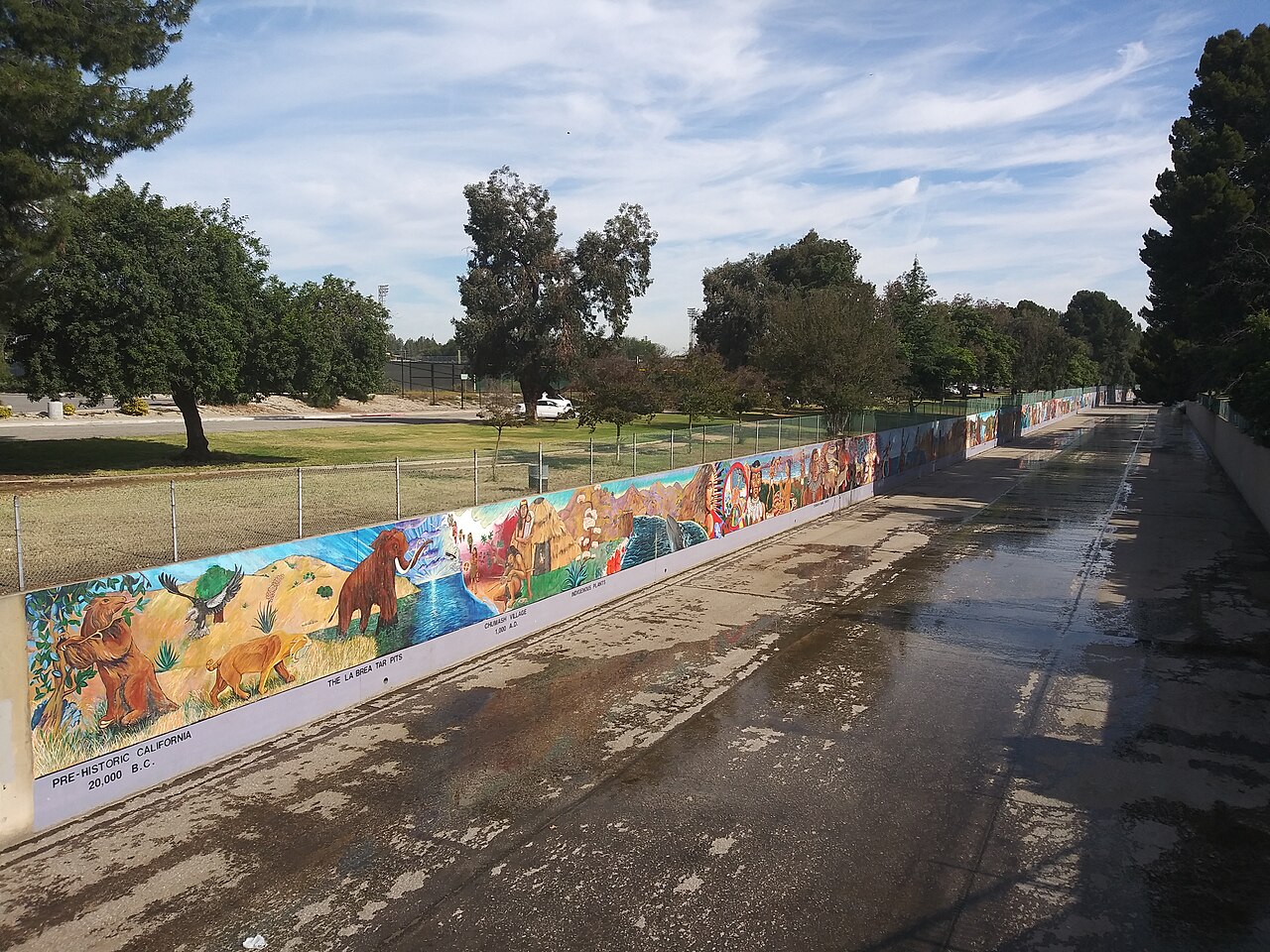
Begin with a very long wall
Los Angeles is a city you are supposed to see through a windshield, and the wall at the top of this story plays along. It runs beside a concrete channel for so long that you understand its scale only by walking it, scene after scene, with a mammoth waiting at the near end. It is a fair warning about the Los Angeles murals ahead: they are big, they are patient, and they do not mind being found slowly.
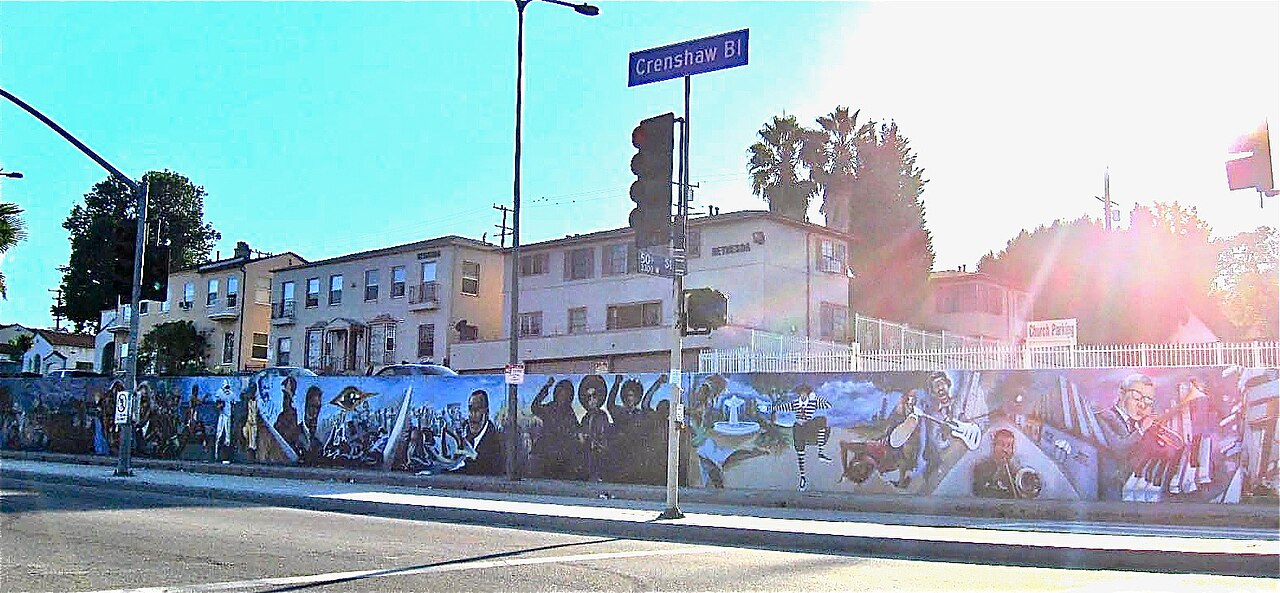
The rest of the city is easier to take on foot, one neighborhood at a time. Start on Crenshaw Boulevard, where a low wall in bright sun carries a long procession of musicians and community figures. It sits at the height of the people passing it, which is a kind of courtesy. You do not look up at this one. You walk alongside it, the way you would walk alongside neighbors.
There is a lesson in starting here. A mural is not only a picture, it is a decision about height, distance and who gets to stop and look. On Crenshaw the answer is everybody, at walking pace, in daylight, with a coffee in hand. Wait long enough and someone will point out a face on the wall and tell you who it is.

The corner that does everything
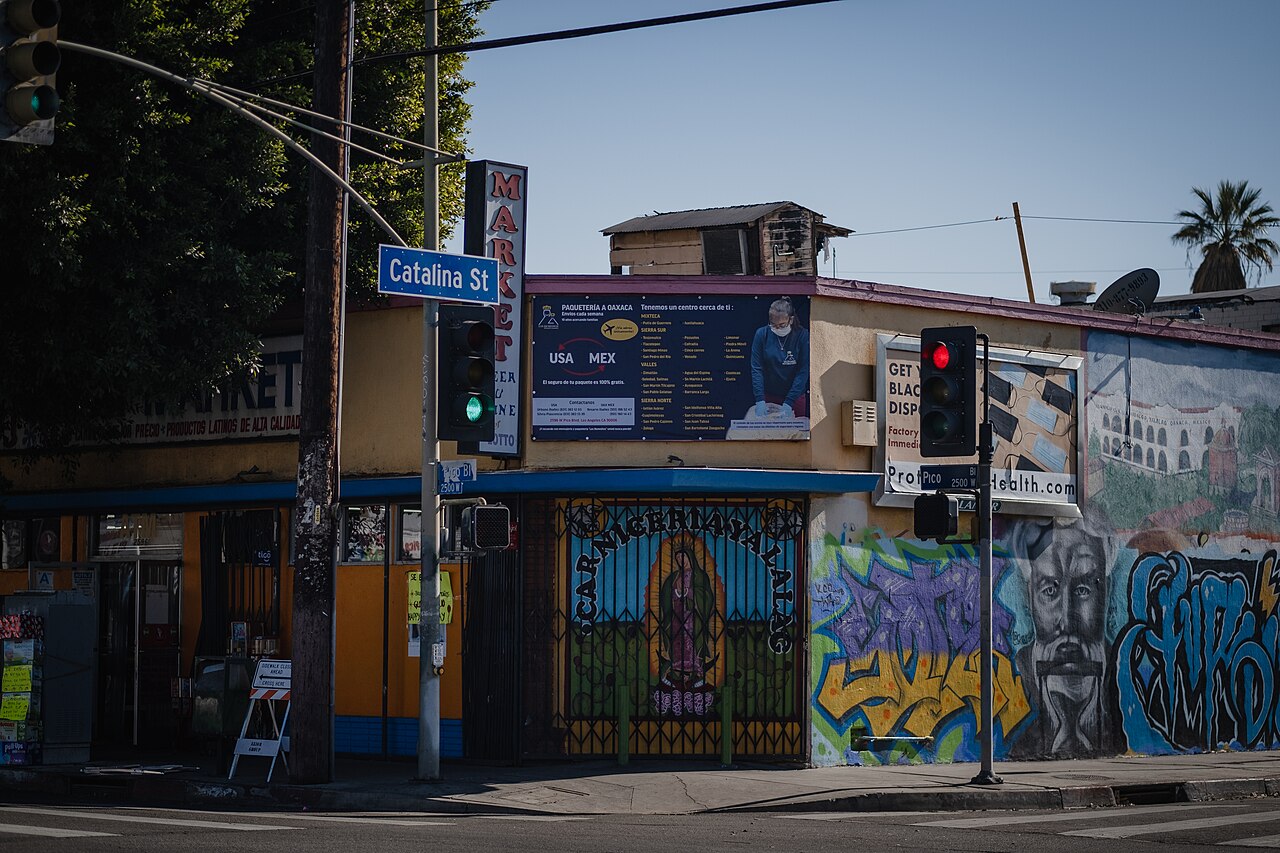
Near Pico, on Catalina Street, a corner market shows how much work a single intersection can do. The gate is painted. The wall beside it is a bold, graffiti-style mural. The market, the paint and the sidewalk all belong to the same small conversation.
This is Los Angeles street art at neighborhood scale. Nobody built it for a tour. It is simply what the corner looks like when the people around it have something to say, and it makes an ordinary stop for groceries feel like it has a face.
Look at how the pieces divide the work. The gate carries the shop’s name and its colors. The wall carries the neighborhood’s voice. Neither competes with the other, and together they make a corner you could describe to a stranger from three blocks away. That is the quiet superpower of Los Angeles street art: it gives people landmarks they did not have to be told about.
If you are walking it, take your time at the edges. The best detail is often where paint meets a doorframe, a downspout or a parked car, the places a designer would never plan and a neighborhood always finds.

Black and white on Fairfax
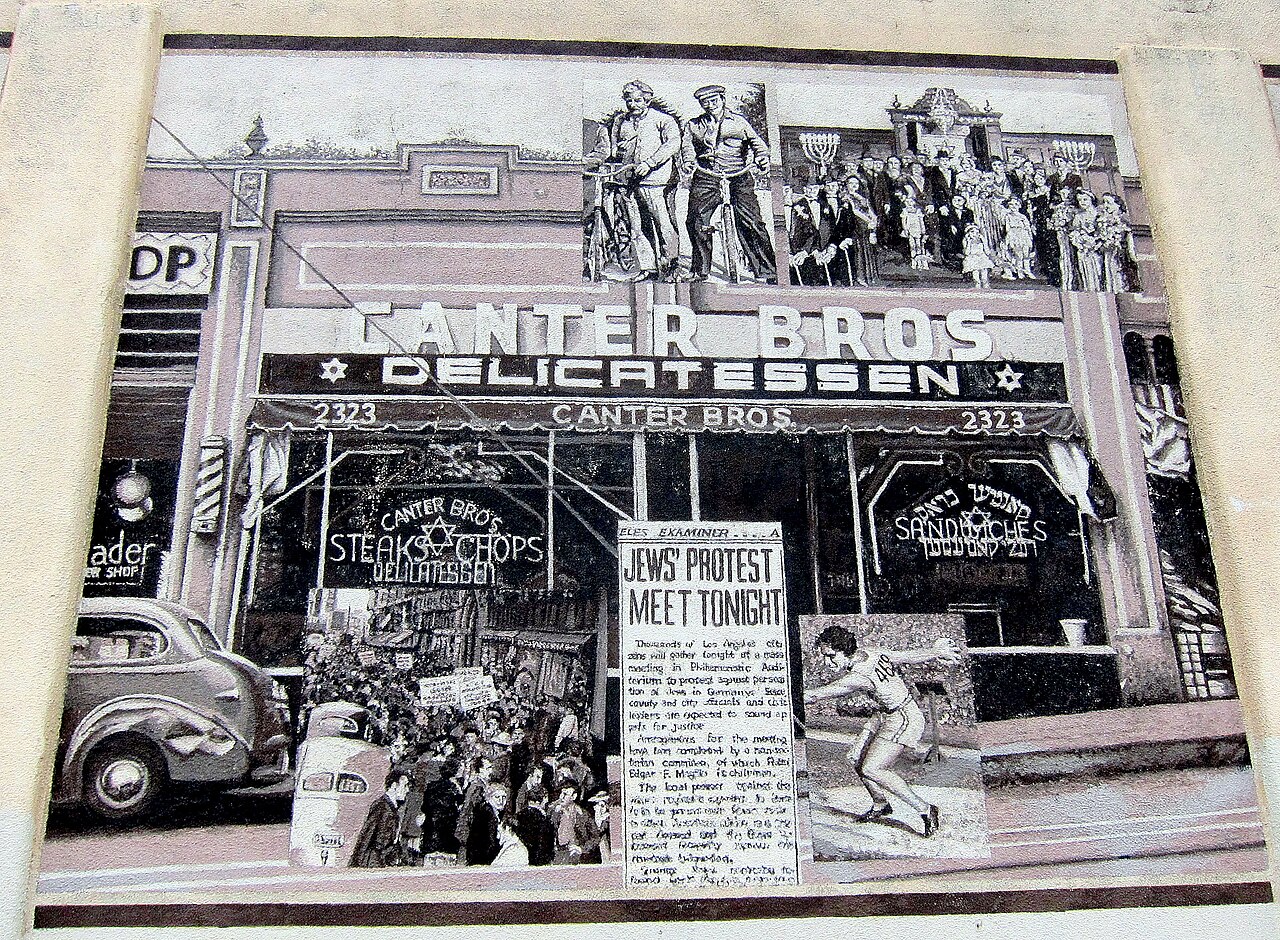
In the Fairfax District, the wall outside Canter’s Deli turns the other way. This panel, one of several, is painted in black and white: the old Canter Bros Delicatessen storefront, with scenes from the past worked in around it.
After the color of the last two corners, the lack of it is striking. It feels like a photograph that learned to stand up on a wall. A good mural does not have to be loud to hold a block, and this one is proof that a restaurant can keep its own history on its own front.
Fairfax is also a reminder that a wall can be a form of storytelling. A painted storefront within sight of the real one gives passers-by two versions of the same address, then and now, and invites them to compare. Plenty of buildings have a history. Fewer of them put it where you can read it while you wait for a table.

Games on the walls
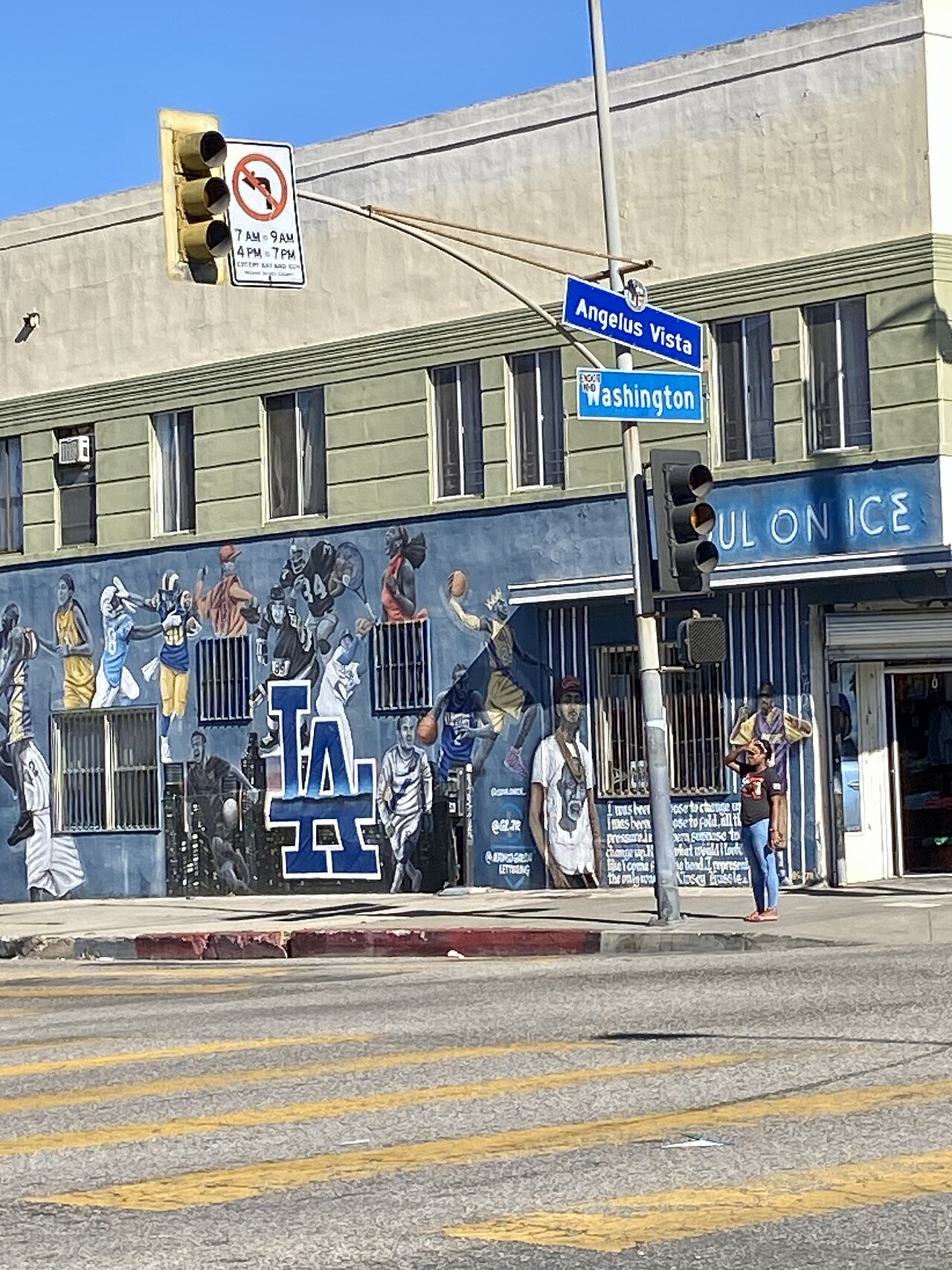
Sports are a second language here, and the walls speak it. On Washington Boulevard in South LA, a corner building wears a large athlete-themed mural with a Dodgers logo, just above a street sign for Angelus Vista. You do not need a program to follow the story. Everyone on that block knows who it is for.
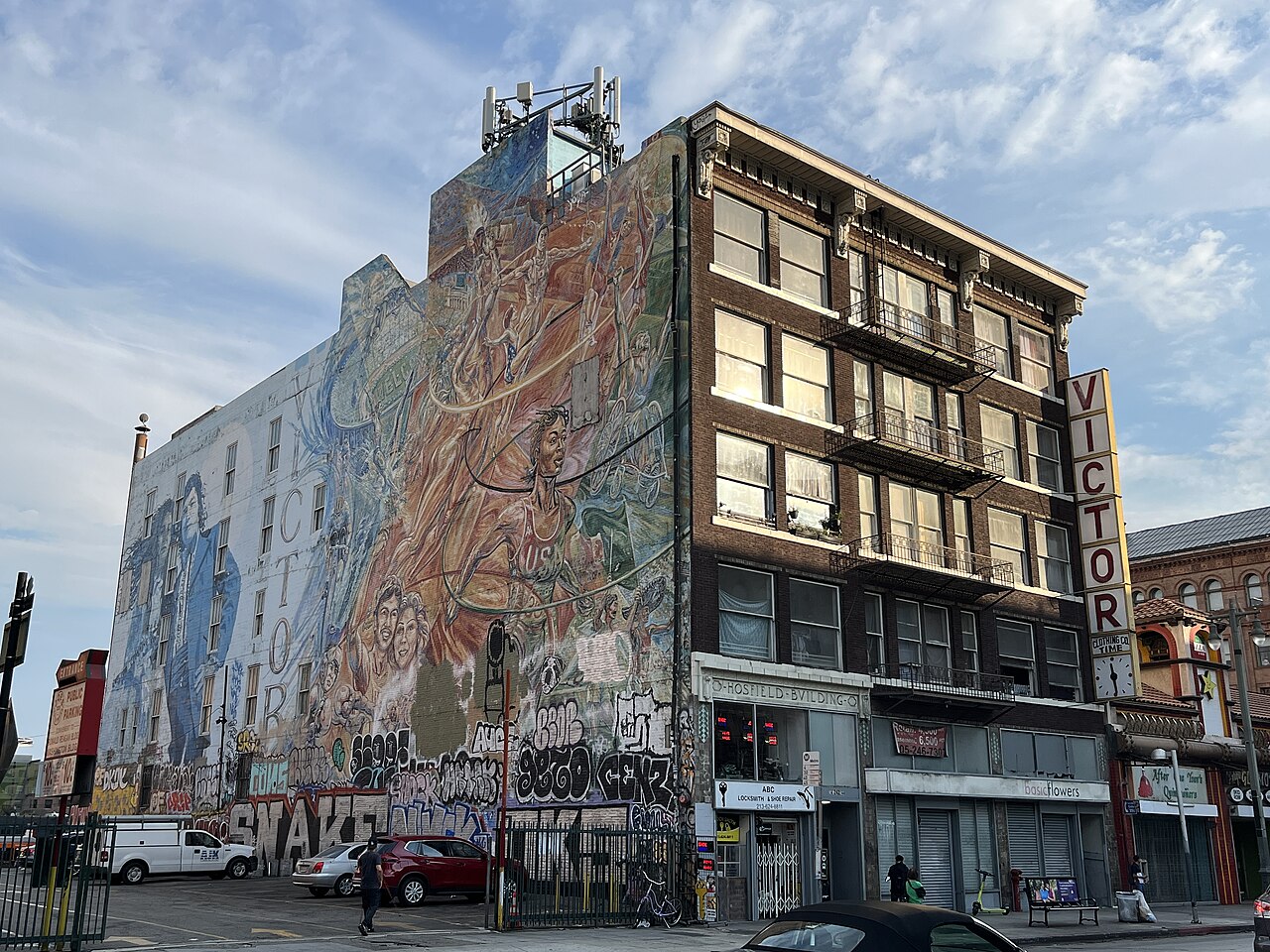
Downtown, a tall brick building carries a huge painted mural of athletes down its side wall, with graffiti along the bottom where the sidewalk begins. The two layers sit together without apology: the big commissioned image above, the small hand-made marks below.
Put the two walls side by side and you get something useful. Los Angeles murals are often fan art for the city itself, painted large enough that a whole street can share it. They also show how a wall can carry a crowd: a game night, a hometown name, a face a block has known for years, all at a size you can read from across a four-lane road.
There is a practical point tucked in here too. Corner buildings and tall side walls are the surfaces people notice most, because so many eyes pass them every day. A wall like that is seen by commuters, shoppers and kids on their way home, and a good one earns its place among them.


Where the plaza keeps its market
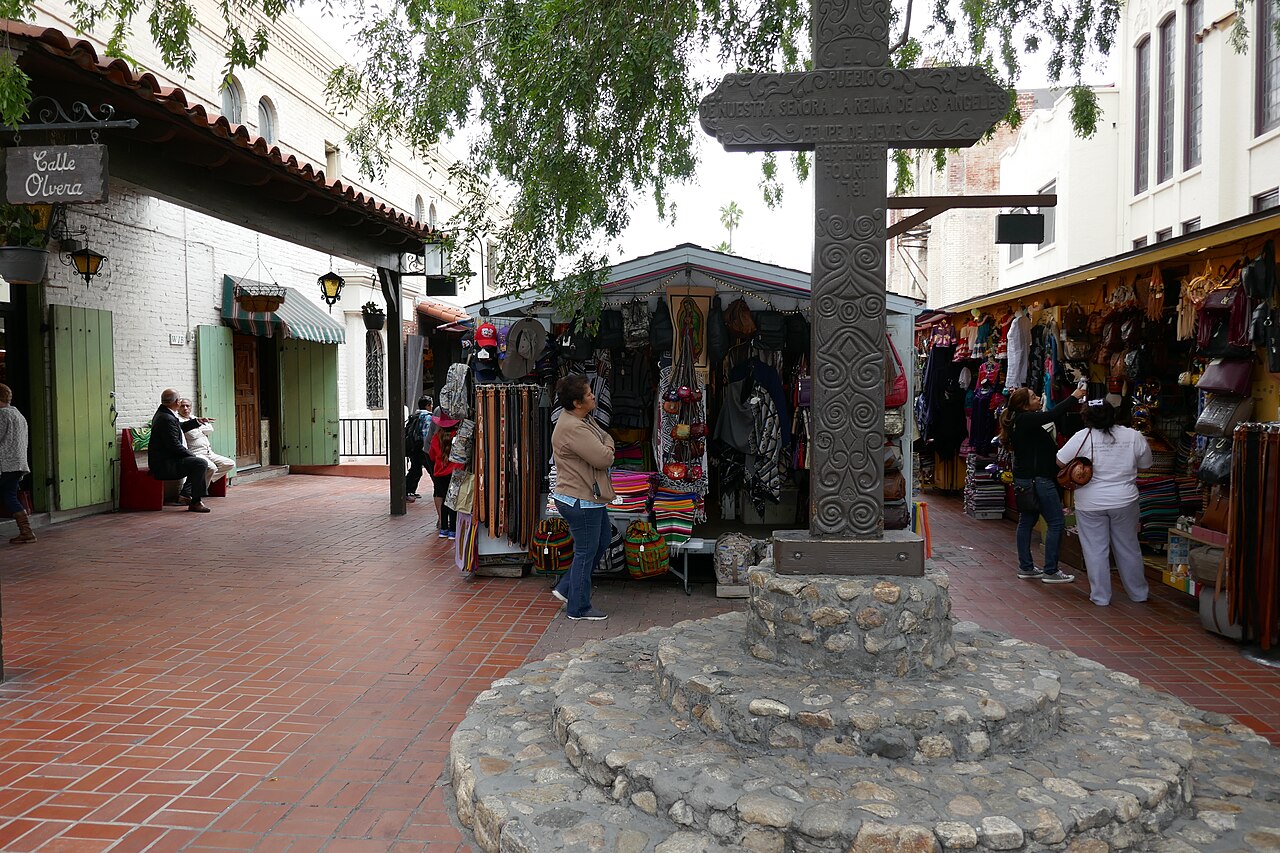
Olvera Street is a brick-paved plaza with a stone cross and market stalls selling bags and textiles. Color here comes from the goods rather than the walls: fabric hung in rows, leather laid out in the sun. It shows a different relationship between a place and its art, where the thing you are looking at is also something you can carry home.
It is worth walking through with the other walls in mind. Murals, markets and signs all share the same job: they tell you what a place is proud of.
Notice the pace as well. People wander here instead of hurrying, and that changes how art lands. When a place gives you time, you start to read the small things: the pattern in a textile, the shadow the cross throws on the brick. A mural in a place like this would not need to shout either.

Light at the edge
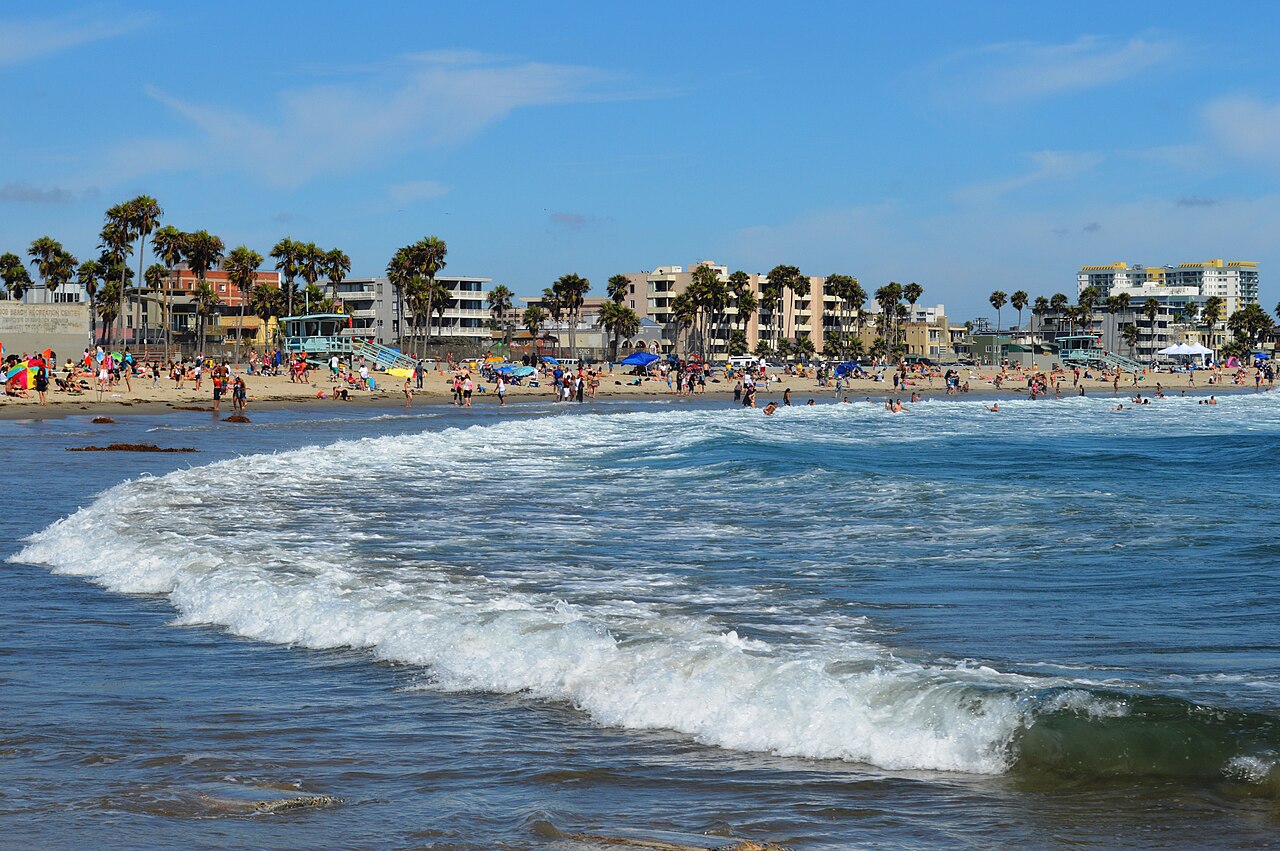
Out at Venice Beach, the picture is mostly sky and water. A wave rolls toward a busy, sunny beach, palm trees stand in a row, and apartment buildings crowd up behind. Whatever you paint here has to compete with that light, which may be why the neighborhood has such a loose, easygoing relationship with the idea of a wall.
Still, it is a good reminder that the best walls in Los Angeles are written for their setting. Near the ocean, the setting is bright and wide and a little distracting. Away from it, on a gray block in the middle of the city, a wall can do the job of the horizon: it gives your eye somewhere to go.
Before you leave the coast, look back along the sand. The beach is as much a stage as any wall, crowded with people who came to be looked at as much as to look. A city that loves a public view is a good home for public art.

The view that explains the sprawl
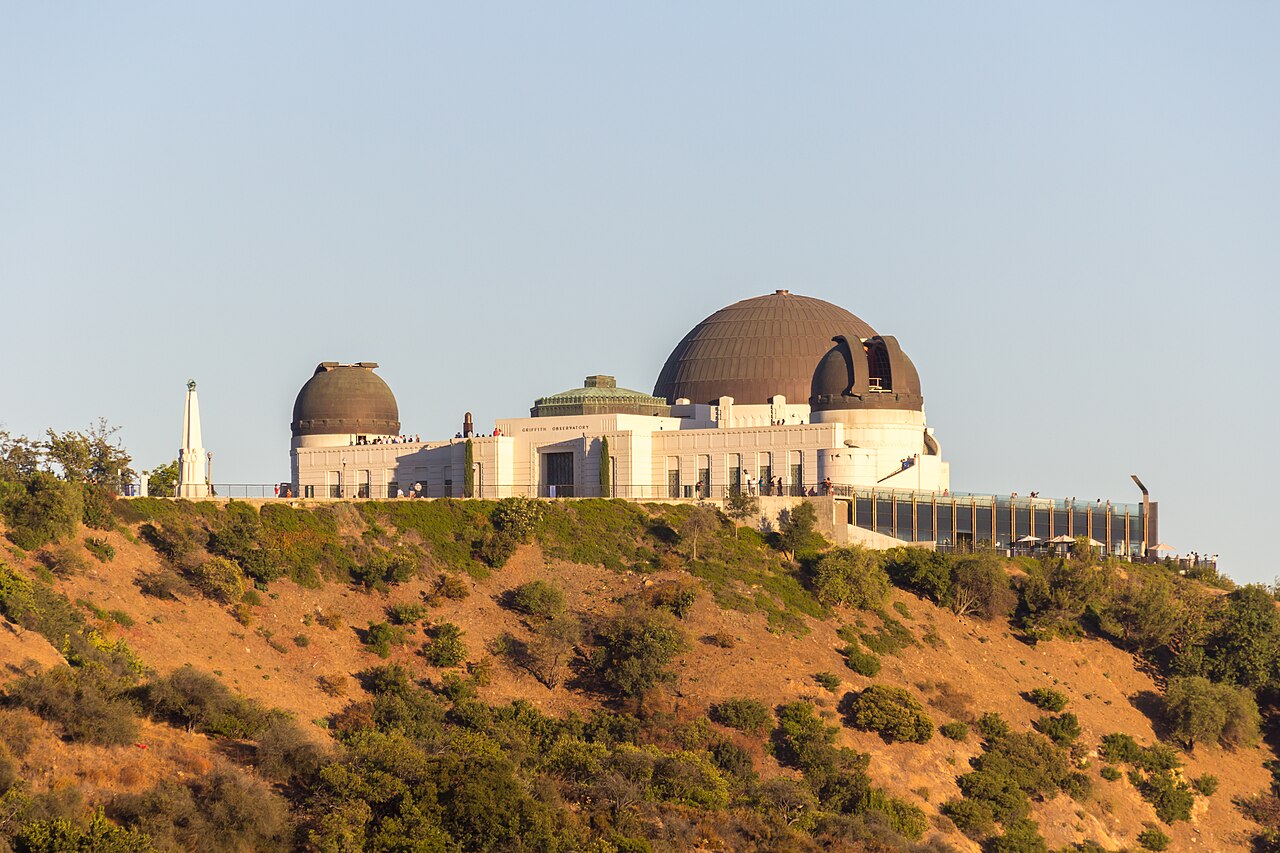
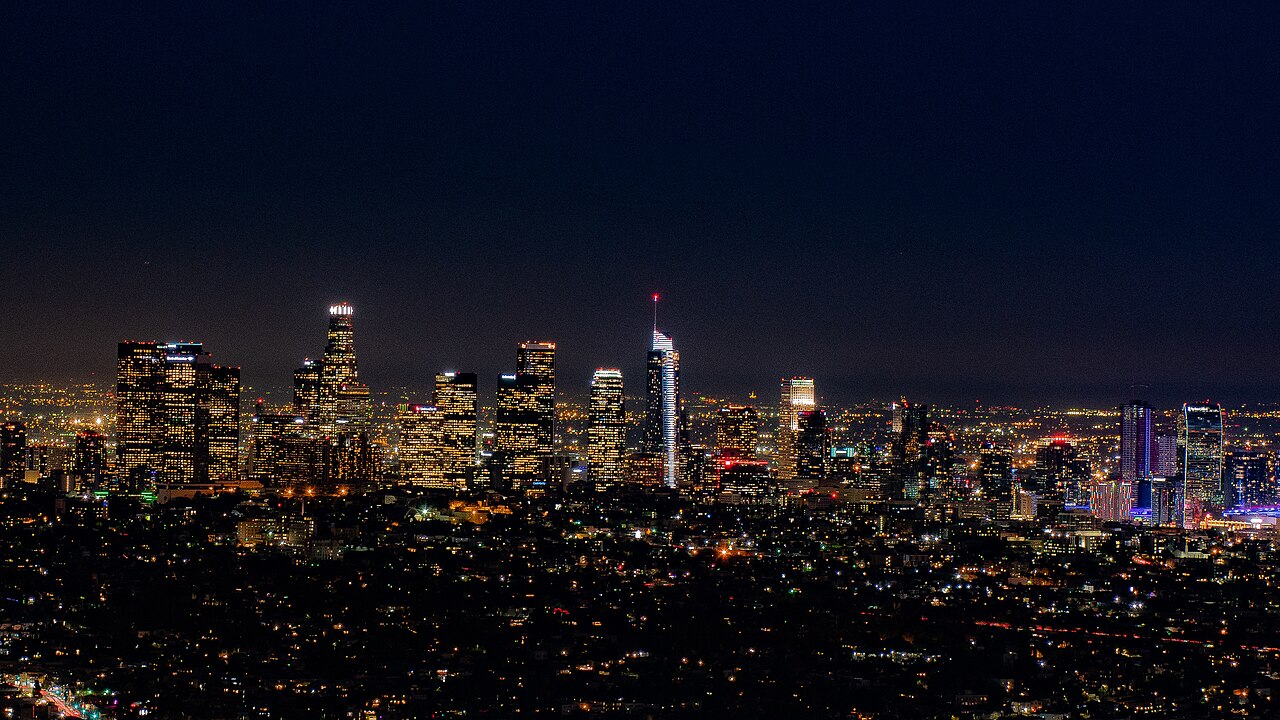
Climb to Griffith Park and the city finally makes sense. The domes of Griffith Observatory sit on the hillside in warm evening light, and below them the grid spreads out farther than seems reasonable. By night, the downtown skyline is a lit cluster in the middle of it all.
From up here you see why Los Angeles murals are scattered rather than gathered. There is no single center to put them in. The walls are dotted across hundreds of small neighborhoods, each one a little proof that somebody decided their block deserved a picture.
For anyone who owns property here, that scatter is the opportunity. A blank wall on a busy corner is a decision waiting to be made, and our guide on how public art can lift a property in Los Angeles goes further into that side of the story. You can also see how we work in the city on our Los Angeles page.


Finish at the water
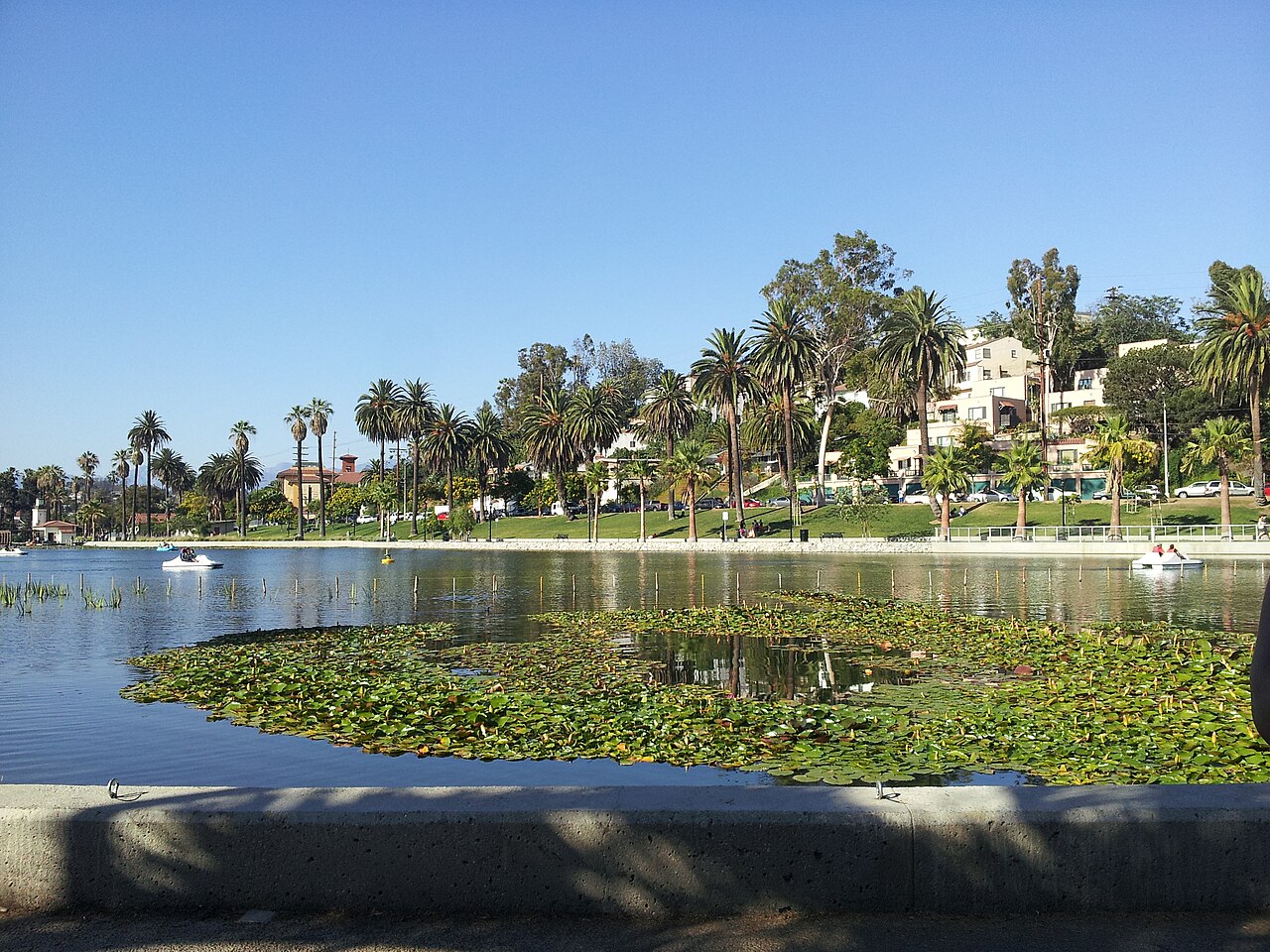
End in Echo Park, where the lake has lily pads, palm trees, a grassy hillside and a couple of paddle boats drifting along. After a day of big walls, it is a quiet place to sit and sort through what you saw.
What stays with you is not one image. It is the way a city this spread out keeps finding small ways to look back at the people moving through it, on a long wall, a market gate, a brick side wall, a corner. Los Angeles does not hand you its murals in one place. It lets you find them, and that is half the pleasure.

If you have a wall in mind
Every wall in this story started out blank, and somebody decided it could say something. If you manage a building in Los Angeles and keep looking at a wall of your own, we would be glad to hear about it. Tell us about your wall and we will take it from there.
Frequently asked questions
- Where can I see murals in Los Angeles?
- Good places to start are Crenshaw Boulevard, the Fairfax District near Canter’s Deli, Catalina Street near Pico, South LA along Washington Boulevard and downtown. A long painted wall also runs beside a channel in the San Fernando Valley.
- Which Los Angeles neighborhoods have the most street art?
- Street art is spread across the whole city rather than gathered in one place. Crenshaw, Fairfax, South LA, downtown and Venice are all good neighborhoods to walk, and each has a different feel.
- Is street art legal in Los Angeles?
- It depends on the wall and the owner. A mural painted with a property owner’s permission is commissioned work; unsanctioned painting is a different matter. If you own a wall, get the agreement in writing.
- How do I find a muralist in Los Angeles for my building?
- Look for a muralist whose style suits the wall and the neighborhood, then talk through the size, surface and look. We help match walls with muralists and handle quotes, contracts and scheduling.
All photos are free-licensed and credited under each image; license links go to the original file pages.