City story · Medellín · 6 min read
Medellín Murals: Color Climbing the Hillsides
From a cable car over the valley to painted stairways in Comuna 13, a walk through the Medellín murals and street art that turn steep streets into storytelling.
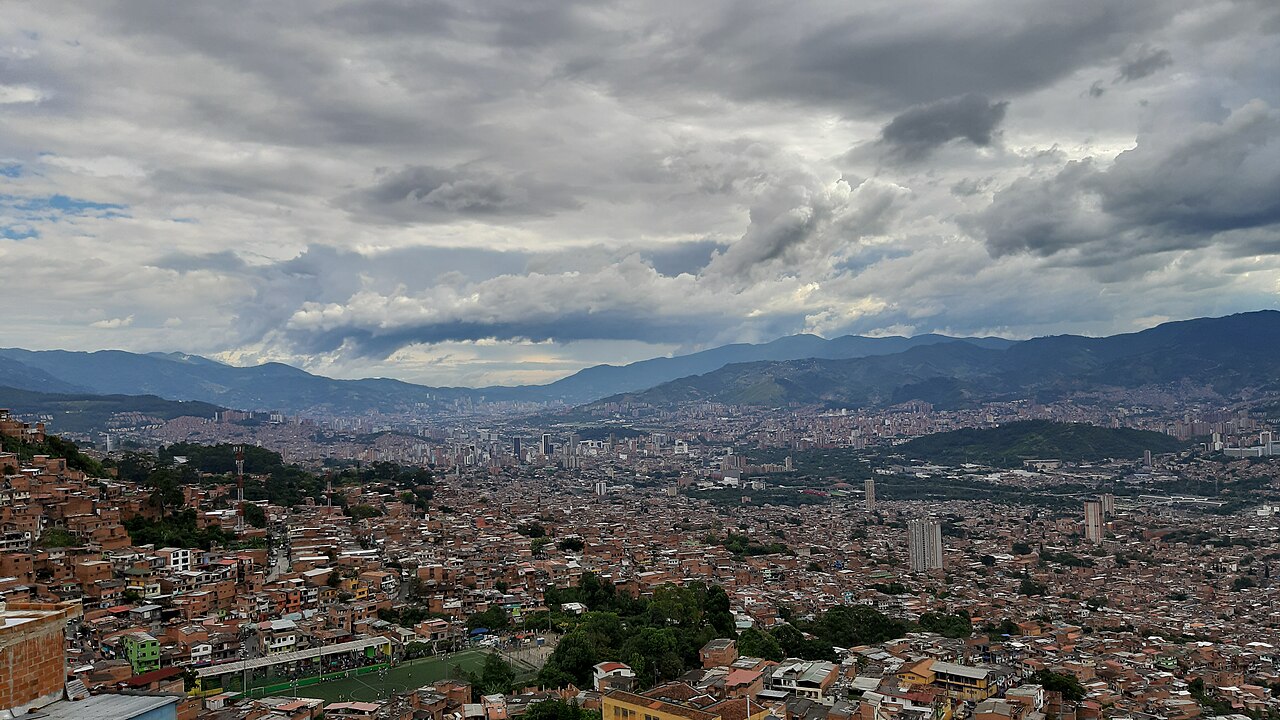
Begin with the valley
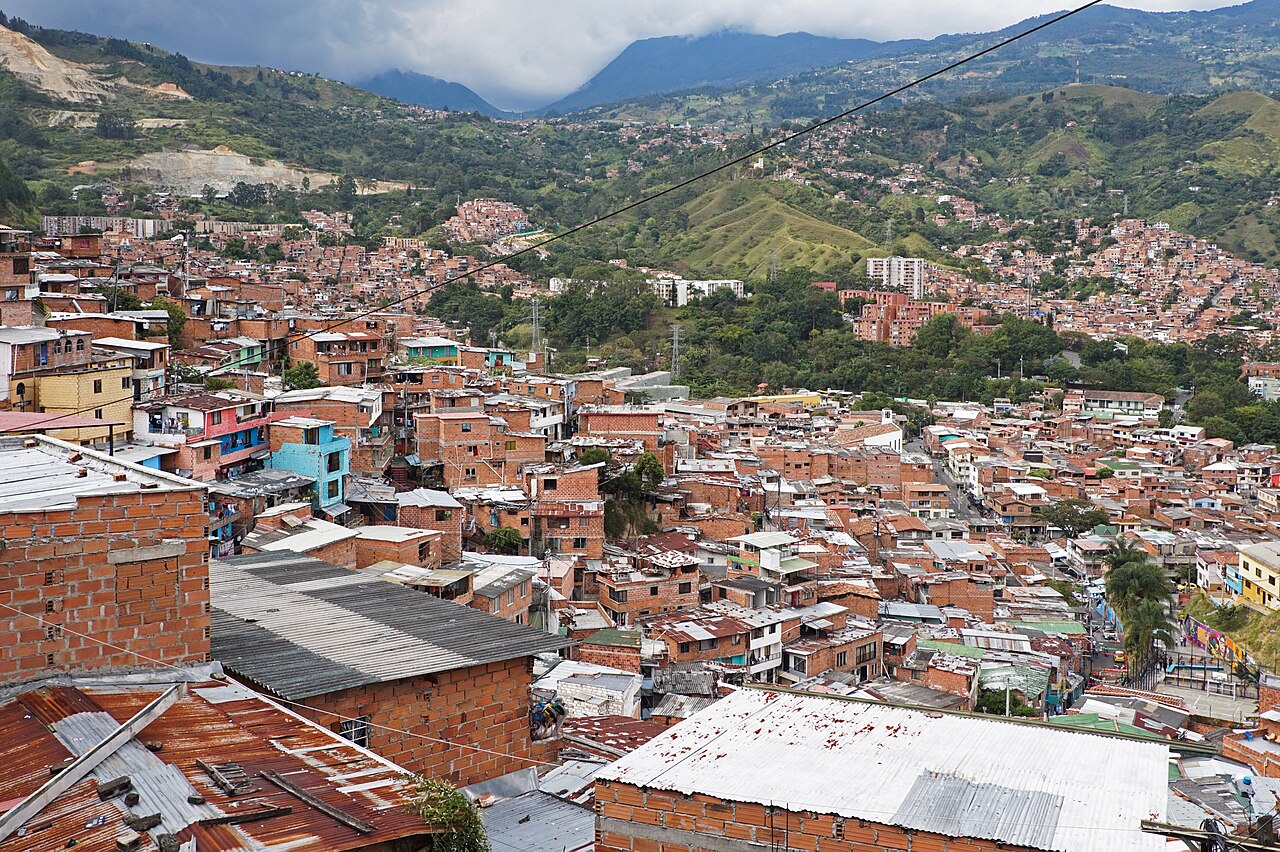
Medellín sits in a long bowl of green mountains, and the best way to understand its walls is to see what they are painted on. From above, under a heavy sky, the Aburrá Valley is a sea of rooftops. Houses climb every slope until the slope runs out, and the city center waits in the distance.
That geography explains a lot. When homes are stacked up a hillside, every retaining wall, stair and blank side of a house becomes a surface people pass at close range. Medellín murals are rarely seen from a car window. They are met on foot, a few steps at a time.
Look for the colors in the picture, too. Even at this distance the hillsides are patched with painted walls and bright roofs, small flickers of choice in a landscape that is mostly brick and green. A mural is that same choice made large.

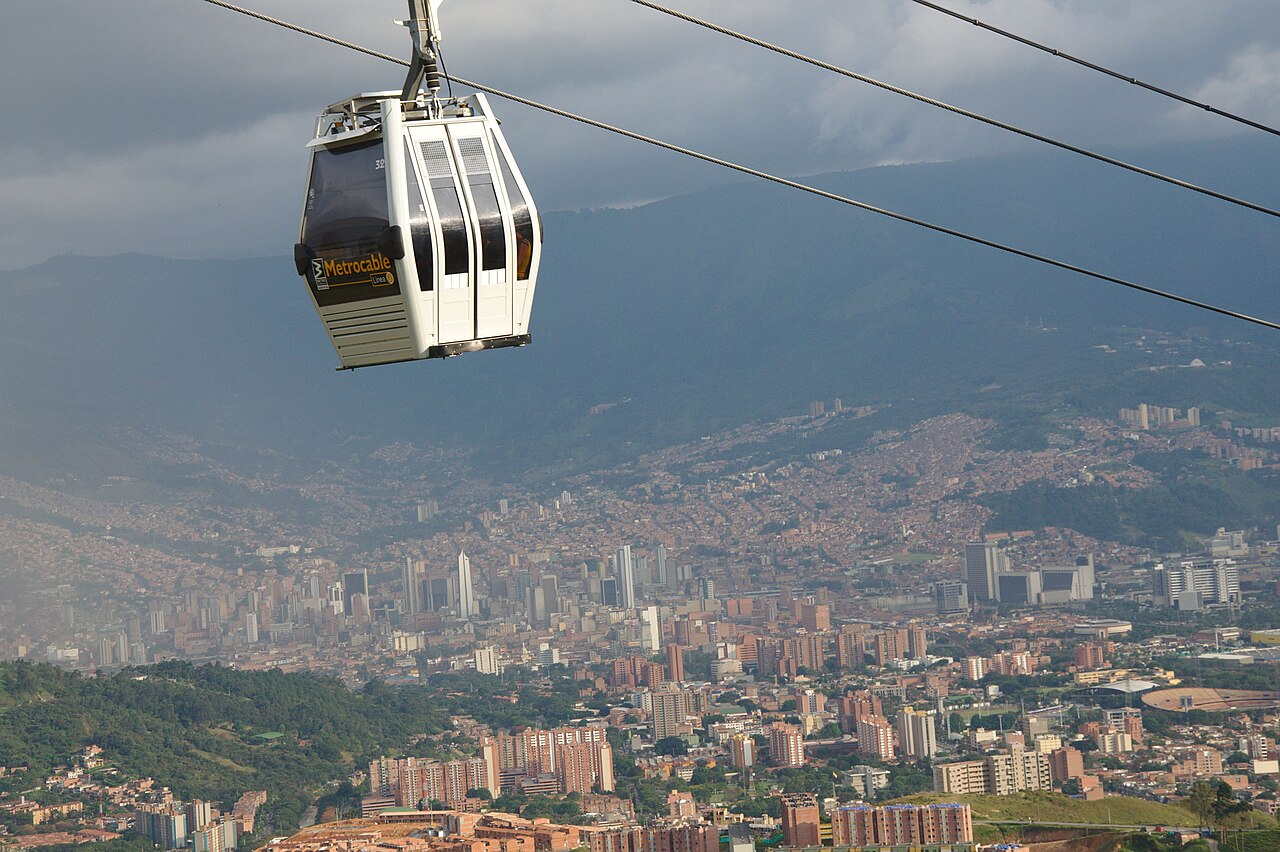
Ride up on the Metrocable
Medellín's Metrocable is a cable-car line that carries people from the valley floor up to neighborhoods on the hills. It is public transit, and it also happens to be one of the great viewing platforms of any city. A cabin swings out over the roofs, the center fades into haze, and you stop thinking of the hillside as a barrier.
Murals do something similar at street level. They take a place that visitors might skip and give them a reason to look closely. The ride up is a good way to arrive with your eyes ready.
There is a practical lesson for anyone who owns a wall. Think about how people will actually arrive at it. A wall seen from a cable car, a stairway or a bus stop wants a different picture than one seen across a parking lot.

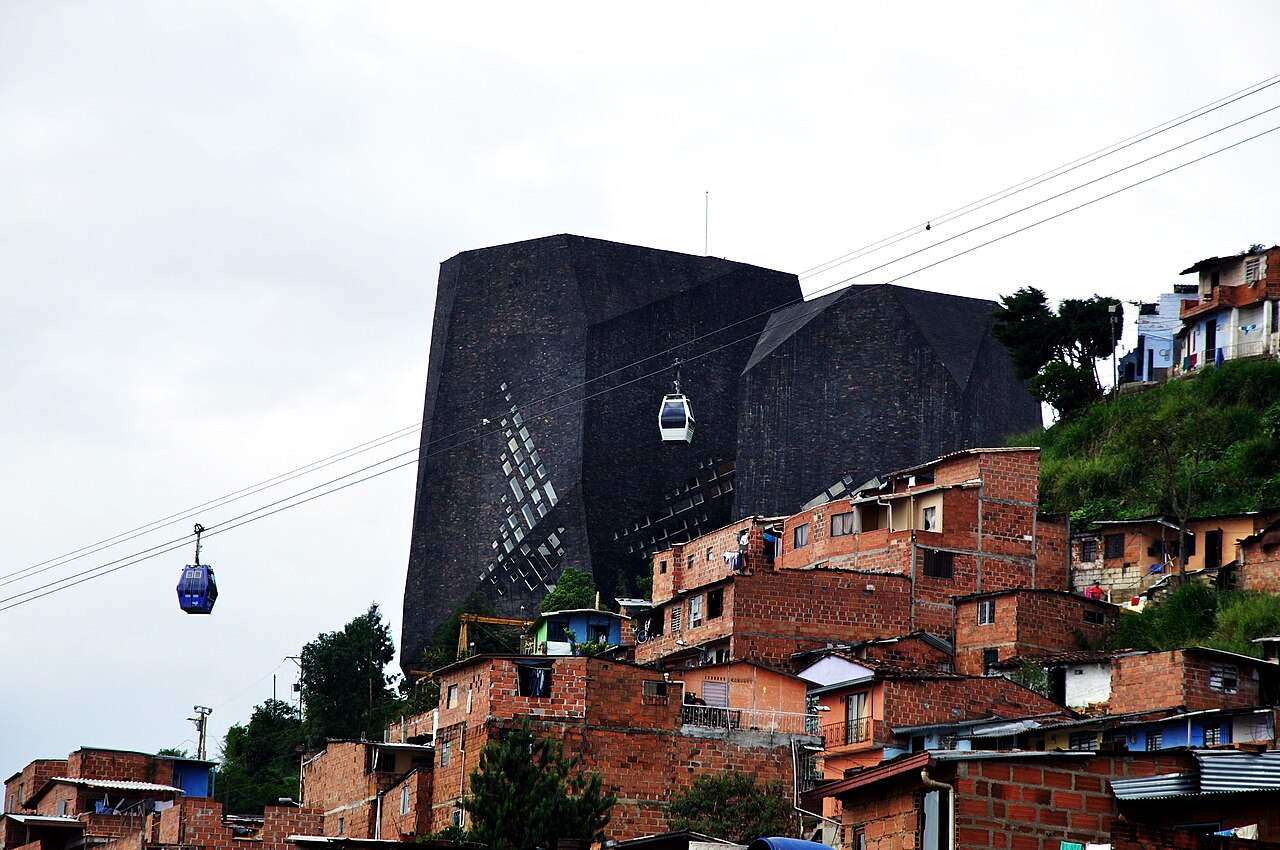
A library among the brick houses
Higher up in Santo Domingo Savio, a dark, angular library building stands above a slope of brick houses, with Metrocable cabins gliding past its front. It is a bold shape against all that small-scale brick, and it makes a quiet argument: a neighborhood far from the center can hold something ambitious.
Walls and buildings talk to each other here. The library's sharp lines, the houses' warm brick and the moving cabins make a composition no one planned in a single sitting, which is how a lot of the best city color comes about.
If you are walking the hills, take your time with the ordinary streets between landmarks. The mural you remember is often the one you found while catching your breath on a landing.

Comuna 13, one stair at a time
For many people, Medellín street art begins in Comuna 13, also called San Javier. Brick houses and painted houses press together on a hillside with green mountains behind them, and the streets become a climb. Paint turns up everywhere you put a hand or a foot: on stair walls, house fronts, corners.
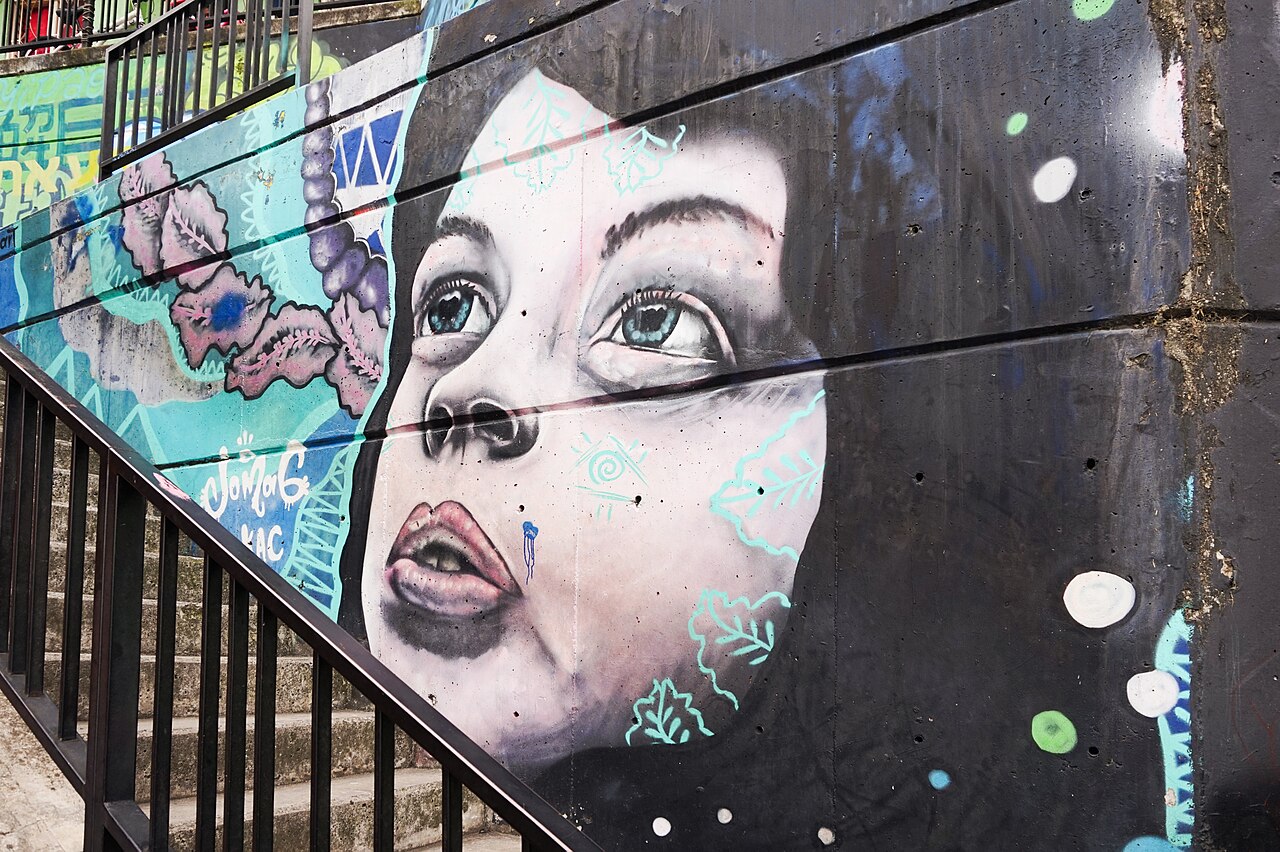
On one concrete stairway, a woman's face appears among flowers and patterns, her features following the line of the wall. Higher or lower, the next turn brings another image. Nothing here is hung in a frame. You walk into it, and the wall decides how much of the picture you get at once.
Go slowly and look at the small things: how a painted flower wraps around a corner, how a pattern picks up the color of a doorframe. The scale of the street makes details matter, and the painters here seem to know it.


Birds, flags and a child's gaze
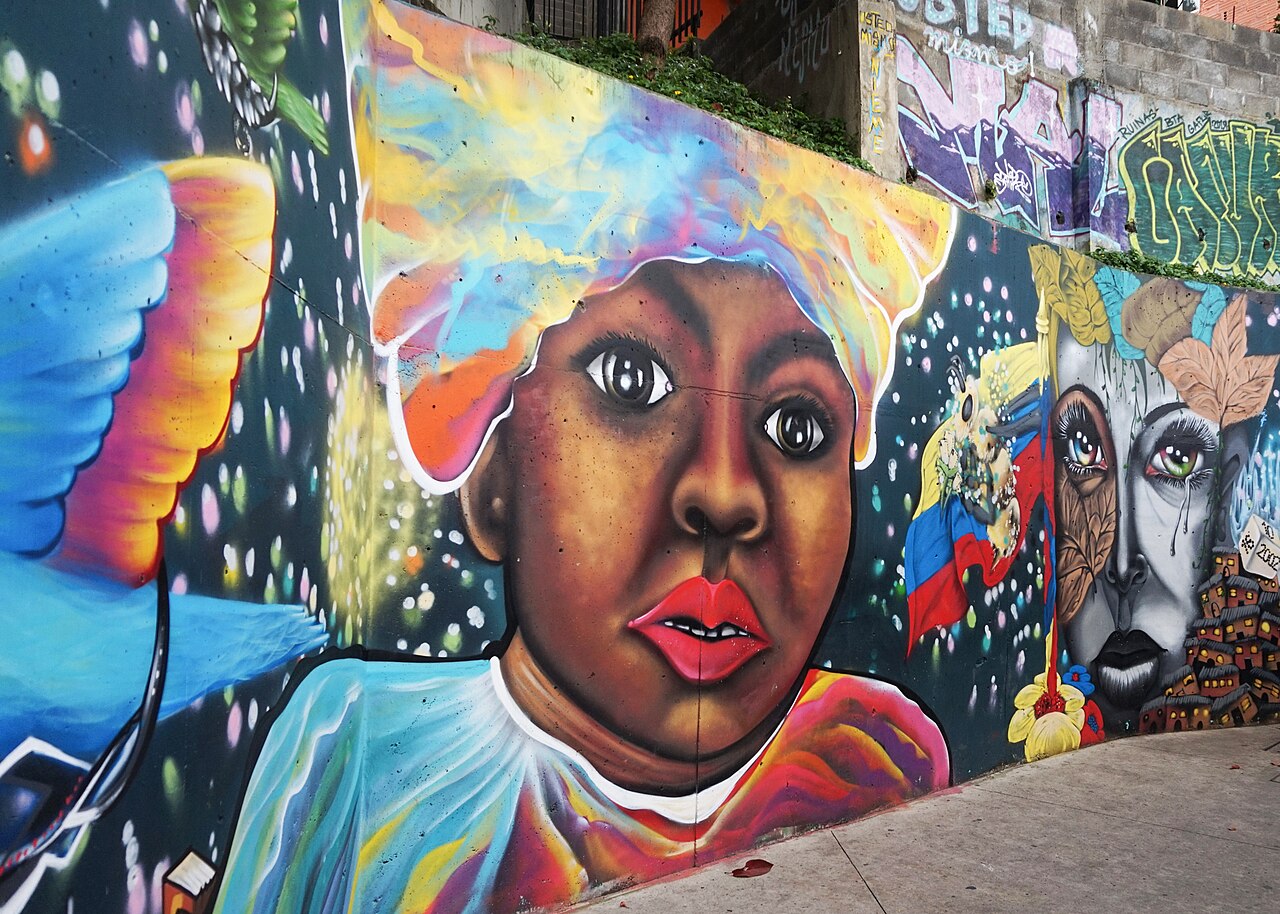
Some Medellín murals are plain about where they stand. Along one street wall, a child in a bright headwrap sits beside a blue bird and a Colombian flag. The colors are loud and generous, and the child looks out at everyone who passes, which gives the wall its warmth.
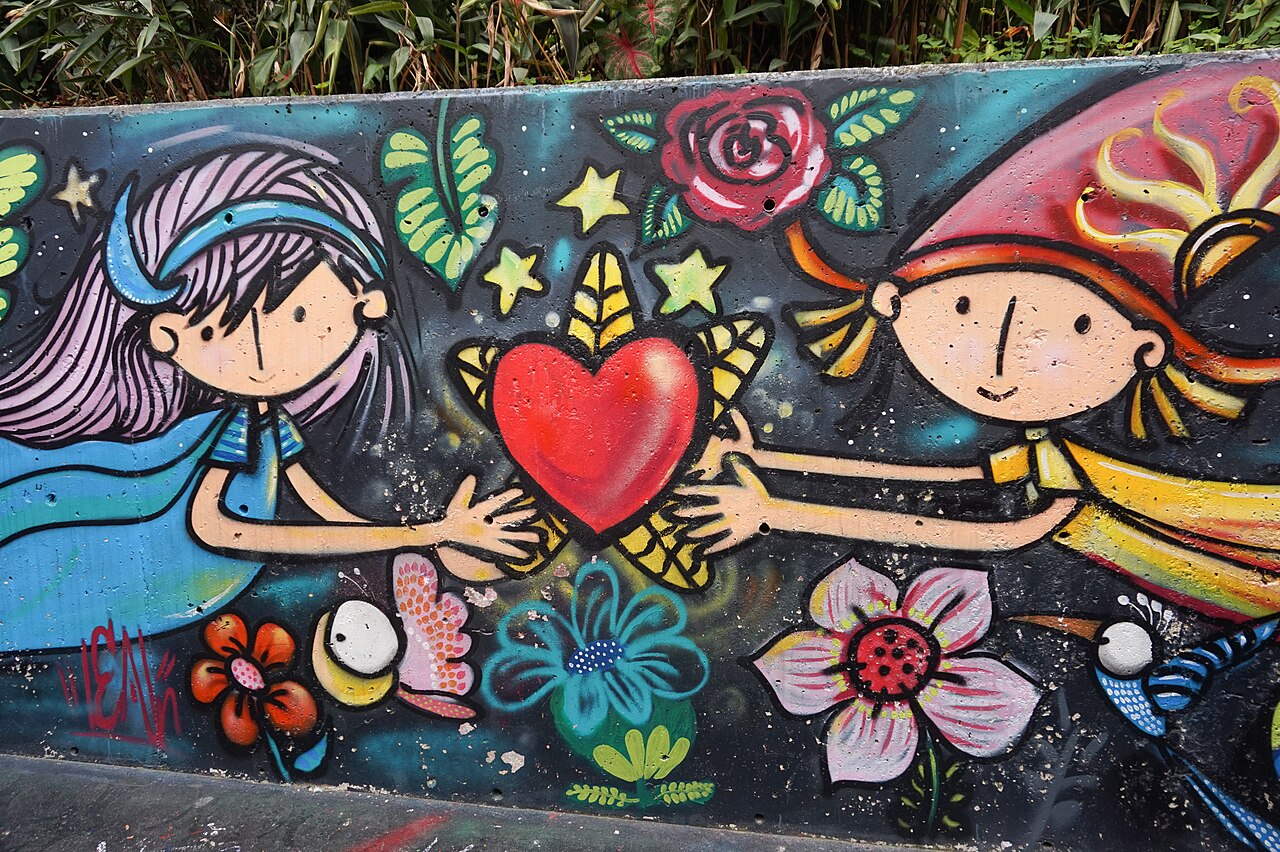
Nearby, another piece turns to cartoon style: two figures holding a red heart, surrounded by flowers and birds. It is friendly, almost storybook, and it shows the range of Comuna 13 street art. The same neighborhood can hold serious portraits and playful scenes within a few steps.
Photographers love this stretch, and it is easy to see why. Still, a photo flattens what makes these walls good. They work because you are inside them, with the hill at your back and the next stair ahead.


Letters, tags and a quiet baby
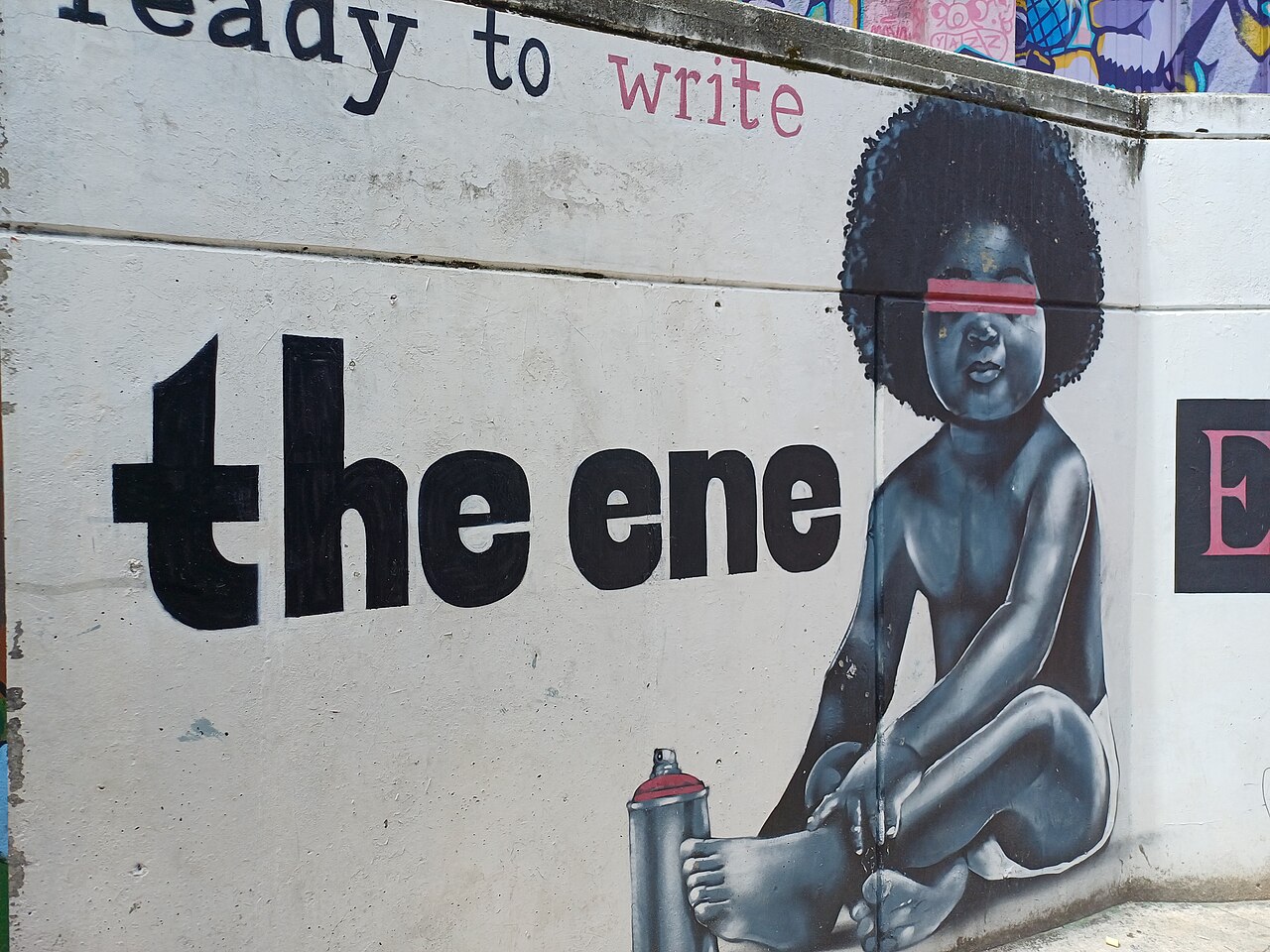
Not every wall is sweet. One black-and-white mural shows a seated baby with a red band across its eyes, next to large lettering and a painted spray can. It is stark in a neighborhood full of color, and it stops you for exactly that reason.
This is the other voice of Medellín street art: slogans, tags and images that ask questions instead of answering them. A good mural wall holds both kinds, the one that charms and the one that makes you stand still.
Walls like this are a reminder that a mural is a conversation with a place. A slogan or a spray can painted at this scale says the street is a public page, and the neighborhood has things to say.

Bronze on the plaza
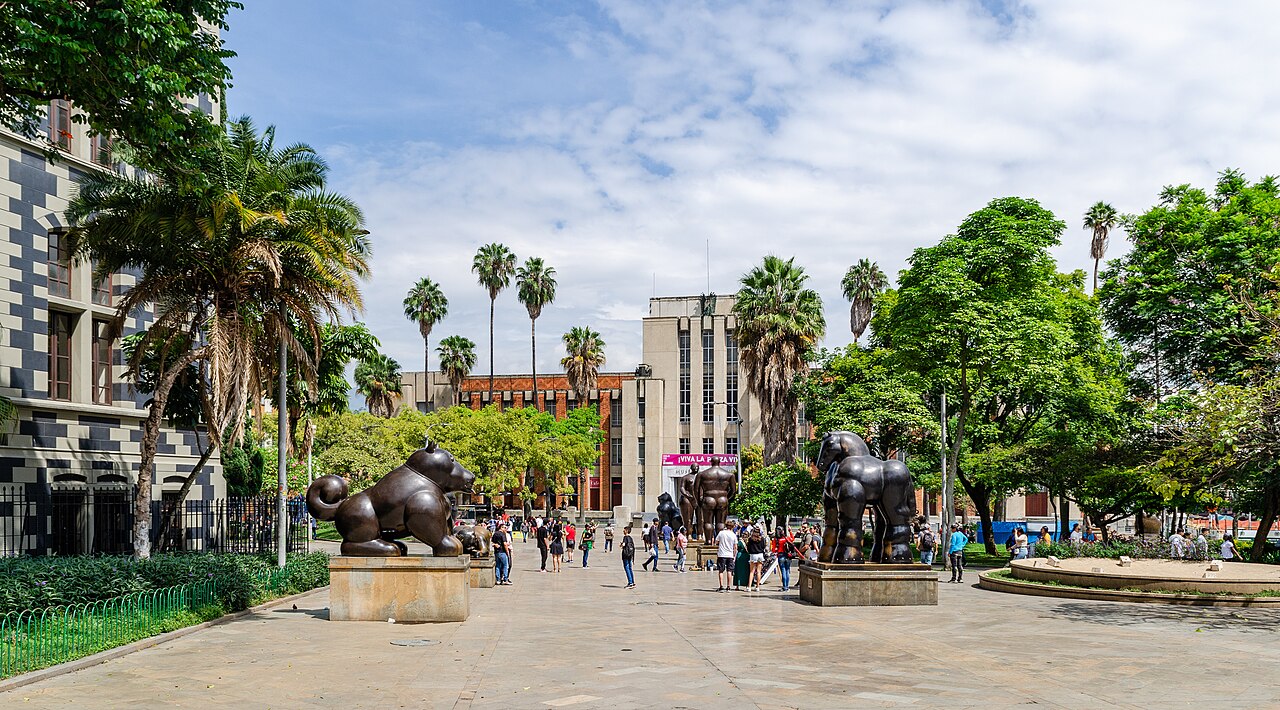
Down in the center, the mood shifts. Plaza Botero is an open square lined with palms, and its round bronze sculptures sit right on the paving where people walk between them. A few visitors drift through, small beside the figures.
It is a useful contrast with the hillside. In the plaza, public art is monumental and sits at ground level. In Comuna 13, it climbs. Between them, Medellín shows two ways a city can put art where everyone can reach it.
The pairing says something for anyone planning art for a building. Scale, material and the way people approach decide whether a piece feels welcoming. A plaza invites a pause; a stairway invites a climb.

Close the day with the lights
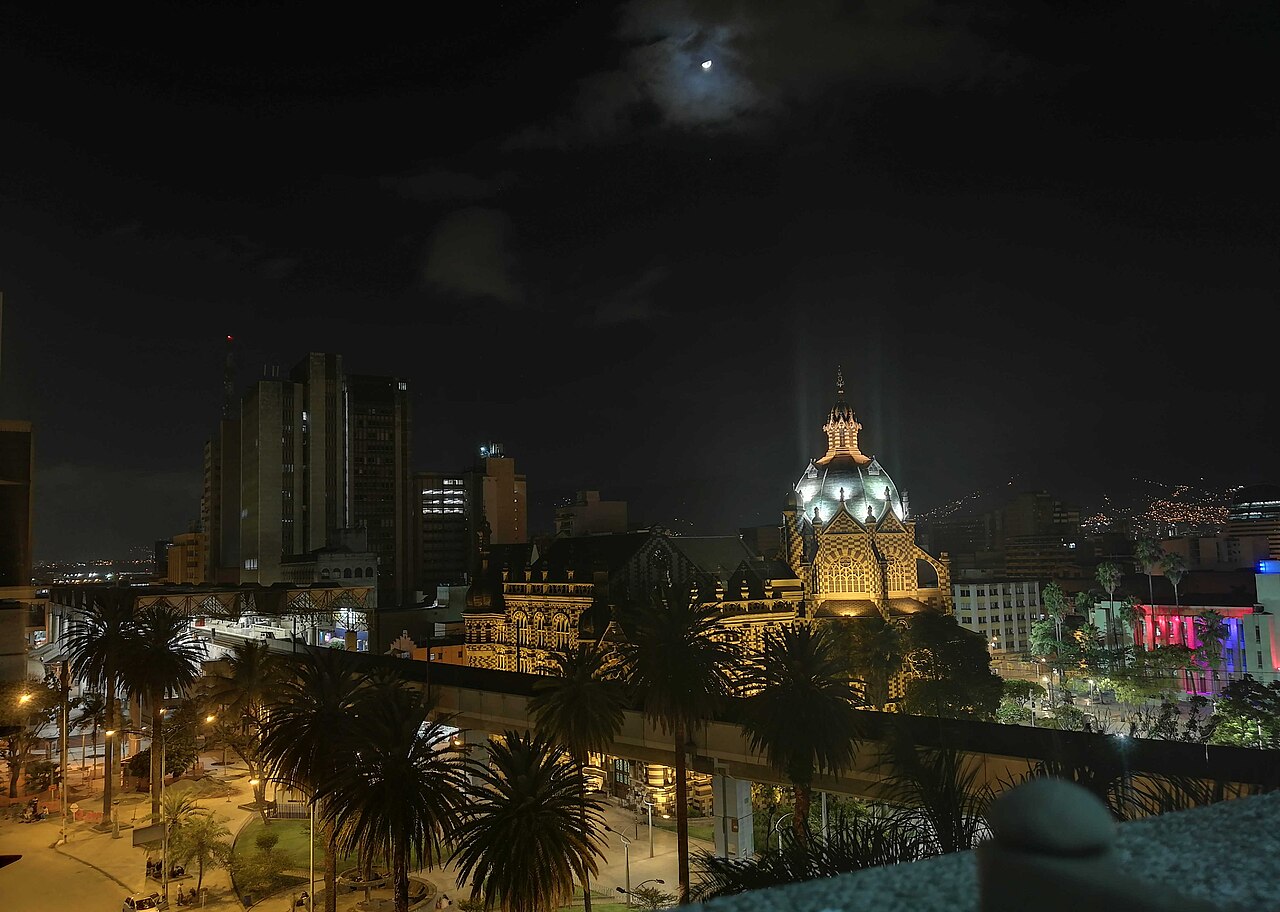
Evening in Medellín is worth waiting for. A lit domed building glows among palm trees, with towers rising behind it and a moon above. After a day on the hills, the center feels calm and formal, a different city from the one you climbed.
That is the lasting impression of Medellín murals: they belong to everyday streets, not only to landmarks. When the lights come on, you carry the painted stairways home with you.
Bring a light jacket and a little patience, and let the evening do some of the work. A city looks different once you know its hillsides, and the center reads as the calm end of a long, colorful day.

If you have a wall in mind
Every mural in this story began with someone looking at a blank wall and deciding it could do more. If you manage a building and have a wall you keep looking at, we would be glad to hear about it. For more on how a city's walls come together, see our Medellín guide, or tell us about your wall and we will take it from there.
Frequently asked questions
- Where can I see murals in Medellín?
- Comuna 13, also called San Javier, is the best known place for Medellín murals and street art, with painted stairways, house fronts and street walls. In the center, Plaza Botero is worth a visit for its public sculptures.
- Which neighborhoods in Medellín have the best street art?
- Comuna 13 San Javier is the main one. Santo Domingo Savio and the other hillside neighborhoods along the Metrocable are good for the views and the way the city climbs, even where the wall art is quieter.
- Is street art legal in Medellín?
- It depends on the wall and the owner. Murals painted with permission are commissioned work; unsanctioned pieces are a different matter. If you own a wall and want a mural, talk to a muralist and put the agreement in writing.
- How do I find a muralist for a building in Medellín?
- Look for a muralist whose style suits the wall and the neighborhood, then talk through the size, surface and look. If you are a building owner with a wall in mind, tell us about it and we will say what we can do.
All photos are free-licensed and credited under each image; license links go to the original file pages.
Historia de la ciudad · Medellín · 6 min de lectura
Murales en Medellín: color que sube por las laderas
Desde un cable aéreo sobre el valle hasta las escaleras pintadas de la Comuna 13, un recorrido por los murales y el arte urbano de Medellín que convierten calles empinadas en relato.
Empiece por el valle
Medellín está en una larga cuenca de montañas verdes, y la mejor manera de entender sus muros es ver sobre qué están pintados. Desde arriba, bajo un cielo cargado, el Valle de Aburrá es un mar de techos. Las casas trepan por cada ladera hasta que la ladera se acaba, y el centro de la ciudad espera a lo lejos.
Esa geografía explica mucho. Cuando las viviendas se apilan en una montaña, cada muro de contención, cada escalera y cada costado ciego de una casa se vuelve una superficie por la que la gente pasa de cerca. Los murales de Medellín casi nunca se ven desde la ventanilla de un carro. Se encuentran a pie, unos cuantos pasos a la vez.
Fíjese también en los colores de la imagen. Incluso a esta distancia las laderas están salpicadas de muros pintados y techos vivos, pequeños destellos de decisión en un paisaje que es sobre todo ladrillo y verde. Un mural es esa misma decisión, hecha en grande.
Suba en el Metrocable
El Metrocable de Medellín es una línea de cable aéreo que lleva a la gente desde el fondo del valle hasta los barrios de las montañas. Es transporte público y, de paso, uno de los mejores miradores de cualquier ciudad. Una cabina se mece sobre los techos, el centro se pierde en la bruma y uno deja de ver la ladera como una barrera.
Los murales hacen algo parecido a nivel de calle. Toman un lugar que los visitantes podrían pasar por alto y les dan una razón para mirar con detenimiento. El viaje hacia arriba es una buena forma de llegar con los ojos listos.
Hay una lección práctica para quien tiene un muro. Piense en cómo va a llegar la gente hasta él. Un muro que se ve desde un cable aéreo, una escalera o una parada de bus pide una imagen distinta a la de uno que se ve al otro lado de un parqueadero.
Una biblioteca entre casas de ladrillo
Más arriba, en Santo Domingo Savio, un edificio de biblioteca oscuro y angular se alza sobre una ladera de casas de ladrillo, con las cabinas del Metrocable deslizándose frente a su fachada. Es una forma atrevida frente a tanto ladrillo de escala pequeña, y plantea un argumento callado: un barrio lejos del centro puede albergar algo ambicioso.
Aquí los muros y los edificios conversan entre sí. Las líneas filosas de la biblioteca, el ladrillo cálido de las casas y las cabinas en movimiento forman una composición que nadie planeó de una sola vez, que es como nace buena parte del mejor color de una ciudad.
Si recorre las laderas, tómese su tiempo en las calles corrientes entre un punto y otro. El mural que se recuerda suele ser el que uno encuentra mientras recupera el aliento en un descanso de la escalera.
Comuna 13, un escalón a la vez
Para mucha gente, el arte urbano de Medellín empieza en la Comuna 13, también llamada San Javier. Casas de ladrillo y casas pintadas se aprietan en una ladera con montañas verdes detrás, y las calles se vuelven una subida. La pintura aparece donde uno ponga la mano o el pie: en los muros de las escaleras, en las fachadas, en las esquinas.
En una escalera de concreto, el rostro de una mujer surge entre flores y patrones, y sus facciones siguen la línea del muro. Más arriba o más abajo, la siguiente curva trae otra imagen. Aquí nada está colgado en un marco. Uno entra en la imagen, y el muro decide cuánto de ella se ve de una vez.
Vaya despacio y mire los detalles pequeños: cómo una flor pintada da la vuelta a una esquina, cómo un patrón retoma el color del marco de una puerta. La escala de la calle hace que los detalles importen, y quienes pintan aquí parecen saberlo.
Pájaros, banderas y la mirada de un niño
Algunos murales de Medellín dicen con claridad dónde están. En el muro de una calle, un niño con un pañuelo de colores en la cabeza se sienta junto a un pájaro azul y una bandera de Colombia. Los colores son fuertes y generosos, y el niño mira a todo el que pasa, lo que le da calidez al muro.
Muy cerca, otra obra apuesta por el estilo de caricatura: dos figuras sostienen un corazón rojo, rodeadas de flores y pájaros. Es amable, casi de cuento, y muestra el rango del arte urbano de la Comuna 13. El mismo barrio puede reunir retratos serios y escenas juguetonas a pocos pasos.
A los fotógrafos les encanta este tramo, y es fácil entender por qué. Aun así, una foto aplana lo que hace buenos a estos muros. Funcionan porque uno está dentro de ellos, con la montaña a la espalda y la siguiente escalera por delante.
Letras, tags y un bebé callado
No todos los muros son dulces. Un mural en blanco y negro muestra a un bebé sentado con una banda roja sobre los ojos, junto a letras grandes y una lata de aerosol pintada. Es austero en un barrio lleno de color, y por eso mismo lo detiene a uno.
Esta es la otra voz del arte urbano de Medellín: consignas, tags e imágenes que hacen preguntas en lugar de dar respuestas. Un buen muro de murales reúne las dos clases, la que seduce y la que lo deja a uno quieto.
Muros como este recuerdan que un mural es una conversación con un lugar. Una consigna o una lata de aerosol pintadas a esta escala dicen que la calle es una página pública y que el barrio tiene cosas por decir.
Bronce en la plaza
Abajo, en el centro, el ambiente cambia. La Plaza Botero es un espacio abierto bordeado de palmas, y sus esculturas de bronce redondeadas se asientan sobre el pavimento, justo por donde la gente camina entre ellas. Unos cuantos visitantes pasan, pequeños junto a las figuras.
Es un contraste útil con la ladera. En la plaza, el arte público es monumental y está a nivel del suelo. En la Comuna 13, sube. Entre una y otra, Medellín muestra dos maneras en que una ciudad puede poner el arte al alcance de todos.
La pareja dice algo a quien planea arte para un edificio. La escala, el material y la forma en que la gente se acerca deciden si una obra se siente acogedora. Una plaza invita a una pausa; una escalera invita a subir.
Cierre el día con las luces
Vale la pena esperar la noche en Medellín. Un edificio con cúpula, iluminado, resplandece entre las palmas, con torres que se elevan detrás y una luna encima. Después de un día en las laderas, el centro se siente tranquilo y formal, una ciudad distinta a la que usted subió.
Esa es la impresión que dejan los murales de Medellín: pertenecen a las calles de todos los días, no solo a los lugares emblemáticos. Cuando se encienden las luces, usted se lleva a casa las escaleras pintadas.
Lleve una chaqueta ligera y un poco de paciencia, y deje que la noche haga parte del trabajo. Una ciudad se ve distinta cuando uno conoce sus laderas, y el centro se lee como el final sereno de un día largo y lleno de color.
Si tiene un muro en mente
Cada mural de esta historia empezó con alguien que miró un muro en blanco y decidió que podía dar más. Si usted administra un edificio y tiene un muro que no deja de mirar, nos dará gusto saber de él. Para saber más sobre cómo se arman los muros de una ciudad, consulte nuestra guía de Medellín, o cuéntenos sobre su muro y nosotros nos encargamos del resto.
Preguntas frecuentes
- ¿Dónde se pueden ver murales en Medellín?
- La Comuna 13, también llamada San Javier, es el lugar más conocido para ver murales y arte urbano en Medellín, con escaleras pintadas, fachadas y muros de calle. En el centro, la Plaza Botero merece una visita por sus esculturas públicas.
- ¿Qué barrios de Medellín tienen el mejor arte urbano?
- La Comuna 13 San Javier es el principal. Santo Domingo Savio y los demás barrios de ladera a lo largo del Metrocable son buenos por las vistas y por la forma en que la ciudad sube, aunque allí el arte mural sea más discreto.
- ¿Es legal el arte urbano en Medellín?
- Depende del muro y de su dueño. Los murales pintados con permiso son trabajos por encargo; las obras sin autorización son otro asunto. Si usted tiene un muro y quiere un mural, hable con un muralista y deje el acuerdo por escrito.
- ¿Cómo encuentro un muralista para un edificio en Medellín?
- Busque un muralista cuyo estilo le vaya al muro y al barrio, y luego converse con él sobre el tamaño, la superficie y el aspecto. Si usted es dueño de un edificio y tiene un muro en mente, cuéntenos y le diremos qué podemos hacer.
Todas las fotos tienen licencia libre y llevan su crédito bajo cada imagen; los enlaces de licencia llevan a las páginas de los archivos originales.