City story · Melbourne · 6 min read
Melbourne Murals: Laneways, Walls and Street Art
Melbourne is a city you explore by turning down the small streets. Its laneways, shopfronts and end walls are covered in paint, and every corner offers something to stop for. A slow tour of the Melbourne murals worth the detour.
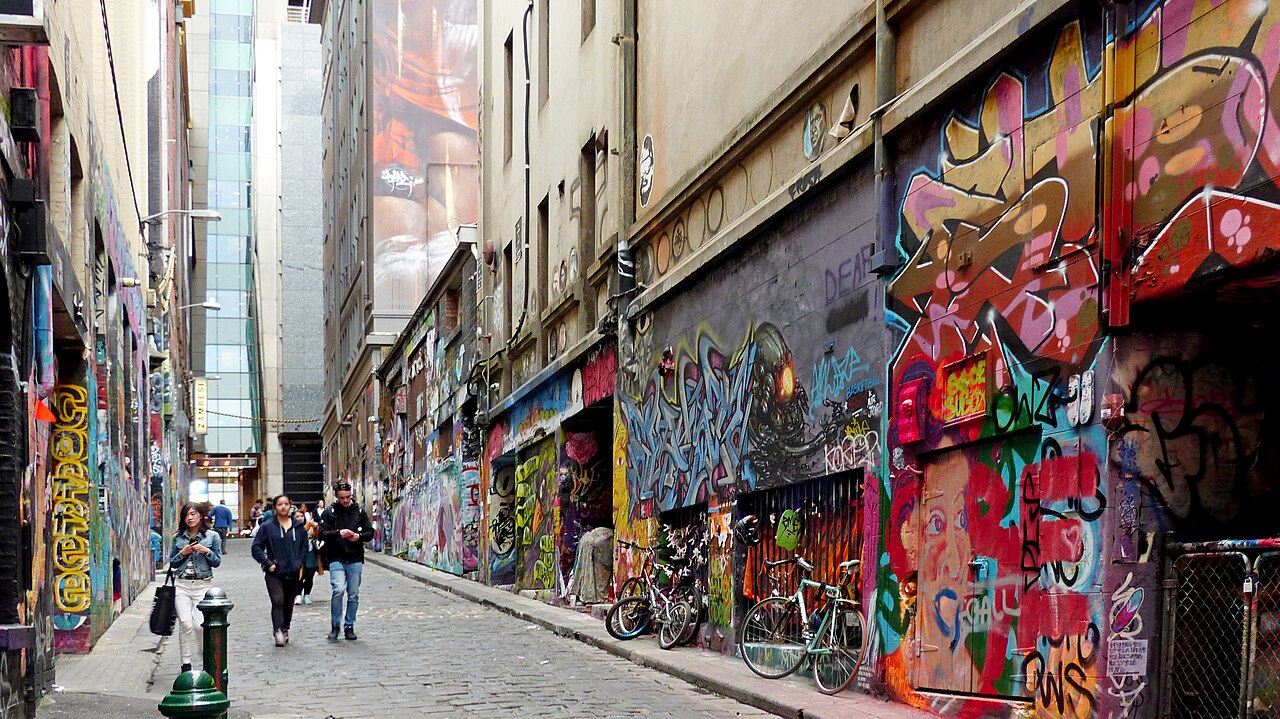
Start in Hosier Lane
The first stop for Melbourne murals is Hosier Lane. It is a cobbled laneway, and from the first step in, the walls on both sides are covered in paint: tall lettering in pink, orange and purple, painted characters, faces peering out of doorways. Bicycles lean against the wall and people drift along at the pace of the lane, looking up, looking sideways and stopping to take pictures.
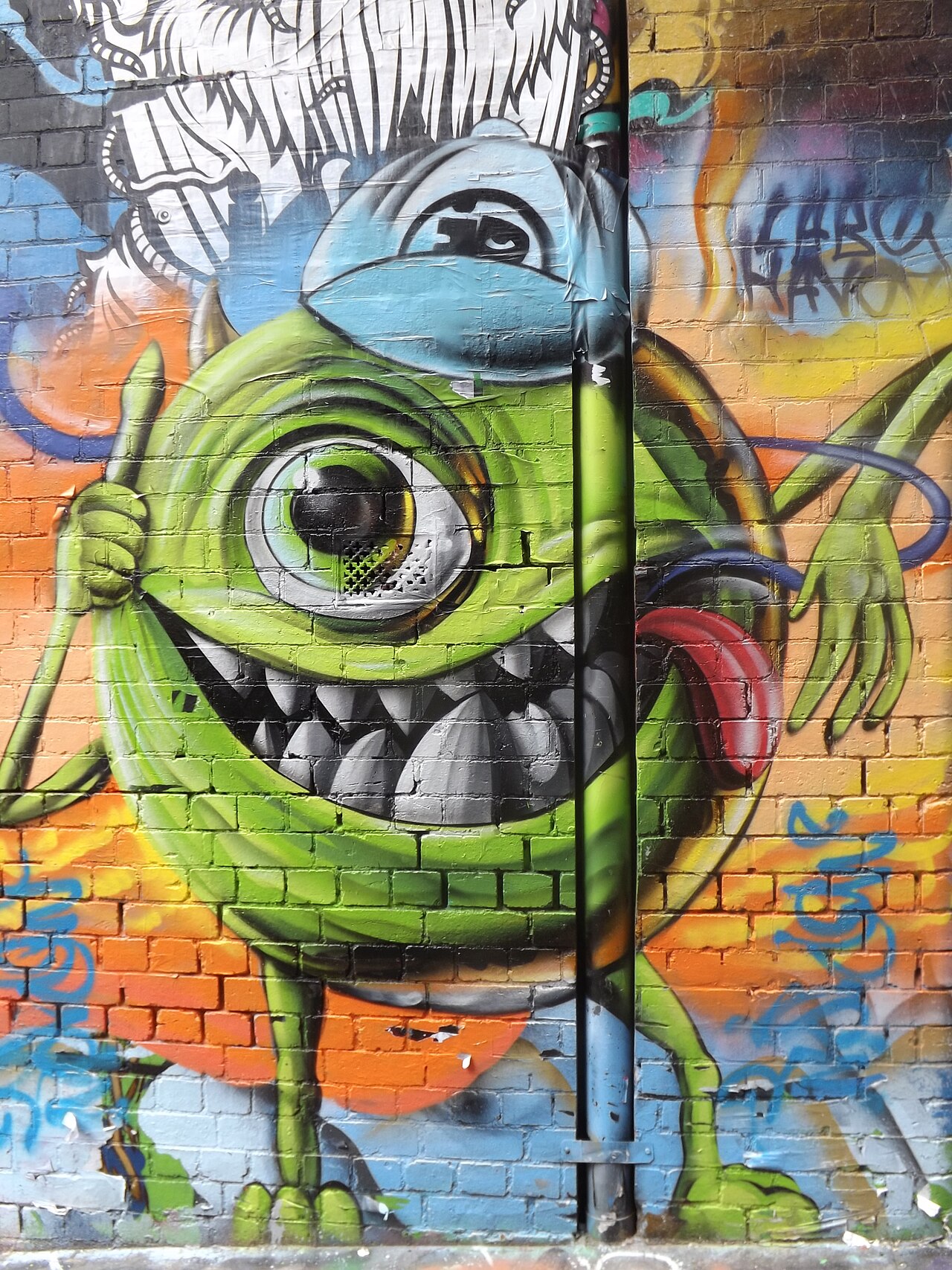
One wall shows how much character a single painted figure can carry. A big green one-eyed monster in a blue cap grins out from an orange and blue brick wall, with a drainpipe running straight down the middle of it. The painter did not hide the pipe. They used it, and the pipe became part of the joke. Walls like this are a good reminder that the best murals answer the surface they are given.

AC/DC Lane and the names on the wall
A short walk away, AC/DC Lane carries the name of the Australian rock band. The lane was renamed in 2004; before that it was called Corporation Lane. The painted wall at the street sign includes a lightning bolt, looping colored tubes and a rainbow, and a list of artists' names written along the top, including Makatron, Heesco, Putos, Presto and Dvate.
That list of names is a quiet detail worth noticing. Names written on a wall are a small way for painters to say who has been here.


Lanes, laneways and the city center
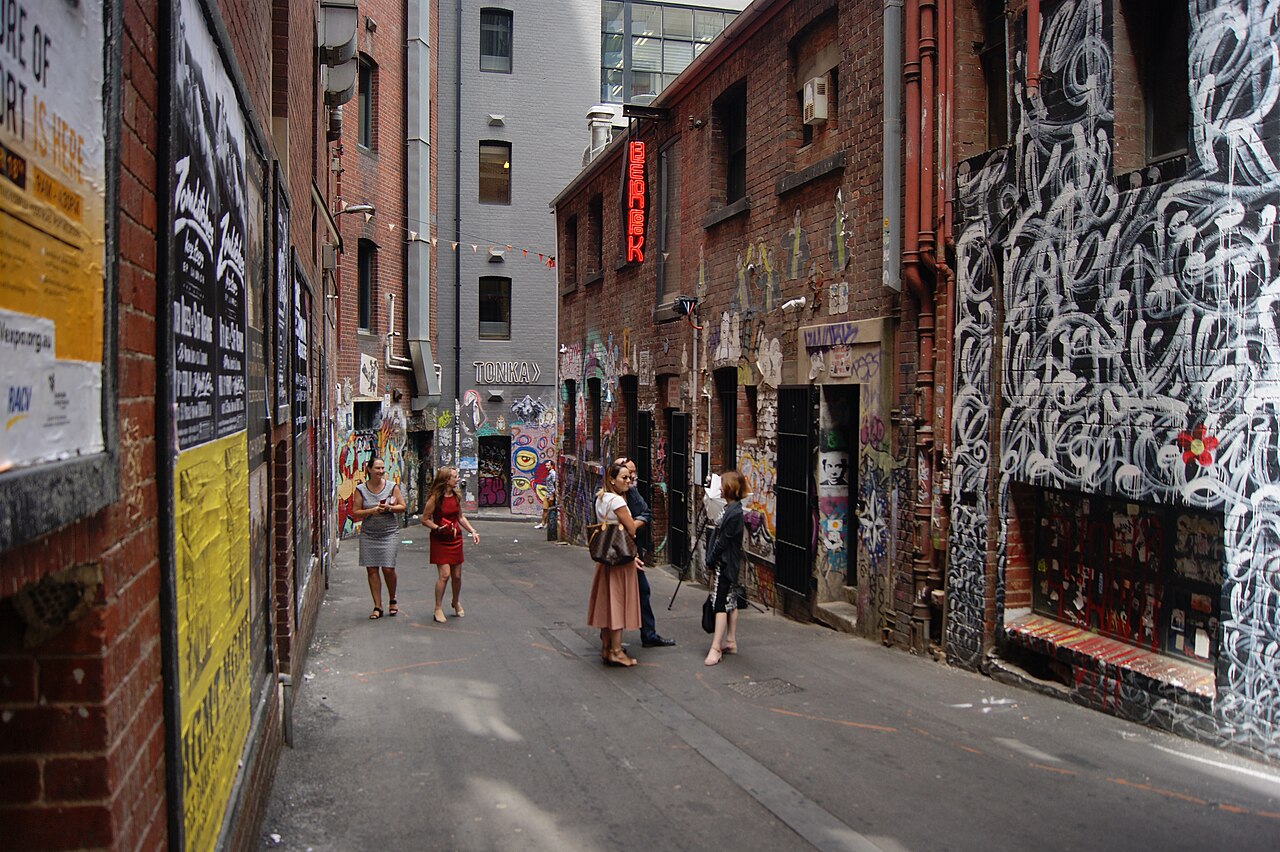
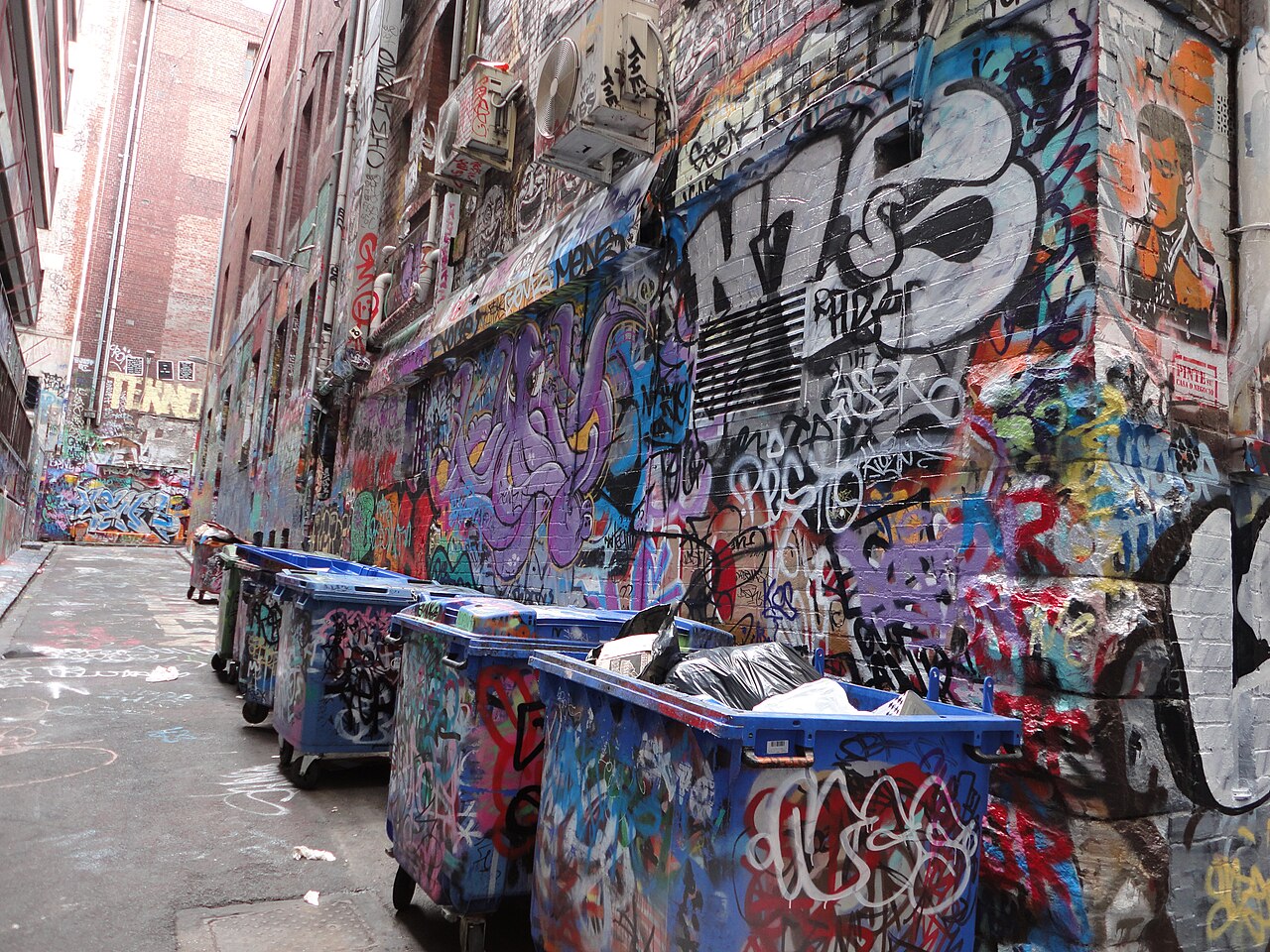
Beyond Hosier Lane, the central city is full of small passages worth following. In one narrow brick lane, the walls on either side are layered with stencils, posters and white scrolling line work, while a red neon sign glows over a doorway and a handful of people chat in the middle of the lane. In another, painted walls and wheelie bins are covered in layers of lettering and color, with another bright wall waiting at the far end to pull you forward.
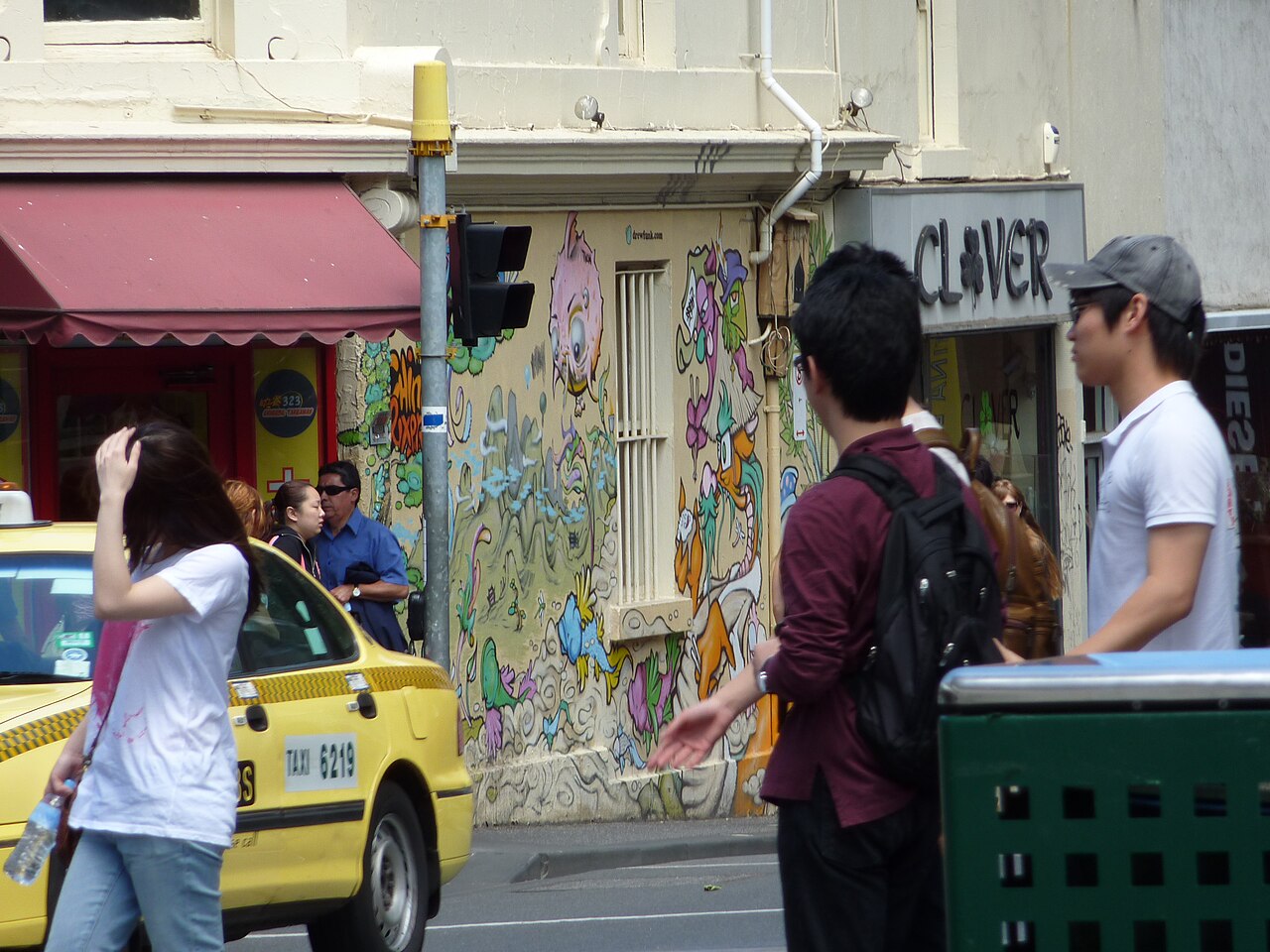
On Little Lonsdale Street, near the corner with Swanston Street, a mural wraps a building corner with creatures and flowers in greens, pinks and oranges. It sits above the street at pedestrian level, so people waiting at the crossing have a good view, and a passing taxi gives the whole scene a very Melbourne feel.



Fitzroy: walls with a story
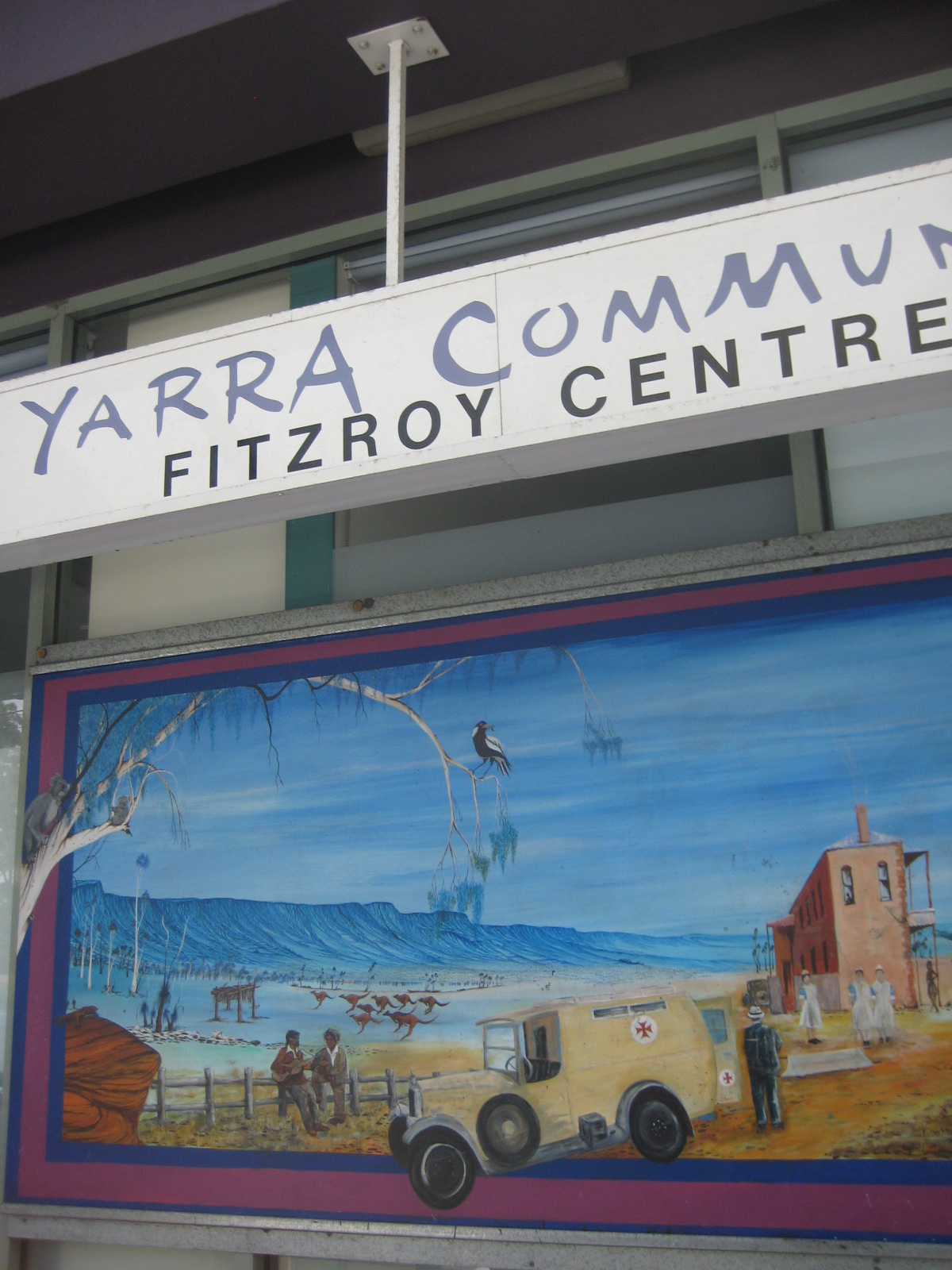
Fitzroy rewards a slower look. At the entrance to the North Yarra Community Health Service, a painted panel shows an outback scene: kangaroos crossing a plain, a magpie in a gum tree, two seated figures, one holding a guitar, an old ambulance and a red brick building beneath a wide blue sky. The Commons description calls it an Aboriginal mural. It is a very different kind of wall from the lanes, a painting made for a community building and meant to be seen by the people who walk in the door.
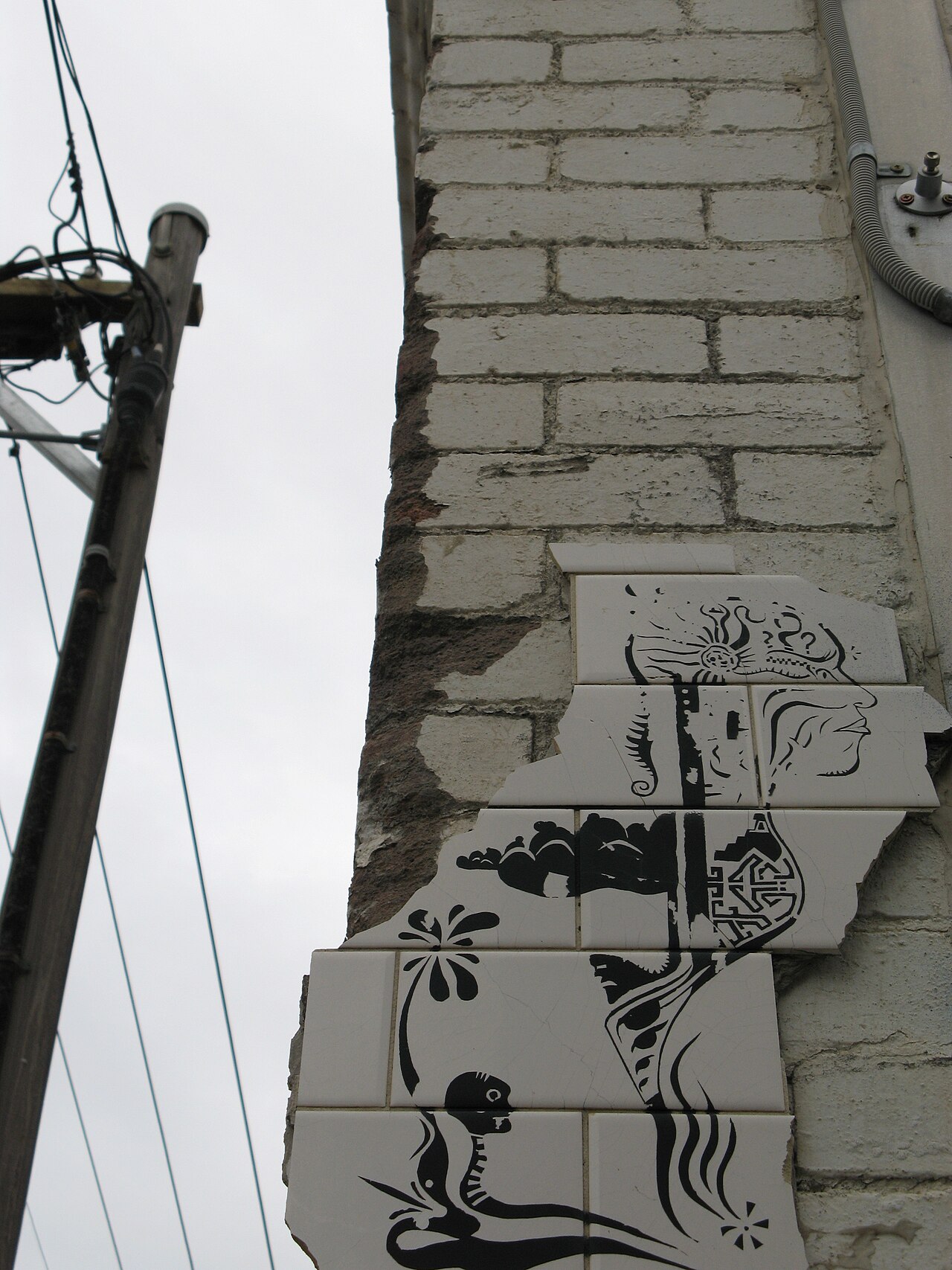
Fitzroy also has quieter, smaller pieces. On the corner of one brick building, broken white ceramic tiles carry black line drawings of faces and strange shapes, fixed to the wall like a fragment of something older. The photographer, who took the picture in 2008, did not know the artist, so we do not either. It is a lovely reminder that street art does not have to be big to be memorable. Pieces like this ask you to slow down, and the reward for noticing them is the feeling that the city has left you a private message.


Brunswick: paste-ups on the corner
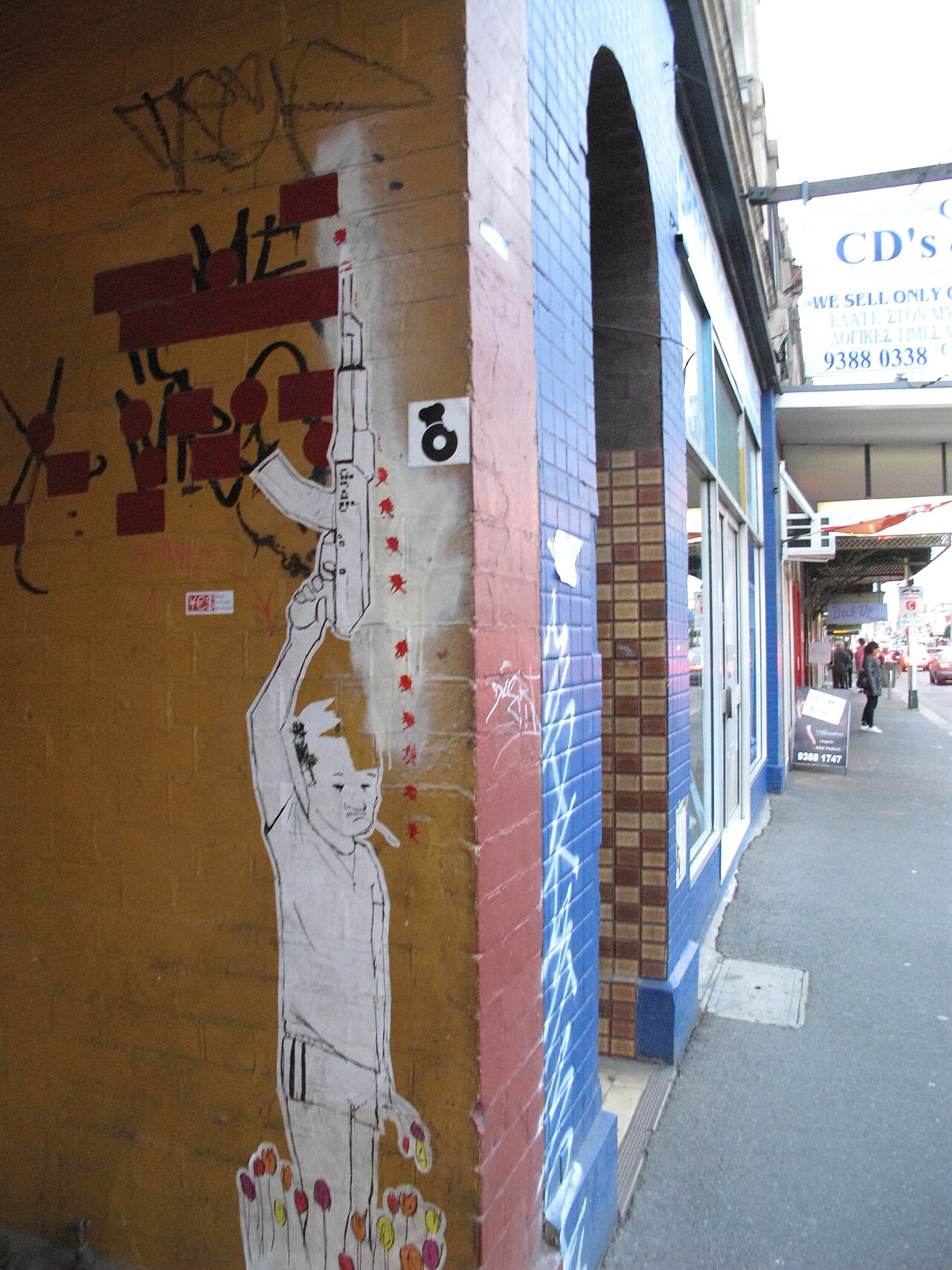
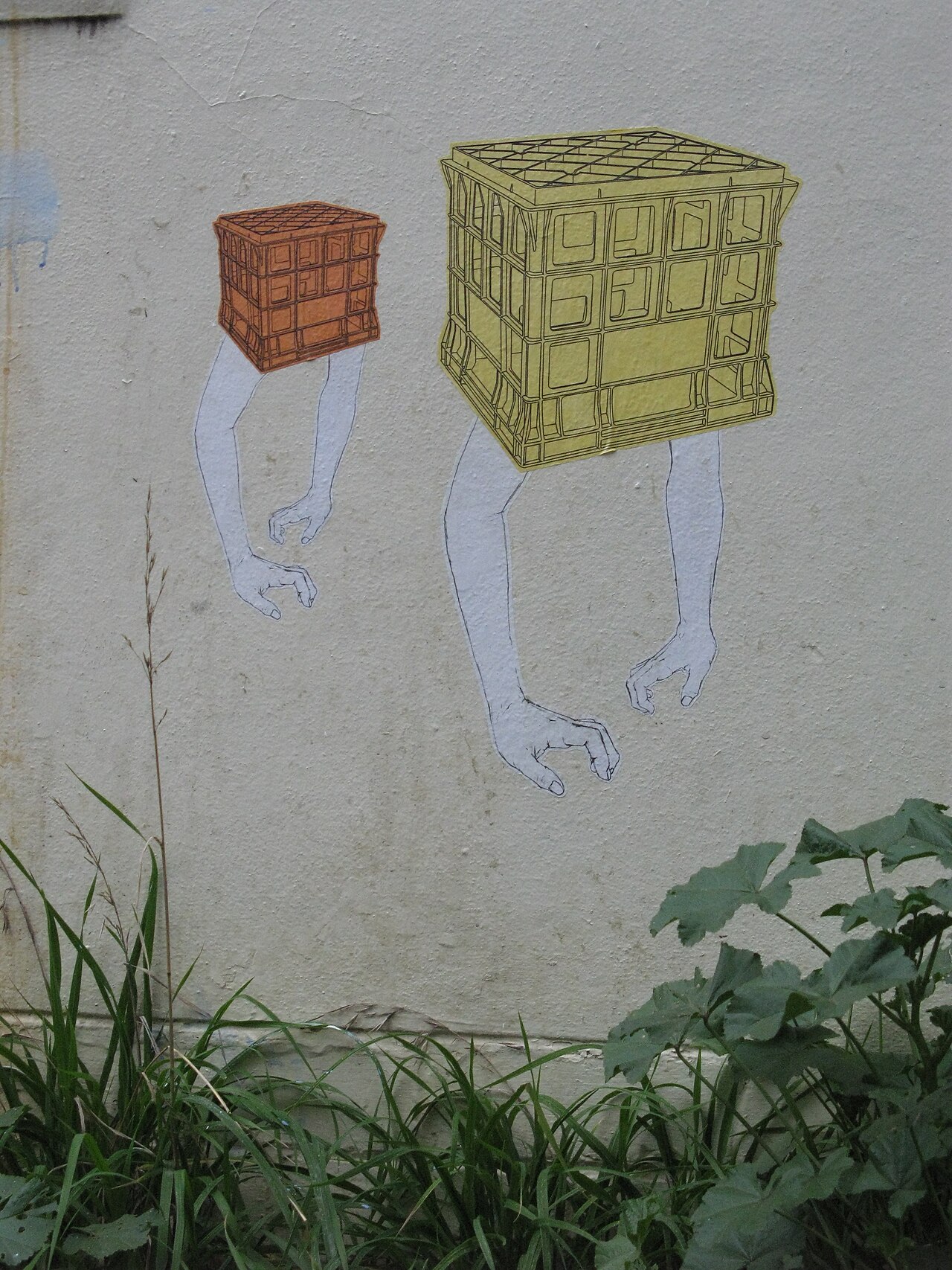
North of the center, Brunswick shows a different side of Melbourne street art: paper. On one shopfront corner of yellow, blue and pink, a paste-up shows a man holding a rifle high above his head, with red marks drifting through the air around it. On a pale wall elsewhere in the suburb, two figures with milk crates for heads, one orange and one yellow, reach down with long pale arms, as if they were about to pick something up from the weeds below.
Both photographs date from 2009, so the walls may well have changed since. That is the way of paste-ups: they are made to be found, enjoyed and eventually replaced by the next idea.


Footscray and the Franco Cozzo mural
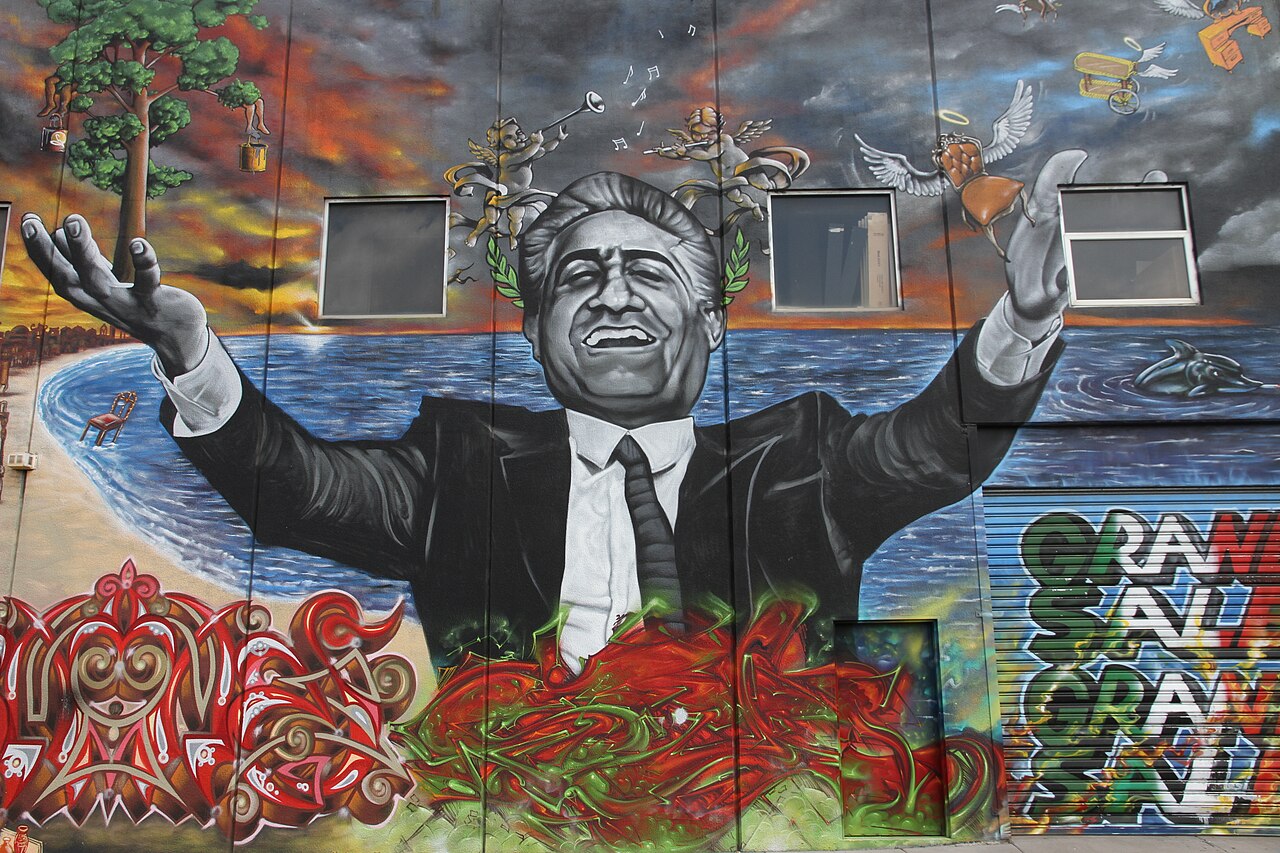
West of the center, Footscray has one of the most striking portraits in the city. On the Franco Cozzo building, a large mural shows a smiling man in a dark suit with his arms thrown wide, standing before a beach at sunset. Little angels with trumpets circle his head, a small dolphin surfaces in the water behind him, and a chair sits on the sand at the left. At the bottom of the wall, red and green spray-painted lettering curls around the figure, and the shutter beside it carries bold lettering in green, white and red.
What makes the wall work is the way a lifelike portrait and loose, playful details live together. The face is warm. The surroundings are a little wild.

How to see Melbourne murals on foot
Melbourne is easy to walk, and the best way to see its murals is to pick a patch and go slowly. Start with Hosier Lane and AC/DC Lane in the city center, wander the lanes and Little Lonsdale Street, then head north to Fitzroy and Brunswick for something quieter. Footscray is worth a trip on its own for the Franco Cozzo wall. Go in good light, look up as well as ahead, and keep in mind that lane walls change, so what you find may be new. Bring a camera, but also give yourself time to stand still. A wall reads differently once the people around it have moved on, and the small details, a name in the corner, a pipe worked into the picture, a sticker on a post, tend to show up on the second look.
Our Melbourne field guide page lists more of the city's walls, with locations and credits, for anyone who wants a longer route.
If you have a wall in mind
Every wall in this story began as a blank surface and someone's decision to make it more. If you look after a building and keep noticing a wall that deserves better, we would be glad to hear about it. Tell us about your wall and we will take it from there.
Frequently asked questions
- Where can I see murals in Melbourne?
- Good places to start are Hosier Lane and AC/DC Lane in the city center, the other small laneways nearby, Fitzroy and Brunswick to the north, and Footscray to the west, where the Franco Cozzo building carries a large portrait mural.
- What is AC/DC Lane?
- AC/DC Lane is a small lane in central Melbourne, named for the Australian rock band in 2004. It was previously called Corporation Lane. Its walls are covered with painted work and artists' names.
- What is Hosier Lane known for?
- Hosier Lane is a cobbled laneway in the city center whose walls on both sides are covered with painted lettering, characters and portraits. It is one of the first places most visitors go to see Melbourne street art.
- Are the murals still there?
- Some walls stay for years and others are painted over or replaced, especially in the lanes. If there is a wall you want to see, check recent photos before you go.
All photos are free-licensed and credited under each image; license links go to the original file pages.