City story · Mexico City · 6 min read
Mexico City Murals: A City That Paints Its Own Story
Mexico City murals are not tucked away in galleries. They climb office towers, brighten corner bars and wait at the top of a palace stairway. Here is a slow walk through the Mexico City street art that gives the capital its voice.

Start with a dog on a corner
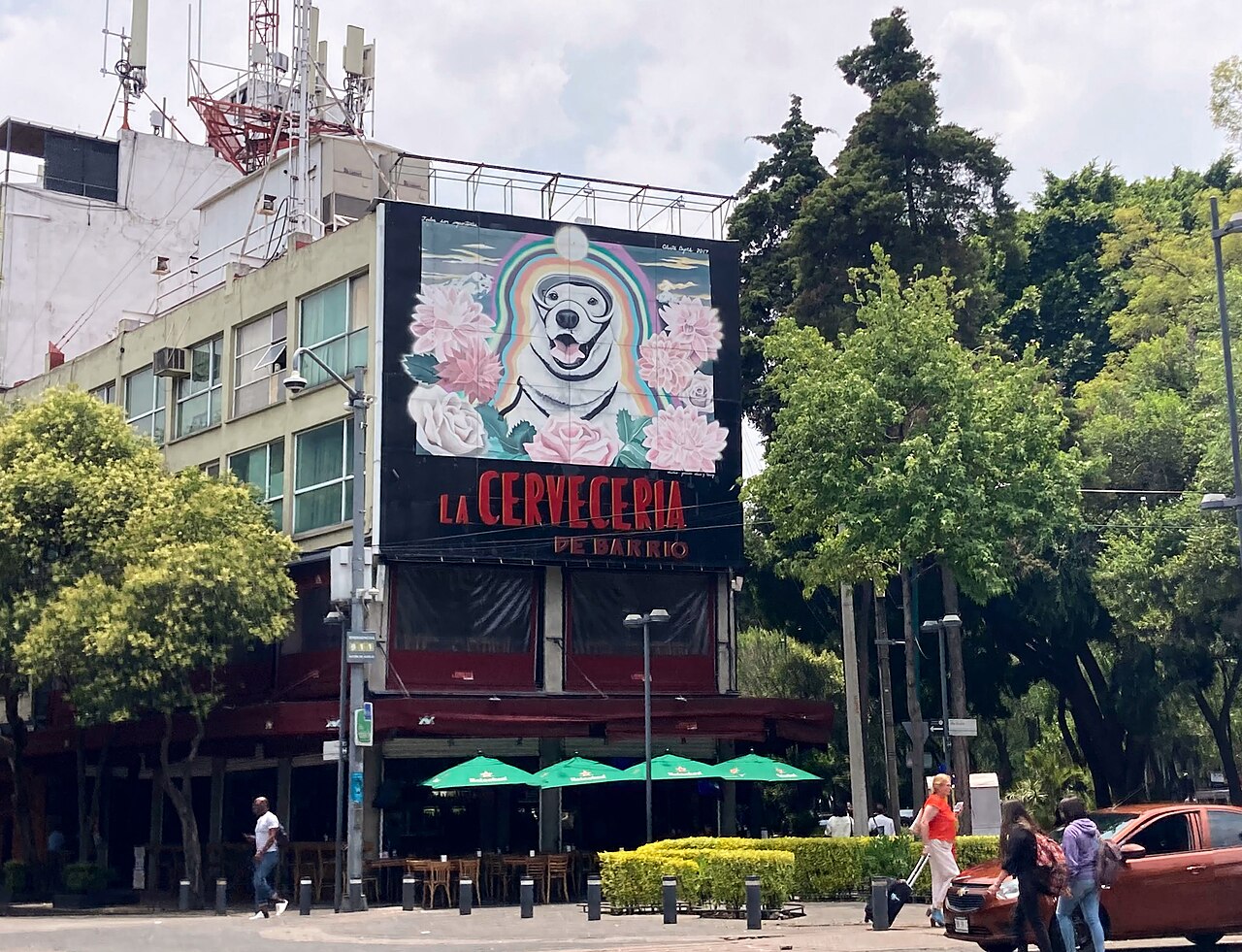
Ask a local where the good walls are and you may get a shrug and a street corner. In Roma Norte, the answer might be a rainbow arch and a smiling white dog, painted large above a corner cervecería. Pink flowers crowd around her. People walk under it with a beer in hand and barely look up, which is the highest compliment a neighborhood can pay a mural. It has become part of the furniture.
That is the first thing to understand about Mexico City murals. They are not saved for special occasions. They sit where people already are, at the corner where you meet a friend, on the wall you pass on the way to lunch.

Roma Norte under the trees
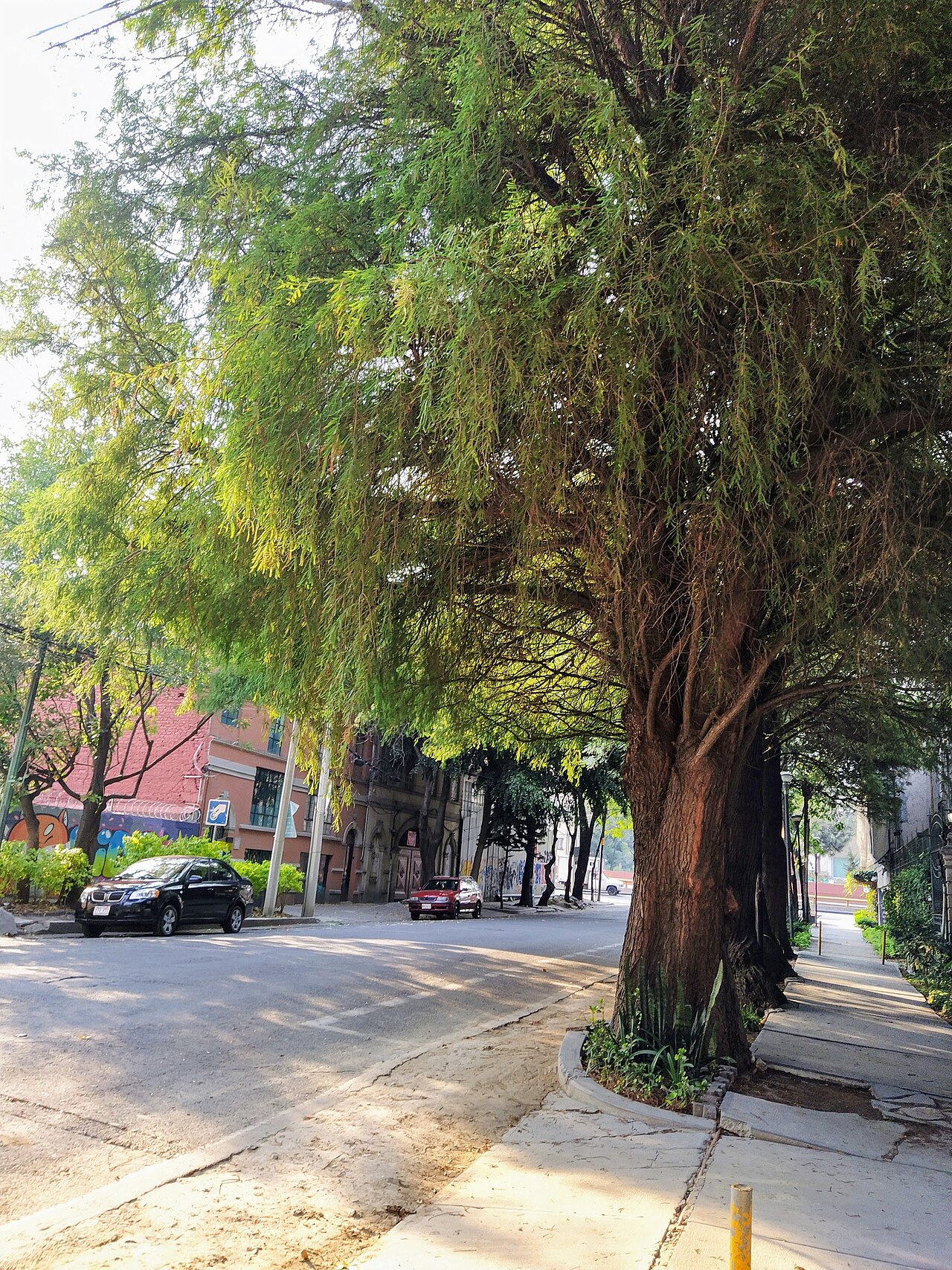
A few blocks on, the paint gives way to leaves. Roma Norte is a neighborhood of tall trees that arch over quiet residential streets, parked cars tucked beneath brick buildings. The walls here are part of a larger composition: shade, stoops, color, a place that feels lived in rather than staged.
It is worth wandering without a plan. Some of the best Mexico City street art is found by turning down the street that looks the most pleasant, and Roma Norte rewards that kind of curiosity.

Look up
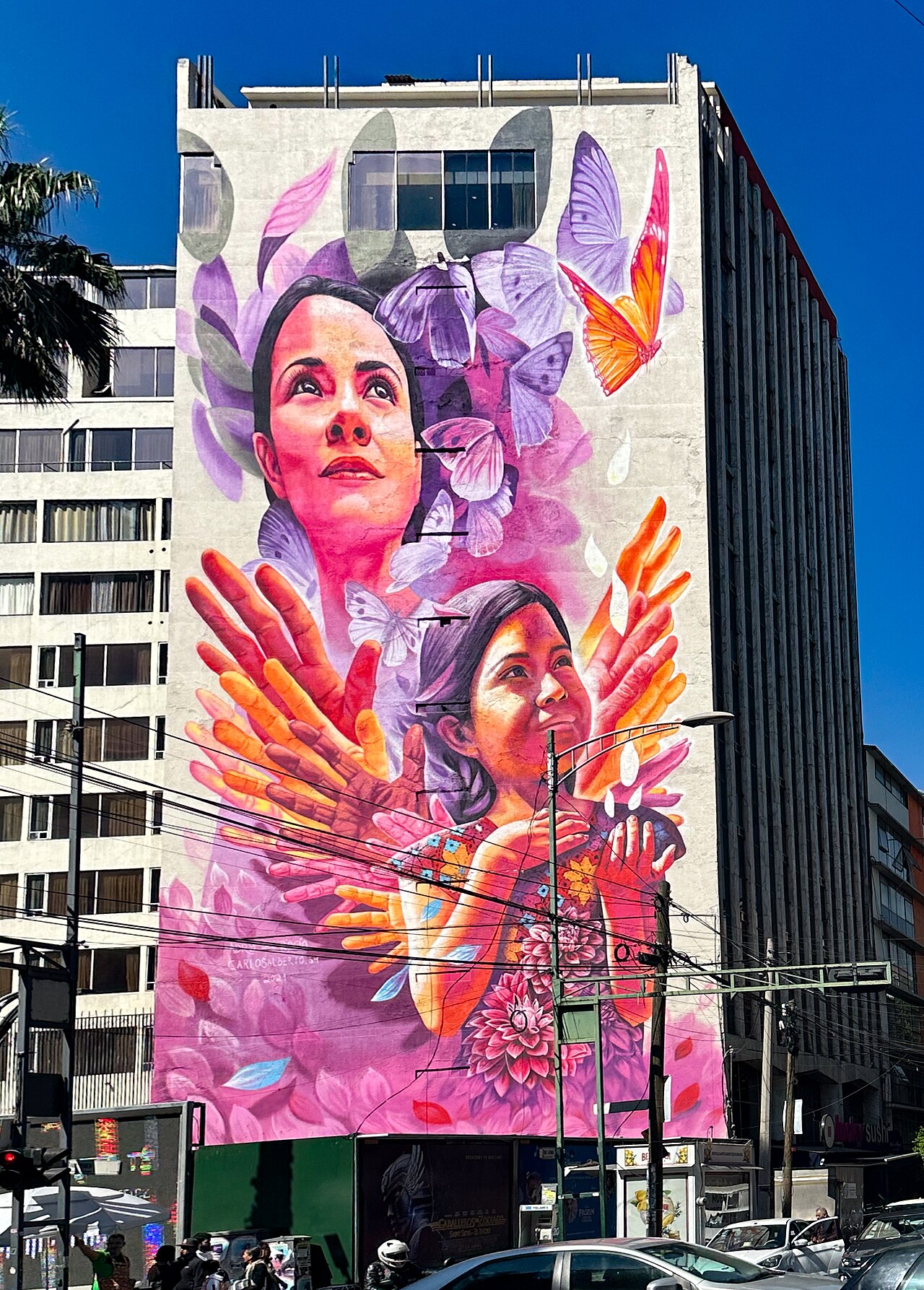
Then the scale changes. Along the big avenues, the walls are not painted at human height at all. A multi-storey mural of two women looking upward, framed by butterflies and a wing of colorful hands, rises over a busy street. Its figures gaze skyward, so you do too.
Hero-sized walls like this change how a block feels. A plain side of a building becomes a landmark, something drivers and pedestrians use to say where they are. On Paseo de la Reforma, the tower-sized mural at the top of this story does the same job, with a woman in floral and skull makeup, marigolds and a hummingbird filling a blue sky. Paint at this size is closer to architecture than decoration.

A dragon in the park
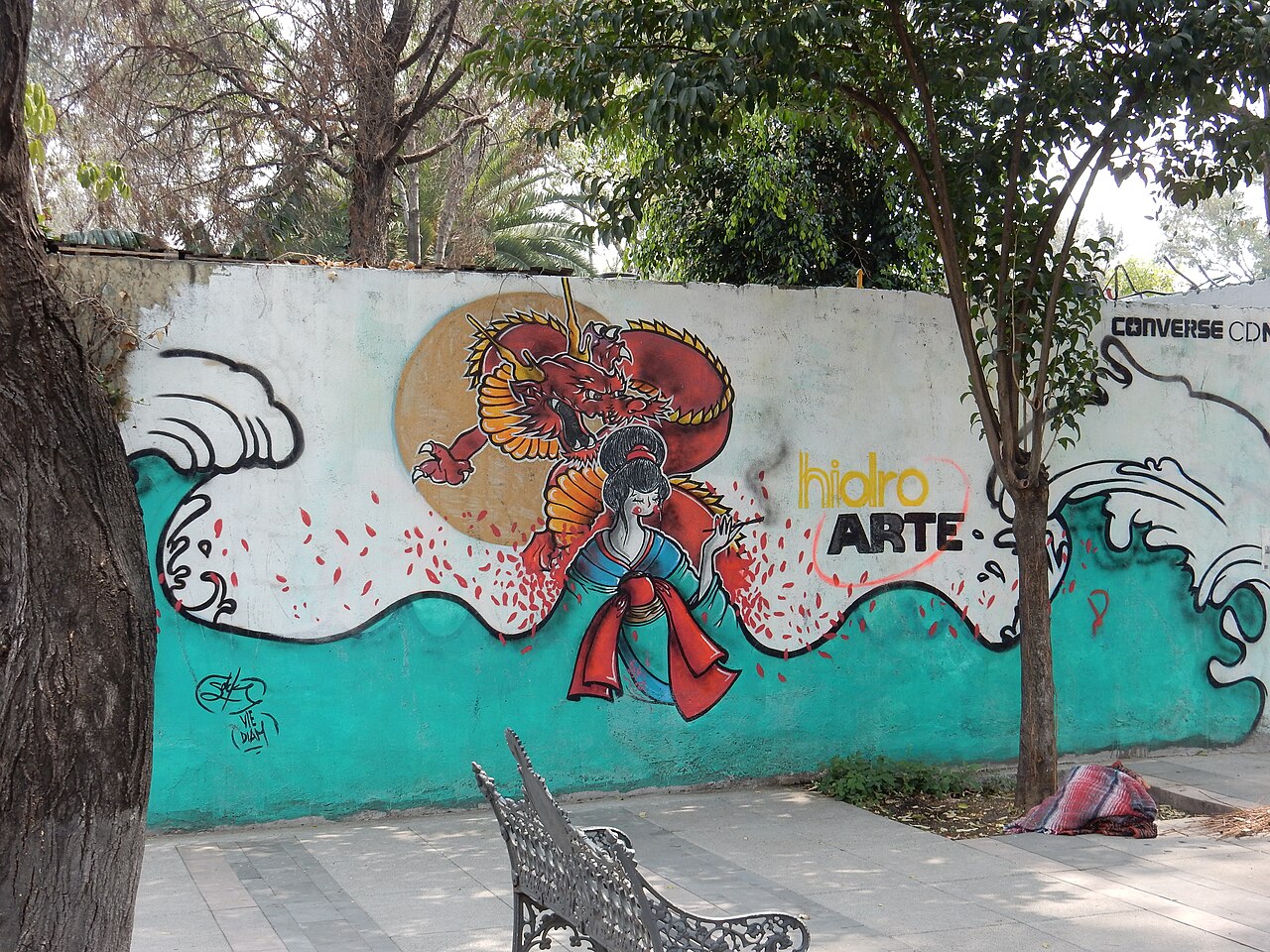
Not every wall is monumental. Beside a park bench and a few trees, a long painted wall shows a red dragon and a woman in a kimono set against teal waves. Nothing about it is formal. It sits where people rest, and it gives them something to look at while they do.
This is the quieter lesson of Mexico City murals: a good wall does not have to be an event. Sometimes it is simply a reason for a park to feel looked after.

The stairway that taught a country to look
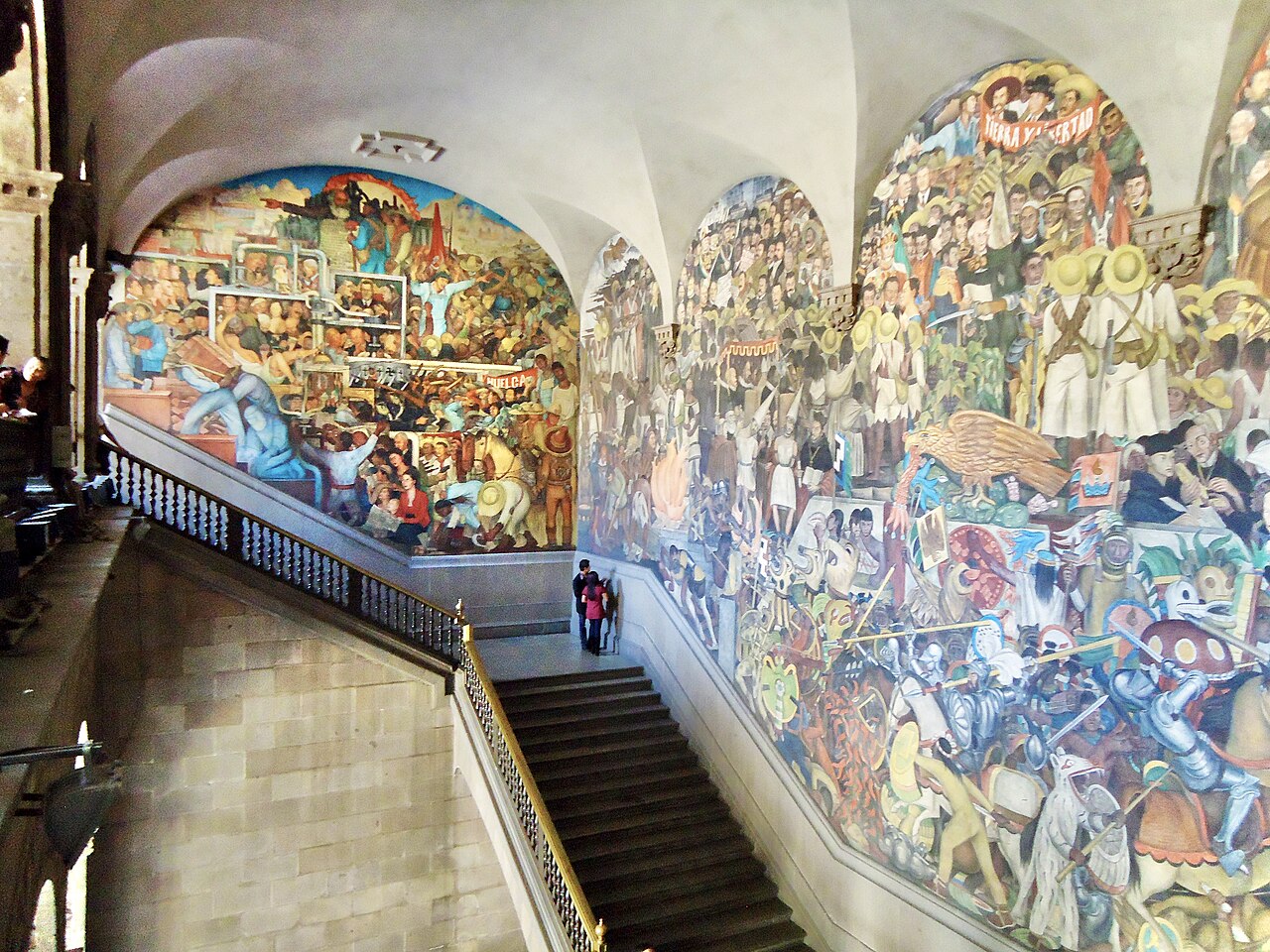
No walk through Mexico City murals is complete without the National Palace. In the Centro Histórico, Diego Rivera's murals curve over the stairway, and visitors climb slowly with their heads tipped back. These are among the best-known murals anywhere, and they remind you that in Mexico the painted wall has long been a public language, meant for everyone who walks the steps.
You do not need an art degree to feel what the architecture is doing here. The stairs lead you upward and the wall tells you a story as you climb. Every modern wall in the city, from a corner dog to a tower, is working in that same tradition of putting art where the public can reach it.

A square big enough for everything
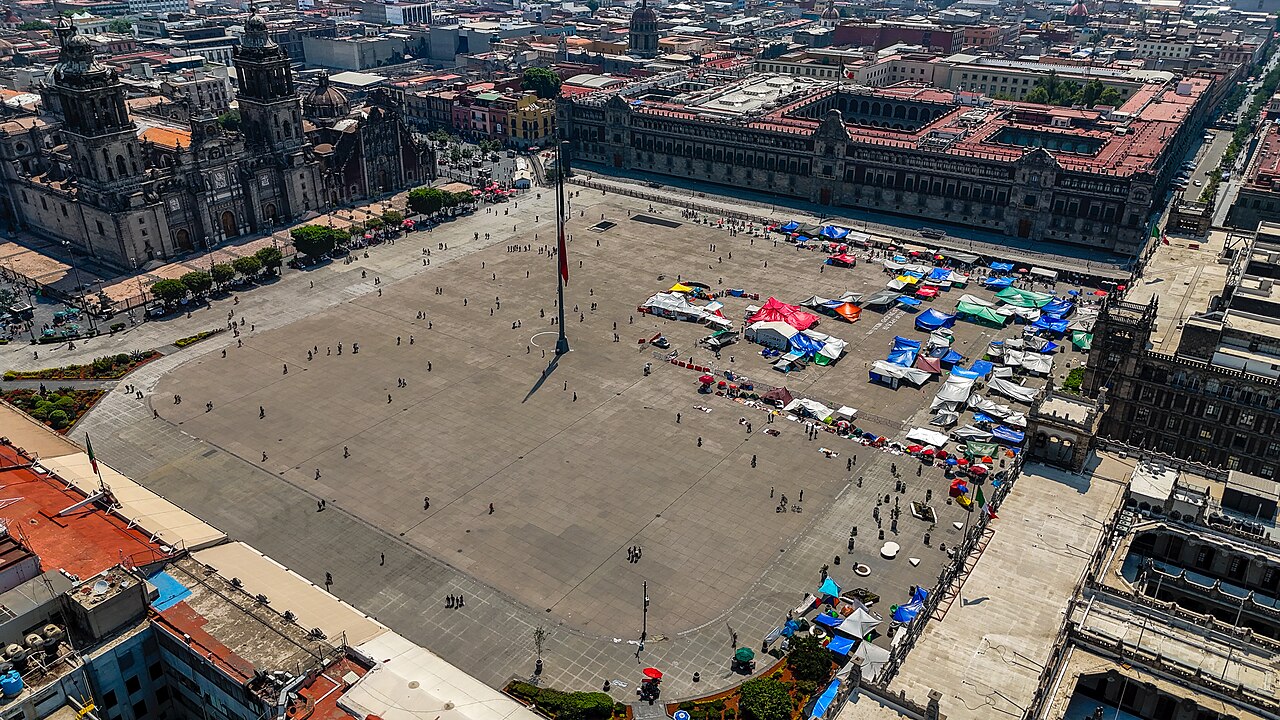
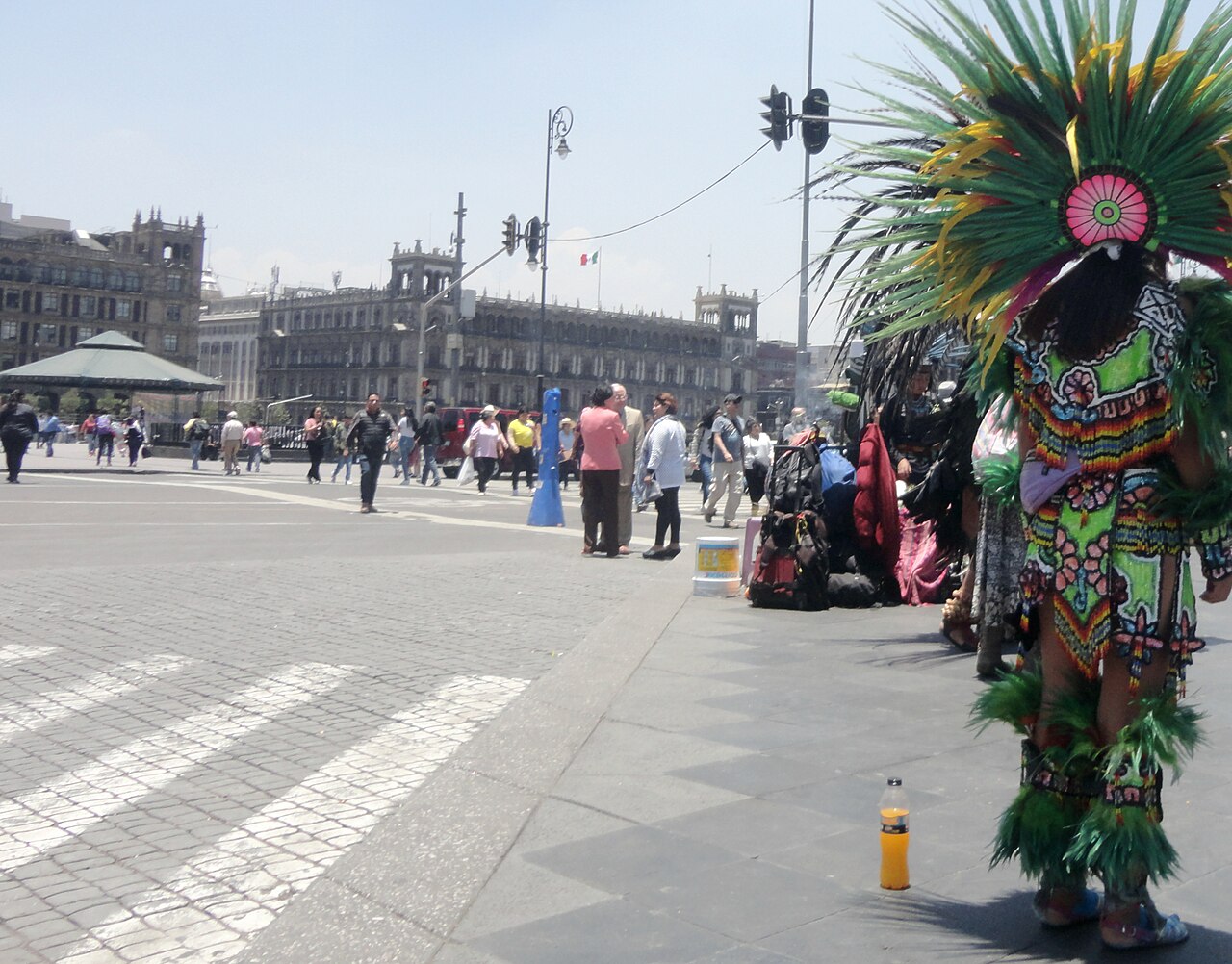
Step outside and you are in the Zócalo, the huge square with the cathedral and the National Palace along its edges. From above it looks like a stage cleared for whatever the city wants to do next. On the ground it is just as theatrical. A dancer in a tall green feathered headdress and costume stands at the edge of the square, passersby drifting behind.
Color here is not only on walls. It is on people, in costume and movement, and it makes the point that a mural is one part of a city's visual life, not the whole of it.


Coyoacán goes quiet
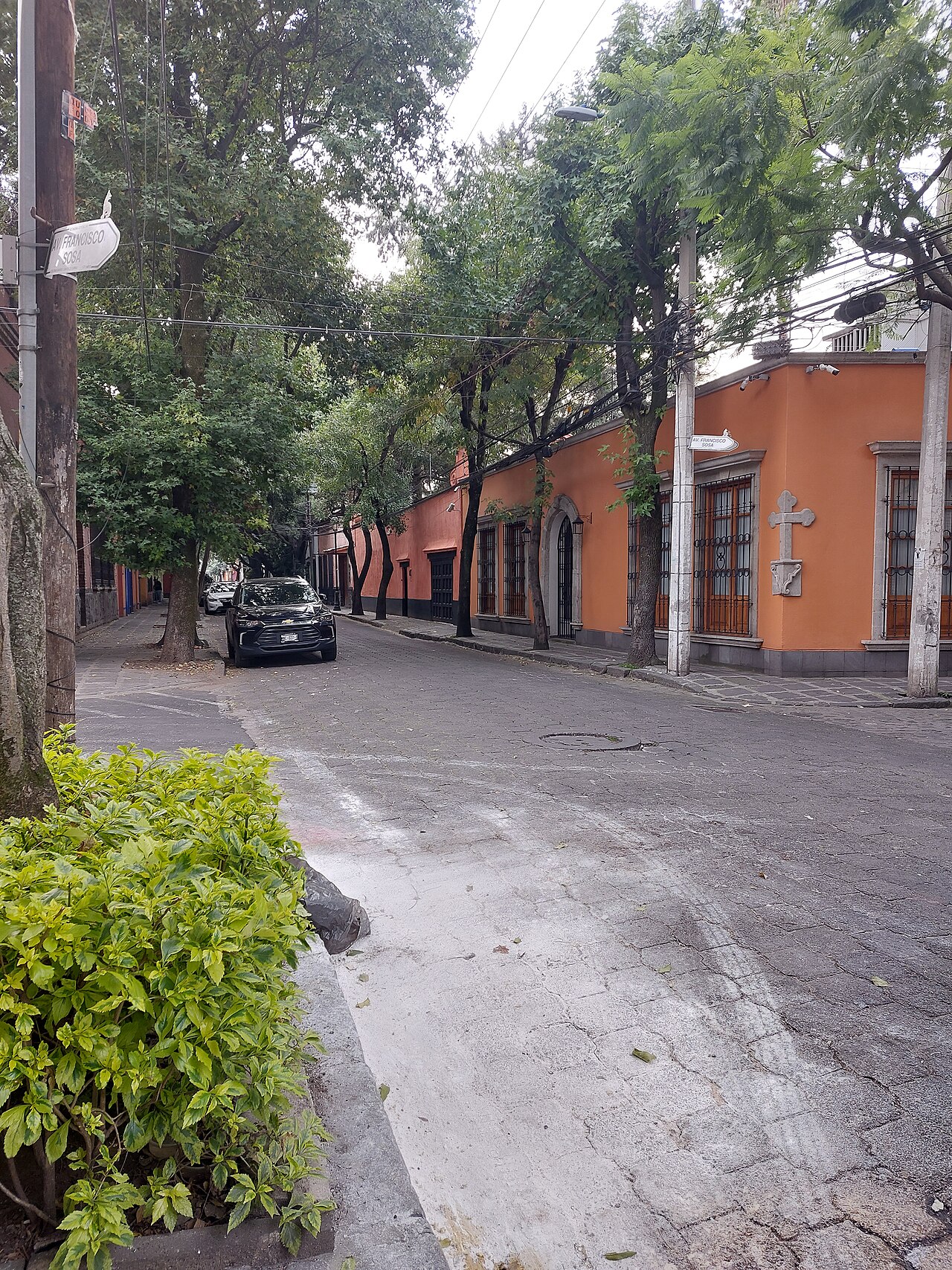
South of the center, Coyoacán slows everything down. A cobbled street lined with trees runs past an orange-walled colonial house with iron-barred windows. The paint here is on the walls themselves, in a warm color that has nothing to prove.
After the scale of the avenues, this is a useful reset. Mexico City street art is loud in some places and tender in others, and a neighborhood like Coyoacán shows how color alone can give an old street its character.

Boats painted like flowers
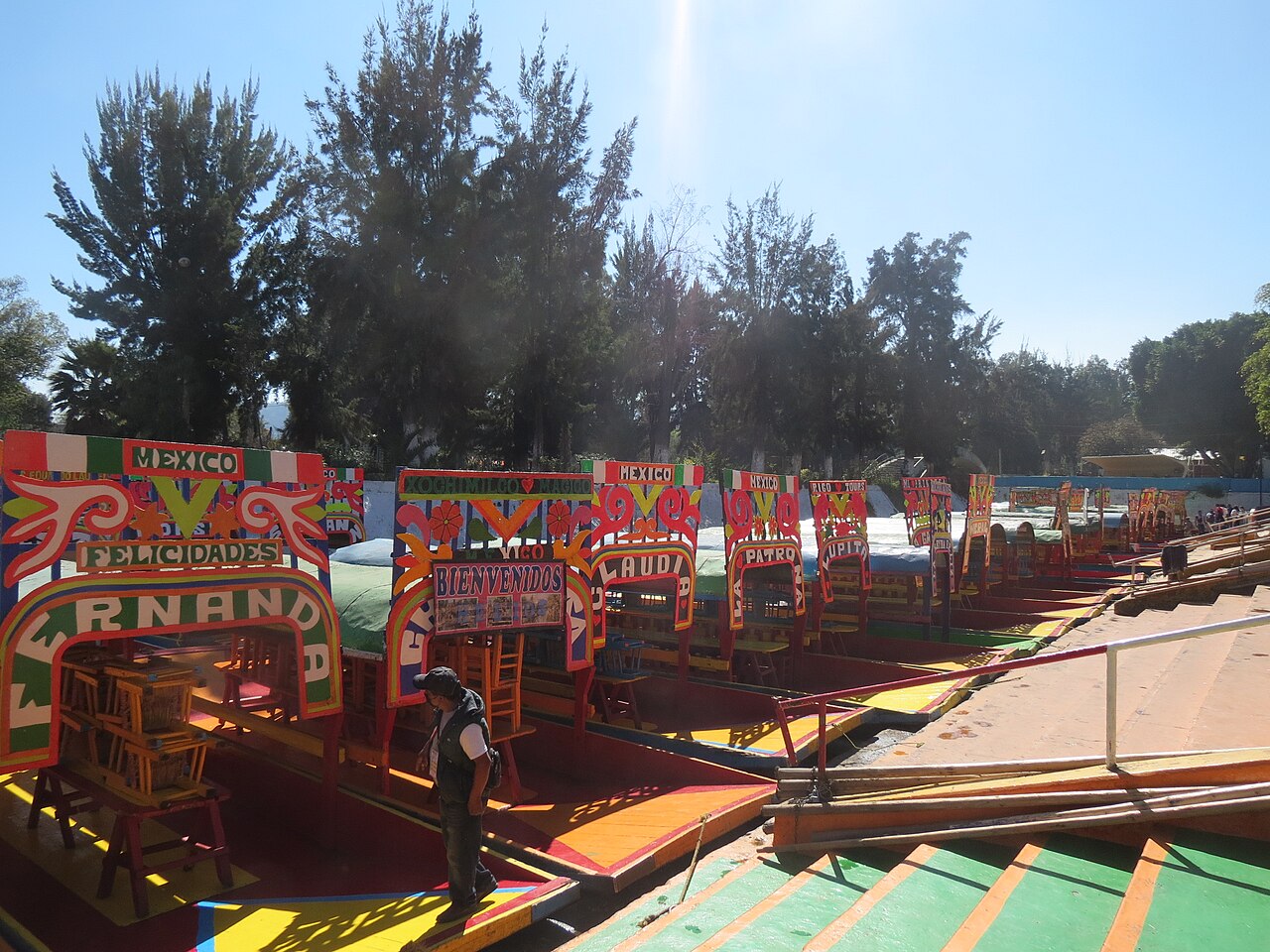
Farther south, the canals of Xochimilco hold a different kind of painted object. Rows of trajineras, the flat-bottomed boats of the canals, wait at a landing in the sun, each one decorated in bright color. They are not murals, but they carry the same instinct: if something is going to be used by many people, make it a pleasure to look at.
It is a fitting stop near the end of the day. The city's love of paint reaches past walls to boats, signs and costumes.

End on Reforma at night
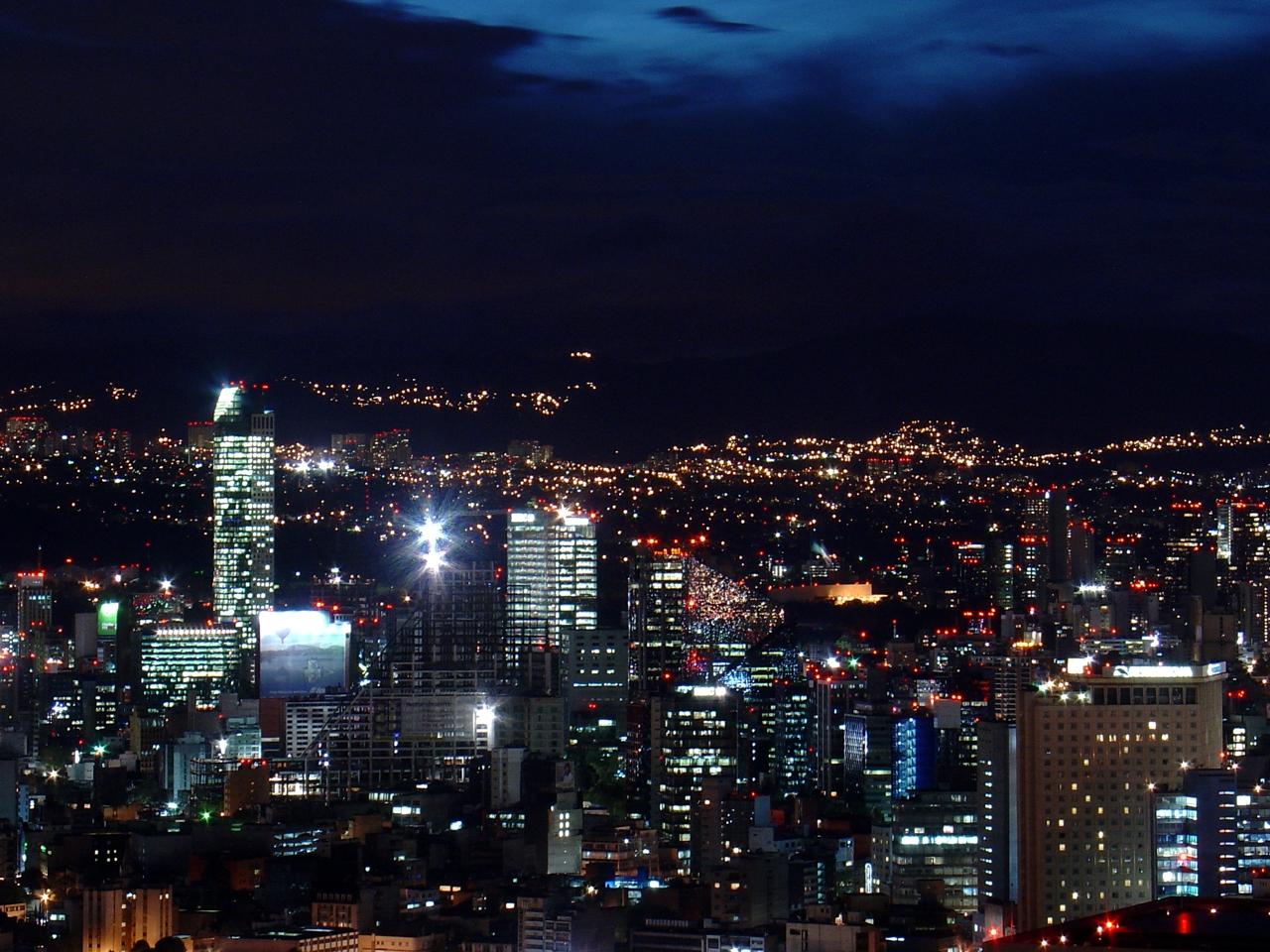
Finish back on Paseo de la Reforma after dark. The towers are lit, hillside lights stretch to the horizon, and the daytime walls fade into the larger picture of a city of millions going home. The murals you spent the day with are still there, in the dark, doing quiet work.
That is what the best Mexico City murals do. They make a vast capital feel like a set of neighborhoods you can walk, one wall at a time. If you want to keep exploring, our Mexico City guide has more walls to look for.

If you have a wall in mind
Every wall in this story began as somebody's blank surface and a decision to make it more than that. If you manage a building and keep looking at a wall that could say something, we would be glad to hear about it. Tell us about your wall and we will take it from there.
Frequently asked questions
- Where can I see murals in Mexico City?
- Good places to start are Roma Norte for corner walls and tree-lined streets, the Centro Histórico for Diego Rivera's murals inside the National Palace, Paseo de la Reforma for tower-sized walls, and Coyoacán for quieter lanes. Most areas are best seen on foot.
- Which neighborhoods have the best street art in Mexico City?
- Roma Norte, the Centro Histórico and the avenues around Paseo de la Reforma are strong starting points, with Coyoacán and Xochimilco adding different moods. Walk without a fixed plan and you will find more.
- Is street art legal in Mexico City?
- It depends on the wall and the owner. Murals painted with a property owner's permission are commissioned work, while unsanctioned pieces are a different matter. If you own a wall and want a mural, agree the details in writing and check local rules for your building.
- How do I find a muralist for my building in Mexico City?
- Start with a muralist whose style suits the wall and the neighborhood, then talk through the size, surface and look. If you would like help thinking it through, tell us about your wall and we will see what we can do.
All photos are free-licensed and credited under each image; license links go to the original file pages.
Historia de la ciudad · Mexico City · 6 min de lectura
Murales en la Ciudad de México: una ciudad que pinta su propia historia
Los murales de la Ciudad de México no se esconden en galerías. Trepan por torres de oficinas, alegran las esquinas con cantina y esperan al final de la escalera de un palacio. Este es un recorrido tranquilo por el arte urbano que le da voz a la capital.
Empiece con un perro en una esquina
Si usted le pregunta a alguien del barrio dónde están los buenos muros, quizá reciba un encogimiento de hombros y una esquina por respuesta. En la Roma Norte, la respuesta puede ser un arcoíris y un perro blanco sonriente, pintados en grande sobre una cervecería de esquina. Flores rosas lo rodean. La gente pasa debajo con una cerveza en la mano y apenas levanta la vista, que es el mejor elogio que un barrio puede hacerle a un mural: ya forma parte del mobiliario.
Esa es la primera cosa que hay que entender sobre los murales de la Ciudad de México. No se guardan para ocasiones especiales. Están donde la gente ya está: en la esquina donde se ve con un amigo, en el muro que pasa de camino a comer.
La Roma Norte bajo los árboles
Unas cuadras más adelante, la pintura deja su lugar a las hojas. La Roma Norte es un barrio de árboles altos que se arquean sobre calles residenciales tranquilas, con autos estacionados al pie de edificios de ladrillo. Los muros de aquí forman parte de una composición más grande: sombra, escalones de entrada, color, un lugar que se siente habitado y no puesto en escena.
Vale la pena caminar sin plan. Parte del mejor arte urbano de la Ciudad de México se encuentra al doblar por la calle que se ve más agradable, y la Roma Norte premia esa curiosidad.
Levante la vista
Entonces cambia la escala. A lo largo de las grandes avenidas, los muros no se pintan a la altura de una persona. Un mural de varios pisos con dos mujeres que miran hacia arriba, enmarcadas por mariposas y un ala de manos de colores, se alza sobre una calle muy transitada. Sus figuras miran al cielo, y usted también.
Los muros de este tamaño cambian la sensación de toda una cuadra. El costado liso de un edificio se vuelve un punto de referencia que conductores y peatones usan para decir dónde están. En el Paseo de la Reforma, el mural del tamaño de una torre con el que abre esta historia hace lo mismo: una mujer con maquillaje de flores y calavera, cempasúchil y un colibrí llenan un cielo azul. La pintura a esta escala se parece más a la arquitectura que a la decoración.
Un dragón en el parque
No todos los muros son monumentales. Junto a una banca de parque y unos cuantos árboles, un muro largo muestra un dragón rojo y una mujer en kimono sobre olas turquesa. Nada en él es solemne. Está donde la gente descansa y le da algo que mirar mientras lo hace.
Esta es la lección más discreta de los murales de la Ciudad de México: un buen muro no tiene que ser un acontecimiento. A veces es, simplemente, una razón para que un parque se sienta cuidado.
La escalera que enseñó a un país a mirar
Ningún recorrido por los murales de la Ciudad de México está completo sin el Palacio Nacional. En el Centro Histórico, los murales de Diego Rivera se curvan sobre la escalera, y los visitantes suben despacio con la cabeza echada hacia atrás. Están entre los murales más conocidos del mundo y recuerdan que en México el muro pintado ha sido durante mucho tiempo un lenguaje público, hecho para todos los que pisan esos escalones.
No hace falta ser experto en arte para sentir lo que hace la arquitectura aquí. La escalera lo lleva hacia arriba y el muro le cuenta una historia mientras sube. Cada muro moderno de la ciudad, del perro de la esquina a la torre, trabaja dentro de esa misma tradición de poner el arte al alcance del público.
Una plaza lo bastante grande para todo
Salga a la calle y estará en el Zócalo, la enorme plaza con la catedral y el Palacio Nacional en sus bordes. Desde arriba parece un escenario despejado para lo que la ciudad quiera hacer después. A ras de suelo es igual de teatral. Un danzante con un alto penacho de plumas verdes y su traje se planta en el borde de la plaza, mientras los transeúntes pasan detrás.
Aquí el color no está solo en los muros. Está en la gente, en el vestuario y en el movimiento, y deja claro que un mural es una parte de la vida visual de una ciudad, no su totalidad.
Coyoacán se queda en silencio
Al sur del centro, Coyoacán lo baja todo de velocidad. Una calle empedrada y arbolada pasa junto a una casa colonial de muros naranjas y ventanas con rejas de hierro. Aquí la pintura está en los muros mismos, en un color cálido que no tiene nada que demostrar.
Después de la escala de las avenidas, es un buen reinicio. El arte urbano de la Ciudad de México es estruendoso en unos lugares y tierno en otros, y un barrio como Coyoacán muestra cómo el color, por sí solo, puede darle carácter a una calle antigua.
Barcas pintadas como flores
Más al sur, los canales de Xochimilco guardan otra clase de objeto pintado. Hileras de trajineras, las embarcaciones de fondo plano de los canales, esperan al sol en un embarcadero, cada una decorada con colores vivos. No son murales, pero comparten el mismo instinto: si algo va a ser usado por mucha gente, hay que hacer que dé gusto verlo.
Es una parada acertada hacia el final del día. El amor de la ciudad por la pintura llega más allá de los muros: a las barcas, los letreros y los trajes.
Termine en Reforma de noche
Cierre de vuelta en el Paseo de la Reforma, ya de noche. Las torres están iluminadas, las luces de los cerros se extienden hasta el horizonte y los muros del día se desvanecen en el cuadro más amplio de una ciudad de millones que vuelve a casa. Los murales con los que pasó el día siguen ahí, en la oscuridad, haciendo su trabajo callado.
Eso es lo que hacen los mejores murales de la Ciudad de México: hacen que una capital inmensa se sienta como un conjunto de barrios que se pueden recorrer a pie, un muro a la vez. Si quiere seguir explorando, nuestra guía de la Ciudad de México tiene más muros por descubrir.
Si tiene un muro en mente
Cada muro de esta historia empezó como una superficie en blanco y la decisión de convertirla en algo más. Si usted administra un edificio y no deja de mirar un muro que podría decir algo, nos dará gusto saber de él. Cuéntenos sobre su muro y nosotros nos encargamos del resto.
Preguntas frecuentes
- ¿Dónde puedo ver murales en la Ciudad de México?
- Buenos lugares para empezar son la Roma Norte, por sus muros de esquina y calles arboladas; el Centro Histórico, por los murales de Diego Rivera dentro del Palacio Nacional; el Paseo de la Reforma, por sus muros del tamaño de torres; y Coyoacán, por sus calles más tranquilas. La mayoría de las zonas se disfrutan mejor a pie.
- ¿Qué colonias tienen el mejor arte urbano de la Ciudad de México?
- La Roma Norte, el Centro Histórico y las avenidas alrededor del Paseo de la Reforma son buenos puntos de partida, y Coyoacán y Xochimilco aportan otros ambientes. Camine sin un plan fijo y encontrará más.
- ¿Es legal el arte urbano en la Ciudad de México?
- Depende del muro y de su dueño. Los murales pintados con permiso del propietario son trabajo por encargo, mientras que las piezas sin autorización son otro asunto. Si usted es dueño de un muro y quiere un mural, acuerde los detalles por escrito y consulte la normativa local aplicable a su edificio.
- ¿Cómo encuentro a un muralista para mi edificio en la Ciudad de México?
- Empiece por un muralista cuyo estilo se ajuste al muro y al barrio, y luego hablen del tamaño, la superficie y el aspecto. Si quiere ayuda para pensarlo, cuéntenos sobre su muro y veremos qué podemos hacer.
Todas las fotos tienen licencia libre y llevan su crédito bajo cada imagen; los enlaces de licencia llevan a las páginas de los archivos originales.