City story · Miami · 6 min read
Miami Murals: A City That Paints Its Own Welcome
From the painted letters of Little Havana to the stripes of Wynwood and a purple lifeguard stand on the sand, a slow look at the Miami murals and street art that give the city its color.
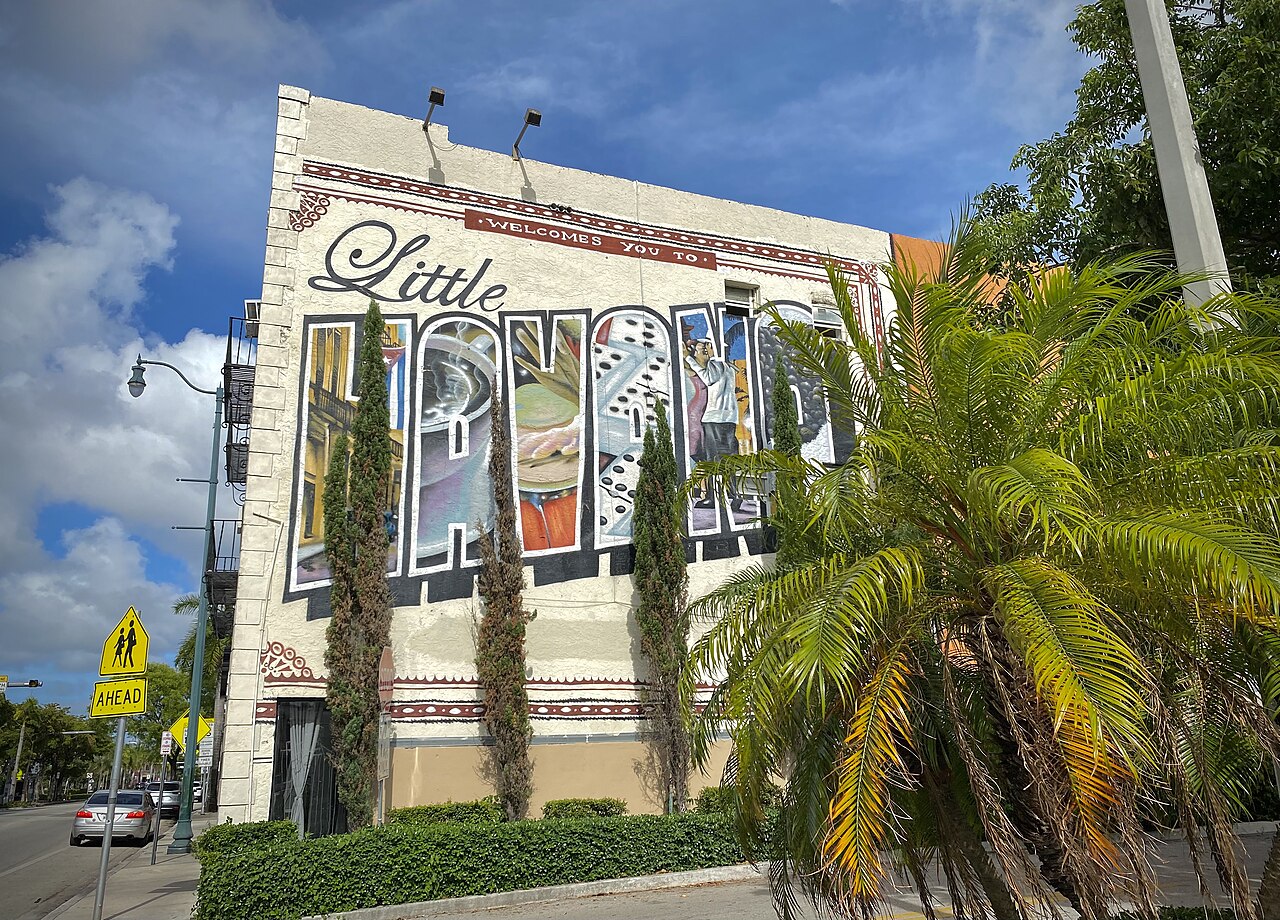
Begin with the letters
Miami murals have a way of introducing themselves. On a corner in Little Havana, a tall wall spells out the neighborhood's name in enormous letters, and inside each letter a small scene is painted: a whole world folded into a word. Palms lean in from the edges of the frame. You do not need a map to know where you are standing.
That is the first job of a good mural, and this one does it with warmth. It is a greeting for visitors and a bit of quiet pride for the people who live a few doors down. A lot of the best murals in Miami work this way, as signs that happen to carry a story.
It also says something about scale. The wall is tall, the letters are generous, and the painting expects to be read from across the street, from a passing car, from the end of the block. A mural like this is built for people on the move.

Cars at the curb, culture on the wall
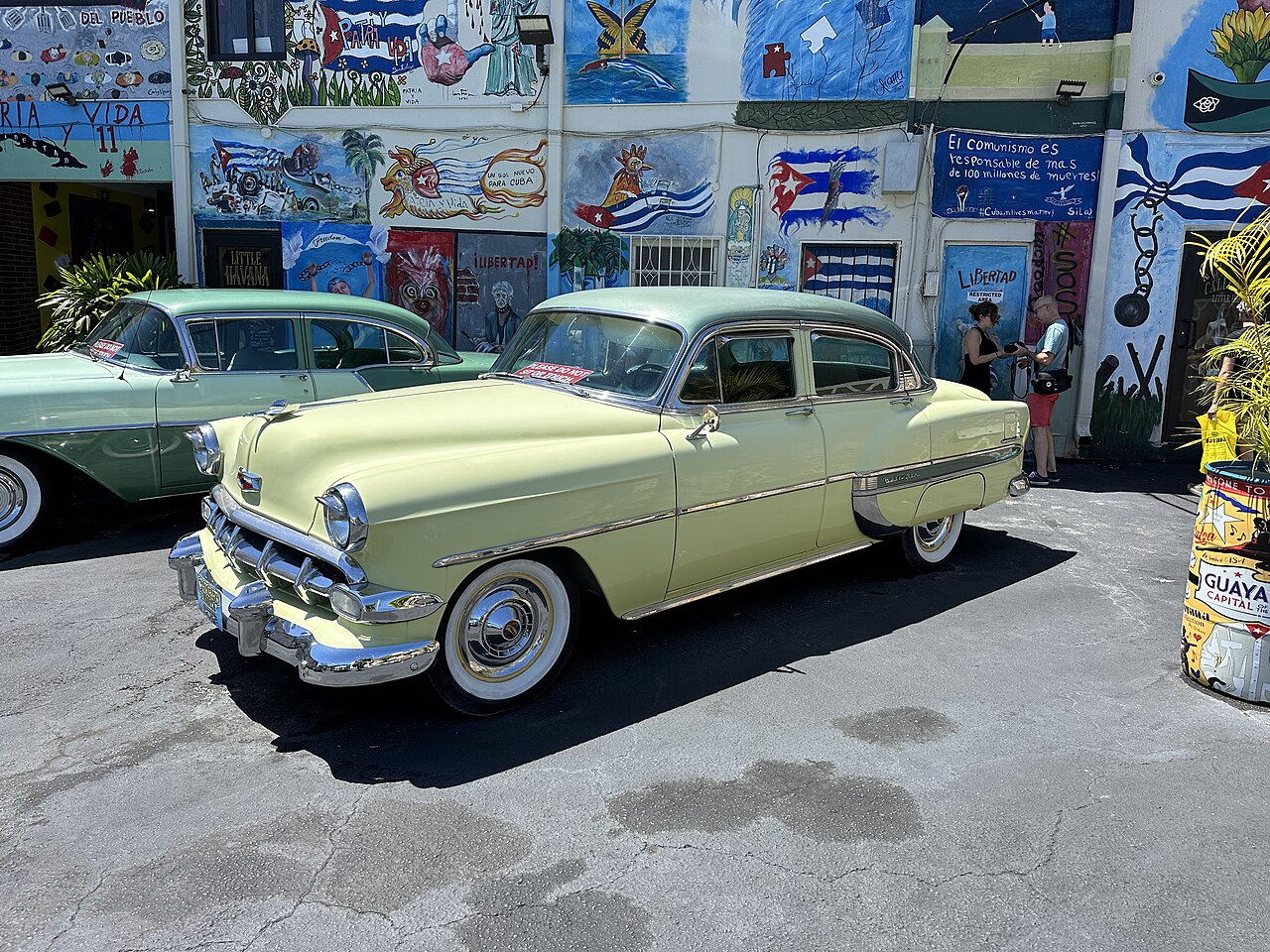
A few streets over, two classic cars sit parked in front of a wall crowded with Cuban-themed murals. The cars are polished and the wall is loud, and together they feel like a set that nobody built on purpose. It is simply what the block looks like on an ordinary afternoon.
Little Havana is a good place to understand that a mural is rarely only decoration. It carries heritage. It tells a passerby what this street cares about, in colors that carry across a crosswalk long before anyone reads a sign. Stand here for ten minutes and you will watch people slow down, point, take a photo and keep walking with a slightly better mood.

Wynwood, one wall at a time
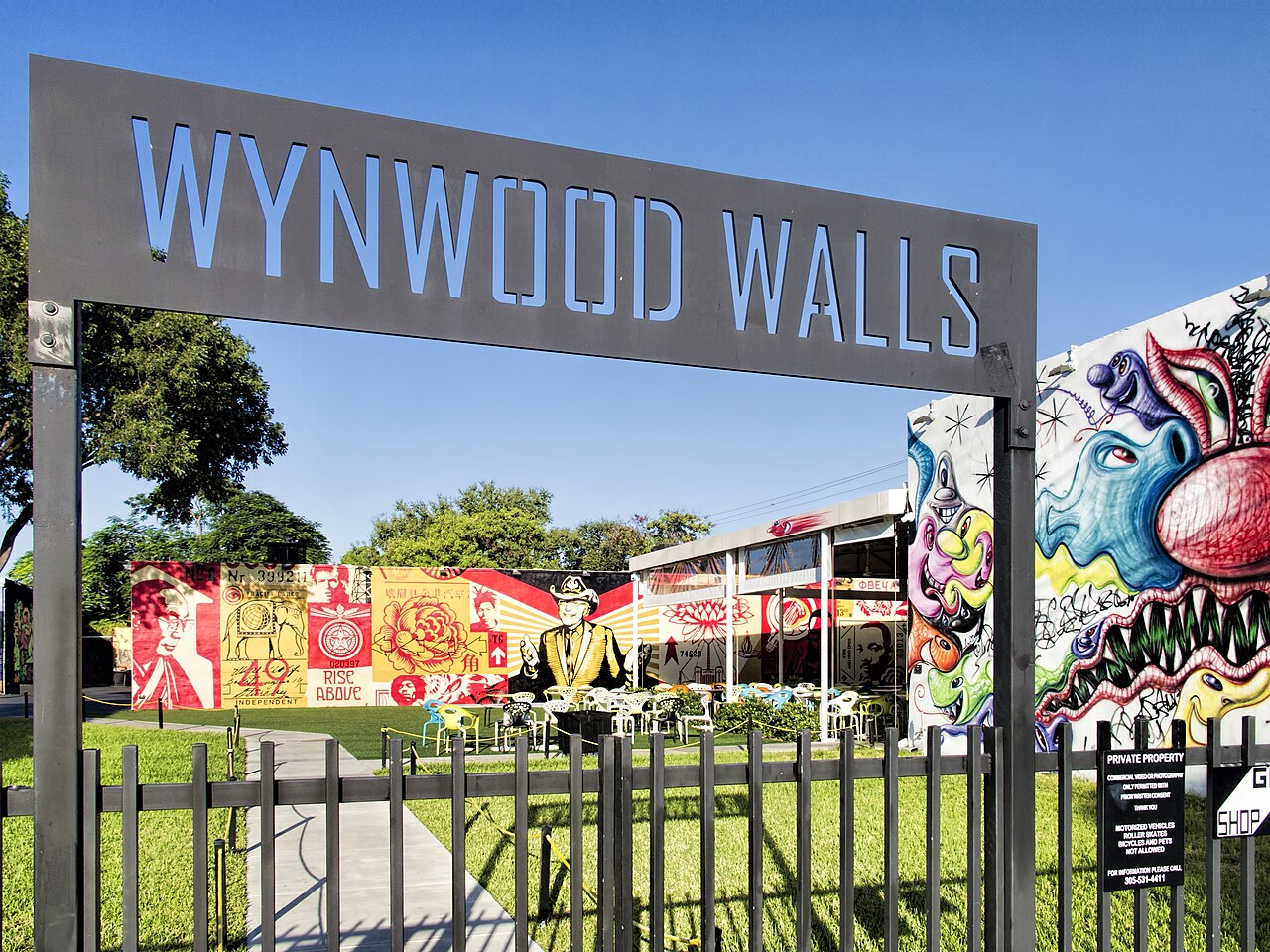
Wynwood is the neighborhood most people picture when they think of Miami street art, and it earns the reputation. It grew up as a warehouse district, and those big, plain buildings turned out to be ideal for painters. Today the walls are the main attraction, and the sign at the entrance to Wynwood Walls, at the top of this page, is where many visitors begin.
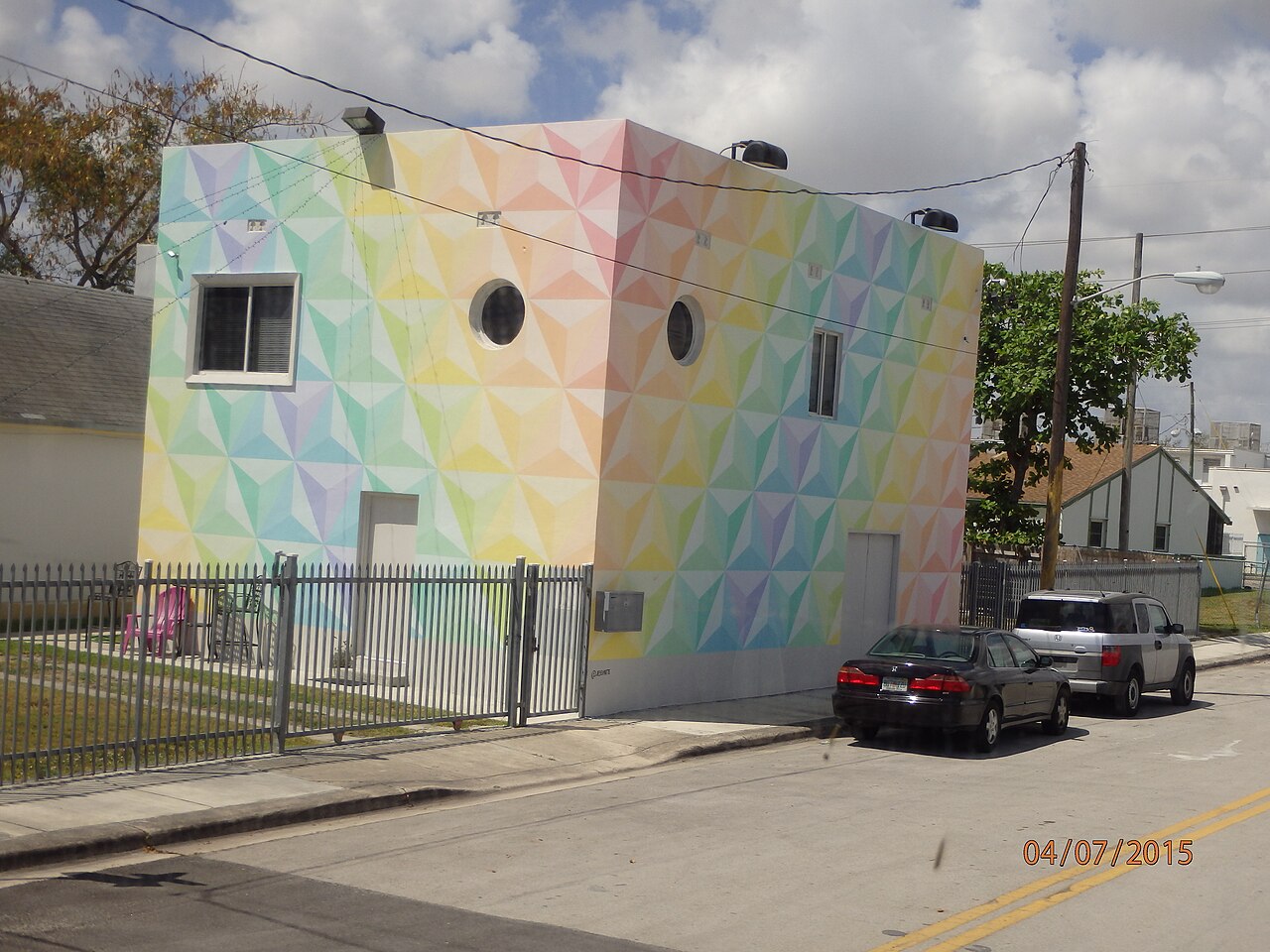
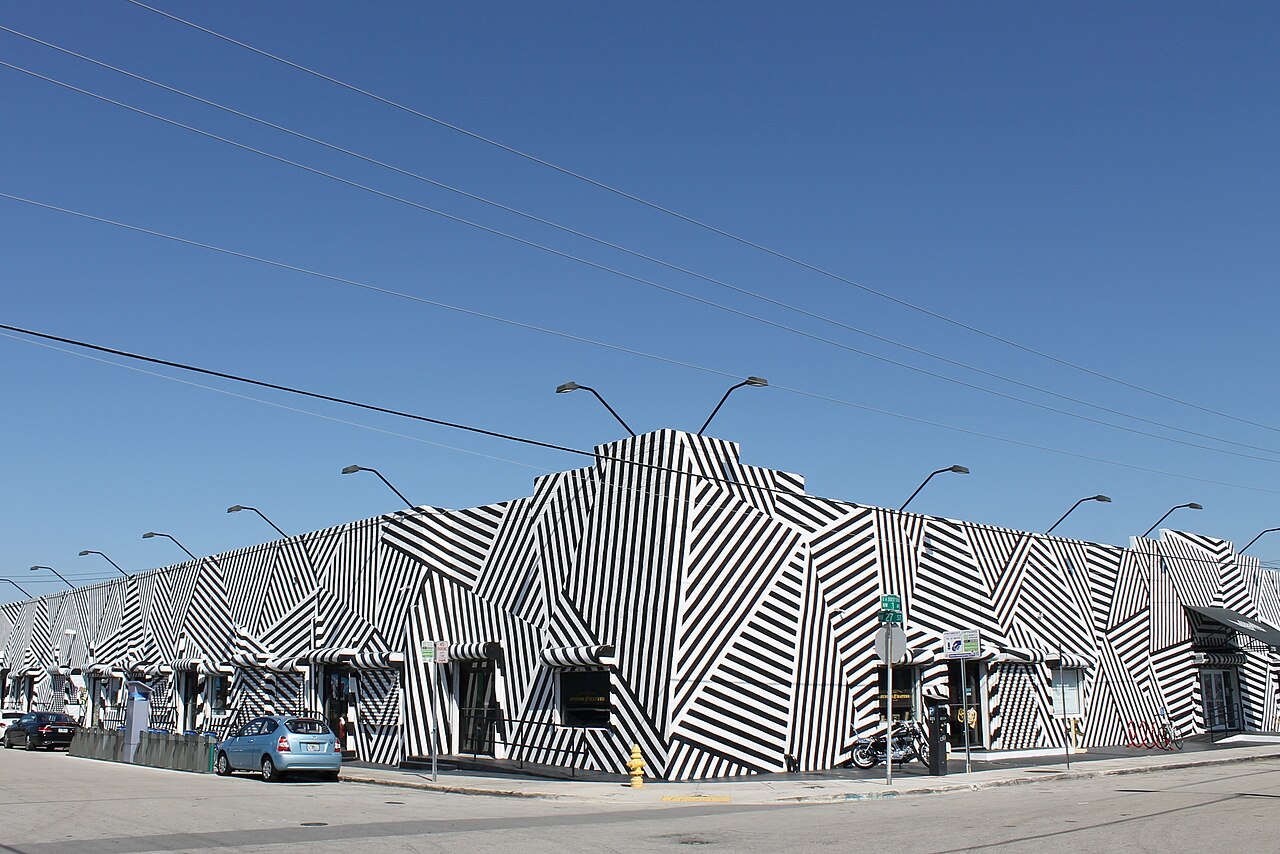
Some of the walls are almost quiet. A small building is covered in pastel triangles, a rainbow of soft geometry beside an unhurried street, and it somehow looks calm in the middle of all that energy. Around another corner, a building is wrapped in bold black and white diagonal stripes that seem to move when you walk past in the sun.
What strikes you is the range. Wynwood is not one style, and that is exactly why a walk here rewards patience. Pastel next to graphic next to loud, each wall making its own case, and the street is richer for the argument.


Lettering, shutters and polka dots
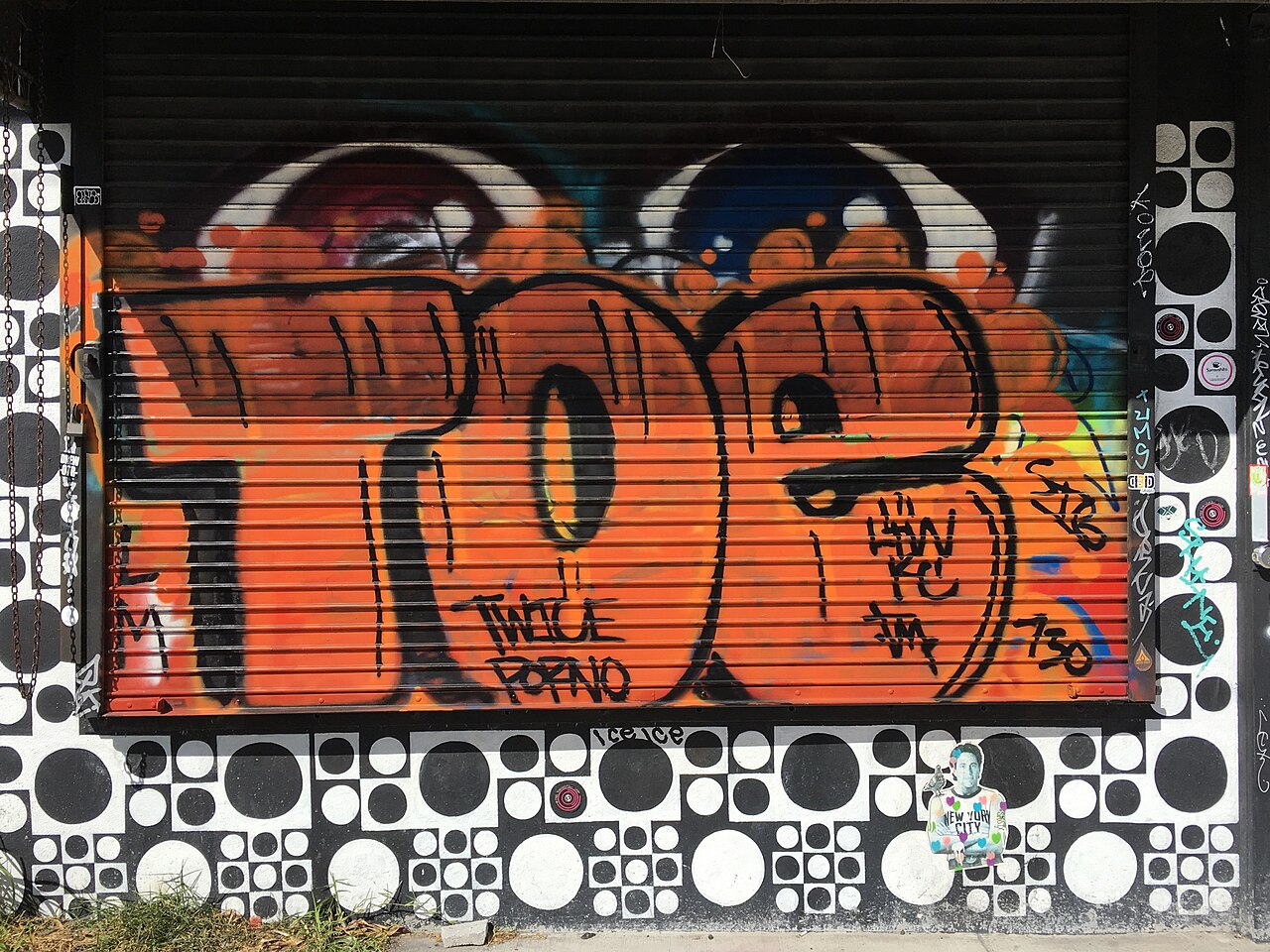
Look closer at the edges of the neighborhood and you find the everyday layer. Orange graffiti lettering runs across a roll-down shutter, and below it a wall is painted in black and white polka dots. Nobody is posing here. It is a working street, and the paint is part of the furniture.
Miami street art lives at both scales. There are the famous walls people travel to see, and there are the shutters and side walls that make an ordinary block feel looked after and a little more playful than it had to be. The second kind rarely gets a plaque, but it is often the kind you remember.
If you are walking with a camera, give these walls a minute. The details, from the edge of a letter to the line where one pattern meets the next, are where the hand of the painter shows.

Pink towers and old Art Deco
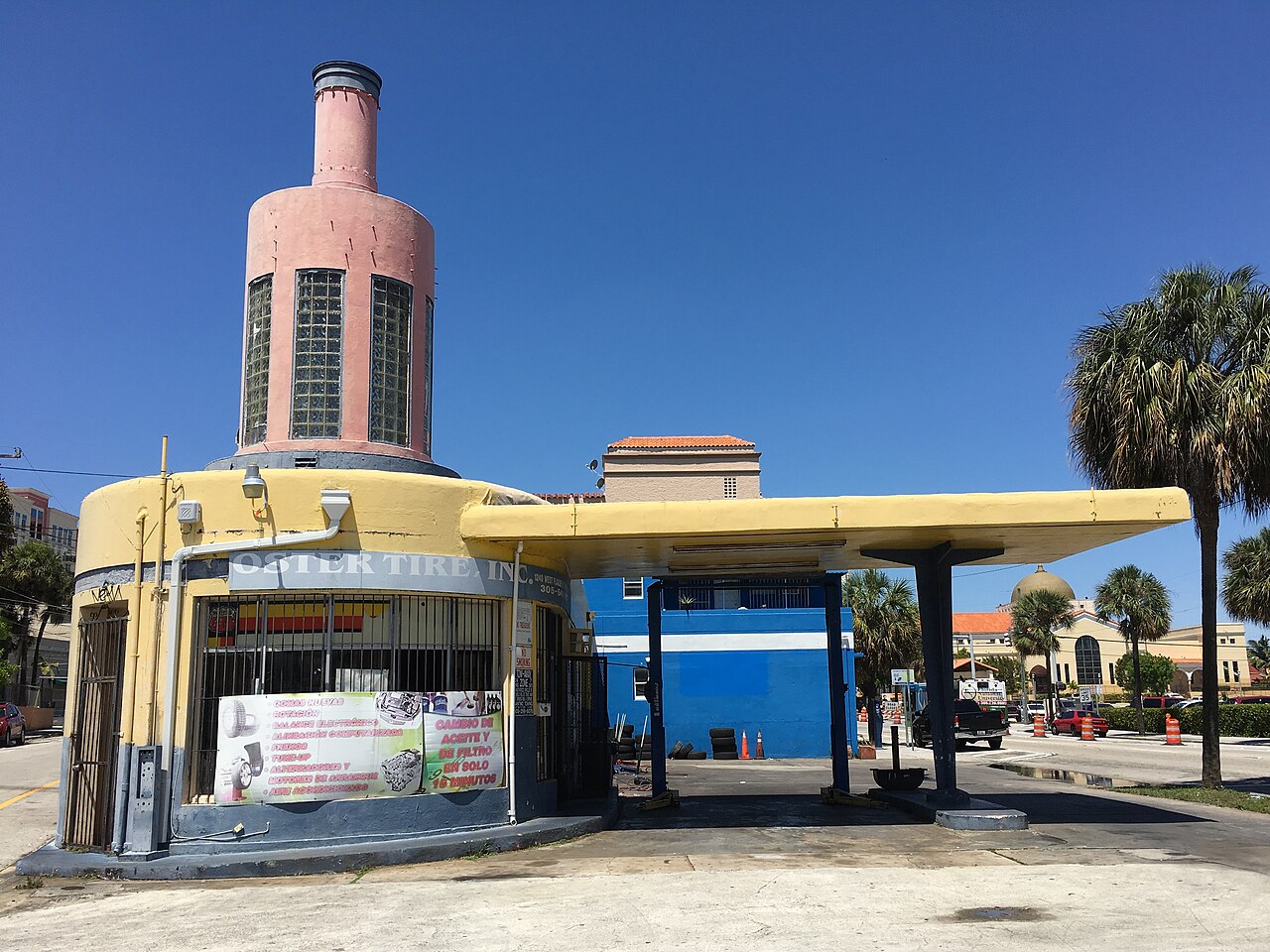
Not every colorful building in Miami is a mural, and the city is better for the overlap. A former Art Deco gas station near downtown stands with a pink tower, a yellow canopy and palm trees under a blue sky. Here, color is part of the architecture itself.
It helps explain why murals fit this city so naturally. Miami has long liked its buildings bright, and a painted wall continues a habit that was here well before the current wave of street art.
Walk past it slowly and notice how the tower and the canopy frame the corner. Buildings like this were made to be looked at from a moving car, and they still stop a walker in the middle of the sidewalk. A bright facade is a kind of promise to the street, and this one still keeps it.

Down to the water
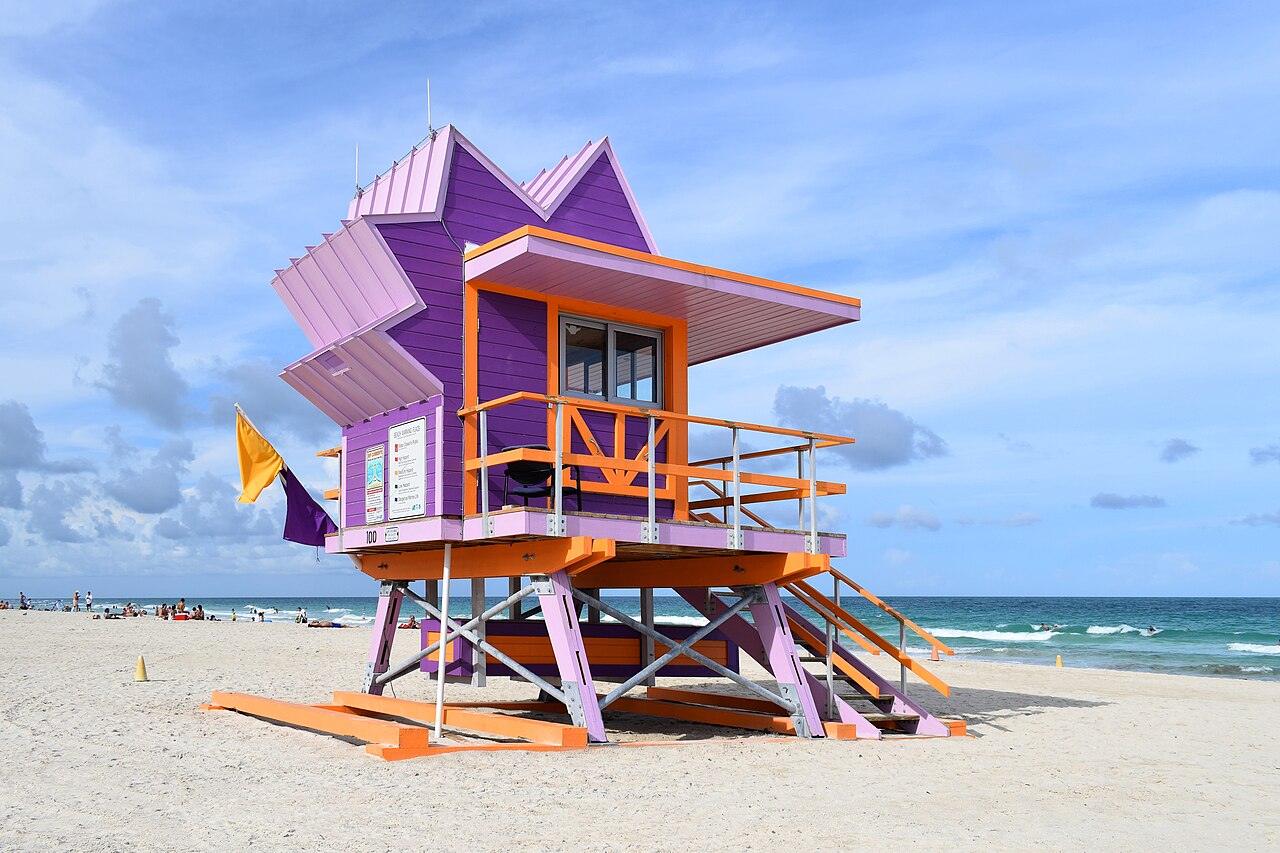
Cross to the beach and the palette shifts to sand and sea. A bright purple and orange lifeguard stand sits on the sand in South Beach with the ocean behind it, and it may be the smallest piece of public color in this story. It is also one of the happiest.
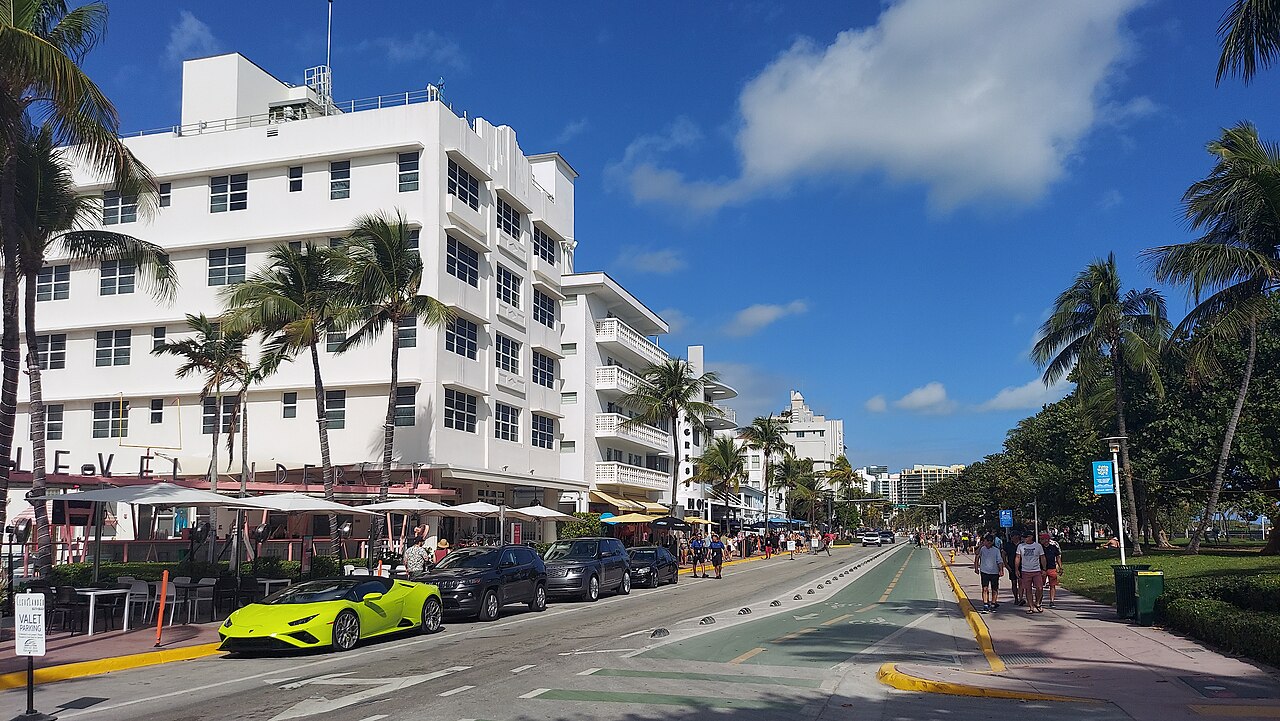
Ocean Drive adds its own backdrop: white Art Deco hotels in a row, palms along the curb and people strolling the sidewalk at an easy pace. The street has a point of view of its own, which is a good reminder of how much this city trusts color to do the talking.
Both scenes share a lightness. Nothing here is trying to be serious, and yet the colors do real work: they mark the shoreline as a place for people to gather, linger and take their time.


Room to breathe downtown
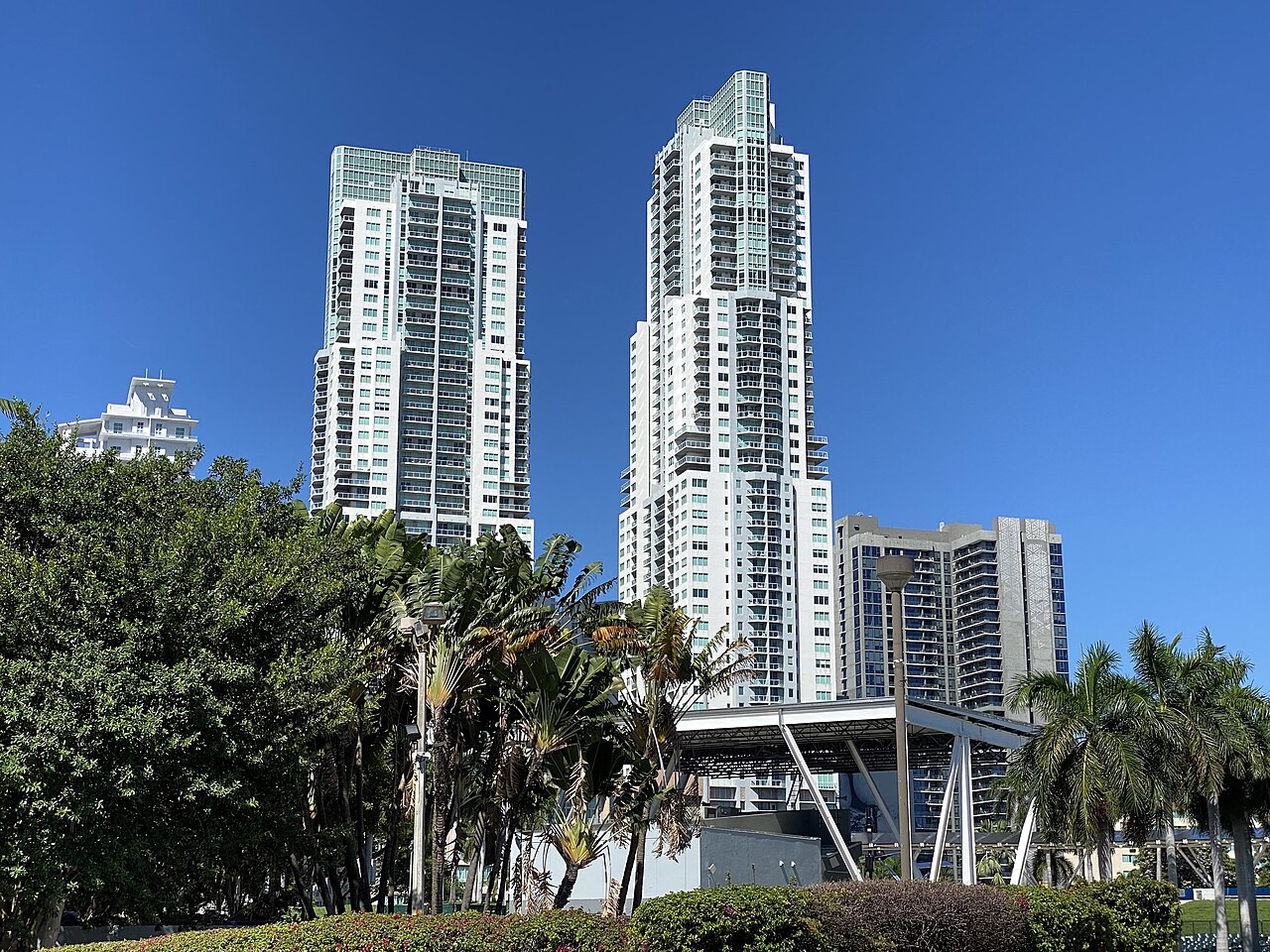
Downtown Miami is a place of towers, and at Bayfront Park they rise above palms and greenery. A park gives a dense city somewhere to exhale. The walls waiting in the neighborhoods give that breath a face.
The contrast is useful for anyone who owns or manages a building. Tall glass keeps its distance from the sidewalk. A painted wall, by comparison, invites people in. If you want to see how the pieces fit together across the city, our Miami page is a good place to start.

Leave by the lights
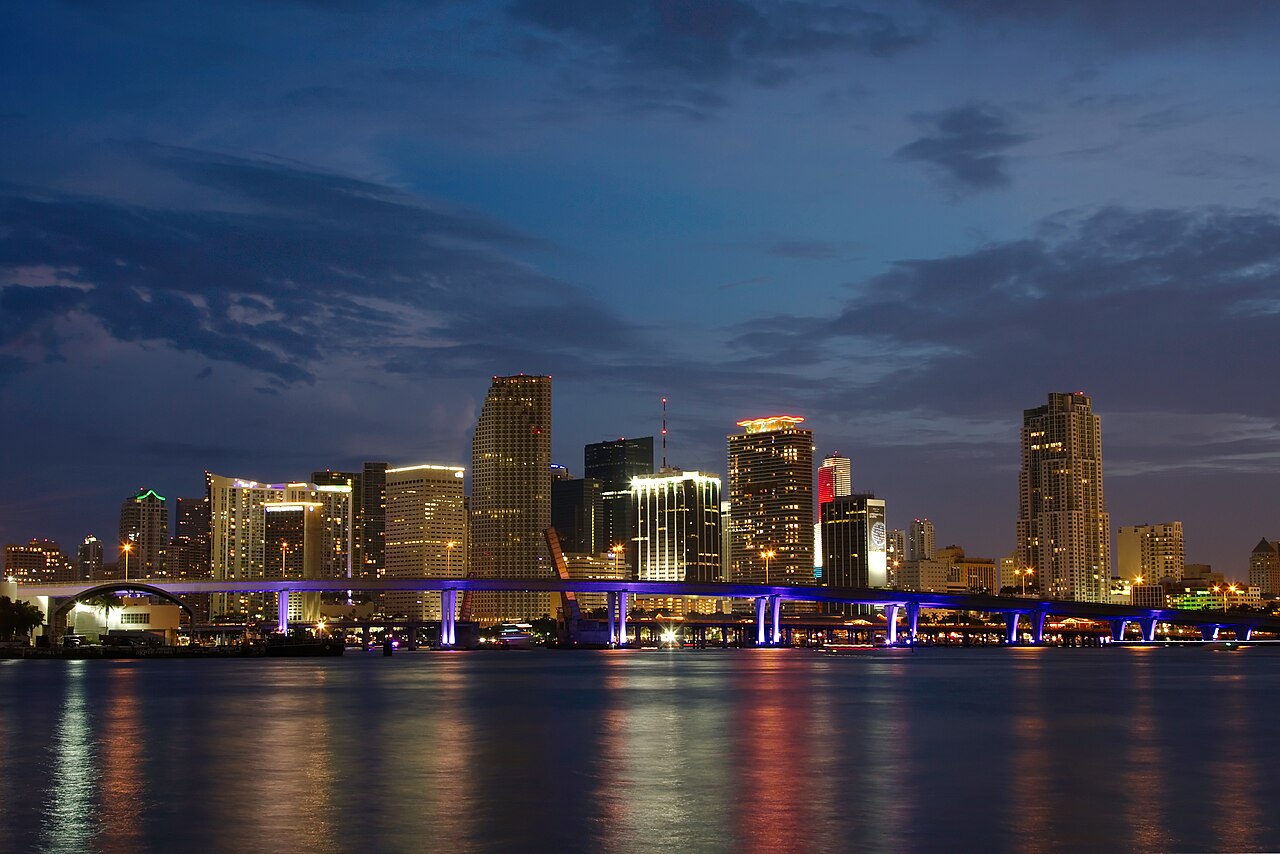
End the day across the water. The downtown skyline glows at dusk, and a blue-lit bridge crosses the foreground. From here the walls you visited feel like the human scale of the picture, the part of Miami you can actually walk up to and touch.
That is what Miami murals do best. They turn a famously big, fast city into a series of corners that each have something to say.
Come back in the morning and the whole route reads differently. The same walls catch other light, and the neighborhoods you crossed in the heat of the day feel closer together than they did on the map.

If you have a wall in mind
Every wall in this story started as a blank surface and somebody's decision to give it a voice. If you manage a building in Miami and keep looking at a plain wall, we would like to hear about it. Tell us about your wall and we will take it from there.
Frequently asked questions
- Where can I see murals in Miami?
- Wynwood is the best-known place for Miami street art, and Little Havana has painted walls rooted in the neighborhood's Cuban heritage. South Beach adds Art Deco color along Ocean Drive and the sand.
- Which Miami neighborhoods have the most street art?
- Wynwood is where most people start. Little Havana is a close second for culture and storytelling, and you will find colorful walls and shutters scattered through the blocks around both.
- Is street art legal in Miami?
- It depends on the wall and its owner. Murals painted with a property owner's permission are commissioned work; unsanctioned pieces are a different matter. If you own a wall, ask a muralist and get the agreement in writing.
- How do I find a muralist in Miami for my building?
- Start with a muralist whose style suits the wall and the neighborhood, then talk through size, surface and look. We help match walls with muralists and handle quotes, contracts and scheduling.
All photos are free-licensed and credited under each image; license links go to the original file pages.