City story · Minneapolis · 6 min read
Minneapolis Murals: Color for a City Built Around Water
A five-story wall of sheet music, a row of grain silos and a painted Venice above a parking lot: a walk through the Minneapolis murals and street art that brighten the gray days.
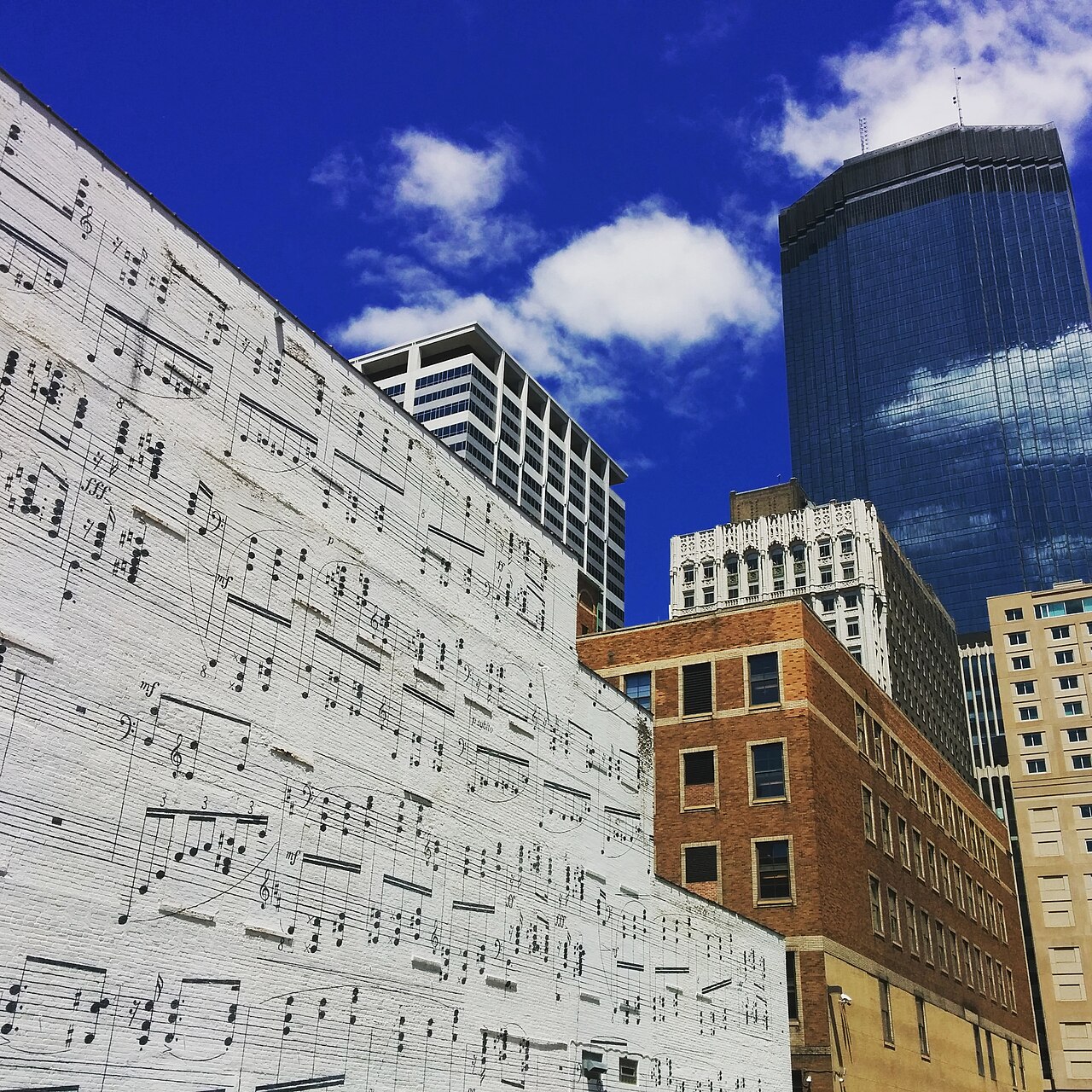
A wall you can read
Look up from the sidewalk downtown and one wall seems to be playing a tune. Sheet music climbs five stories of white, black notes marching against a deep blue sky, with glass towers standing behind it. You do not need to read music to get the idea. A big blank wall became a piece of the skyline, and it did it without a single word.
That is the quiet promise behind most Minneapolis murals. The city is easy to like from a distance, with its towers, its river and its lakes. Paint is how it gets close to you.
Stand there a minute and notice who else is looking. Someone waits for a light and glances up. Someone on a phone call tilts a head back. A wall this size changes the way a block feels, and it does so for everyone who passes, not just the people who came to see art.
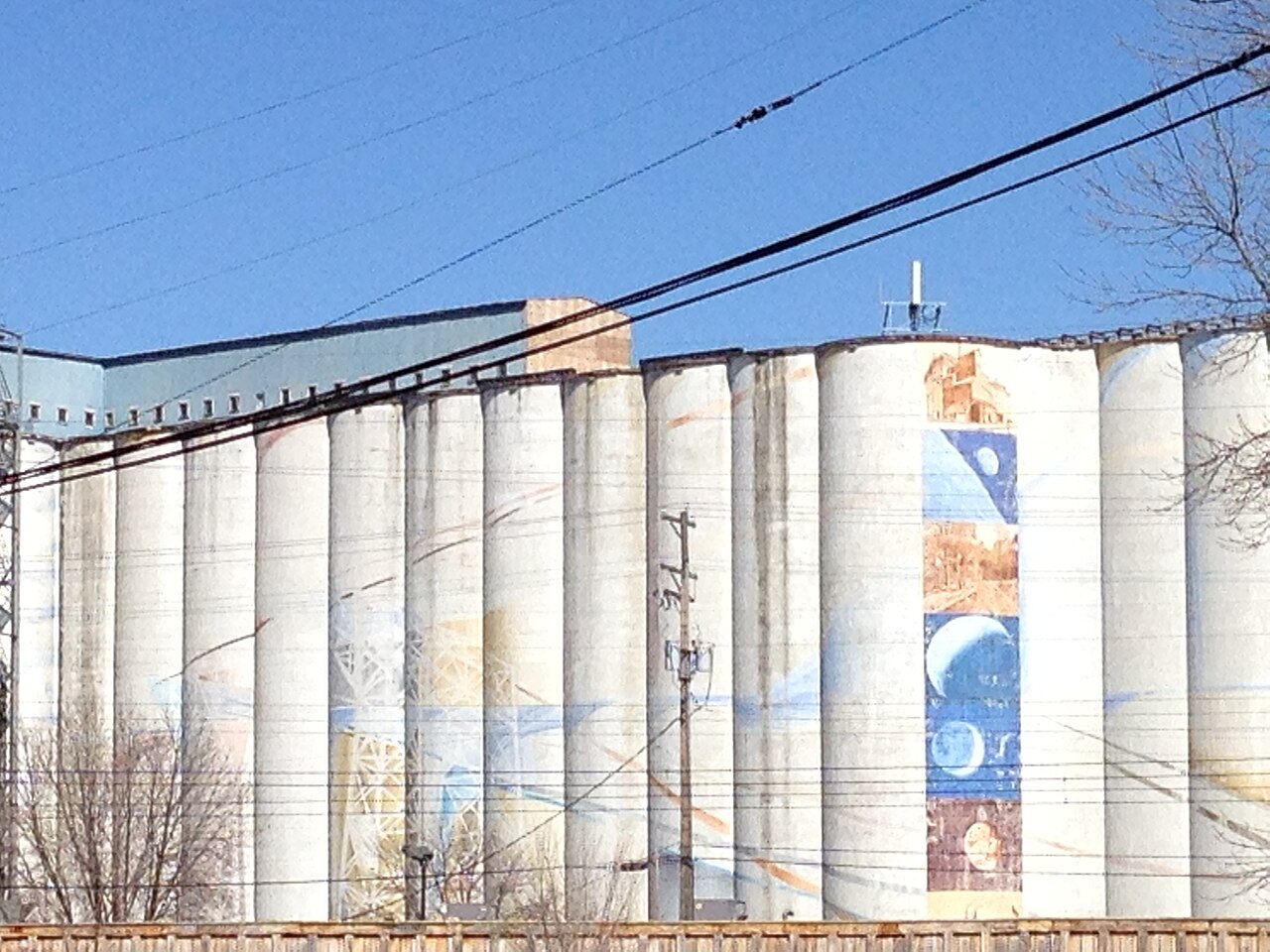
Moon over the silos
Head south along Hiawatha Avenue and the scale changes. A row of concrete grain silos stands beside the road, and someone looked at that tall, curved, unpromising surface and saw a long strip of sky. Moon and landscape panels run up the cylinders under a clear blue sky, so that a piece of industrial storage reads as a slow, painted night.
Silos are hard walls. They curve, they are tall, and they are seen from moving cars. A mural that works there has to be simple enough to read at speed and strong enough to hold up when you stop.
There is a patience to it, too. Drive by once and you see the moon. Come back on foot and you notice the way the panels step up the cylinders, one scene handing off to the next.

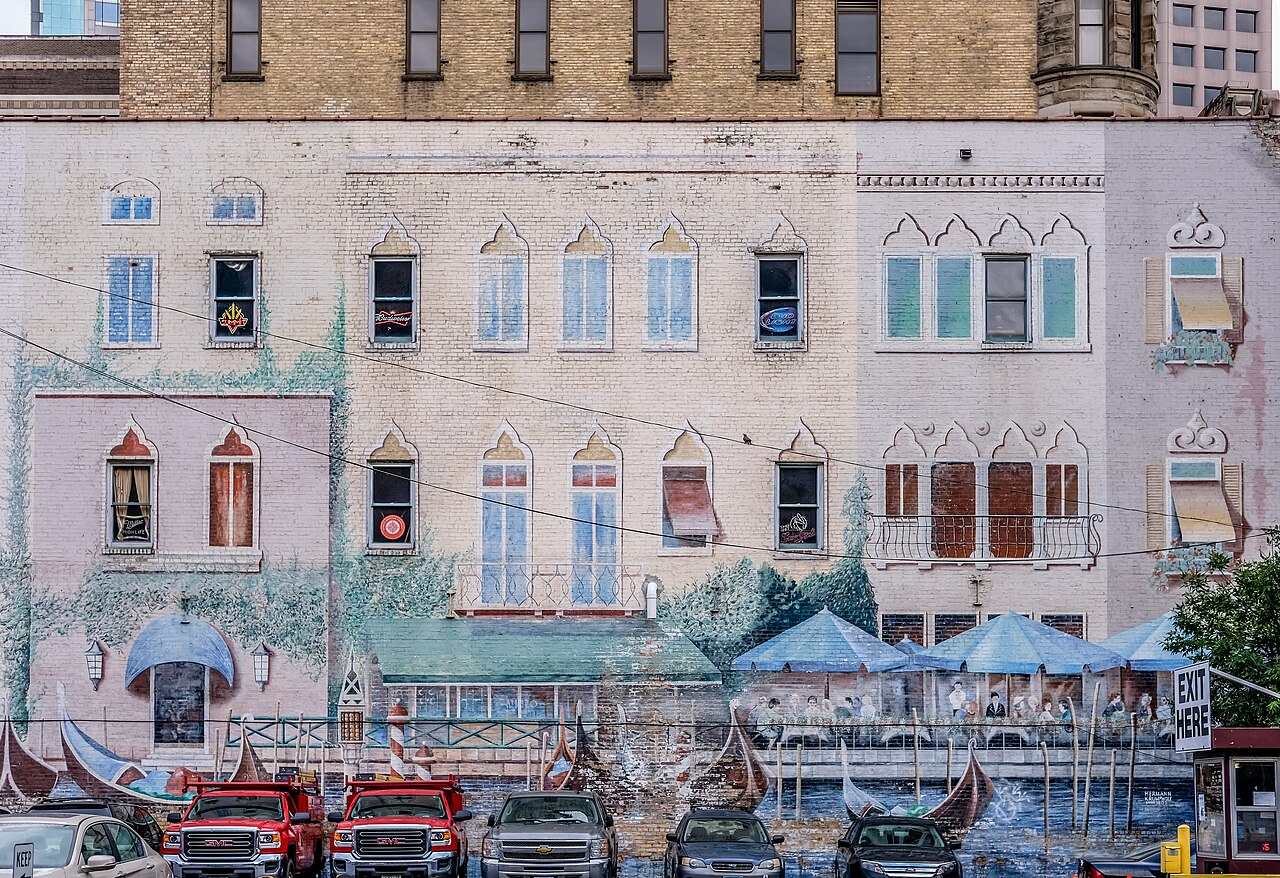
Venice, above the parking lot
Downtown has a joke it tells with a straight face. On a brick wall above a parking lot, a trompe-l'oeil scene of Venice: buildings stacked along a canal, gondolas on the water, cafe umbrellas set out as if lunch were just about to be served.
Trompe-l'oeil means fooling the eye, and the fun is in the half second when you almost believe it. Then you smile and keep walking, a little less aware of the parking lot. A painted view is a cheap way to add a window to a place that never had one.

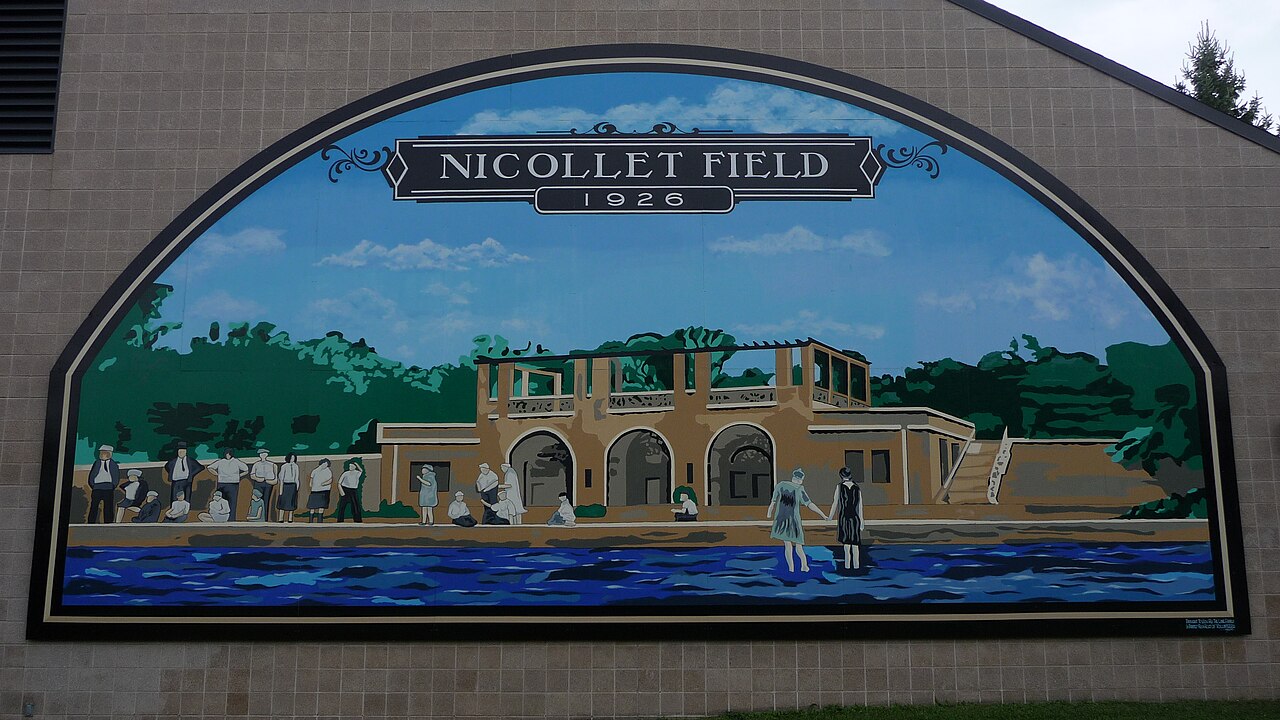
The park that remembers a pavilion
In Martin Luther King Park, an arched mural fills the wall of a tiled park building. It shows the Nicollet Field pavilion as it looked in 1926, with bathers beside it. Neighborhood murals often do this work: they hold onto a place that is no longer standing, so people who never saw it can picture it.
It is a different mood from the silos or the skyline wall. This one is local and a little tender, made for the people who use the park and a good example of how murals can act as a neighborhood's memory.
It also shows what a mural can do for a place that is not on any postcard. Nobody planned a tourist stop here. People who live nearby just get a better walk to the corner, and that is a fine thing for a wall to be responsible for.

Uptown, one corner at a time
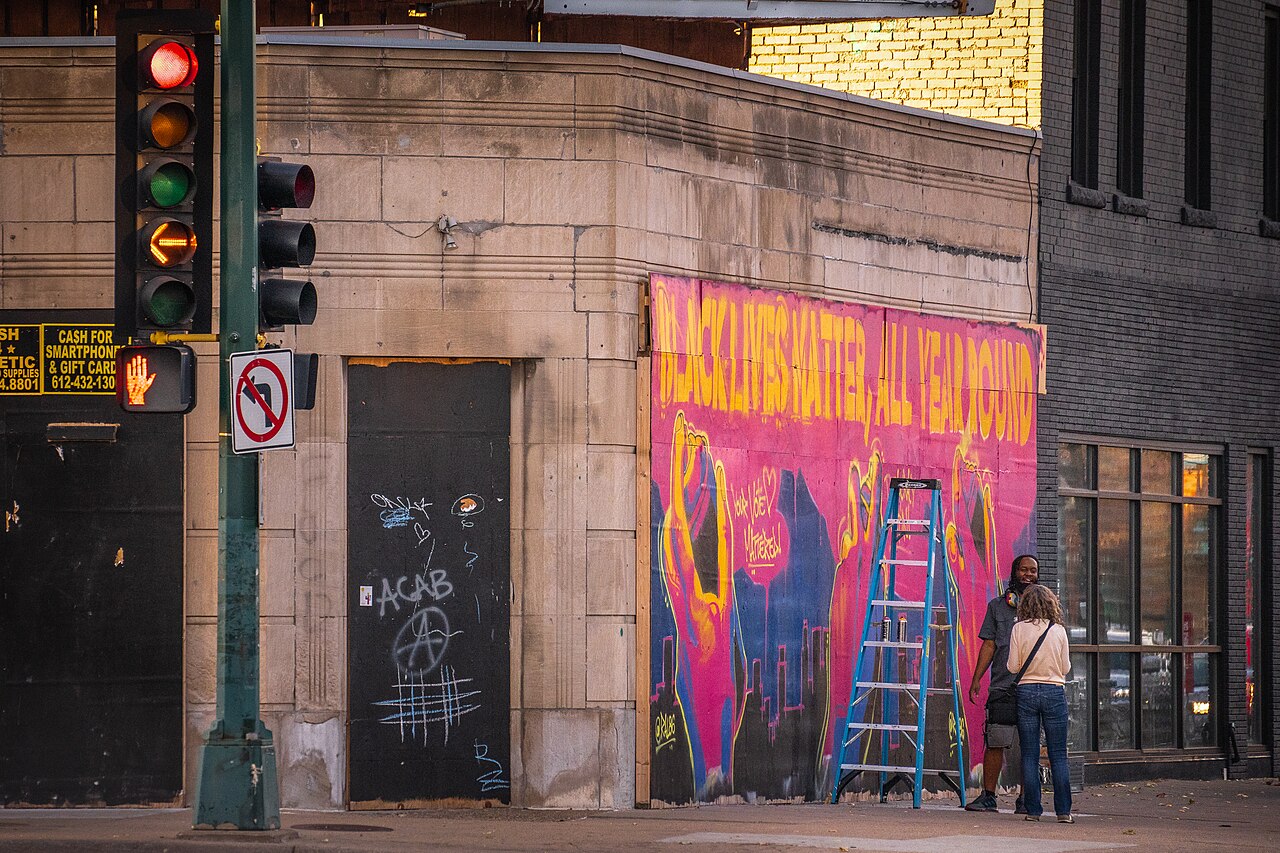
On Lyndale Avenue in Uptown, a pink and yellow painted mural covers a street-corner storefront. A ladder leans nearby, and two people stand talking beside the wall. That is the best picture of street art in Minneapolis: not a monument, but a corner where somebody paints, somebody else stops to chat, and the sidewalk gets a little warmer.
Storefront walls are the everyday gallery of any city. They are small, close and personal, and they change with the block.
Minneapolis street art lives comfortably in this kind of setting, between the shopfronts and the sky, where color is part of how a street introduces itself.

Eat Street and the long view of Nicollet
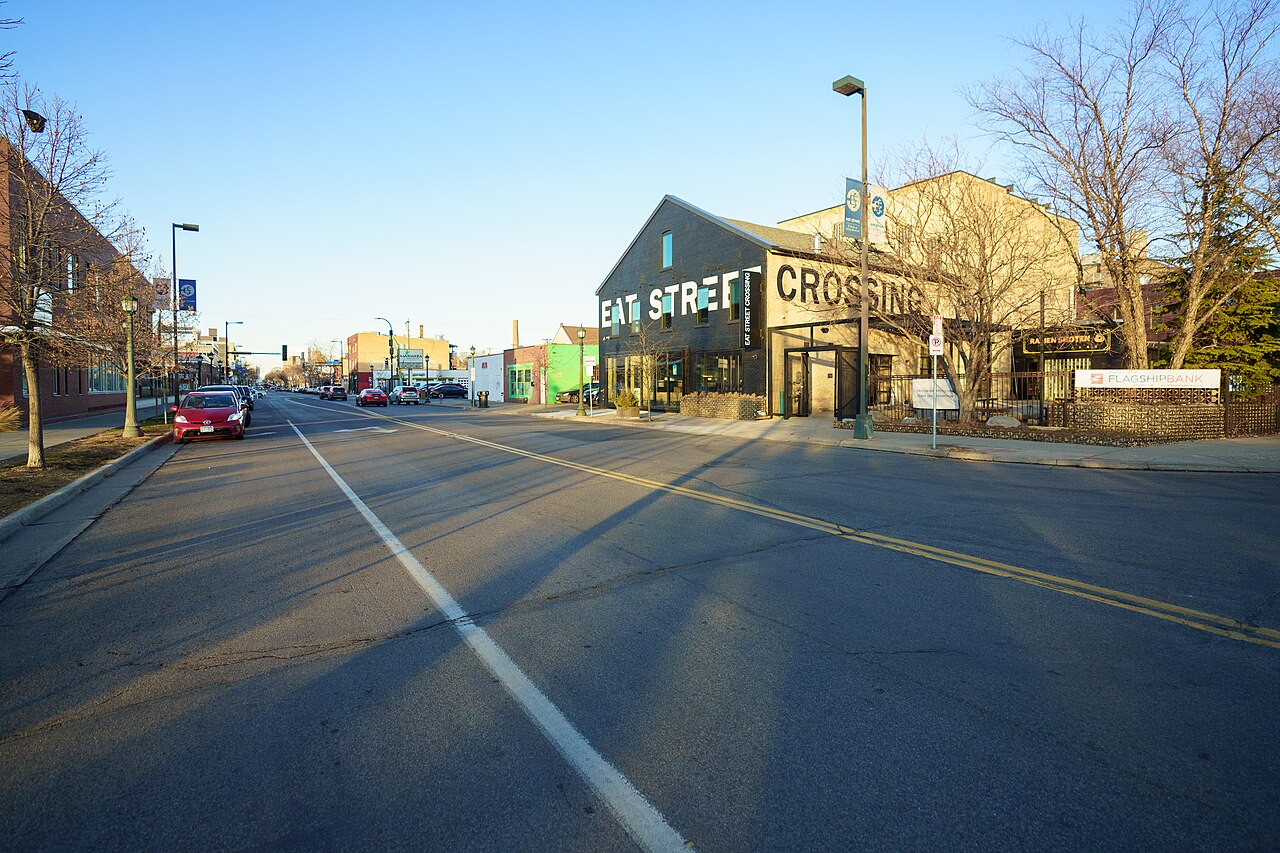
Nicollet Avenue runs through south Minneapolis with a stretch of low shops and restaurants that locals call Eat Street. On a clear day the street opens up wide, with plenty of sky and plain brick, and you can see how much room there is for color.
Restaurants and small businesses know this better than anyone. A painted wall is a sign that can be as friendly as the food. When it is done well, a street starts to feel like somewhere you would meet a friend.
Imagine coming out of a tunnel of retaining wall into a burst of paint. Even a short stretch changes the ride, and the people living above it get a view worth having.

Below street level, on the Greenway
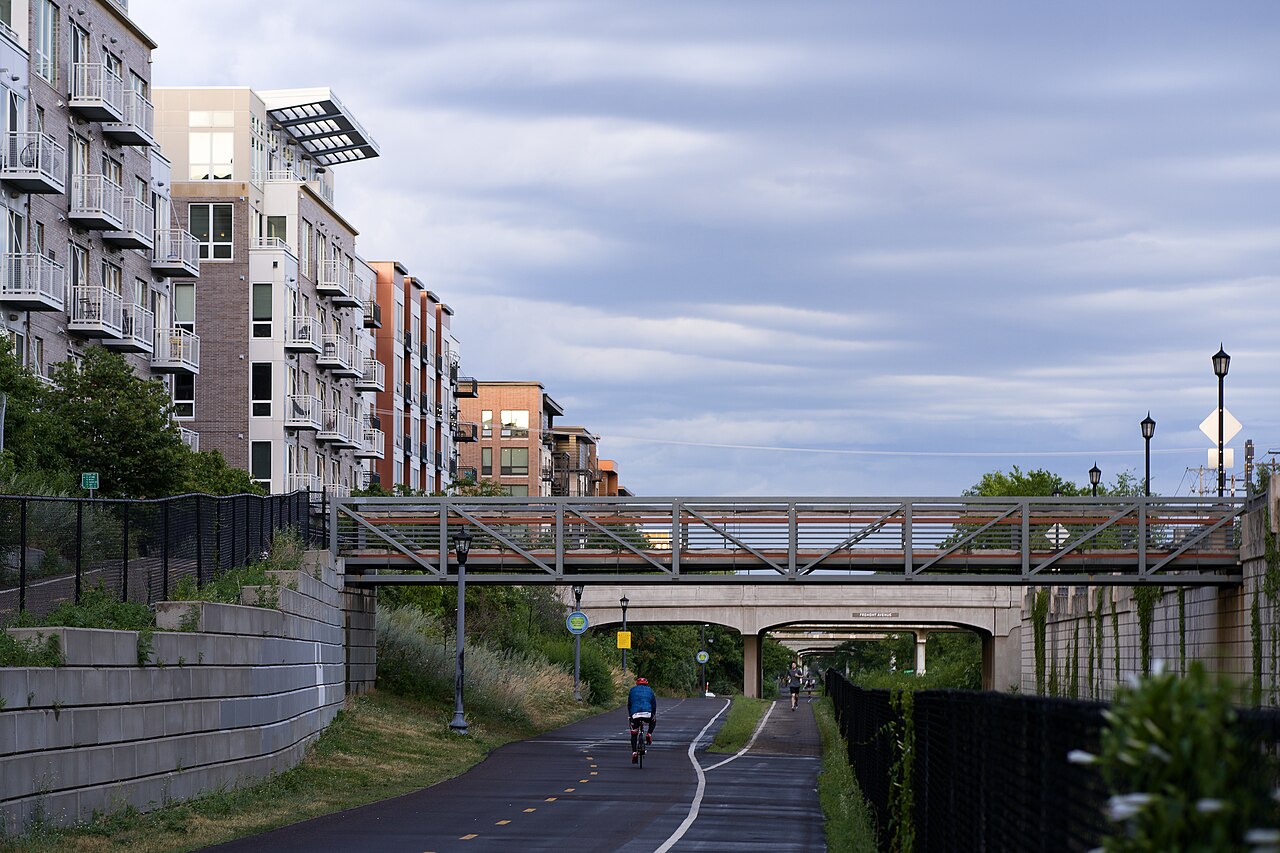
The Midtown Greenway is a sunken bike path that runs beneath footbridges and past new apartment buildings. A lone cyclist rides off into the distance. The path is quiet, linear and full of retaining walls and bridge faces that people pass at a steady pace.
Any trail like this is a natural place for murals, because the audience is moving slowly and the walls line up one after another. Where a building meets the path, the wall facing it is worth thinking about.

Water, stone and sky
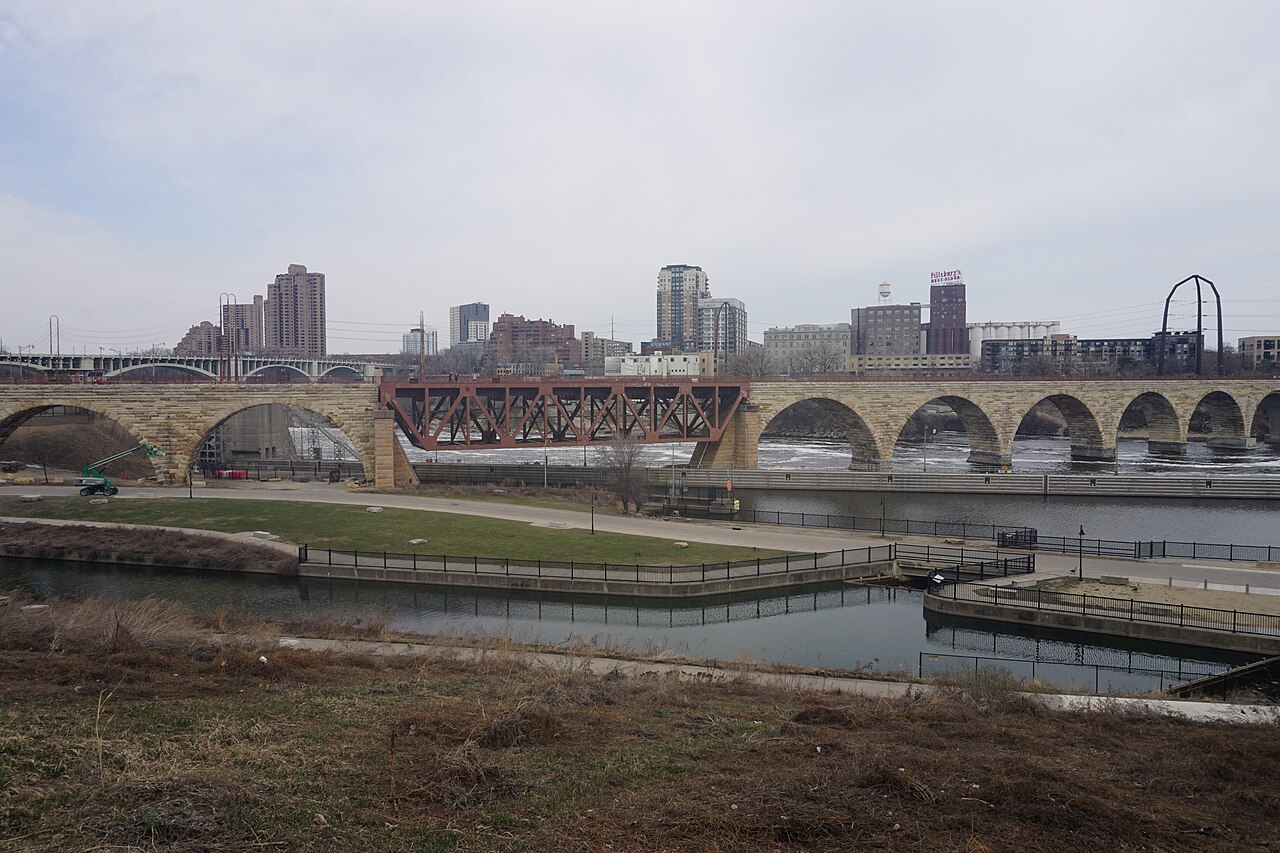
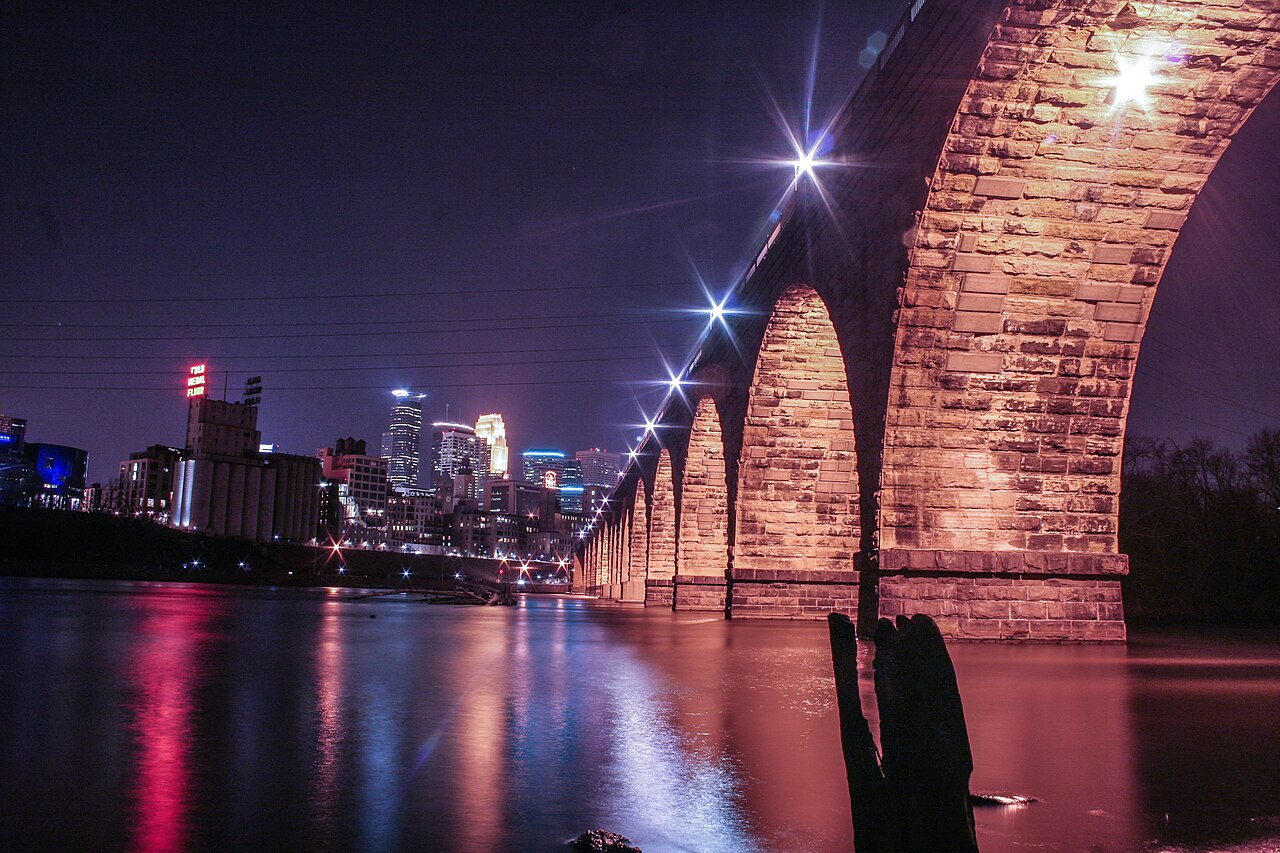
Minneapolis grew up on the Mississippi, and a walk across the Stone Arch Bridge shows why. Its row of stone arches crosses the river with downtown behind it. On a gray day the stone looks almost like a painted line. At night the arches light up and the skyline glows past them.
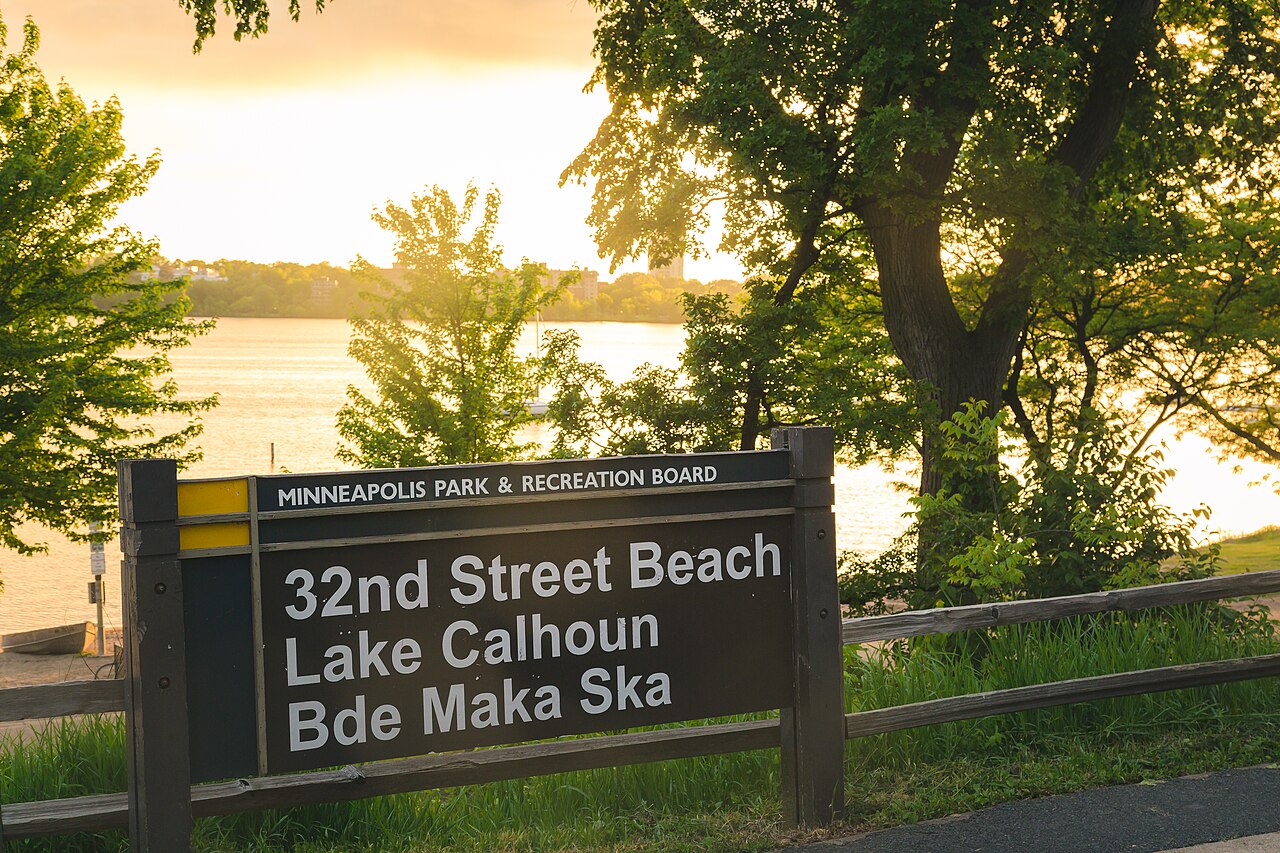
Down at Bde Maka Ska, a park board sign marks 32nd Street Beach while the lake catches the last gold of the evening. The city is organized around water and light, and the murals are a way of bringing some of that color back inland, onto brick and concrete.
Seasons matter here. A city that spends part of the year under gray skies learns to value a bright surface, and you can feel that in how people stop for a good wall, even in a coat and gloves.



End under the moon
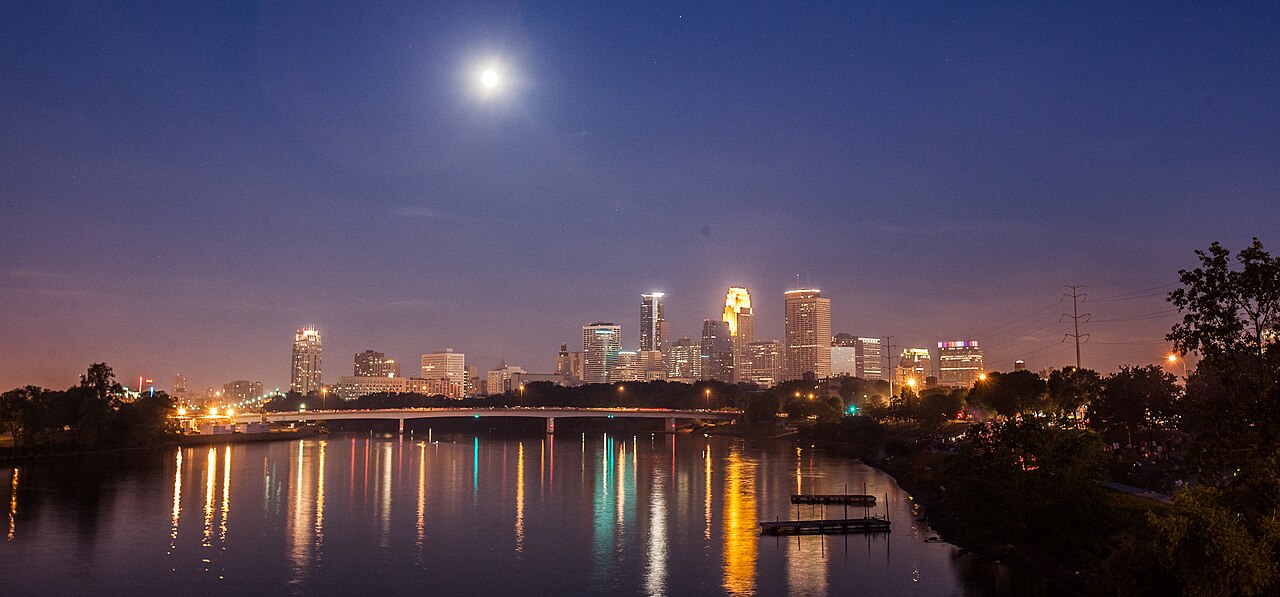
Finish by the river at dusk. A bright moon hangs over the downtown skyline and the water holds the reflection. After a day of walls, it is a nice reminder that the best of them borrow from exactly this: a big sky, a bit of light, and a city that likes to be looked at.
Minneapolis murals do not shout. They give a gray winter street something to talk about, and they leave the rest to the people walking by.
Come back in a different season and you will find the same streets in a different light. That is part of the pleasure of Minneapolis murals: they keep giving the city a fresh face while the river and lakes stay put.

If you have a wall in mind
Every mural here started as somebody's plain wall and a decision to give it a story. If you manage a building in Minneapolis and there is a wall you keep looking at, we would like to hear about it. Tell us about your wall and we will take it from there. You can also read more on our Minneapolis page.
Frequently asked questions
- Where can I see murals in Minneapolis?
- Good places to start are downtown, Hiawatha Avenue in south Minneapolis, Uptown along Lyndale Avenue, Nicollet Avenue's Eat Street, and Martin Luther King Park. Walls change often, so look around each block.
- Which Minneapolis neighborhoods have the most street art?
- Uptown, the Nicollet Avenue corridor, downtown and the streets near the Midtown Greenway are all worth a walk. Each has a different mood, from storefronts to large building walls.
- Is street art legal in Minneapolis?
- It depends on the wall and its owner. A mural painted with the property owner's permission is commissioned work; unsanctioned painting is different. If you own a wall, agree the plan in writing with your muralist.
- How do I find a muralist in Minneapolis for my building?
- Look for a muralist whose style fits the wall and the neighborhood, then talk through size, surface and look. We help match walls with muralists and handle quotes, contracts and scheduling.
All photos are free-licensed and credited under each image; license links go to the original file pages.