City story · Philadelphia · 6 min read
Philadelphia Murals: A City That Paints Its Blocks
From a painted wall beside a parking lot to mosaic corners, a school facade and a market street, a slow walk through the Philadelphia murals and street art that make the neighborhoods feel lived in.
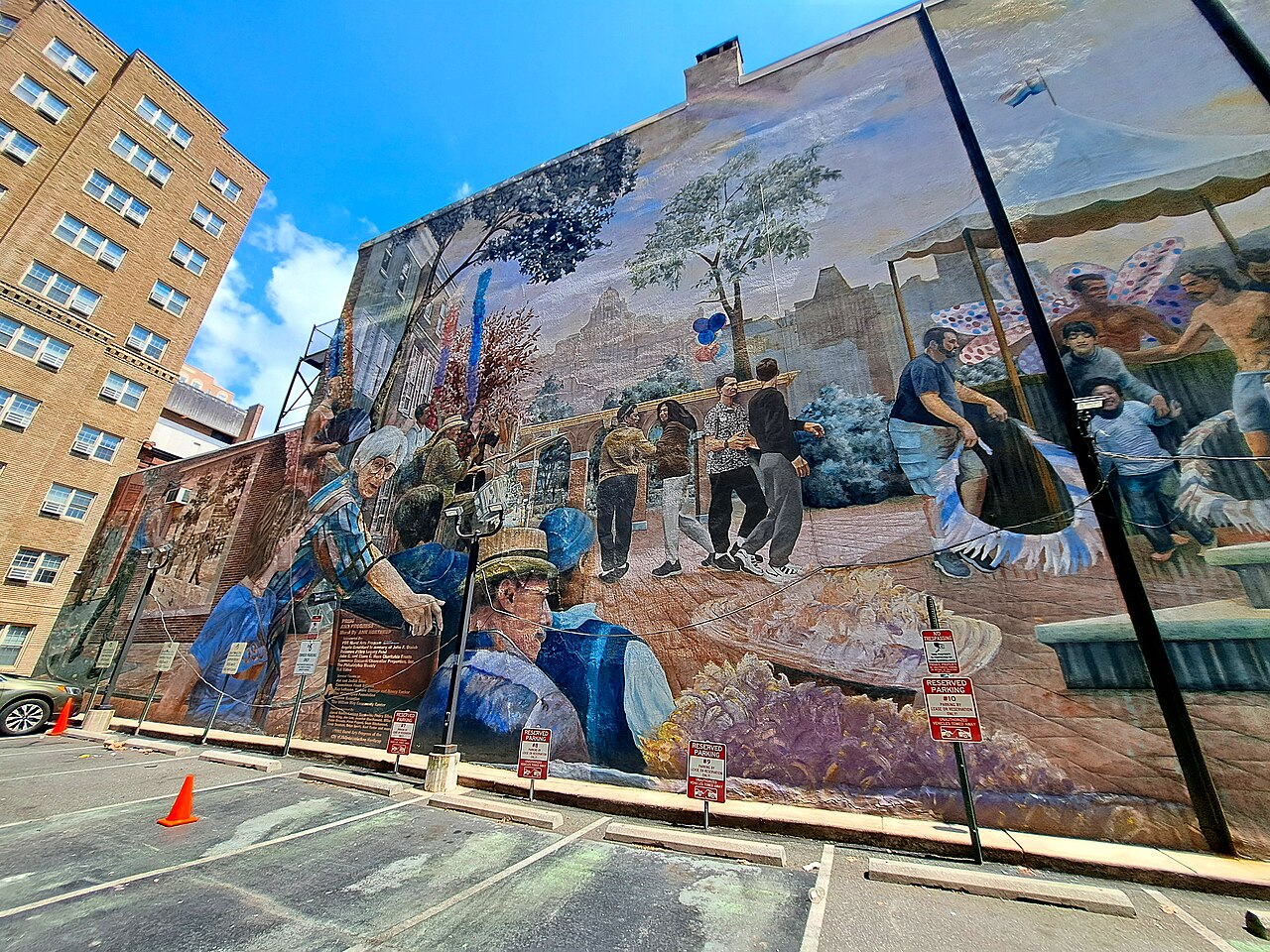
Look up from the parking lot
Plenty of Philadelphia murals are found the way you find a good sandwich: by turning a corner you had no reason to turn. A parking lot opens up, you look across it, and a whole side of a building is covered in color, with people painted along its length as if the block had invited its neighbors to stand on the wall.
That is the first thing to know about walking here. The city is built of brick and rowhouse, and brick has a lot of blank faces. In Philadelphia, a surprising number of them have been given something to say. Bring comfortable shoes and no fixed plan.
A ribbon above the river
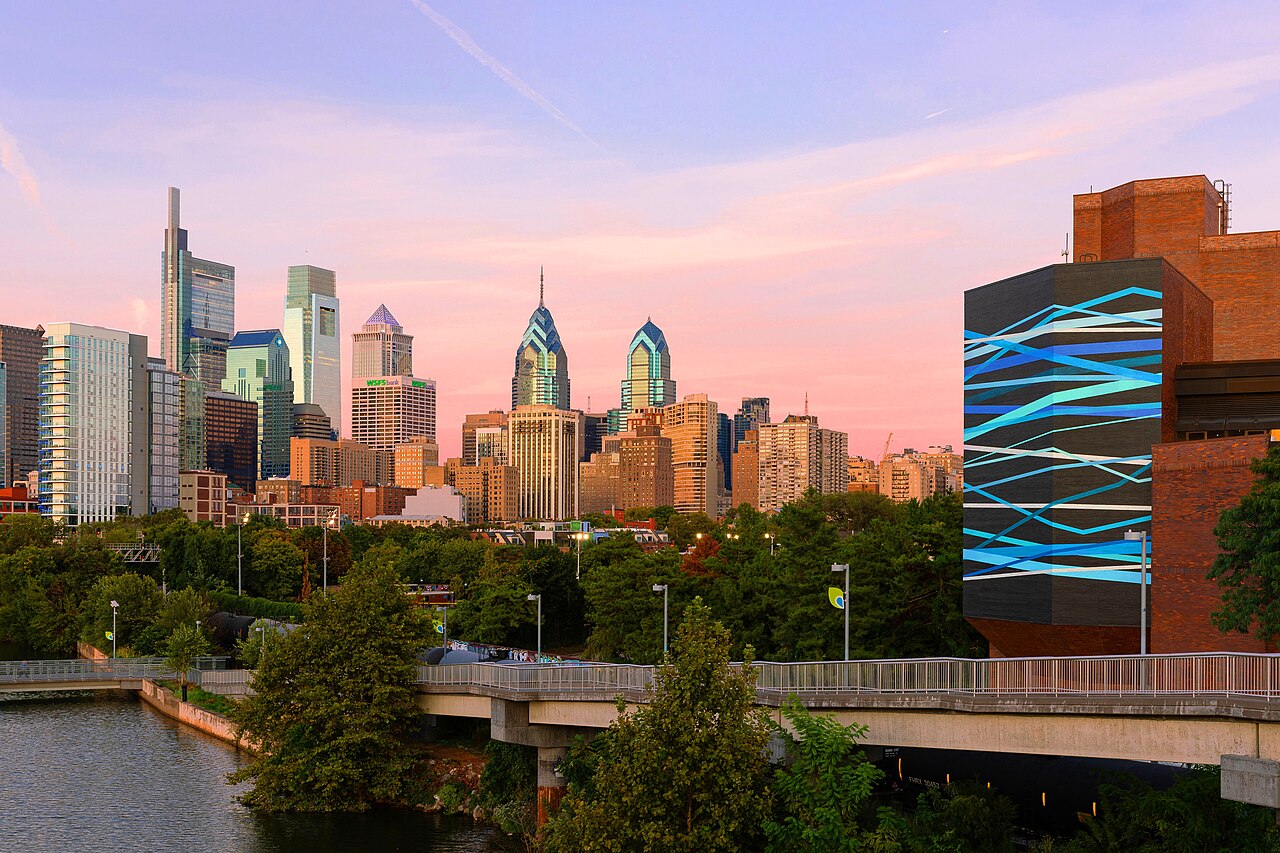
Near South Street and the Schuylkill River, a dark building wears a pattern of blue-and-white ribbons, and behind it the Center City skyline goes gold at sunset. The two belong together. One is made of glass and steel, the other of flowing paint, and the contrast is the whole pleasure of the view.
A mural like this does something a postcard cannot. It makes you look at the building before you look at the skyline, and then it hands you the skyline as a reward.
Take the ribbons as a clue to the rest of the day. This is a city of edges, where the river, the highway and the grid of streets all meet, and the painted walls sit exactly where those edges leave something plain. They are not trying to hide the building. They are trying to give it a mood.

South Street, covered edge to edge
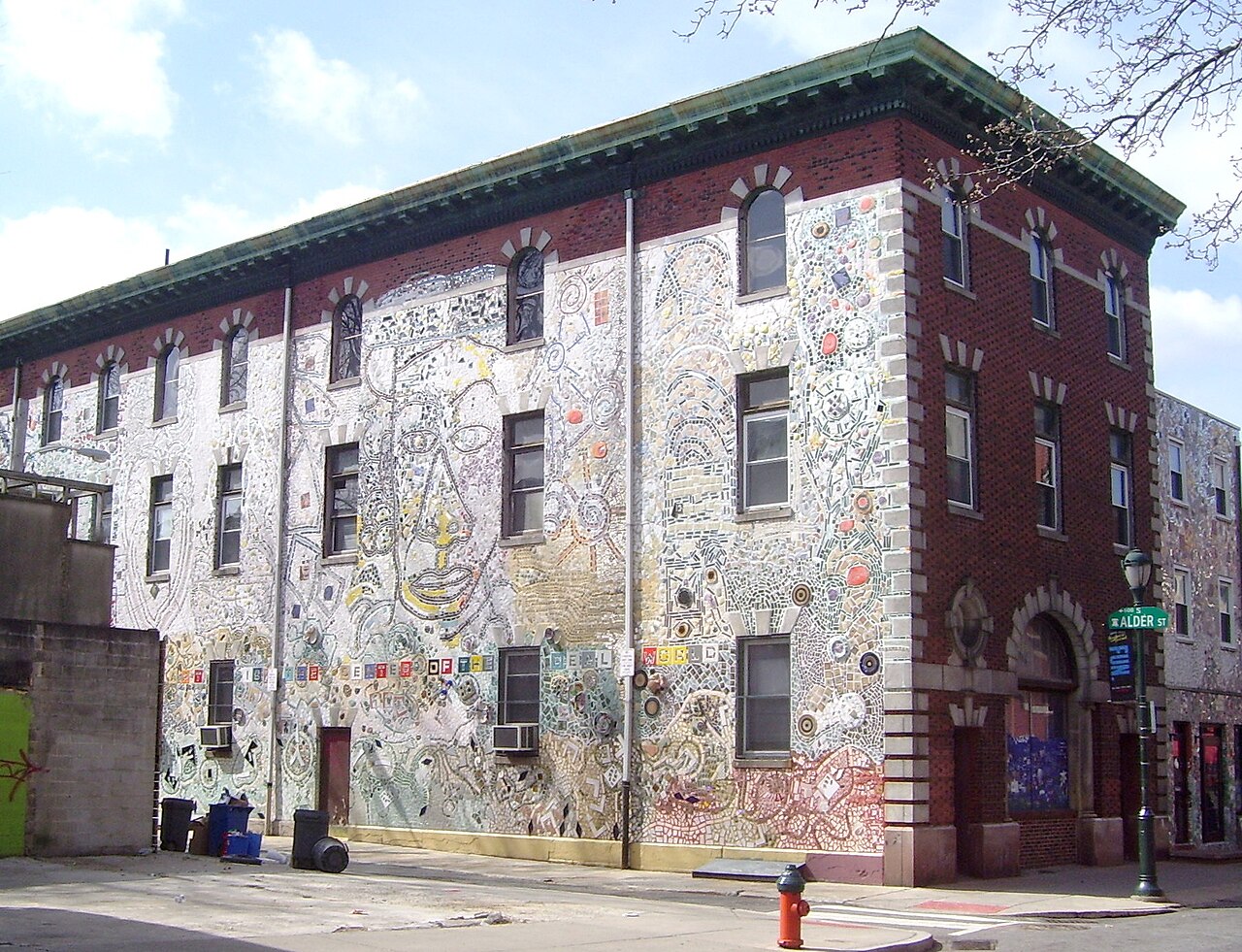
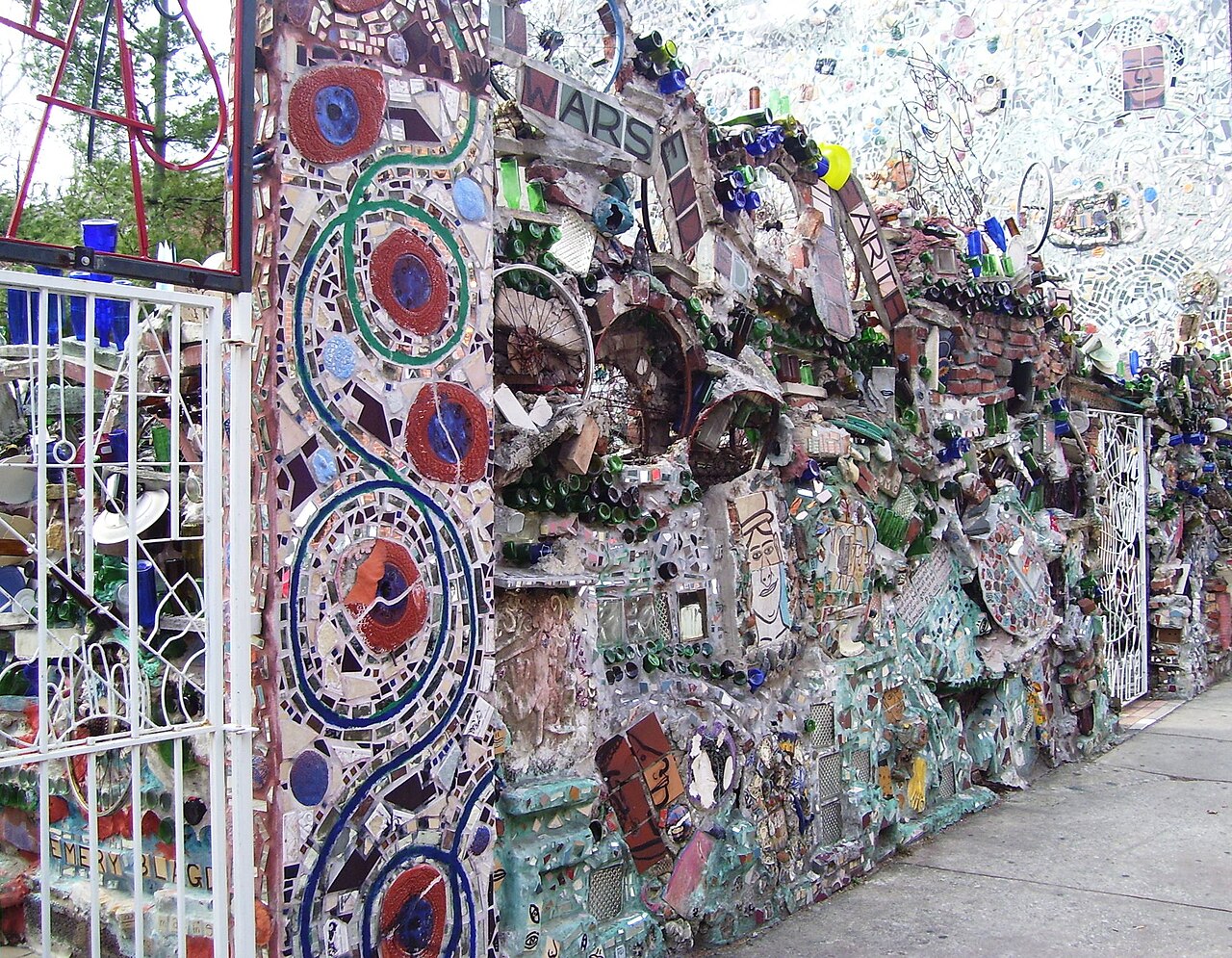
Then there is the stretch of South Street where the walls stop being walls. A corner building is covered in mosaic: mirror, tile and drawn faces pressed into every surface. A little farther on, a gate opens onto another mosaic wall built from tile, bottles, bicycle wheels and mirror pieces.
This is closer to installation art than to a painted mural, and it is better for that. It shows how far a Philadelphia wall can stretch when someone decides the whole block is the canvas. You will want to slow down. Every few inches there is something small to find.
Notice, too, how people behave around it. Visitors stop mid-step, tilt their heads, and take a photo of a detail the rest of the street walks past. A good wall earns that pause without asking for it.


A wall beside a garden
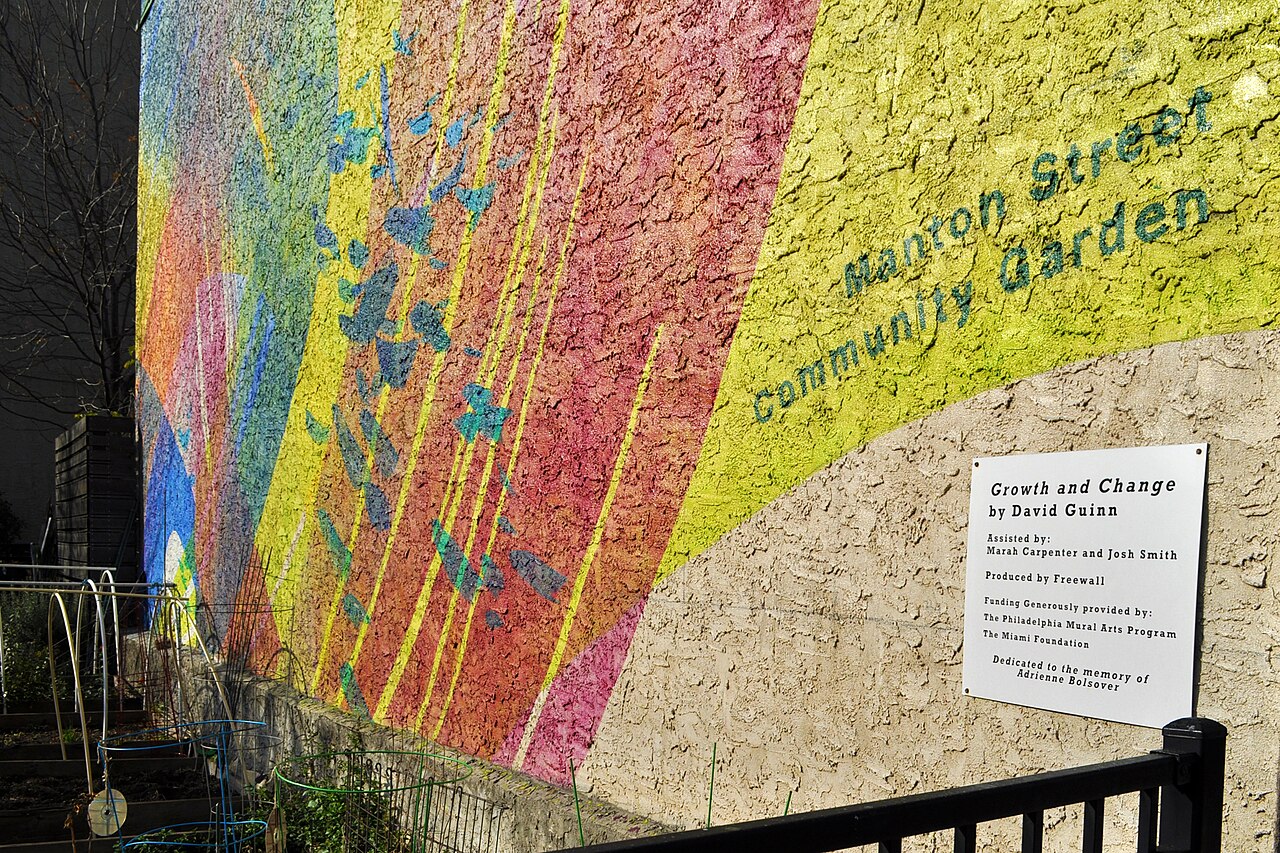
On Manton Street in South Philadelphia, a bright mural in pink, yellow and blue stands next to a community garden. A plaque beside it names the work, which is a small, good habit: it tells you this wall was meant, and that someone wants you to know it.
Gardens and murals suit each other. Both are acts of care on a patch of the city that could have been left alone, and both reward a neighbor who stops on the way home.
There is a practical lesson here for anyone who owns a side wall. A mural that is named, placed near something people already love and left where neighbors can reach it tends to become part of the block rather than something done to it.

Stripes on a schoolhouse
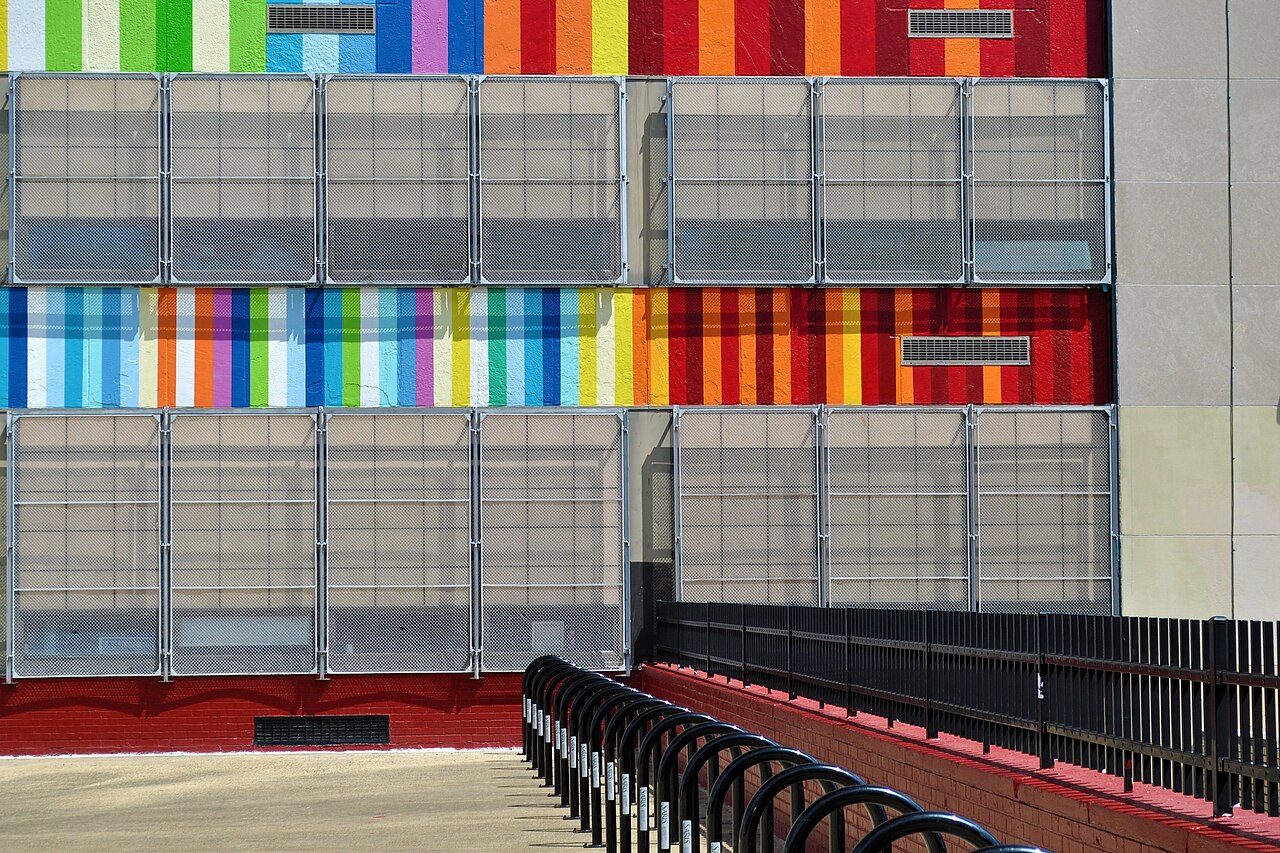
Down South Broad Street, a school building has been given bands of rainbow-colored stripes across its face, with a bike rack parked below. It is not a picture of anything. It is simply color, laid on at the scale of a building, and it changes how a big institutional facade feels from the sidewalk.
Not every mural needs a story or a face. Sometimes the most generous thing a wall can do is make a hard morning a little brighter for the people walking in.
Schools are among the places where this matters most. Hundreds of people pass a facade like this every morning, and the wall is the first thing they see before the day begins. It is quiet, large and very hard to ignore.

Lunch under a painted face
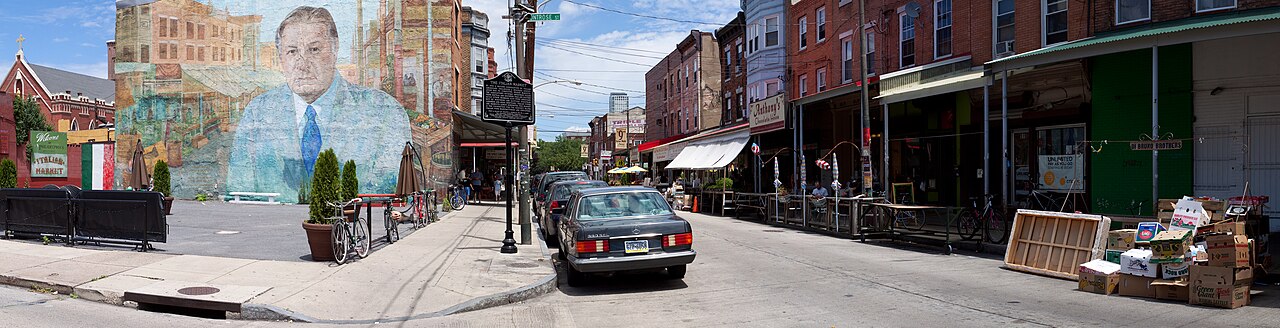
The Italian Market runs along South 9th Street under awnings and past produce stands, and above the bustle a large painted portrait looks down from a building wall. You only really notice it when you step back from the crowd.
That is how street-level art tends to work in a working market. The stalls are the main event; the wall is the quiet presence overhead. Buy your fruit, then look up.
Come hungry and give yourself time. The market is loud, the sidewalks are narrow, and the best view of the wall is often from across the street, once you have your bag in hand and a moment to spare.

Girard Avenue, at a slower hour
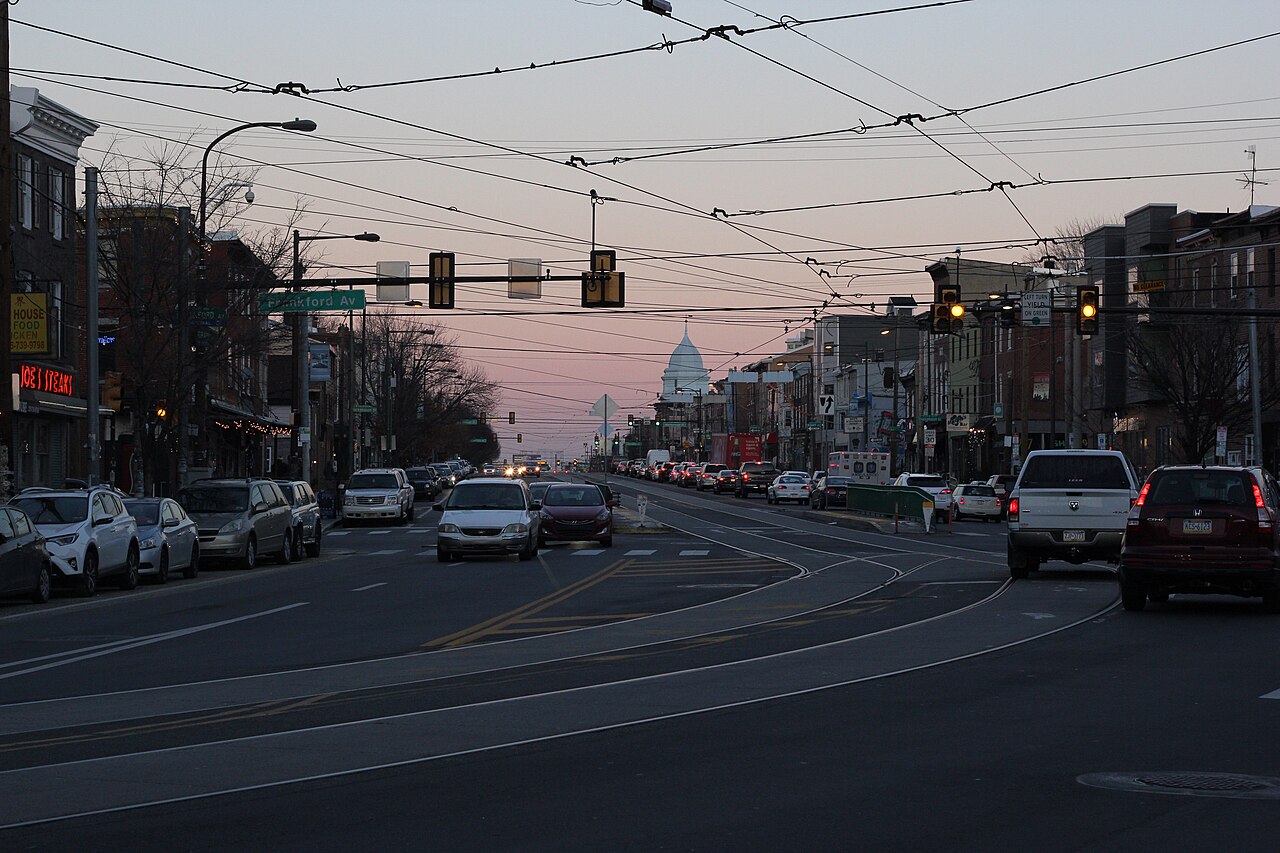
In Fishtown, Girard Avenue at dusk is mostly wires, headlights and a domed building far down the road. The trolley lines cross the sky. It is not a mural in the picture, but it is the kind of street where Philadelphia street art feels at home: working, a bit scruffy, and full of walls waiting for their turn.
If you are looking for what makes a neighborhood ready for a mural, it is usually this. People pass by every day, the buildings are close to the sidewalk, and there is room on a wall for something that wasn't there yesterday.
A walk like this is a good reminder that the paint is only half the picture. The other half is the street: the lighting, the people, the traffic, the way the buildings sit close together. A muralist who knows that will always read the block before touching the wall.

A square with quiet walls
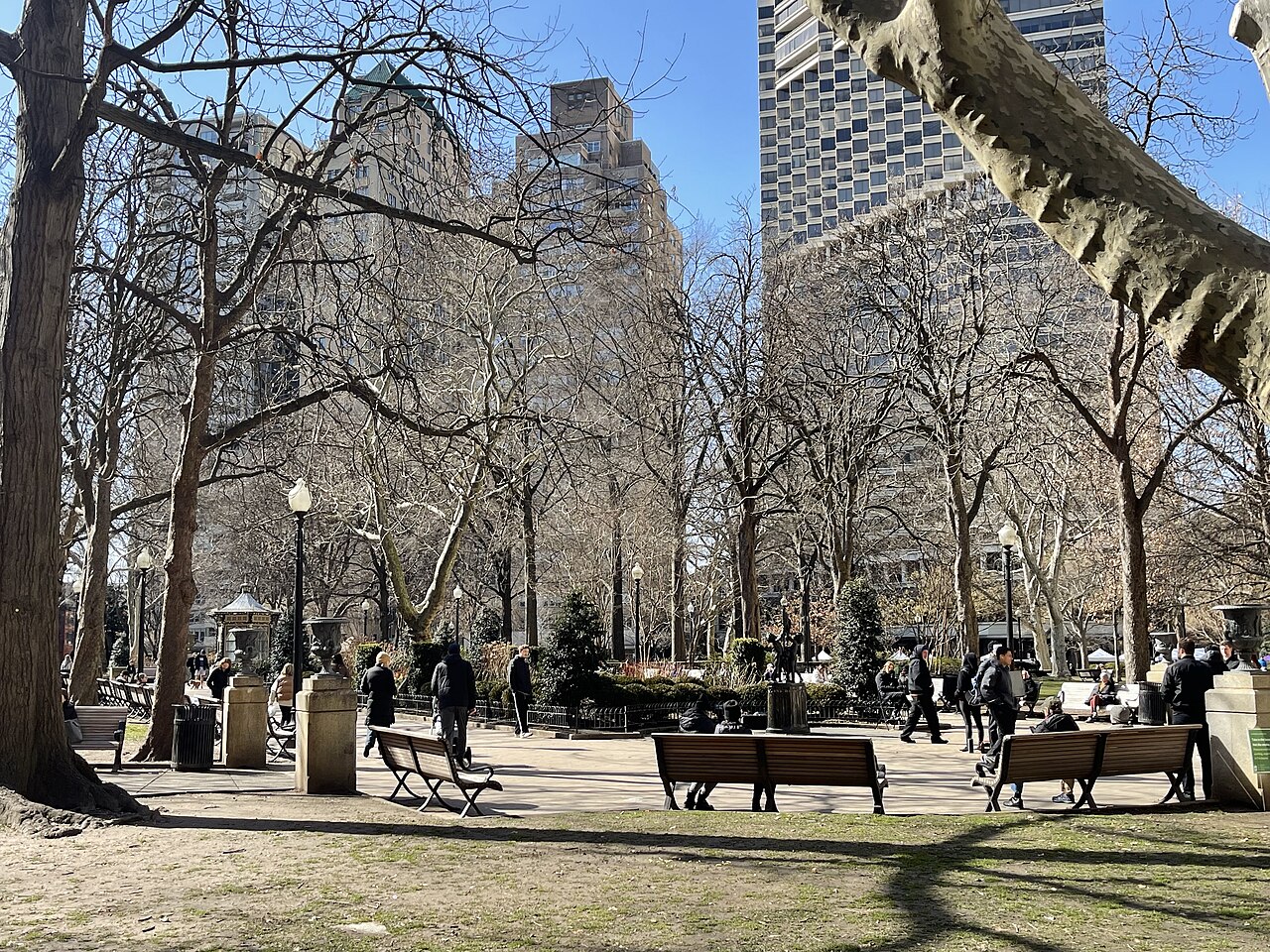
Rittenhouse Square in winter is bare trees, benches and a few people walking, with tall buildings standing around the edges. Here the city lets the park do the talking.
It is a useful pause. After a day of color, a calm square reminds you that murals earn their place by contrast. A loud wall means more beside a quiet one.
This is also why murals look so different from one neighborhood to the next. A square, a school, a market and a garden each ask for something else, and the best walls answer the place they are standing in.

Finish with the steps and the skyline
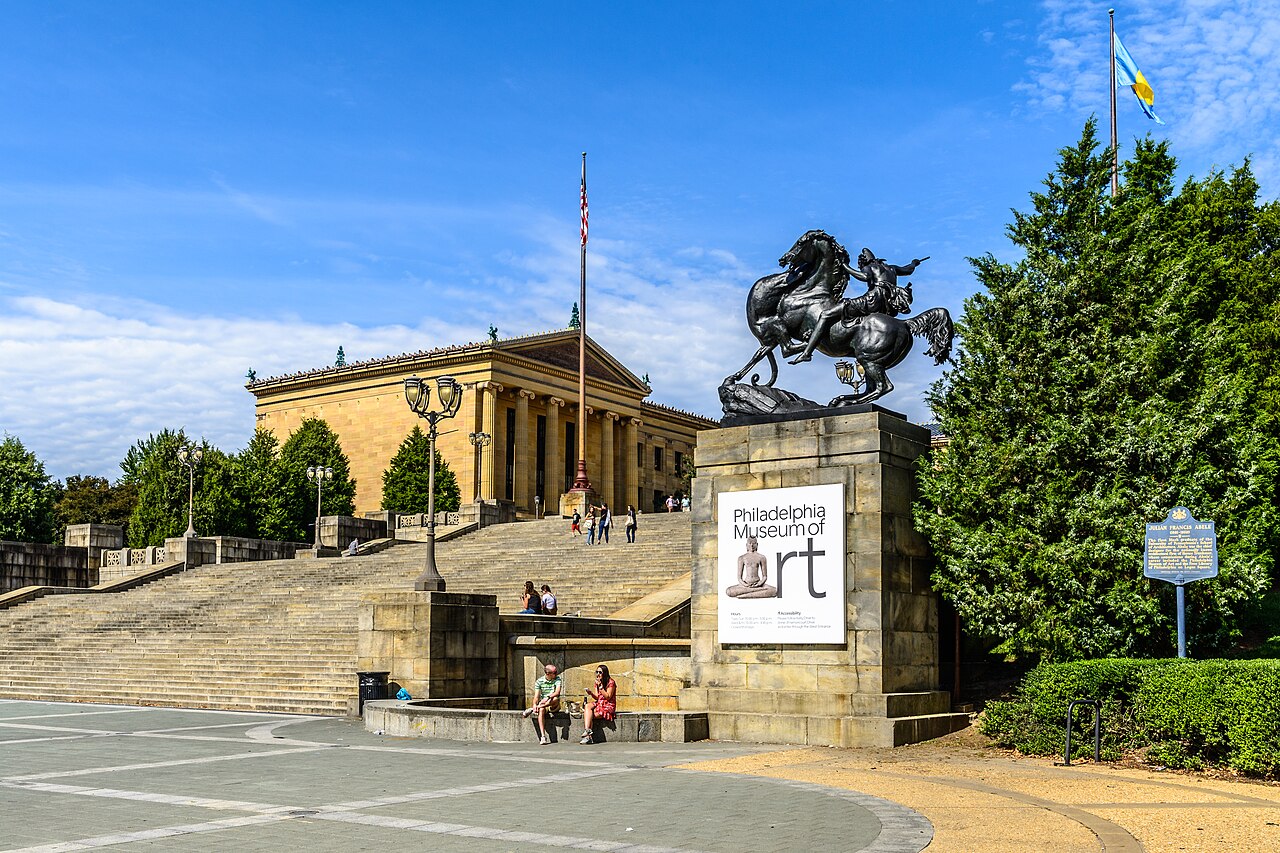
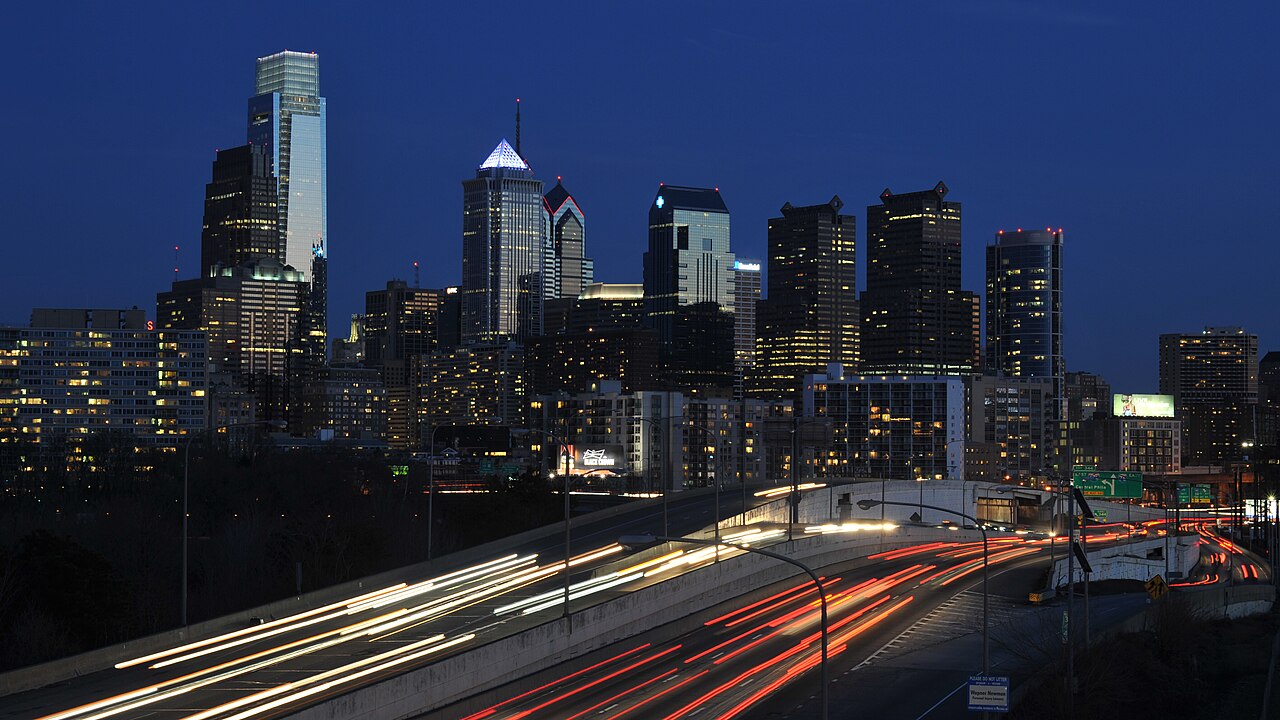
Walk up to the Benjamin Franklin Parkway and you reach the front steps of the Philadelphia Museum of Art, where a bronze horse and rider keep watch and visitors sit in the sun. Later, from above the Schuylkill Expressway, the downtown skyline lights up at dusk with trails of traffic in front of it.
It is a good place to end, because it shows the whole stage the Philadelphia murals stand on. The grand buildings give the city its postcard. The painted walls, the mosaic corners and the neighborhood gardens give it a face you recognize on the way home.


If you have a wall in mind
Every wall in this story began as somebody's blank surface and a decision to make it something. If you manage a building in Philadelphia and keep looking at a wall of your own, we would be glad to hear about it. Tell us about your wall and we will take it from there. You can also browse our Philadelphia page or read how public art can lift a property in Philadelphia.
Frequently asked questions
- Where can I see murals in Philadelphia?
- South Street is a good start, with its mosaic walls, along with South Philadelphia near Manton Street and South Broad Street, the Italian Market on South 9th Street and the neighborhoods farther out such as Fishtown. Most of these are easy to link together on foot or by transit over a day.
- Which Philadelphia neighborhoods have the most street art?
- South Street, South Philadelphia and Fishtown are all good places to look. Neighborhood character changes block by block, so wander the side streets as well as the main avenues.
- Is street art legal in Philadelphia?
- It depends on the wall and the owner. Murals painted with a property owner's permission are commissioned work; unsanctioned pieces are a different matter. If you own a wall and want a mural, talk with a muralist and put the agreement in writing.
- How do I find a muralist in Philadelphia for my building?
- Start with a muralist whose style suits the wall and the neighborhood, then talk through the size, surface and look. We help match walls with muralists and handle quotes, contracts and scheduling.
All photos are free-licensed and credited under each image; license links go to the original file pages.