City story · Portland · 6 min read
Portland Murals: A City That Paints Its Corners
From viaduct pillars and a historic downtown wall to a sticker-covered stop sign, a slow walk through the Portland murals and street art that give the city its character.
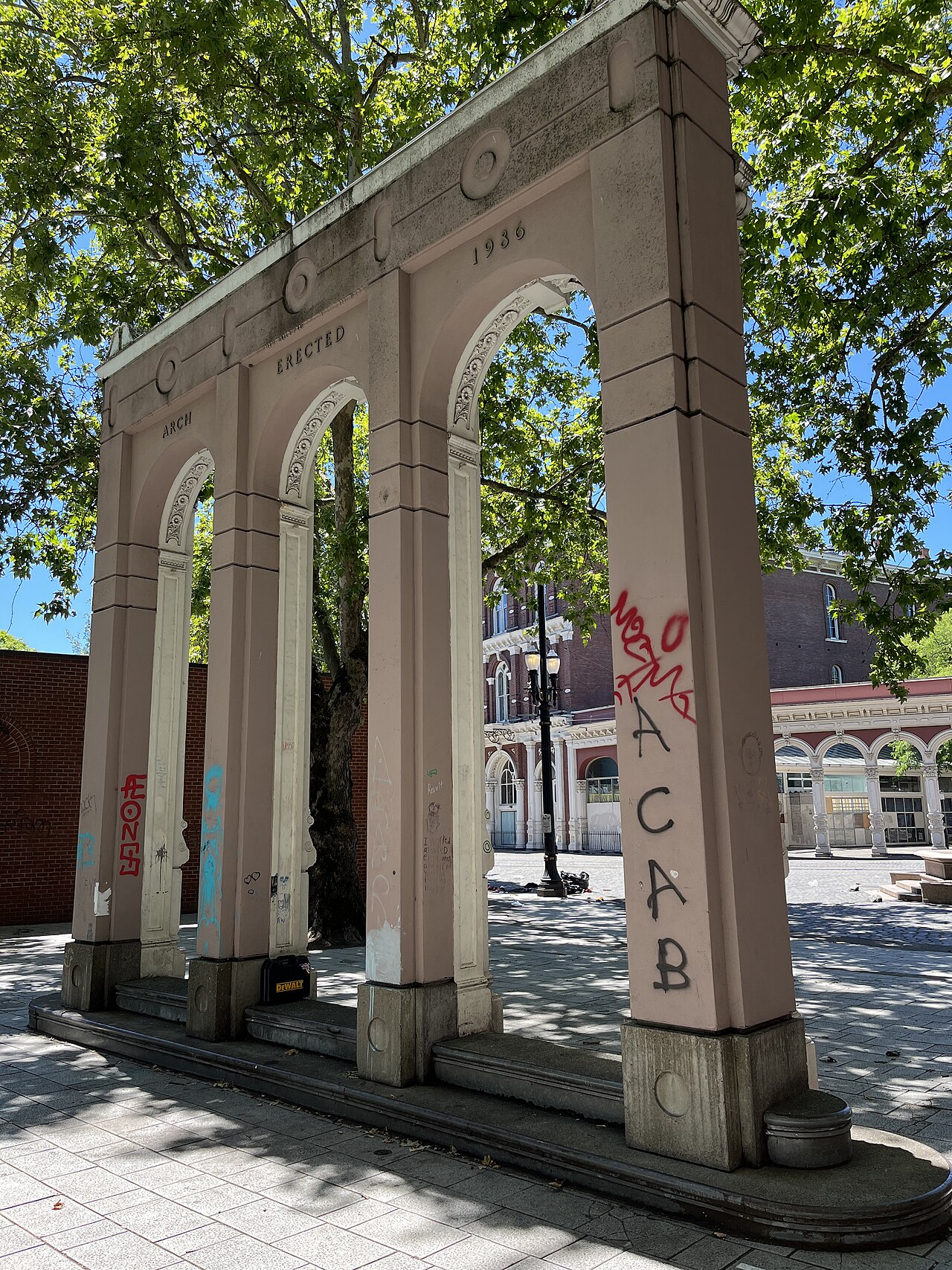
Start with the color on a downtown wall
Portland murals tend to find you before you go looking. You turn a downtown corner, and a storefront has been given over to a whole scene: figures gathered in a moment from the past, painted large enough that the sidewalk becomes the viewing gallery.
That is a good way to begin, because it shows what a mural does for a street. A shop front is a business. A shop front with a painted story across it is a landmark, something people photograph, point at and use when they tell a friend where to meet.
Look at who is in the picture, too. A scene with figures asks you to slow down and read it, the way you would read a page. It rewards the person who stops for a minute, and it gives the people who walk past every day something new to notice each time the light changes.
A face on a historic wall
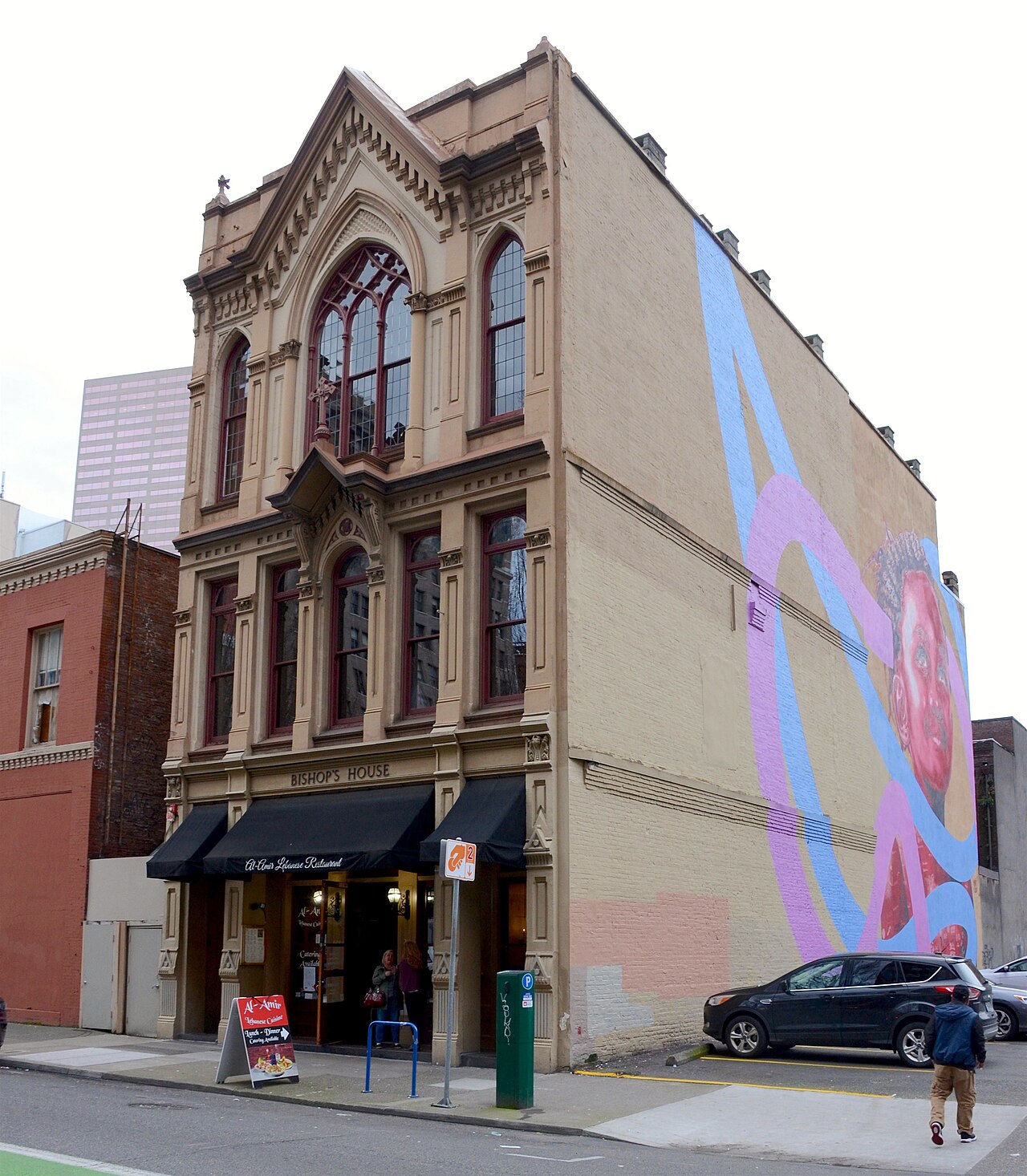
A few blocks away, the Bishop's House stands on SW Stark Street, a historic building listed on the National Register of Historic Places. At the time this photo was taken, its east wall carried a large painted face looking out over the neighbors.
Old buildings and new paint make an interesting pair. The brick and the careful façade say one thing about the past; the face on the side wall says the block is still being looked at, and still being argued about, in the best way. A mural on a historic building is a conversation across time, and the wall is where it happens.
It also shows how much a single wall can carry. One large image, seen from the street, can make a whole block feel looked after. You do not need a dozen pieces to change how a corner feels. Sometimes you need one good one, in the right place, painted at the right scale.

Pillars under the viaduct
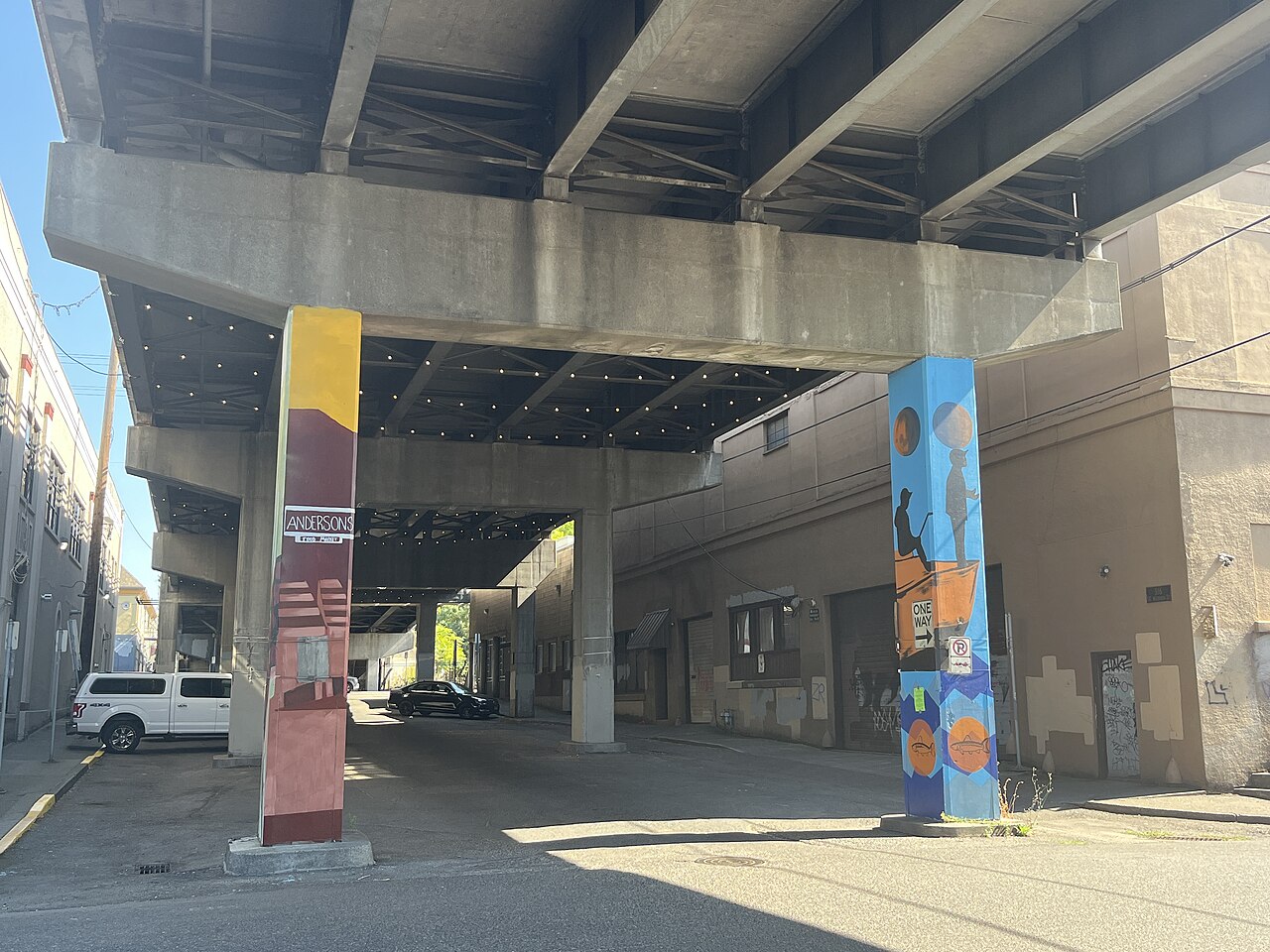
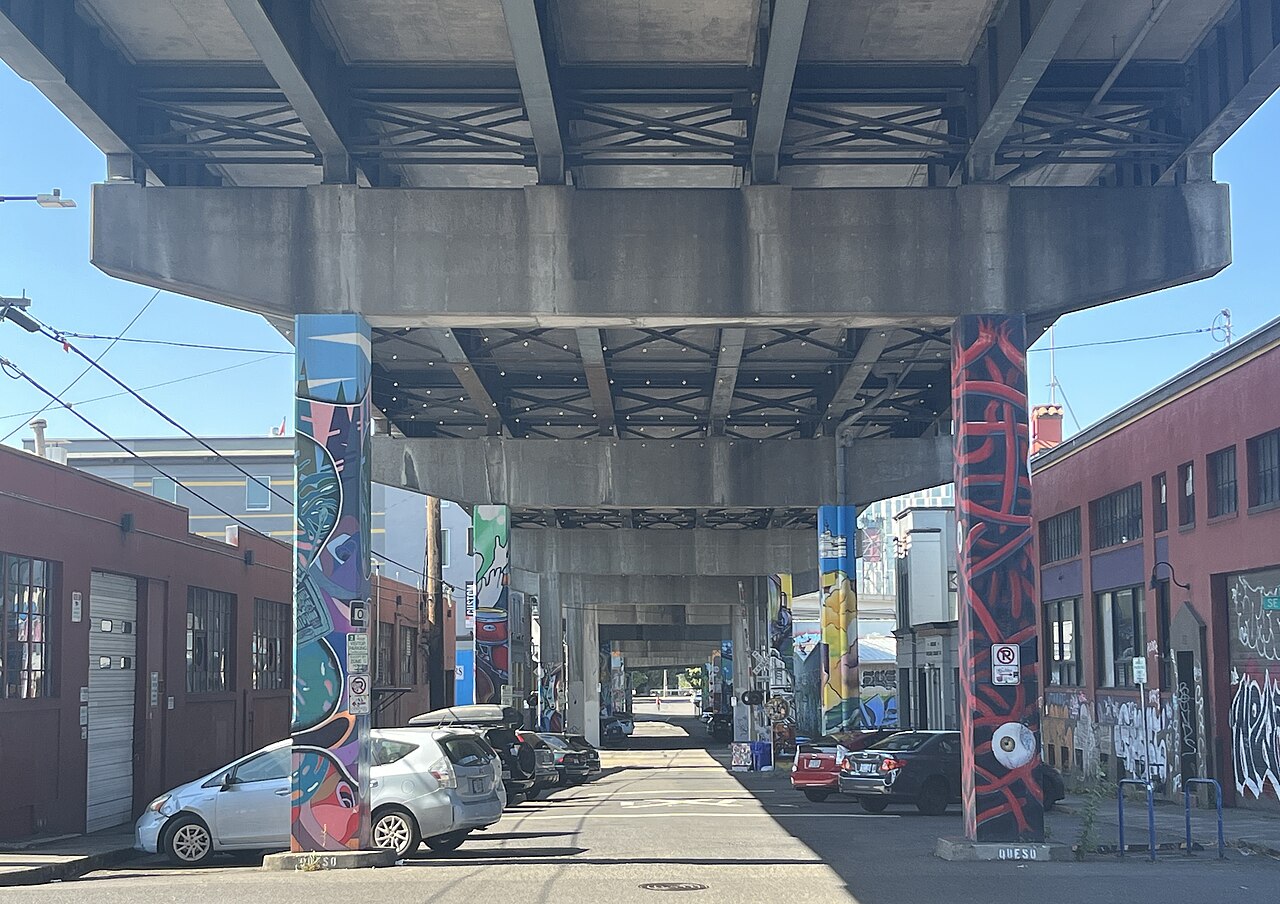
Cross the river into the Central Eastside and the scale changes. This is an industrial part of town, all loading docks, brick warehouses and the long shadow of an elevated roadway. Under it, the concrete pillars have been painted, one after another, in bright blocks of color.
It is the kind of place a city usually ignores. Paint changes that. A row of columns becomes a rhythm you can walk along, and a dull stretch of street starts to feel like it has a point of view. Portland street art often works like this: it does not wait for a gallery, it goes to the places that need a lift.
Walk it slowly and you notice the details: where one color meets the next, how the brick buildings on either side frame the line of pillars, how the road overhead turns the whole stretch into a kind of long gallery with a roof. Nothing about the setting was designed to be pretty, which is exactly why the paint stands out.


The small art of a stop sign
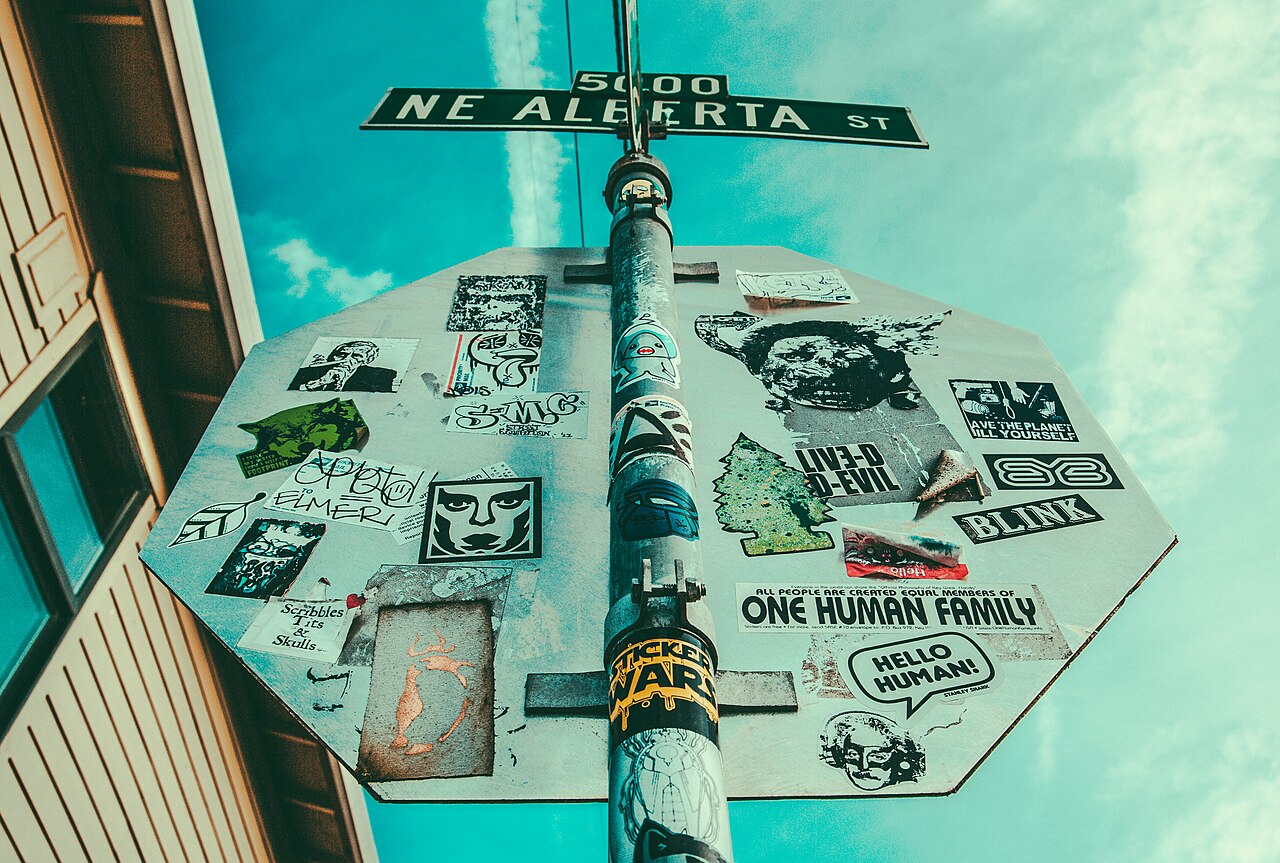
Not every wall is a wall. On NE Alberta Street, in the Alberta Arts District, the back of a stop sign is covered in stickers, layer on layer, under the street sign.
Nobody commissioned it, and that is part of its charm. It is a reminder that street art is a spectrum: from a building-sized painting planned for months to a sticker slapped on a pole in a minute. A neighborhood with an arts reputation earns it from both ends.
Alberta is the sort of street where you can spend an afternoon just looking at poles, windows and walls. The small things are the texture, and the texture is what makes people say a neighborhood has personality.

A corner on Mississippi Avenue
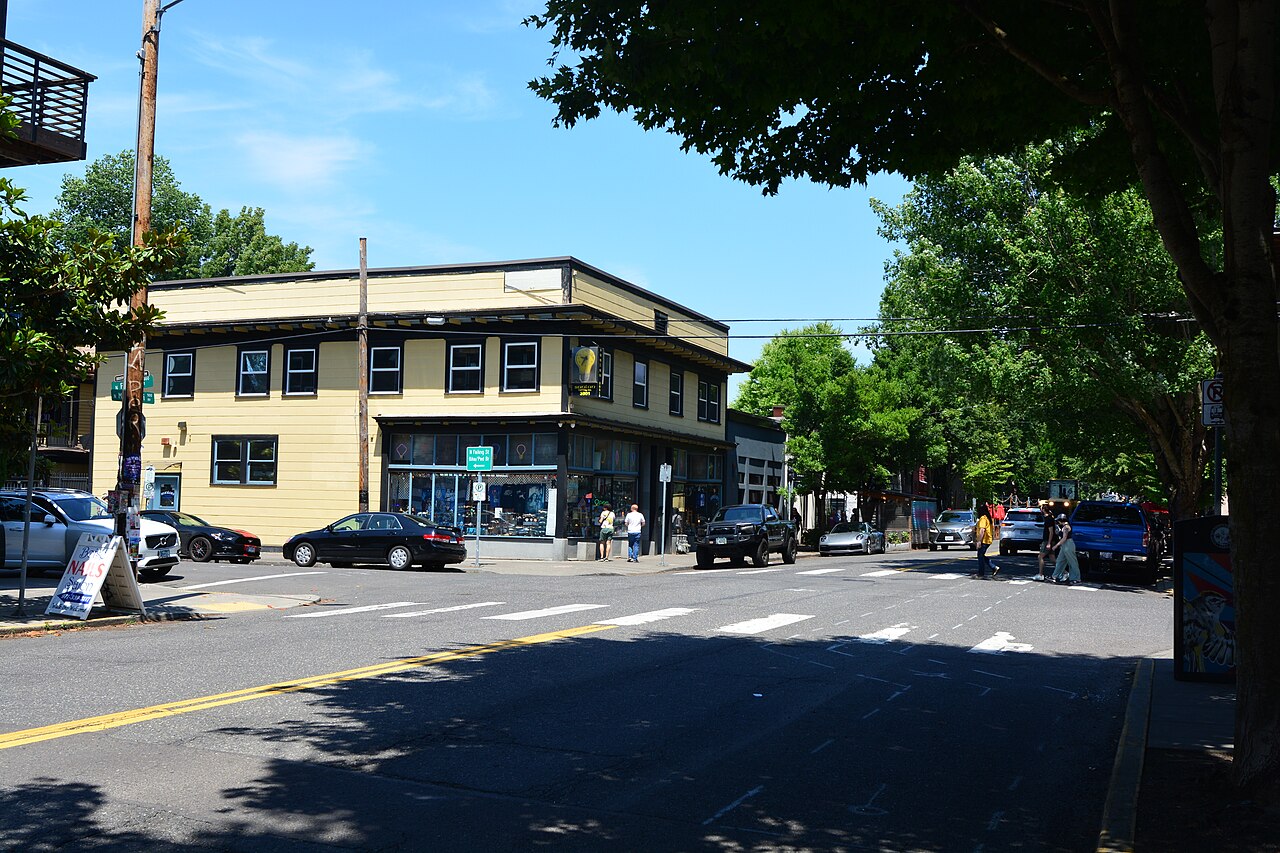
Up on North Mississippi Avenue, at the corner of Failing Street, a yellow two-story shop building sits in the sun with trees along the sidewalk. There is no giant mural in this picture, and that is the point.
Walls like this are why neighborhoods end up with painted work in the first place. A friendly building on a good corner, with foot traffic and a face to the street, is just the kind of place where a business owner starts to wonder what could go there.
Stand on a corner like this and picture the side wall, the back wall or the blank stretch above the door. That is how most commissioned work begins: not with a grand plan, but with somebody looking at a building they love and thinking it could say a little more.

Down by the river
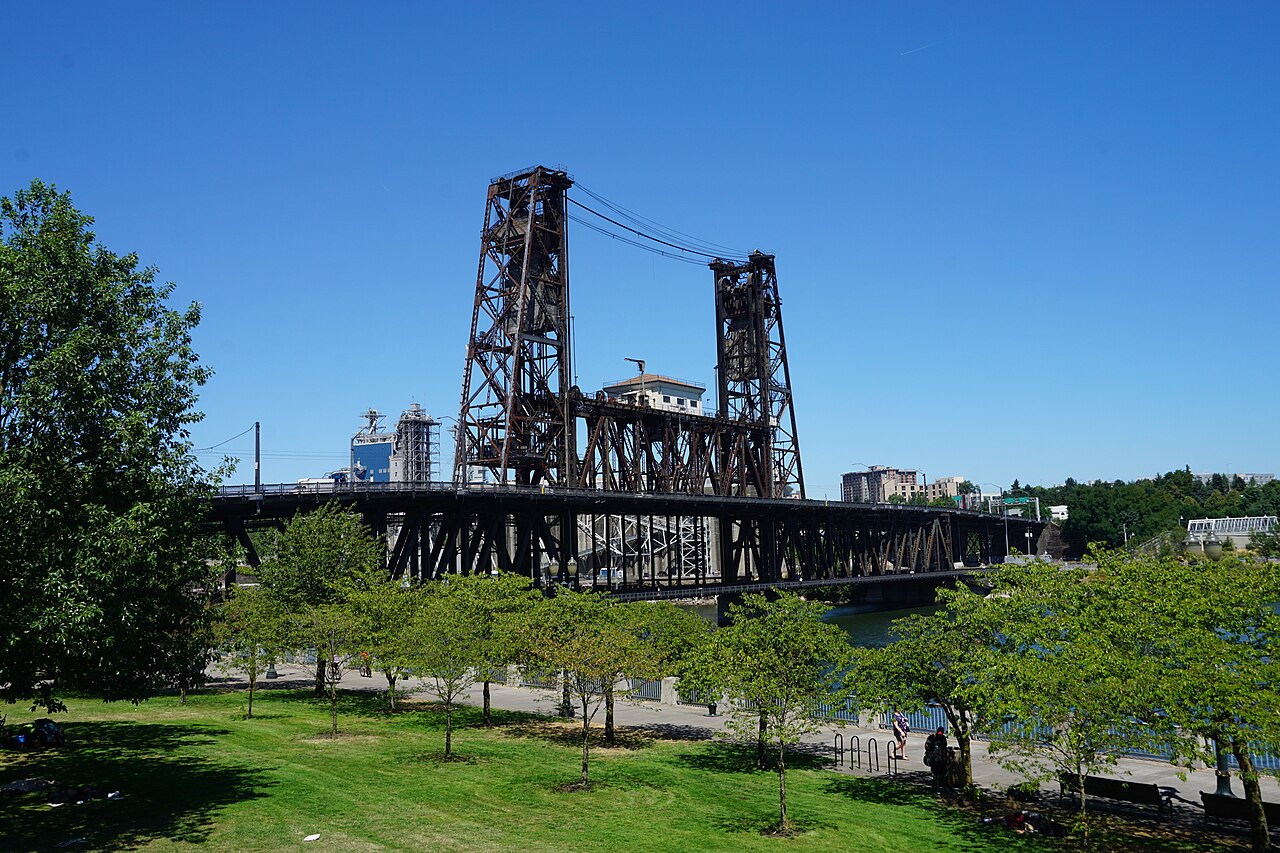
Portland is a river city, and at Tom McCall Waterfront Park the Steel Bridge towers over the water from a wide green lawn. People come here to walk, sit and watch the city go by.
Big public spaces need big landmarks, and a bridge is one. But the walls you saw earlier do the opposite job: they make a district feel close and personal. A city needs both.
Walk the lawn toward the bridge and notice how people use the space: strollers, dogs, folks stretched out on the grass. Public art, whether it is a painted wall or a bridge, works best when it is part of how people already move through the city.

The living room and the rose garden
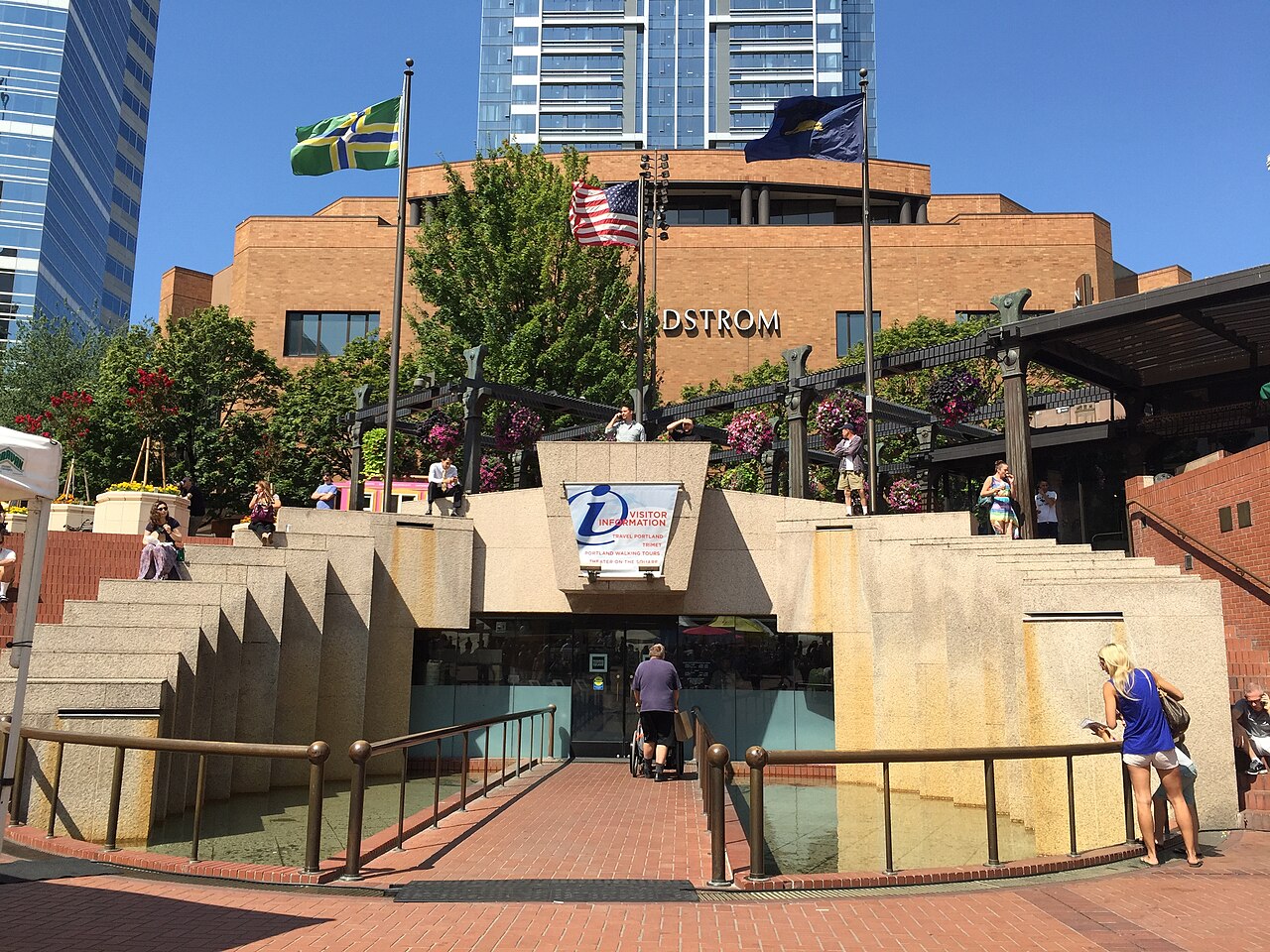
Pioneer Courthouse Square, with its wide steps and the visitor information entrance, is often called Portland's living room, and on a sunny day you can see why. People sit, wait, meet and watch.
Then there are the roses. Portland has long been called the City of Roses, and the International Rose Test Garden in Washington Park is the place to see why. Pink blooms fill the beds in a way that feels like a mural made of living things. It is a useful reminder that color is part of this city's identity, indoors and out.
Between the square and the garden you have two very different Portlands: one built of steps and bricks and meeting places, one grown from soil and sunlight. Murals sit between them, as paint that gives hard surfaces a little of the garden's generosity.



Evenings, and a very large sign
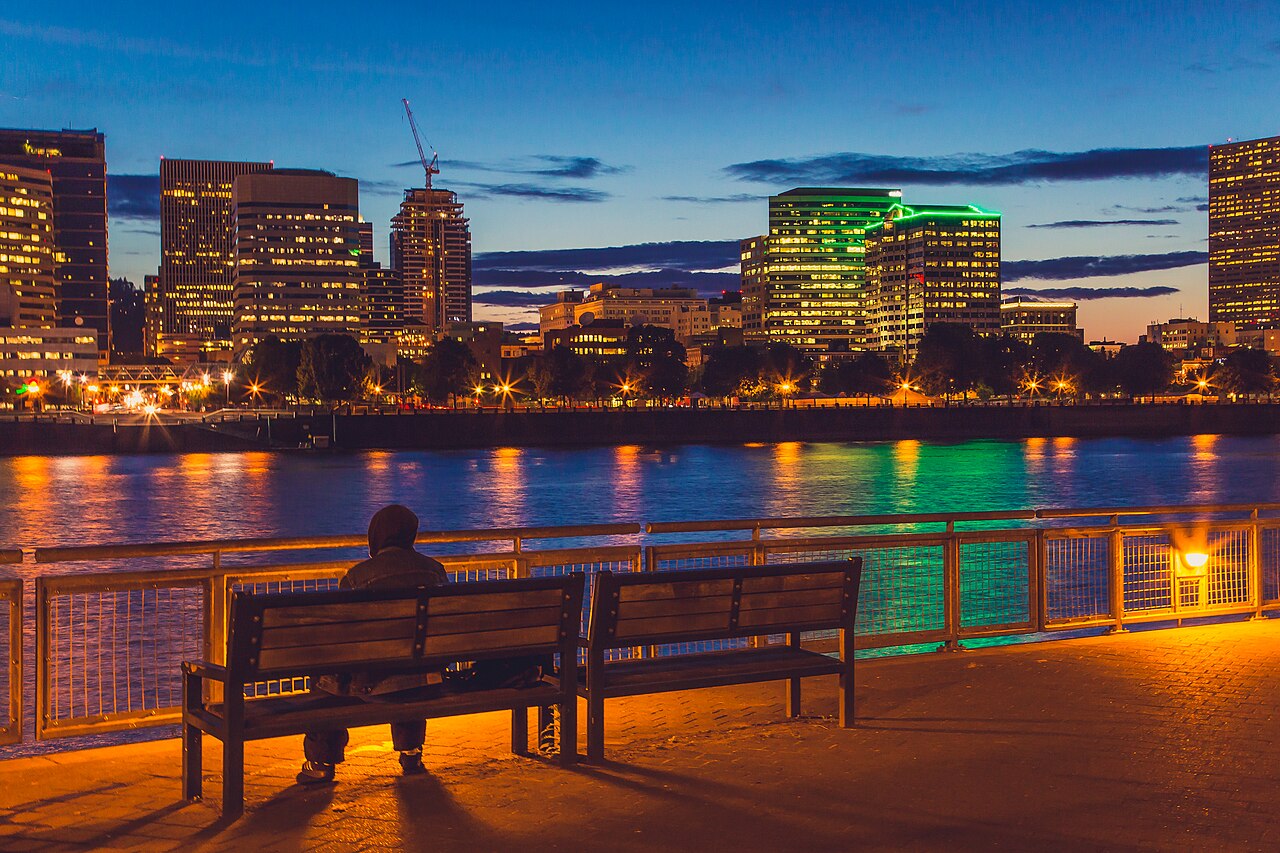
At dusk the downtown towers light up across the Willamette River, with benches along the waterfront for anyone who wants to stay a while. It is a quiet end to a day of looking at walls.
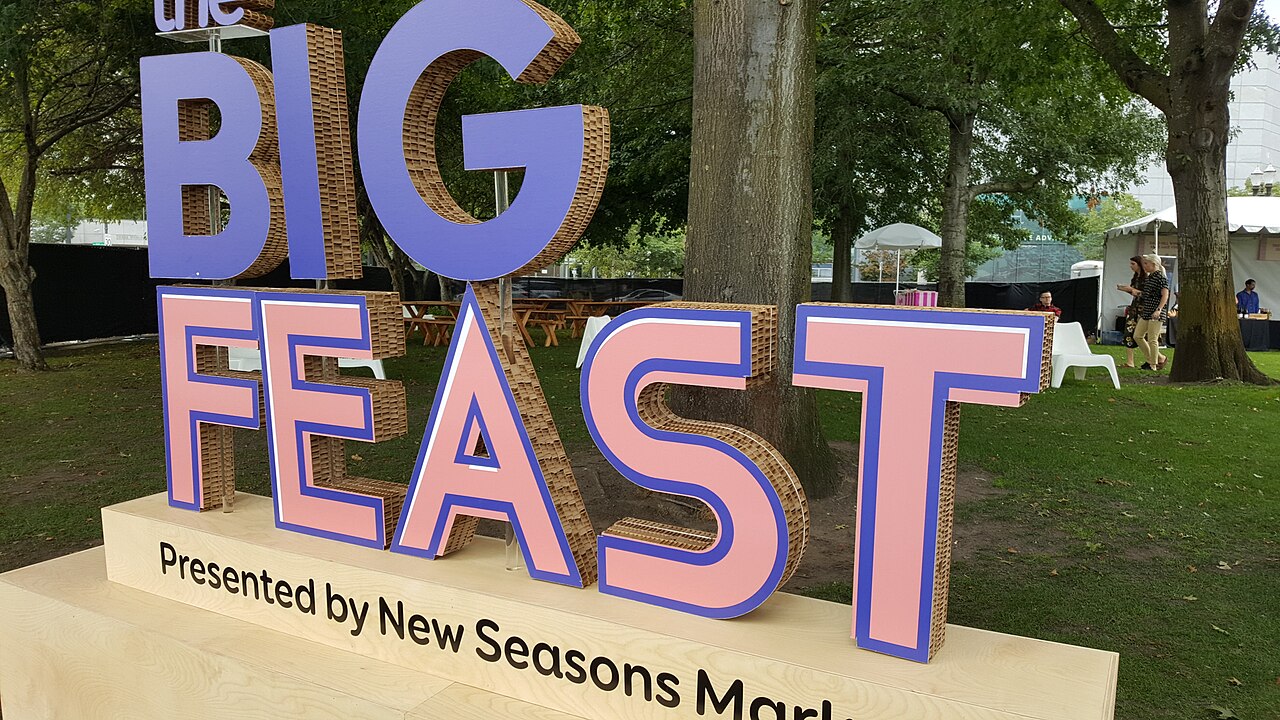
The city likes a party, too. In the park at Feast Portland, a food festival, a huge cardboard-letter sign reading The Big Feast welcomed the crowd. It is not a mural, but it carries the same impulse: make something big, make it by hand, and put it where people will see it. That impulse is what keeps Portland murals coming.


If you have a wall in mind
Every wall in this story began as somebody's blank surface and a decision to give it something to say. If you manage a building in Portland, or any city, and keep glancing at a wall that could do more, we would be glad to hear about it. Tell us about your wall and we will take it from there.
Frequently asked questions
- Where can I see murals in Portland?
- Good places to start are downtown, where a historic building on SW Stark Street has carried a large painted face, the painted pillars under the viaduct in the Central Eastside, and the Alberta Arts District. Murals change, so walk each area and see what is new.
- Which Portland neighborhoods have the most street art?
- The Central Eastside, the Alberta Arts District and downtown are good places to begin, with North Mississippi Avenue worth a stop as well. Each has its own feel, from industrial to arts-focused to urban.
- Is street art legal in Portland?
- It depends on the wall and the owner. A mural painted with the property owner's permission is commissioned work; unsanctioned pieces are a different matter. If you own a wall, get the agreement in writing.
- How do I find a muralist in Portland for my building?
- Look for a muralist whose style suits your wall and neighborhood, then talk through size, surface and look. We help match walls with muralists and handle quotes, contracts and scheduling; you can start with our Portland page.
All photos are free-licensed and credited under each image; license links go to the original file pages.