City story · Rio de Janeiro · 6 min read
Rio de Janeiro Murals: A City Told on Its Walls
From a staircase of broken tiles in Lapa to a mural the size of a city block at the port, a slow walk through the Rio de Janeiro murals and street art that make the city's story public.
Start on the stairs
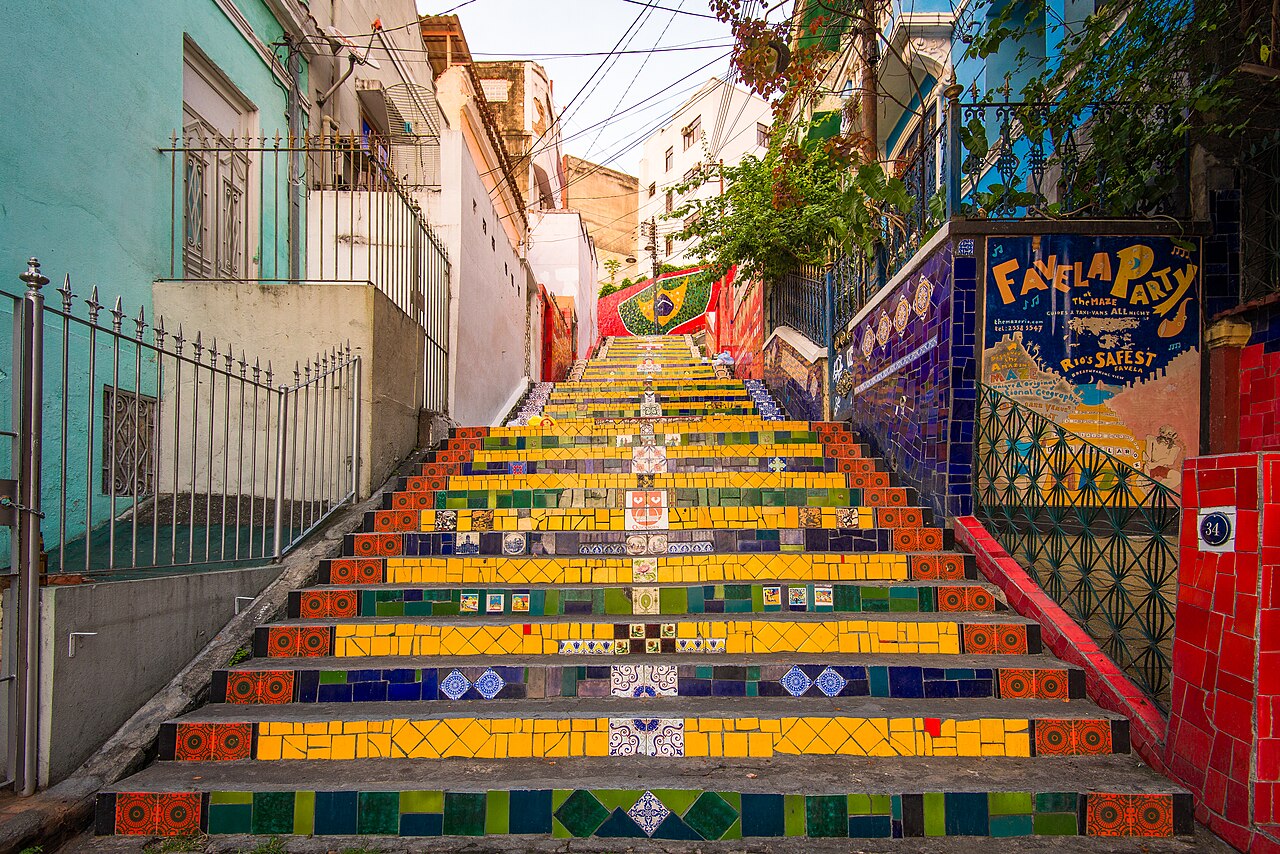
Most people arrive in Rio looking up, at the mountains and the statue on top of one of them. The Rio de Janeiro murals ask you to look down first. In Lapa, a steep flight of steps climbs toward the hills of Santa Teresa, and every riser and tread is covered in tile.
The Escadaria Selarón is the work of Jorge Selarón, a Chilean-born artist who began tiling the steps around 1990 and kept adding to them for the rest of his life. He gathered tiles from many places, and the colors that dominate are red, yellow, green and blue, the colors of the Brazilian flag. Nothing here was planned as a gallery. One person kept going, and a staircase became a landmark.

The side streets hold more
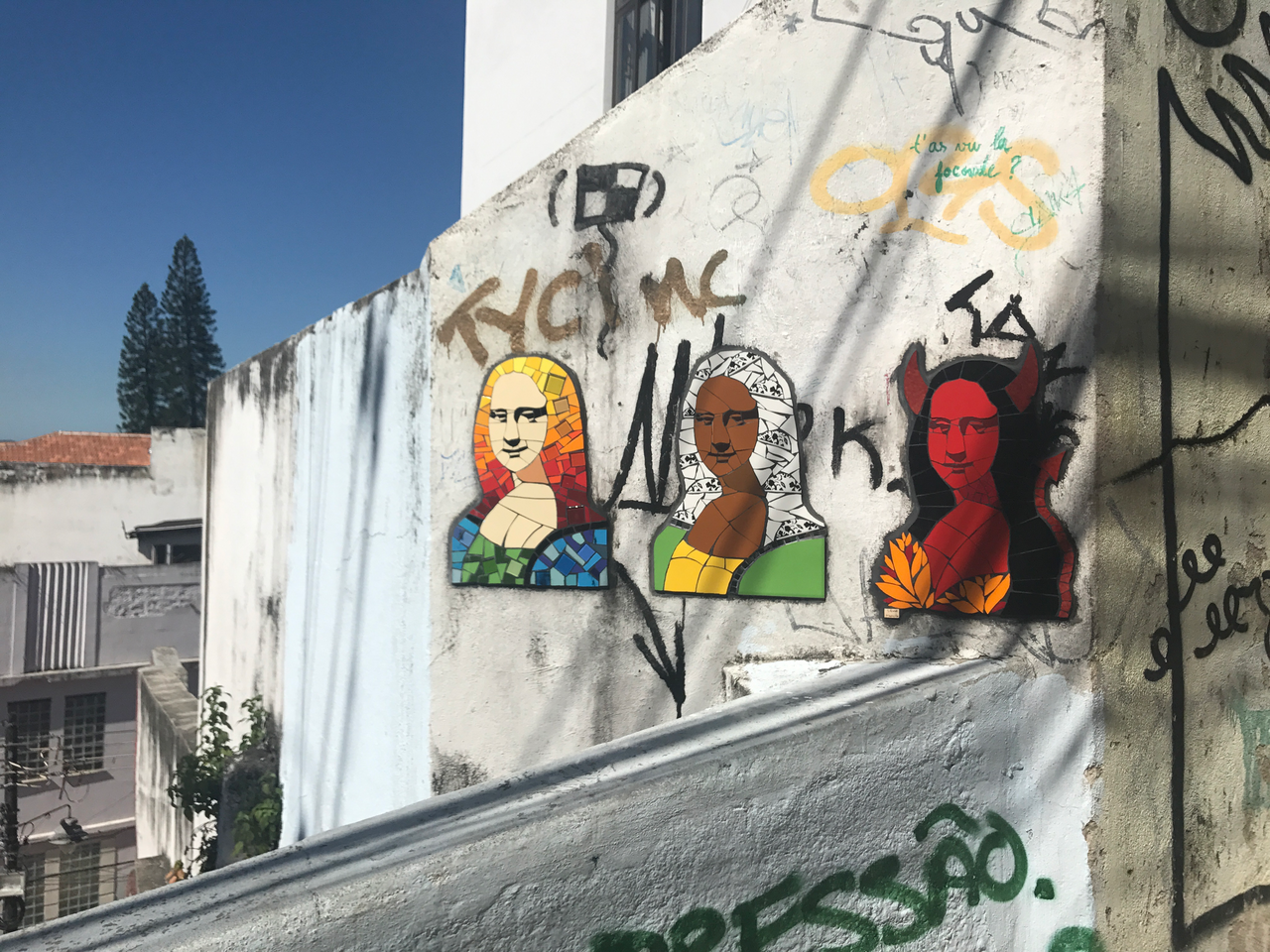
Do not stop at the top. The streets around the steps are full of smaller pieces: tile portraits, stenciled faces, hand-lettered walls. One wall near the stairs carries three tile versions of the Mona Lisa, one of them with devil horns, with graffiti layered around them, a good example of how old and new work sit together in this city without fuss.
This is a good first lesson in how to look at Rio. The famous piece is rarely the only piece. Give yourself time to walk the blocks around it.

A wall the size of a block
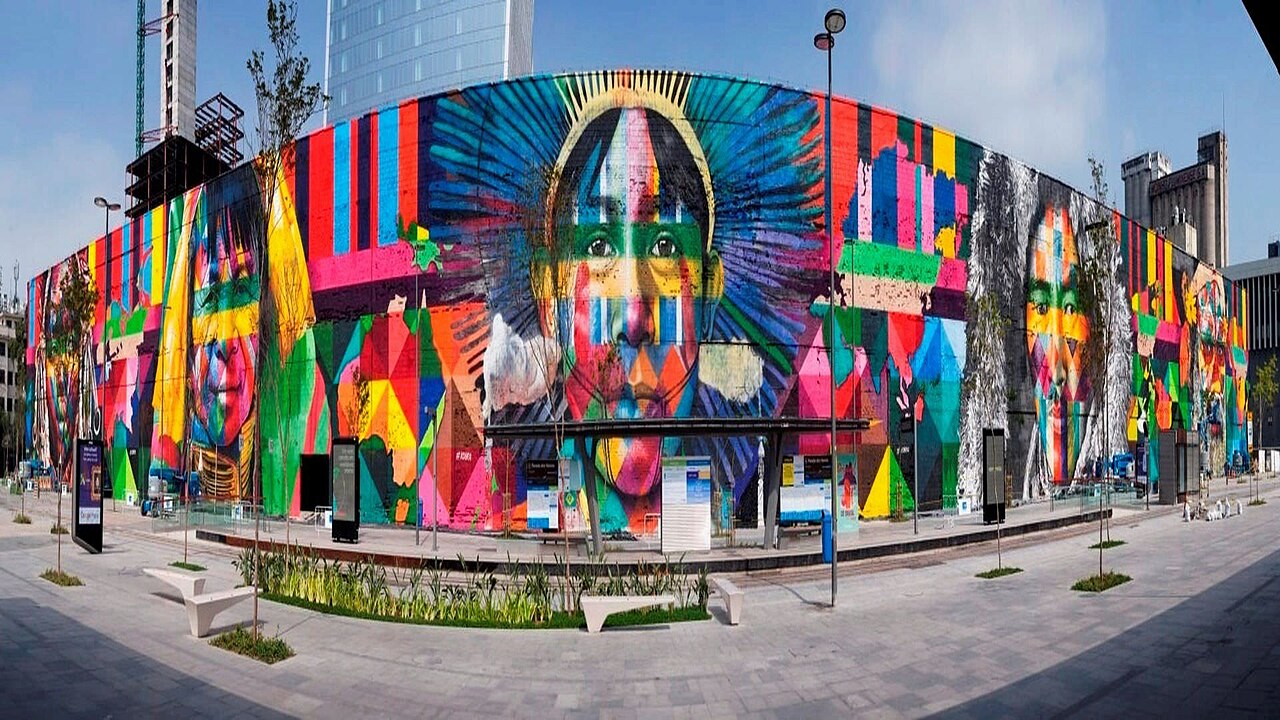
Take the port next. The old waterfront district, now called Porto Maravilha, was rebuilt in the years before the 2016 Olympic Games, and the city gave it something unusual to show off: the biggest wall in the Rio de Janeiro murals story.
Etnias, by the Brazilian muralist Eduardo Kobra, covers almost three thousand square meters along the Boulevard Olímpico. It shows faces from peoples of five continents, built from the sharp, geometric blocks of color that Kobra is known for. Standing in front of it, you see why walls this large change a place. A district that was once mostly warehouses and traffic now has a face.

Another wall, another message
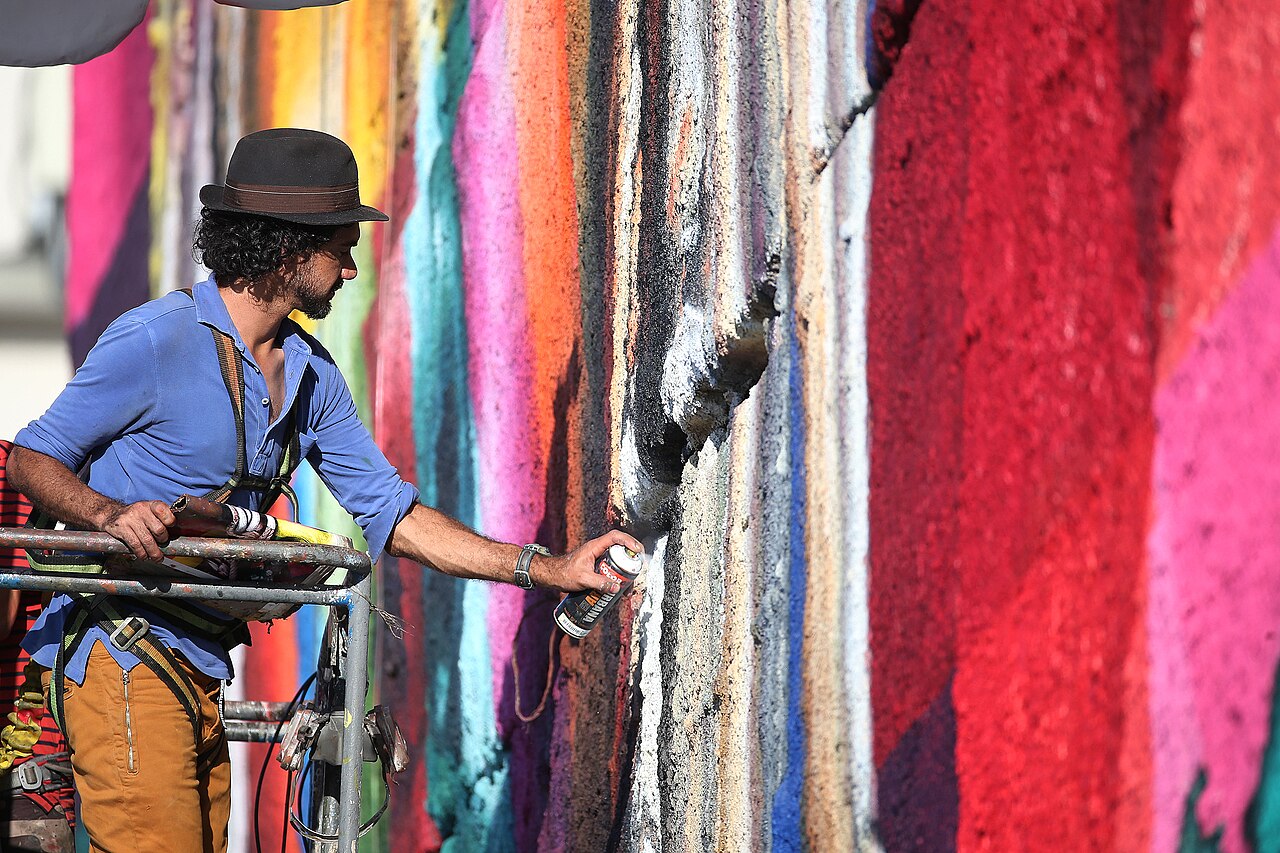
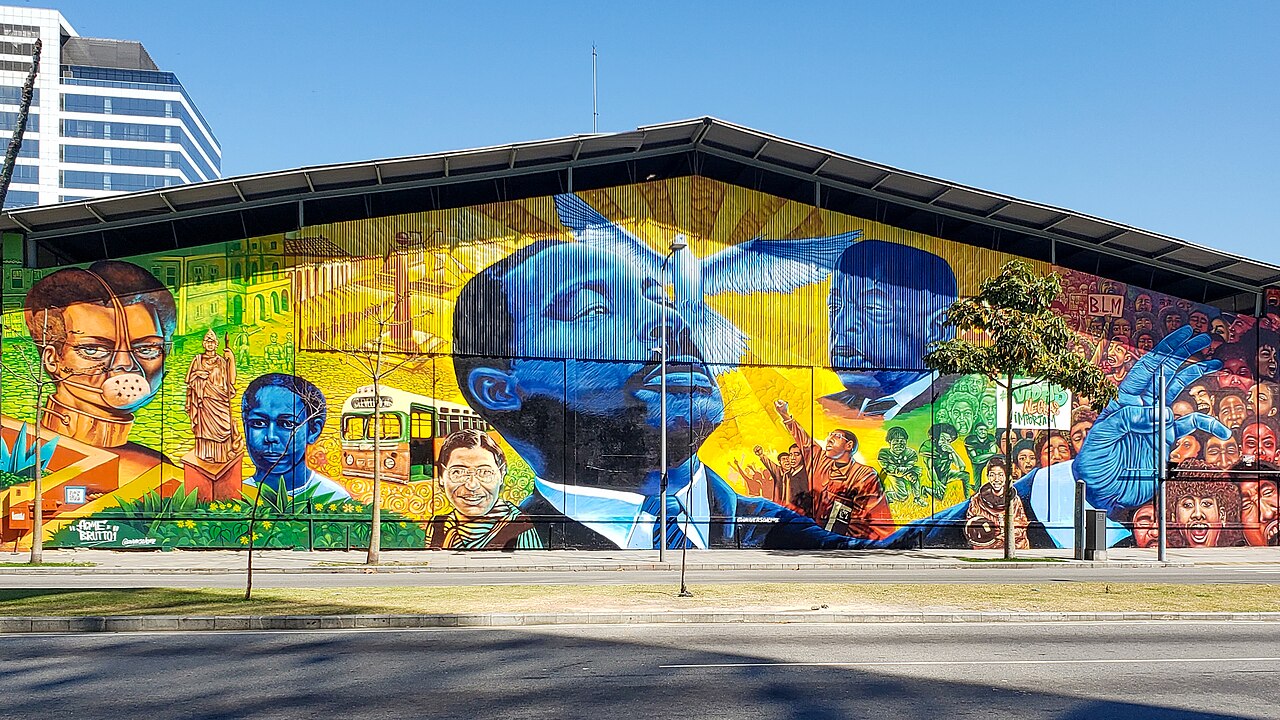
Etnias is not alone down here. A few steps away, a 2021 mural called Visions of Resistance, Dreams of Freedom covers about 360 square meters of port wall. It was painted by the artist Acme, and it shows how the same district can carry very different voices: where Kobra's wall celebrates a shared human family, this one speaks to struggle and hope.
It is worth noticing how both walls use scale. A big wall is a decision by the people who own it to give a block over to an idea.

Words on the pillars
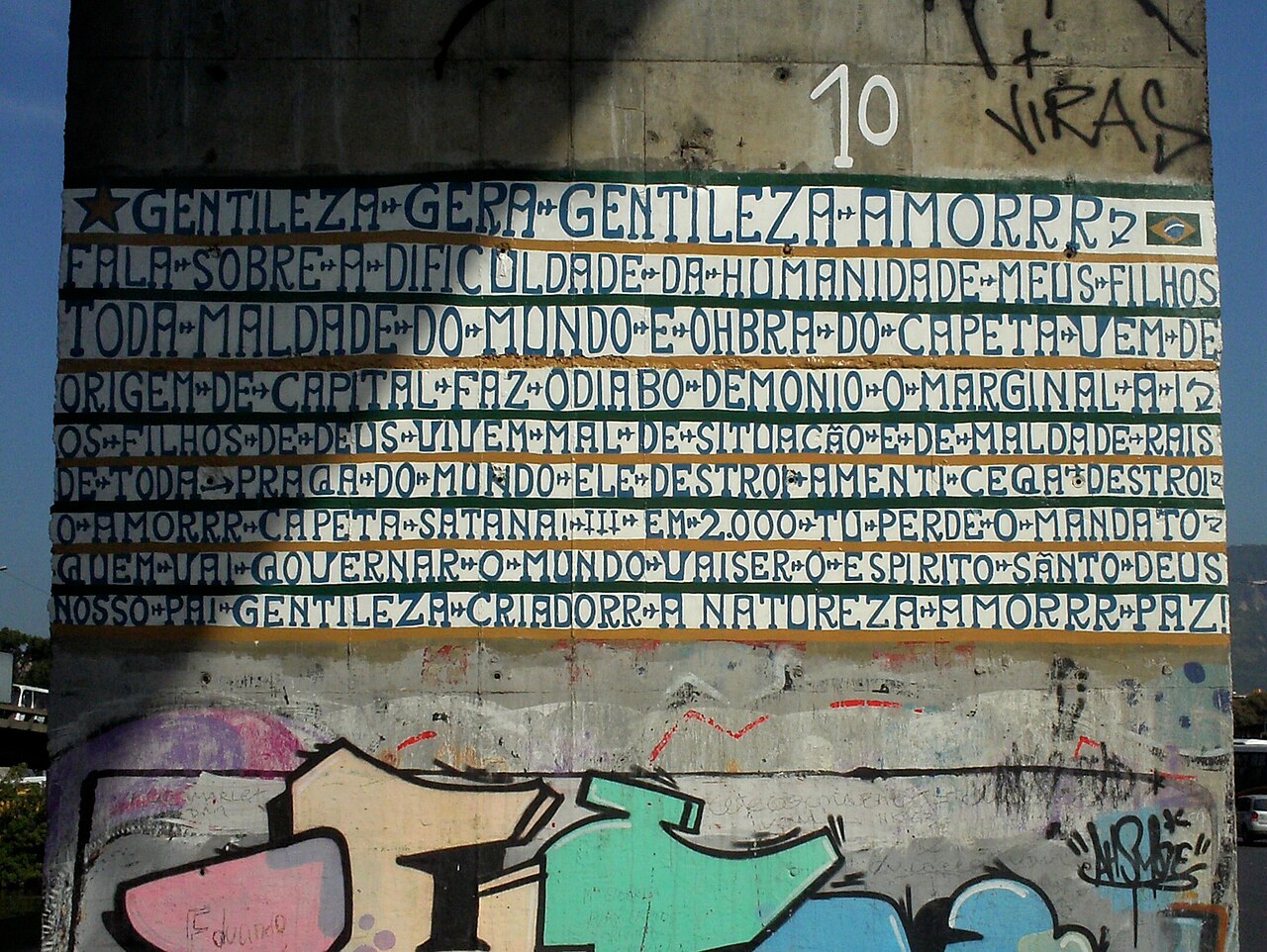
Not every important Rio wall is a picture. Near the Rodoviária Novo Rio bus station, the pillars of a viaduct carry long passages of hand-painted lettering by the man Cariocas call Profeta Gentileza, who lived from 1917 to 1996. His message was simple and kind: gentleness begets gentleness.
The city later gave the inscriptions protected status, a rare case of public writing treated as heritage. They are a reminder that a mural does not have to be a portrait or a pattern. Sometimes the most lasting wall is a handwritten plea.

Faces on the museum wall
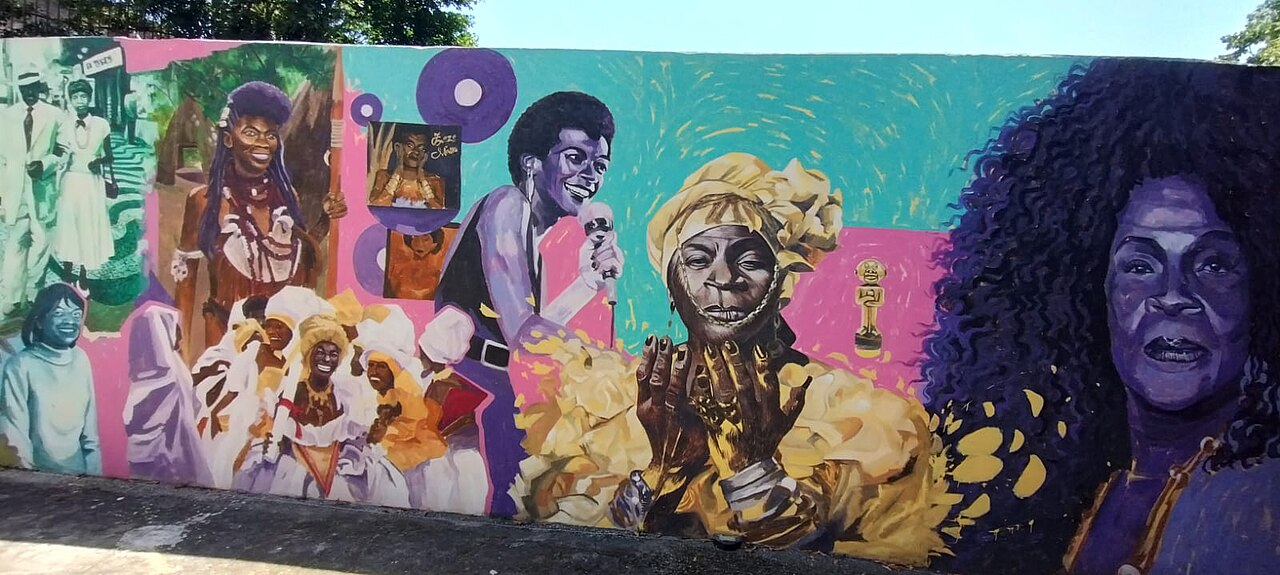
Back in the port area, the outer wall of the Museu da História e da Cultura Afro-Brasileira carries a mural of portraits and scenes honoring Black women and Afro-Brazilian culture, including the actress Zezé Motta, one of the best-known Black actresses in Brazil. Putting her image on the wall of a museum about Afro-Brazilian history is a clear statement about who gets remembered in public.
This is one of the quiet strengths of the Rio de Janeiro murals: a lot of them are about people, and about who belongs on a city wall.

Lapa, by day and after dark
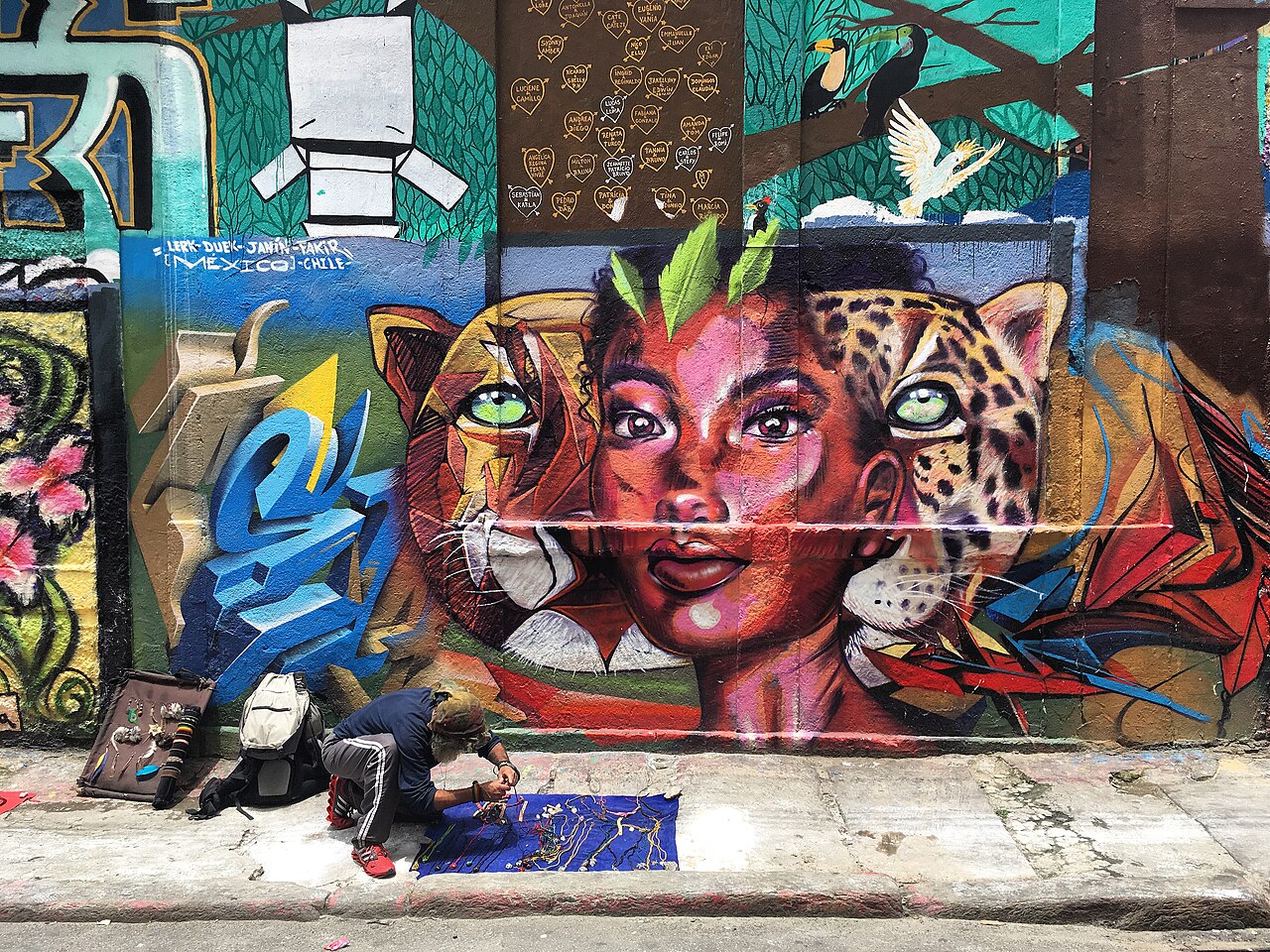
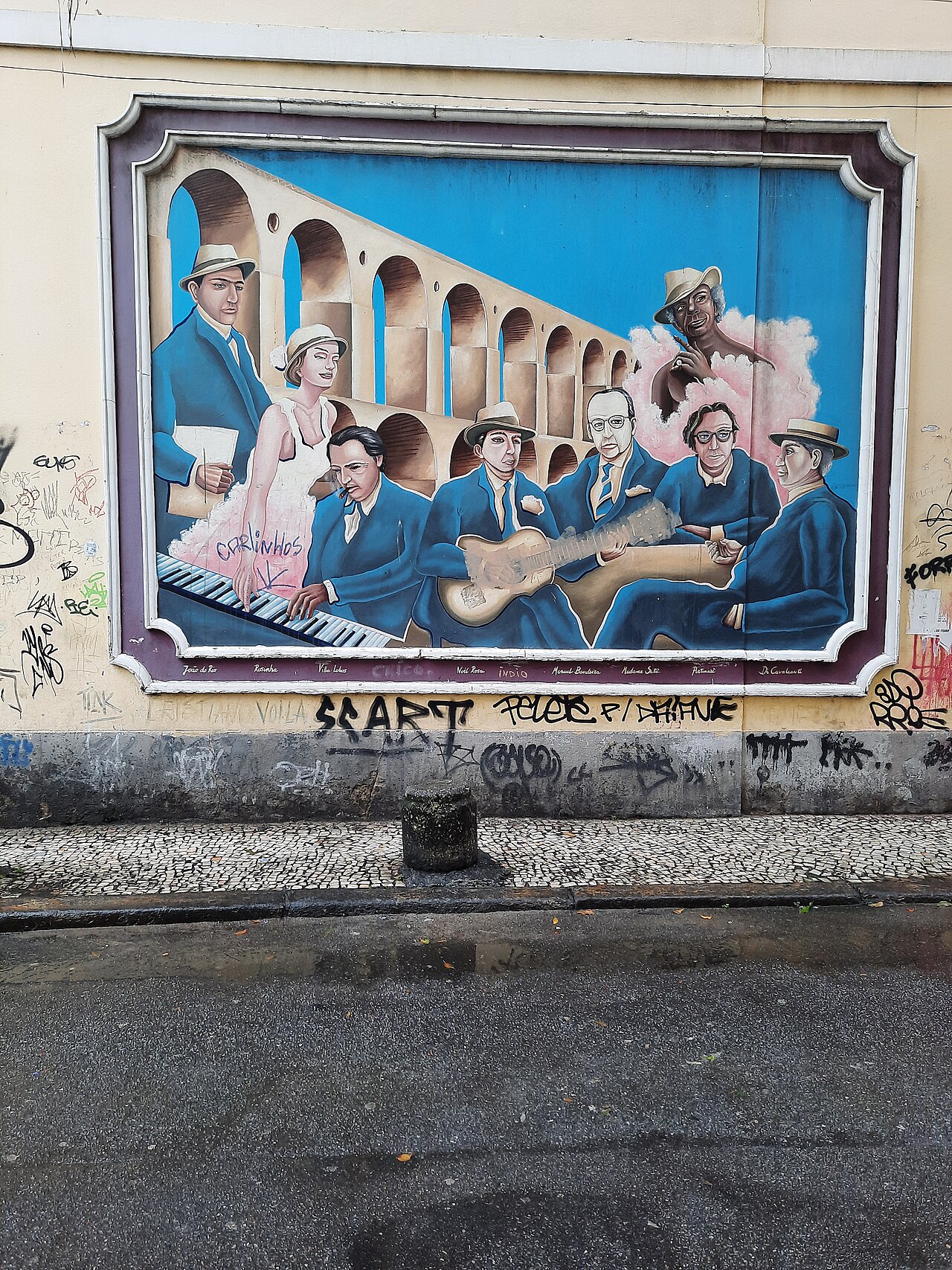
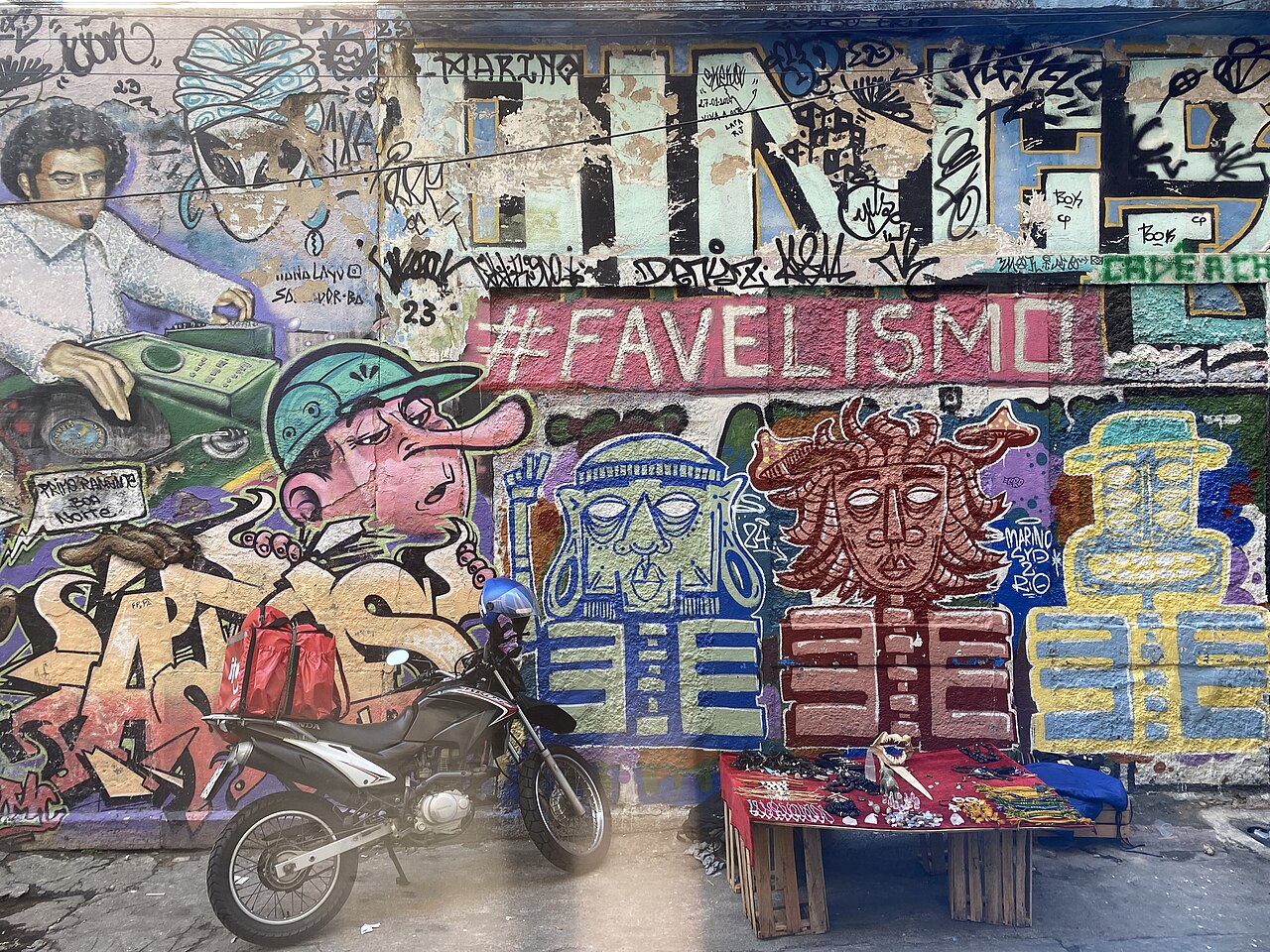
Lapa is known for its nightlife, but its walls are worth a daytime walk. A framed mural of musicians and writers hangs on one wall, set against the painted arches of the Arcos da Lapa aqueduct, and large painted portraits appear on corners and alley ends, often with the day’s street life moving in front of them, like a vendor laying out jewelry on the sidewalk.
In daylight you can read the detail. At night the same walls become a backdrop for the neighborhood's music and crowds. Either way, Lapa shows how murals in Rio sit inside everyday life instead of off to the side of it.


Lakeside walls and hillside lanes
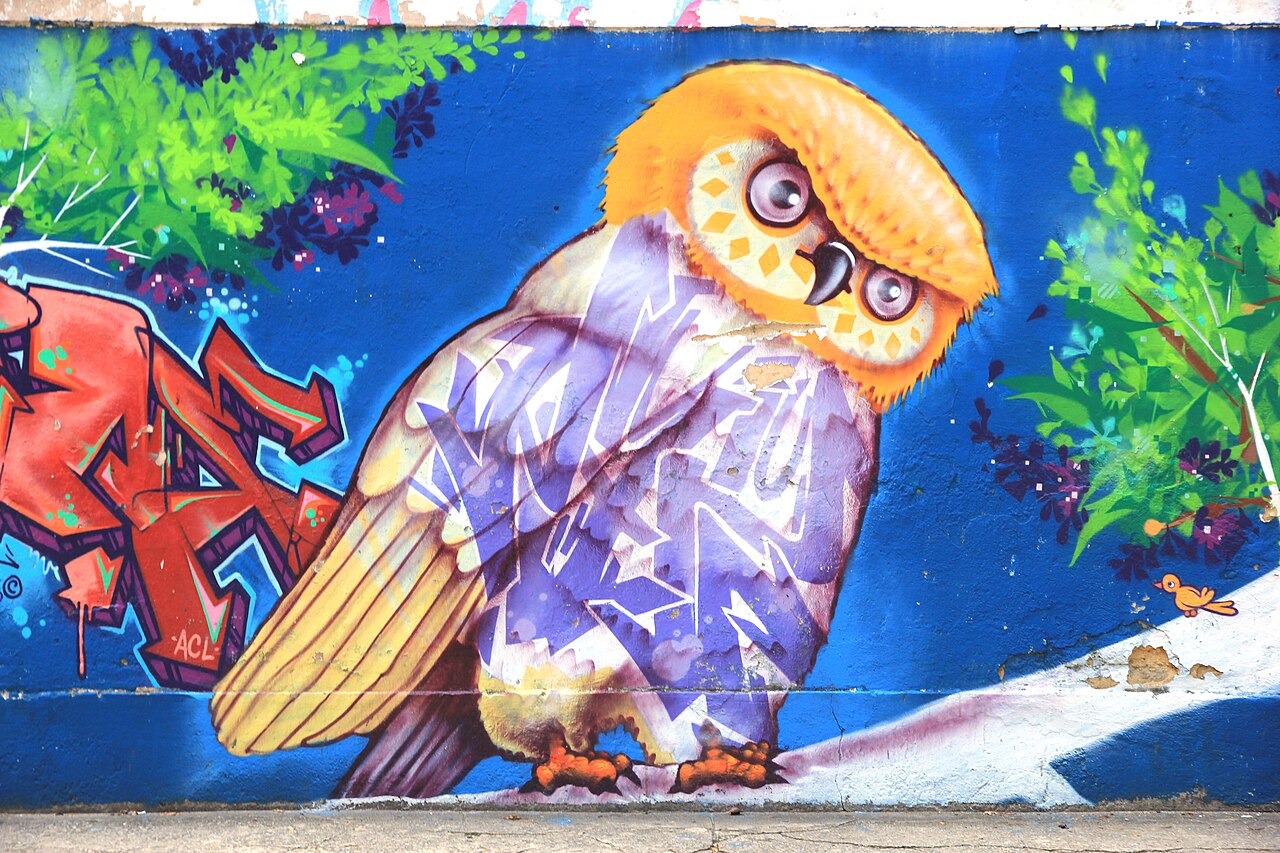
To finish, leave the center. Beside the Lagoa Rodrigo de Freitas, long boundary walls have been turned into graffiti, including a large painted owl on a blue wall, giving joggers and cyclists an outdoor gallery along their route. And up in the hilltop streets of Santa Teresa, painted walls appear between old houses and steep lanes, including in the hillside communities there.
If you want the wider map, our Rio de Janeiro field guide page lists more of the city's walls, with locations and credits. Pick a neighborhood, go on foot, and let one wall lead to the next.


If you have a wall in mind
Every wall in this story began as a blank surface and someone's decision to leave it less blank. If you manage a building and keep looking at a wall, we would be glad to hear about it. Tell us about your wall and we will take it from there.
Frequently asked questions
- Where can I see murals in Rio de Janeiro?
- Good places to start are the Selarón steps in Lapa, the Boulevard Olímpico and the port area (Porto Maravilha), the Lagoa Rodrigo de Freitas, and the streets of Santa Teresa. The center and the port can be combined in a day on foot with some public transit.
- What is the Etnias mural?
- Etnias is a large mural by the Brazilian artist Eduardo Kobra on the Boulevard Olímpico in the port area. It shows faces from peoples of five continents and covers almost three thousand square meters.
- Is street art legal in Rio de Janeiro?
- Large, commissioned murals like the ones in this story are made with permission from the wall owner or the city. Unsanctioned pieces are a different matter, and local rules apply, so check with locals or a tour guide if you are unsure.
- Is it safe to visit these murals?
- The port, Lapa and the Lagoa are popular with visitors, but as in any big city it is wise to go in daylight, keep valuables out of sight, and ask locally about current conditions. If you visit a hillside community, go with a local guide and respect residents' privacy.
All photos are free-licensed and credited under each image; license links go to the original file pages.
História da cidade · Rio de Janeiro · 6 min de leitura
Murais do Rio de Janeiro: a cidade contada nos muros
De uma escadaria de azulejos na Lapa a um mural do tamanho de um quarteirão no porto, um passeio sem pressa pelos murais e pela arte urbana do Rio de Janeiro que tornam a história da cidade pública.
Comece pela escadaria
A maioria das pessoas chega ao Rio olhando para cima, para as montanhas e para a estátua no alto de uma delas. Os murais do Rio de Janeiro pedem que você olhe primeiro para baixo. Na Lapa, uma escadaria íngreme sobe em direção aos morros de Santa Teresa, e cada degrau e cada espelho estão cobertos de azulejos.
A Escadaria Selarón é obra de Jorge Selarón, artista nascido no Chile que começou a revestir os degraus por volta de 1990 e continuou acrescentando peças pelo resto da vida. Ele reuniu azulejos de vários lugares, e as cores que dominam são o vermelho, o amarelo, o verde e o azul, as cores da bandeira brasileira. Nada ali foi planejado como galeria. Uma pessoa continuou, e uma escadaria virou ponto de referência.
As ruas laterais guardam mais
Não pare no topo. As ruas ao redor da escadaria estão cheias de obras menores: retratos em azulejo, rostos feitos com estêncil, muros com letras pintadas à mão. Um muro perto da escadaria exibe três versões em azulejo da Mona Lisa, uma delas com chifres de diabo, com grafite por cima e ao redor, um bom exemplo de como o trabalho antigo e o novo convivem nesta cidade sem cerimônia.
É uma boa primeira lição sobre como olhar o Rio. A obra famosa raramente é a única. Reserve tempo para caminhar pelos quarteirões ao redor dela.
Uma parede do tamanho de um quarteirão
Vá em seguida ao porto. A antiga zona portuária, hoje chamada de Porto Maravilha, foi reconstruída nos anos que antecederam os Jogos Olímpicos de 2016, e a cidade lhe deu algo fora do comum para exibir: o maior muro da história dos murais do Rio de Janeiro.
Etnias, do muralista brasileiro Eduardo Kobra, cobre quase três mil metros quadrados ao longo do Boulevard Olímpico. Mostra rostos de povos de cinco continentes, construídos com os blocos geométricos e nítidos de cor pelos quais Kobra é conhecido. Diante dele, você entende por que paredes tão grandes mudam um lugar. Um bairro que era sobretudo galpões e trânsito agora tem um rosto.
Outro muro, outra mensagem
Etnias não está sozinho por ali. A poucos passos, um mural de 2021 chamado Visões de Resistência, Sonhos de Liberdade cobre cerca de 360 metros quadrados de muro do porto. Foi pintado pelo artista Acme e mostra como o mesmo bairro pode abrigar vozes muito diferentes: enquanto o muro de Kobra celebra uma família humana compartilhada, este fala de luta e esperança.
Vale reparar em como os dois muros usam a escala. Um muro grande é uma decisão de quem é dono dele de ceder um quarteirão a uma ideia.
Palavras nos pilares
Nem todo muro importante do Rio é uma imagem. Perto da Rodoviária Novo Rio, os pilares de um viaduto trazem longos trechos de letras pintadas à mão pelo homem que os cariocas chamam de Profeta Gentileza, que viveu de 1917 a 1996. A mensagem dele era simples e generosa: gentileza gera gentileza.
A cidade depois concedeu proteção oficial às inscrições, um raro caso de escrita pública tratada como patrimônio. Elas lembram que um mural não precisa ser um retrato nem um padrão. Às vezes o muro mais duradouro é um apelo escrito à mão.
Rostos no muro do museu
De volta à região portuária, o muro externo do Museu da História e da Cultura Afro-Brasileira traz um mural de retratos e cenas em homenagem às mulheres negras e à cultura afro-brasileira, incluindo a atriz Zezé Motta, uma das atrizes negras mais conhecidas do Brasil. Colocar a imagem dela no muro de um museu sobre a história afro-brasileira é uma declaração clara sobre quem é lembrado em público.
Esta é uma das forças discretas dos murais do Rio de Janeiro: muitos deles falam de pessoas e de quem merece estar num muro da cidade.
Lapa, de dia e à noite
A Lapa é conhecida pela vida noturna, mas seus muros merecem uma caminhada de dia. Um mural emoldurado de músicos e escritores fica em uma parede, diante dos arcos pintados dos Arcos da Lapa, e grandes retratos pintados aparecem em esquinas e no fim dos becos, muitas vezes com a vida da rua passando à frente, como um vendedor estendendo joias na calçada.
À luz do dia dá para ler os detalhes. À noite, os mesmos muros viram cenário para a música e a multidão do bairro. De um jeito ou de outro, a Lapa mostra como os murais do Rio fazem parte do cotidiano, e não ficam à margem dele.
Muros à beira da lagoa e becos nos morros
Para terminar, saia do centro. À beira da Lagoa Rodrigo de Freitas, longos muros divisórios viraram grafite, incluindo uma grande coruja pintada em um muro azul, dando a quem corre ou pedala uma galeria ao ar livre no caminho. E nas ruas do alto de Santa Teresa, muros pintados aparecem entre casas antigas e ladeiras íngremes, inclusive nas comunidades das encostas.
Se quiser o mapa mais amplo, a página do guia do Rio de Janeiro lista mais muros da cidade, com localização e créditos. Escolha um bairro, vá a pé e deixe que um muro leve ao próximo.
Se você tem uma parede em mente
Cada parede desta história começou como uma superfície em branco e a decisão de alguém de deixá-la menos em branco. Se você administra um prédio e vive olhando para uma parede, vamos adorar saber dela. Conte-nos sobre a sua parede e nós cuidamos do resto.
Perguntas frequentes
- Onde ver murais no Rio de Janeiro?
- Bons pontos de partida são a Escadaria Selarón, na Lapa, o Boulevard Olímpico e a região portuária (Porto Maravilha), a Lagoa Rodrigo de Freitas e as ruas de Santa Teresa. O centro e o porto podem ser combinados em um dia, a pé e com algum transporte público.
- O que é o mural Etnias?
- Etnias é um grande mural do artista brasileiro Eduardo Kobra no Boulevard Olímpico, na região portuária. Mostra rostos de povos de cinco continentes e cobre quase três mil metros quadrados.
- O grafite é legal no Rio de Janeiro?
- Murais grandes e encomendados, como os desta história, são feitos com a permissão do dono do muro ou da prefeitura. Obras sem autorização são outra questão, e valem as regras locais; se tiver dúvida, pergunte a moradores ou a um guia.
- É seguro visitar esses murais?
- O porto, a Lapa e a Lagoa são frequentados por visitantes, mas, como em qualquer cidade grande, convém ir de dia, não deixar objetos de valor à mostra e se informar localmente sobre as condições atuais. Se for visitar uma comunidade nas encostas, vá com um guia local e respeite a privacidade dos moradores.
Todas as fotos têm licença livre e levam o crédito abaixo de cada imagem; os links de licença levam às páginas dos arquivos originais.