City story · San Diego · 6 min read
San Diego Murals: Where the Walls Hold the Neighborhood
Concrete pillars, a long sidewalk wall and a few quieter corners: a slow look at the San Diego murals and street art that tell you whose city this is.
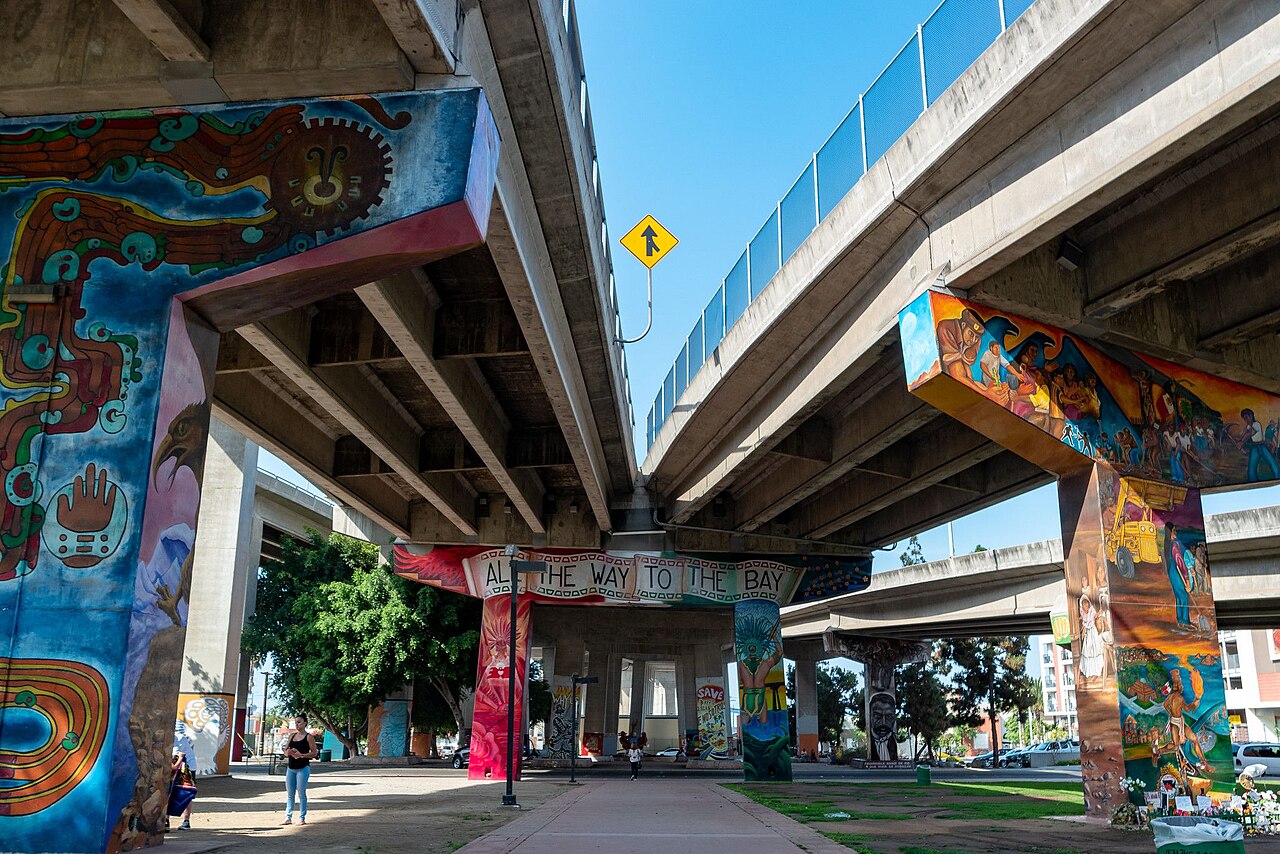
Look up at the pillars
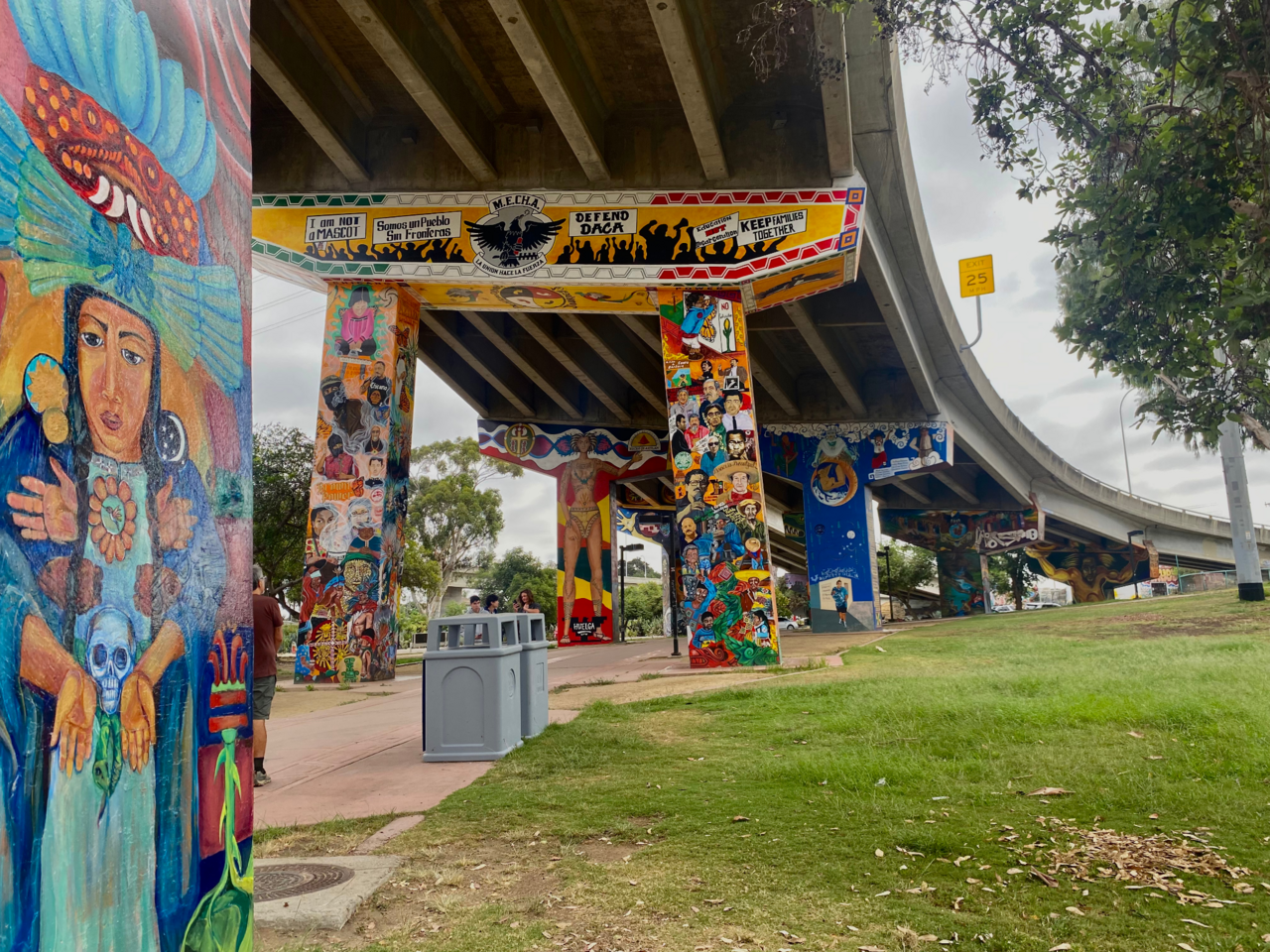
Most cities hang their art on buildings. In San Diego, some of the best walls hold up a freeway. Under the Coronado Bridge, in the neighborhood of Barrio Logan, the concrete pillars and beams are covered in paint, and the whole place reads like a long, open-air book that you walk through rather than read.
Stand at the edge and the scale arrives first. Columns rise in rows, every surface taken, and the colors push back against all that gray concrete. Then your eye starts finding things: a figure, a face, a symbol repeated down a beam. It is a good first lesson in San Diego murals. The art here is not decoration added after the fact. It is part of how the place holds itself up.

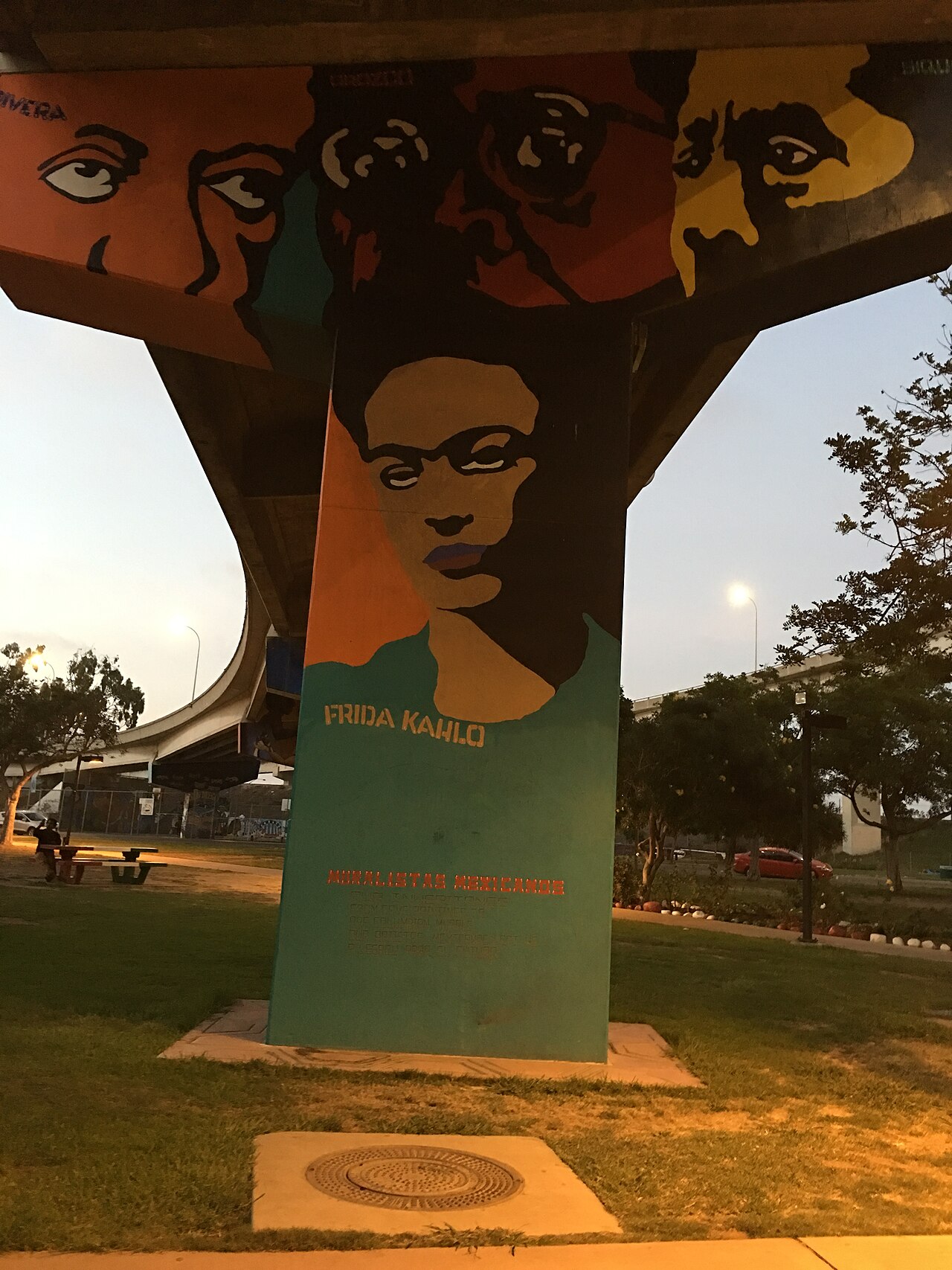
Two faces on one column
Come back at dusk and the light changes the mood. On one support column, the face of Frida Kahlo looks out at the park, and above her, on the beam, a pair of eyes belonging to Diego Rivera watches from overhead. Whoever planned the pairing knew how to use the architecture: the column becomes a body, the beam a brow.
It is a small piece of staging that makes a very large structure feel personal. You do not need to know the whole story to feel that these walls were made for the people who live around them.

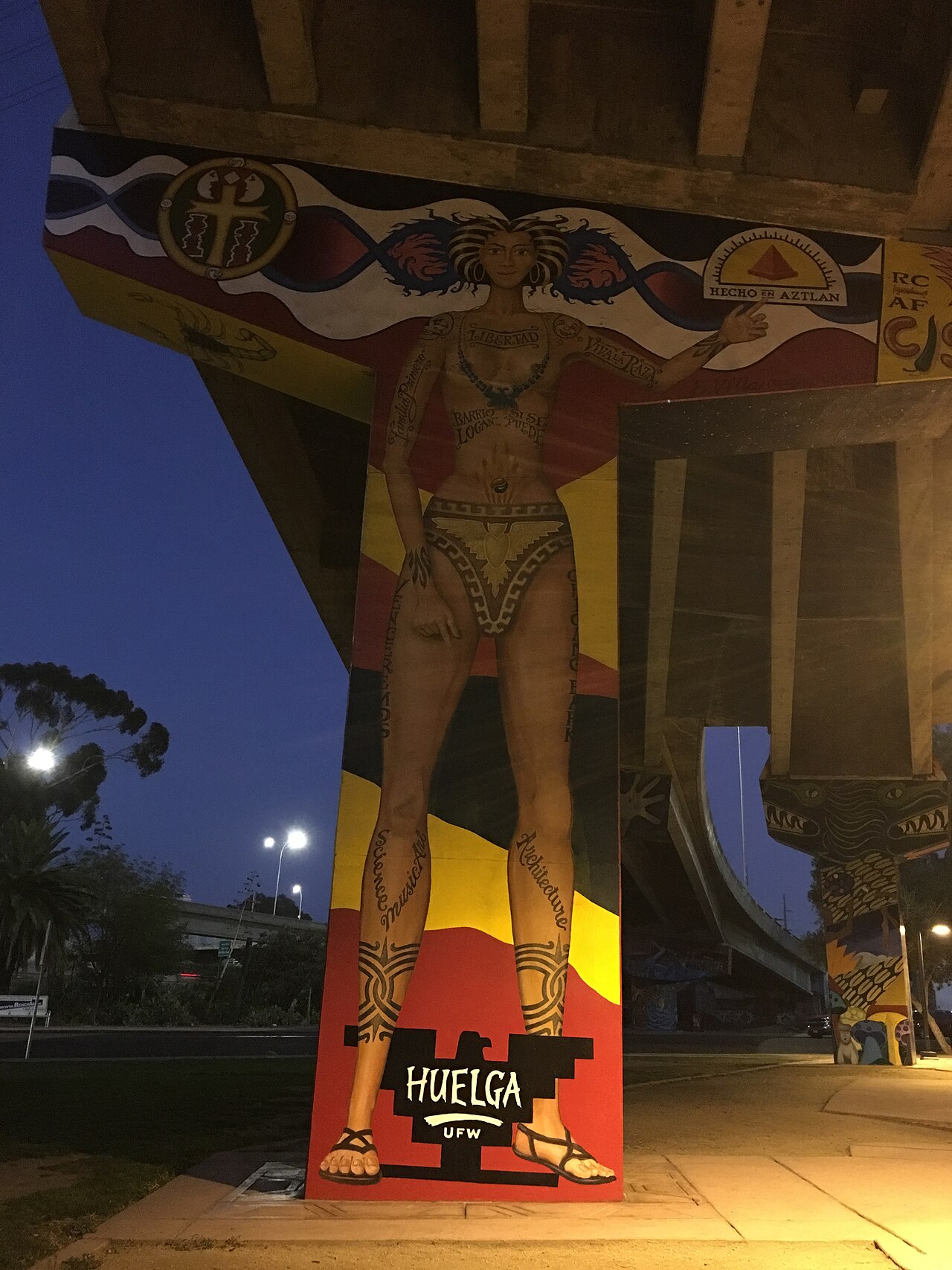
A figure, a word, a column
Not every wall here is quiet. Another column carries a tall standing figure with a single word painted beside it: Huelga, the Spanish word for strike. A mural like this does what a poster cannot. It is as tall as the structure, it stays up for years, and it is part of the neighborhood's daily view.
That is the thing worth noticing about street art in San Diego. The walls are not only pretty. Many of them speak, and they speak in the voice of the people who pass them every day.

Come back after dark
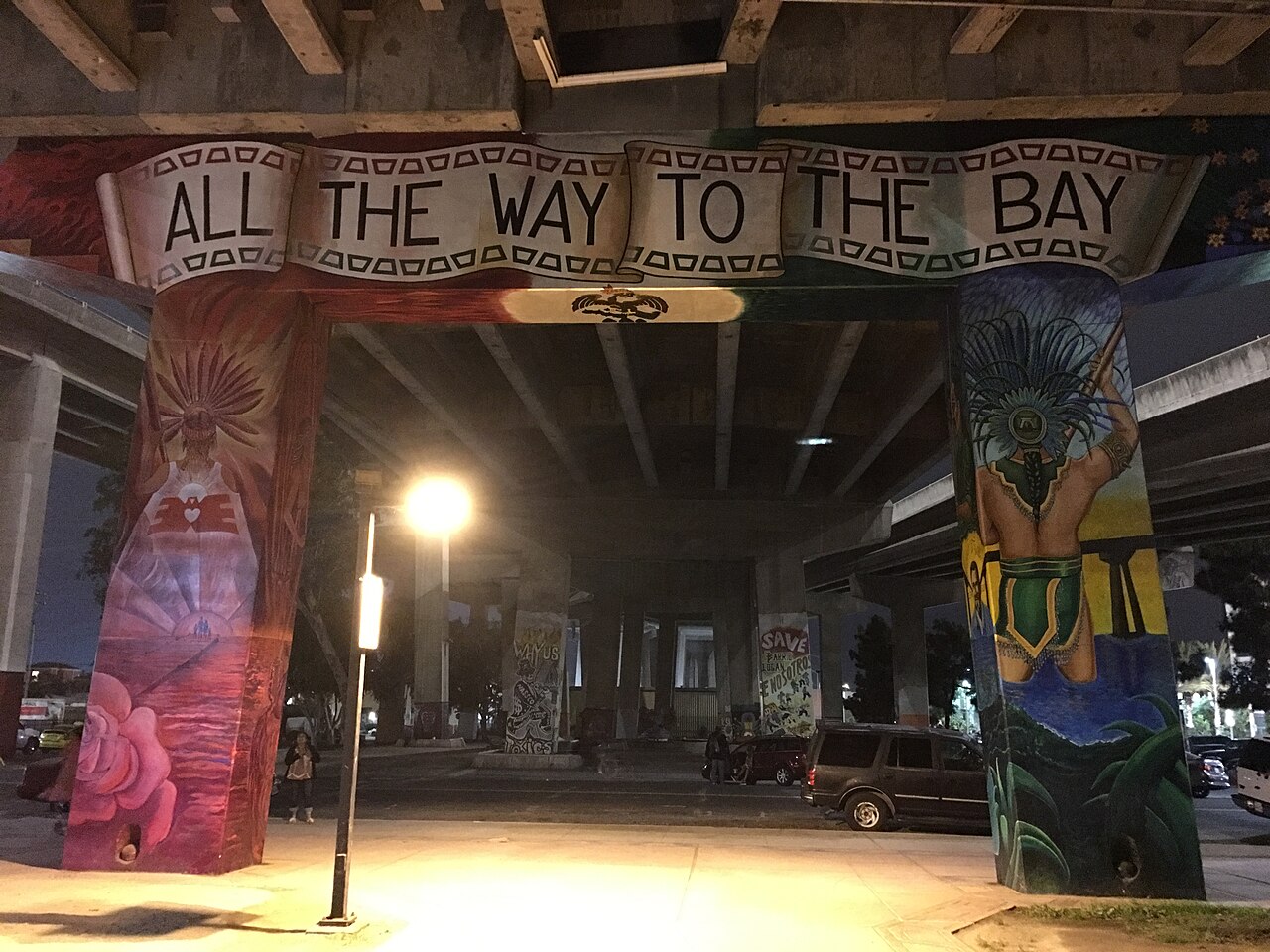
At night the park changes again. Lights pick out a painted banner that reads All the Way to the Bay, and the pillars glow in the dark between the traffic overhead and the quiet below. The murals seem to take on weight in this light, like stained glass in a cathedral that happens to be a freeway.
If you only have time for one visit, make it twice: once in daylight for the detail, once at night for the mood.

A wall you can walk beside
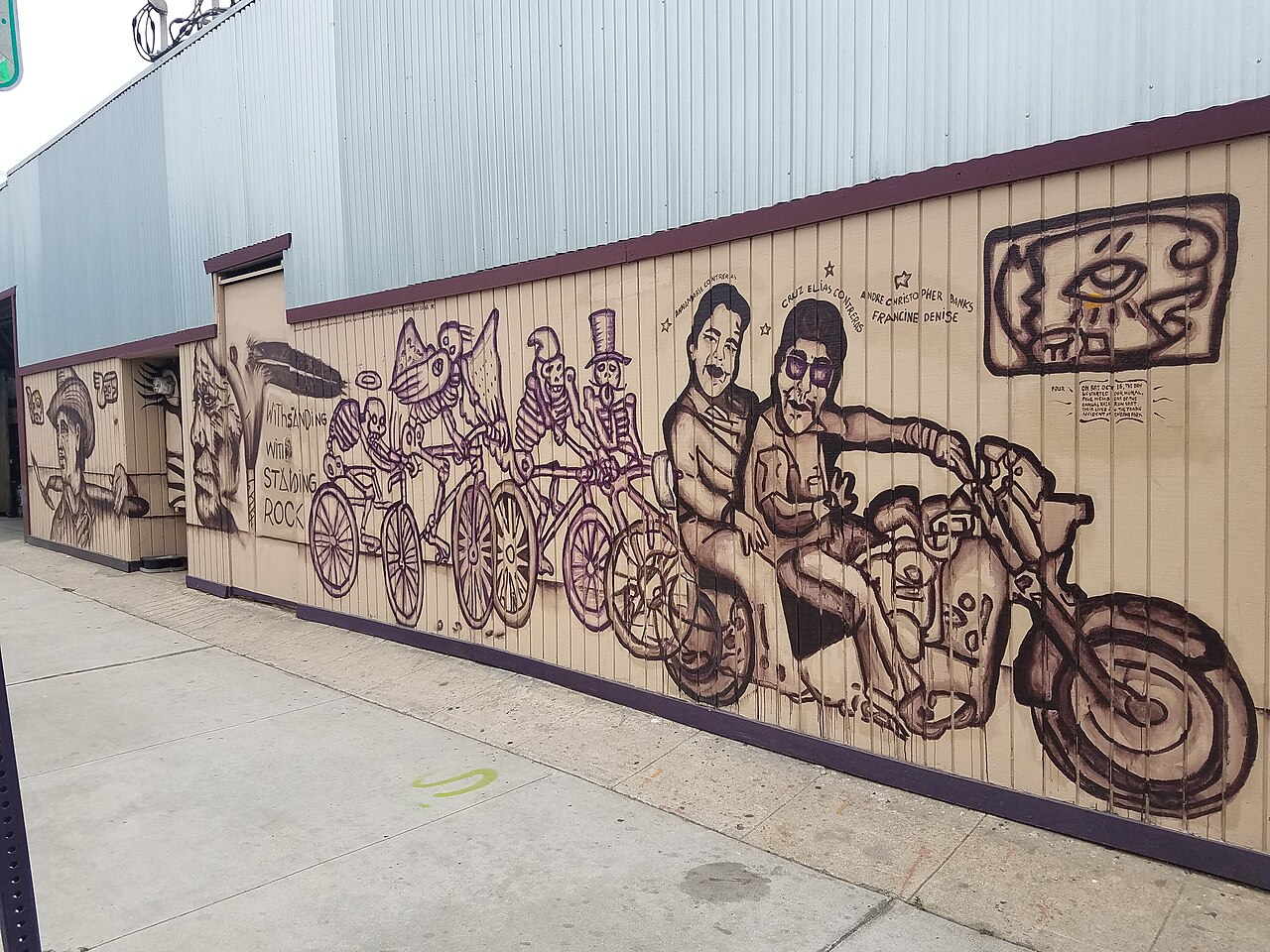
From the park, Barrio Logan keeps going on foot. Along one sidewalk, a long painted wall runs past you at walking pace: portraits, skeleton cyclists, two riders on a motorcycle, all in a row. It works the way a good street should, giving you something new every few steps and rewarding anyone slow enough to look.
A long wall like this asks for a different kind of attention than a single big mural. You are not standing back to take it in. You are moving along it, and the story changes as you go.

Little Italy, a church and the towers
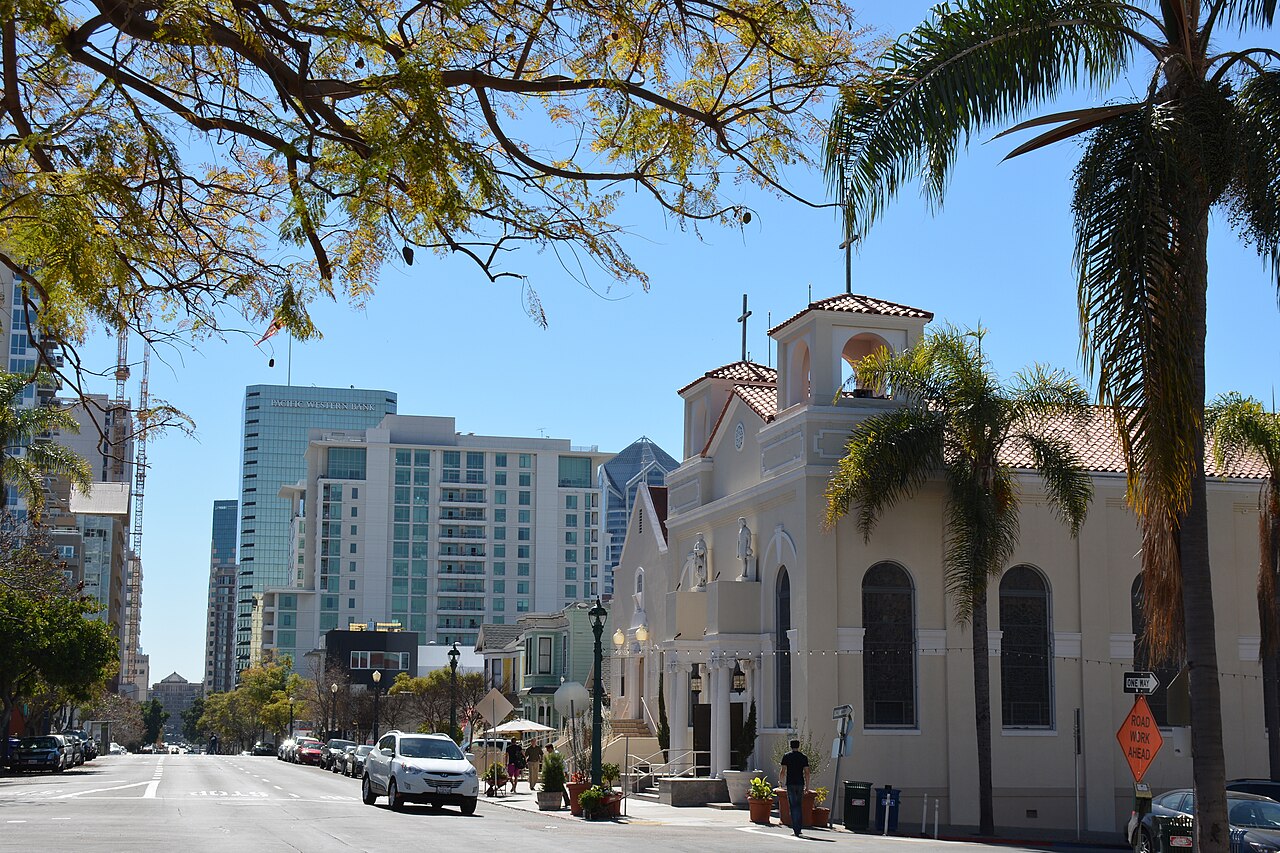
Head north and the city shifts gear. In Little Italy the streets are lined with palms, a church sits on the corner, and downtown high-rises stand just behind it. The scene is bright and tidy, and it shows how closely San Diego's older neighborhoods sit beside the new skyline.
Places like this are where a wall can do quiet work. A blank side of a building near a busy corner is a chance to say something about the neighborhood, in a way a sign never will.

Pavement and a pond
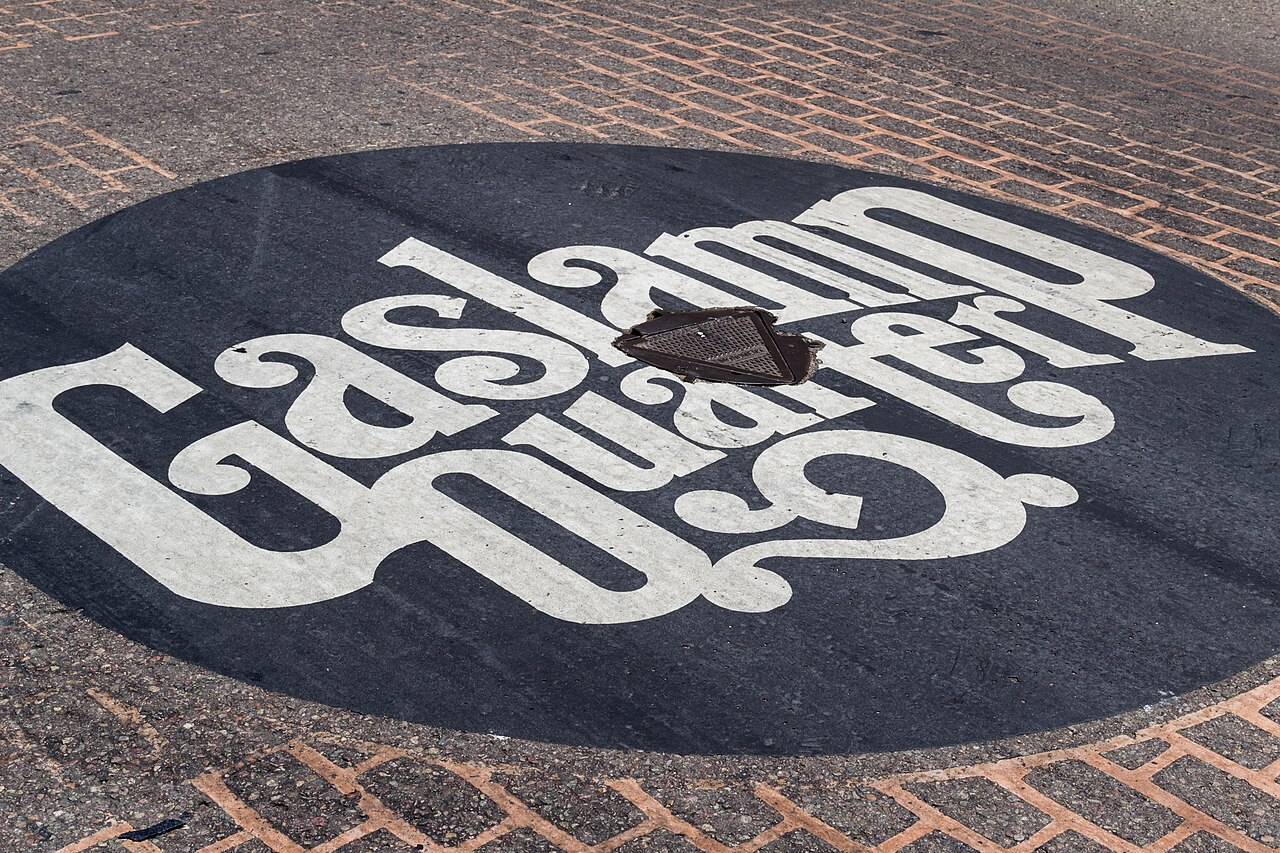
In the Gaslamp Quarter, the art is underfoot. A big painted logo sits on the brick-patterned street, announcing the district to anyone crossing it. It is not a mural in the usual sense, but it makes a useful point: a city can mark a place with paint on any surface, and people read it.
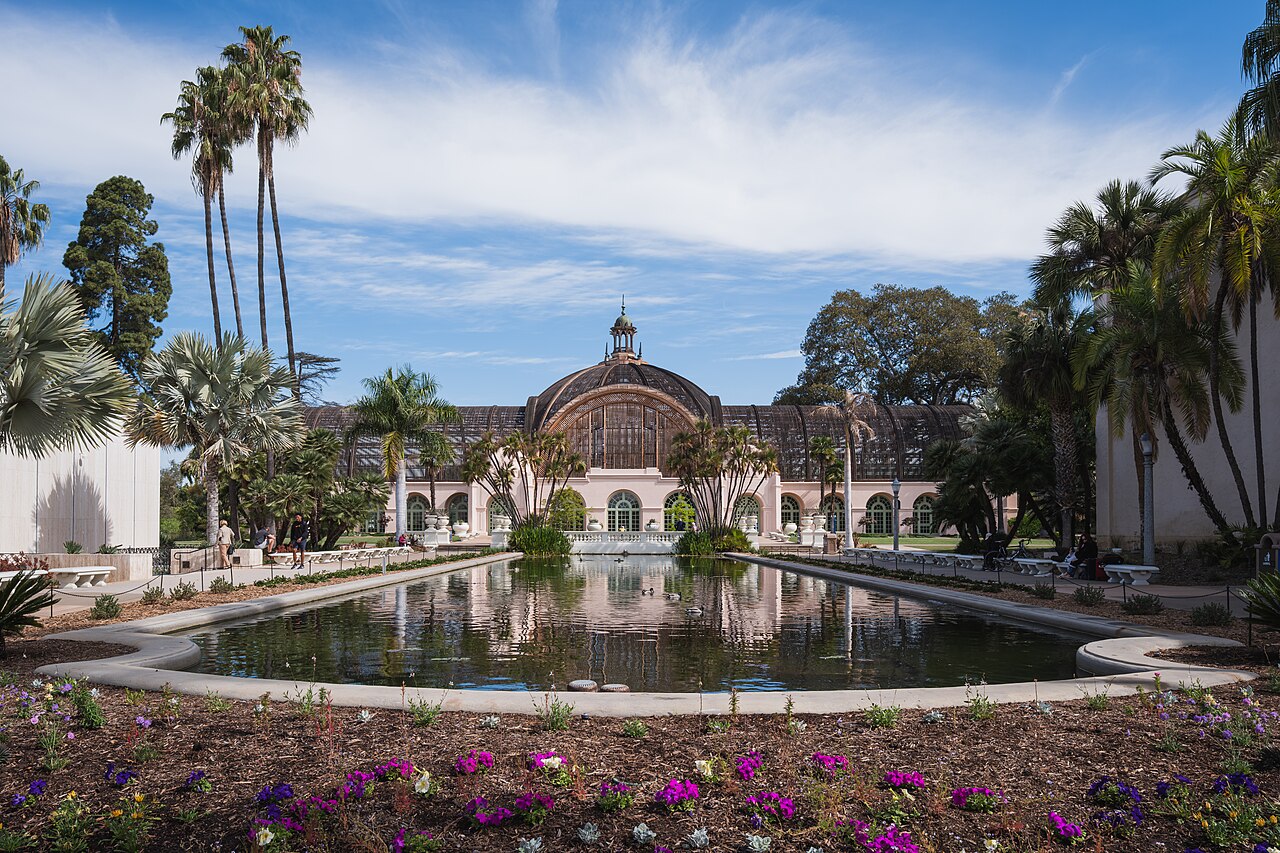
Balboa Park, by contrast, is where San Diego slows down. The Botanical Building sits beside its lily pond, palms lean over a flowerbed, and the whole scene doubles in the water. Gardens, buildings and open space set the stage the walls play against, and the best murals look like they belong to the place they are in.


Beach town energy
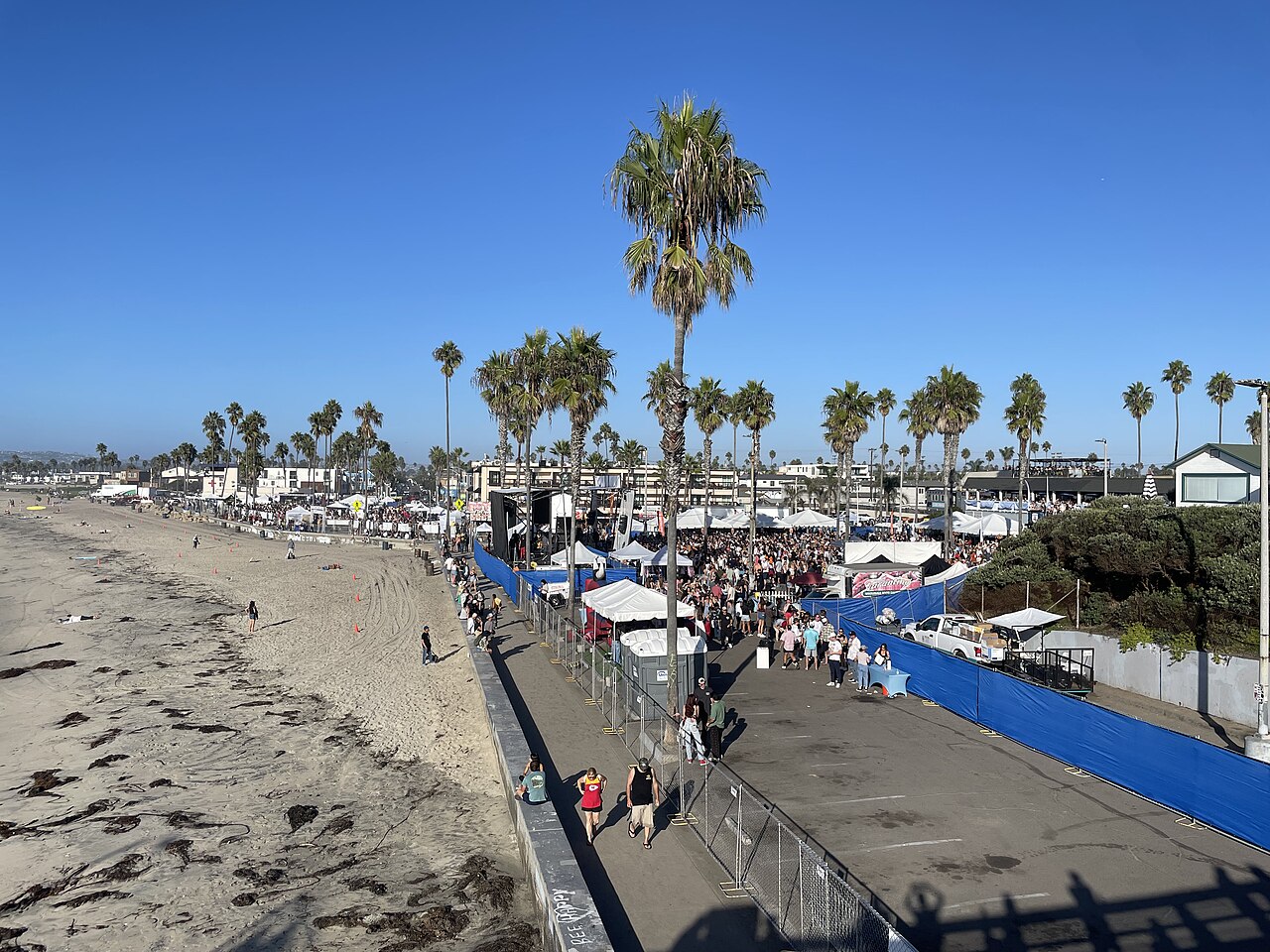
Out west in Ocean Beach, the mood is looser. On festival days a crowd fills the beachfront, with tents set up under the palm trees and people spilling along the sand. The neighborhood has a reputation for doing things its own way, and a gathering like this shows the energy a wall can plug into.
A mural near a place like this is not a monument. It is a backdrop to people having a good afternoon.

Finish at the water
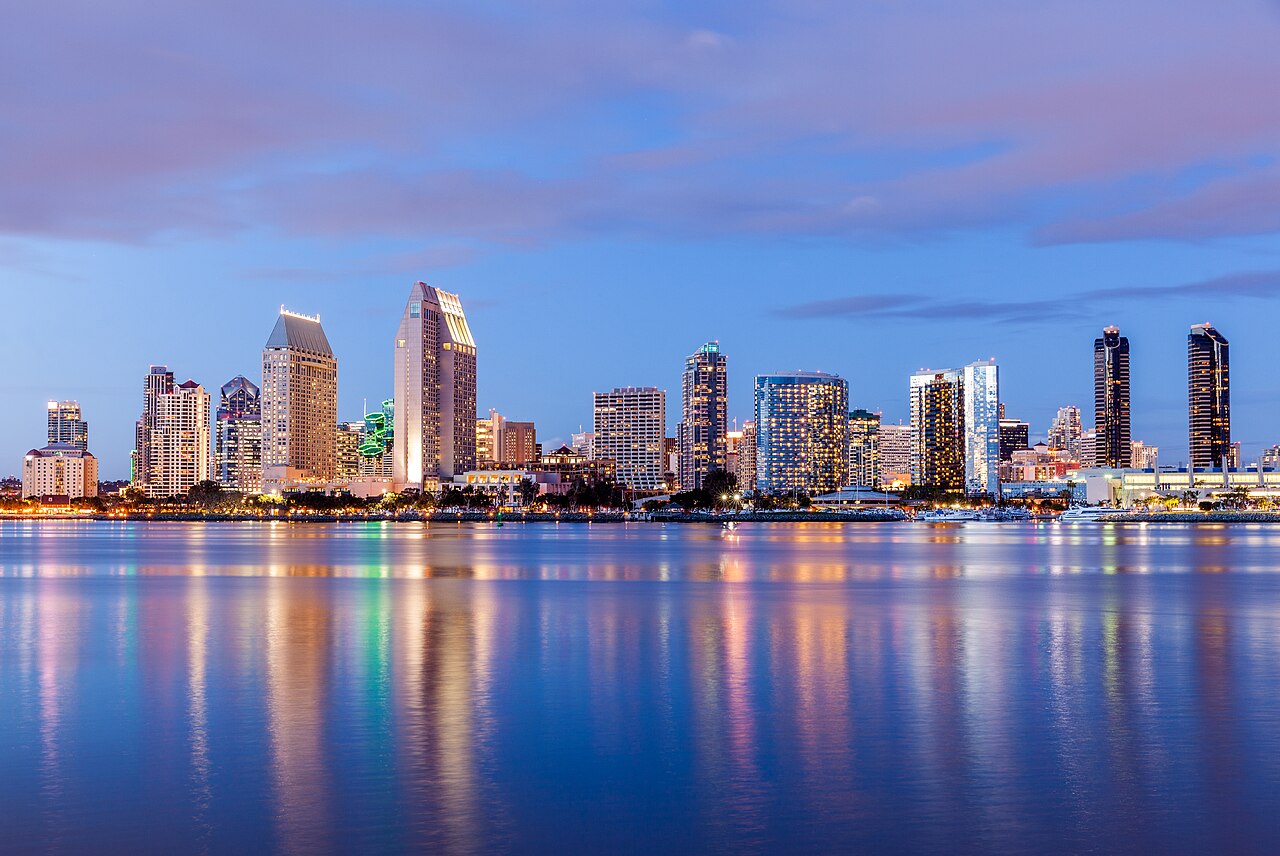
End the day on the bay. From Coronado, the downtown skyline lights up at dusk and doubles itself in the water. After a day of walls, it is a useful change of scale: a whole city at once, small and glowing across the bay.
Then you remember that every light in that skyline is somebody's building, and every building has a side wall. That is where San Diego murals come from: a person, a wall, and a decision to make it say something.

If you have a wall in mind
Every wall in this story began as somebody's blank surface and a decision to leave it less blank. If you manage a building in San Diego and keep looking at one of your own, we would be glad to hear about it. Tell us about your wall and we will take it from there. You can also browse our San Diego page.
Frequently asked questions
- Where can I see the best murals in San Diego?
- A good place to start is Chicano Park in Barrio Logan, where murals cover the pillars beneath the Coronado Bridge. Barrio Logan's sidewalks have more painted walls nearby, and both are easy to see in an afternoon.
- Which San Diego neighborhoods have the most street art?
- Chicano Park and Barrio Logan are the best known for murals. Little Italy, the Gaslamp Quarter, Balboa Park and Ocean Beach each have a different feel, and walking between them shows how varied San Diego street art can be.
- Is street art legal in San Diego?
- It depends on the wall and the owner. Murals painted with a property owner's permission are commissioned work, while unsanctioned pieces are a different matter. If you own a wall and want a mural, get the agreement in writing.
- How do I find a muralist in San Diego for my building?
- Start with a muralist whose style fits the wall and the neighborhood, then talk through the size, surface and look. We help match walls with muralists and handle quotes, contracts and scheduling.
All photos are free-licensed and credited under each image; license links go to the original file pages.