City story · Seattle · 6 min read
Seattle Murals: Color for a City of Gray Days
From a hill above Lake Union to a rocket on red brick, a patchwork wall and a painted street, a patient look at the Seattle murals and street art that warm up a city of overcast skies.

Start on the hill
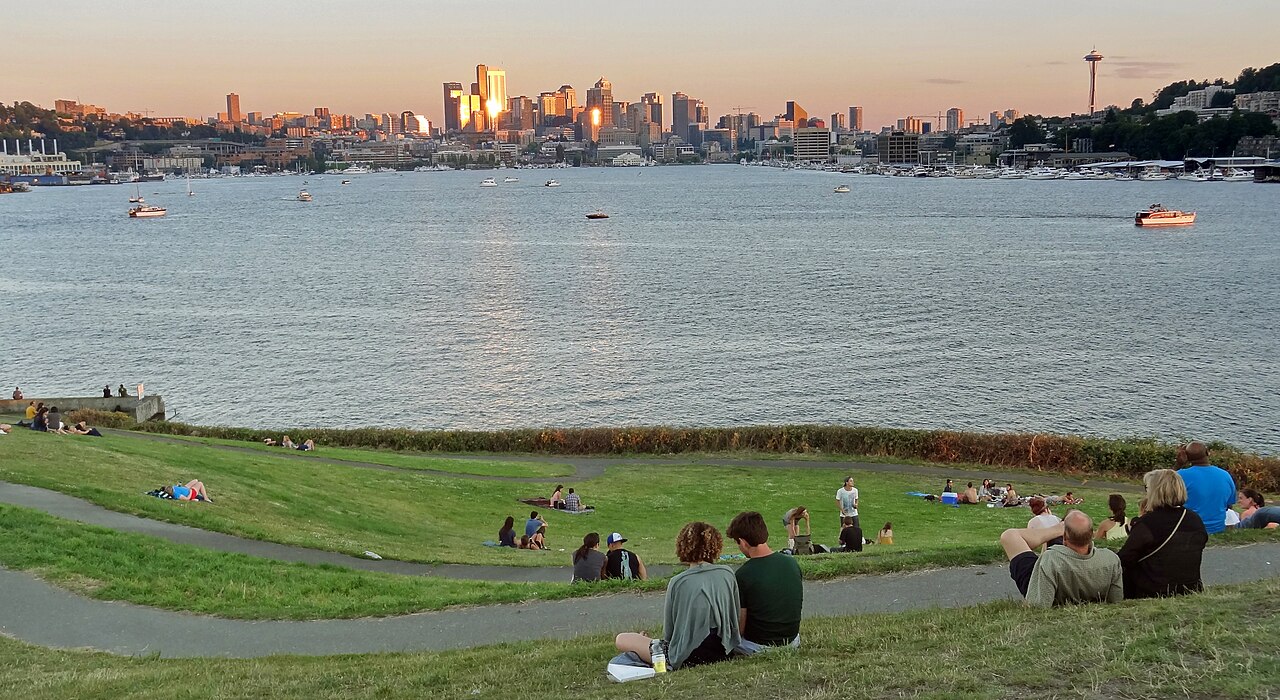
The best first look at Seattle is not a wall at all. Climb the grassy mound at Gas Works Park near sunset and the whole city lines up across Lake Union: the downtown towers, the Space Needle, people spread out on the grass with nothing to do but watch the light change.
It is a useful place to begin a story about Seattle murals, because it shows you the setting before the paint. This is a city of water, hills and long gray stretches, and a lot of its street art reads as a quiet answer to that weather. When the sky does the muting, a wall gets to do the shouting.

Under the Needle
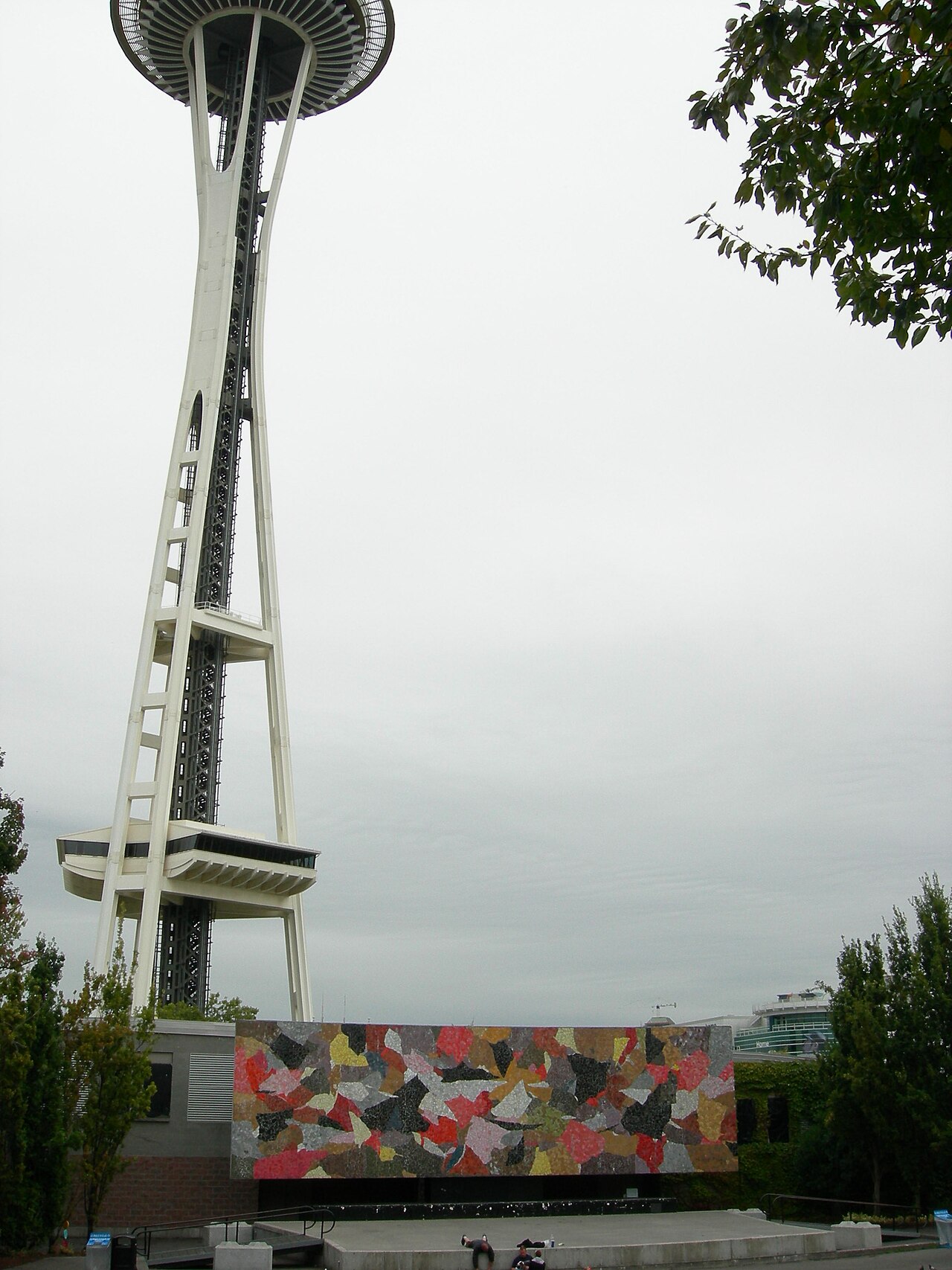
At Seattle Center, the Space Needle is the thing everyone photographs. Turn around, though, and there is a broad abstract mural of red, black and gray shapes standing right in front of it. The Mural Amphitheater is the kind of wall you can sit near, which changes how you look at it.
Nothing in it tells a story in words. The shapes press against each other, and the tower behind keeps its own counsel. It is a nice reminder that a mural does not need a face or a slogan to hold a space together.

A rocket on red brick
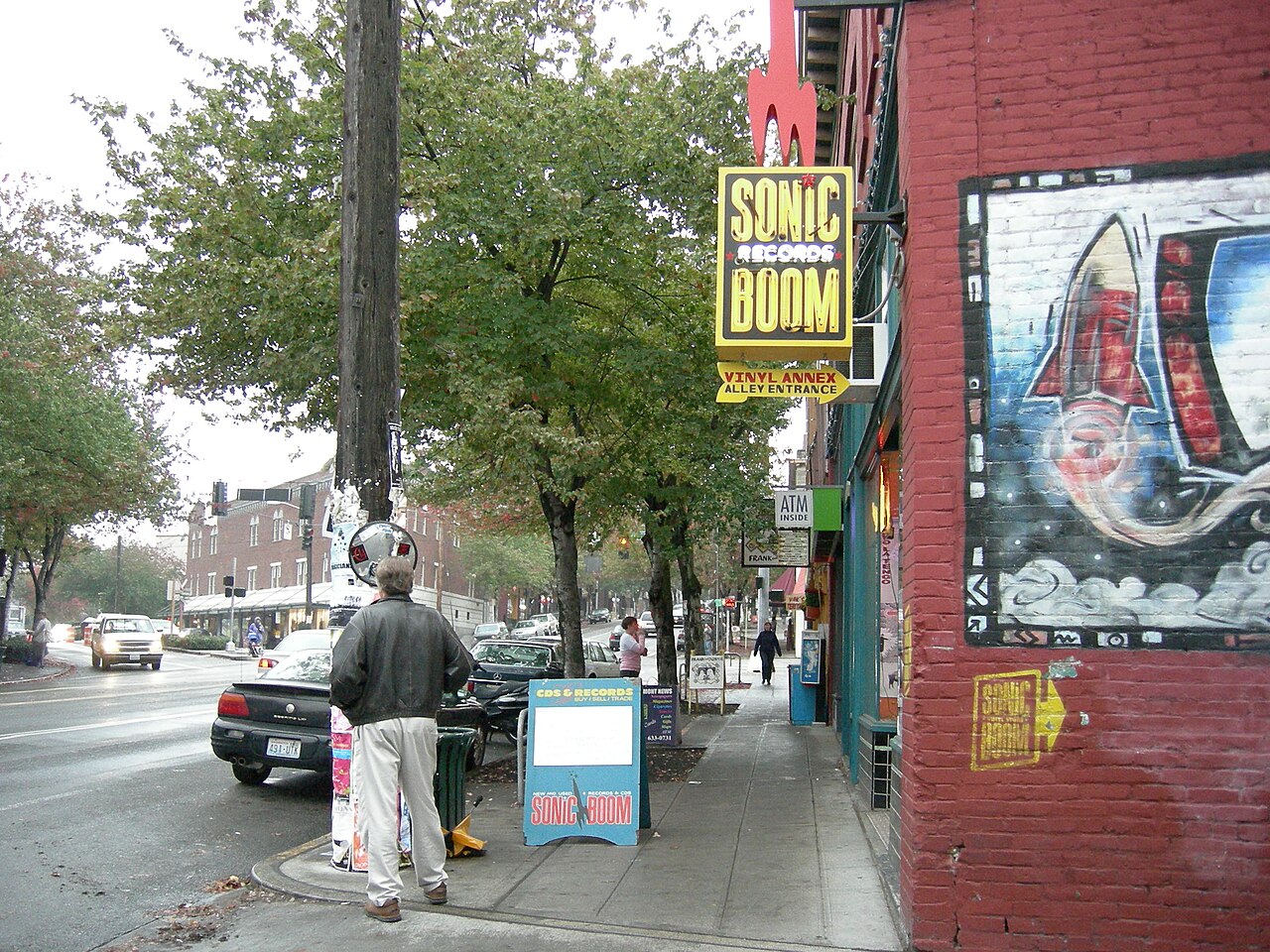
Fremont has a reputation for doing things its own way, and a stroll down Fremont Avenue North backs that up. The sidewalk is lined with trees, a record shop hangs its sign over the pavement, and a painted rocket climbs a red brick wall as if the neighborhood expected a launch.
What makes it work is the scale. Nothing here is trying to be a monument. It is a joke you are allowed to take seriously, and it gives the block a face. Walk past a few of these and you start to understand why people say Seattle street art feels like it belongs to the neighborhood it lives in.

Paint where the street is
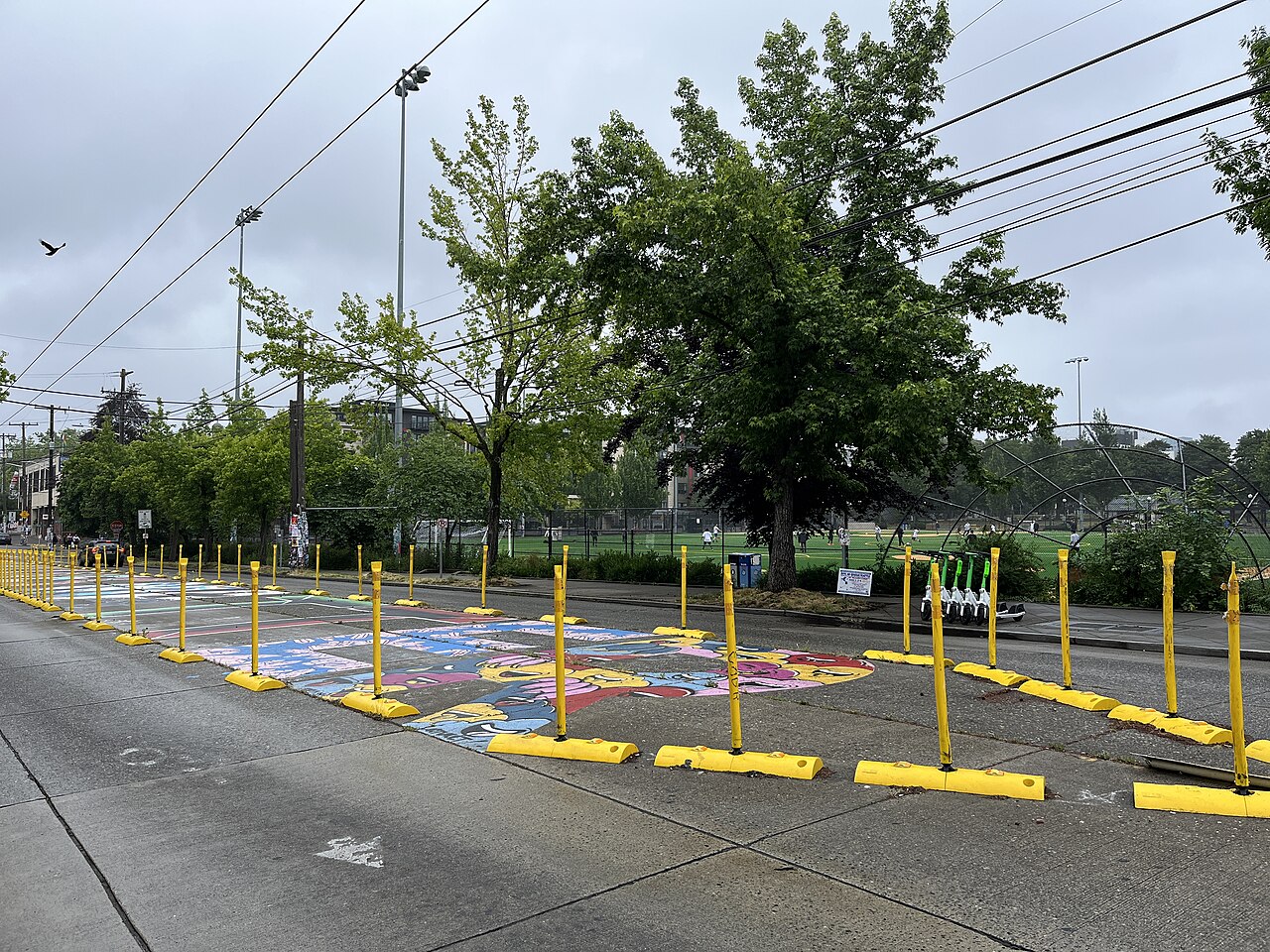
On Capitol Hill, the art sometimes lies flat. A colorful painted street mural sits behind a row of yellow bollards beside a ball field and some trees, and you read it the way you read a crosswalk: by walking across the idea of it.
Painted pavement is one of the friendliest forms of Seattle murals. It asks a car to slow down and a pedestrian to look down. If you have ever wished a plain stretch of asphalt would just be nicer to stand on, this is what that wish looks like finished.

Market morning
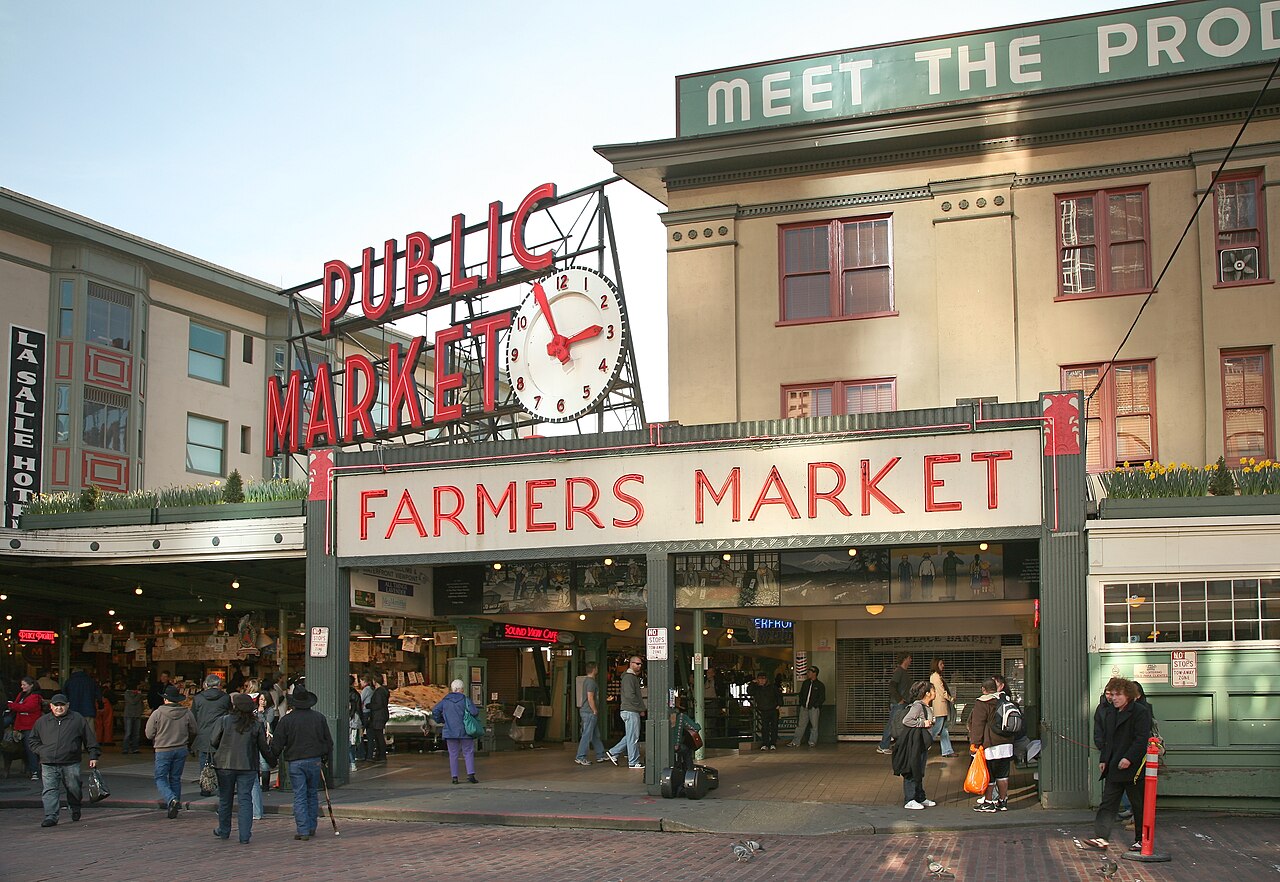
Pike Place Market is not a mural, and it earns a stop anyway. Under the red Public Market sign and clock, shoppers stream past the farmers market entrance, and nearly everything you see is hand-lettered, hand-stacked or hand-made.
That is the lesson a market teaches a muralist: color and craft belong in the middle of daily life. The sign is as much a part of Seattle's visual identity as any painted wall, and it hints at what a well-placed mural can do for a busy entrance. People arrive, they look up, and they remember where they were.

Black paint and layered walls
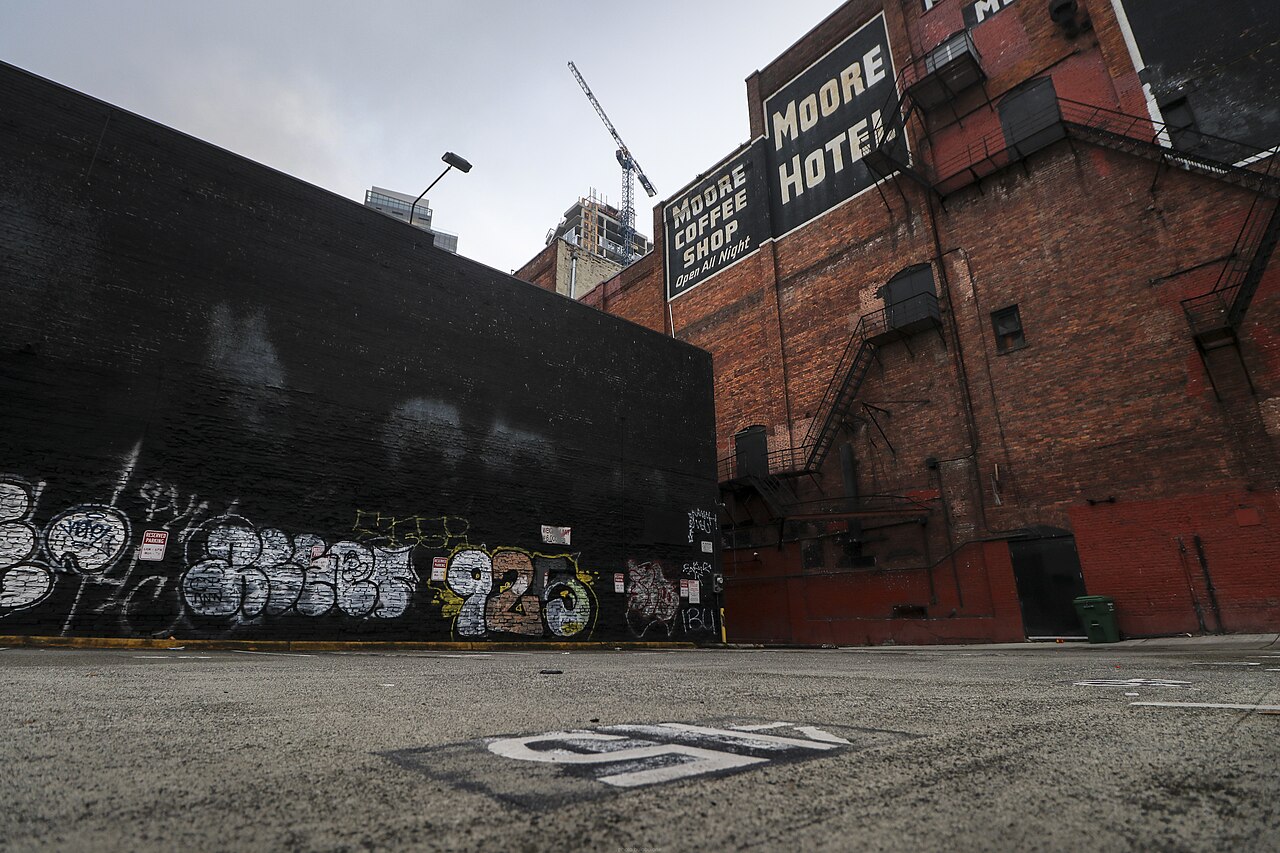
Head into Belltown and the mood shifts. A tall black-painted wall rises beside a brick building with a Moore Hotel sign, white and colored lettering running along its base. The contrast between the old brick and the dark, clean surface is the whole picture.
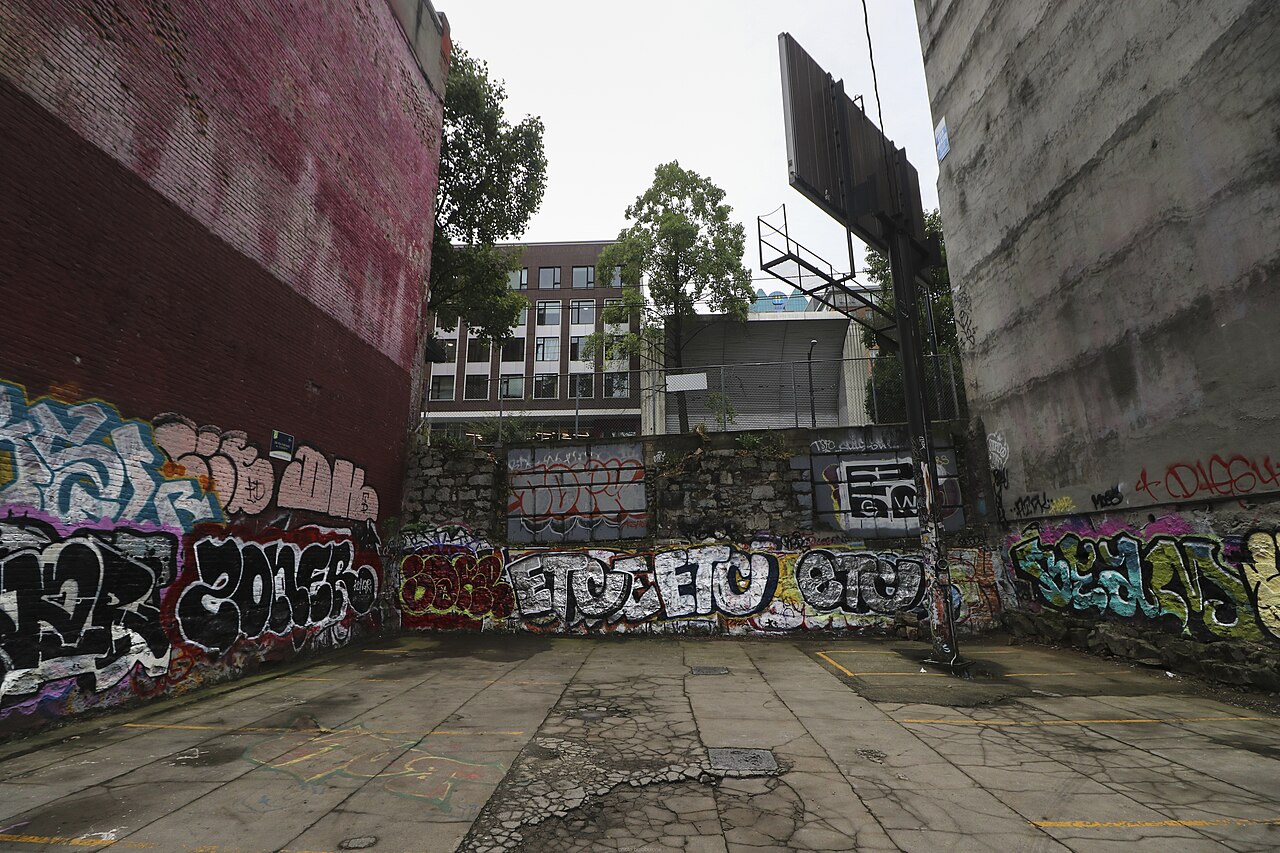
Downtown, a walled-in court tells a different story. Layered graffiti pieces cover brick and concrete under an overcast sky, one idea over the next. Not all of this is commissioned, and it is worth saying so plainly: sanctioned murals are made with a property owner's agreement, while layered walls like this one live by other rules. Both are part of how people read the city's walls.


Squares of color
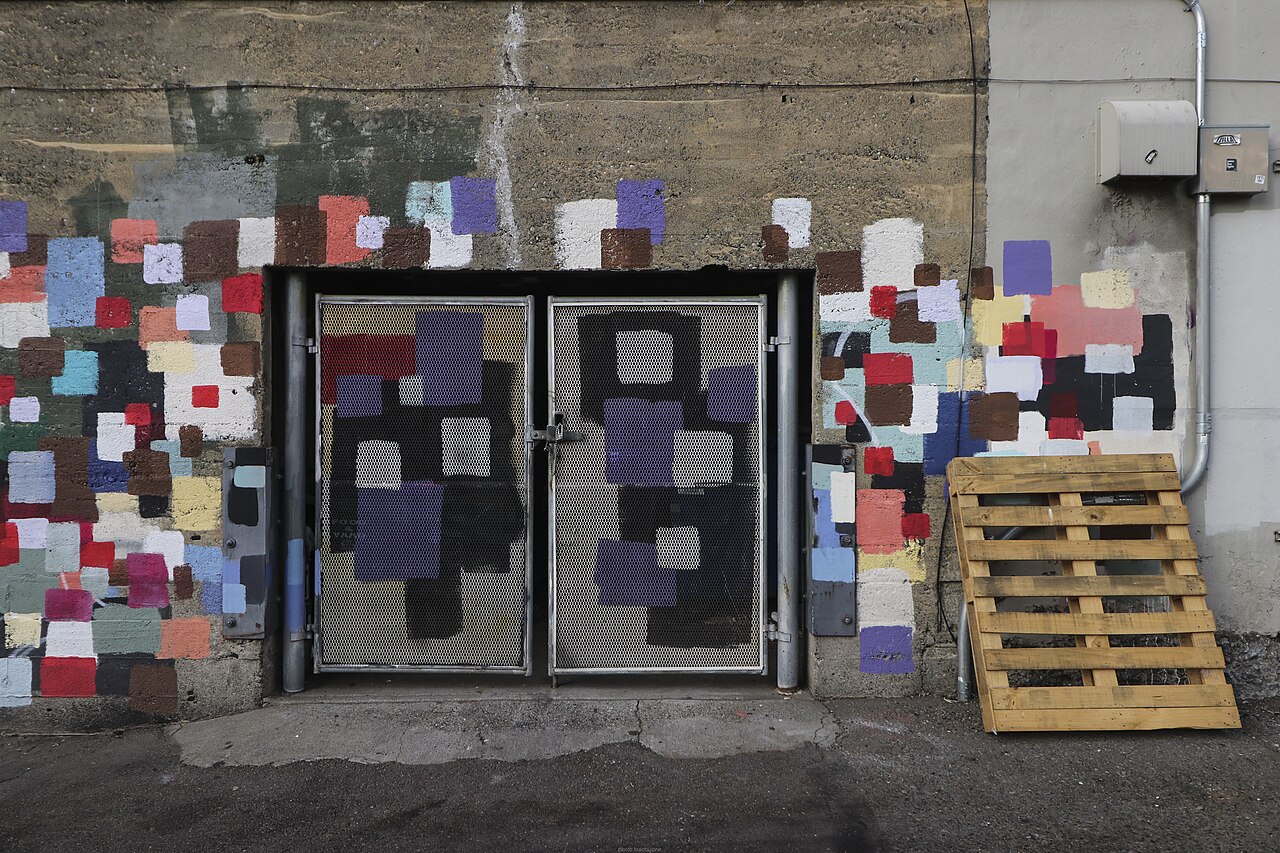
Somewhere in the city, a concrete wall around a pair of mesh doors is covered in patchwork squares of paint in many colors, with a wooden pallet leaning against it. It is nothing grand. It may be the most honest picture of street art in Seattle you will see: a utility wall, made brighter by someone with paint and time.
The squares do not form a picture. They form a mood, a quilt thrown over a loading door. For anyone who manages a building, it is also a quiet case that even a service entrance can be a good place to start.

Brick and play in Pioneer Square
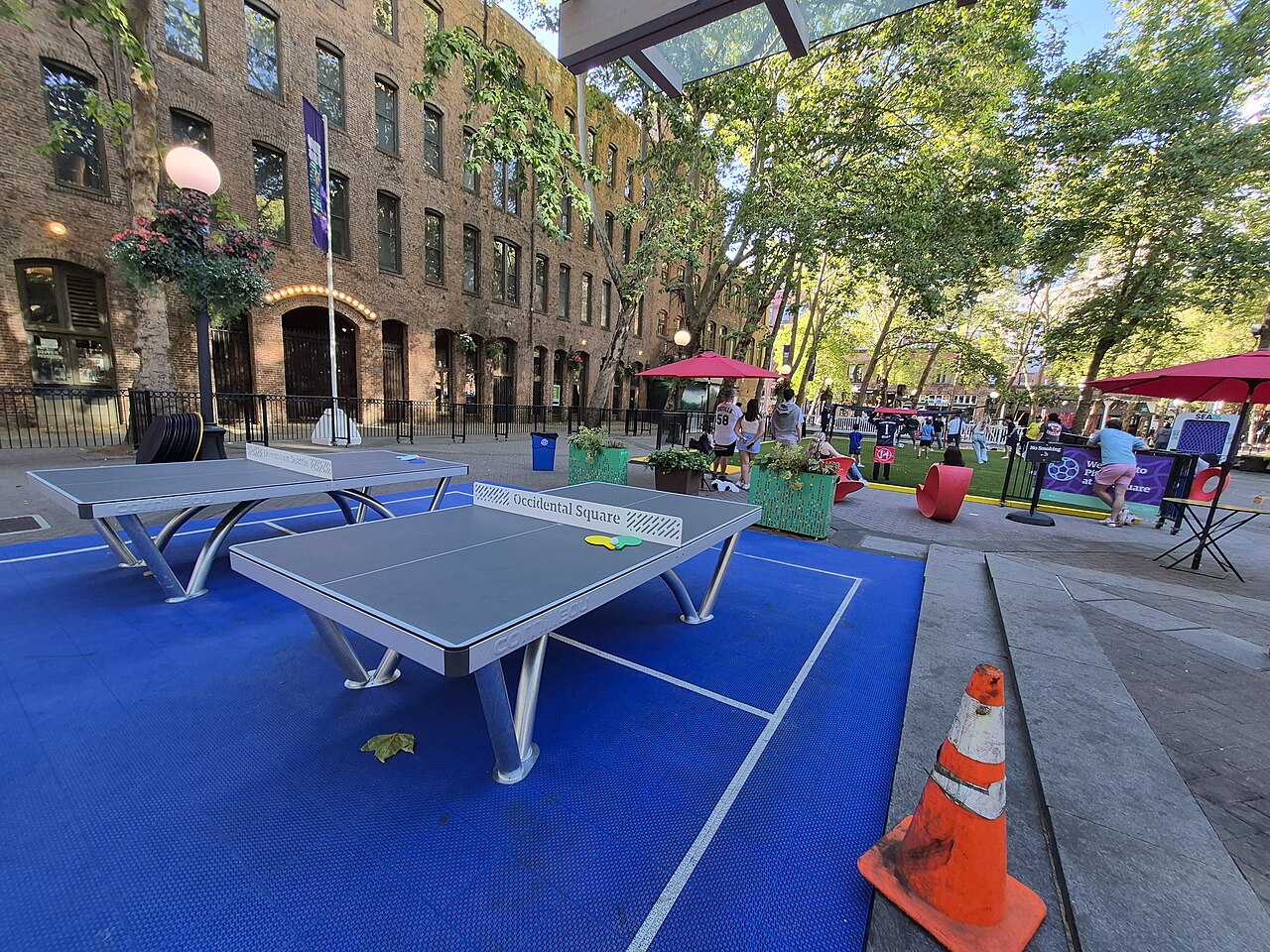
Pioneer Square is built of brick and shade, and when the neighborhood hosted a World Cup fan zone, ping pong tables on a blue court filled a tree-shaded square beside the old buildings. Public art is not only what hangs on a wall. It is also color on a court, a crowd in a square, and a reason to gather.
If you own a building in a neighborhood like this one, you are already working with a strong backdrop. Our guide on how public art can lift a property in Seattle goes further on what a wall can do for the block around it.

End on the water
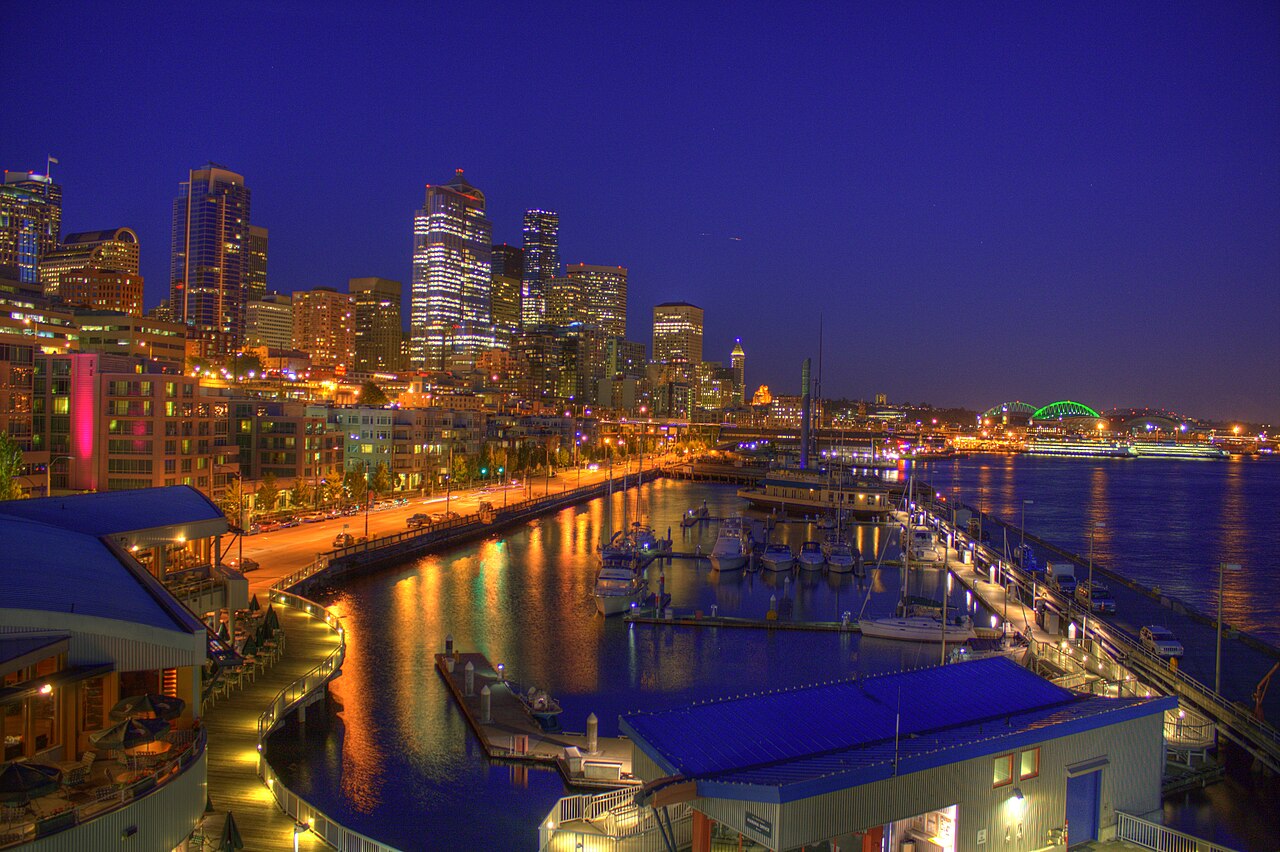
Finish by the waterfront at dusk. The downtown towers and a marina glow, their lights reflected in the water, and after a day among walls the skyline looks like the backdrop it is: the stage for every corner you just walked.
That is the thing about Seattle murals. They are small against all this, and they are the part you remember. A rocket, a painted street, a patch of squares: the city comes down to a human size, one wall at a time.

A Seattle painter who paints weightless
The koi and arowana mural at the top of this story is by Devin Jansa, a Seattle-based artist working where public space meets art history. Trained at Gage Academy of Art, Devin paints large-scale murals guided by a sense of weightlessness and movement: fish that seem to swim around a corner, a hummingbird caught mid-wingbeat, a monster breaking out of a brick wall.
Devin has painted restaurant interiors, house and shed walls, exterior brick, a shipping container and an indoor office wall, and keeps an ongoing painting series called Frogeries that reimagines famous works with humor. The work is shown with Devin's permission. See more on Devin's artist page, read the feature on Devin, or browse more painters on our Seattle page.
If you have a wall in mind
Every mural in this story began as somebody's blank wall and a decision to leave it less blank. If you manage a building in Seattle and have a wall you keep looking at, we would be glad to hear about it. Tell us about your wall and we will take it from there.
Frequently asked questions
- Where can I see murals in Seattle?
- Good places to start are Seattle Center, where the Mural Amphitheater sits in front of the Space Needle, Fremont, Capitol Hill, Belltown, Pioneer Square and downtown. Most are reachable on foot or by transit, and walls change, so look around as you go.
- Which Seattle neighborhoods have the best street art?
- Fremont, Capitol Hill and Belltown are all good for a wander, and Pioneer Square and downtown have layered walls and public spaces worth seeing. Each neighborhood has a different feel, so pick one and take your time.
- Is street art legal in Seattle?
- It depends on the wall and the owner. A mural painted with a property owner's permission is commissioned work; unsanctioned pieces are a different matter. If you own a wall and want a mural, talk to a muralist and get the agreement in writing.
- How do I find a muralist in Seattle for my building?
- Start with a muralist whose style fits the wall and the neighborhood, then talk through the size, surface and look. We help match walls with muralists and handle quotes, contracts and scheduling.
Hero artwork © Devin Jansa, shown with the artist’s permission. All other photos are free-licensed and credited under each image; license links go to the original file pages.