City story · Valencia · 6 min read
Valencia Murals: A City That Paints Its Corners
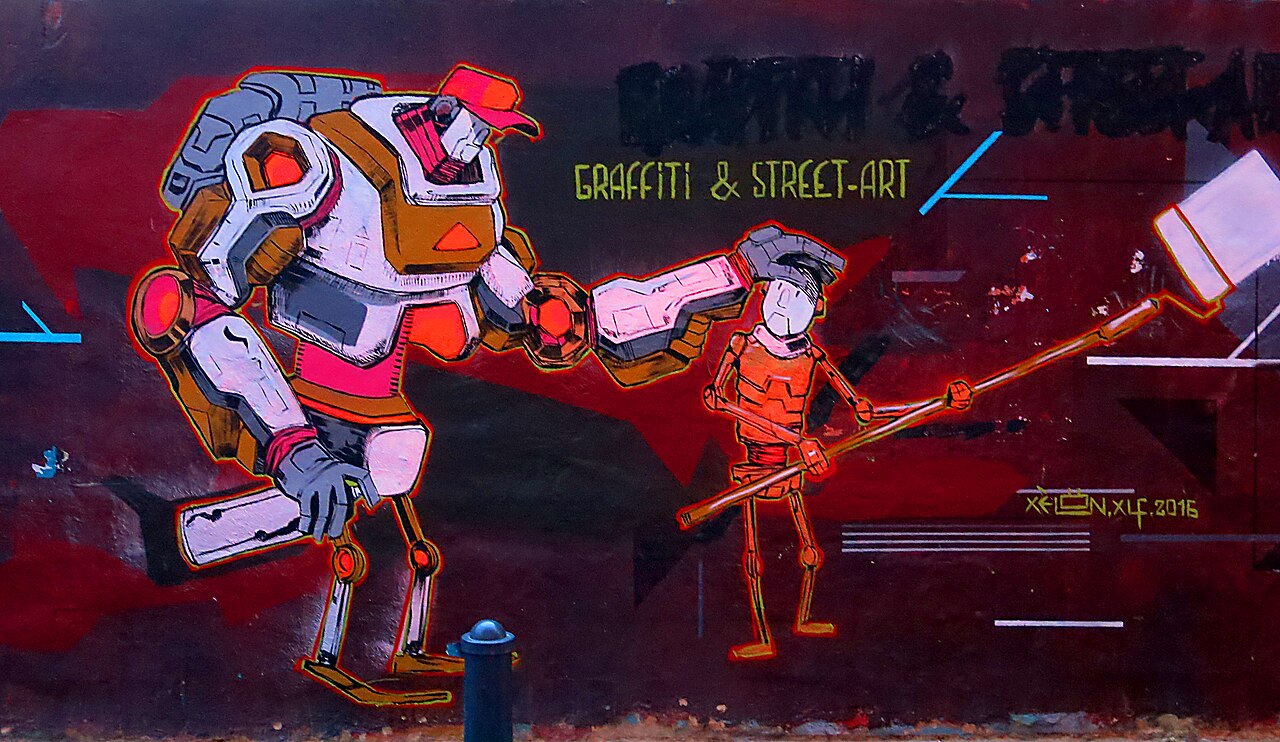
Orange robots, a painted motorbike, a blue-and-yellow corner above a tobacco shop: a slow walk through the Valencia murals and street art that turn ordinary streets into places you remember.
Begin where the lanes narrow
The old centre of Valencia is built for wandering. Streets bend, squares open without warning, and every few steps a wall asks you to look up. This is where Valencia murals feel least like an attraction and most like a habit of the place.
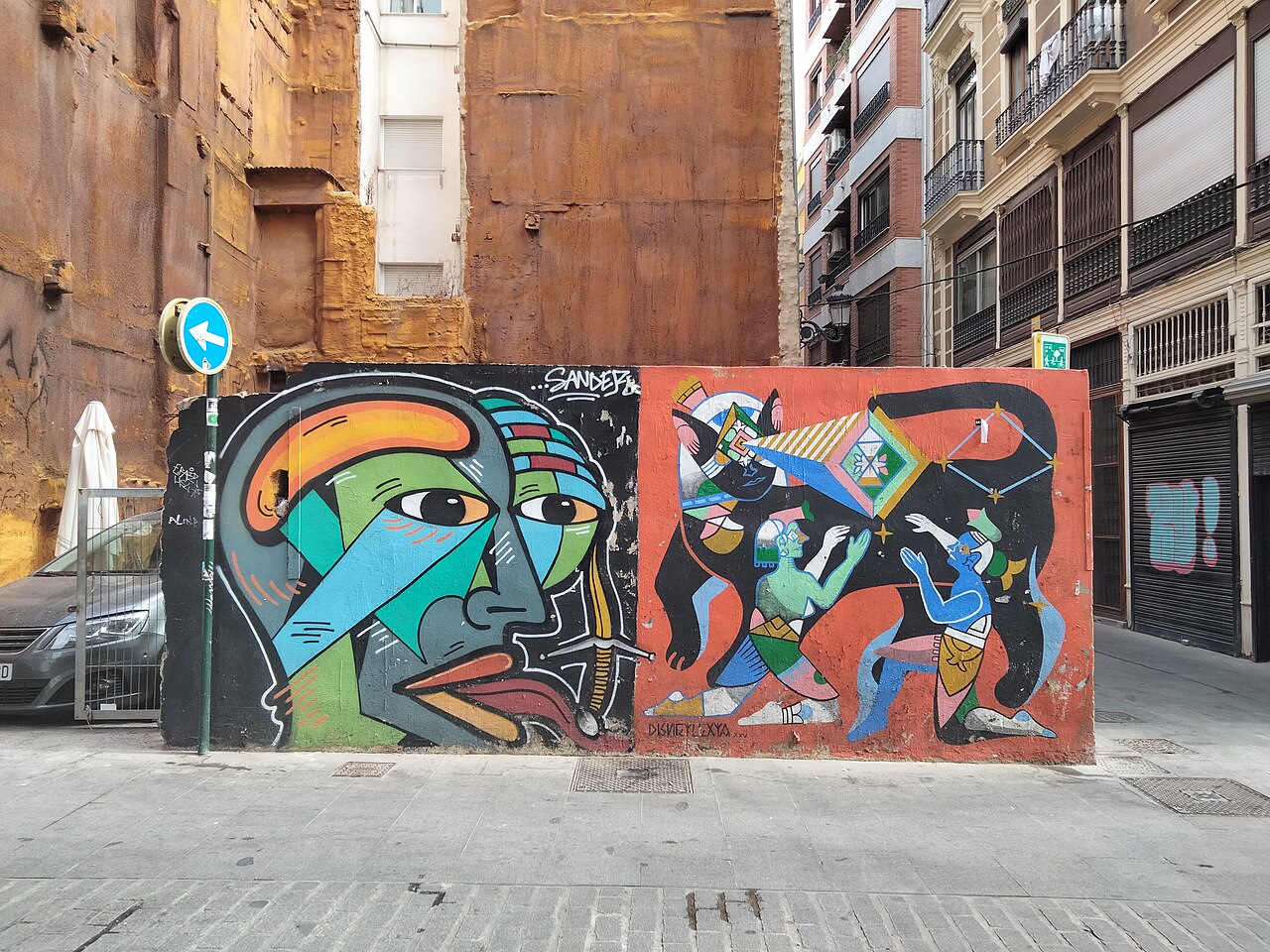
On Carrer Carabasses, two murals share a low wall at a corner. One is a big stylized face, the other a crowd of figures with a black bull. They sit side by side like neighbors who have stopped arguing and started talking. Nobody planned a gallery here. The wall simply became one.
Stand there for a minute and watch who walks past. Someone slows for the face, someone else stops for the bull, and a third person does not look up at all because the wall is simply part of the way home. That is the real test of a mural: whether it has been absorbed into daily life without losing its ability to surprise.

The wall that is for sale, or isn't
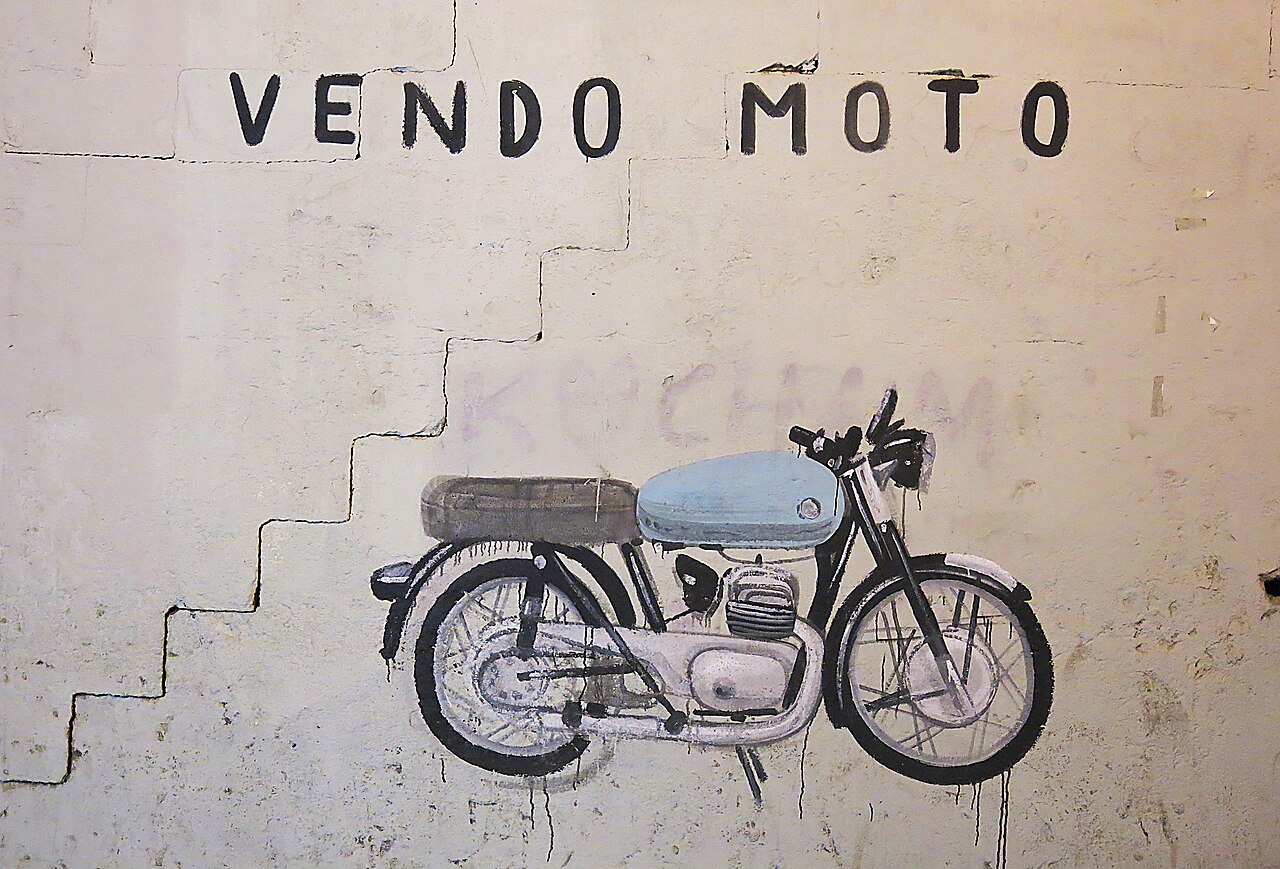
Further along, on Carrer Músic Peydró, a pale-blue motorbike is painted on a cracked plaster wall, with the words VENDO MOTO beneath it. It reads like a classified ad. It is also, quite clearly, a joke, and a good one.
That is a quiet strength of street art in Valencia. A flaking wall is not hidden or apologized for. It becomes the surface that gives the picture its age and its humor. You stop, you smile, you take a photo, and you tell someone about it later.
There is a lesson here for anyone who looks at a tired wall and sees only a problem. The crack, the stain and the faded plaster are not obstacles to the picture. In the right hands they are the first brushstroke, and the painter has only to answer them.

A corner with a job to do
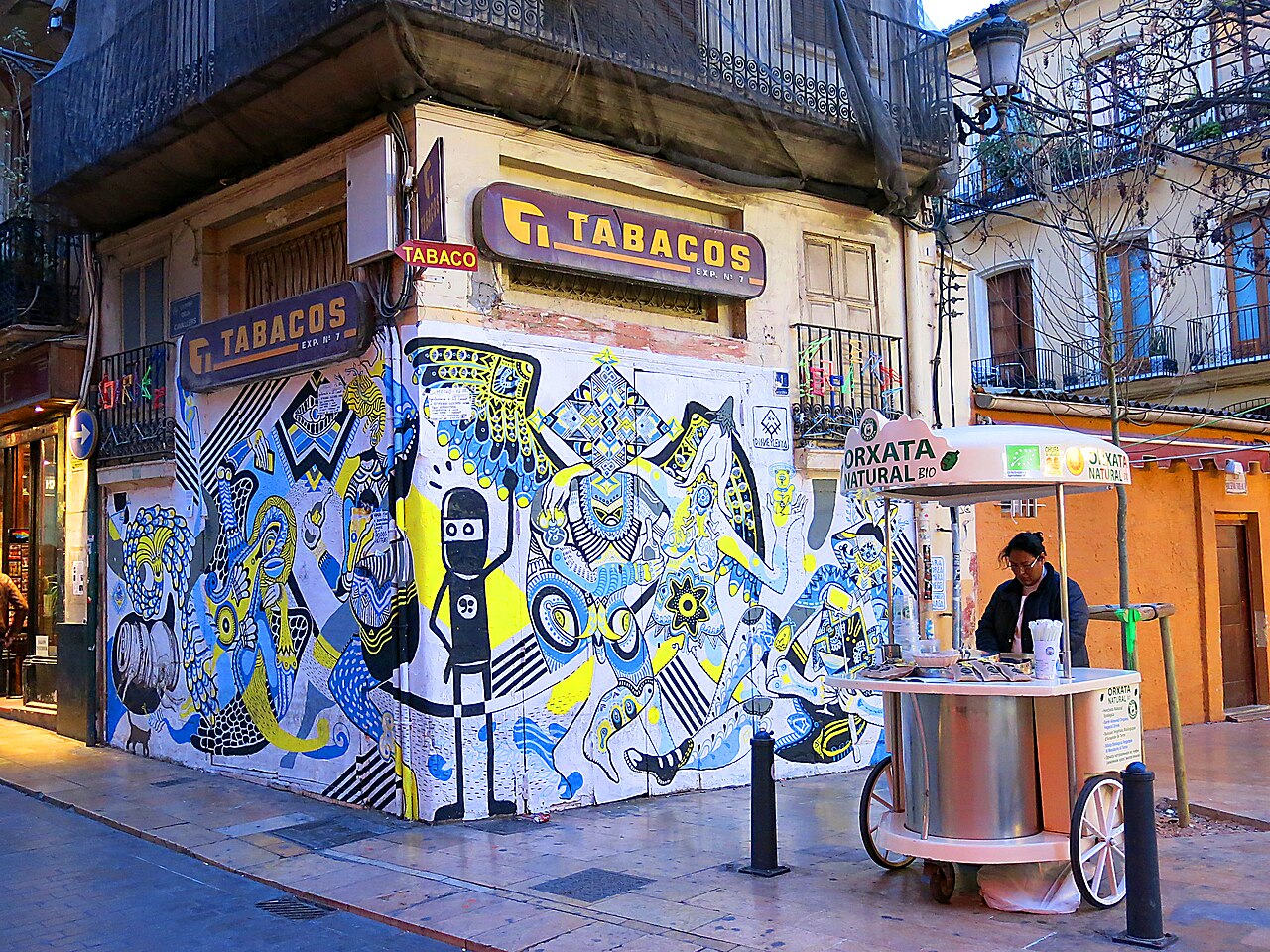
At Plaça del Tossal in El Carmen, a blue, yellow and black mural wraps a corner building above a tobacco shop. Beside it, an orxata cart waits for the afternoon. Orxata is the cold, milky Valencian drink, and the cart and the mural seem to belong to the same sentence.
This is a mural doing practical work. It marks the corner, gives the square a color, and makes the shop below easier to remember. Ask a local for directions here and the painted wall is likely to be part of the answer.
Squares like this are where Valencia murals earn their keep. A plaza is a room without a roof, and color is how a room gets a mood. Blue and yellow in the afternoon sun make a space that feels welcoming before you have sat down.

Layers on Plaça del Carme
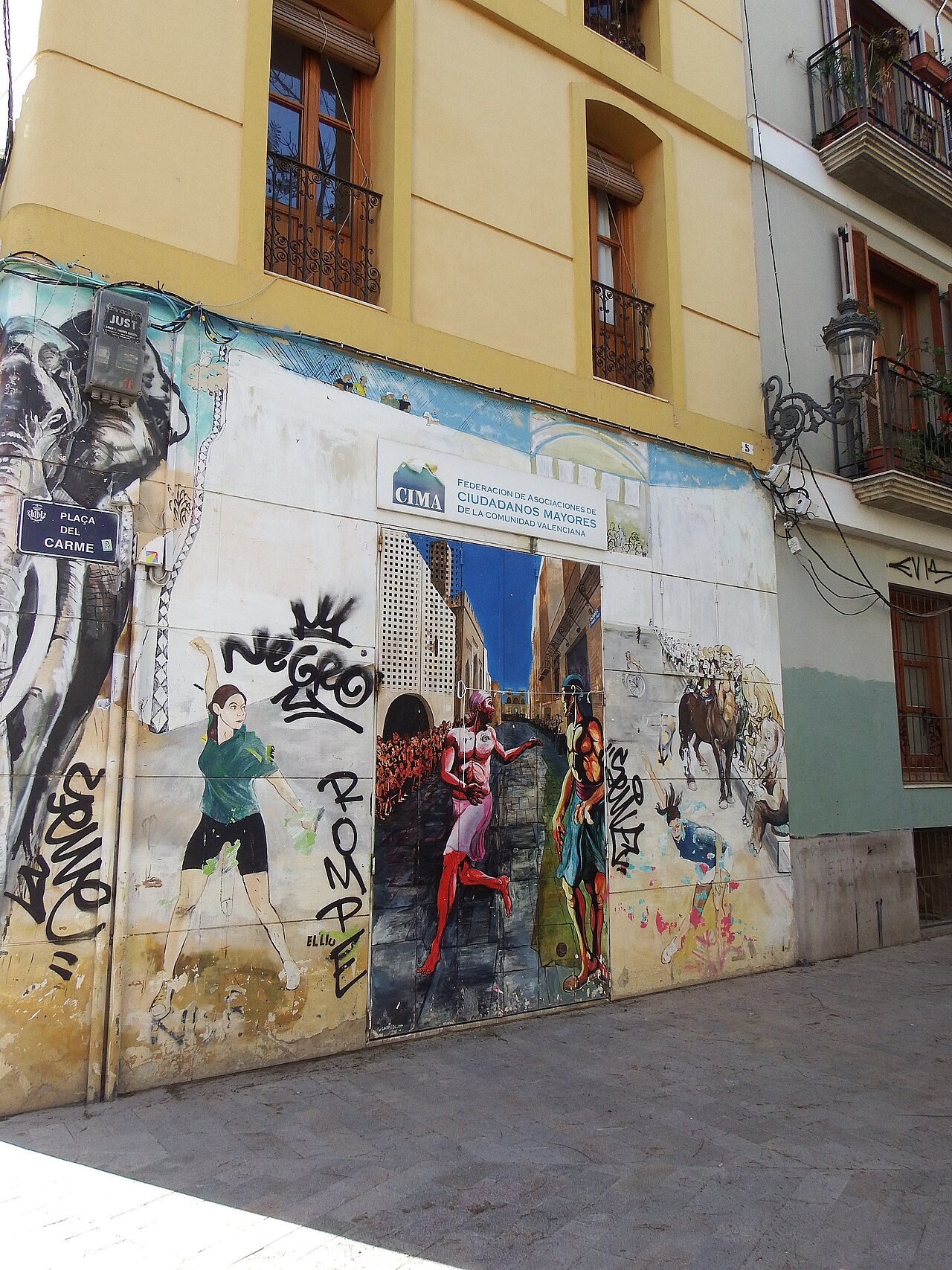
Not every wall stays the way it was painted, and the barrio of El Carmen shows that honestly. On one wall and door off Plaça del Carme, an elephant, runners and a street scene sit under later tags, a layered record of who has passed by and what they felt like adding.
Some people want a wall to stay pristine. Others find the stacking of paint the most truthful part of the city. Both views are fair, and both are part of why Valencia street art rewards a second look on a different day.
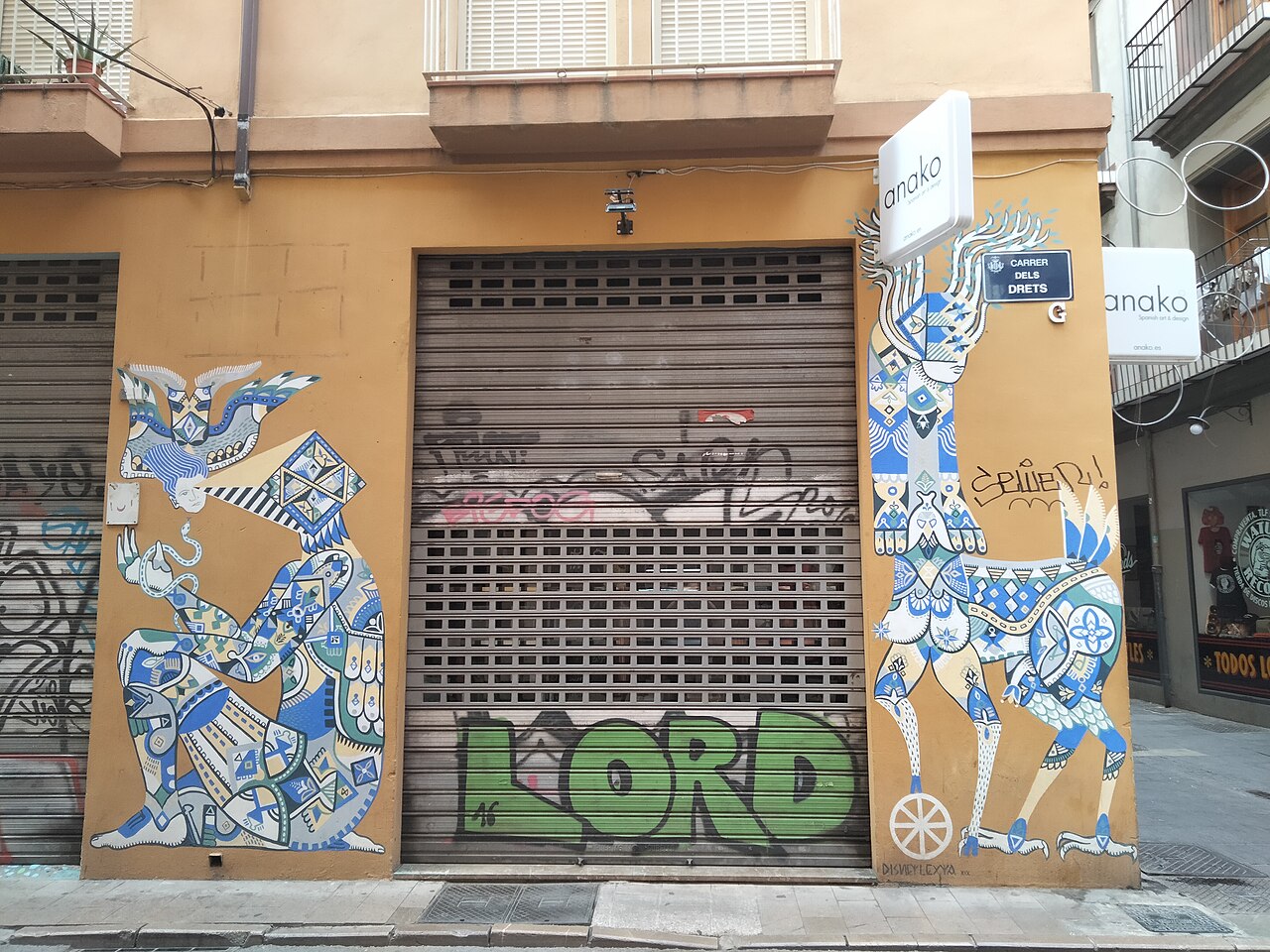
A little way off, on Carrer dels Drets, blue and white patterned figures stand on either side of a shop shutter against a yellow-ochre wall. When the shop is closed, the shutter becomes part of the picture. It is a small, clever answer to a problem every street-level wall has.
Walking this part of the old town, you start to read the walls the way you read faces. One is confident and freshly done. Another has been lived in. A third has been argued with. All of them tell you the street is in use.


Ruzafa, at a lower volume
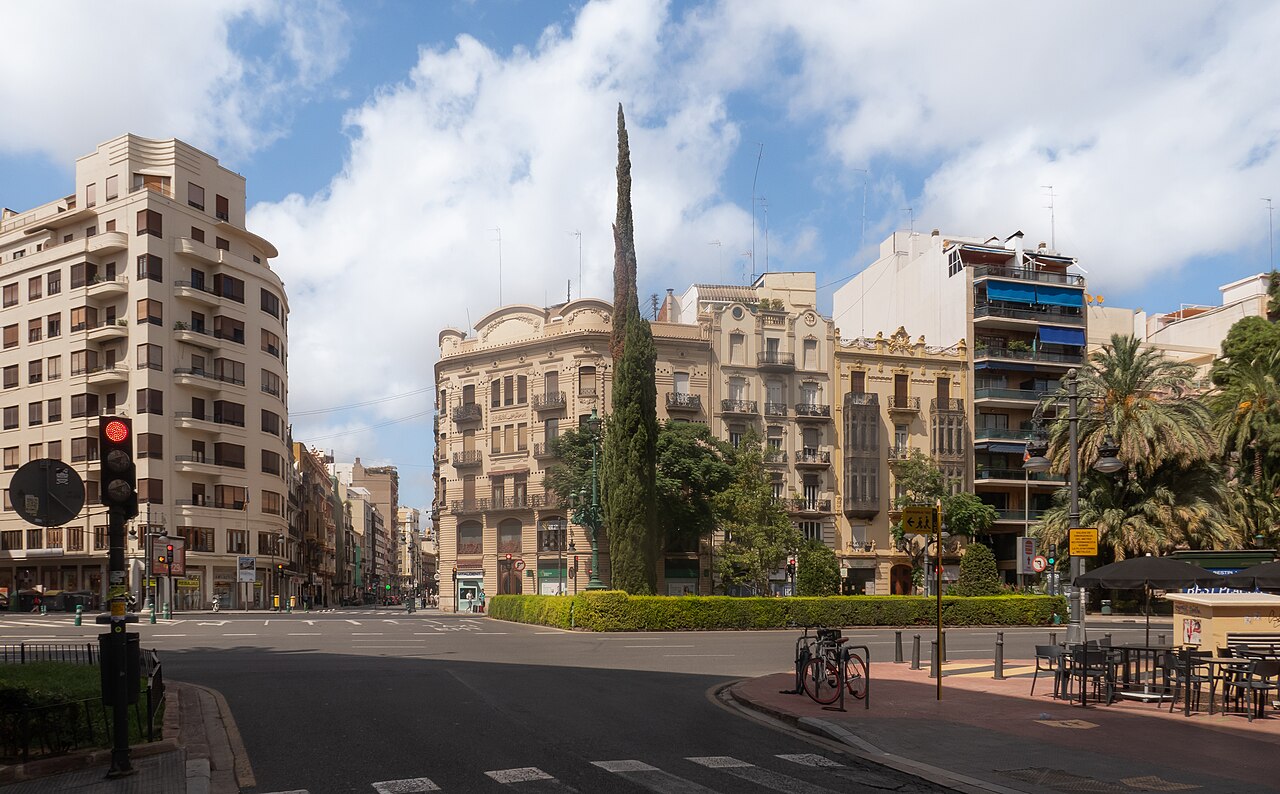
Not every good walk is loud. In Ruzafa, in the Eixample, a sunlit intersection of ornate older apartment buildings, palms and a tall cypress asks you to slow down. It is a reminder that a mural is only half of any wall story. The other half is the street it lives on: the light, the trees, the way people cross the road.
If you are looking for murals in Valencia, bring this patience with you. Some of the best moments come between the painted walls, when the neighborhood tells you what kind of paint it can carry.
It also says something about commissioning. A good mural begins with the building: its light, its neighbors, its doors and its people. A painter who ignores the street will make a nice picture; a painter who listens to it will make a landmark.

Fallas: when paint goes up and then goes up in smoke
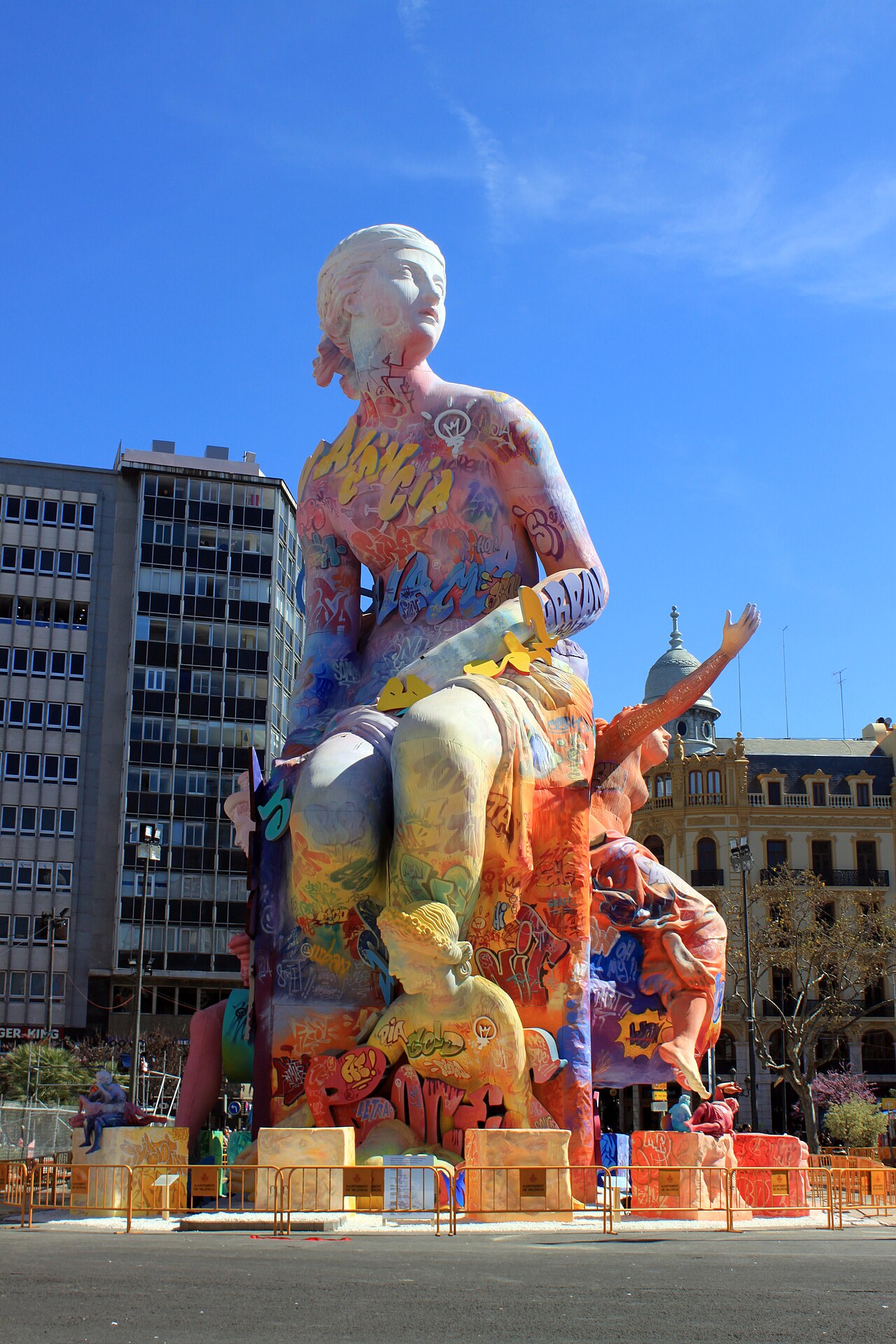
Valencia has an unusual relationship with painted things that do not last. During Fallas, every March, huge sculptures fill the city's squares, and the best-known fact about them is that they are burned at the end. It is a festival built on making something large, bright and temporary.
In Plaza del Ayuntamiento, one giant seated figure is covered in graffiti-style painting under a blue sky. Seeing it, you understand something about the city's taste for color at scale. Painted work here has always been allowed to be exuberant, and to be enjoyed now.
So take a coffee, sit for a while and let the street come to you. Then walk to the next wall with fresh eyes.

Under a dome, a different kind of decoration
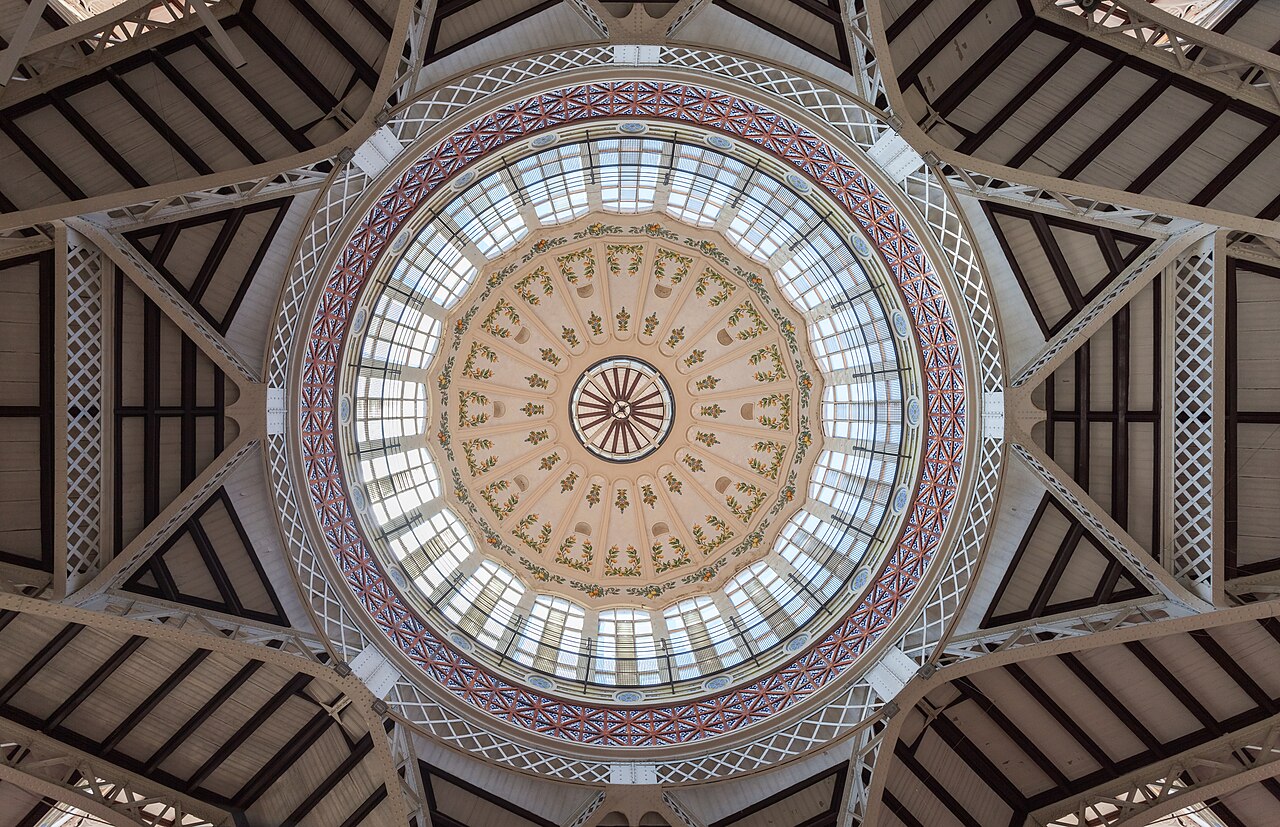
Valencia's Mercado Central is a modernist market building, and from below you can see its decorated dome and wooden roof structure. It is not a mural, but it makes the same argument: a place where people shop for dinner can also be a place worth looking up at.
That idea carries through the city. Craft is not kept for museums. It is in the roofs, the tiles, the shutters and, more recently, the walls.

The long green line, and the city of glass
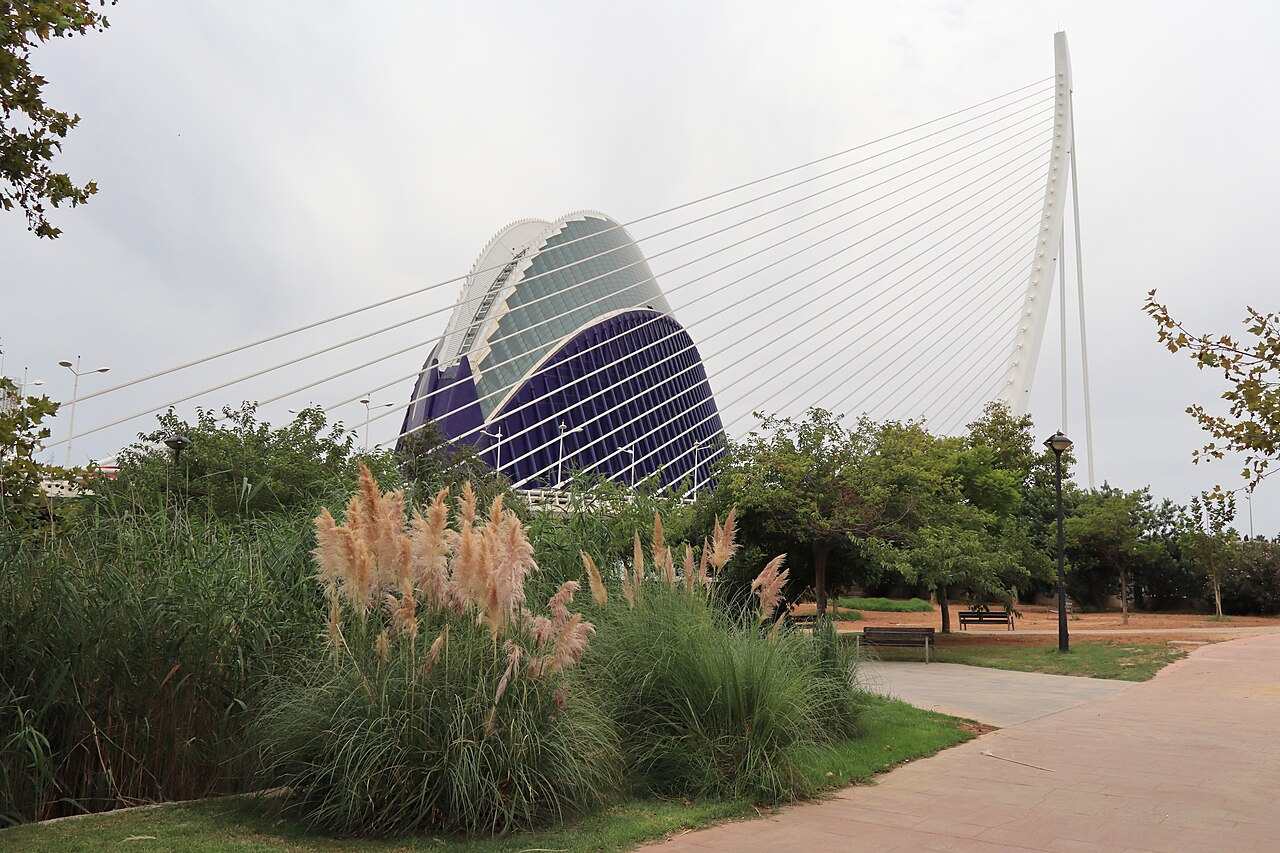
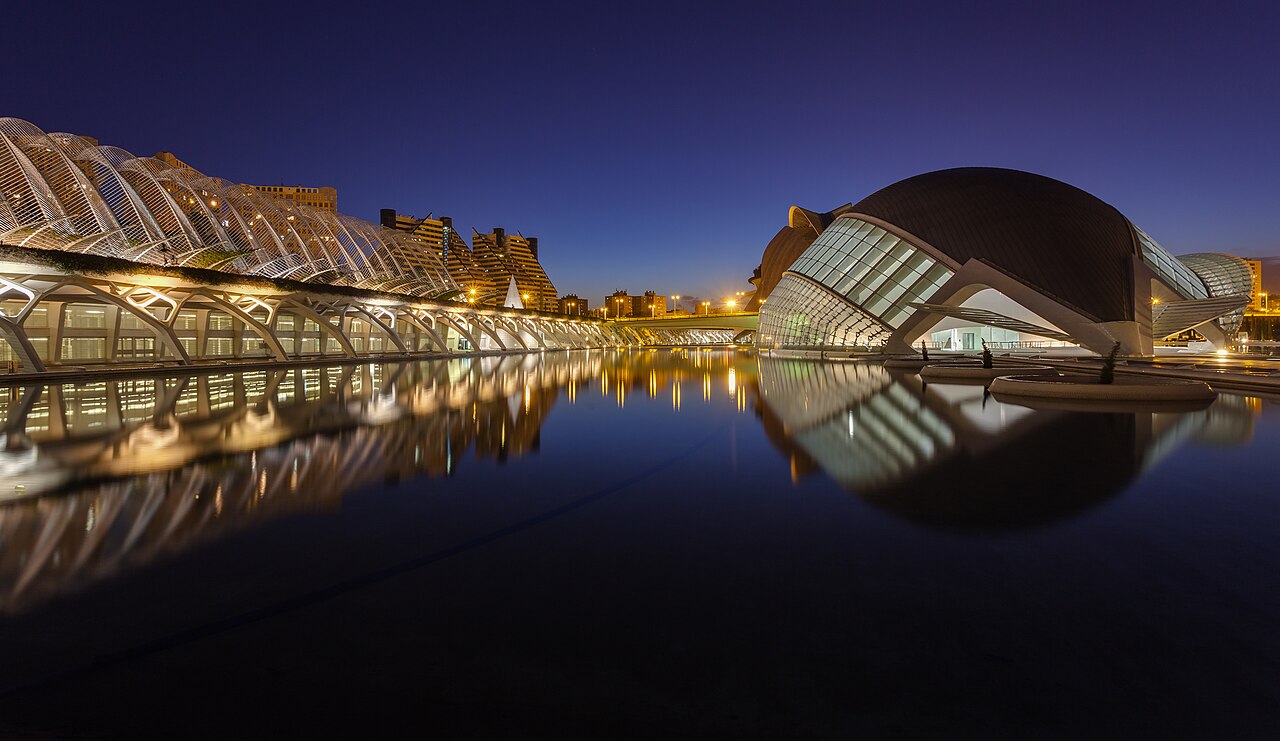
The Turia gardens run through Valencia like a green spine, and from their tall grasses you can see L'Àgora and the pylon of the cable-stayed bridge in the City of Arts and Sciences. At blue hour, the Hemispheric and its glass-ribbed arches double themselves in still water.
These futuristic buildings are a contrast to the plaster walls of El Carmen, and the contrast is the point. Valencia holds both: a city of crisp white architecture and a city of hand-painted corners. The murals are what keep the second one alive.
For anyone thinking about a wall of their own, that mix is encouraging. A building can be modern and still carry a hand-painted face. The two do not compete; they make each other easier to see.


If you have a wall in mind
Every wall in this story began as somebody's blank surface and a decision to make it less blank. If you own or manage a building and have a wall you keep looking at, we would be glad to hear about it. Tell us about your wall, and you can see more of the city in our Valencia guide.
Frequently asked questions
- Where can I see murals in Valencia?
- The old centre is the easiest place to start, especially El Carmen around Plaça del Tossal and Plaça del Carme, and nearby streets such as Carrer Carabasses and Carrer dels Drets. Walking without a fixed route works well, since walls turn up around corners.
- Which Valencia neighborhoods have the most street art?
- El Carmen and the wider Ciutat Vella are the best-known areas for street art. Ruzafa in the Eixample is worth a visit for its atmosphere, and murals appear in many other neighborhoods too.
- Is street art legal in Valencia?
- It depends on the wall and the owner. A mural painted with a property owner's permission is a commission; unsanctioned painting is a different matter and local rules apply. If you own a wall and want a mural, agree on the details in writing.
- How do I find a muralist for a wall in Valencia?
- Look for a painter whose style fits the wall and the street, then talk through the surface, the size and the look. We help match walls with muralists and handle quotes, contracts and scheduling, so tell us about your wall to start the conversation.
All photos are free-licensed and credited under each image; license links go to the original file pages.
Historia de la ciudad · Valencia · 6 min de lectura
Murales en Valencia: una ciudad que pinta sus esquinas
Robots naranjas, una moto pintada, una esquina azul y amarilla sobre un estanco: un paseo pausado por los murales y el arte urbano de Valencia que convierten calles corrientes en lugares que se recuerdan.
Empiece donde se estrechan las calles
El casco antiguo de Valencia está hecho para pasear sin rumbo. Las calles se curvan, las plazas se abren sin avisar y cada pocos pasos un muro le invita a levantar la vista. Aquí es donde los murales de Valencia se sienten menos como una atracción y más como una costumbre del lugar.
En la Carrer Carabasses, dos murales comparten un muro bajo en una esquina. Uno es un gran rostro estilizado; el otro, un grupo de figuras con un toro negro. Están uno junto al otro como dos vecinos que han dejado de discutir y han empezado a conversar. Nadie planeó una galería aquí. El muro, simplemente, se convirtió en una.
Quédese un minuto y observe quién pasa. Alguien se frena ante el rostro, otro se detiene ante el toro, y una tercera persona ni siquiera levanta la vista porque el muro es parte del camino a casa. Esa es la verdadera prueba de un mural: que la vida diaria lo haya absorbido sin que pierda su capacidad de sorprender.
El muro que se vende, o no
Más adelante, en la Carrer Músic Peydró, una moto azul pálido está pintada sobre un muro de yeso agrietado, con las palabras VENDO MOTO debajo. Parece un anuncio por palabras. También es, sin duda, una broma, y buena.
Esa es una fortaleza discreta del arte urbano en Valencia. Un muro desconchado no se esconde ni se disculpa. Se convierte en la superficie que da a la imagen su edad y su humor. Uno se detiene, sonríe, hace una foto y se lo cuenta a alguien más tarde.
Hay una lección aquí para quien mira un muro cansado y solo ve un problema. La grieta, la mancha y el yeso descolorido no son obstáculos para la imagen. En buenas manos son la primera pincelada, y al pintor solo le queda responderles.
Una esquina con trabajo que hacer
En la Plaça del Tossal, en El Carmen, un mural azul, amarillo y negro envuelve un edificio de esquina sobre un estanco. A su lado, un carrito de horchata espera a la tarde. La horchata es la bebida valenciana, fría y lechosa, y el carrito y el mural parecen pertenecer a la misma frase.
Este es un mural que hace un trabajo práctico. Marca la esquina, da color a la plaza y hace más fácil recordar la tienda de abajo. Si pregunta a un vecino cómo llegar por aquí, es probable que el muro pintado forme parte de la respuesta.
Plazas como esta son donde los murales de Valencia se ganan el sitio. Una plaza es una sala sin techo, y el color es lo que da ambiente a una sala. El azul y el amarillo bajo el sol de la tarde crean un espacio que resulta acogedor antes de que uno se haya sentado.
Capas en la Plaça del Carme
No todos los muros se quedan como se pintaron, y el barrio de El Carmen lo muestra con honestidad. En un muro y una puerta junto a la Plaça del Carme, un elefante, unos corredores y una escena callejera conviven bajo firmas posteriores, un registro por capas de quién ha pasado por allí y qué le apeteció añadir.
Algunas personas quieren que un muro se mantenga impecable. Otras encuentran en la acumulación de pintura lo más veraz de la ciudad. Ambas posturas son razonables, y ambas forman parte de por qué el arte urbano de Valencia merece una segunda mirada otro día.
Un poco más allá, en la Carrer dels Drets, unas figuras de dibujos azules y blancos flanquean la persiana de un comercio sobre un muro de ocre amarillo. Cuando la tienda está cerrada, la persiana pasa a formar parte de la imagen. Es una respuesta pequeña e ingeniosa a un problema que tiene todo muro a pie de calle.
Al recorrer esta parte del casco antiguo, uno empieza a leer los muros como se leen los rostros. Uno es seguro y recién pintado. Otro ha sido habitado. Un tercero ha sido discutido. Todos le dicen que la calle está en uso.
Ruzafa, a menos volumen
No todo buen paseo es ruidoso. En Ruzafa, en el Eixample, un cruce soleado de edificios de viviendas antiguos y ornamentados, palmeras y un ciprés alto le pide que baje el ritmo. Es un recordatorio de que el mural es solo la mitad de la historia de un muro. La otra mitad es la calle en la que vive: la luz, los árboles, la manera en que la gente cruza la calzada.
Si busca murales en Valencia, traiga esta paciencia consigo. Algunos de los mejores momentos llegan entre muro y muro, cuando el barrio le dice qué clase de pintura es capaz de sostener.
También dice algo sobre el encargo de un mural. Un buen mural empieza por el edificio: su luz, sus vecinos, sus puertas y su gente. Un pintor que ignora la calle hará una imagen bonita; uno que la escucha hará un hito.
Fallas: cuando la pintura sube y luego se va en humo
Valencia tiene una relación singular con las cosas pintadas que no duran. Durante las Fallas, cada mes de marzo, enormes esculturas llenan las plazas de la ciudad, y lo más conocido de ellas es que se queman al final. Es una fiesta construida sobre hacer algo grande, vistoso y pasajero.
En la Plaza del Ayuntamiento, una figura gigante sentada está cubierta de pintura de estilo grafiti bajo un cielo azul. Al verla, se entiende algo del gusto de la ciudad por el color a gran escala. Aquí la obra pintada siempre ha podido ser exuberante y disfrutarse ahora.
Así que tome un café, siéntese un rato y deje que la calle venga a usted. Luego camine hasta el siguiente muro con ojos nuevos.
Bajo una cúpula, otra clase de decoración
El Mercado Central de Valencia es un edificio de mercado modernista, y desde abajo se ve su cúpula decorada y la estructura de madera del tejado. No es un mural, pero defiende lo mismo: un lugar donde la gente compra la cena también puede ser un lugar al que vale la pena mirar hacia arriba.
Esa idea recorre toda la ciudad. El oficio no se reserva para los museos. Está en los tejados, los azulejos, las persianas y, más recientemente, los muros.
La larga línea verde y la ciudad de cristal
Los jardines del Turia atraviesan Valencia como una columna verde, y desde sus hierbas altas se ven L'Àgora y el pilono del puente atirantado de la Ciudad de las Artes y las Ciencias. A la hora azul, el Hemisfèric y sus arcos de nervaduras de cristal se duplican en el agua quieta.
Estos edificios futuristas contrastan con los muros de yeso de El Carmen, y ese contraste es la clave. Valencia contiene ambas cosas: una ciudad de arquitectura blanca y nítida y una ciudad de esquinas pintadas a mano. Los murales son lo que mantiene viva a la segunda.
Para quien piense en un muro propio, esa mezcla es alentadora. Un edificio puede ser moderno y aun así llevar un rostro pintado a mano. Los dos no compiten; se ayudan mutuamente a verse mejor.
Si tiene un muro en mente
Cada muro de esta historia empezó siendo la superficie en blanco de alguien y la decisión de que dejara de estarlo. Si usted es propietario o administra un edificio y tiene un muro que no deja de mirar, nos dará gusto saber de él. Cuéntenos sobre su muro, y puede ver más de la ciudad en nuestra guía de Valencia.
Preguntas frecuentes
- ¿Dónde puedo ver murales en Valencia?
- El casco antiguo es el lugar más fácil para empezar, sobre todo El Carmen, alrededor de la Plaça del Tossal y la Plaça del Carme, y calles cercanas como la Carrer Carabasses y la Carrer dels Drets. Pasear sin una ruta fija funciona bien, porque los muros aparecen a la vuelta de las esquinas.
- ¿Qué barrios de Valencia tienen más arte urbano?
- El Carmen y el conjunto de Ciutat Vella son las zonas de arte urbano más conocidas. Ruzafa, en el Eixample, merece una visita por su ambiente, y también hay murales en muchos otros barrios.
- ¿Es legal el arte urbano en Valencia?
- Depende del muro y de su propietario. Un mural pintado con permiso del propietario es un encargo; pintar sin autorización es otra cosa y se aplican las normas locales. Si usted es dueño de un muro y quiere un mural, acuerden los detalles por escrito.
- ¿Cómo encuentro a un muralista para un muro en Valencia?
- Busque a un pintor cuyo estilo encaje con el muro y con la calle, y hablen de la superficie, el tamaño y el aspecto. Nosotros ayudamos a emparejar muros con muralistas y nos encargamos de las cotizaciones, los contratos y la programación; cuéntenos sobre su muro para empezar la conversación.
Todas las fotos tienen licencia libre y llevan su crédito bajo cada imagen; los enlaces de licencia llevan a las páginas de los archivos originales.