City story · Valparaíso · 6 min read
Valparaíso Murals: A City Painted Up Its Hills
Stairs, funiculars and steep lanes make Valparaíso murals feel like discoveries. A slow climb through the Valparaíso street art that colors the hills above the port.
Begin by going up
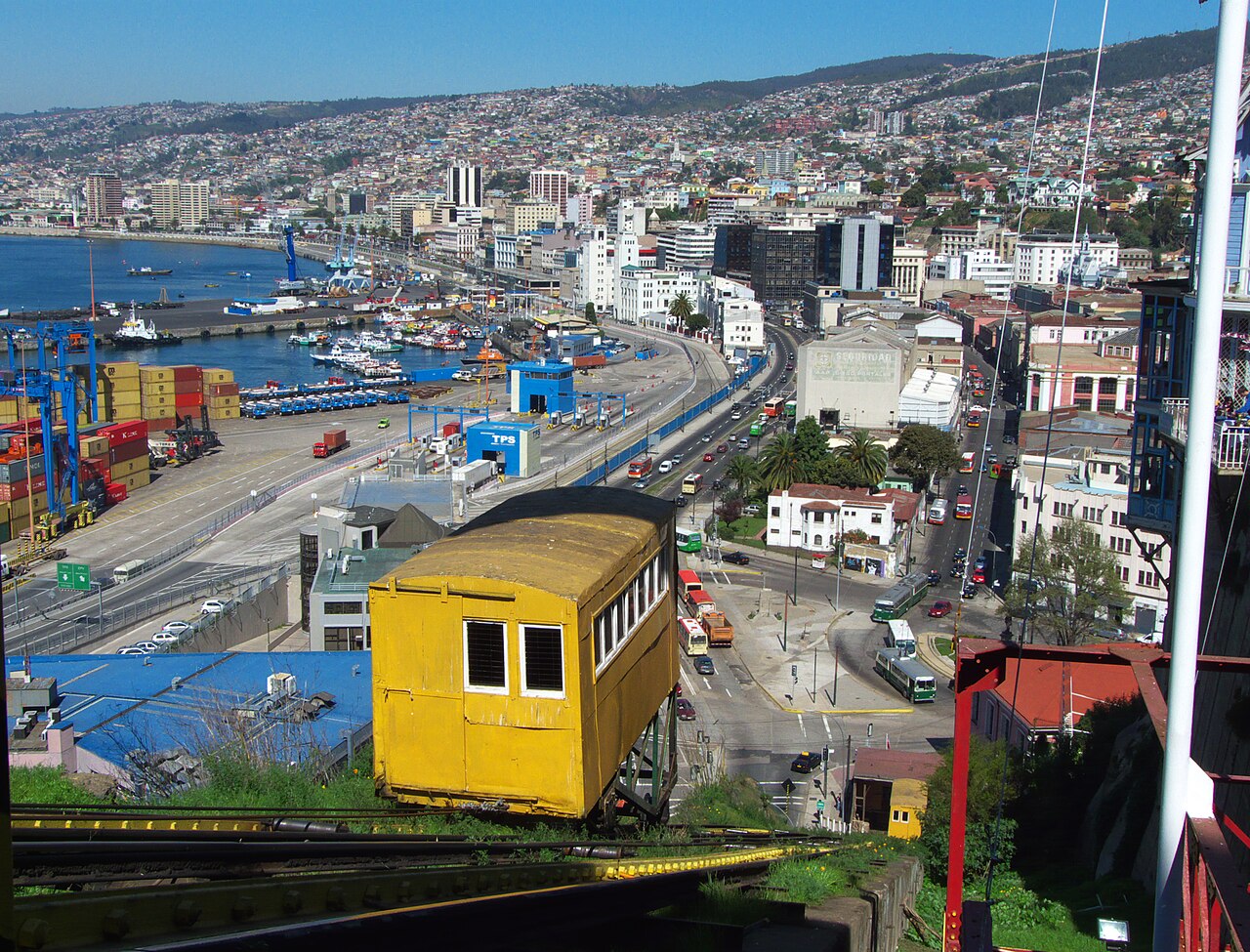
Valparaíso does not let you stay flat for long. The city is a port, and behind the port the hills rise almost at once, so the first decision any visitor makes is how to get up. Many people choose a funicular, one of the old incline cars that still climb the slopes. From the top of one, the yellow car sits on its tracks, the cargo containers wait below, and the houses climb the hillsides in no particular order.
That view explains a lot about the walls. When a city is built on slopes, every retaining wall, stairway and blank gable is facing somebody. Nothing is hidden behind a parking lot. A wall here is something you look at on your way up, on your way down, and again from the opposite hill.

Cerro Concepción, one lane at a time
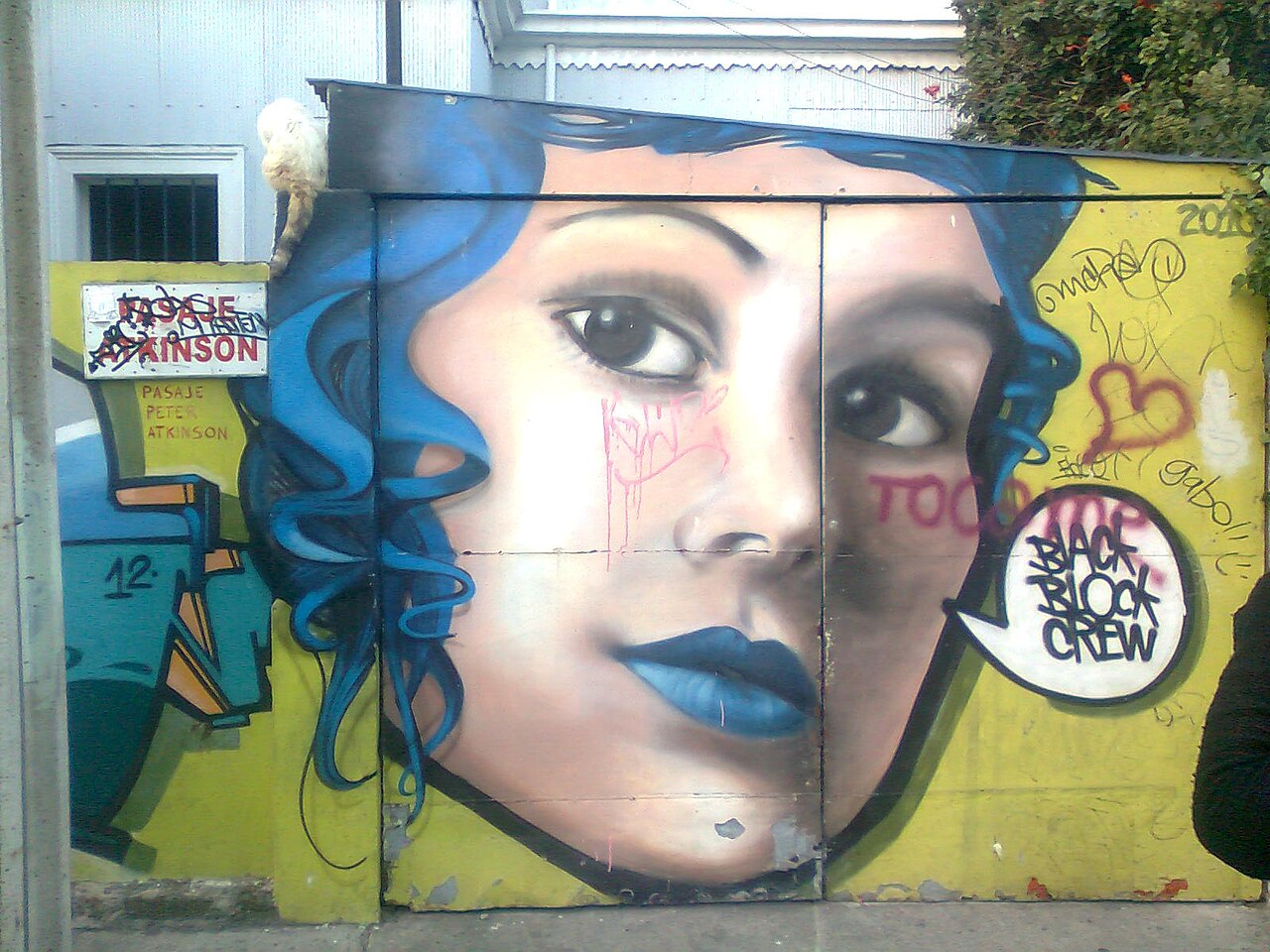
The best way to find Valparaíso murals is to stop trying to find them. Wander the lanes of Cerro Concepción and let them turn up. In pasaje Beethoven, a woman with blue hair and blue lips looks out from a yellow wall, larger than the doorways around her and entirely at home there.
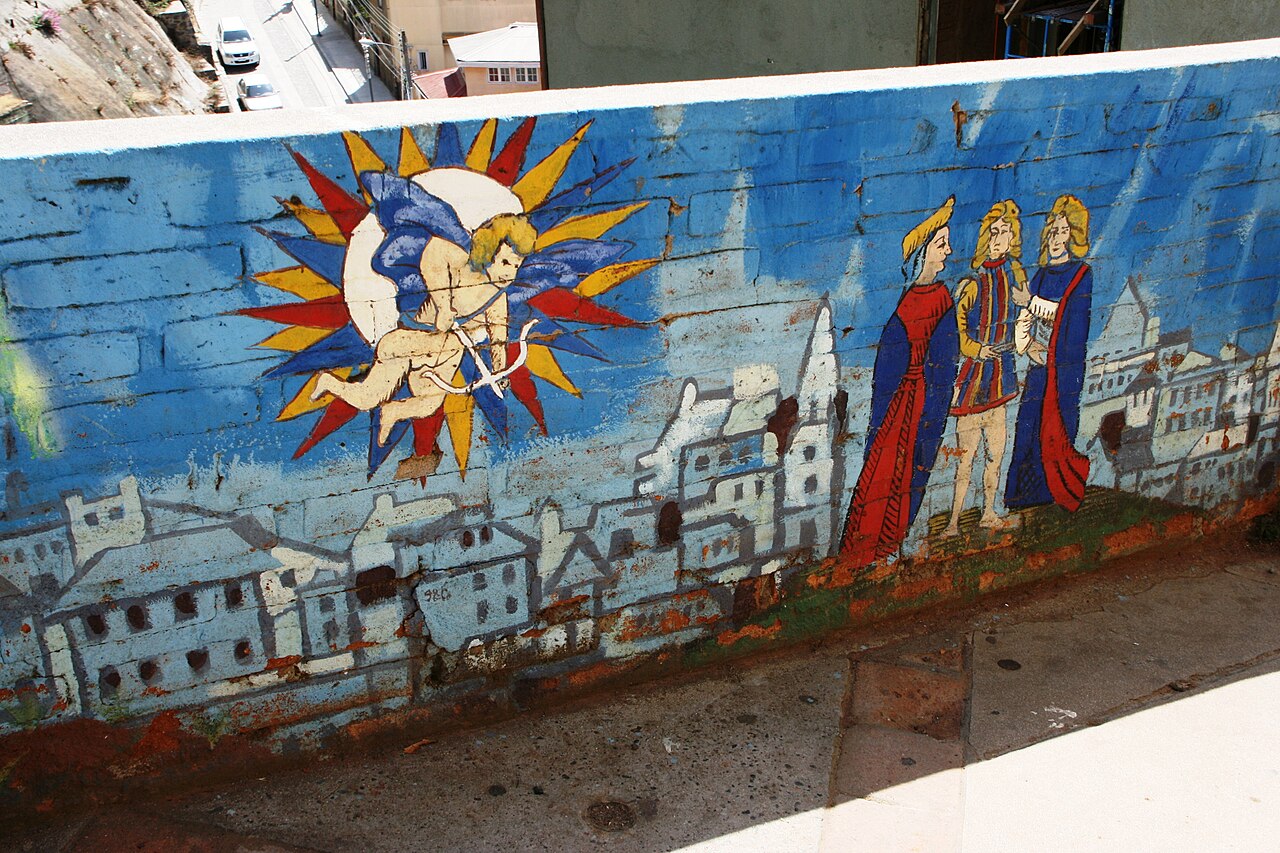
A little further along, a blue wall carries a winged cupid inside a sunburst, with three robed figures standing in front of a painted town. A painted town on a wall in a town of painted walls has its own kind of humor. It is the sort of piece that makes you slow down, look twice, and then notice what is on the next wall.

Houses that carry their own color
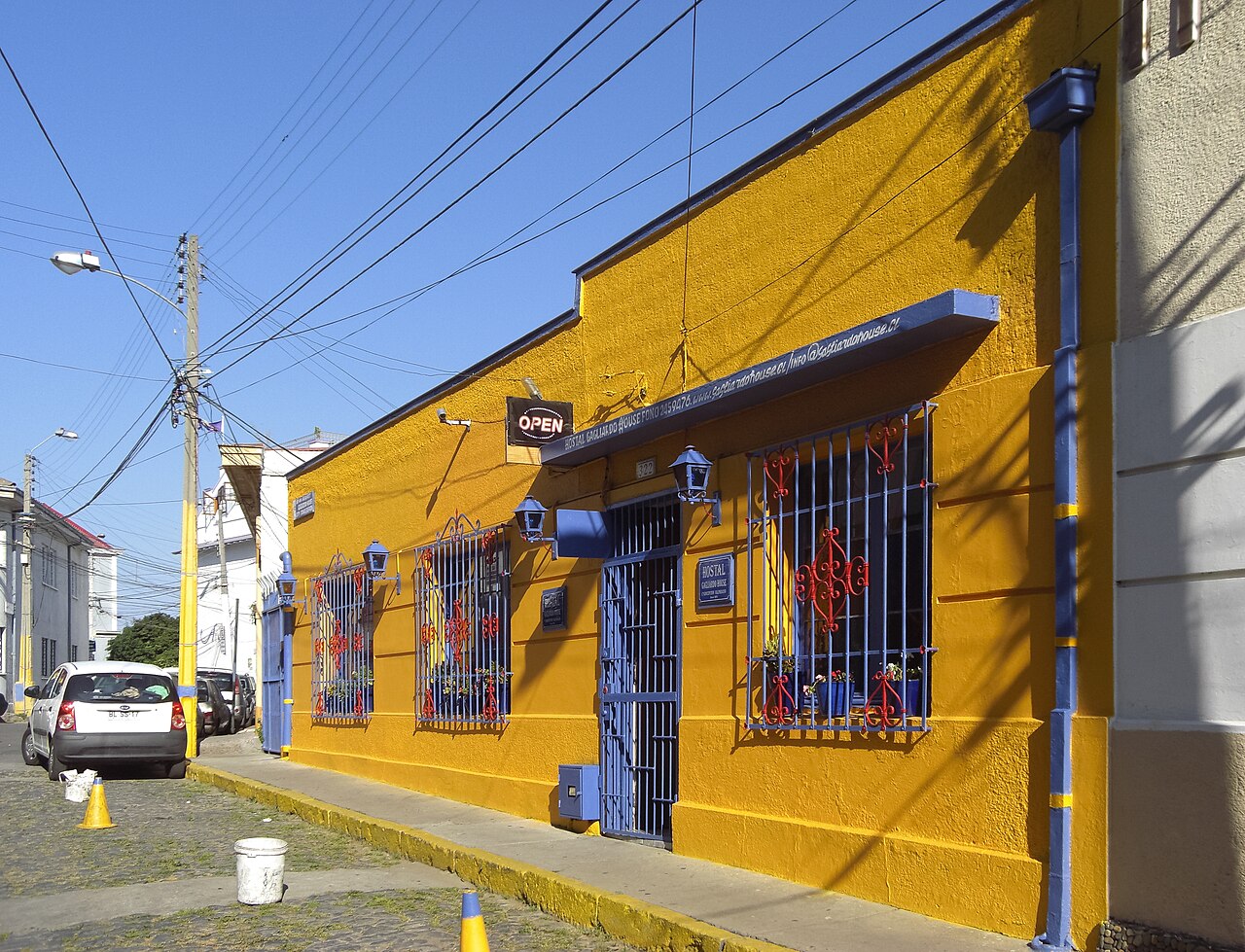
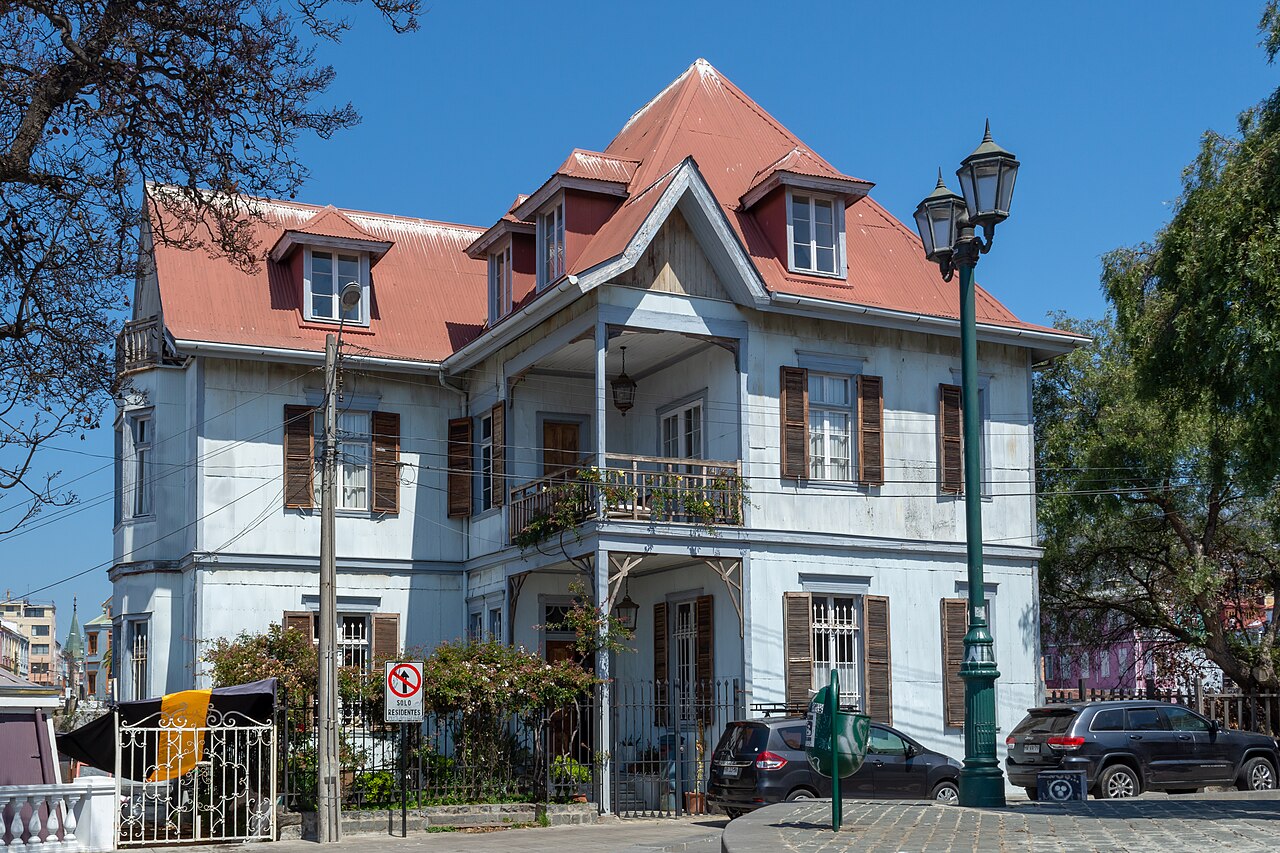
Not all of the color on these hills comes from murals. On Cerro Alegre, a single-story building is painted a bright yellow with blue trim, its windows barred and its wires strung overhead across a cobbled street. Nearby, a two-story house on calle Miramar is pale blue with a red roof and a balcony, set on a corner under a wide sky.
These are not murals, and they do not pretend to be. But they set the stage. When the houses already speak in strong colors, a painted wall has company, and the street reads as one long, uneven composition. Valparaíso street art sits comfortably in that setting because the whole neighborhood is already willing to be looked at.


A lane that works like a gallery
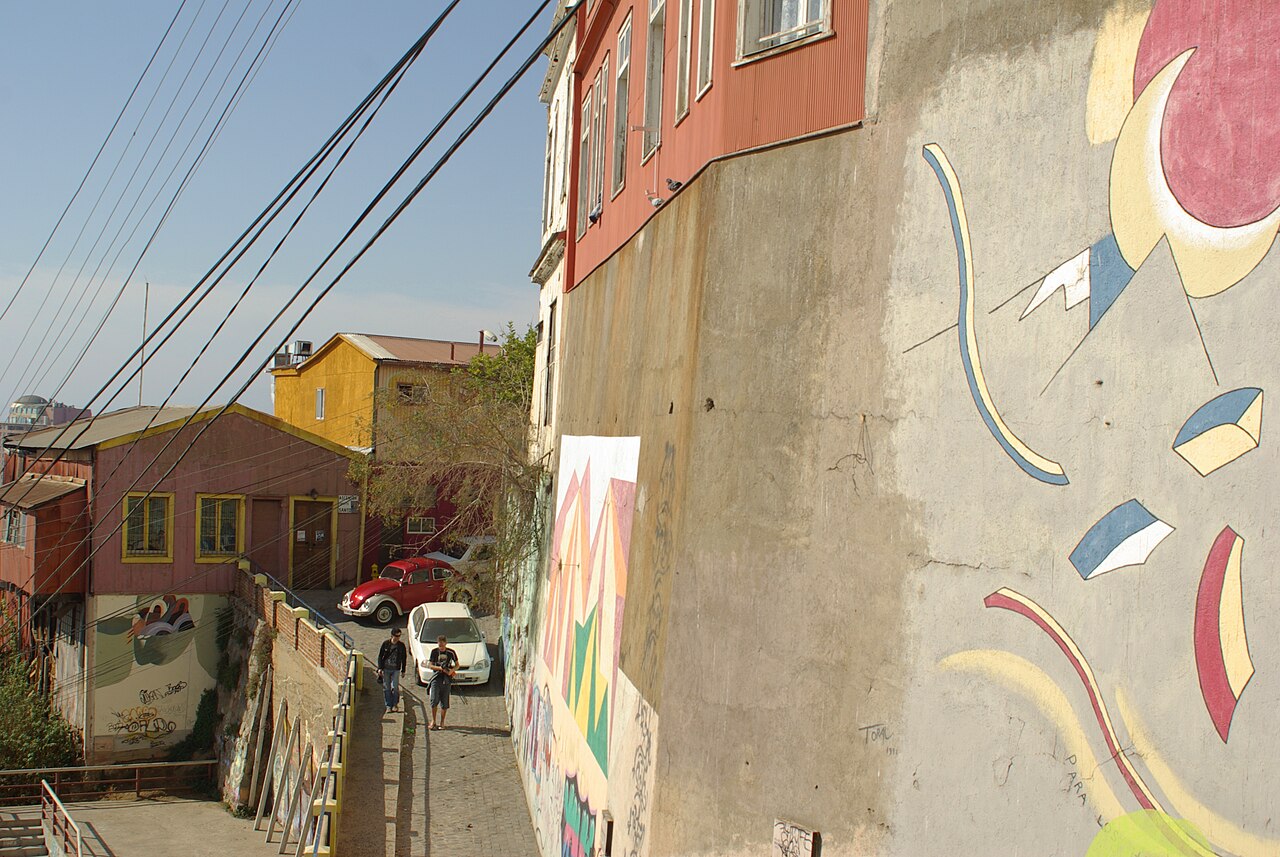
On Cerro Bellavista, a narrow hillside lane has been given over to very large, abstract murals. People walk along it slowly, two figures small beneath the painted walls, in the manner of visitors in a long gallery room. The difference is that the ceiling is open sky and the neighbors live next door.
Locals call this stretch the Museo a Cielo Abierto, the open-air museum, and the name fits. It shows what happens when a city decides that a steep lane can also be a place to linger. The walls are big enough to hold the eye and the lane is narrow enough to feel intimate, which is a hard balance to strike.

Faces above the sidewalk
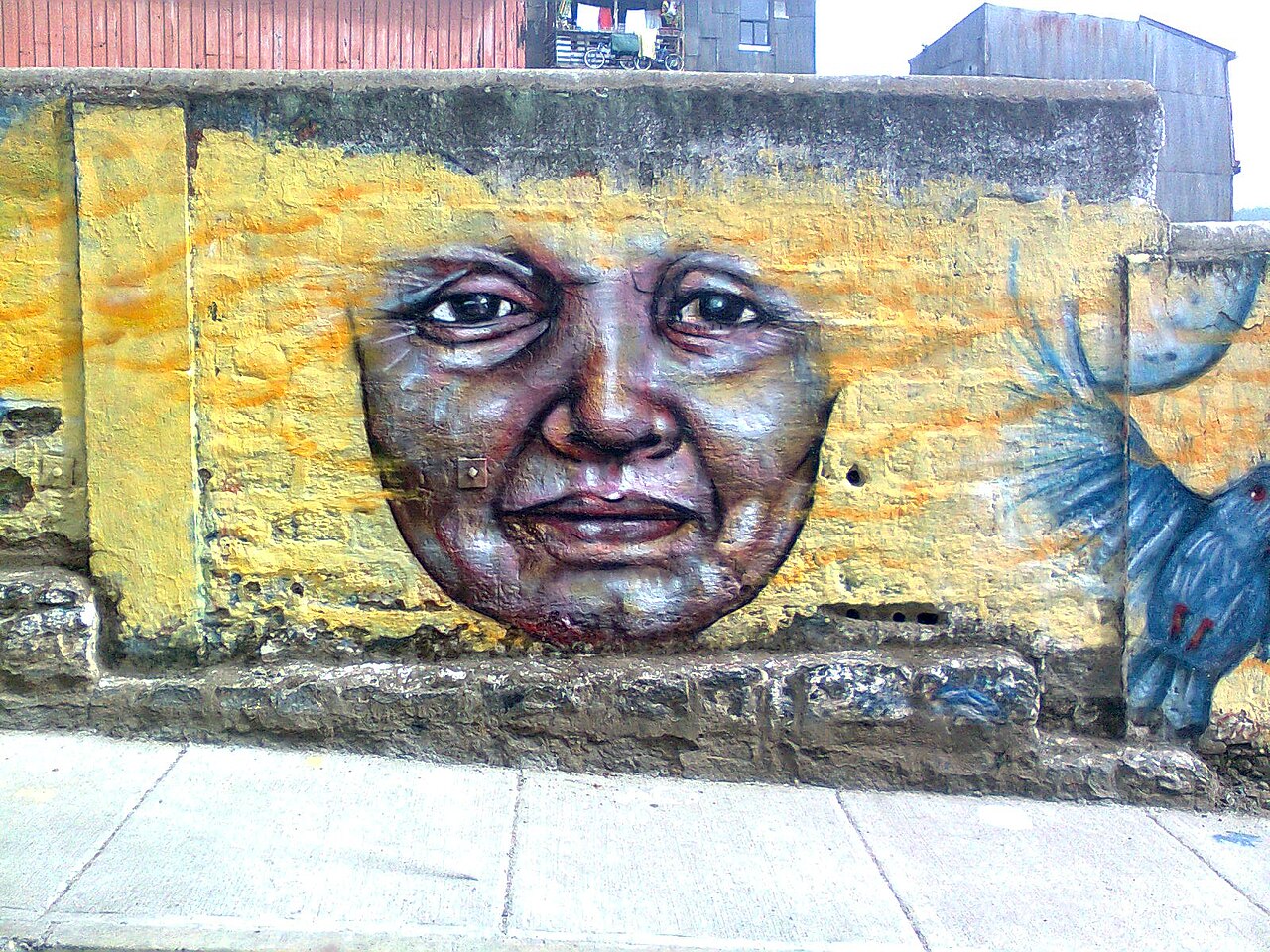
On Cerro Polanco, a painted face and a blue bird share a yellow retaining wall above a sidewalk. It is a modest scale compared with the big lane on Bellavista, and it works for exactly that reason. You pass beneath it on an ordinary errand.
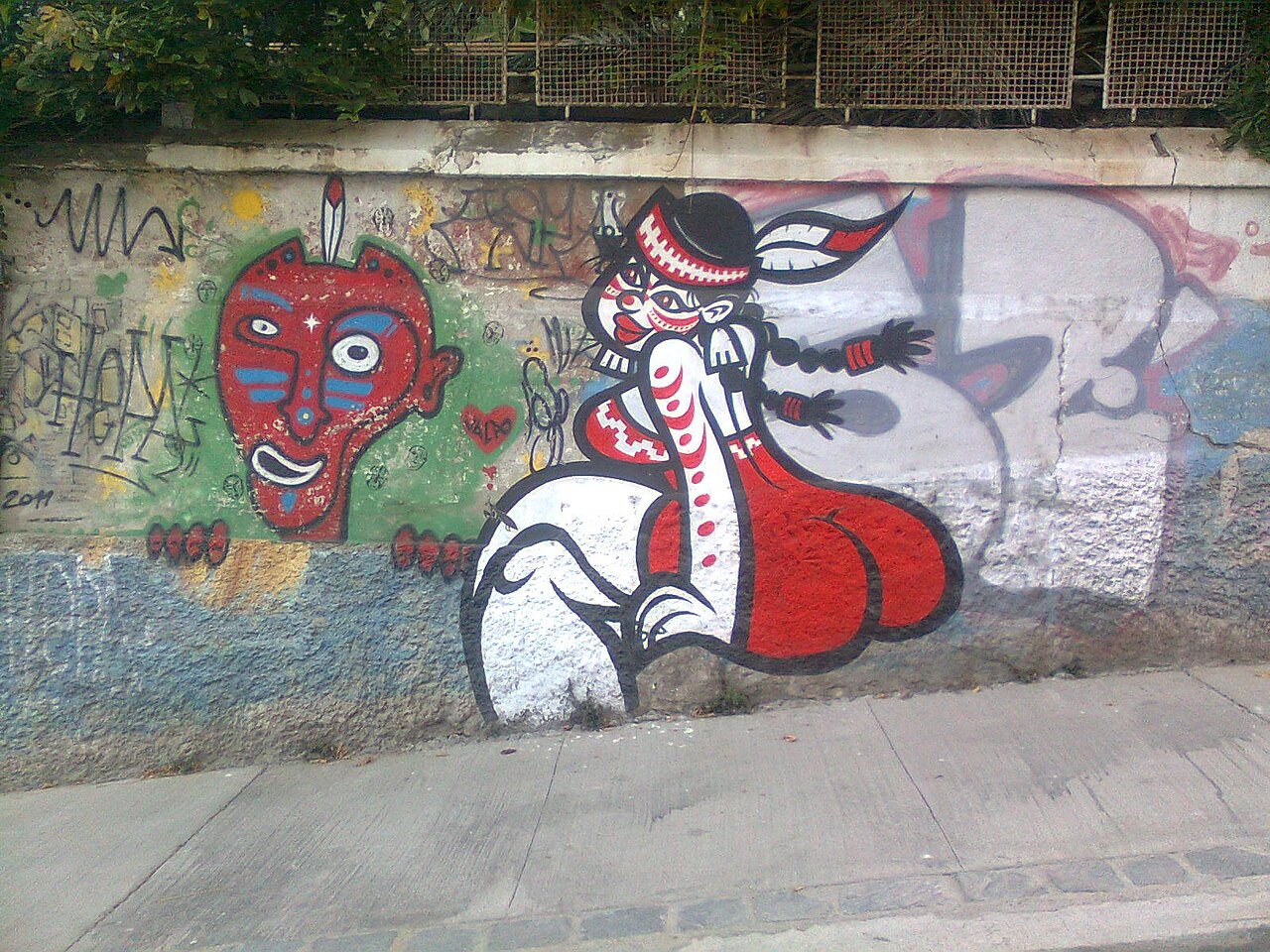
Somewhere else on the hillside streets, a long wall holds a red-and-white painted figure beside a red, mask-like face. Different hands, different moods, and the same instinct: if there is a wall and people walk past it, put something on it. That instinct is what makes Valparaíso murals feel less like a collection and more like a habit of the place.


Down to the water
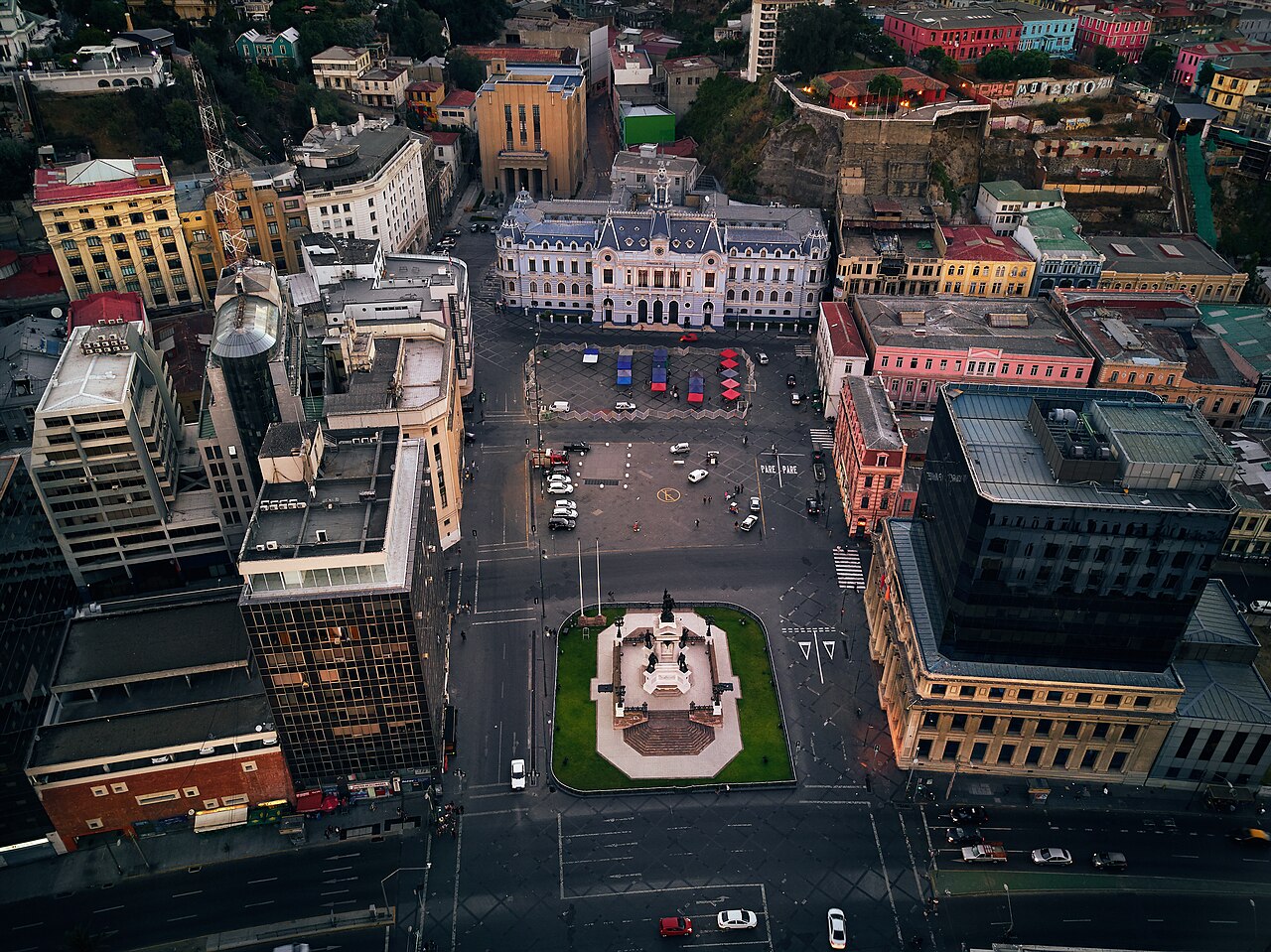
Eventually the streets bring you back to sea level. Plaza Sotomayor is open and formal, with a monument in the middle and historic buildings around it, and after the hills it feels like a deep breath. The old part of Valparaíso is recognized as a World Heritage site, and this is the corner where its civic side is easiest to see.
Look at how different the two halves of the city feel. Down here the architecture sets the tone, with stone and symmetry. Up there, the walls get to be personal. The pleasure of a walk through town is moving between them.

Stay for the lights
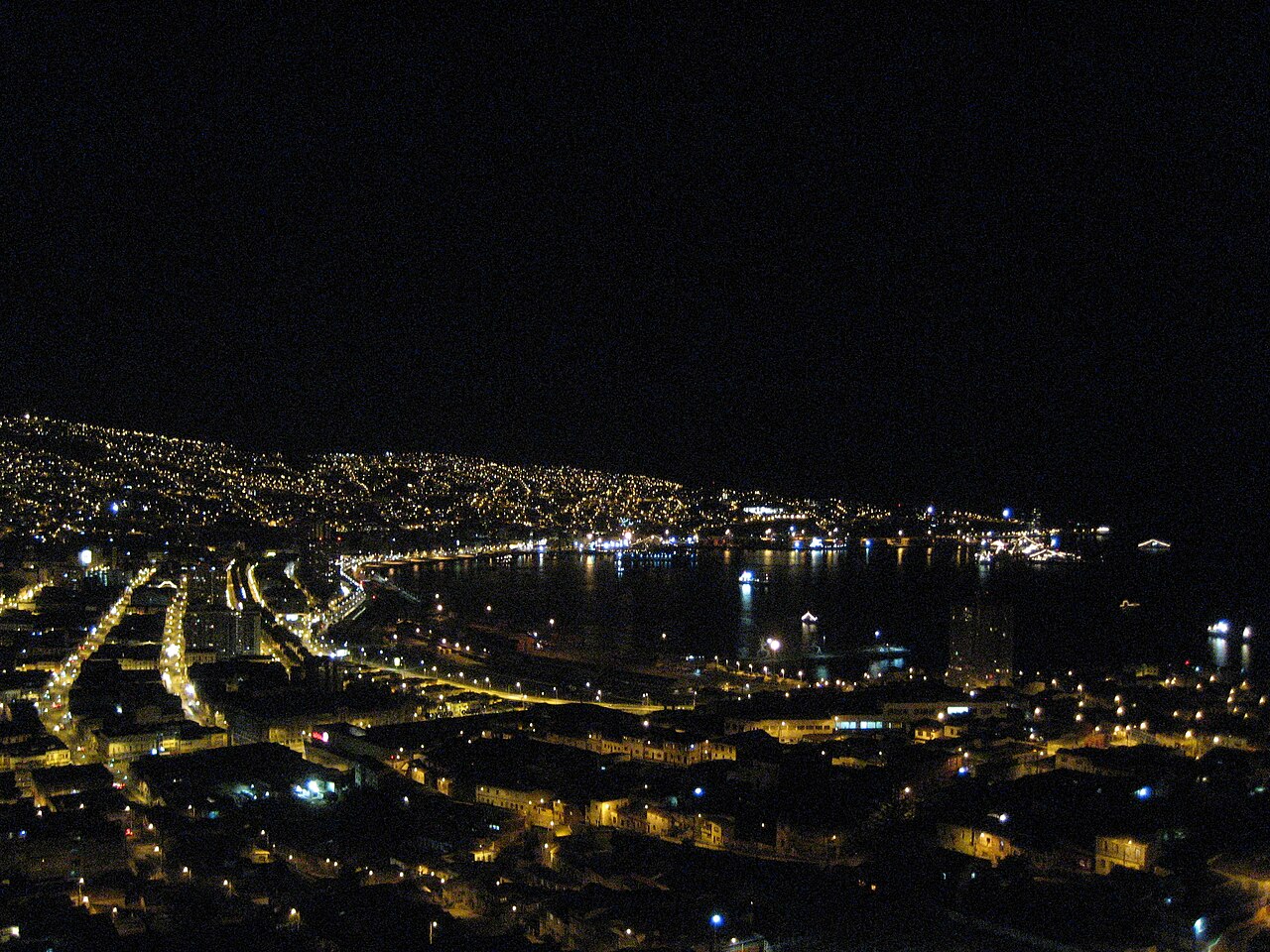
Valparaíso is at its most generous after dark. The bay and the hillsides light up together, and the houses you walked past in the afternoon become rows of small windows stepping up into the black.
On New Year's Eve the bay fills with fireworks, watched from the hills, and the whole amphitheater of slopes becomes a viewing platform. It is a reminder of what these walls are for. They belong to a city that likes to be outdoors together, looking at things.



If you have a wall in mind
Every wall in this story started as somebody's blank surface and a decision to give it a face. If you own or manage a building and have a wall you keep looking at, we would be glad to hear about it. Tell us about your wall and we will take it from there. You can also read more about the city on our Valparaíso guide page.
Frequently asked questions
- Where can I see murals in Valparaíso?
- Start on the hills above the port. Cerro Concepción, Cerro Alegre, Cerro Bellavista and Cerro Polanco all have painted walls along their lanes, and the Museo a Cielo Abierto on Cerro Bellavista is a lane of large murals made to be walked slowly.
- Which neighborhoods in Valparaíso have the most street art?
- The hill neighborhoods are the best places to look, especially Cerro Concepción, Cerro Alegre and Cerro Bellavista. Walking uphill and down by the lanes will show you more than any single route.
- Is street art in Valparaíso legal?
- It depends on the wall and its owner. Murals painted with a property owner's permission are commissioned or approved work, while unsanctioned pieces are a different matter. If you own a wall and want a mural, ask a muralist and get the agreement in writing.
- How do I find a muralist for a building in Valparaíso?
- Look for a painter whose style fits the wall and the neighborhood, then talk through the surface, the size and the look you want. Tell us about your wall and we will help match it with the right painter and handle quotes, contracts and scheduling.
All photos are free-licensed and credited under each image; license links go to the original file pages.
Historia de la ciudad · Valparaíso · 6 min de lectura
Murales en Valparaíso: una ciudad pintada cerro arriba
Escaleras, funiculares y pasajes empinados hacen que los murales de Valparaíso se sientan como descubrimientos. Un recorrido pausado por el arte urbano que da color a los cerros sobre el puerto.
Empiece subiendo
Valparaíso no deja que uno se quede en plano por mucho tiempo. La ciudad es un puerto, y detrás del puerto los cerros se levantan casi de inmediato, de modo que la primera decisión de cualquier visitante es cómo subir. Muchas personas eligen un funicular, uno de esos antiguos carros sobre rieles que todavía trepan las laderas. Desde arriba se ve el carro amarillo sobre sus rieles, los contenedores esperando abajo y las casas subiendo por los cerros sin ningún orden en particular.
Esa vista explica gran parte de los muros. Cuando una ciudad se construye sobre pendientes, cada muro de contención, cada escalera y cada medianera vacía queda frente a alguien. Nada se esconde detrás de un estacionamiento. Aquí un muro es algo que se mira al subir, al bajar y otra vez desde el cerro de enfrente.
Cerro Concepción, un pasaje a la vez
La mejor manera de encontrar los murales de Valparaíso es dejar de buscarlos. Recorra los pasajes del cerro Concepción y deje que aparezcan. En el pasaje Beethoven, una mujer de pelo azul y labios azules mira desde un muro amarillo, más grande que las puertas que la rodean y completamente a gusto allí.
Un poco más allá, un muro azul lleva un cupido alado dentro de un sol radiante, con tres figuras de túnica de pie frente a un pueblo pintado. Un pueblo pintado en un muro, en un pueblo de muros pintados, tiene su propio tipo de humor. Es el tipo de obra que lo hace ir más despacio, mirar dos veces y luego fijarse en lo que hay en el muro siguiente.
Casas que llevan su propio color
No todo el color de estos cerros viene de los murales. En el cerro Alegre, una casa de un piso está pintada de un amarillo vivo con detalles azules, con las ventanas enrejadas y los cables tendidos sobre una calle empedrada. Cerca, una casa de dos pisos en calle Miramar es de un celeste pálido, con techo rojo y balcón, en una esquina bajo un cielo amplio.
Esto no son murales, y no pretenden serlo. Pero preparan el escenario. Cuando las casas ya hablan en colores fuertes, un muro pintado tiene compañía, y la calle se lee como una sola composición larga y despareja. El arte urbano de Valparaíso se siente cómodo en ese entorno porque todo el barrio ya está dispuesto a ser mirado.
Un pasaje que funciona como galería
En el cerro Bellavista, un angosto pasaje de ladera se ha entregado a murales abstractos de gran tamaño. La gente lo recorre despacio, dos figuras pequeñas bajo los muros pintados, como visitantes en una larga sala de museo. La diferencia es que el cielo es el techo y los vecinos viven al lado.
Este tramo se conoce como el Museo a Cielo Abierto, y el nombre le calza. Muestra lo que ocurre cuando una ciudad decide que un pasaje empinado también puede ser un lugar donde quedarse un rato. Los muros son lo bastante grandes para retener la mirada y el pasaje es lo bastante angosto para sentirse íntimo, un equilibrio difícil de lograr.
Rostros sobre la vereda
En el cerro Polanco, un rostro pintado y un pájaro azul comparten un muro de contención amarillo sobre una vereda. Es una escala modesta comparada con el gran pasaje de Bellavista, y funciona justamente por eso. Uno pasa por debajo haciendo un trámite cualquiera.
En otro punto de las calles de los cerros, un muro largo muestra una figura roja y blanca junto a un rostro rojo, parecido a una máscara. Manos distintas, ánimos distintos y el mismo instinto: si hay un muro y la gente pasa frente a él, hay que ponerle algo. Ese instinto es lo que hace que los murales de Valparaíso se sientan menos como una colección y más como una costumbre del lugar.
Bajar hasta el agua
Al final las calles lo devuelven al nivel del mar. La plaza Sotomayor es abierta y formal, con un monumento al centro y edificios históricos alrededor, y después de los cerros se siente como una respiración profunda. El casco antiguo de Valparaíso está reconocido como Patrimonio de la Humanidad, y esta es la esquina donde mejor se aprecia su lado cívico.
Fíjese en lo distintas que se sienten las dos mitades de la ciudad. Aquí abajo la arquitectura marca el tono, con piedra y simetría. Allá arriba, los muros pueden ser personales. El placer de caminar por la ciudad está en moverse entre una y otra.
Quédese hasta que se enciendan las luces
Valparaíso es más generoso después del anochecer. La bahía y los cerros se iluminan juntos, y las casas que usted recorrió por la tarde se vuelven hileras de pequeñas ventanas que suben hacia la oscuridad.
En Año Nuevo la bahía se llena de fuegos artificiales, que se ven desde los cerros, y todo el anfiteatro de laderas se convierte en un mirador. Es un recordatorio de para qué sirven estos muros. Pertenecen a una ciudad a la que le gusta estar al aire libre, junta, mirando cosas.
Si tiene un muro en mente
Cada muro de esta historia empezó como la superficie en blanco de alguien y la decisión de darle un rostro. Si usted es dueño o administrador de un edificio y tiene un muro que no deja de mirar, nos dará gusto saber de él. Cuéntenos sobre su muro y nosotros nos encargamos del resto. También puede leer más sobre la ciudad en nuestra página guía de Valparaíso.
Preguntas frecuentes
- ¿Dónde puedo ver murales en Valparaíso?
- Empiece por los cerros sobre el puerto. Los cerros Concepción, Alegre, Bellavista y Polanco tienen muros pintados a lo largo de sus pasajes, y el Museo a Cielo Abierto del cerro Bellavista es un pasaje de grandes murales hecho para recorrerse con calma.
- ¿Qué barrios de Valparaíso tienen más arte urbano?
- Los cerros son los mejores lugares para mirar, sobre todo el Concepción, el Alegre y el Bellavista. Subir y bajar por los pasajes le mostrará más que cualquier ruta única.
- ¿Es legal el arte urbano en Valparaíso?
- Depende del muro y de su dueño. Los murales pintados con permiso del propietario son trabajos encargados o autorizados, mientras que las obras sin autorización son otra cosa. Si usted es dueño de un muro y quiere un mural, consulte a un muralista y deje el acuerdo por escrito.
- ¿Cómo encuentro un muralista para un edificio en Valparaíso?
- Busque a un pintor cuyo estilo se ajuste al muro y al barrio, y luego converse sobre la superficie, el tamaño y el aspecto que desea. Cuéntenos sobre su muro y le ayudaremos a encontrar al pintor adecuado y nos encargaremos de la cotización, el contrato y la programación.
Todas las fotos tienen licencia libre y están acreditadas bajo cada imagen; los enlaces de licencia llevan a las páginas originales de los archivos.