City story · Washington DC · 6 min read
Washington DC Murals: The City Behind the Monuments
Past the marble and the floodlights, a stencil, an alley, a painted street and a fence that spells out a neighborhood: a slow look at the Washington DC murals and street art that people actually live beside.
The postcard comes first
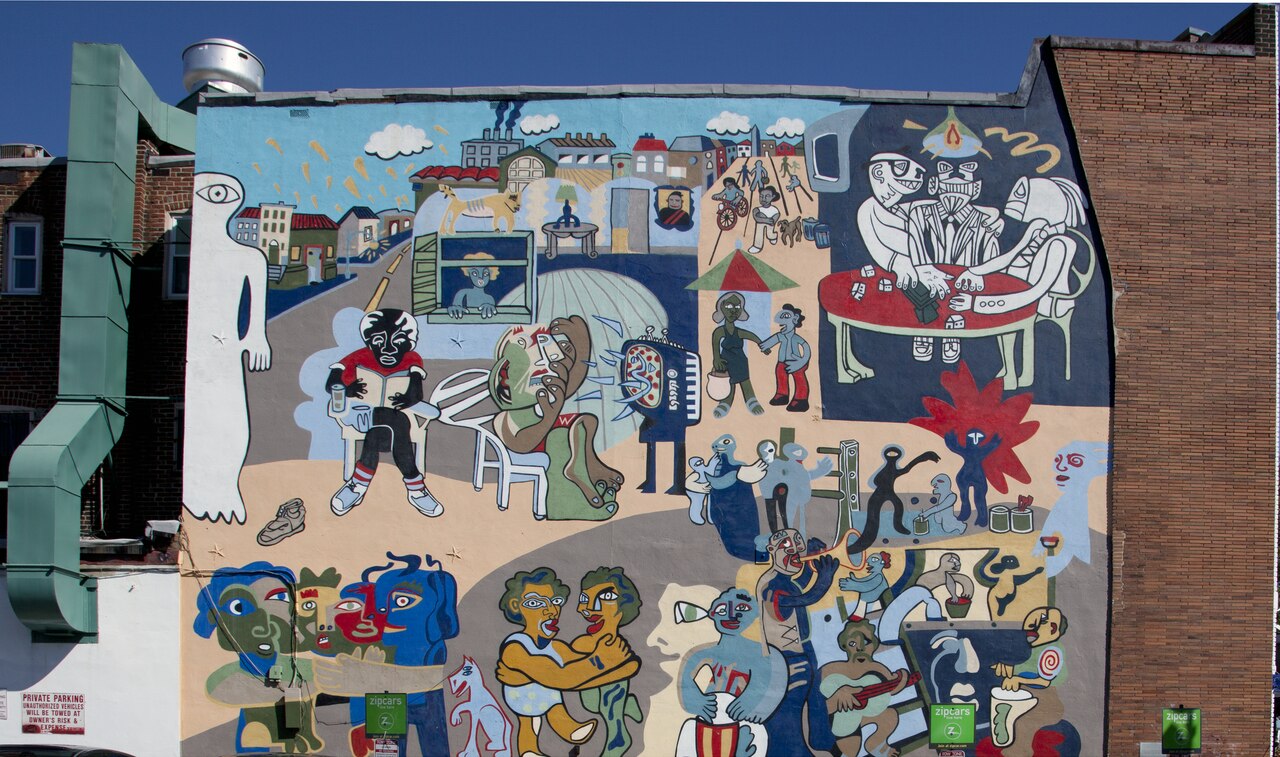
Everybody arrives in Washington with the same picture already in their head. The Lincoln Memorial, the Washington Monument and the Capitol dome, lit white against a dark sky, are some of the most photographed sights in the country, and they deserve it. They are also stone, built to be admired from a respectful distance.
This story is about the other Washington, the one a short ride from the postcards. It is a city of rowhouses, alleys and corner stores, where people put paint on their own walls. If you want to understand it, Washington DC murals are a good place to begin, because they are what residents chose to look at every day.

Adams Morgan, where the walls talk back
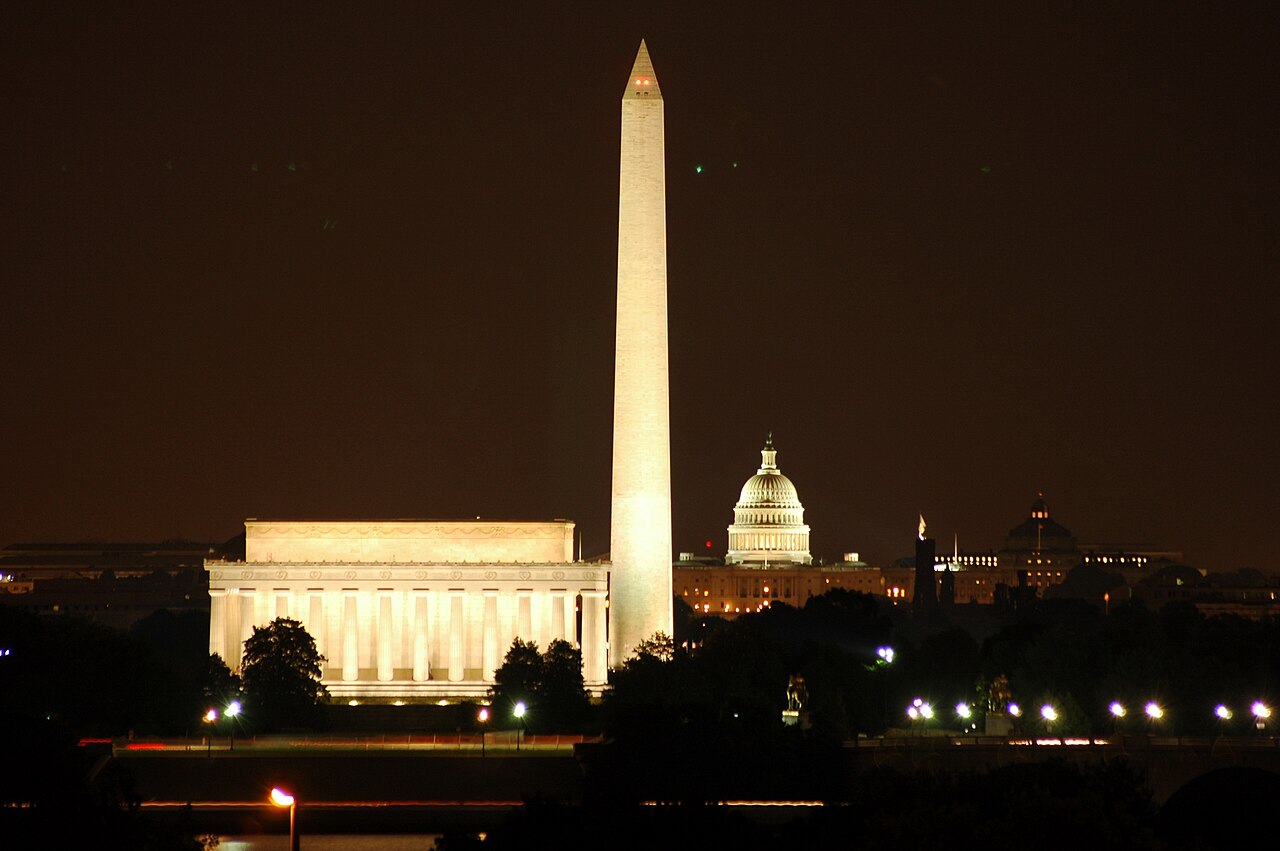
Ask someone where to find Washington DC street art and Adams Morgan is usually the first answer. It earns the reputation without shouting. On a whitewashed brick wall, a single black stencil shows a man on his phone, walking two dogs, with a small pink cat stencil beside him. It is funny and exact. Anyone who has lived in a city knows that man.
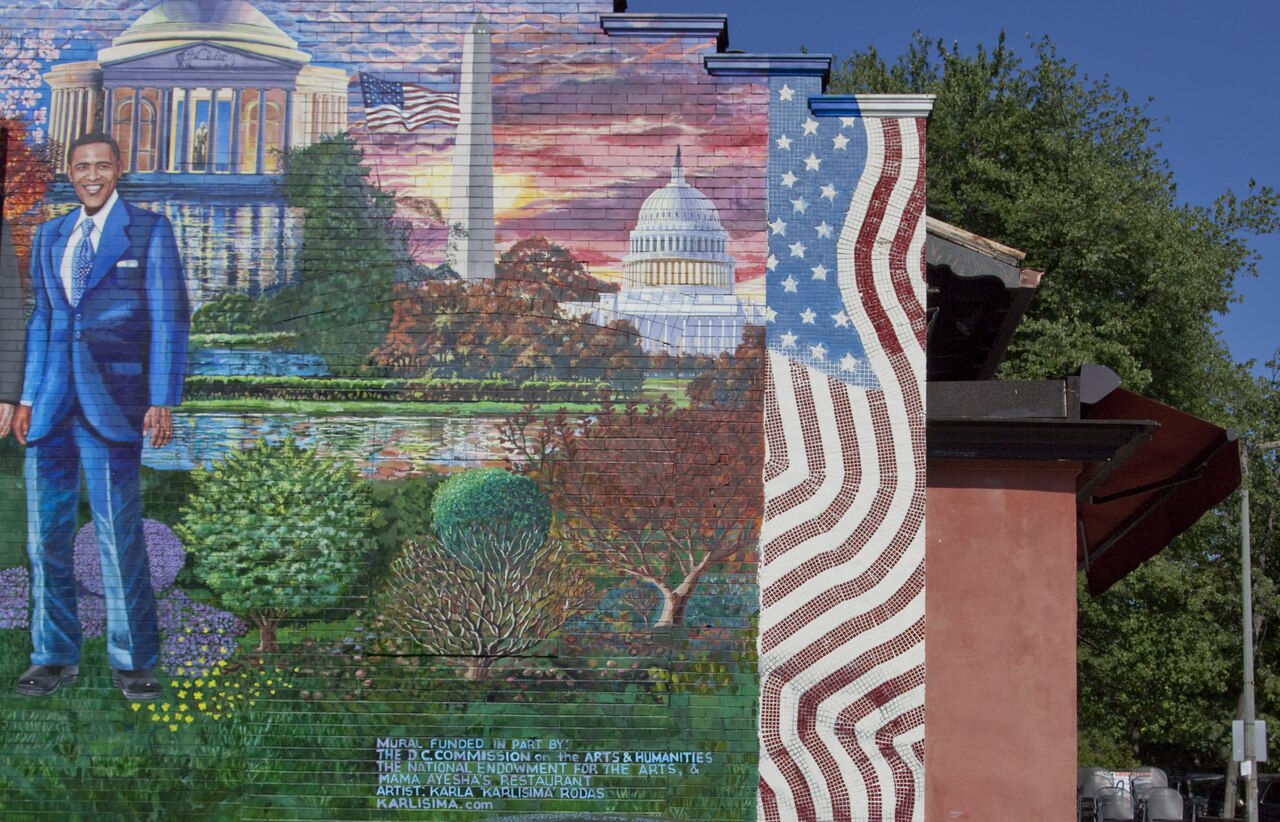
Around the corner the scale jumps. A tall figure in a blue suit stands before the Jefferson Memorial and the Capitol at sunset, beside a painted American flag. The monuments from the postcard are back, but here they are scenery on a neighborhood wall, with a person standing in front of them. The reversal feels like the quiet joke of the whole district.
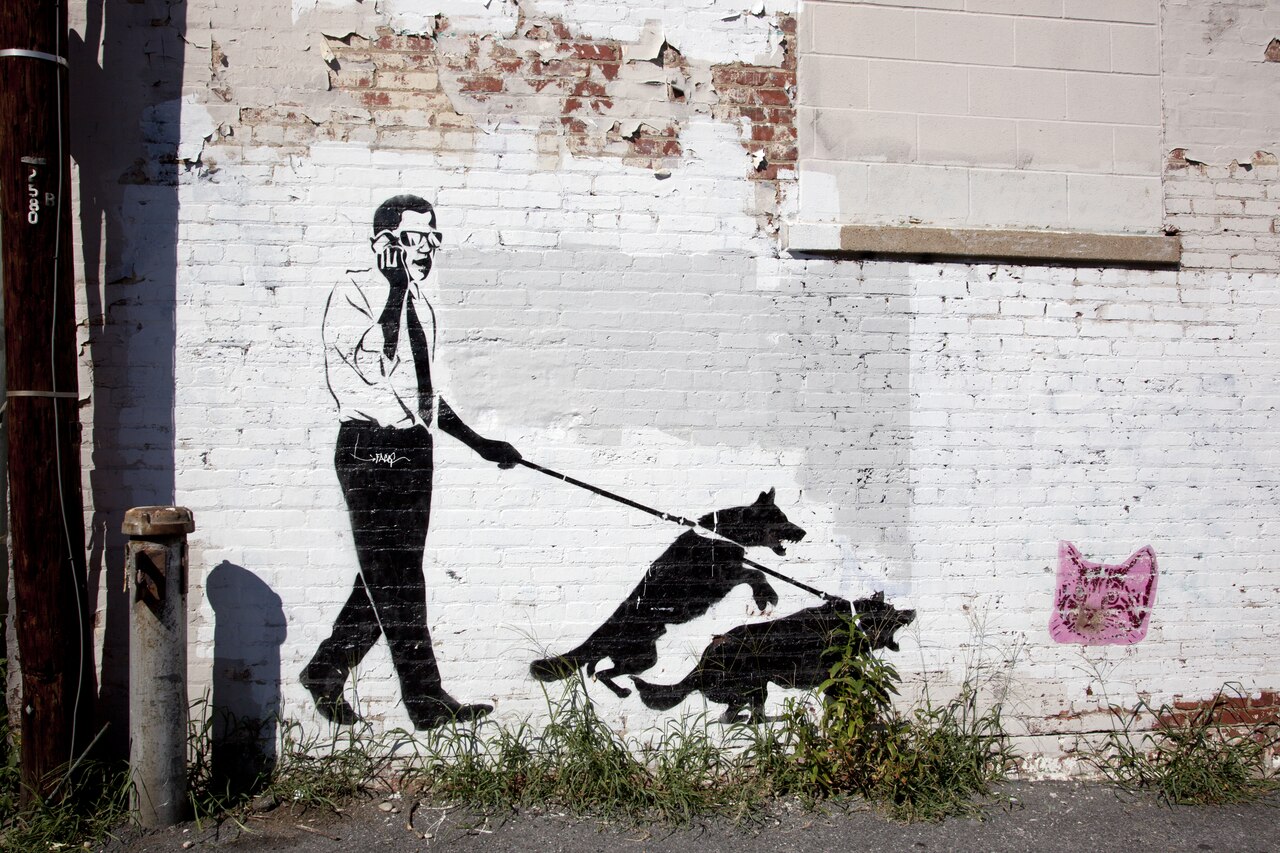
The big painted wall at the top of this story belongs to the same streets: a crowd of scenes and figures running the full side of a brick building. Walk a few blocks and the brick keeps changing character.
An alley off U Street
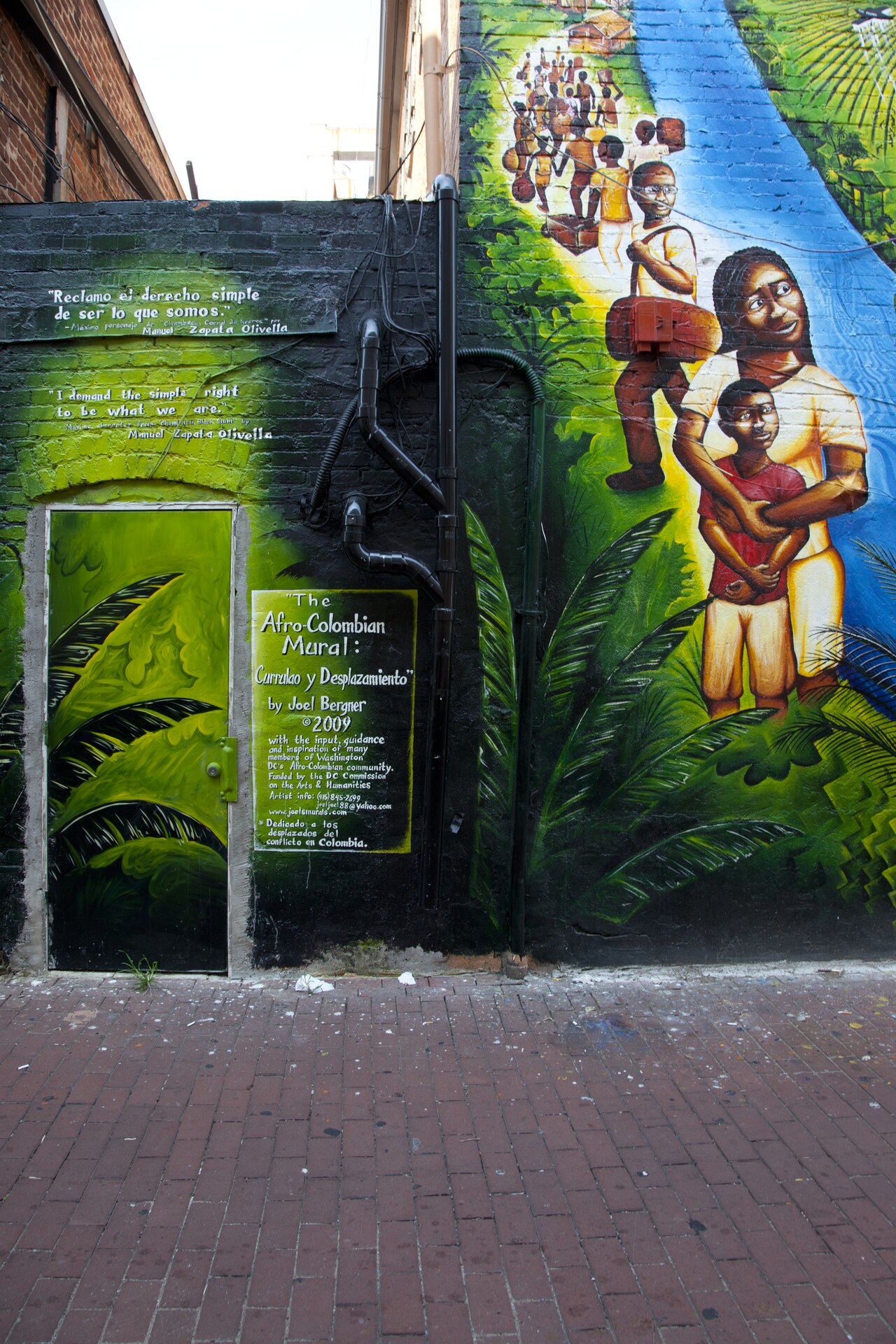
Some of the best walls in Washington are not on a street at all. In an alley between 13th, 14th and U Street, a green, tropical mural shows a mother and child, with a line of travelers beside a river. There is a painted door and a small text plaque. You could walk straight past the alley mouth, which is part of the pleasure. The mural is not advertising itself to traffic. It is waiting for you to turn.
Alleys are the underrated galleries of any rowhouse city. They are out of the wind, away from the loud signs, and the people who live along them see the wall every day. A mural here sits closer to a front-porch decoration than a billboard.
A street that became a message
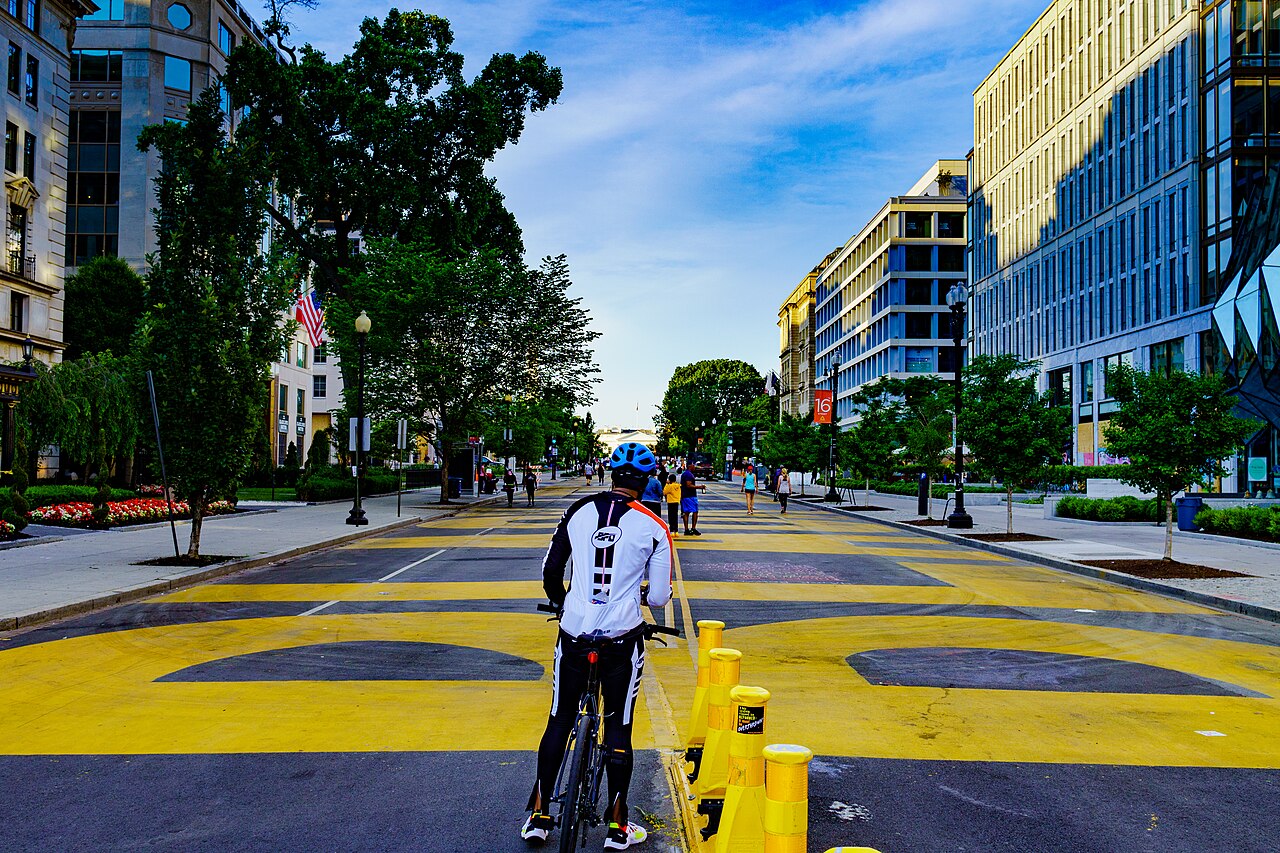
In Washington, even the pavement can be the canvas. On a block downtown, the street itself is painted with giant yellow letters, big enough to read from above and from the saddle of a bicycle. In the photograph a cyclist rolls toward them, office buildings and trees ahead.
It is the most direct kind of public painting, because there is no wall to frame it. You do not look at it so much as move through it. Whatever a visitor thinks of the message, it shows how far painted public space can go in a capital where so much of the public landscape is already symbolic.

Logan Circle spells its own name
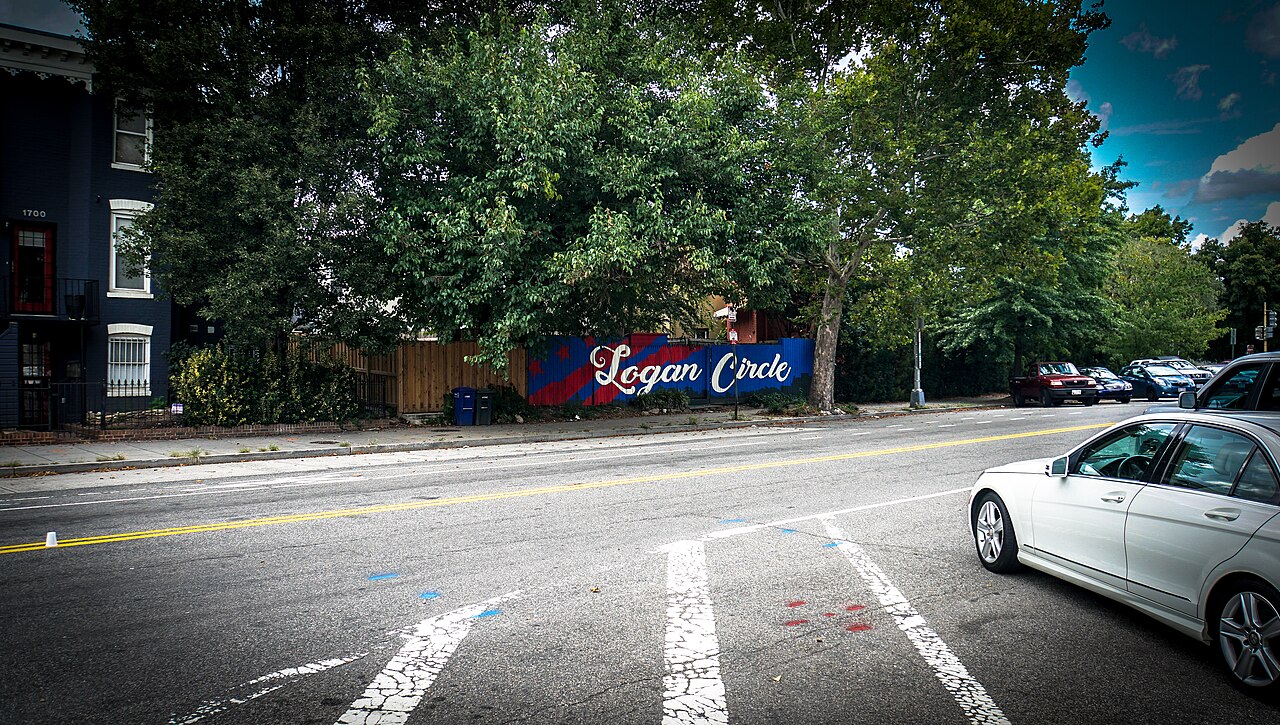
A smaller kind of painting does a different job. On a corner near Logan Circle, a painted fence spells out the neighborhood name in red, white and blue, among trees and a few parked cars. Nobody would call it a masterpiece, and it is not trying to be one.
What it does is simpler and arguably more useful: it tells people who live here that this is their place. A fence is a modest surface, but a modest surface done with care is how most neighborhoods first say hello.

Brick, bay windows and good manners
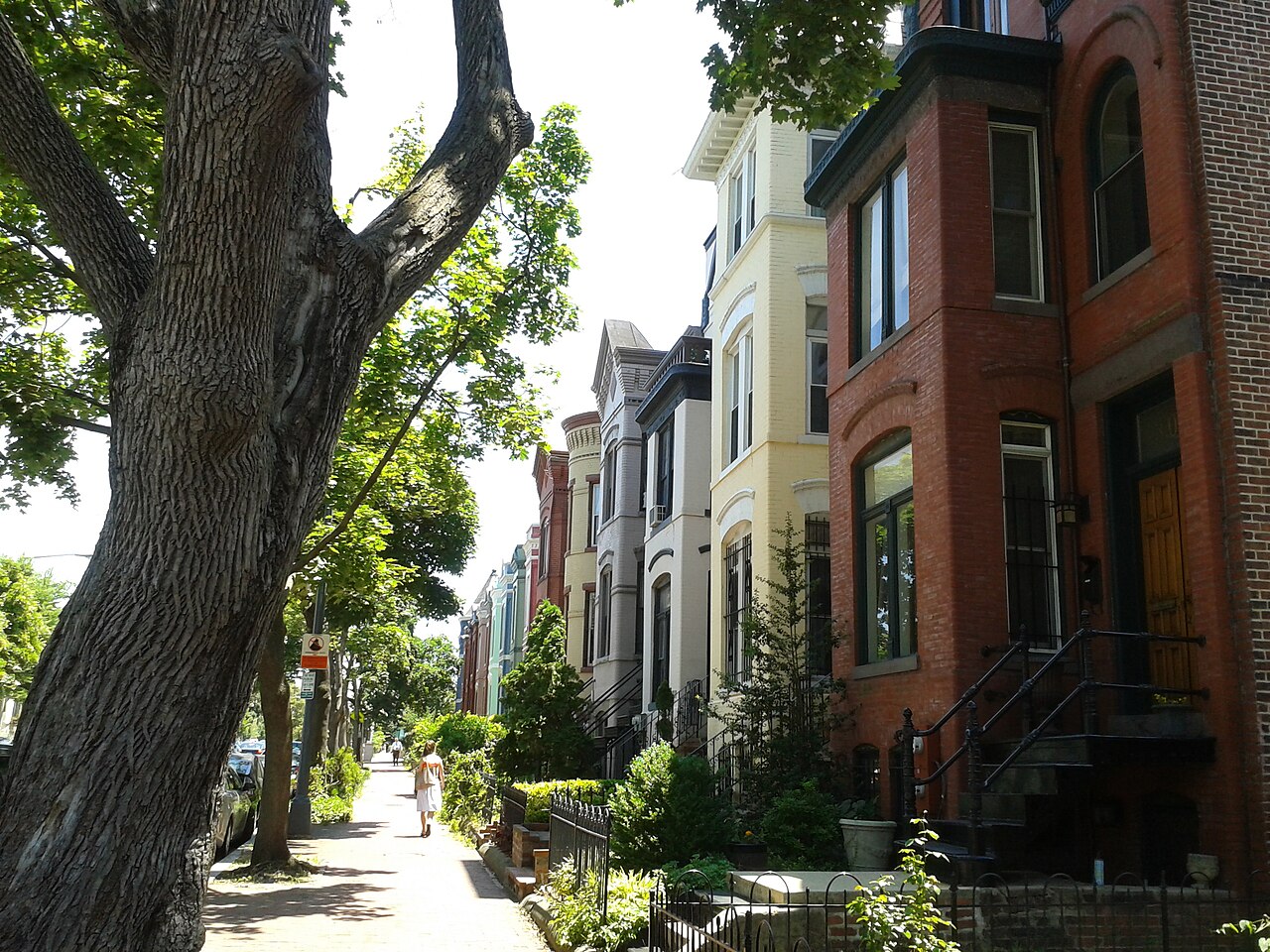
Washington is a brick city, and the bricks set the rules. In Capitol Hill, a tree-shaded sidewalk runs past rowhouses in brick and painted color, with bay windows catching the sun. Each house wears its own shade, and the block reads like a row of neighbors who agreed to disagree politely.
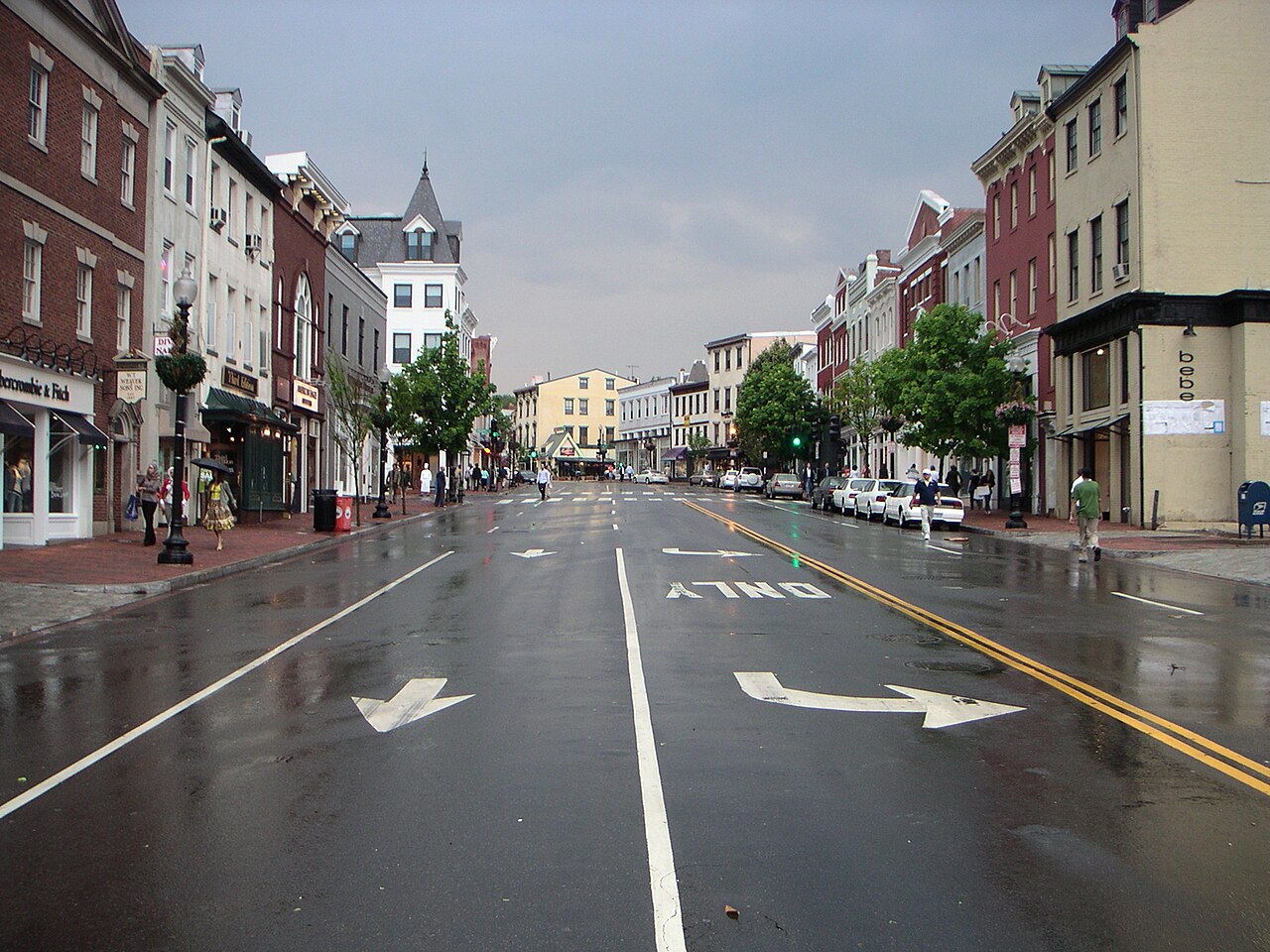
Georgetown shows the other mood. On a wet gray day, Wisconsin Avenue is an empty street of old brick shops and storefronts, with a few people on the sidewalks. It is not a mural scene, and that is the point. In streets like these, a new piece of paint has to earn its place. The older the setting, the more a wall rewards a careful hand and a plan that respects what is already there.


Not everything hangs on paint
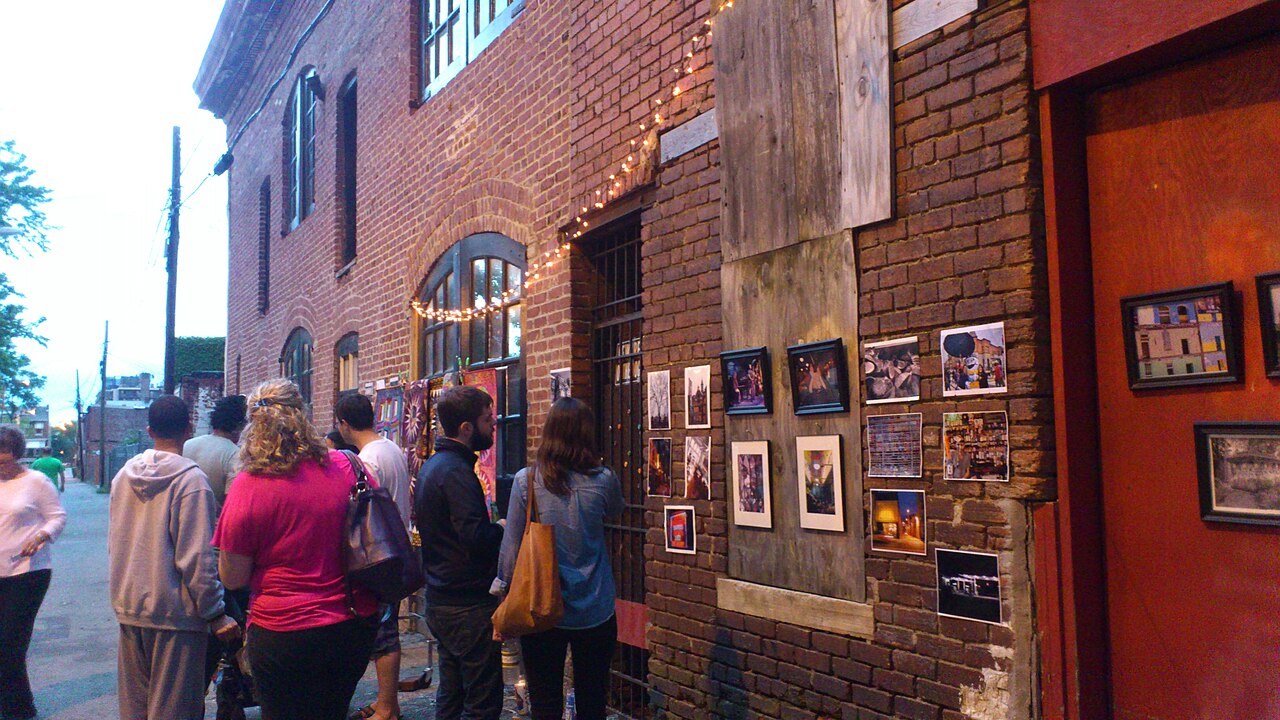
In Trinidad, behind a row of garages, an alley turns into a pop-up art fair. Framed photographs hang on a brick wall under string lights, and visitors drift along it, most of them caught from behind, heads tilted toward the pictures.
It is a useful reminder that a wall is a gallery for anyone with a hook and a free afternoon. Murals begin from the same impulse: an ordinary surface, offered up to the people who pass it.

Finish among the blossoms
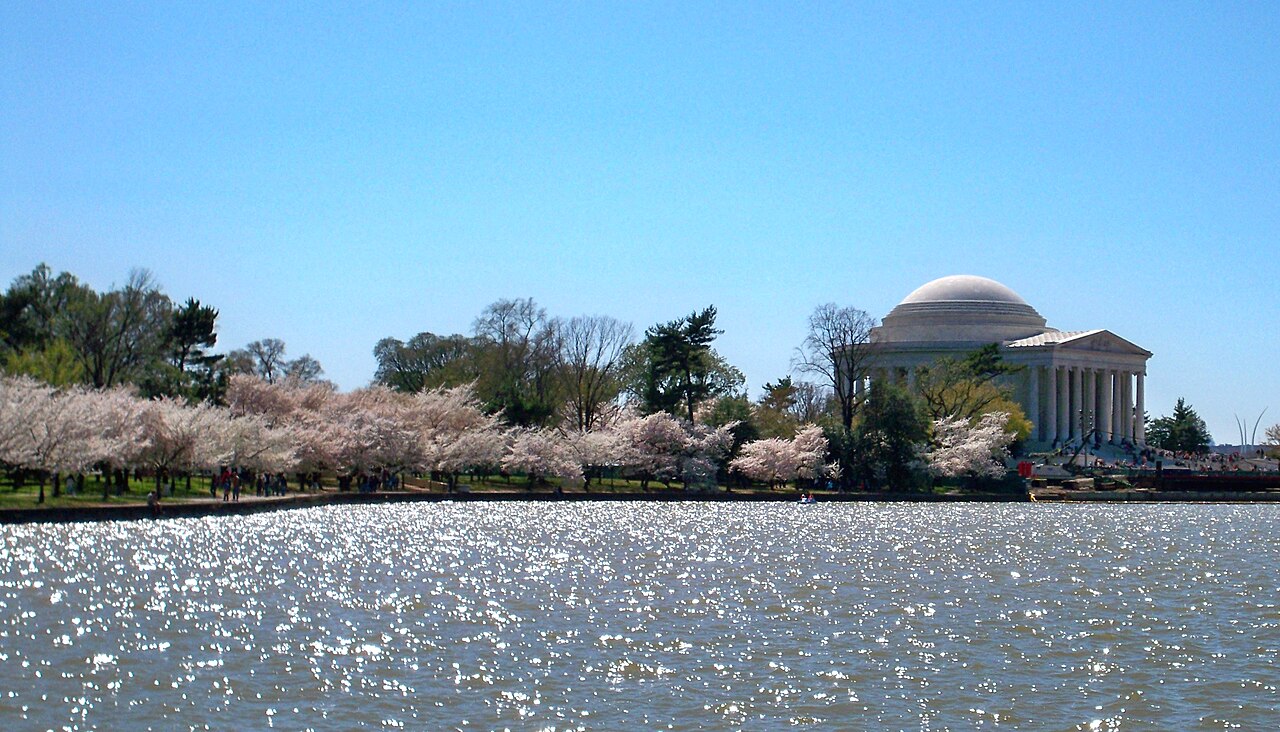
End where the city is at its softest. Along the Tidal Basin, pink cherry trees bloom beside sparkling water, with the Jefferson Memorial across it. Crowds come for the blossoms, and for a short season the best color in town is a living one.
It makes a fair argument for everything above. Color changes how a place feels, and a city built from stone and marble needs more of it than most. If you want to keep exploring, our Washington DC city page collects more of the walls and the people behind them.

If a wall in the District is on your mind
Walls like these start with a plain surface and someone willing to ask what it could become. If you look after a building in Washington and keep noticing a wall of your own, send us a few details about it and we will help match it with the right muralist, then handle the quotes, contracts and scheduling.
Frequently asked questions
- Where can I see murals in Washington DC?
- Adams Morgan is the usual first stop for Washington DC murals and street art, with painted walls on its side streets. Alleys off U Street, the Logan Circle area and Black Lives Matter Plaza downtown are good additions for a day on foot or by bike.
- Which neighborhoods in DC have the most street art?
- Adams Morgan, the U Street corridor, Logan Circle and Shaw, and Trinidad are good neighborhoods to explore. Each has a different feel, from big painted walls to quiet alley pieces and small neighborhood signs.
- Is street art legal in Washington DC?
- It depends on the wall and the owner. Murals painted with a property owner's permission are commissioned work, while unsanctioned painting is a different matter. If you own a wall, get the agreement in writing and check with the city about any local requirements.
- How do I find a muralist in Washington DC for my building?
- Start with a muralist whose style fits your wall and your neighborhood, then talk through the surface, the size and the look you want. We help match walls with muralists and handle quotes, contracts and scheduling.
All photos are free-licensed and credited under each image; license links go to the original file pages.