City story · New York · 6 min read
New York Murals: The City Written on Its Walls
New York murals and street art show up on garage doors, brick corners and park walls, borough by borough. This is a slow look at a few of them and the streets around them.
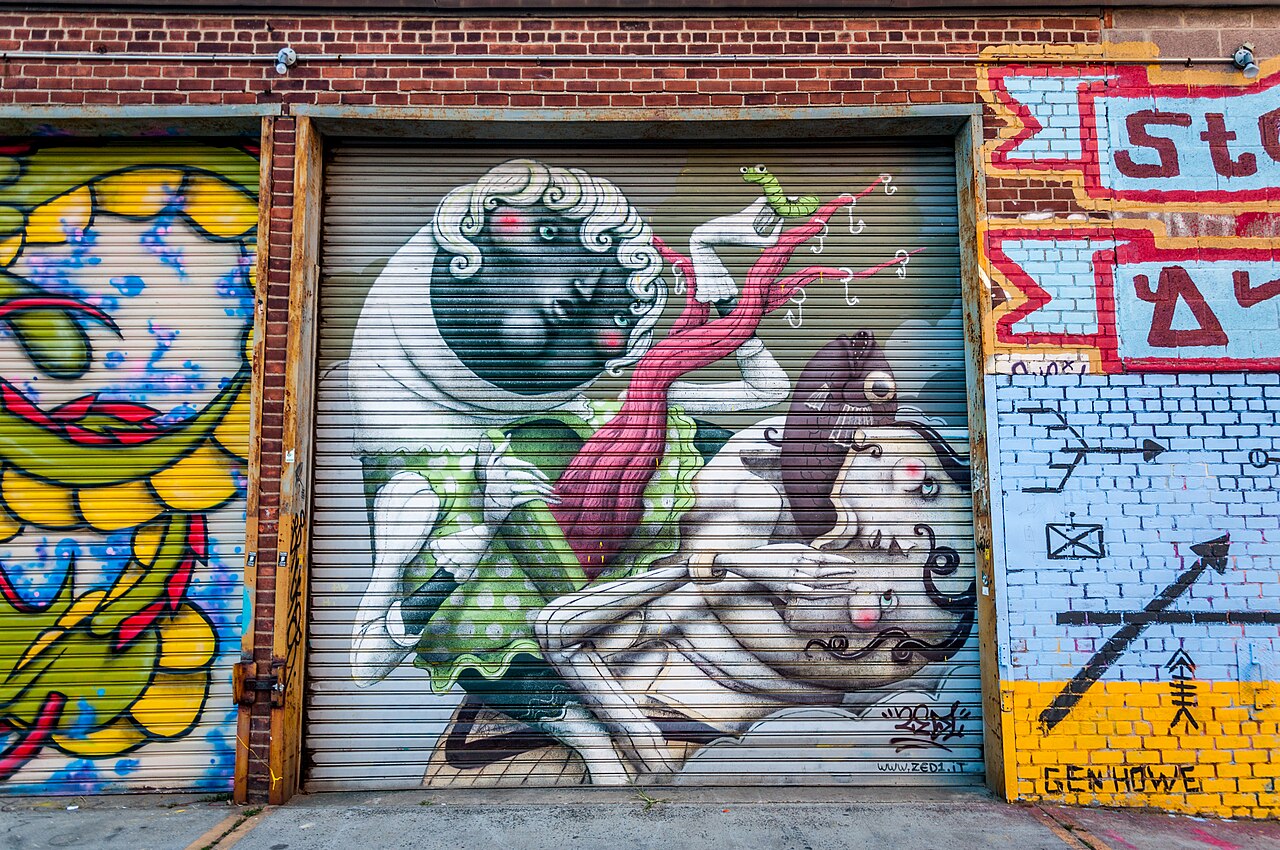
Begin with a garage door in Queens
Most visitors plan New York around the famous places. The murals tend to ignore the plan. You turn a corner in Astoria and a ground-floor wall is covered edge to edge in color, a parked SUV in front of it, the whole thing just part of an ordinary block.
That ordinariness is what makes New York murals feel so alive. Nobody has roped them off. They sit beside restaurants and loading doors and bus stops, and the people who pass them every day barely need to look up. Visitors do look up, and that small difference is half the pleasure of walking here.
Astoria sits in Queens, a borough of many neighborhoods, and the walls here reflect that mix. The roll-up door at the top of this story, with its two stylized figures and a green caterpillar, is a small comic scene sitting between graffiti-covered brick walls. Stand a minute and you will see how the colors on one surface spill into the next.
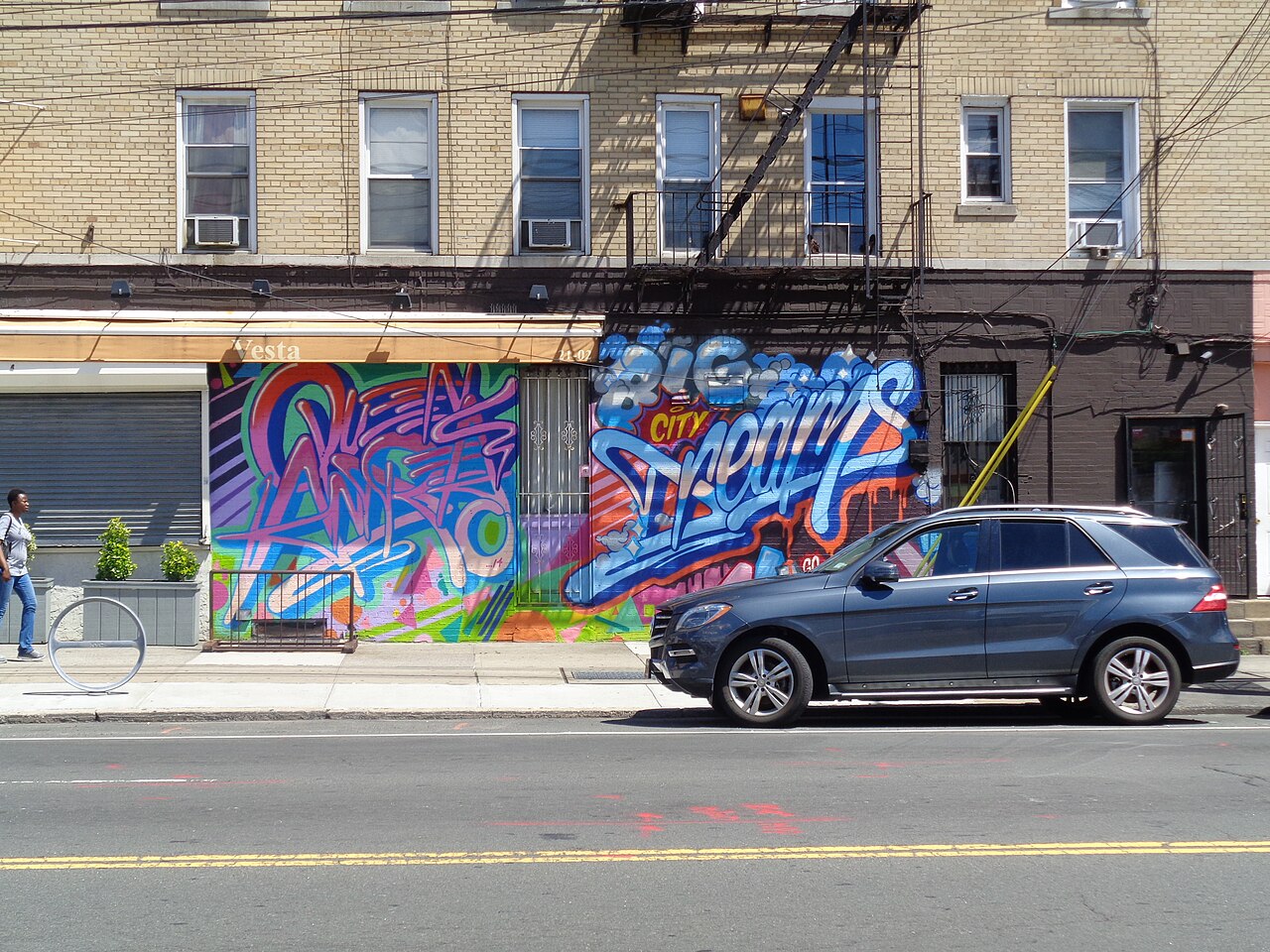

Bushwick, where the brick is black and the colors are loud
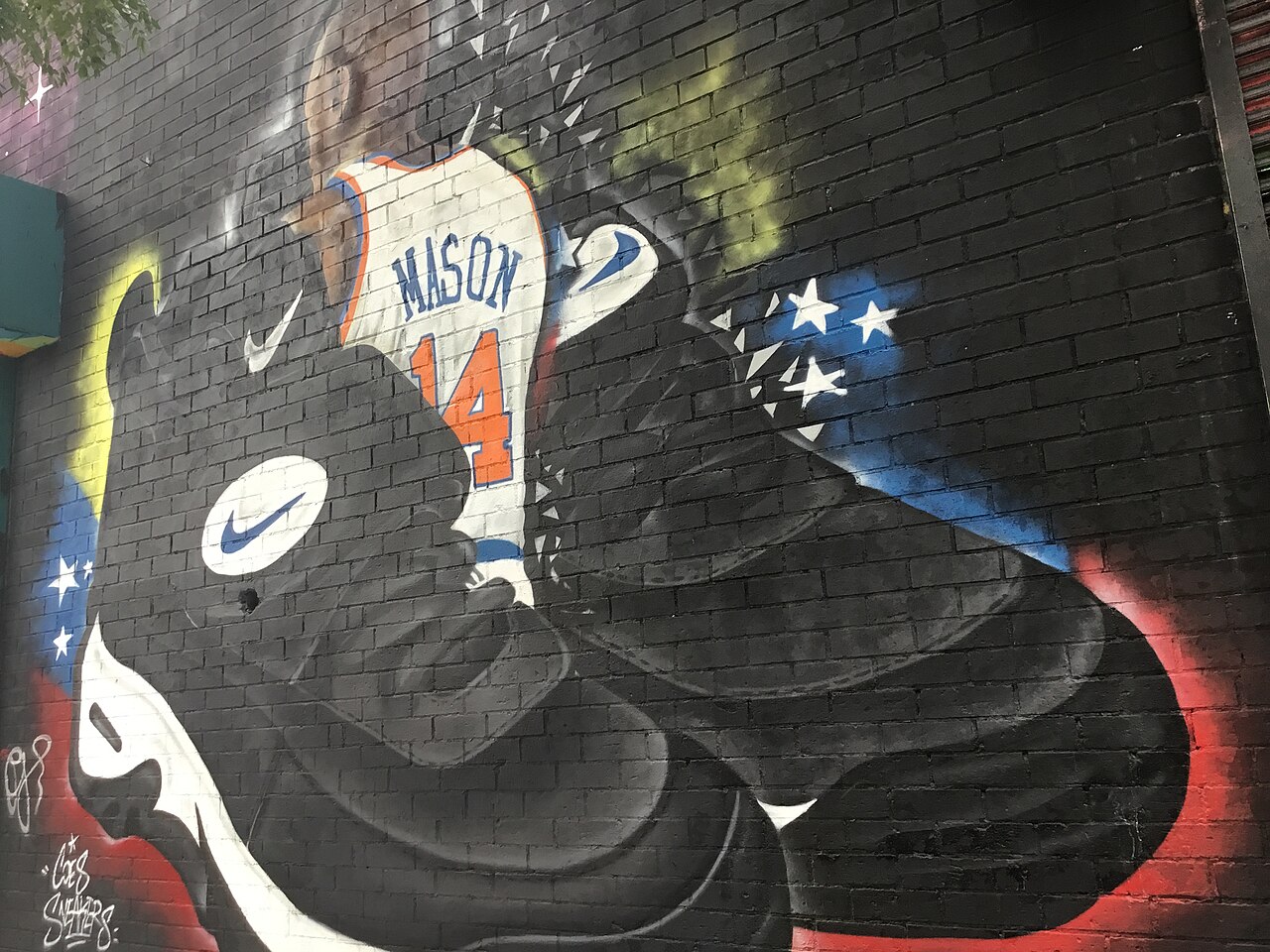
Bushwick is the neighborhood most people mean when they ask about New York street art. Walls here are treated like pages in a very large sketchbook. One of them is a black brick surface carrying a basketball jersey that reads Mason 14, surrounded by sneaker shapes and washes of stars and color.
It is a good reminder of how much a mural can say with objects people already recognize. A jersey, a pair of shoes: you do not need a caption to understand that this wall is about someone, and about the game that fills a lot of Brooklyn blocks.
Look closely and the surface itself becomes part of the work. Black brick drinks in light, so the whites and bright colors seem to hover. Painters who work on dark walls know to let that depth do some of the lifting, and the result reads from half a block away.

Harlem keeps a roll call
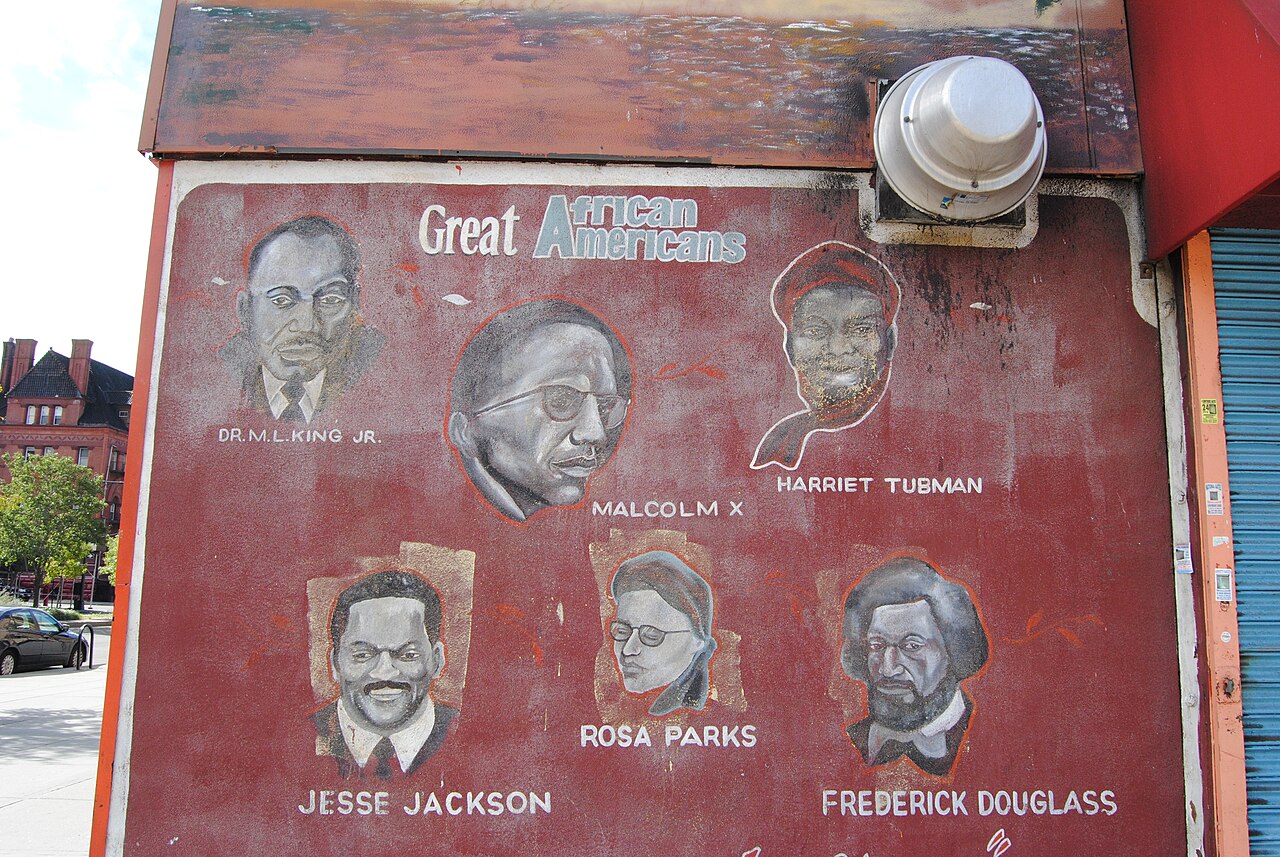
Uptown, a wall in Harlem takes a different approach. Titled Great African Americans, it lines up portraits with name labels beneath each face, so the wall works like a lesson you can read from the sidewalk.
Murals like this turn a plain street into a shared classroom. Children walk past on the way to school, neighbors stop to name a face, and a visitor learns something without opening a book. It is public art doing the oldest job there is: telling a community who it is proud of.
What stands out is the patience of it. Portraits take time, and a wall of many faces asks the viewer for time in return. Walk it slowly, left to right, and read the names as you go.

The small one in the park
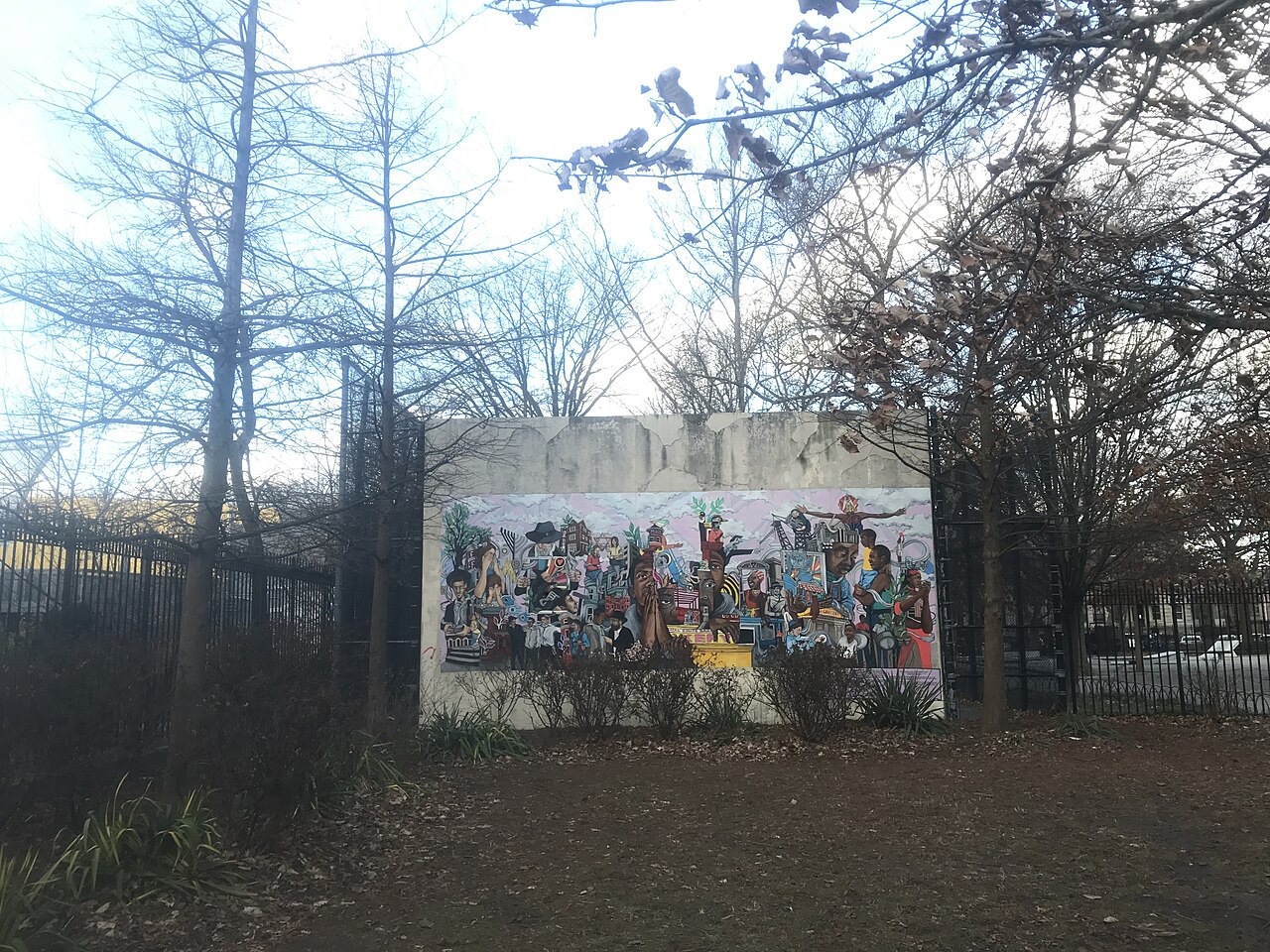
Not every great wall is big. In Brower Park, in Crown Heights, a colorful community mural runs along a concrete wall, framed by bare winter trees and an iron fence. From a distance it is a bright stripe at the edge of the grass.
Park walls like this are a quiet kind of generosity. They take a blank surface that could have stayed gray and give the people using the park something to look at while they wait for a kid on the swings or a friend on the path.
There is a lesson for anyone thinking about a wall of their own. Scale is not the only measure of impact. A modest mural placed where people already linger can matter more than a giant one on a street nobody walks.

Under the roller coaster
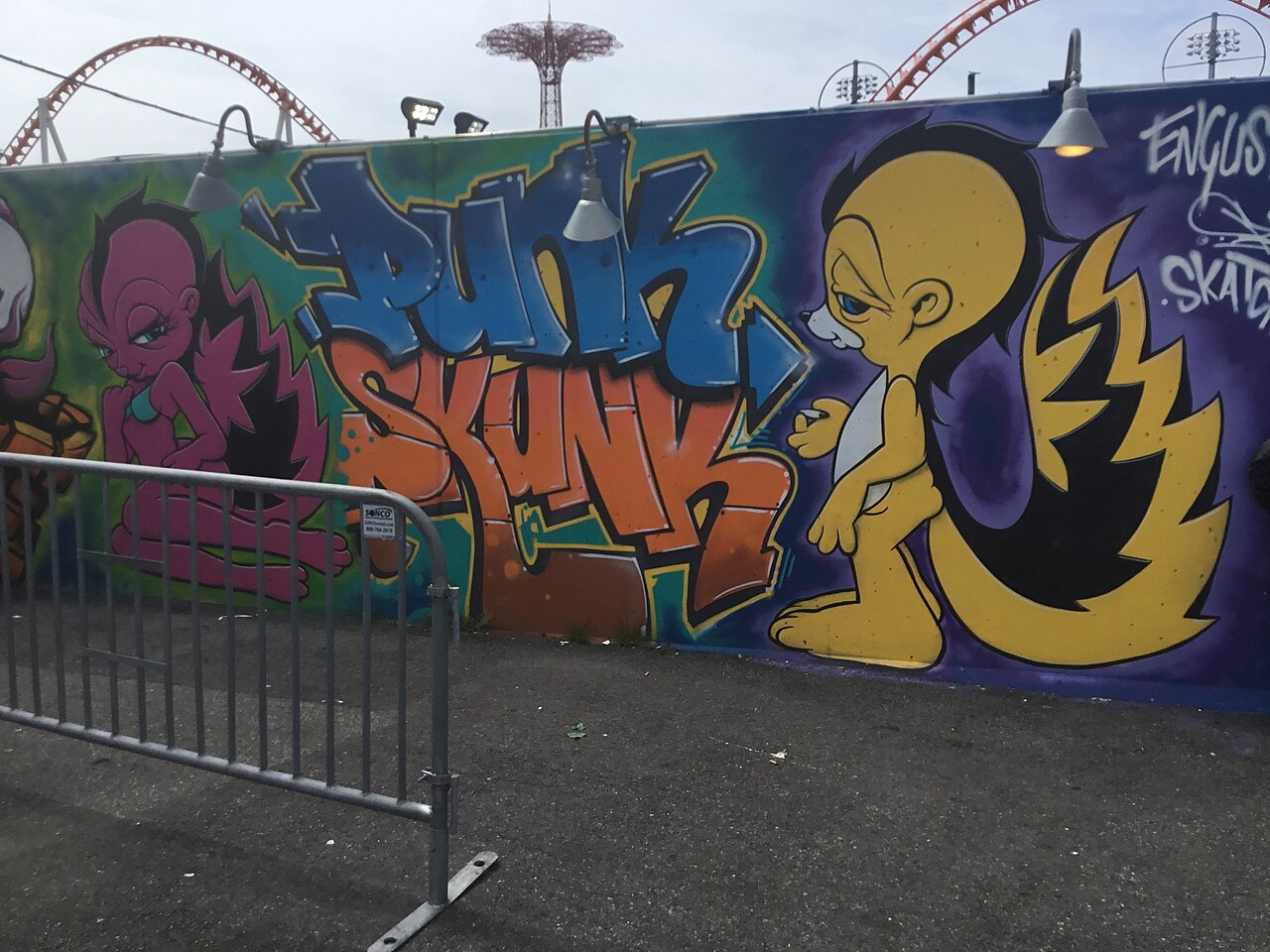
Coney Island is where New York murals meet the amusement ride. At the Coney Art Walls, a graffiti-style piece reading Punk Skunk shows a yellow cartoon skunk grinning beneath the tracks of a roller coaster, with the Parachute Jump rising behind.
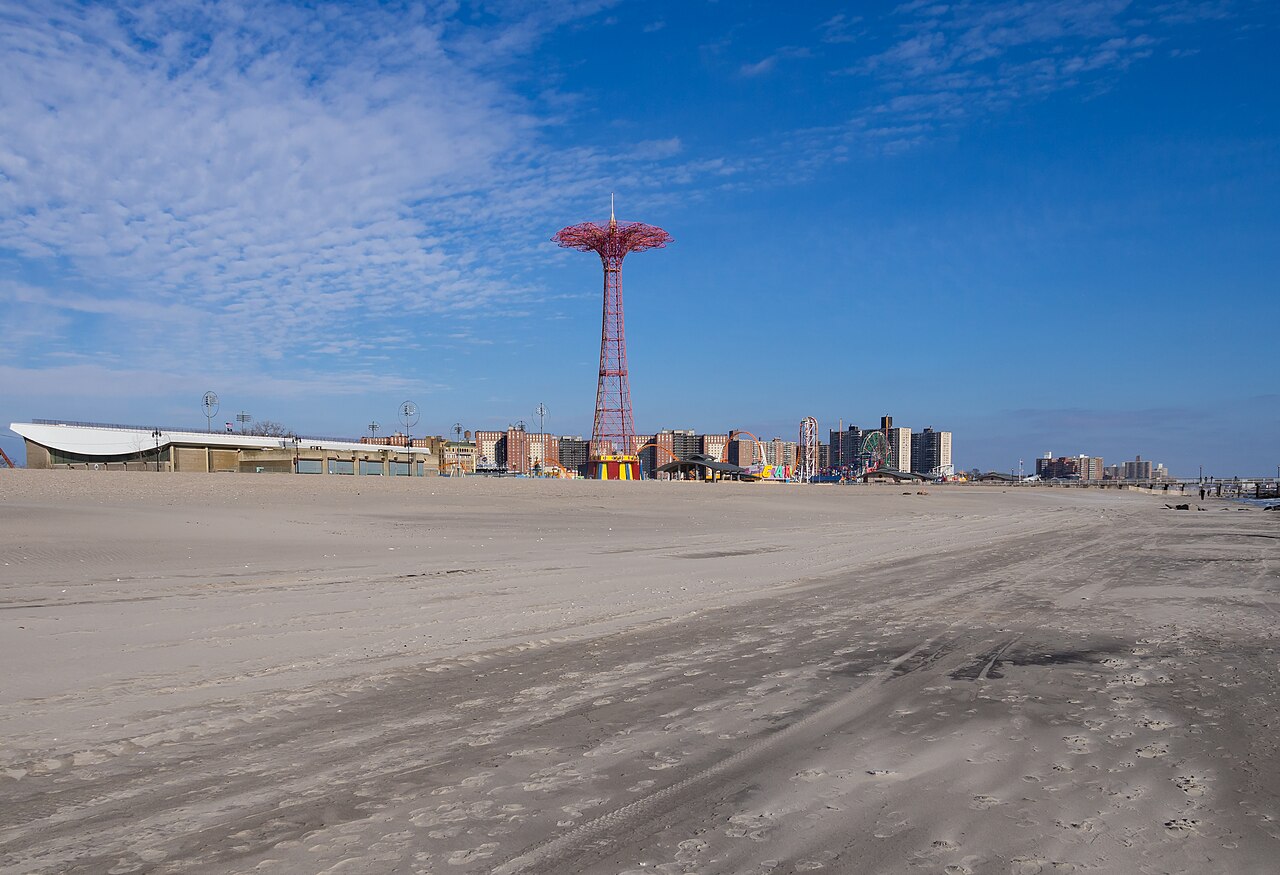
A short walk away the mood changes completely. In winter the beach is wide, empty and pale, the red Parachute Jump stands in the distance, and the rides wait for the season to start again. Seeing both in the same afternoon says something about the city: it is playful and quiet, often within a few blocks.
The contrast is the charm. Bright paint meets old amusement tracks, and a cartoon animal has the nerve to look comfortable there. Coney Island has always been a place that does not take itself too seriously, and its walls follow suit.


Where the arch meets the skateboards
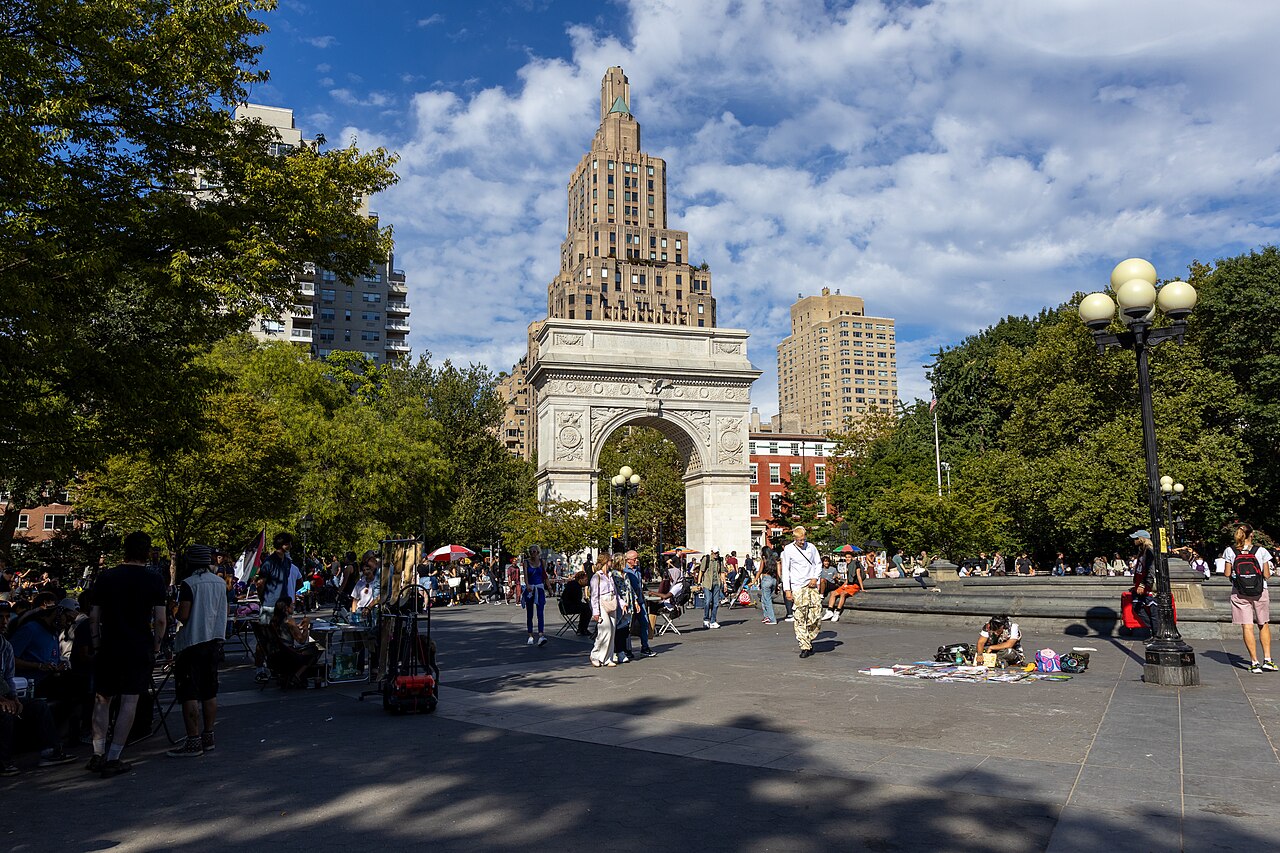
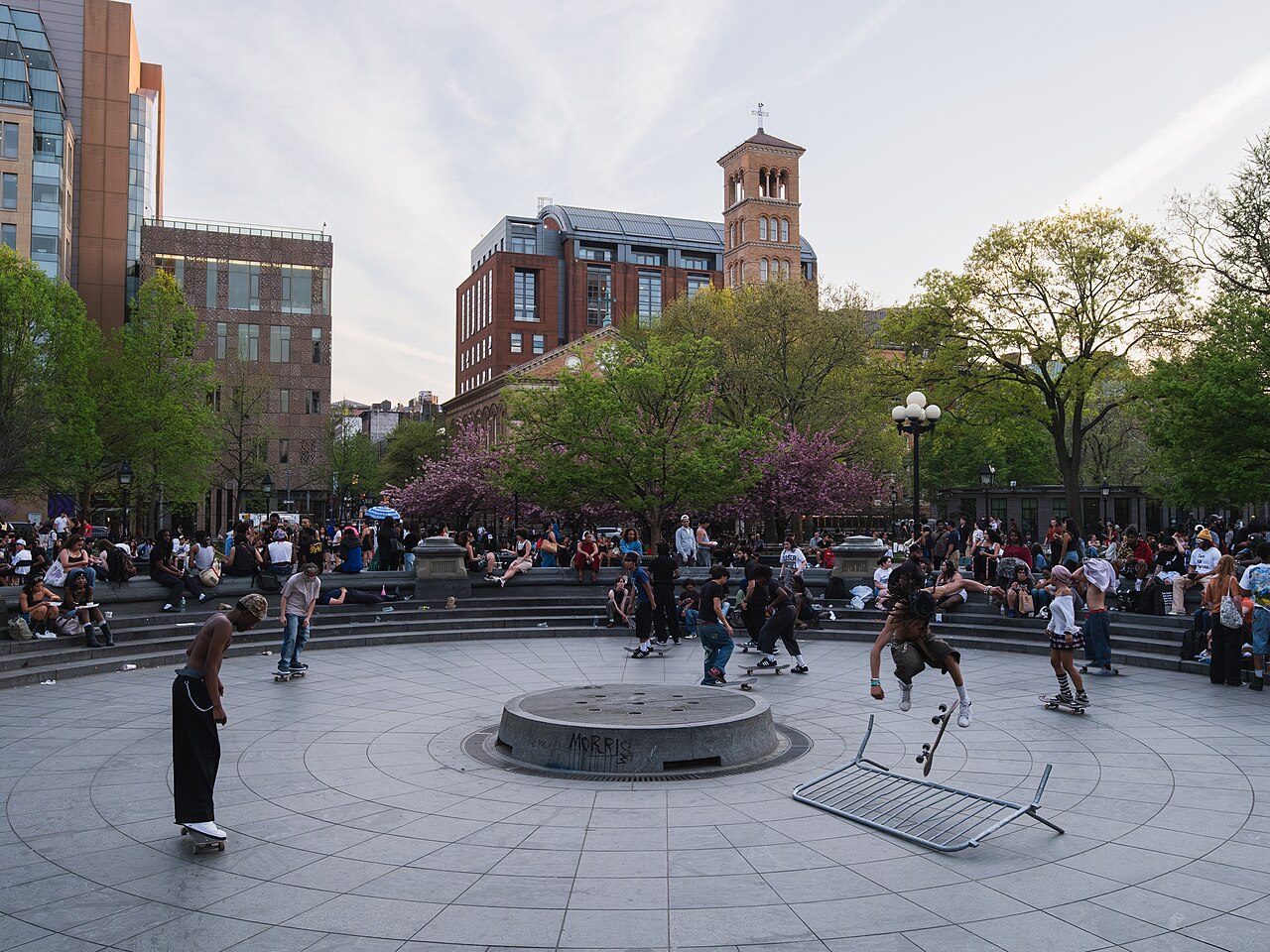
Washington Square Park is not a mural, but it explains why New York murals get made. A crowd gathers there under the arch on any sunny day, and the energy of the place is exactly what street art tries to bottle.
On the round fountain plaza, skateboarders practice tricks while others sit on the steps beneath spring trees and watch. Public space in this city is a stage, and the best walls understand that they are part of the audience too.
Between the sports, the music and the people-watching, the park gives you a feel for the city at street level. Walk out in any direction and you will start spotting painted doors, shutters and sidewalks in the blocks around it.


Under the bridge in Williamsburg
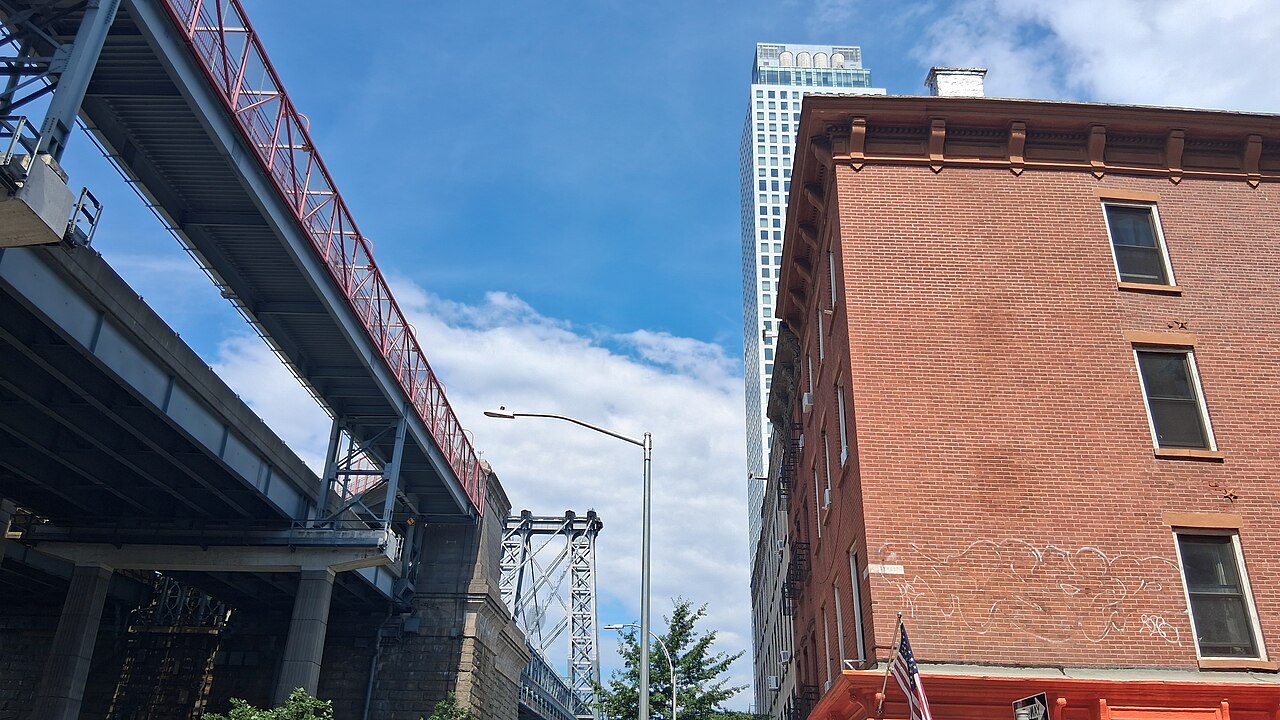
At the approach to the Williamsburg Bridge, a red brick building sits on a street corner with a tall tower rising behind it. It is a plain scene, and that is the point. Bare brick near a busy corner is where a lot of the city's wall art starts, long before a brush gets near it.
For people who own or manage buildings, a corner like this is worth a second look. Our guide to cities where murals add value for real estate developers looks at that idea more closely, and our New York page has more on the city.
Everything is a possible surface in a city this dense: shutters, side walls, the ends of buildings facing an empty lot. The work for a muralist is often to see what a wall could be before anyone else does.

Finish on the water
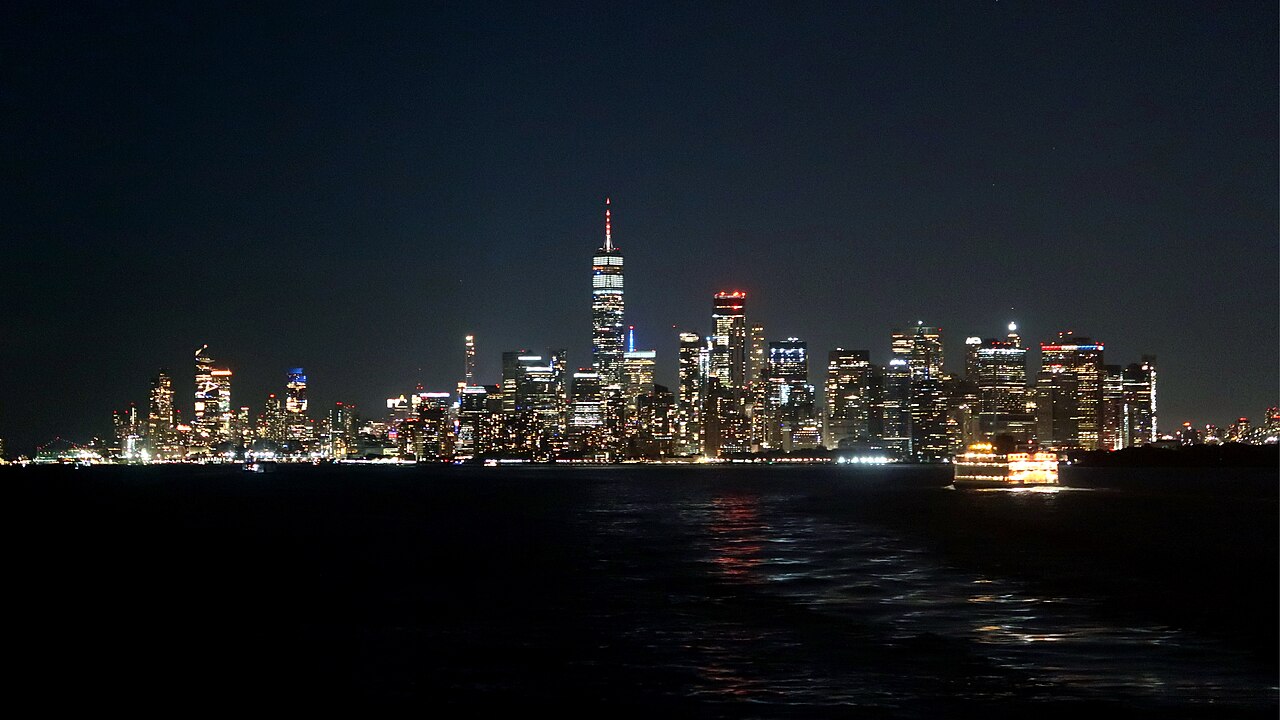
The best last look at the city is from the Staten Island Ferry after dark. Lower Manhattan lights up across the black water, One World Trade Center standing tall in the glow.
From out there the walls you walked past all day are invisible, folded into a skyline. That is the quiet truth of New York murals: each one is small against the city, and the city is made of small things like them.
Ride it once and it makes a fitting end. The boroughs you crossed on foot are all there in that glow, and the ferry carries you slowly enough to look back at them.

If a wall of yours keeps catching your eye
Every wall in this story began as somebody's blank surface and a decision to give it a voice. If you manage a building in New York or anywhere else and have a wall you keep looking at, we would love to hear about it. Tell us about your wall and we will take it from there.
Frequently asked questions
- Where can I see the best murals in New York?
- Good places to start are Bushwick in Brooklyn, Harlem in Manhattan, Astoria in Queens, Crown Heights and the Coney Art Walls at Coney Island. Each is easy to reach by subway and rewards a slow walk.
- Which New York neighborhoods have the most street art?
- Bushwick is the one most people name first, and Astoria, Harlem, Williamsburg and Coney Island all have walls worth a visit. Street art changes often, so plan to find new pieces each trip.
- Is street art legal in New York?
- It depends on the wall and the owner. Murals painted with a property owner's permission are commissioned or approved work; unsanctioned pieces are a different matter. If you own a wall and want a mural, ask a muralist and get the agreement in writing.
- How do I find a muralist in New York for my building?
- Start with a muralist whose style fits the wall and the neighborhood, then talk through the size, surface and look. We help match walls with muralists and handle quotes, contracts and scheduling.
All photos are free-licensed and credited under each image; license links go to the original file pages.