City story · Chicago · 6 min read
Chicago Murals: The Walls That Talk Back
Chicago murals tend to live where people already are: under elevated tracks, on a corner food mart, along a block of lanterns. Here is a slow walk through the Chicago street art and painted walls that make each neighborhood sound like itself.

Begin in the shadow of the tracks
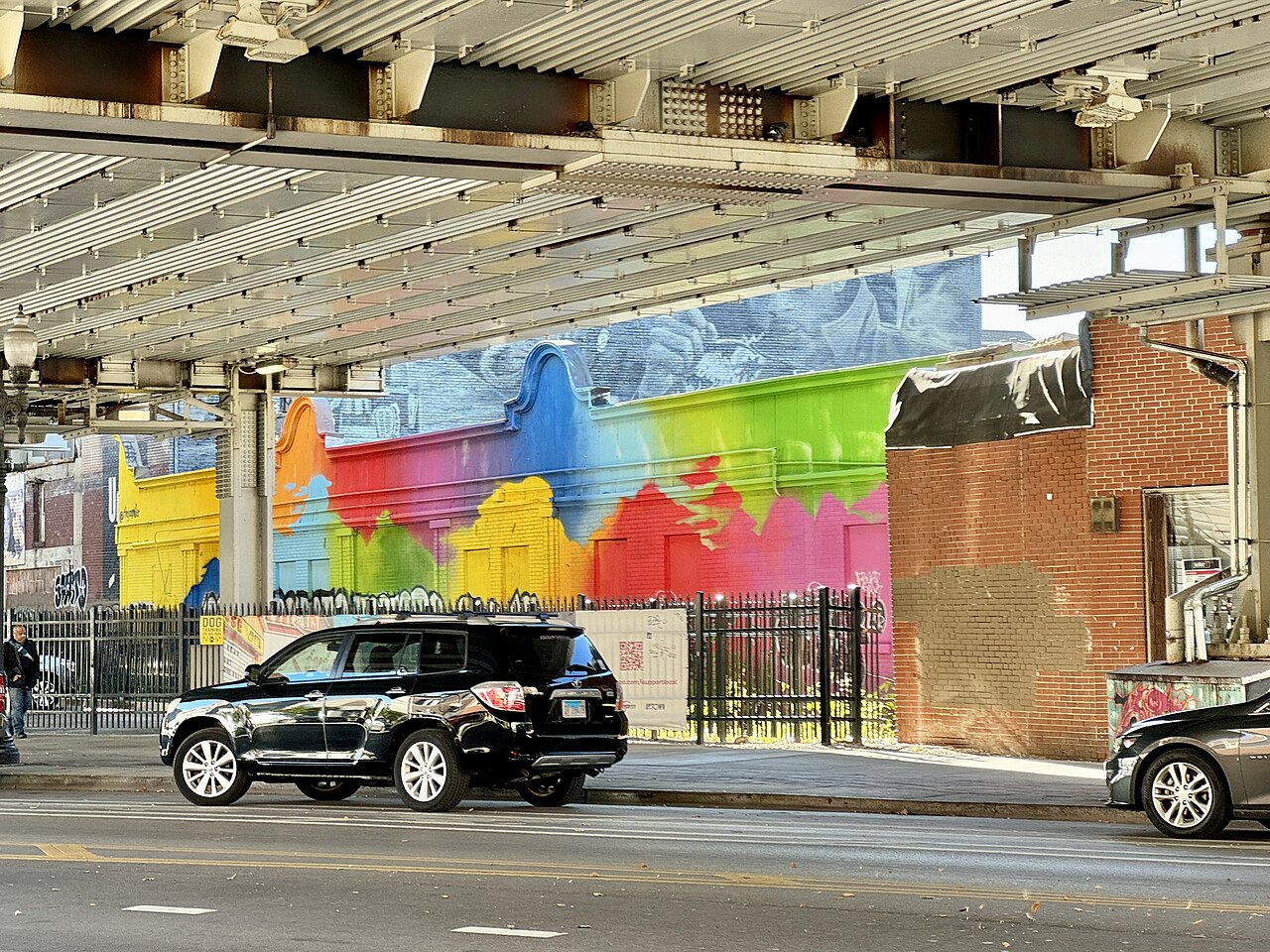
The first lesson Chicago teaches about walls is that the best ones sit where the city is loudest. On Broadway in Uptown, the elevated tracks run overhead and the street below is a hallway of brick, signs and awnings. Step out from under the steel and a painted wall comes into view, bands of rainbow color in front, and behind it a bigger blue-gray mural rising above the roofline.
It is a layered picture, one wall leaning on another, and it feels very Chicago. Nothing is dressed up for visitors. The color is simply there for the people waiting on the corner, the commuters and the neighbors who walk past it every morning.
Stand there long enough and the pattern shows itself. A rider stops to look. A kid points at the high blue wall. Someone ahead of you checks a phone, then looks up and checks the wall again. Chicago murals are rarely tucked away in a gallery; they work on a walking pace, which is why a good one gets noticed by people who were not looking for art at all.

Geese over a corner store
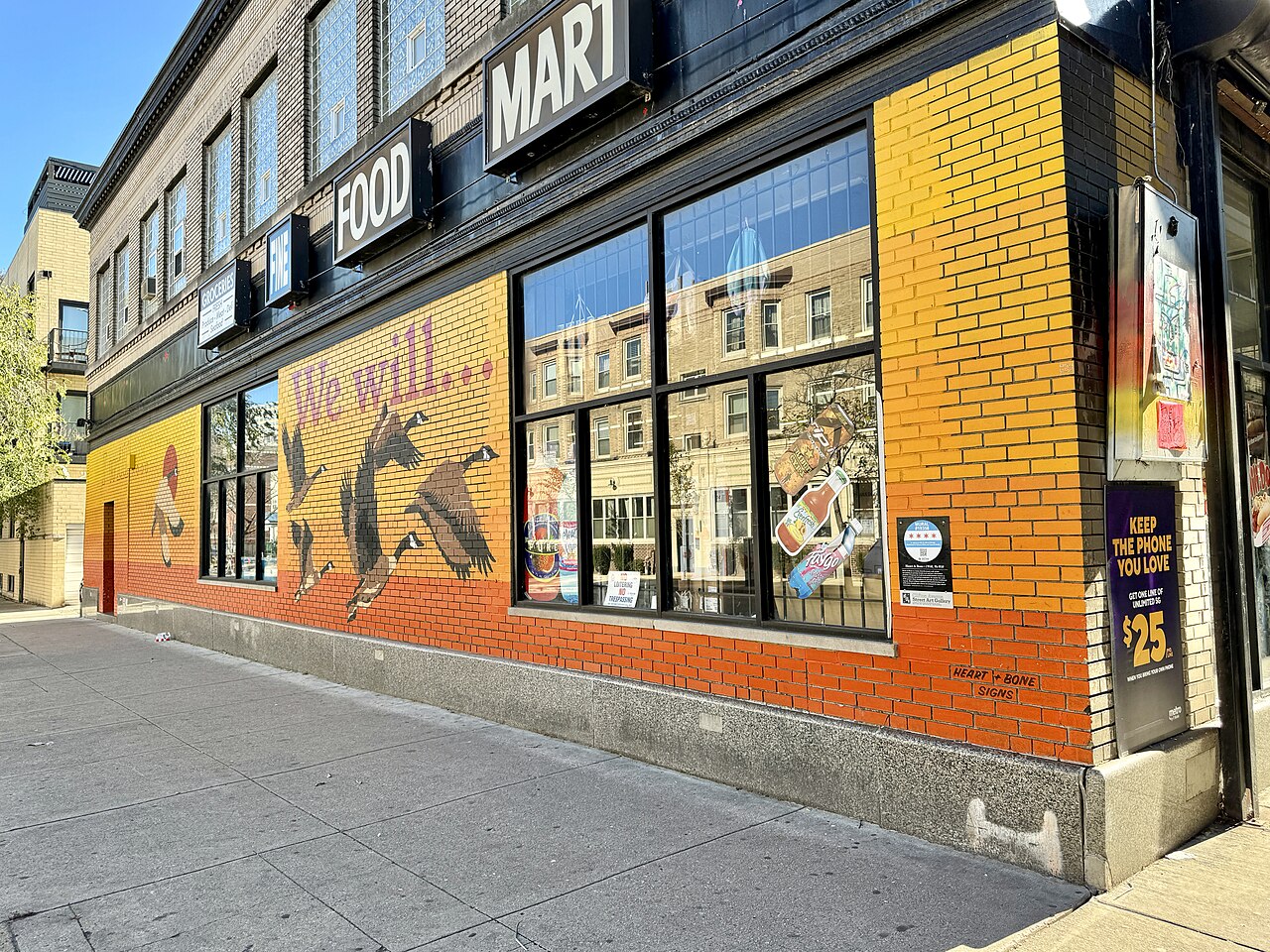
Not far away, on Leland Avenue, a corner food mart wears its mural like a coat. Flying geese cross the brick, and above them two words in a gradient that runs from orange to red: We will. There is no explanation and none is needed. A message that short, painted that large, reads as a promise from the block to itself.
This is what Chicago murals do well. They turn an everyday building, a place where people buy milk and chat with the cashier, into the most hopeful thing on the street.

Pilsen says it out loud
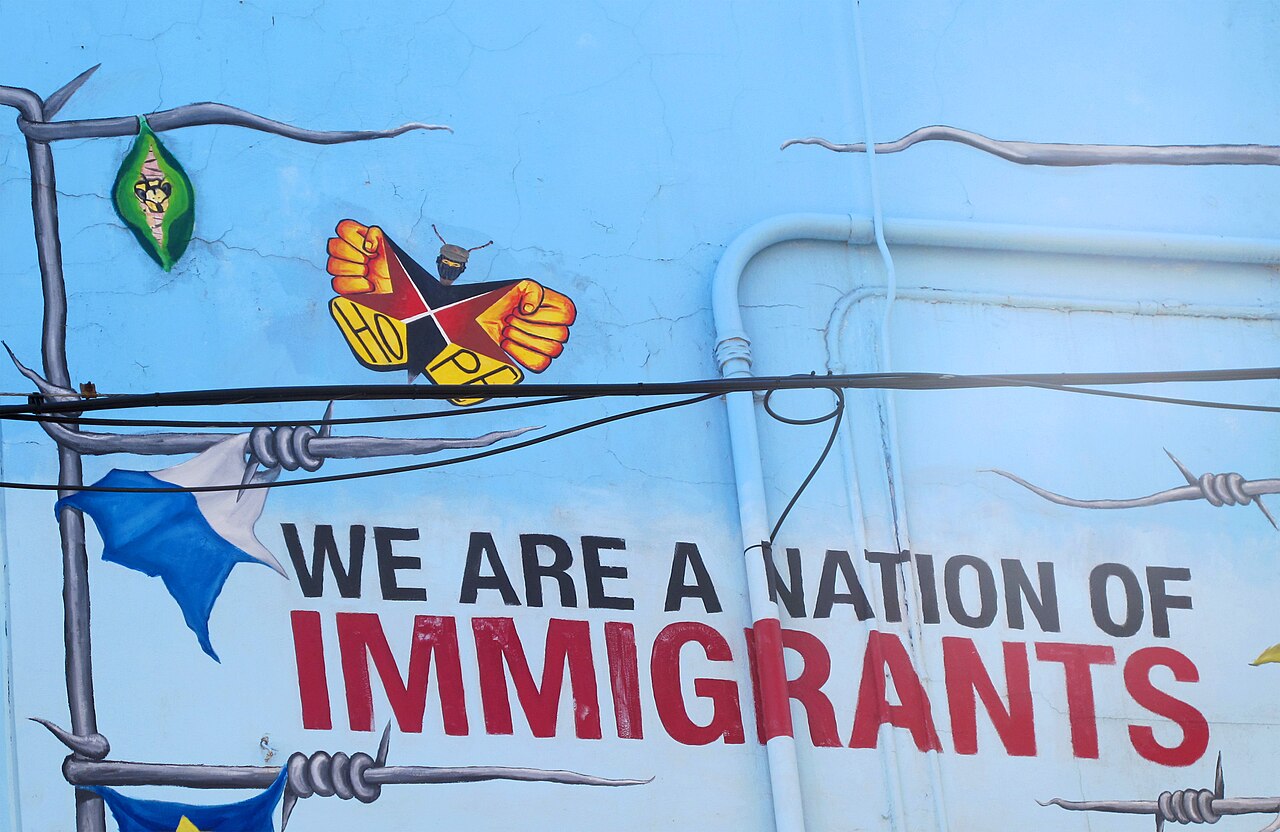
Pilsen is a neighborhood that has long used its walls to speak. On West 18th Street, a light blue mural carries barbed wire, raised fists and the words We Are a Nation of Immigrants. It is not subtle and it is not meant to be. It stands at street level, where anyone passing by is part of the audience.
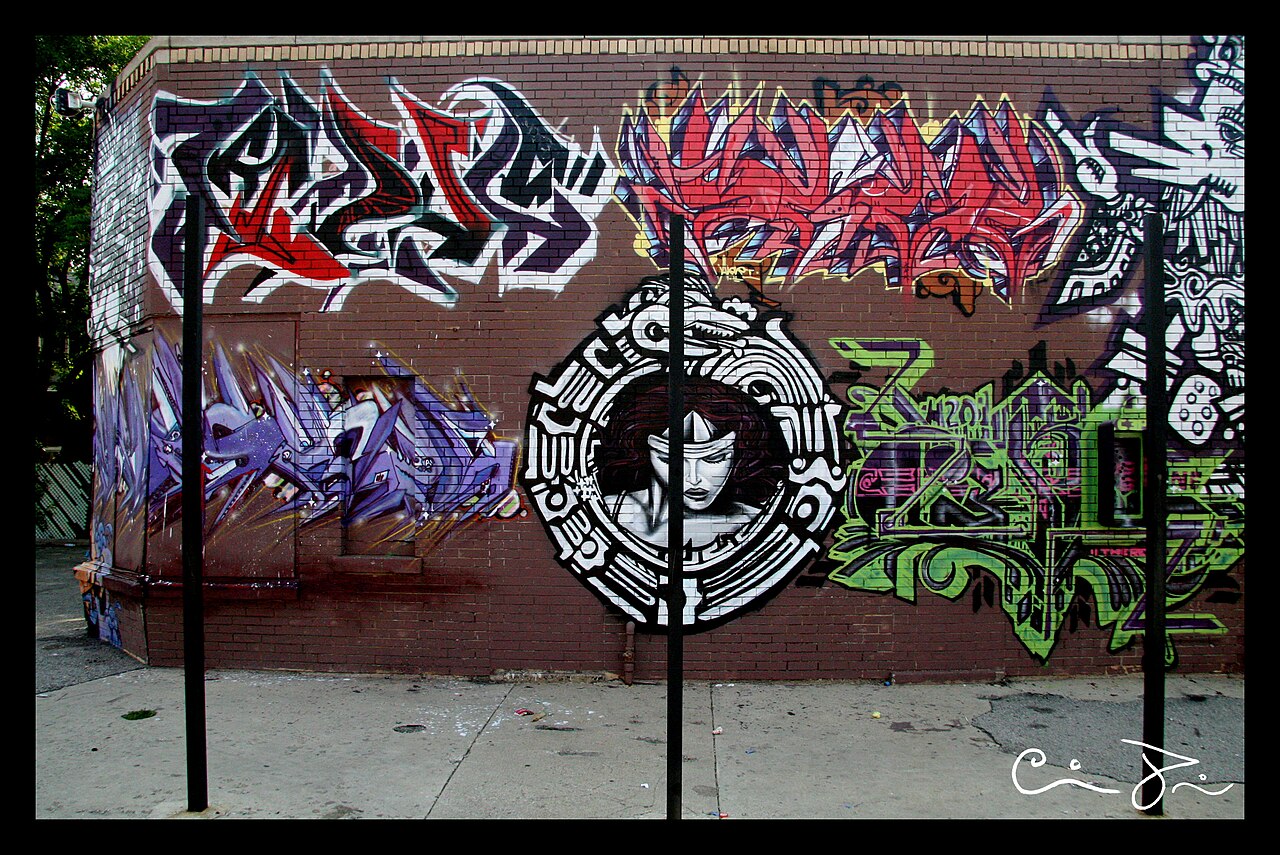
A few blocks of brick elsewhere in the neighborhood show the other voice of Chicago street art: a wall packed with graffiti lettering in loud color, a round black-and-white portrait sitting in the middle like a calm face in a crowd. One wall argues. The other shows off. Together they are a fair sketch of how a neighborhood sounds when everyone is allowed to paint.
That mix is the reason Pilsen is worth a slow afternoon. You can read the neighborhood from the street, one wall at a time, and no two walls are trying to say the same thing.


A door in Logan Square
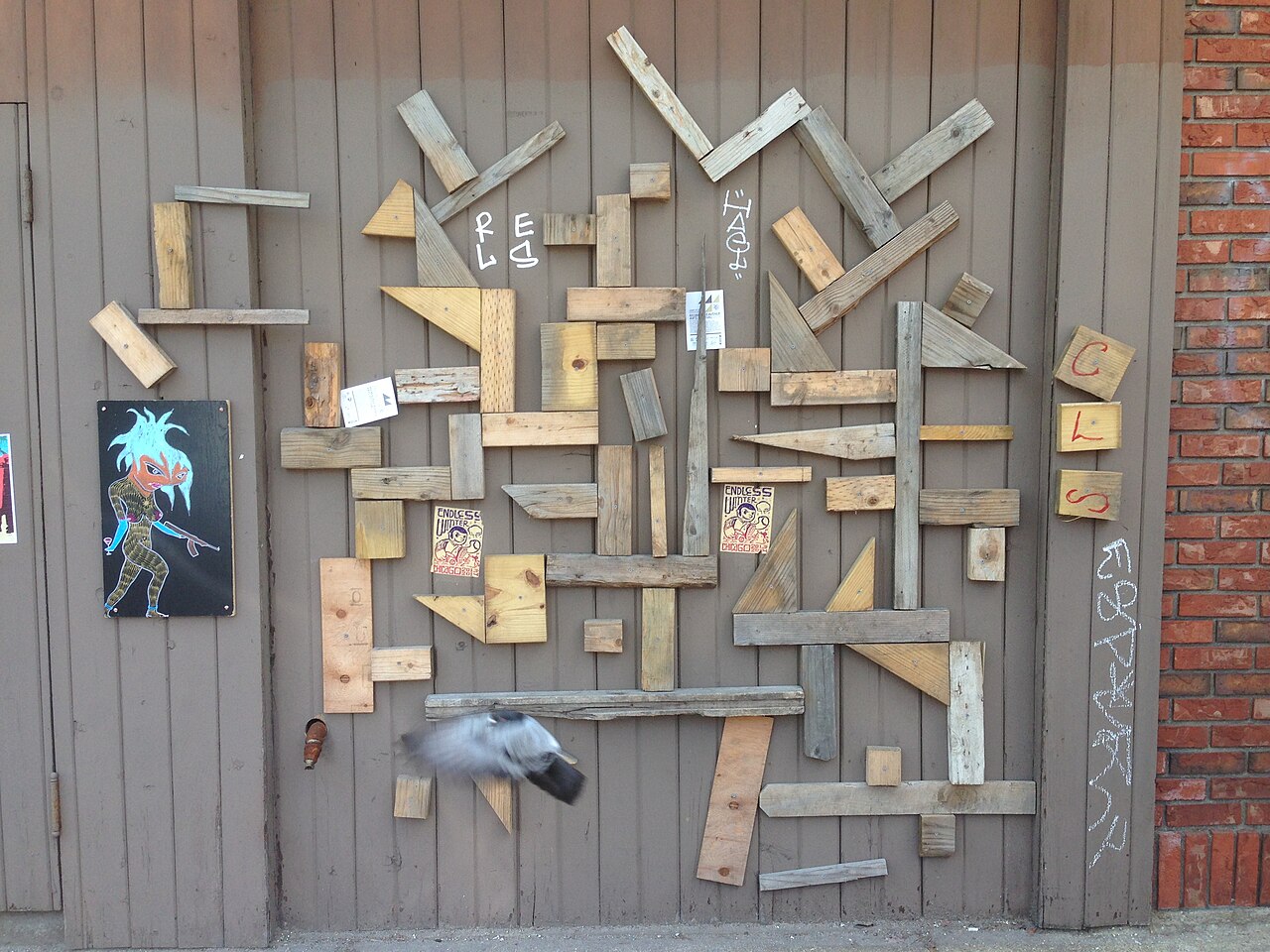
Some street art is not a mural at all, and Logan Square has a good example. A weathered garage door is covered in a collage of scrap wood, stickers and one small painted panel, patched together piece by piece. Nobody planned it as a single image. It grew the way a bulletin board grows.
We keep an eye out for walls like this because they remind us where the big commissions begin: with someone who looked at a plain surface and decided to add to it.

Lanterns on Wentworth
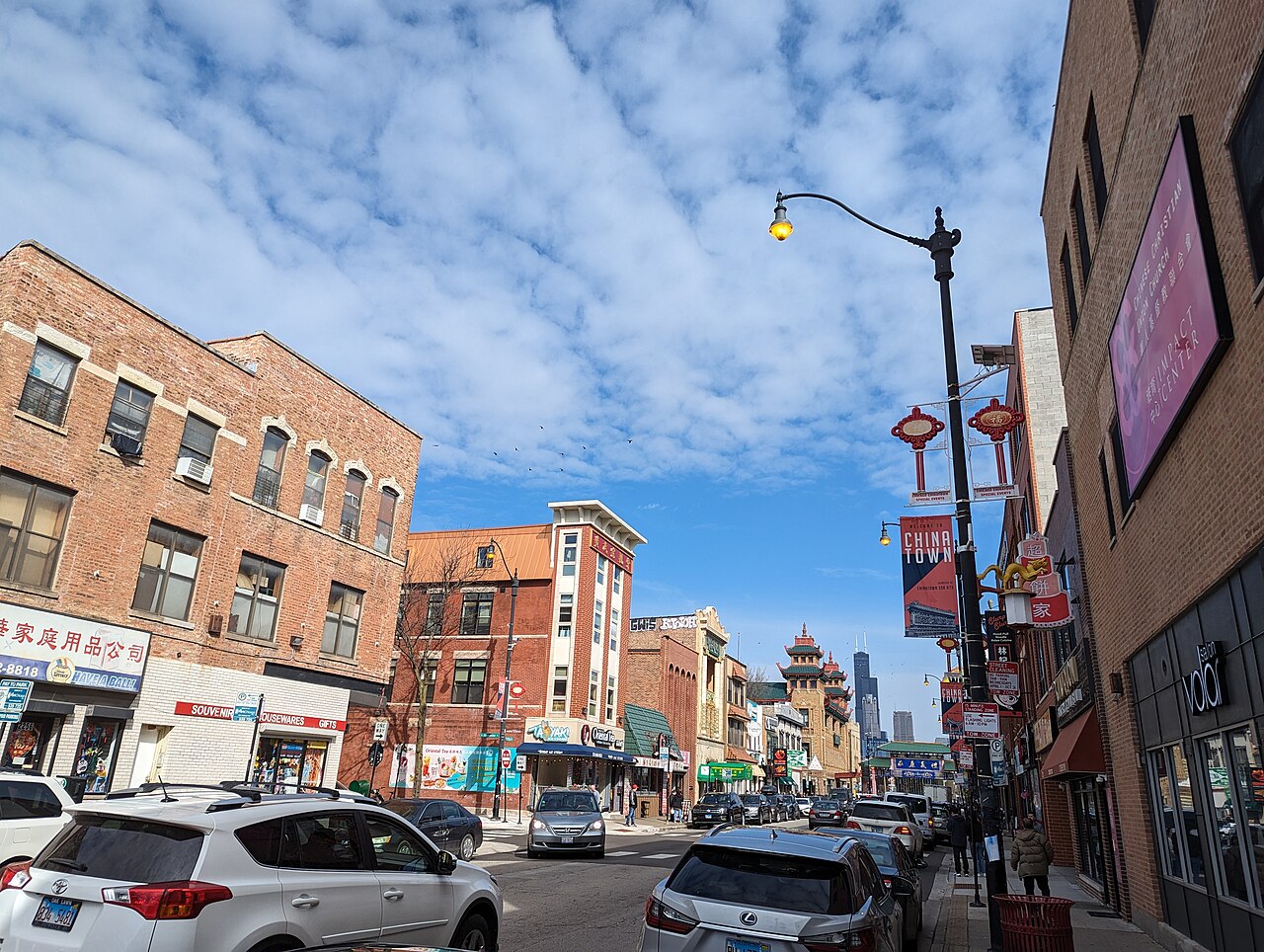
Color in Chicago is not always paint on brick. On Wentworth Avenue in Chinatown, it arrives as red lanterns strung over the street, brick storefronts below, and the Chinatown gate standing in the distance as the end of the view. The block is built to be walked, and everything on it points the same way.
It is a short stretch, but it shows how a street can feel decorated without a single brushstroke. Color, signs and architecture all do the work a mural would do elsewhere, and a muralist who paints here learns to respect the setting before adding to it.

A flag in steel, a park by the lagoon
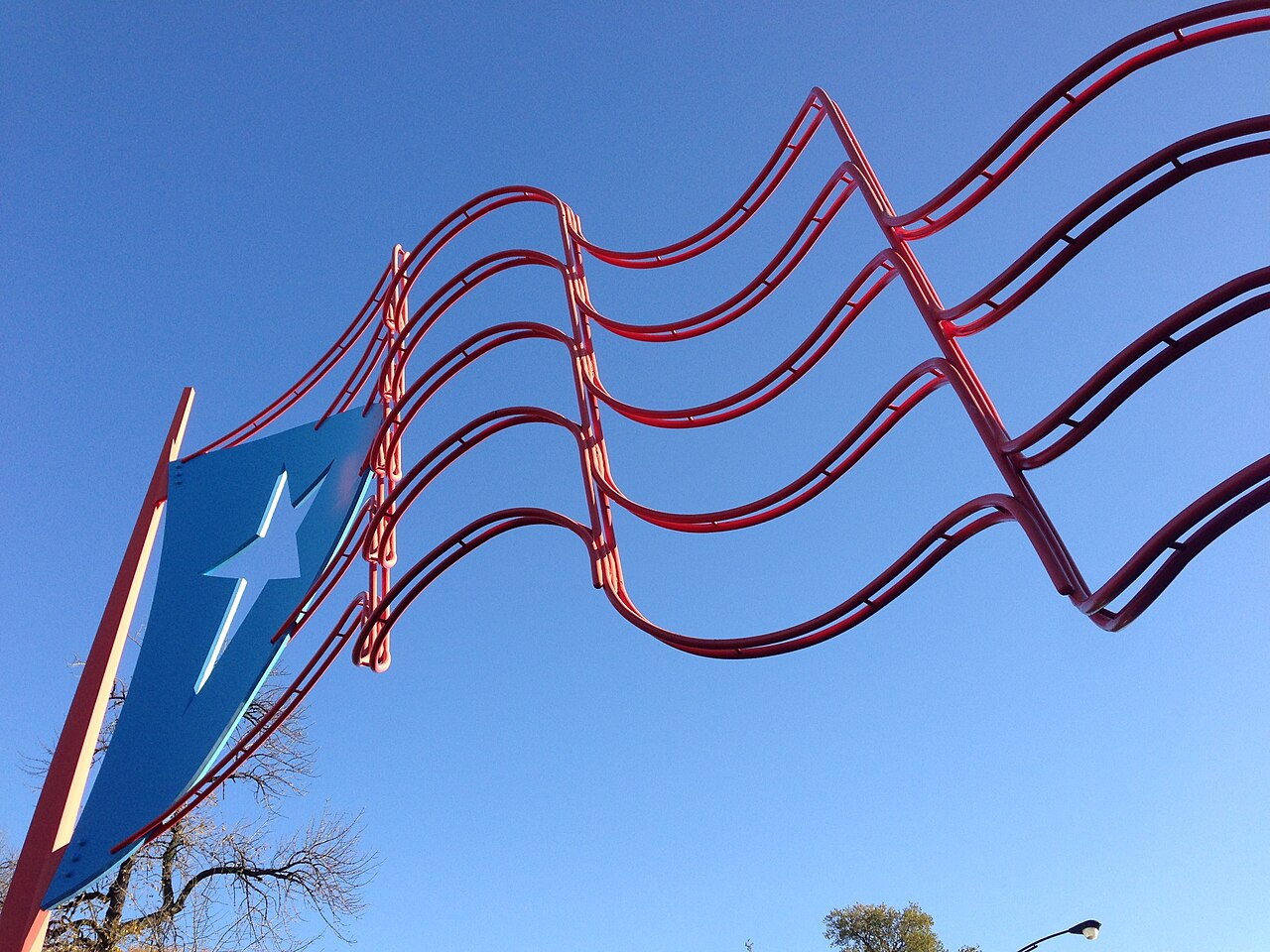
In Humboldt Park the art is sculpted as well as painted. A steel Puerto Rican flag, caught mid-wave against a clear blue sky, is the kind of landmark a neighborhood uses to tell you where you are. You do not need a sign when you have this.
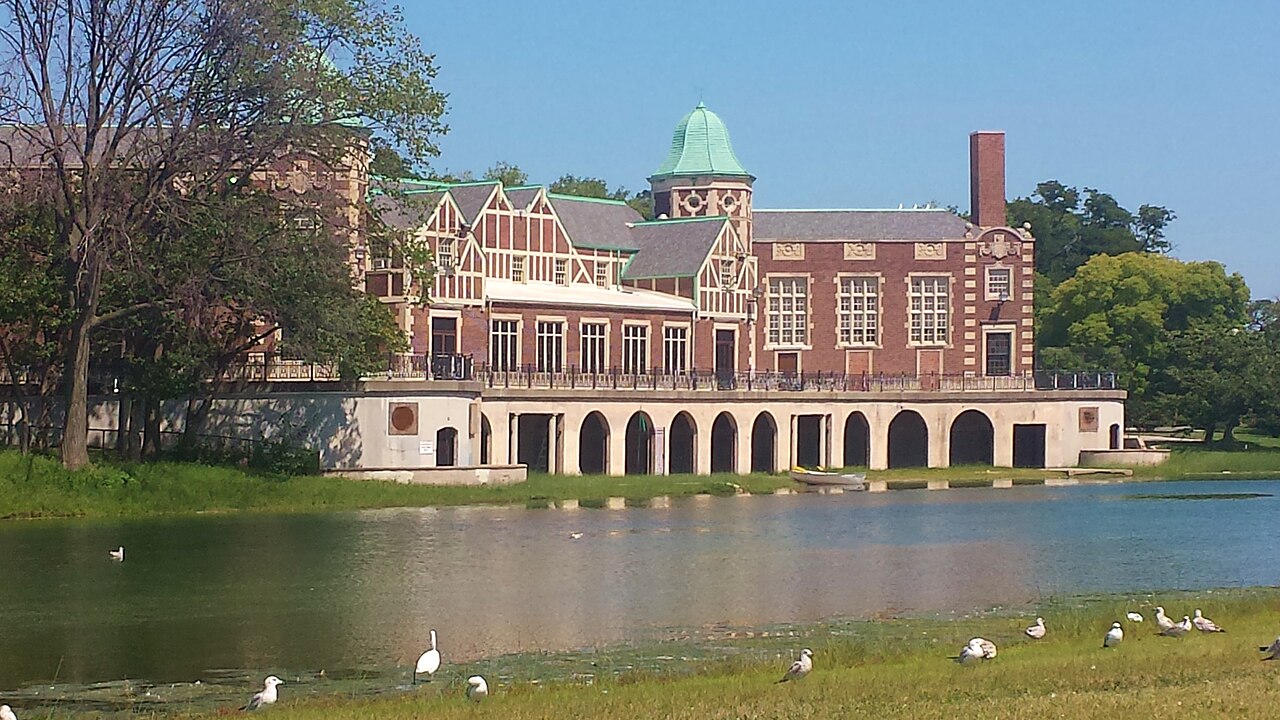
A short walk away, the park itself is a mural of another kind: a brick and timber field house with a green copper tower, a lagoon, gulls resting on the grass. Public space and public art are cousins. Both exist so that a neighborhood has somewhere to gather and something to point at.


Finish at the river
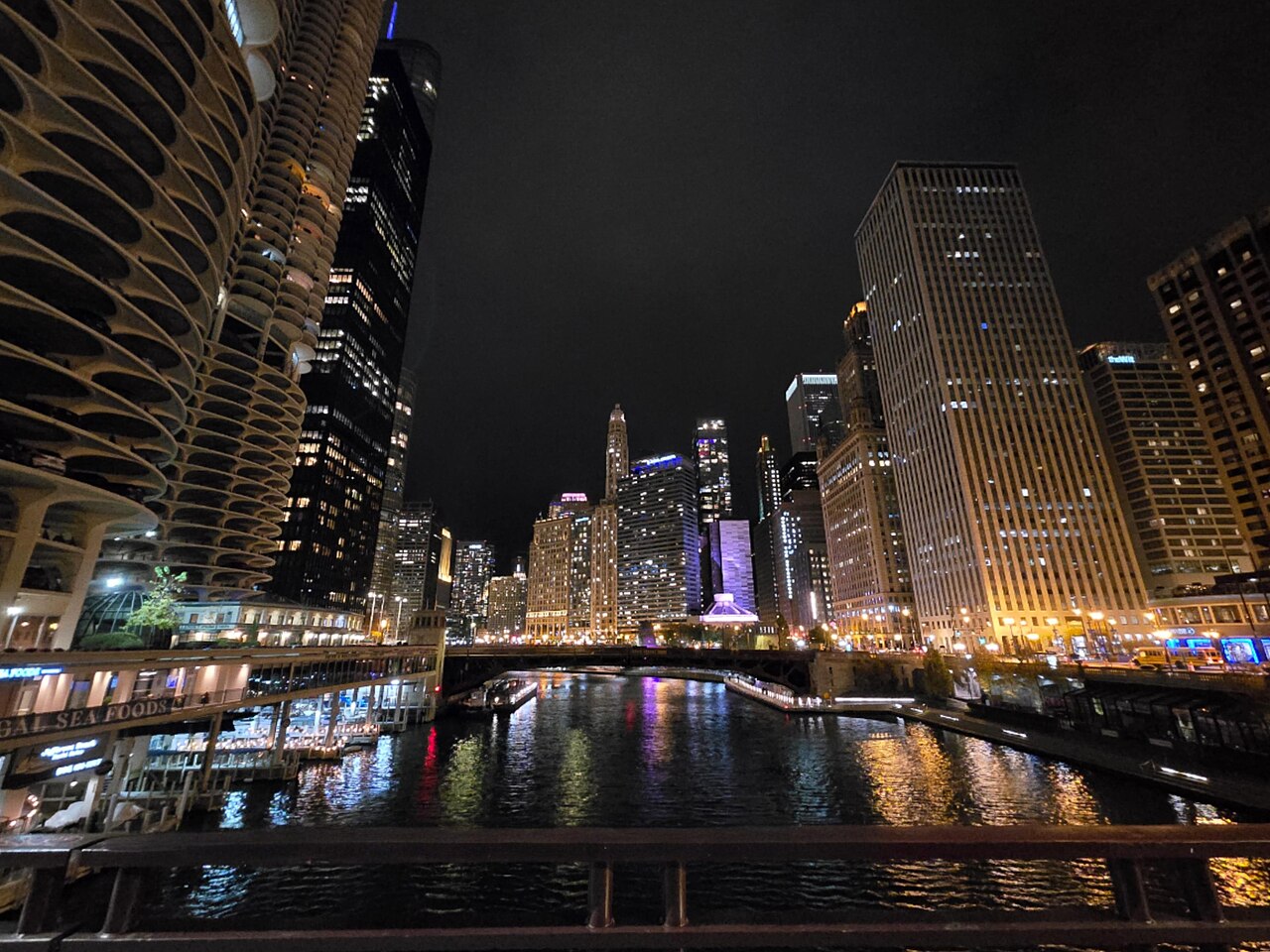
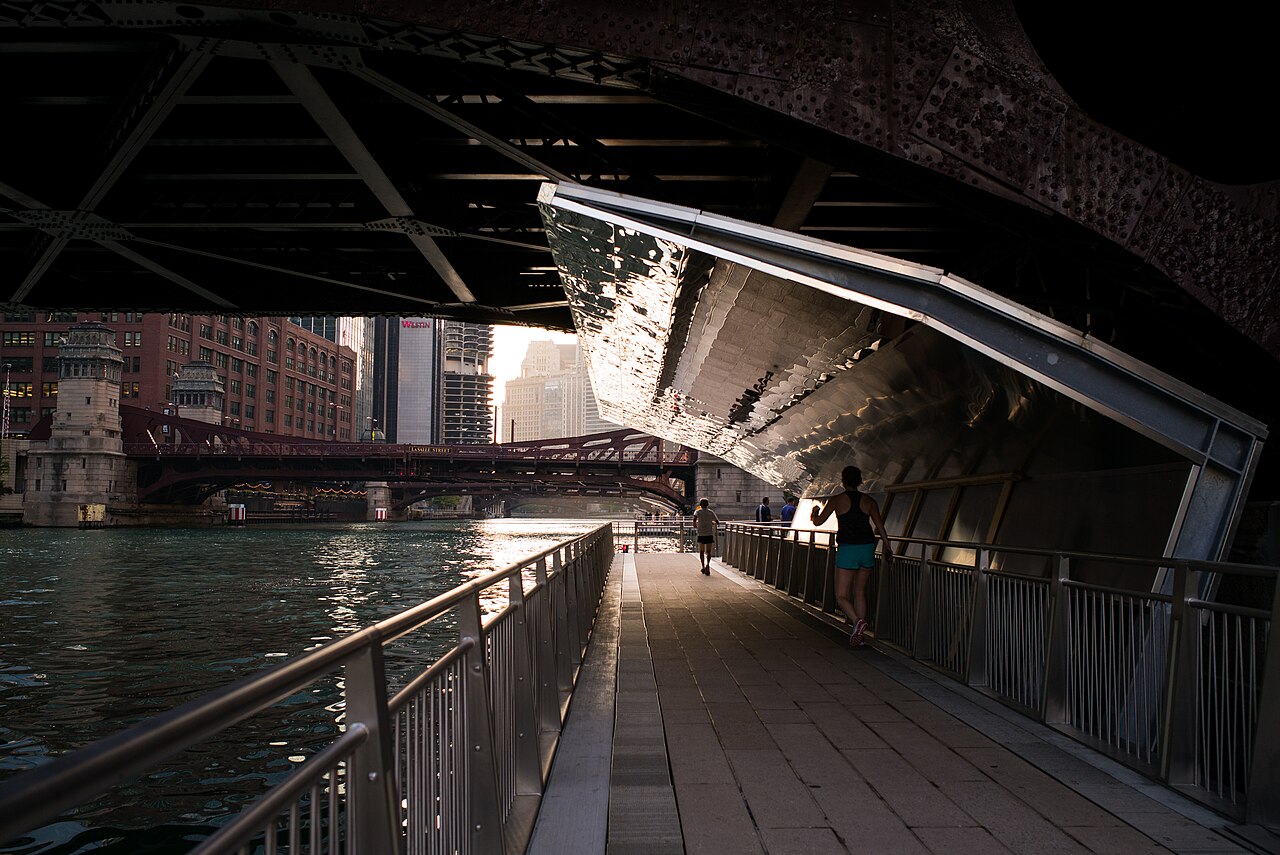
End the day downtown, where the Chicago River does what a good wall does: it gives the whole city something to look at. At night the towers light up, a bridge crosses the water, and the curved Marina City towers hold the left edge of the picture. Down on the Riverwalk, a runner passes under a bridge in the last of the evening light.
From here the neighborhoods you walked through feel like the heart of the city rather than the edges. If you manage a building and have a plain wall near a busy corner, that is worth remembering. Our guide on how public art can lift a property in Chicago looks at the idea from the owner’s side, and the story is the same one told here: the Chicago murals people love are the ones that belong to their block.


A painter who grew up on these streets
Ramiro Huizar was born in Guadalajara, Jalisco, and raised in Chicago. He paints, draws and works digitally, and his walls mix Mexican heritage with the city he grew up in: the prickly pear cactus, the luchador mask, the Virgin of Guadalupe, lowriders and barbershops, all redrawn in his own style. The rider on the black horse at the top of this story is his, shown with his permission.
His Night Cruise mural greets riders at the Milwaukee Avenue entrance to the Bloomingdale Trail, also called the 606, in Wicker Park. It came from his own years biking the trail after dark, with stars overhead and orange building lights pointing the way. He hopes his work helps people take pride in their culture and heritage. See more on his artist page, read the feature on his work, or meet more painters on our Chicago page.
If you have a wall in mind
Every wall in this story began as somebody’s blank surface and a decision to make it less blank. If you manage a building in Chicago and keep looking at a wall that could say something, we would be glad to hear about it. Tell us about your wall and we will take it from there.
Frequently asked questions
- Where can I see murals in Chicago?
- Good places to start are Broadway and Leland Avenue in Uptown, West 18th Street in Pilsen, the Bloomingdale Trail (the 606) in Wicker Park, Logan Square and Humboldt Park. Most are easy to reach by train or bike.
- Which Chicago neighborhoods have the best street art?
- Pilsen, Uptown, Logan Square, Wicker Park and Humboldt Park are all good for walls and painted corners. Each neighborhood has its own character, so plan a few hours in one area rather than rushing between all of them.
- Is street art legal in Chicago?
- It depends on the wall and the owner. A mural painted with the property owner’s permission is commissioned work; unsanctioned pieces are a different matter. If you own a wall and want a mural, check local requirements and get the agreement in writing.
- How do I find a muralist in Chicago for my building?
- Start with a muralist whose style fits your wall and your neighborhood, then talk through the size, the surface and the look you want. We find walls and help match them with muralists, and we handle quotes, contracts and scheduling.
Hero artwork © Ramiro Huizar, shown with the artist’s permission. All other photos are free-licensed and credited under each image; license links go to the original file pages.