Artist feature · Chicago · 7 min read
Ramiro Huizar, Chicago muralist, paints heritage with a modern twist
Born in Guadalajara and raised in Chicago, Ramiro Huizar redraws the prickly pear cactus, the luchador mask, the Virgin of Guadalupe, lowriders and barbershops in a style that belongs to him and to the city.
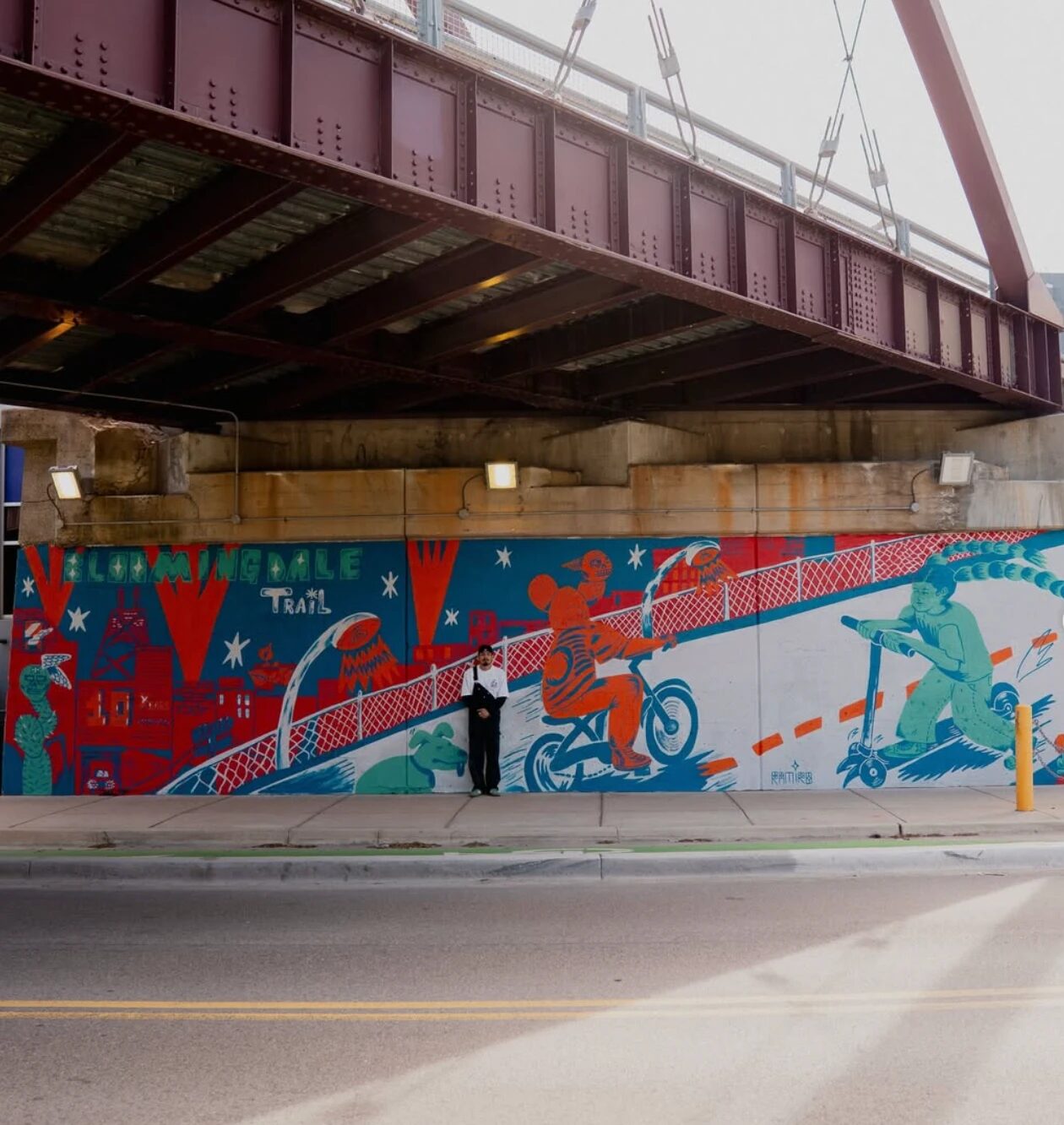
Chicago muralist Ramiro Huizar is best met on a bike. Ride up to the Milwaukee Avenue entrance of the Bloomingdale Trail in Wicker Park, the elevated path Chicagoans call the 606, and the wall greets you before the trail does. A rider with a prickly pear cactus for a head pedals through a deep blue night. A girl on a scooter glides alongside. The colors are red, blue, white and green, flat and bright, with clean outlines that read from a long way off. The mural is called Night Cruise, and it is the clearest introduction to the work of Ramiro Huizar.
Huizar was born in Guadalajara, Jalisco, and raised in Chicago. He paints, draws and works digitally, and almost everything he makes sits at the meeting point of those two places. His walls carry Mexican heritage, but they never look like a museum of it. They look like a neighborhood: the barbershop on the corner, the lowrider washed on a Sunday, the soccer jersey worn to the game. The heritage is the material, and the modern twist is the way he redraws it.
A cactus for a head
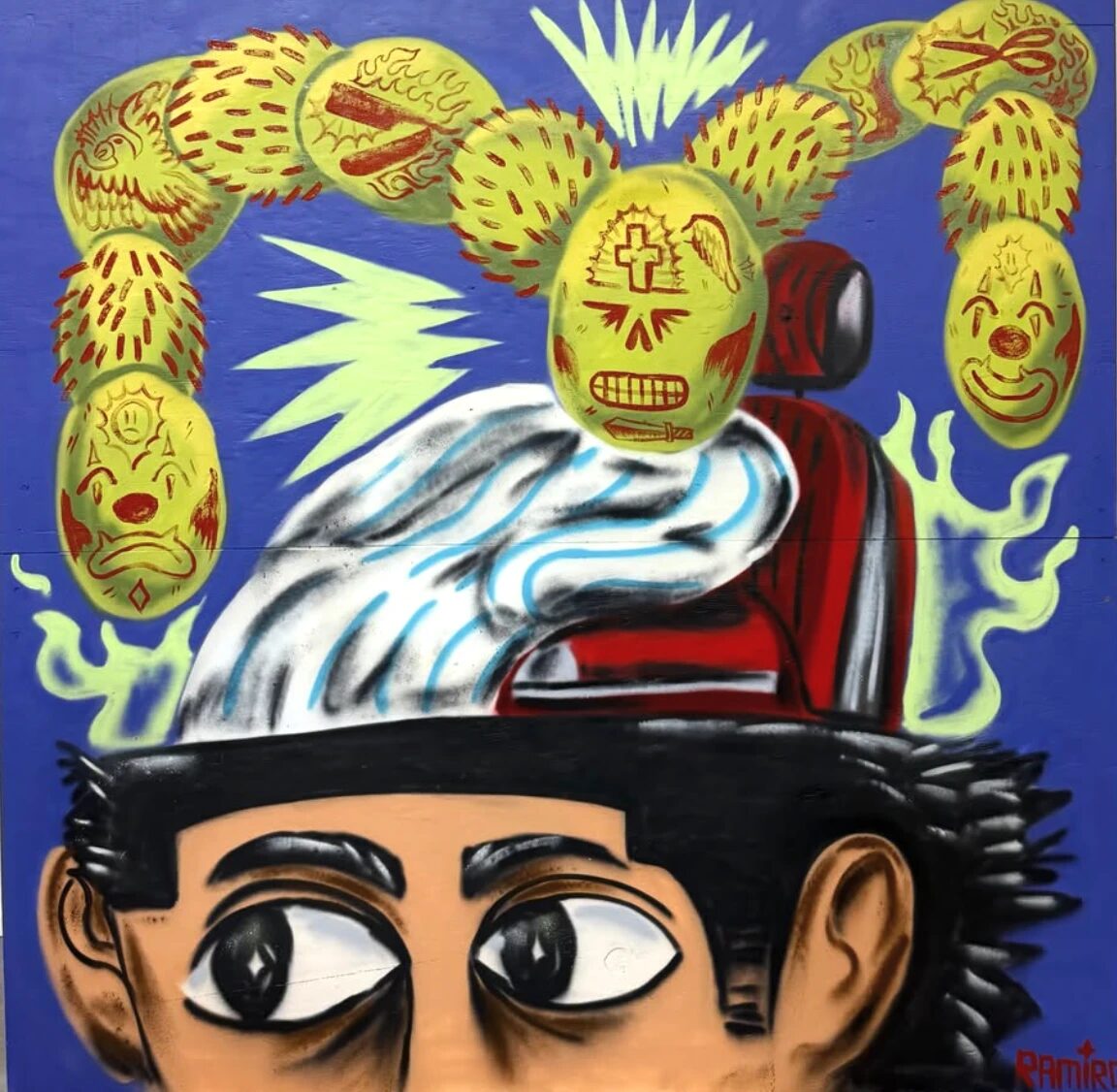
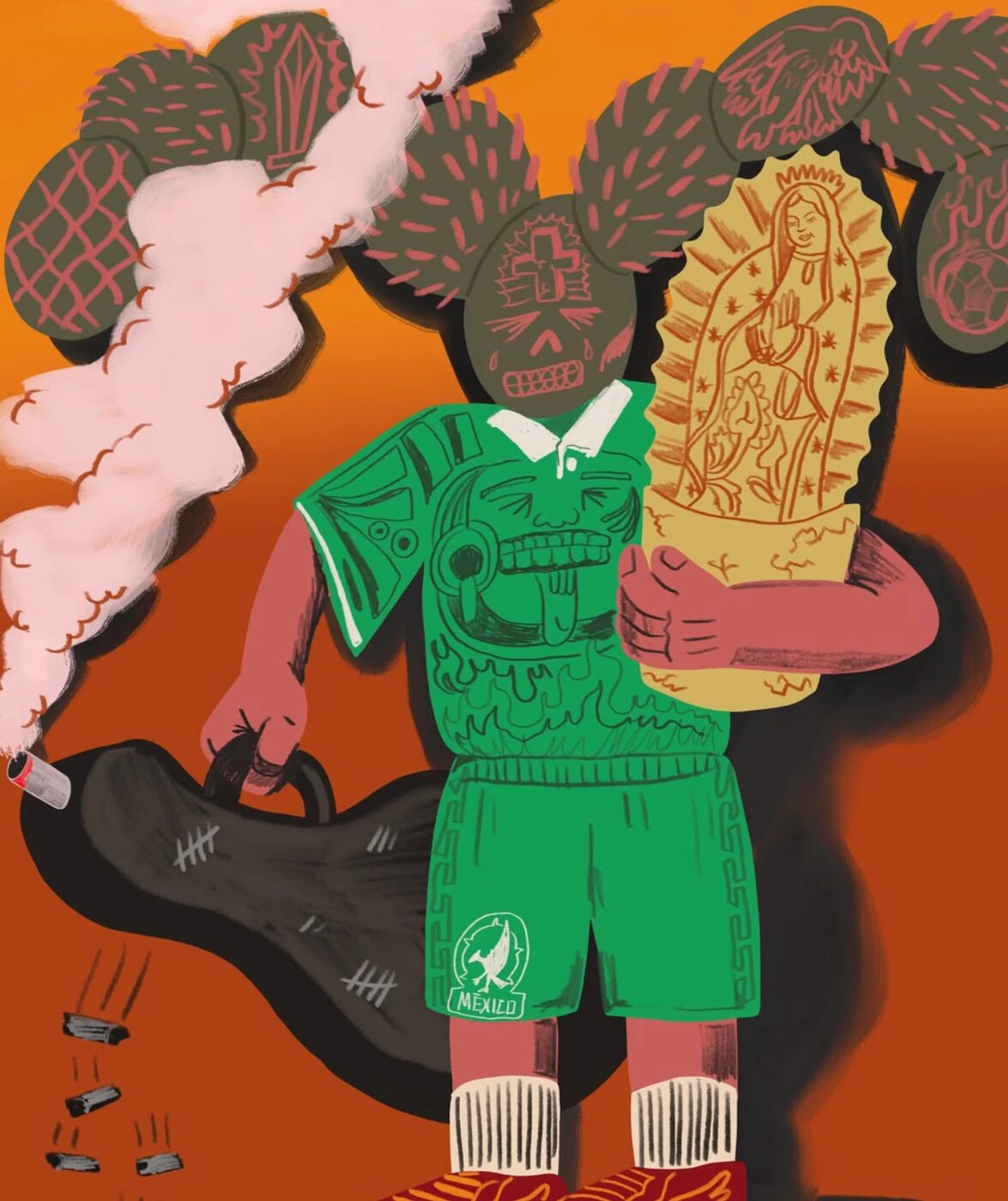
The first thing most people notice is the cactus. Huizar’s figures often have chains of prickly pear pads where a head or crown should be, and each pad is drawn like a tiny canvas of its own. One carries a heart. Another has a cross, or a dagger, or a clown’s face. Read a wall slowly and you find a whole inner life packed into a plant.
The prickly pear is the nopal, a staple of Mexican kitchens and landscapes, and it has long stood for the country itself. It is tough, it grows in hard places, and it gives something back. Huizar takes that familiar image and makes it a character. The cactus becomes a face you can read, a way of saying that the people he paints are rooted, spiny when they need to be, and generous underneath.
The symbols he keeps close
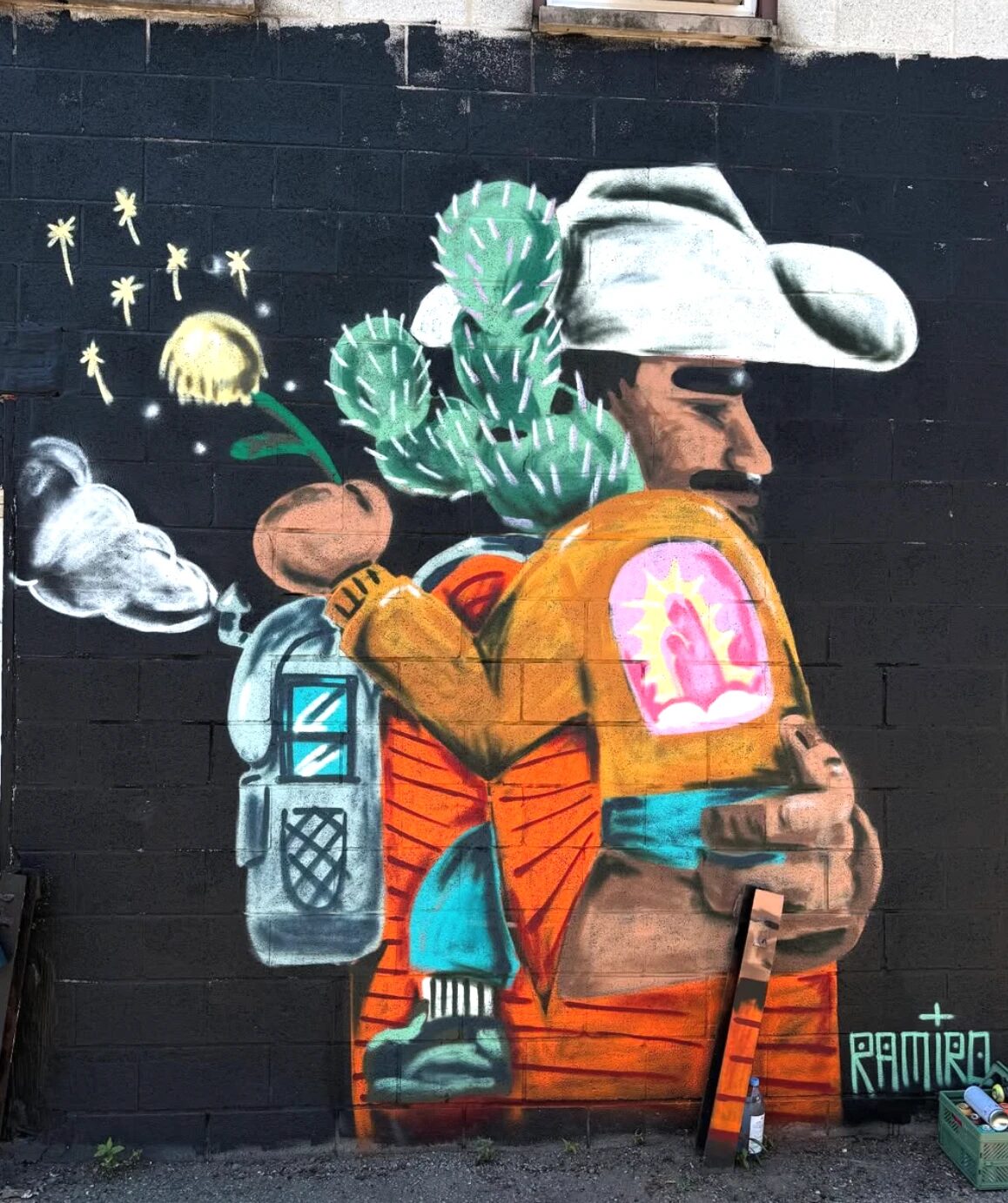
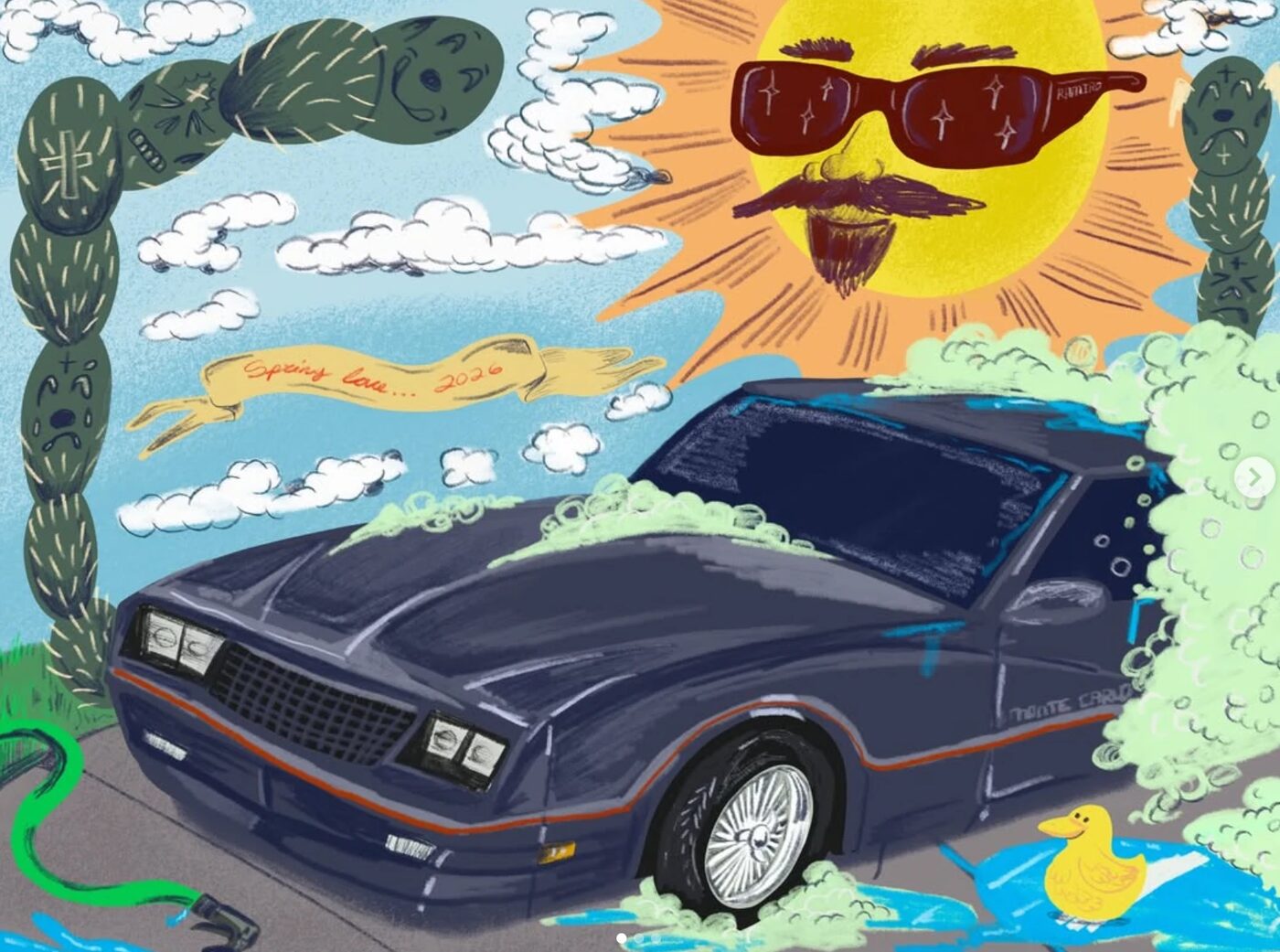
Alongside the cactus there is a small cast of recurring symbols. The luchador mask turns up, the emblem of lucha libre, where a mask is both a costume and a promise. The Virgin of Guadalupe appears in his illustrations, held in a golden frame or drawn on a pad above a figure with closed eyes. There are eagles and serpents, a nod to the image at the heart of Mexican national identity. And there are the things that belong to Chicago as much as to Jalisco: lowriders, barbershops, spring afternoons at the car wash.
That mix is the point. Huizar does not choose between the country his family comes from and the city that raised him. He puts a Monte Carlo under a mustached sun in sunglasses, and he frames it with cactus pads. He draws a barber chair opening out of a wide-eyed head, with a crown of yellow pads above it. A man in a green Mexico jersey holds up a golden Guadalupe. Each image is a small argument that these things belong together, and that a person can carry all of them without apology.
Night Cruise and the 606
Night Cruise comes from lived experience. Huizar spent years biking the trail after dark, with stars overhead and orange building lights pointing the way. The mural puts that feeling on the wall at one of the busiest entrances to the path, so riders and walkers meet it on the way in. A trail underpass is a demanding place for a mural. People pass it at speed, in all kinds of light, and they see it for only a few seconds. Bold shapes and saturated color are a practical answer to that. They also happen to be his natural language.
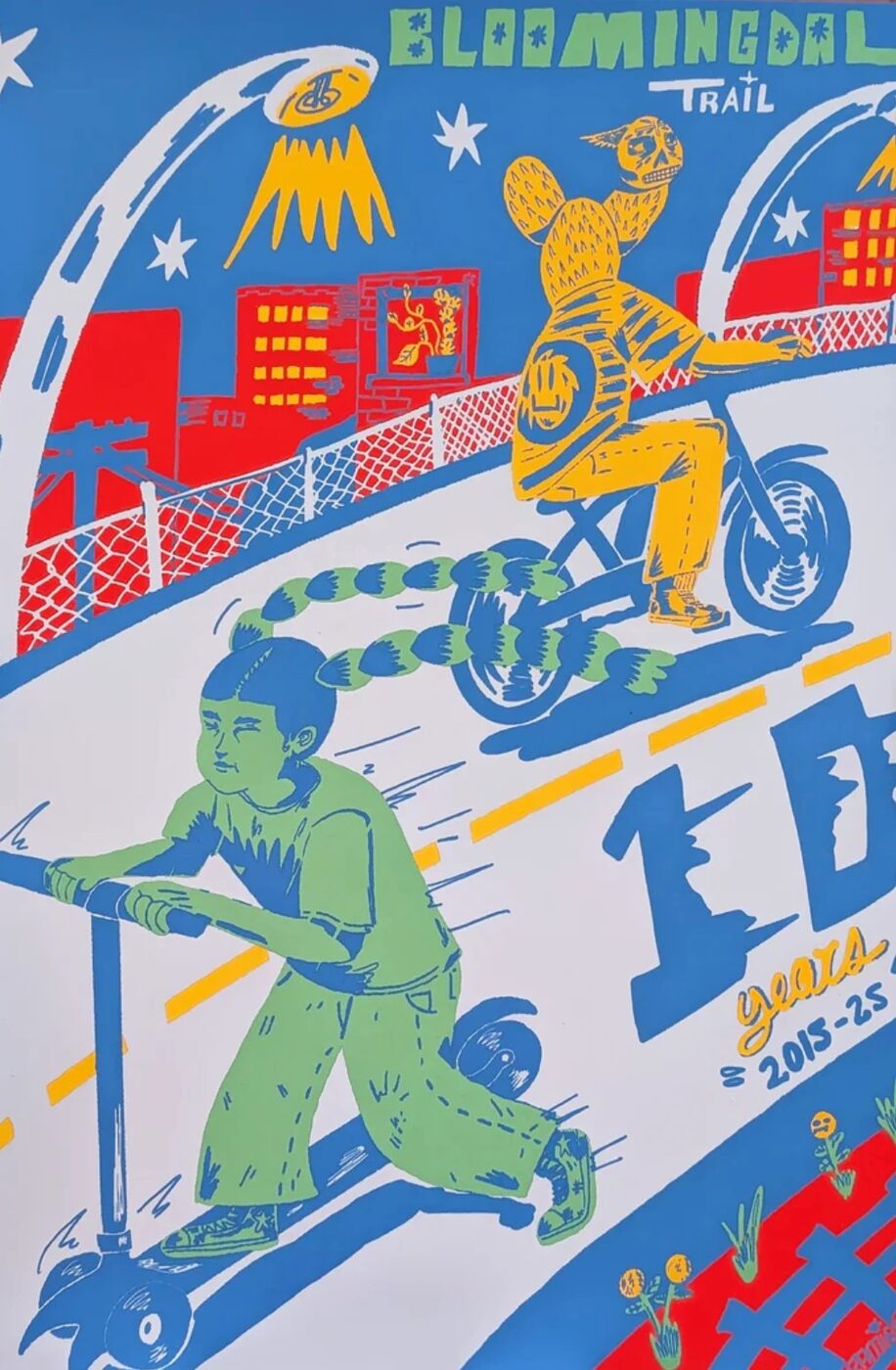
The trail itself opened in 2015, and Huizar marked its tenth year with a print in blue, red, yellow and green, the same girl on a scooter and the same cactus-headed rider, this time as a keepsake. It says something about how a mural can settle into a place. A painted wall begins as an image, and over a decade it becomes part of how people describe a neighborhood. Tell someone to meet you at the Milwaukee Avenue entrance and the mural is part of the directions.
Mexican heritage on Chicago walls
Huizar paints inside a tradition much older than he is. Mexican muralism of the 1920s put history and working people on public buildings, so that art did not have to live behind a museum door. In the late 1960s and 1970s the Chicano mural movement carried that idea into neighborhoods, school walls and underpasses across the country, often painted by neighbors for neighbors. Chicago has its own Mexican American mural history, and Pilsen and Little Village are the neighborhoods most often tied to it.
The idea at the center of that tradition is simple: a wall belongs to the street, and the street gets to say who it is. Huizar works with the same idea in a language of his own, with cactus heads, lowriders and Mexico jerseys instead of historical scenes. He does not choose between the country his family comes from and the city that raised him. He draws a person who lives with both, bigger than life, proud and a little funny.
Chicago is a city of neighborhoods, and its walls tend to say which one you are in. Humboldt Park, closely tied to the city’s Puerto Rican community, has a strong public art tradition of its own. A new wall in Wicker Park sits among older stories, and Night Cruise claims its place there in four bright colors. For more of the city’s painted history, read our Chicago murals story.
Illustration first, then the wall
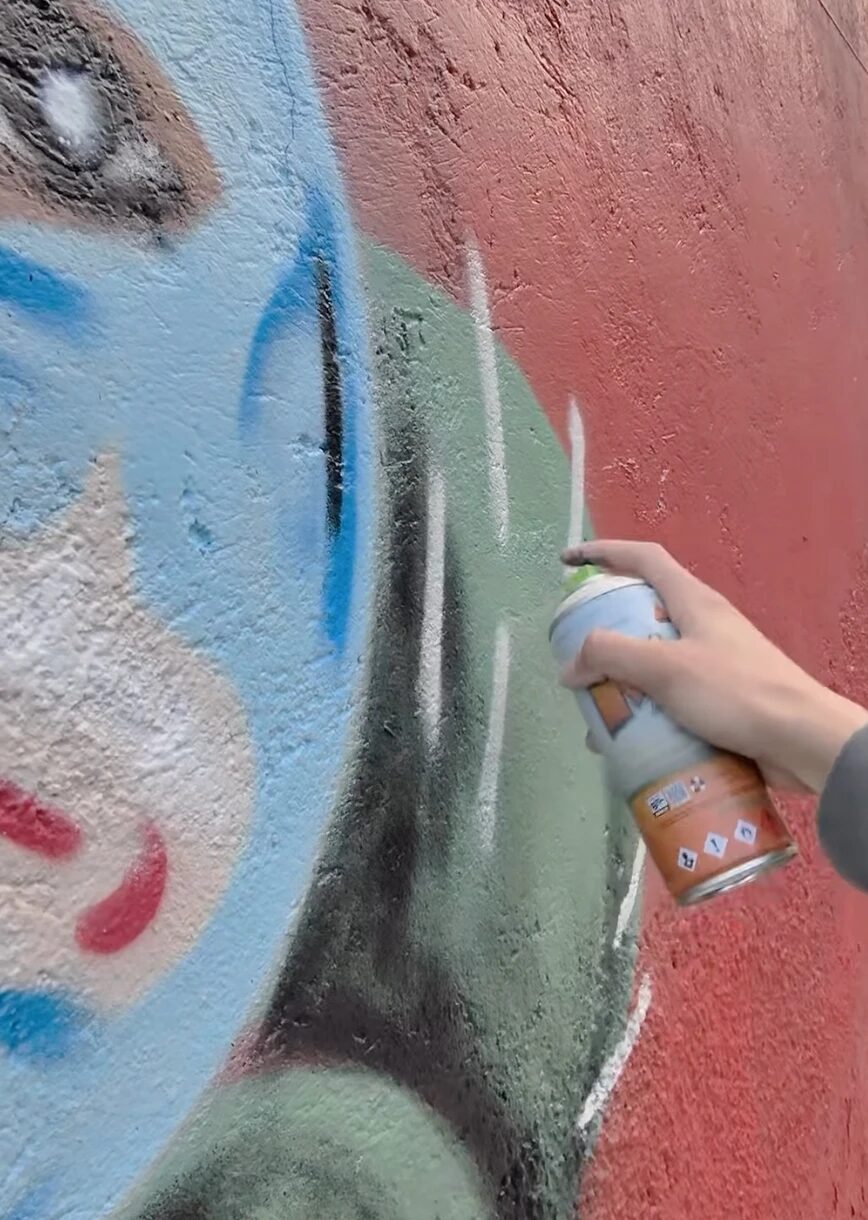
Huizar works in spray paint and brush on walls, and in prints and digital art in the studio, and the two sides feed each other. Most of his walls begin as illustrations. The design is worked out on a screen or on paper, where he can adjust the figures, tune the color and decide which symbol belongs on which pad. Only then does he scale it up to the wall.
That habit matters to anyone commissioning a mural. You see the design before a can is opened. The studio pieces, the figures sitting inside open heads, the hand braiding a chain of cactus pads, the painter at an easel inside another person’s mind, show how he thinks. They are quieter than the walls, and often stranger. A man sweeps out the inside of his own head. A cactus-headed figure rides a spinning record. They suggest that the walls, for all their bright energy, come from someone who spends a lot of time looking inward and asking what a person is made of.

Why the modern twist works
Heritage art can go wrong in two ways. It can freeze, repeating old images until they stop meaning anything. Or it can dilute, borrowing the symbols and dropping the feeling. Huizar avoids both. His shapes are simple and contemporary, closer to a screen print or a graphic novel than to a folk revival, yet the symbols are used with care, and they are never decoration. The twist is not irony. It is a way of making old images readable by people who grew up on the same streets he did.
He has said that he hopes his work helps people take pride in their culture and heritage. You can feel that on the wall. A kid walking home from school sees a figure who looks like someone in the family, crowned with a plant from the family’s kitchen, painted bigger than life. Nothing about it asks permission. Public art does a particular kind of work in a neighborhood: it tells people they are seen, and that what they carry is worth putting up in lights. Huizar’s walls do that without a speech.
What this style does for a wall
For anyone planning a mural, Huizar’s style suggests where his work fits best. Flat, saturated color and clear outlines suit trail underpasses, alleys, restaurant exteriors, barbershops, corner shops and neighborhood walls, anywhere people meet the image on the move and want to stop and look again. A wall with a story behind it, a street, a trade, a family business, gives him plenty to work with, because his best pieces start from people and places rather than from pattern.
The cactus figures also carry a generous amount of detail for those who linger. Every pad is a small surprise, so a wall rewards the second look and the tenth. That is a quality property managers and business owners tend to value: a mural that works from across the street and still has something to offer up close.
The artist
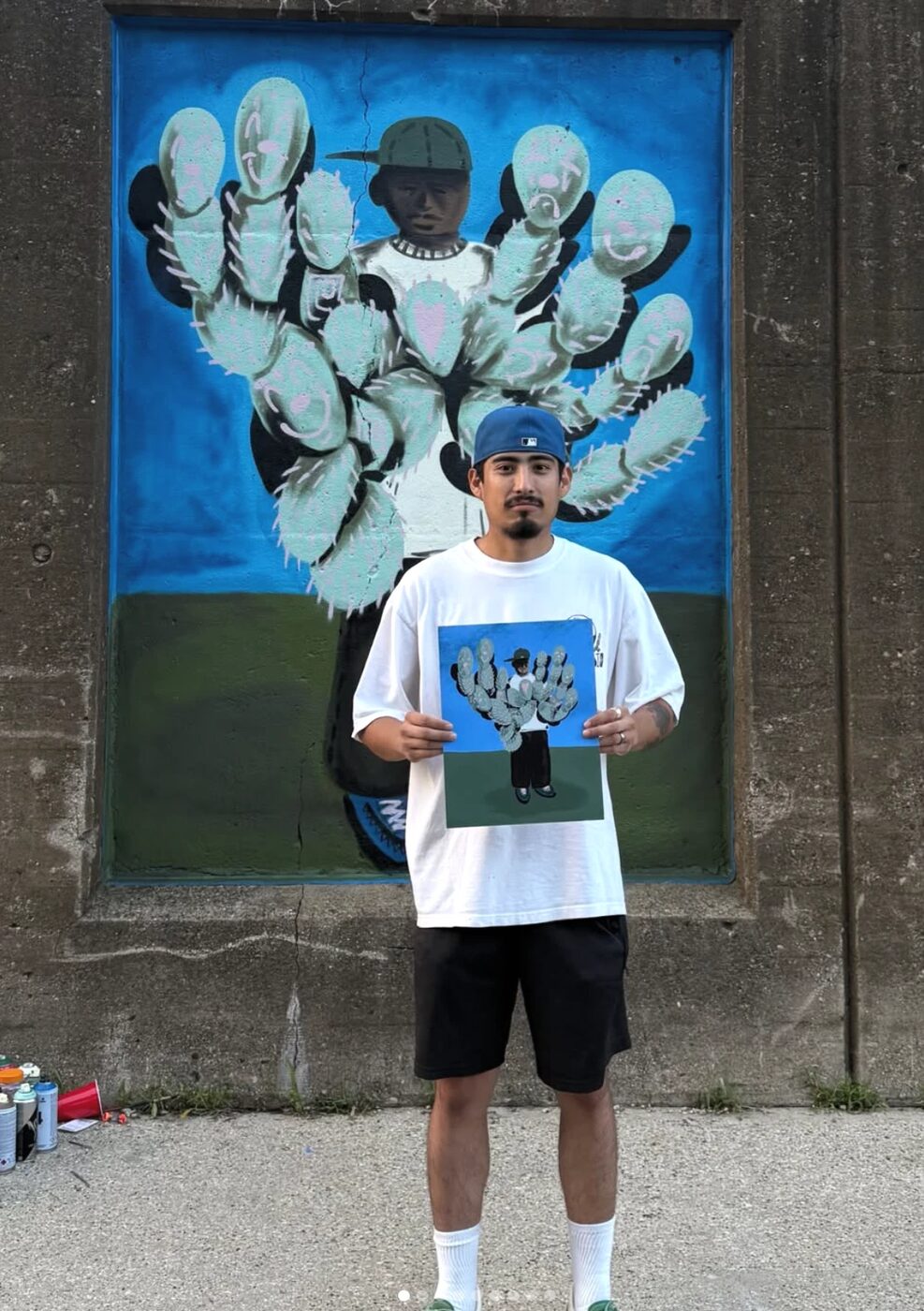
Ramiro Huizar is a painter, muralist and illustrator based in Chicago. He is one of the muralists we represent at MuralScout, and his Night Cruise mural greets riders at the Milwaukee Avenue entrance to the 606. His work answers a question many Chicagoans quietly carry: how do you honor where your family came from while living fully in the place you grew up? His answer, in spray paint and brush, is to draw them both at once.
Photo courtesy of the artist.
All artwork © Ramiro Huizar. Shown with the artist’s permission. Please ask before reusing it.
More: Ramiro Huizar and Chicago’s Mexican American murals · Chicago mural artists · Chicago murals story · Chicago guide for developers · All guides